Body wave vs deep wave: two of the highest-demand wavy textures in the global hair market — and the pair that generates the most inventory mistakes among wholesale buyers. This guide cuts straight to what matters for B2B decisions: wave specs, client fit by market, and how density grade and hair quality affect your unit cost and margin.
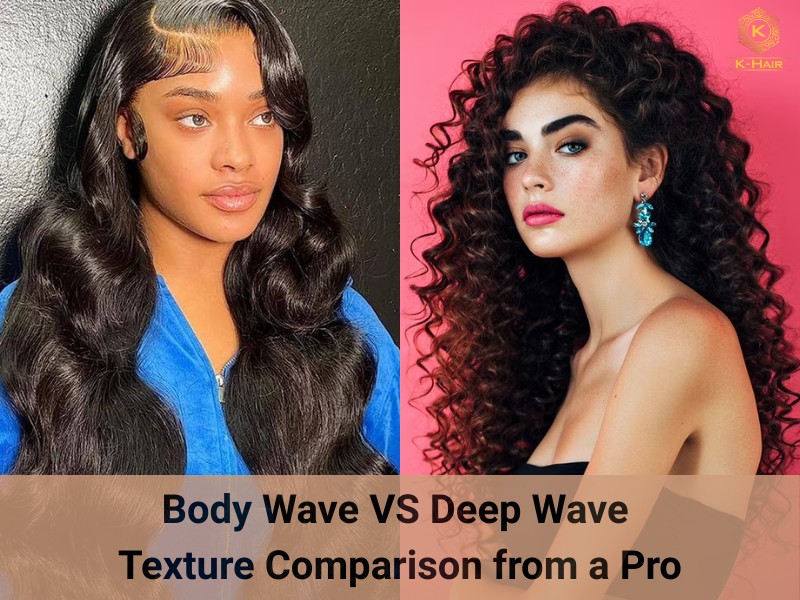
1. Body Wave vs Deep Wave: Quick Comparison
Before diving into the full breakdown, here is a high-level reference table covering the six criteria that matter most for wholesale inventory decisions. Use this to quickly identify which texture aligns with your current client demand.
| Criteria | Body Wave | Deep Wave |
|---|---|---|
| Curl Pattern | Loose, broad S-shape – ~3–4 cm diameter, lies flat and 2-dimensional | Tight, uniform S-shape – ~1–1.5 cm diameter, 3-dimensional and voluminous |
| Volume | Natural, flat – adds length more than width | High – expands outward, delivers dramatic fullness and coverage |
| Longevity | 8–14 months with proper care | 4–8 months (higher maintenance demand accelerates wear) |
| Maintenance | Low – less prone to tangling, moisture distributes evenly along broad waves | Medium-High – tighter curls frizz faster, require frequent conditioning and detangling |
| Styling Versatility | High – straightens to bone-straight, curls to tighter textures with ease | Medium – resists heat transformation; pattern rebounds even after flat-ironing at 230°C |
| Best Market Fit | US/European markets, Caucasian clients, office and professional settings | African and African-American markets, glam and event-driven demand |
2. Understanding the Textures: Definition & Key Specs
Beyond visual appearance, the structural integrity of a curl pattern determines how a texture performs in daily wear, survives transit, and ultimately satisfies your end-clients. Here is what wholesale buyers need to know before placing an order.
2.1. Body Wave Hair
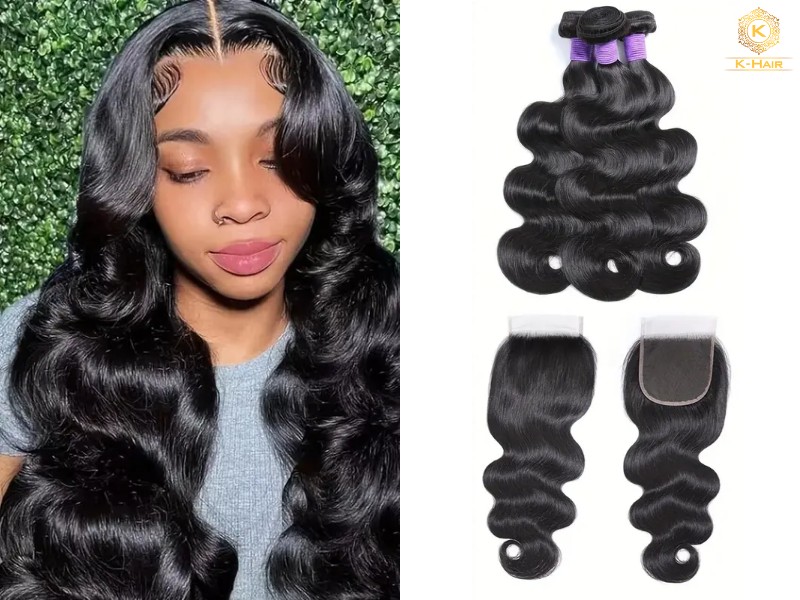
Body wave is a wavy hair extension texture defined by its loose, broad S-shape curl pattern — the flattest and most subtly defined of all wavy textures. The waves follow the natural curves of the body, lying close to the scalp in a soft, 2-dimensional drape that delivers a polished, professional aesthetic without dramatic volume. It closely mimics the natural 2A or 2B hair types common among women in North America and Western Europe.
- Curl diameter: ~3–4 cm
- Pattern behavior: Lies flat when combed; retains wave definition with light moisture
- Maintenance level in stock: Low — stable shelf presentation, minimal frizz in packaging
- Equivalent natural hair type: 2A / 2B
- Market demand signal: Body wave accounts for approximately 42% of B2C extension purchases globally — the single most purchased wavy texture at the retail level
2.2. Deep Wave Hair
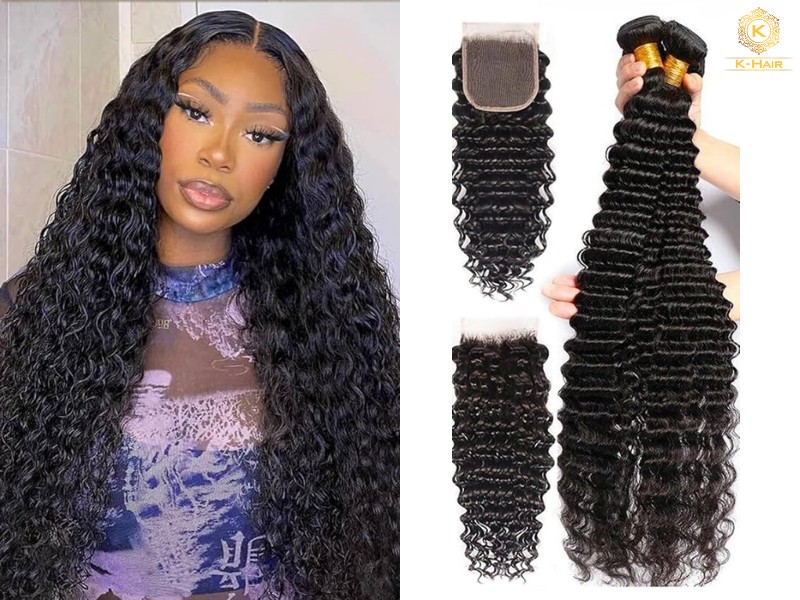
Deep wave is a wavy extension texture defined by its tight, uniform S-shape curl pattern running consistently from root to tip — delivering dramatic volume and a salon-finished, 3-dimensional appearance. Unlike body wave, the pattern does not flatten when combed, making it one of the most visually consistent and high-impact textures across all bundle lengths. It sits at the 2C to 3A range on the natural curl spectrum.
- Curl diameter: ~1–1.5 cm
- Pattern behavior: Holds shape under humidity and moderate heat; resists straightening
- Maintenance level in stock: Medium — requires moisture-sealed packaging to prevent frizz in transit
- Equivalent natural hair type: 2C / 3A
- Market demand signal: Deep wave leads wholesale and B2B channels at approximately 38% of bulk orders — driven by high-volume, event-driven markets
3. 5 Key Differences That Drive Your Inventory Decision
Both textures share an S-shape pattern – which is exactly why comparing body wave vs deep wave can be confusing for wholesale buyers trying to predict end-use performance.. Here is the bottom line on the five dimensions that actually impact your stock decisions and client satisfaction rates.
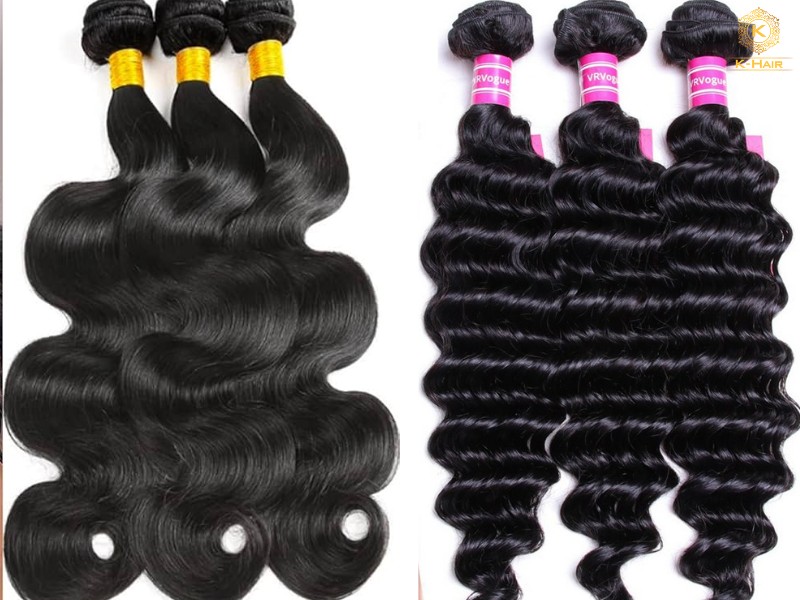
- Curl Pattern & Visual Appeal: Body wave delivers a soft, elegant aesthetic — close to natural hair with shine and luster that few other textures match. Deep wave reads as intentional, glamorous, and high-definition. The two target completely different aesthetics and therefore different end-client profiles.
- Volume & Coverage: Deep wave shrinks in length (~15–20% shrinkage on a 20″ bundle) but expands significantly in width — making it the superior choice for clients covering thinning or bald patches. Body wave adds natural thickness without altering the hair’s length profile, ideal for clients wanting seamless volume enhancement.
- Longevity: Body wave averages 8–14 months of wearable life — its looser pattern experiences less mechanical stress during daily wear. Deep wave, due to its tighter curl structure and higher conditioning demand, typically lasts 4–8 months before losing pattern integrity. This directly affects your clients’ repurchase cycle and your reorder frequency.
- Maintenance & Client Retention: Body wave is forgiving — it handles daily wear, heat, and light product use without frizzing. Deep wave requires daily or every-other-day conditioning and gentle detangling; neglect leads to visible frizz fast. Stocking Deep wave at volume means investing in client education to protect your reputation.
- Styling Versatility: Body wave straightens to bone-straight or curls to tighter textures with standard heat — giving salon stylists maximum creative flexibility. Deep wave resists heat transformation; its pattern rebounds even after flat-ironing at 230°C. If your wholesale clients serve multi-purpose styling needs, body wave is the safer stock anchor.
4. Which Markets Buy What? Texture-to-Demand Mapping
This is the section most B2C content skips entirely — and the most valuable for wholesale buyers making regional inventory decisions. Interestingly, the same texture performs very differently across markets, and stocking without this context leads directly to frozen inventory.
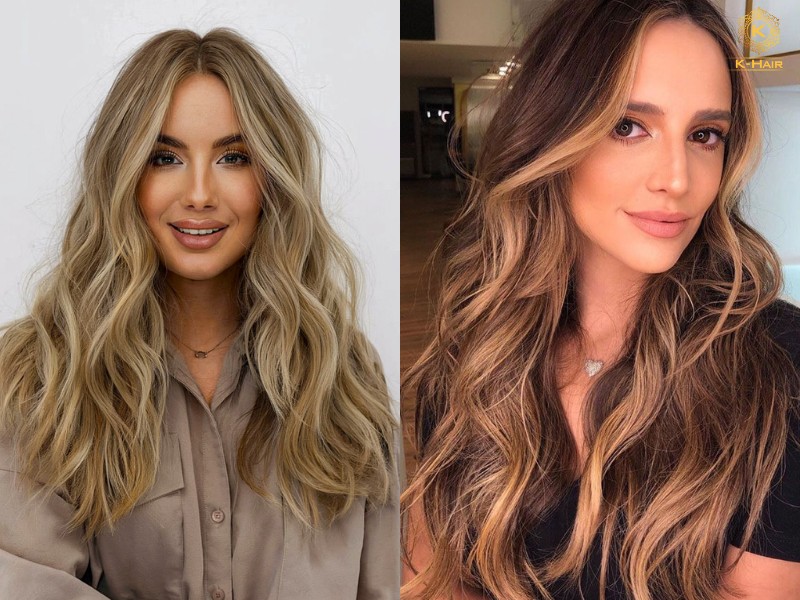
4.1. Body Wave: Dominant in US and European Markets
Body wave’s loose, 2A/2B-equivalent pattern blends naturally with the straight-to-wavy hair texture common among Caucasian women in North America and Western Europe. Its low-maintenance profile aligns with the Western salon client profile — women with demanding schedules who want a polished, workplace-appropriate look without daily upkeep. For wholesale buyers supplying salons in New York, London, Paris, or Sydney, body wave should anchor at least 50–60% of your wavy texture inventory year-round.
- Primary buyer profile: Professional women, 25–45, office and formal settings
- Peak demand period: Year-round stable — no significant seasonal spike
- Recommended grade: Remy Double Drawn as the volume tier; Virgin Super Double Drawn for luxury positioning
4.2. Deep Wave: Dominant in African and African-American Markets
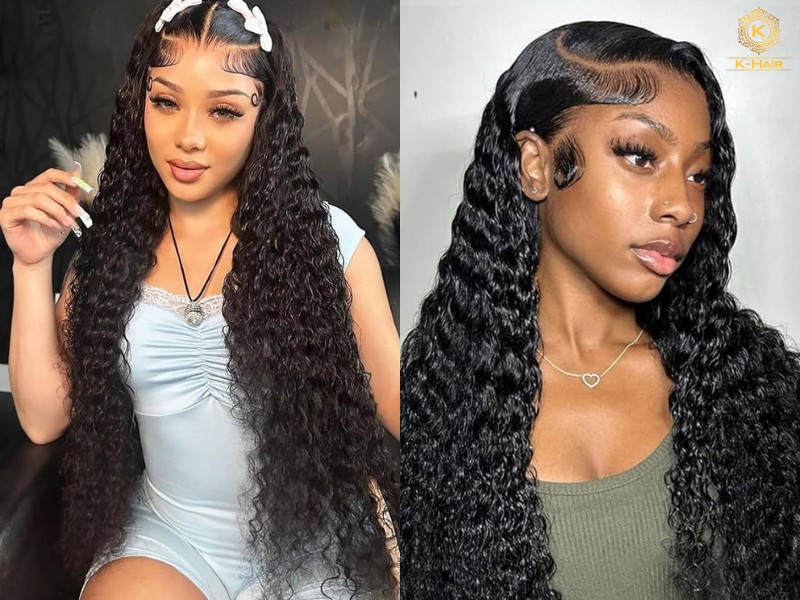
Deep wave’s tight 2C/3A-equivalent curl pattern closely mirrors the natural texture of Black women’s hair — making it the preferred extension for seamless blending in African and African-American markets. Bold, high-volume aesthetics are a core part of the cultural beauty standard in these markets, and Deep wave’s dramatic fullness delivers exactly that. For buyers supplying salons in South Africa, Nigeria, Ghana, or the US Black hair market, deep wave should be a primary stocking priority.
- Primary buyer profile: Style-forward women, event and occasion-driven purchases
- Peak demand period: Q4 (October–December) — festive and holiday season drives a significant demand surge
- Recommended grade: Virgin Double Drawn minimum for pattern longevity; Super Double Drawn for premium clients
Manufacturer Insight — K-Hair Factory Data: Based on our wholesale order data across 40+ countries, Deep wave outsells Body wave at a 3:2 ratio in African markets (South Africa, Nigeria, Ghana) during Q4. For pre-festive season stocking, we recommend a 60% Deep wave / 40% Body wave split for Africa-facing buyers. For US and European markets, invert that ratio: 60% Body wave / 40% Deep wave holds steady throughout the year.
5. Pricing & Sourcing: How Density and Quality Grade Affect Your Cost
This is where B2B sourcing decisions actually get made – and where most B2C content leaves wholesale buyers with nothing actionable. Interestingly, when pricing body wave vs deep wave bundles, the texture itself has minimal impact on your unit cost. What moves the price needle is density grade and hair quality. Here is what you need to know before your next order.
5.1. Density Grade: Single vs Double vs Super Double Drawn
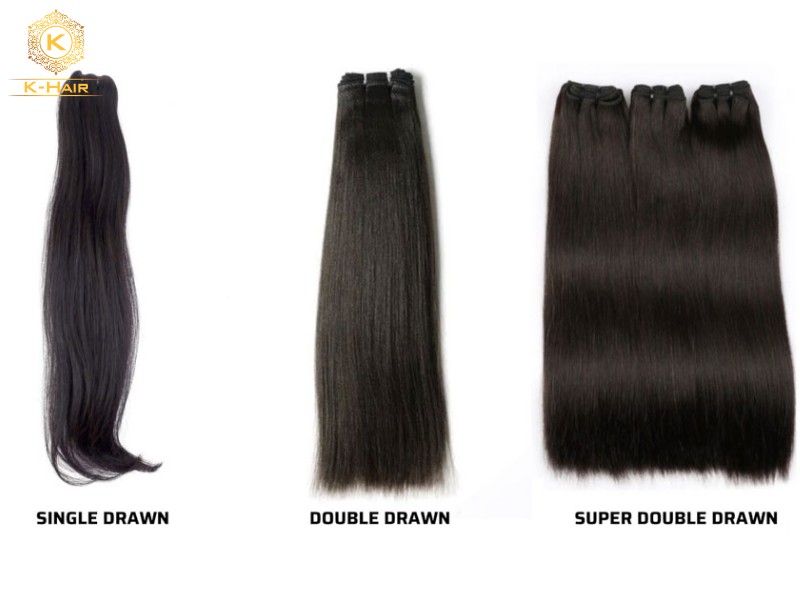
Density refers to the percentage of full-length strands within each bundle. A critical sourcing note: body wave and deep wave respond differently to density grade, and choosing the wrong combination creates a product that underperforms in the field.
- Single Drawn (40–45% full-length strands): Most affordable. Body wave at Single Drawn still presents well — the loose, flat pattern masks the tapered ends. However, Deep wave at Single Drawn loses significant volume and definition; the tighter curl pattern makes thin ends highly visible. Not recommended for Deep wave retail.
- Double Drawn (60–65% full-length strands): The wholesale sweet spot for both textures. Priced at $42/unit for a standard 20″ bundle at K-Hair for either Body wave or Deep wave. Balances cost with quality presentation across both patterns.
- Super Double Drawn (80–85% full-length strands): Maximum fullness. For Deep wave, this grade delivers the full dramatic volume impact the texture is known for — ideal for VIP clients and luxury salon positioning. Runs approximately 25–35% above Double Drawn pricing depending on order volume and lead time.
5.2. Hair Quality: Virgin vs Remy — Which Grade for Which Texture?
Not every quality grade performs equally across textures. Here is how to match grade to use case for body wave and deep wave specifically – a decision that directly affects your client retention rate.
- Virgin Hair (single donor, zero chemical treatment): The highest-durability option for both textures. For Deep wave specifically, Virgin hair holds the tight curl pattern longest — sustaining definition for 6+ months with proper care. Justifiable at a premium price point for luxury salon chains or high-end distributors. Body wave in Virgin grade offers exceptional shine and luster — its key selling point over competing textures.
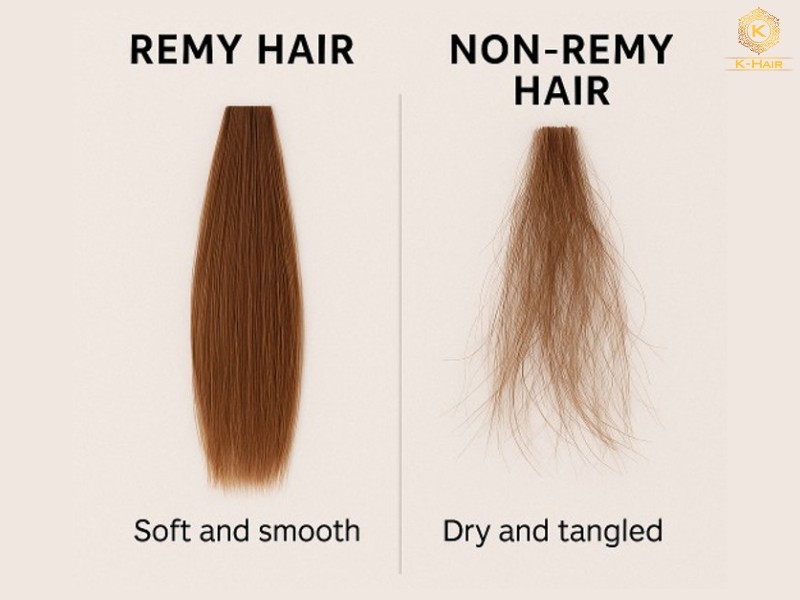
- Remy Hair (2–3 healthy donors, cuticle-aligned): The practical volume choice for most wholesale buyers. Available in both textures, it balances quality and pricing for mid-market positioning. Body wave in Remy Double Drawn is the single most cost-effective stocking option in the wavy category – broad market appeal, low return rate, stable shelf life.
- Raw Hair (single donor, unprocessed bulk): Only for buyers with in-house processing capability. Not retail-ready; requires bundling and texturizing before sale. Best for large distributors or manufacturers looking to reduce per-unit cost at scale.
- Non-Remy / Synthetic: Not recommended for either texture. Non-Remy loses wave integrity rapidly; Synthetic cannot withstand the heat styling that body wave buyers expect. Both grades generate returns and damage supplier reputation.
6. Which Texture Should You Stock? (B2B Decision Guide)
Ultimately, choosing between body wave vs deep wave depends entirely on your specific market and client base – not on which texture is objectively superior.
Stock Body Wave if your clients are:
- Based in US or European markets with predominantly Caucasian clientele
- Seeking low-maintenance, professional, workplace-appropriate hair solutions
- Stylists who need a versatile base texture that can be transformed across multiple looks
- First-time extension buyers who want a safe, universally flattering entry texture
Stock Deep Wave if your clients are:
- Serving African, African-American, or Caribbean markets where bold volume is the aesthetic standard
- Supplying event-driven, occasion-focused salon clientele (formal events, red-carpet, bridal)
- Targeting clients with thinning or fine hair needing maximum coverage per bundle
- Building a premium, luxury-tier product line where pattern longevity justifies Virgin grade pricing
“My best-performing stock formula across my South Africa salon chain is a 60/40 split between Deep wave and Body wave going into Q4 — then I flip it to 40/60 for the quieter months. Both textures source from K-Hair in Virgin Double Drawn, and in four years I have had almost zero client complaints on either.”
— Sandra, Owner, multi-franchise salon chain, South Africa
🔗 Build Your Complete Wavy Hair Inventory:
Body wave and deep wave are the two anchors of any wavy hair range — but a full inventory covers the entire spectrum. Explore the rest of our B2B texture comparison series:
7. Frequently Asked Questions
Navigating wholesale hair sourcing often brings up specific technical questions. Below, we have compiled the most common inquiries we receive from salon owners and hair distributors regarding the performance, maintenance, and profitability of body wave vs deep wave extensions.
7.1. Does body wave or deep wave last longer?
Body wave lasts significantly longer – averaging 8–14 months with standard care. Deep wave, due to its tighter curl structure and higher conditioning demand, typically sees pattern degradation after 4–8 months. For clients prioritizing longevity over volume, body wave is the stronger investment.
7.2. Which texture sells faster in the US market?
Body wave consistently outsells deep wave in US and European markets due to its compatibility with 2A/2B natural hair types common among Caucasian women. In the US Black hair market, the dynamic reverses – deep wave leads, particularly in Q3 and Q4.
7.3. Can body wave and deep wave be bleached or dyed?
Yes – provided the hair is Virgin or Remy grade. Virgin hair handles bleaching to 613 (platinum blonde) without significant texture loss for either pattern. Non-Remy and Synthetic grades are not bleach-compatible and will deteriorate rapidly under chemical processing.
7.4. What is the MOQ for body wave and deep wave bundles at K-Hair?
K-Hair’s standard MOQ starts at 5 bundles per texture for first-time buyers, with flexible mix-and-match options across lengths, densities, and textures in a single order. Contact our team for volume pricing tiers and sample availability.
8. Conclusion
To build a highly profitable hair extension business, understanding the distinct differences between body wave vs deep wave is absolutely essential. While body wave caters to clients seeking a natural, low-maintenance, and professional look, deep wave is the ultimate choice for those demanding dramatic volume and long-lasting curl definition.
By aligning your inventory with your local market demands — and paying close attention to how density and quality grades affect your margins — you can confidently stock both textures without the risk of dead inventory. Evaluate your client base, choose the right quality grade, and partner with a factory that delivers consistent curl patterns batch after batch.
Looking for a reliable Vietnamese hair factory?
At K-Hair Vietnam, we supply premium Double Drawn and Super Double Drawn body wave and deep wave extensions to multi-franchise salons and distributors across 40+ countries. Source directly from the manufacturer — no middlemen, no inflated margins. Reach out via WhatsApp at +84 85 555 5344 or connect with us on Facebook: K-Hair Wholesale for a free texture consultation and our latest B2B price list.
→ Explore our full texture range in our hair extensions shop.