Have you ever stepped outside on a humid day only for your smooth, styled locks to instantly puff up into an unmanageable halo of flyaways? Frizzy hair is a common hair condition that occurs when the outer cuticle layer of the strand raises, allowing atmospheric moisture to penetrate the shaft and cause the hair to swell and misbehave.
However, as popular as this problem might be, many people with frizzy hair are still unaware of having them. This lack of knowledge and information have led to misunderstanding which results in even more maintenance and hair care mistakes that ultimately cause the hair condition to even worsen over time. In this article, we will make sure that the question “What are frizzy hair?” will never go unanswered.
1. What are frizzy hair
First things first, let’s answer the question right out of the gate: “What is frizzy hair?”
1.1. Frizzy hair definition
Frizzy hair is a structural misalignment phenomenon where individual hair strands swell and protrude in multiple directions away from the main cohesive hair pattern, primarily triggered by a compromised cuticle barrier absorbing atmospheric moisture.
To really understand what’s going on, let’s look at how your hair is built. Each strand is covered in a protective outer layer of overlapping shingles called the cuticles. When your hair is healthy and moisturized, those cuticle shingles lay flat and smooth like armor, sealing moisture inside and keeping environmental dampness out.
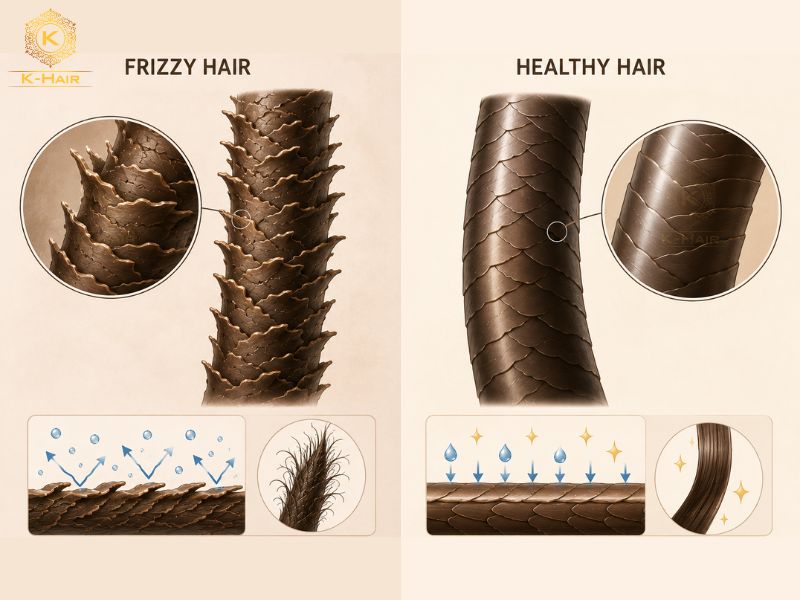
However, what would happen if this protective cuticle layer becomes unaligned and damaged? The answer is simple, the hair becomes frizzy. With all of the cuticle scales completely lifted and open, which may happen due to high humidity and repeated heat styling, the hair strands are more likely to stand up, curl up, facing completely different cuticle alignment with the neighboring strands. This creates the ultimate frizzy, dehydrated and poofy hair look associated with frizziness.
1.2. Frizz hair types
Frizz doesn’t look the same for everyone. It generally presents itself in one of three ways:
- Surface frizz: This happens on the very top layer of your hair. The hair underneath looks smooth and defined, but a static-like halo of fuzzy hairs floats over the crown.
- Halo frizz: This occurs specifically right along your hairline and the crown of your head. It is frequently caused by a mix of new hair growth and broken strands sticking straight up.
- Internal frizz: Common in curly and wavy hair types, this happens when the hair inside the bulk of your style loses its definition. The curls tangle together and turn into a chaotic, voluminous puff rather than separating into distinct ringlets.
- Frizz at the ends: The result of having a lot of split ends. The ends of your hair are often less healthy than the hair at your roots, simply because they’ve been around the block longer and have taken the brunt of the damage from coloring and heat styling.
2. What causes frizzy hair?
Frizzy hair does not appear randomly, and in most cases, it is a consequence of a prolonged amount of time using the wrong maintenance, styling routine. To be short, we got this equation:
When we break down this formula, it becomes crystal clear why frizz behaves the way it does:
2.1. Dry/Damaged cuticles
Frizz happens when the cuticle shingles are propped open or missing. This structural vulnerability is usually caused by four main culprits:
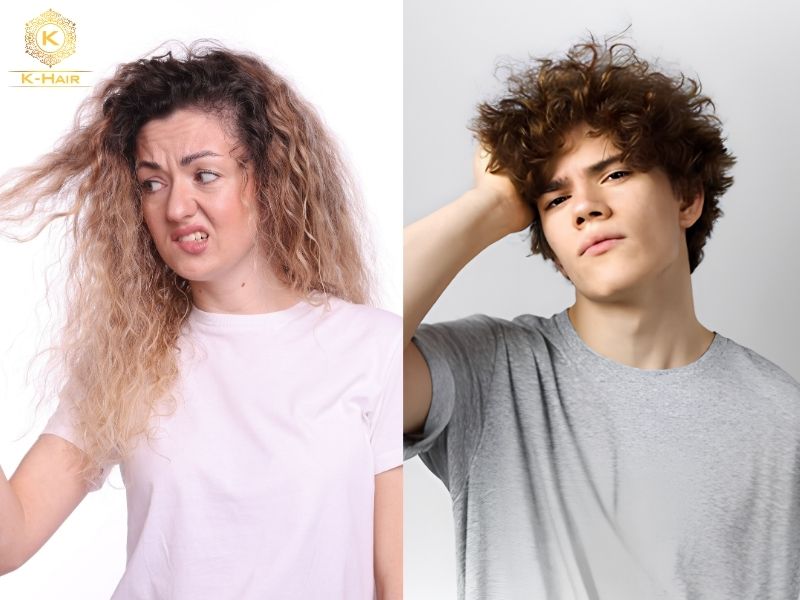
- Genetics: Sometimes, just like porous hair, you do not need damaged hair to experience severe frizz. For many, it is simply coded into their DNA. Wavy, curly, and coily hair types are naturally prone to frizz. Because the hair shaft bends and twists, the shingles can’t lay perfectly flat at the curves. This is why curly hair is “naturally thirsty”.

- Frizzy hair on Wavy, curly, and coily hair
- Chemical treatments: Bleach, relaxers, or coloring techniques (like balayage, highlights,…) use high-alkaline chemicals to force the cuticle open. If done too often, the cuticle never fully closes again, leaving the hair permanently porous.
- Mechanical habits: Aggressive towel-drying with rough cotton, sleeping on friction-heavy pillowcases, or dry-brushing creates microscopic tears in the hair shaft.
- Heat styling: Using tools above 180°C (350°F) without a protectant “bakes” the internal moisture out and can melt the keratin proteins that keep the cuticle smooth.
2.2. Environmental humidity
Even healthy hair can succumb to frizz if the environment is harsh enough. When relative humidity is high, the air becomes completely saturated with water vapor. This airborne moisture acts as an immediate catalyst, rushing into dry or open hair cuticles and causing the internal hair fibers to swell unevenly.
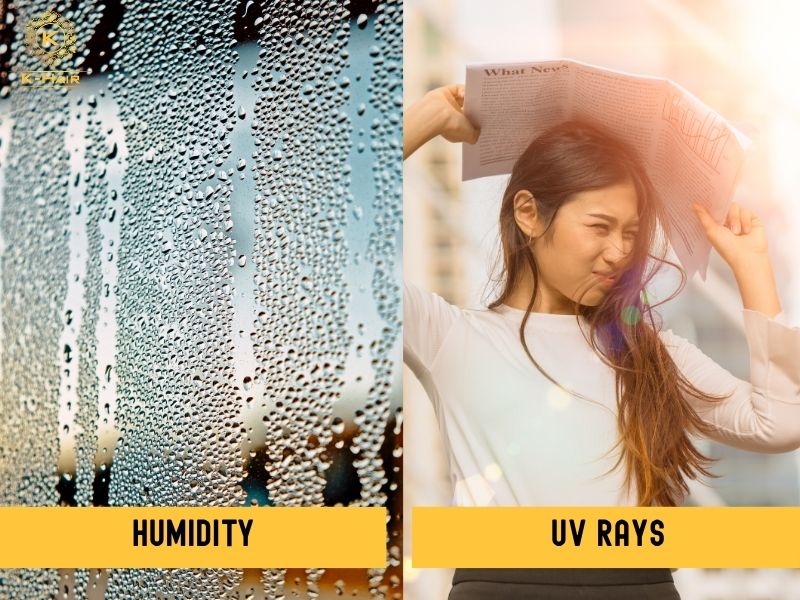
On the flip side, prolonged exposure to solar UV rays degrades the delicate fatty acid barrier (the cell membrane complex) that gives hair its natural water resistance. Similarly, bitter winter cold paired with dry indoor heating strips away ambient moisture, leaving hair desperate to suck up any dampness it can find.
3. Signs you have frizzy hair
Depending on your natural hair texture, it manifests in completely different ways:
- Straight hair: Hair looks dull, limp, or statically charged with flyaways sticking out horizontally along the parting line.
- Wavy hair: The waves look loose, unkempt, and lack uniform direction, often looking like a chaotic “nest” rather than smooth beach waves.
- Curly & coily hair: Curls shrink drastically, feel rough to the touch, lose their curl pattern definition, and expand into an all-over cloud of volume.
4. Frizzy vs Dry vs Dull hair
It is common to lump frizzy, dry, and dull hair into the same category, but they are actually three entirely different hair conditions. Think of this way: Dry hair is a structural lack of moisture, frizzy hair is a behavioral reaction to the environment, and dull hair is a light-reflection problem. Because they have different root causes, their manifestations are also quite different.
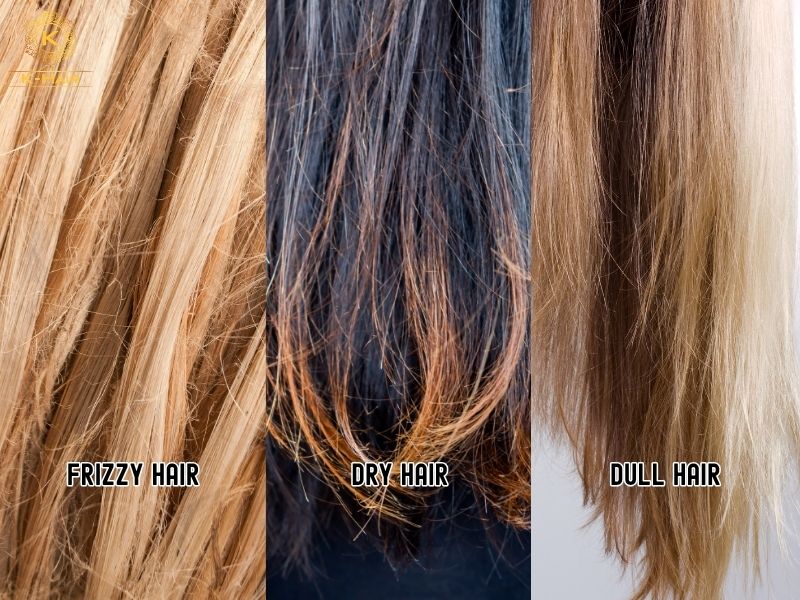
Below is the break down:
| Feature | Frizzy hair | Dry hair | Dull hair |
| What it means | Hair strands lose smooth alignment and puff outward | Hair lacks enough moisture and oils | Hair lacks shine and light reflection |
| Main cause | Open cuticles absorb environmental humidity, causing the strand to bend and buckle. | Scalp produces low oil, or over-washing, chemical processing, and bare heat tools. | Product buildup, hard water minerals, or a rough, jagged cuticle surface. |
| How it feels | Rough, textured, and uneven. Tangles easily like Velcro. | Straw-like, brittle, stiff, and crunchy at the ends. | Can feel normal, but often feels weighed down, coated, or dry. |
| Most common in | Curly, damaged, high porosity hair | High porosity, chemically treated hair | Product buildup, damaged or dehydrated hair |
5. How to fix frizzy hair
To eliminate frizz, you have to break the frizz loop. This means keeping your hair so full of internal moisture that it doesn’t look to the air for hydration, and sealing the outer cuticle layer flat so environmental humidity cannot get inside.
5.1. Hair care routine
Here is a step-by-step, anti-frizz routine engineered to keep your hair smooth and manageable from wash day to the days in between.
Step 1: Washing (2-3 times a week)
Your goal in the shower is to cleanse without stripping away your natural oils.
- The cleanse: Wash with a sulfate-free, hydration shampoo. Traditional sulfates act like harsh dish soap, stripping away the natural lipids that keep your hair cuticles sealed flat. Focus the suds strictly on your scalp and let them gently rinse through your ends.
- The condition: Apply a rich conditioner containing smoothing ingredients like glycerin, argan oil, or shea butter from the mid-lengths to the tips. Use a wide-tooth comb to detangle while the conditioner is in your hair – never brush your hair dry, as this rips the cuticles open and creates instant frizz.
- The cold rinse: Rinse your conditioner out with cool or cold water. While warm water coaxes the hair cuticle open, cold water forces the cuticle shingles to contract and lay flat, sealing in the moisture.
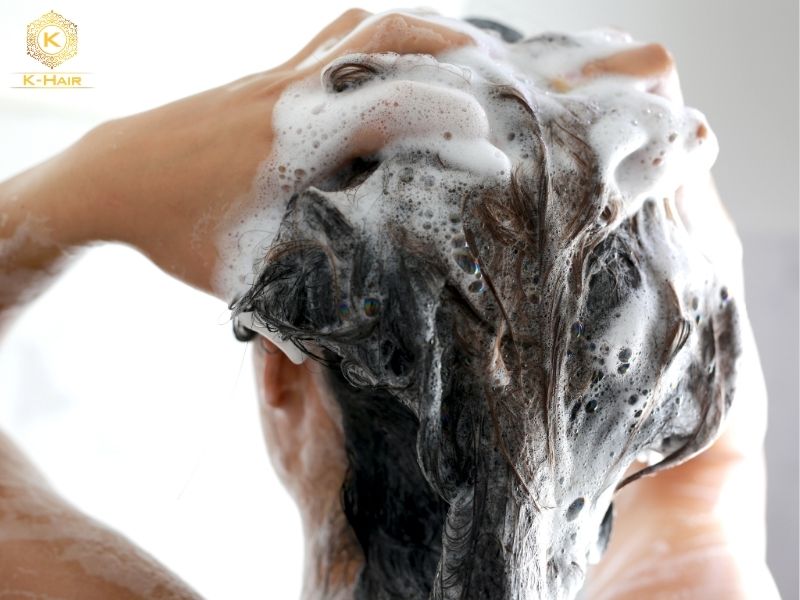
Step 2: Post-shower
How you treat your hair the minute you step out of the shower dictates your frizz levels for the rest of the week.
- Microfiber towel: Regular cotton towels tend to be harsh and rough that act like sandpaper on wet hair, which leads to frizz, tangling, and unnecessary breakage. Using a microfiber tower instead and gently squeeze out excess water to prevent any damage to your natural hair.
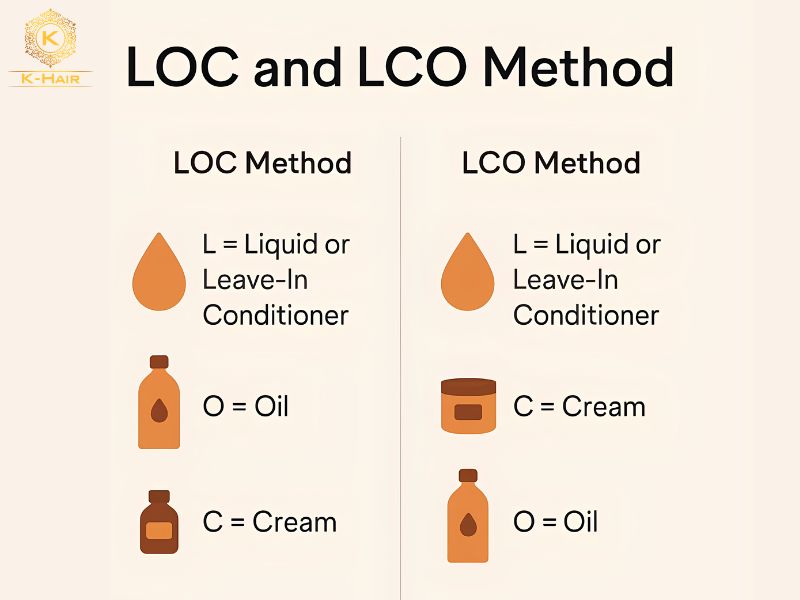
- LOC method: Apply your products while your hair is still dripping damp to trap water molecules inside the strand:
- L (Liquid/Leave-In): Smooth a water-based leave-in conditioner over your strands for foundational hydration.
- O (Oil): Apply 2-3 drops of a lightweight oil (like jojoba or argan) to coat the hair and act as a moisture barrier.
- C (Cream): Finish with a defining cream or gel to lock the hair fibers into smooth, cohesive bundles.
- The serum (For Straight/Blow-Dried Hair): If you plan to blow-dry your hair smooth, apply a lightweight, silicone-based serum containing dimethicone to damp hair. Silicones are completely hydrophobic (water-repelling), creating an invisible, waterproof shield that blocks atmospheric humidity.
Step 3: Drying
Moving air can easily scatter your hair strands and blow your style into a fuzzy cloud if you aren’t careful.
- If air-drying: One your products are applied, keep your hands off your hair until it is 100% dry. Touching your hair while it dries breaks up the product barrier and creates immediate surface frizz.
- If blow-drying straight: Always attach a directional nozzle to your hair dryer and point the airflow straight down from your roots to your ends. This physically smooths the cuticle shingles down flat. Never blow the air upward against the grain of the hair.
- If diffusing curls: Cup your curls gently into a diffuser attachment. Keep the hair dryer on a low speed and medium heat setting. High air speeds will violently separate your curl patterns, resulting in frizz.
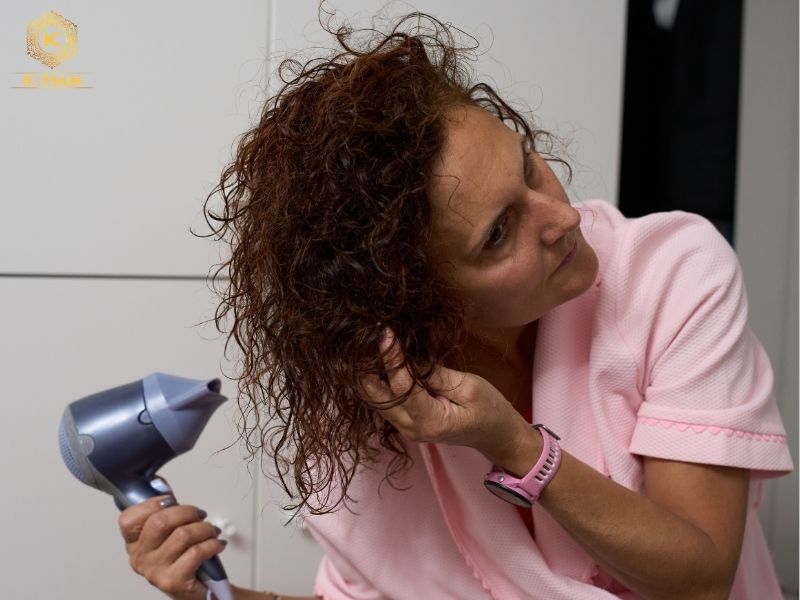
Step 4: Sleeping
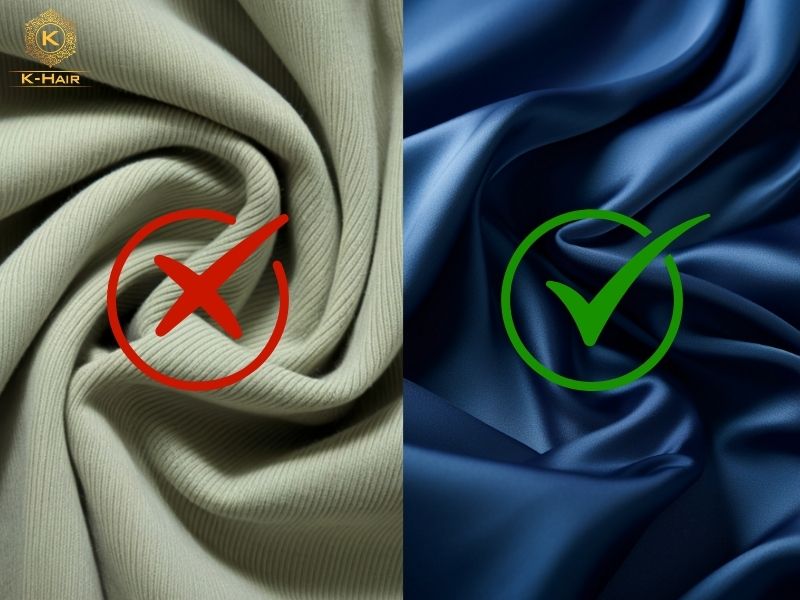
Frizz control doesn’t stop when you go to bed. Protecting your hair overnight ensures your previous protections don’t disappear and you don’t wake up with a tangled mess. Traditional cotton pillowcases absorb moisture right out of your hair and create intense friction as you toss and turn. Switch to a silk or satin pillowcase so your hair can glide smoothly across the surface friction-free.
5.2. Top product ingredients to look for
There are some anti-frizz ingredients that you can look for in the hair products:
- Hydrophobic Silicones (Dimethicone/Cyclomethicone): Water-repellent silicone compounds that create a moisture-resistant film on the outside of the hair shaft.
- Quaternized Ammonium Compounds (Polyquaternium): Positively charged conditioning polymers that counteract negative static electricity in the hair.
- Plant Emollients (Argan oil, Camellia oil): Plant-based oils rich in fatty acids that help regenerate the protective lipid barrier.
- Anti-Humectants: Substances that prevent moisture from the air from penetrating the hair shaft.
6. In-salon solutions for frizzy hair
When at-home masks, oils, and serums aren’t enough to fight off humidity, in-salon texturizing treatments offer a powerful alternative. Professional treatments work by physically changing the outer structure of your hair or infusing it with sumi-permanents smoothing agents that lock our moisture for months at a time.
Choosing the right salon solution depends entirely on your natural hair texture, budget, and whether you want to preserve your natural waves and curls or straighten them completely.
6.1. Keratin treatment/ Brazilian blowout
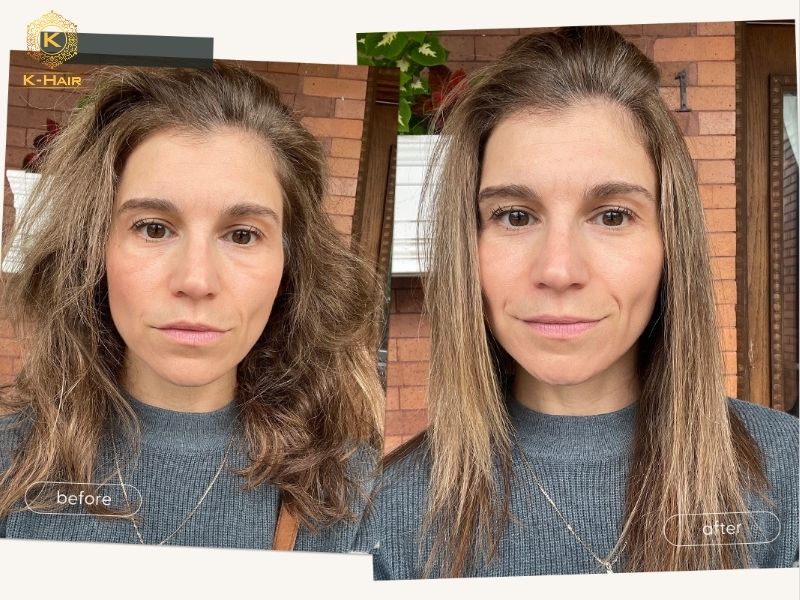
Brazilian blowout is a technique in which a liquid keratin formula is brushed onto the hair and then sealed into the cuticle using a high-heat flat iron. It forms a temporary, defensive protein wrap around each strand. It completely blocks atmospheric humidity. It relaxes your natural curl or wave pattern by about 50-80%, meaning your hair dries significantly smoother and faster.
6.2. Japanese hair straightening
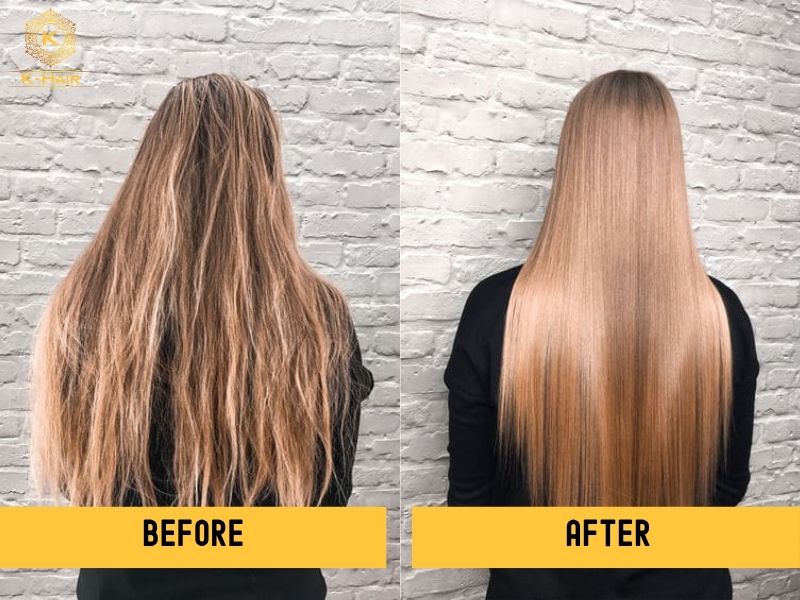
A strong chemical solution is applied to break the internal sulfur/disulfide bonds of the hair. The hair is then meticulously flat-ironed straight and neutralized to lock the new shape permanently into place. It completely obliterates frizz, volume, and texture, transforming the hair into pin-straight, glassy sheets that cannot frizz even in a torrential downpour.
6.3. Hair botox
Despite the name, this involves zero needles. It is an ultra-deep, professional-grade conditioning treatment packed with vitamins, amino acids, antioxidants, and caviar oil. Rather than using harsh chemicals to coat the hair, this technique acts as a topical filler. It floods the gaps, holes, and tears of a damaged, high-porosity hair cuticle, plumping the strand from the inside out to naturally eliminate dryness-included frizz.
| Keratin treatment/ Brazilian blowout | Japanese hair straightening | Hair botox | |
| Frizz reduction | High / Weatherproof | Complete / Absolute | Moderate / Hydrating |
| Alters curl pattern | Yes | Yes | No |
| Chemical harshness | Moderate (Requires heat) | High (Permanent structural change) | None (Deep Condition) |
| Longevity | 3 to 5 months | Permanent | 2 to 4 months |
| Best for | Thick, coarse, or highly porous hair types experiencing severe, daily humidity frizz | The one with thick, coarse, curly, or unruly hair who want permanently straight hair and never intend to wear their hair natural or wavy again | Over-processed, bleached, fine, or structurally damaged hair that is too fragile to safely undergo a high-heat keratin treatment |
| Price | $200 – $400+ | $400 – $800+ | $150 – $300 |
7. FAQs about frizzy hair
Here are some frequently asked questions that often come along with “What are frizzy hair”:
7.1. Is frizzy hair bad?
Not necessarily. Frizz is a natural hair behavior that happens when the hair cuticle absorbs moisture unevenly or becomes lifted. While excessive frizz can indicate dryness or damage, some hair types, especially curly and wavy hair, naturally experience a certain level of frizz.
7.2. Is frizzy hair a style?
Yes, in some cases. Many modern hairstyles intentionally embrace natural texture, volume, and soft frizz for a more effortless and lived-in look. However, naturally frizzy hair caused by dryness or damage is different from intentionally styled texture.
7.3. Can you wear extensions on frizzy hair?
Yes, but proper matching and maintenance are important. Hair extensions should match your natural texture as closely as possible to blend seamlessly. People with frizzy or high-porosity hair may also need extra hydration and anti-frizz care to keep both their natural hair and extensions smooth and manageable.
8. Conclusion
At its core, managing frizzy hair comes down to sealing the cuticles and keeping unwanted moisture out while locking hydration in. While mastering the right anti-frizz routines and products can drastically tame your natural texture, repairing severely heat-damaged or naturally coarse, frizz-prone strands takes time.
Instead of fighting a losing battle with humidity, turning to high-quality hair extensions is the ultimate shortcut to achieving that instantly smooth, silky. By blending premium extensions into your hair, you add a layer of sleek density and weight that helps anchor your natural strands. To achieve that seamless look, K-Hair, the top-rated Vietnamese hair vendors, provides 100% premium raw human hair extensions that boast naturally healthy, aligned cuticles to ensure a smooth, frizz-free blend that styles beautifully. Contact us now to get the best deal!