
In the global hair supply chain, Remy hair is a high-margin raw material that sits strategically between Virgin hair and Non-remy hair. However, many hair business owners find themselves at a crossroads, unsure of which direction to take in the remy hair vs virgin hair debate: should they invest in Virgin hair for its flawless quality and luxury price tag, or opt for Non-remy hair to keep their prices low?
To help you avoid the wrong choices that could cost you your brand’s reputation, this article explores exactly what Remy hair is and the hidden qualities that make it a game-changer in today’s hair extension industry.
1. What is Remy hair?
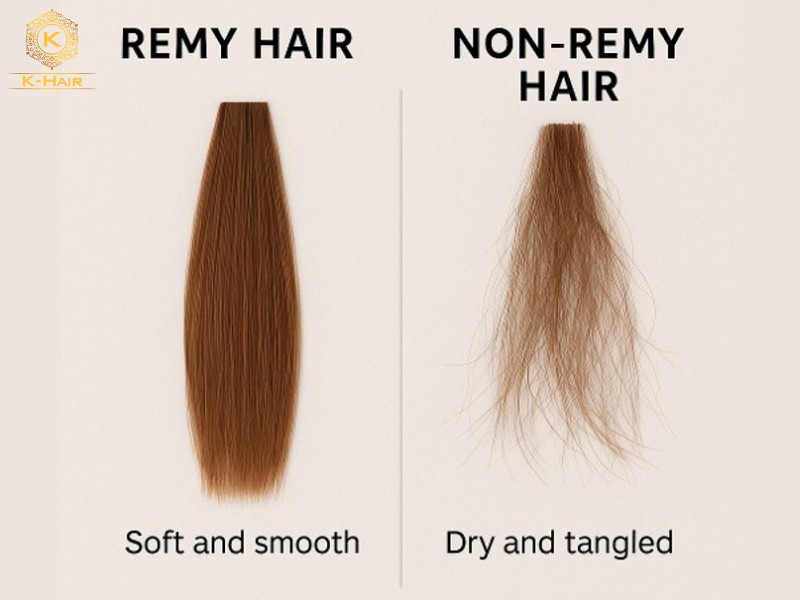
The term Remy hair originates from the French word “remis,” meaning “put back” or “restored,” referring to the alignment of the hair. It is a premium classification of human hair extensions where the cuticles are kept intact and meticulously aligned in a single, unidirectional direction from root to tip. Unlike Virgin hair, it can be collected from multiple donors and may undergo light processing or chemical treatments, provided the cuticle alignment remains undisturbed.
Because the cuticles are preserved, Remy hair effectively retains its moisture and nutrients. This allows the strands to reflect light beautifully, delivering a lustrous, eye-catching shine rarely seen in synthetic or low-quality hair types.
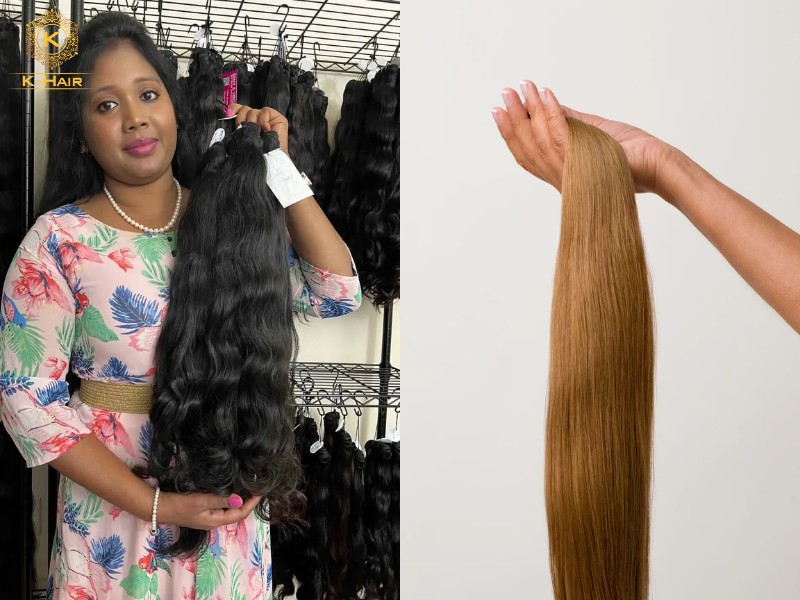
Moreover, this type of hair offers impressive styling versatility. Much like our own natural hair, it can be styled or bleached to shades like #27 Honey Blonde. It performs exceptionally well with warm-toned colors, making it a staple for those who value both versatility and durability.
Additionally, thanks to these flexible sourcing methods, Remy hair suppliers can access a wider range of raw materials. This leads to greater product availability and a more accessible price point compared to more limited, “one-donor” hair sources in the market.
2. Remy Hair vs Non-Remy Hair: Knowing the Differences
Non-remy hair, unlike Remy hair, is the lowest quality of human hair in the market – the opposite of its Remy hair counterparts. This hair type can be collected from salon floors, trash, sidewalks or public bathrooms – highly unsanitized places, resulting in completely misaligned cuticles.
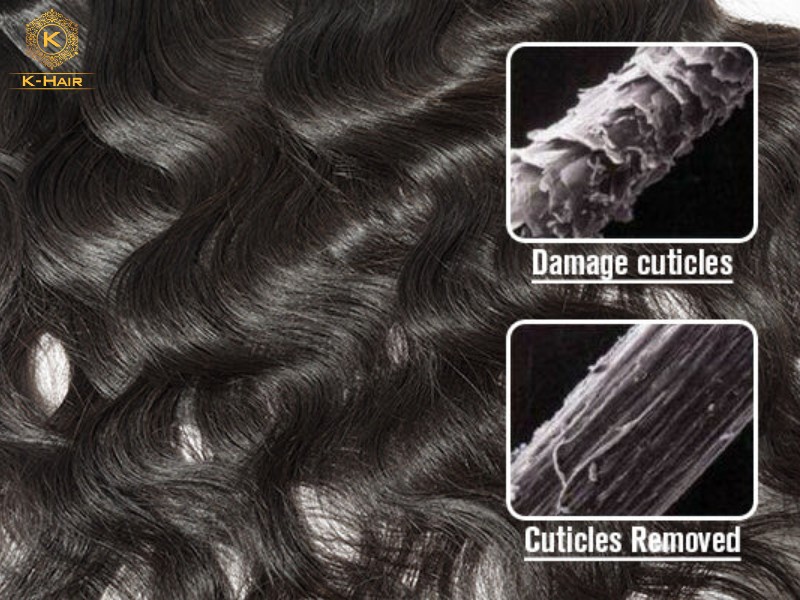
To mimic premium hair, Non-Remy bundles are often aggressively acid-washed and coated in a thick layer of silicone to mask damage and create a temporary shine. These poor origins and harsh treatments lead to significant differences in performance and price compared to Remy hair.
To give you a deeper insight into these two, we have broken down the key differences below:
2.1. From the characteristics perspective
| Remy hair | Non-remy hair | |
| Cuticle Alignment | 100% Aligned. Cuticles face the same direction, preventing friction. |
Mismatched. Cuticles run in opposite directions, causing instant tangling. |
| Processing | Minimally processed, chemically treated. | Hard processed, acid-washed |
| Appearance | Mimic the desirable look of natural human hair. Healthy, natural hair shine and luster. |
Lustrous, shiny and soft appeal at first glance. After a few washes → dull, undesirable appearance underneath. |
| Texture | Soft, bouncy, and move naturally like human hair. | Stiff, unnaturally shiny, and feels “plasticky” over time. |
| Longevity | 6 months to 1 year | 1 to 4 weeks |
| Versatility | Can be styled repeatedly under moderate heat and proper maintenance. Can be bleached to #27 and perfectly dyed warmer tones. |
Unable to be styled without breakage or dryness inflicted. Cannot deliver even, desirable bleaching outcome. |
2.2. From the profit perspective
It’s true that Non-remy hair, due to its origin from hair trash, has a lower “cost of goods”. But those gains are only short-term. Are you willing to trade that for the hidden costs of returns, bad reviews, and chargebacks that quickly erode any initial profit? To be a successful hair salon owner or entrepreneur, you have to look further, deeper than just the tip of the iceberg.
Remy hair, on the other hand, allows you to set a premium price point because the value is visible. Customers can feel the quality and see the longevity, making them much more willing to invest their money in your brand.
Furthermore, the lifetime value of a customer is significantly higher with Remy. Because Non-remy mats and sheds almost immediately, you will never get a repeat buyer. In contrast, a customer who buys Remy becomes a walking advertisement for your business.
They return for new bundles or recommend your shop to others, creating a compounding interest effect on your profits. Hence, investing in Remy hair isn’t just about buying better products; it’s about buying brand equity and market trust – the most valuable assets any hair vendor can own.
3. How to verify authentic Remy hair?
Even the low-quality Non-remy can be coated with silicone and marketed as authentic Remy, making many buyers in the market confused and misled. Therefore, when sourcing your inventory, it is necessary to spot “fake” Remy. Here are the professional verification protocols:
3.1. Visual proofs
To verify the legitimacy of Remy, buyers should demand clear visual proof from vendors before proceeding. This includes close-up texture photos, product videos, and live footage of the factory or production process. A professional supplier should have no trouble providing extensive evidence to back up their claims of authenticity.
3.2. Vendor legitimacy
The most reliable vendors are those with a transparent online presence and a legitimate business registration. A professional website, active social media, and clear contact information are essential signs of a trustworthy brand. By operating under government regulations, these suppliers are far less likely to sell fraudulent products and are generally more transparent about their Remy hair sourcing and quality standards.
Expert tips: Here are some questions you could ask to detect if this hair vendor’s selling authentic Remy hair or not:
- What is the source of your hair? Can you show me the collection process?
↳ Legitimate suppliers (like K-Hair) provide clear documentation or footage of their collection points in local communities. If they say “trade secrets” to a basic question, be wary.- If I bleach this hair, will the cuticles remain intact?
↳ Real Remy hair after bleached must retain shine and structural integrity after bleaching. If they say: “This hair shouldn’t be bleached”, they likely fear the chemicals will strip away the silicone coating and reveal the damaged, Non-remy underneath.- What is your replacement policy if the hair tangles after the first wash?
↳ “Fake” Remy hair only reveals its true nature once the silicone layer washes off. Avoid vendors who dodge this question or offer no post-wash protection. A supplier offering a “first-wash guarantee” is confident in their quality.
3.3. Hair tests
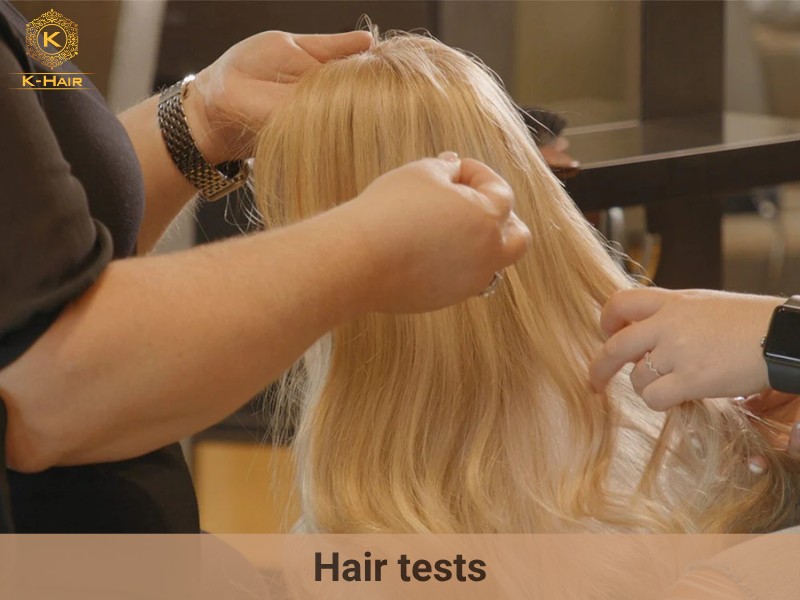
If the visual and legit check passes, perform these three tests. Real Remy must pass all three.
| How to test | Result | ||
| Authentic Remy hair | Non-Remy/Mixed | ||
| Friction test | Take a single strand. Slide your thumb and forefinger down (root to tip). Then reverse (tip to root). |
100% smooth when slide root to tip. A slight “drag” or resistance and hear a faint squeaking sound when tip to root. |
Smooth in both directions. |
| Wash test | Wash a sample with a High-pH/Clarifying shampoo (without conditioner). Dry the hair naturally. |
Remains soft and manageable. | Turns into a “bird’s nest” or feels like straw. |
| Bleaching test | Apply bleach to a small section, and wait for about 20 minutes. | Lifts evenly to a warm blonde. | Stay the same, lifts unevenly (spotty), turns bright orange, or the hair “melts” because the acid-stripped core cannot handle the chemicals. |
Test the hair before you buy it
3.4. Ask for reviews
When inquiring what is Remy hair, you might also want to go over the vendor’s uploaded feedback first to check their legitimacy and get a better picture of their past customer experience and customer satisfaction. However, as these proofs can easily be deepfake or stolen from other suppliers, you might want to take the extra step and ask for reviews from other sources: relatives, friends, colleagues, or other competitors, hair influencers,… for a more honest opinion.
4. Remy Hair vs Synthetic & Yaki Hair
While Remy is 100% human hair, it is often confused with Synthetic or Yaki hair. Synthetic hair is made of plastic fibers that cannot handle heat or chemical treatments. Yaki hair, while often human, is heavily processed and micro-crimped to mimic relaxed Afro-textures. Remy hair remains the superior choice for those seeking the most natural movement, longevity, and versatile styling capabilities.
5. Common Applications of Remy Hair
Due to its perfect balance of high quality and accessible pricing, Remy hair is the “workhorse” for various types of hair extensions. It is most commonly manufactured into:
- Hair Wefts: Durable and perfect for long-term sew-ins, widely popular in the African and US markets.
- Tape-in Extensions: Lightweight and ideal for providing salon clients with a seamless, natural volume lift.
- Clip-ins: The top-selling choice for retail brands targeting customers who want everyday convenience.
6. Why Remy Hair is a Game-Changer
Amid rising competition, success depends on meeting specific buyer needs rather than blindly following trends. Remy serves as a powerful catalyst for this shift, providing the ideal quality-price balance to help entrepreneurs expand their scale and capture global market share:
- High market demands: This type of hair is highly sought-after globally, especially in the African market where buyers prioritize both quality and affordability. By targeting this high-demand region with Remy products, business owners can outperform competitors and secure consistent profits from one of the world’s largest hair market sectors.
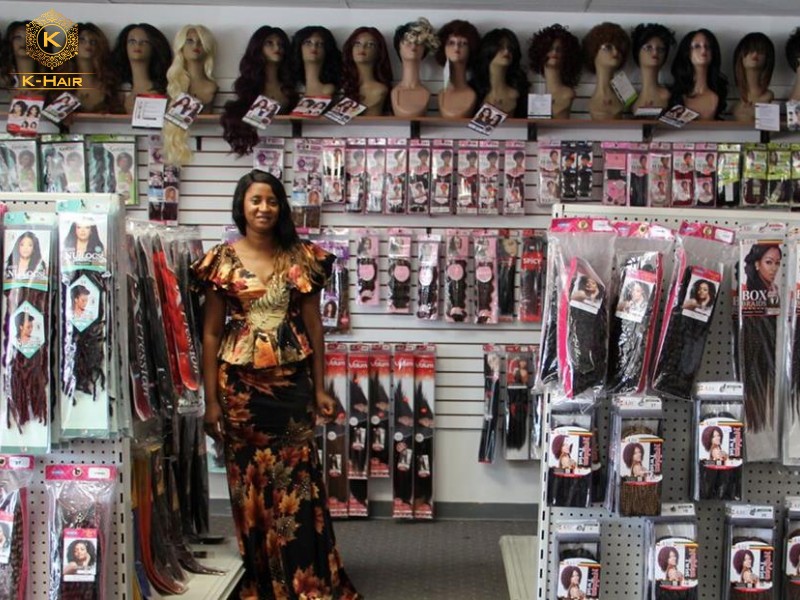
- Hair display value: Remy hair can offer impressive display values for hair businesses looking for a new vedette for their storefront. With its soft, silky, smooth look, along with its lustrous, natural hair shine, Remy can capture the attention of any passerbys – attracting more and more visiting customers to your store if used as a window display.
- Sustainability: This hair type can be re-installed 3 to 4 times, which might seem like you’re selling less hair. But you are not only actually building extreme brand loyalty, but also reduce the beauty industry waste. A client who can reuse their hair for a year will view your salon as a high-value investment, not a cheap expense.
- The pricing tier: Remy hair offers a professional-grade experience without the extreme investment cost of Raw or Virgin hair, while remaining significantly more valuable than the disposable Non-remy.
- Higher profit margins: Most customers cannot afford $500–$1,000 for a Virgin or Raw hair install, but they are happy to pay $200–$300 for Remy. You can sell 10x more Remy bundles than Virgin bundles, leading to higher total monthly profit.
- Reduction in returns/refunds: Non-remy is a profit killer because of high return rates due to matting. Hence, by spending a little more to source Remy over Non-Remy, you virtually eliminate the cost of refunds, and chargebacks.
- Good for hair health and scalp care: Non-remy hair tends to tangle easily. If you don’t know how to keep hair extensions from tangling, it will accumulate bacteria and feel heavy on the scalp, pulling on natural follicles. In contrast, Remy hair is smooth, naturally aligned, and minimizes pressure on the scalp.
7. Why K-Hair is the best Remy hair wholesale supplier
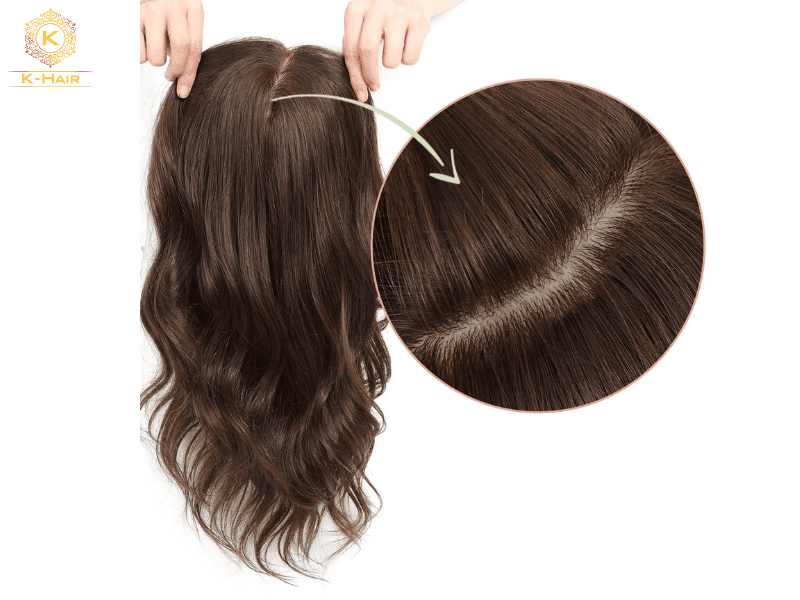
With over 30 years of experience, K-Hair is a global leader in supplying 100% authentic Vietnamese Remy hair. Ethically sourced from healthy young donors, their hair is minimally processed to retain its natural strength, shine, and resilience.
Thanks to this minimal-processing approach, K-Hair’s Remy hair remains soft, smooth, and resilient, with reduced chances of tangling or shedding. As a result, the hair performs beautifully under heat styling, coloring and bleaching, making it the top choice for salon owners and stylists worldwide seeking to tailor products to their specific market needs.
With a strong presence in markets like Nigeria, Brazil, and the US, K-Hair provides seamless support – from professional consultation and production updates to secure shipping and after-sales care.
Furthermore, by eliminating middlemen, K-Hair provides competitive prices that maximize profit margins for wholesalers. This is combined with transparent policies that go beyond just the product, including a flexible 70% deposit for first-time buyers to ensure security and trust.
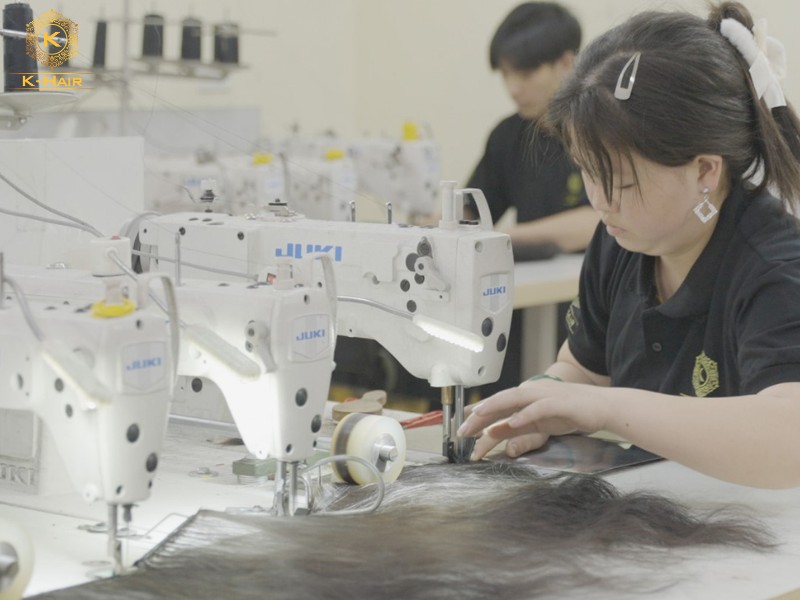
Ultimately, for global buyers in search of not only premium-quality Remy hair but also a dependable, cooperative manufacturing partner, K-Hair Factory represents the essence of professionalism, authenticity, and consistency within the Vietnamese hair industry. With ethically sourced hair and customer satisfaction placed at the core of their operations, K-Hair remains an excellent choice for those prioritizing stable supply, steady quality, and a trustworthy long-term partnership.
>>Want to take a quick look into our hair quality? Check out this hair test video:
Raw Hair Test (gone crazy) with Lovitto Trend
8. FAQs about what is Remy hair
To help you further, here are some of the most frequently asked questions about Remy hair:
8.1. How long should high-quality Remy hair last?
The average lifespan of this hair is 6 to 12 months with proper care. Evenly, if the hair is kept in its natural color and not over-processed with heat, it can often push past the 1-year mark.
8.2. Is Remy hair synthetic?
Absolutely NO. By the definition we gave you above, authentic Remy hair is 100% human hair.
8.3. What is Remy hair made of?
It is made of natural human keratin. It is harvested from human donors in a way that keeps the hair’s protective outer layer – the cuticle – fully intact, ensuring every strand is healthy, strong and biologically complete.
8.4. How many types does Remy hair have?
It comes in various forms (Wigs, Wefts, Clip-ins), it is most importantly categorized by its density and fullness, known as “Drawing Ratios”, including: Single Drawn (45% long strands), Double Drawn (60-65% long strands), Super Double Drawn (80-85% long strands).
9. Conclusion
In conclusion, Remy hair represents the “sweet spot” of the hair extension industry, offering a premium experience without the ultra-luxury price tag of Virgin hair. By keeping the cuticles intact and unidirectional, Remy hair provides the natural shine, fluid movement, and longevity that modern clients demand.
Ultimately, whether you are a stylist or a wholesale vendor, success in the hair market depends on authenticity. Partnering with a transparent Vietnam hair factory like K-Hair ensures that you receive genuine, premium products that perform as promised. With our 30 years of manufacturing expertise, we help you build a foundation of trust and quality that will sustain your business for years to come.
Ready to Source High-Margin Authentic Remy Hair?
Stop losing customers to low-quality tangling hair. Secure your factory-direct wholesale pricing today and let our consistent quality protect your brand’s reputation.
- 📱 Direct Factory WhatsApp: +84 85 555 5344
- 🌐 Official Facebook Page: K-Hair Factory Official
- 📖 Wholesale Catalog: View Premium Remy Extensions


Pingback: SDD Meaning: Compare SDD vs DD vs SD Hair Extensions