For the longest time, appearance, hair and beauty have been among the fundamental concerns of many people – men and women alike, across the globe. However, with all the troubles that come with maintaining and styling one’s own hair, many individuals have switched to using hair extensions as a beauty enhancement to elevate their natural hair look and conceal unwanted hair flaws, such as baldness or thinning hair. This shift has opened a brand new business opportunity for business owners, with more and more hair entrepreneurs joining in the market and offering their unique hair products for consumption. Such a huge wave has made hair extensions more widely available for all hair buyers across the globe, however, this also makes the market more confusing than ever, with different, distinct hair extension lines each with its own pricing range.
For clients planning on buying hair extensions, but hesitant to make the decision and unable to choose between so many options and pricing range in the market, this article will come to your rescue. As experts in the field, we have been able to gather information and shed light on how much are the hair extensions, their features, and factors affecting their prices.
1. How much are the hair extensions?
In the market, there have been two main types of hair extensions suppliers: the direct manufacturers and the distributors – each with their own specific pricing range. However, for end-users wanting to purchase their hair with the best, and most reasonable price possible, we would not recommend buying from a distributor. In fact, most of this type are hair importers – meaning that all of their hair products are sourced and collected from other international manufacturers. Due to their indirect sourcing practice, in order to maintain profit and pay for the international shipping and taxes involved in the transaction, hair distributors would have to raise their price up to a higher range – making them rather a non-ideal supplier option when it comes to pricing.
Nowadays, thanks to the development of information technologies and e-commerce, hair buyers can reach out to the factories themselves and purchase the hair directly from the source without involving any middleman like when buying from a distributor. Furthermore, by being directly involved in the production of their extensions, hair manufacturers can take better control of their quality and offer the most factory-direct, reasonable pricing possible.
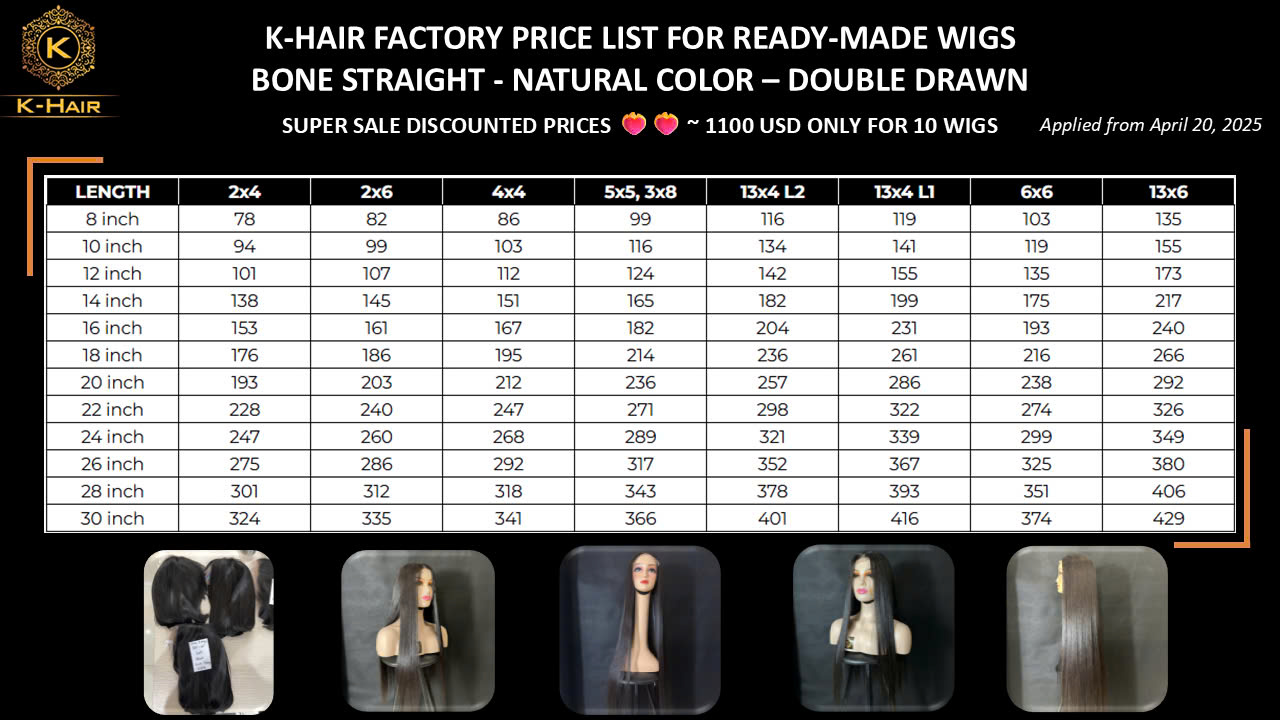
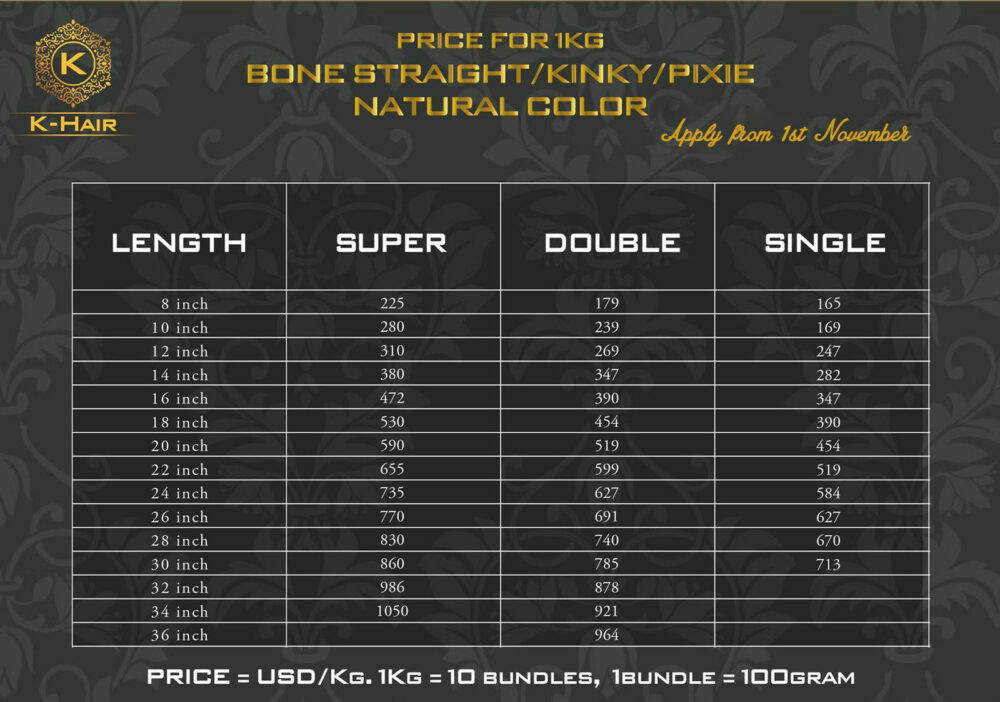
For example, for a Vietnamese hair factory like K-Hair, customers working with them can enjoy a much better price compared to buying from a middleman. For a standard Double Drawn 20” sew-in hair extension, the price would only be $45 – much cheaper compared to the average $100-$150 pricing range of many hair distributors out there.
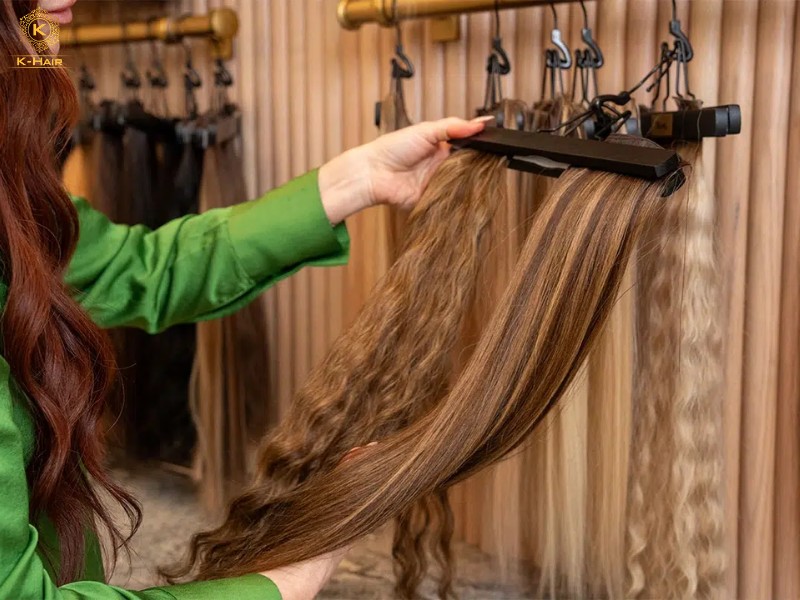
In the market, the most popular hair extension products provided by hair manufacturers are sew-in extensions (hair wefts), clip-ins, tape-ins, keratin bond extensions and I-tip extensions, each are completely distinct with one another, and hence, is often with their own pricing model:
| Hair wefts | Clip-ins | Keratin bond extensions | Tape hair | I-tip hair extensions | |
| Pricing | From $10 to $80/piece, depending on the lengths, and density level | From $25 to $123/piece, depending on the lengths, and density level | From $25 to $115, depending on the lengths, and density level | From $20 to $117, depending on the lengths, and density level | From $24 to $120, depending on the lengths, and density level |
| Application lifespan | For each application, the average lifespan would be from 1-2 months. Since hair wefts are highly reusable – the total longevity of the hair extension would be from 2-3 years | Unlike other hair extensions, clip-ins are to be used on the daily – put on in the morning and take off at night.
→ Total longevity: 3-12 months, depending on frequency of use. |
The most long-standing application lifespan: from 3-6 months before needing reinstalling.
→ Total longevity: 6-18 months, the glue at the hair root can be re-attached to reuse again |
For each application, the average lifespan would be from 6-8 weeks before needing replacement.
→ Total longevity: 6-12 months, and the adhesive can also be re-attached to reuse the extension |
For each application, the average lifespan would be from 2-4 months.
→ Total longevity: 6-12 months, and completely reusable |
| Application method | Professional application only. | Extremely user-friendly → can be applied without needing professional help | Professional application only. | Professional application recommended.
However, can still be done without needing professional help |
Professional application only. |
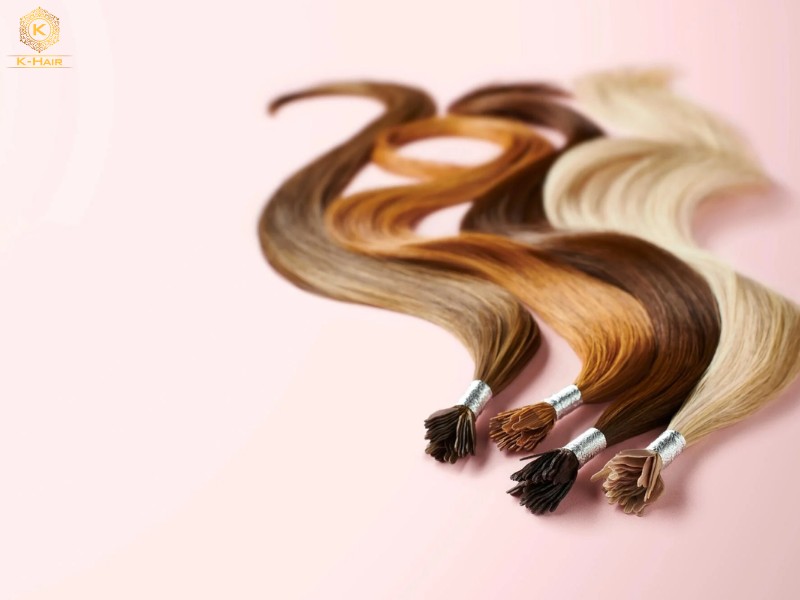
2. Characteristics & Different Types of Hair Extensions
To answer the question “How much are the hair extensions?” – it is crucial that we acknowledge that different types of hair extensions would come with their distinct features and pricing range. Indeed, in order to adapt to the ever-changing trends and varied hair preferences from many hair buyers in the market, manufacturers have introduced numerous hair extension types to the market to better cater to such a diverse industry and customer base. Each of these hair extension types tends to come with a unique hair use, characteristic and application method, therefore, their respective pricing model would vary greatly from one to another.
2.1. Hair wefts (Sew-in hair extensions)
Hair wefts, or also known as hair bundles, are among the most popular types of hair extensions in the market, particularly among the African American hair lover community. By definition, hair wefts consist of hair strands of similar lengths, sewn together into one consecutive strip and folded into a bundle – hence the name.
In the market, hair wefts or hair bundles are highly sought-after, mainly due to the fact that this specific hair extension type is the main ingredient used in the sew-in application method widely-used by many women of color. In this method, the hairstylist will braid their clients’ natural hair into cornrows, used as sewing tracks for the hair wefts to be woven on – creating a natural, seamless hair appeal, while maintaining protection for the hair underneath.
Compared to other types of hair extensions, hair wefts and its application result are among the most long-lasting out there – lasting up to 1-2 months before needing reinstallation. Furthermore, as the hair is directly sewn into the user’s hair using braids or cornrows, hair wefts are provided with a firmer grip, and hence, are much more durable and unbudgeable by external factors such as hair oil or sweat – making the option extremely suitable for hair users with an active, sporty lifestyle.
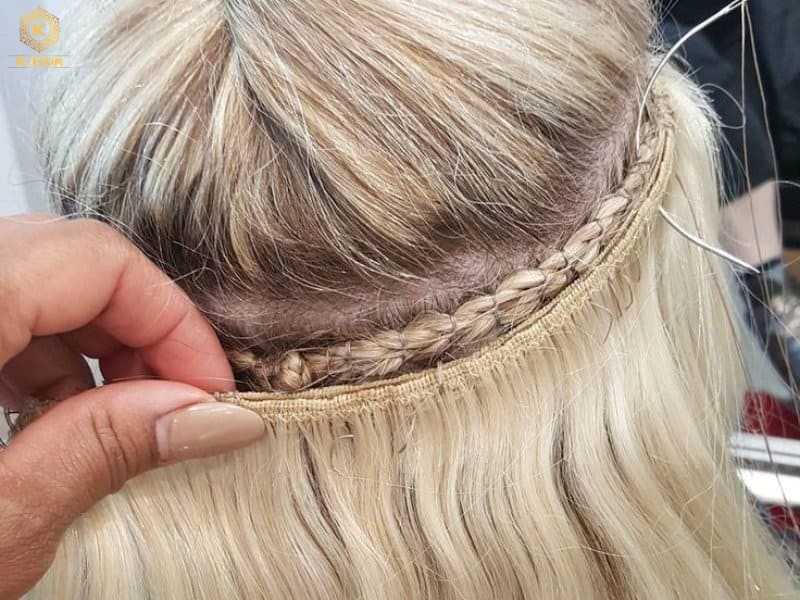
Comparing pricing and availability, and answering “how much are the hair extensions?” – it is notable to say that hair wefts are one of the most inexpensive and affordable hair extensions provided by hair manufacturers. The reasons for such a pricing model can be traced back to the simple technology needed for its production, as well as its wide availability in the industry.
2.2. Clip-ins
Among the available hair enhancement products in the market, clip-ins are one of the most user-friendly and popular hair options taking up to 40% of the total hair extension revenue – the perfect solution for all hair problems of modern men and women. Clip-ins can be made by cutting hair wefts into smaller pieces and attaching small, seamless hair clips at the root – when working with a hair manufacturer, you can actually decide the length and width of this product, as well as how many hair clips will be integrated alongside the root of the hair.
Clip-ins are the easiest and most convenient to be attached to your hair. In fact, the application can be done at the comfort of your own home – by simply using the small hair clips to attach the piece alongside the natural flow of the hair strands. The uninstallation is even simpler – the wearer would trace along the clip-in to feel the hair clip, and detach them from their hair → the entire process would only take several minutes – extremely convenient and time-saving, especially for hair users with a busy lifestyle or a tight schedule and wish to avoid lengthy hair extension application and maintenance.
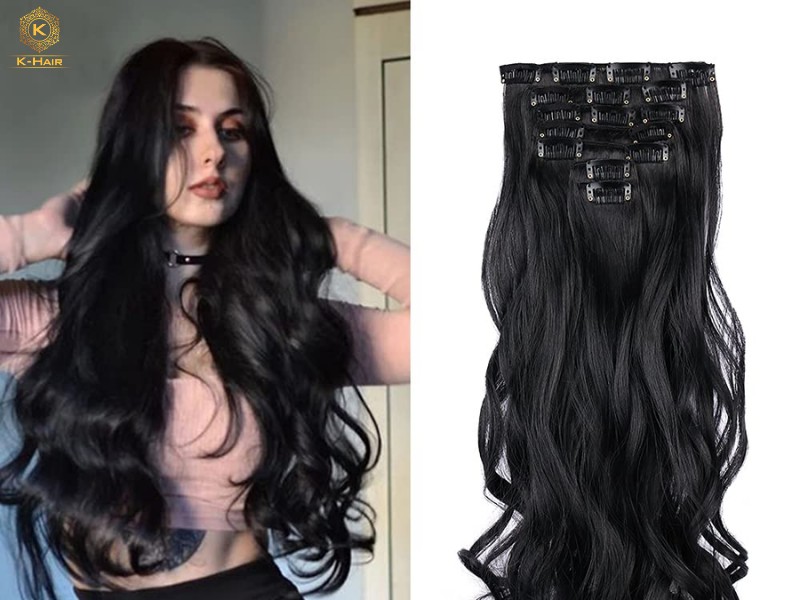
Clip-ins, when bought directly from the source, tend to have a slightly higher pricing than hair wefts, due to the extra labour needed to add the track – in which the hair clips will be placed. However, once purchased, clip-ins can deliver instant volume and length to the user’s natural hair throughout the day, without demanding professional application or lengthy salon visits.
2.3. Keratin bond extensions (K-tips)
One of the most advanced hair extension types on the market is definitely the Keratin bond extensions, and therefore, when discussing “How much are the hair extensions?” – this particular product line often positions itself at a higher pricing range compared to others.
Keratin bond extension does not come in small wefts, rather, hair manufacturers often sell them in batches of 25-50 pieces, with each of the pieces weighing from 15-20gr only – that’s how lightweight they are. Upon each piece, there would be one end where the hair will be completely bonded with keratin. This keratin head will serve as an attachment point for the hair extension and the user’s natural hair later on – as the keratin can be melted and glued directly into the original hair → creating a natural-looking, seamless blend without looking awkward or bumpy. Due to their dependence on professional tools and assistance, keratin bond extensions or K-tips are strictly used by salon professionals only, rather than being an user-friendly option like the Clip-ins.
Nowadays, to better cater to the diverse hair needs in the market, factories have diversified the available types of keratin bond extensions, such as U-tip, V-tip, Flat-tip,… all distinguished by the shape of their keratin heads. Whatever the type, most Keratin bond extensions tend to fall to a higher pricing range – due to the quality of their adhesive, as well as the advanced application that follows.
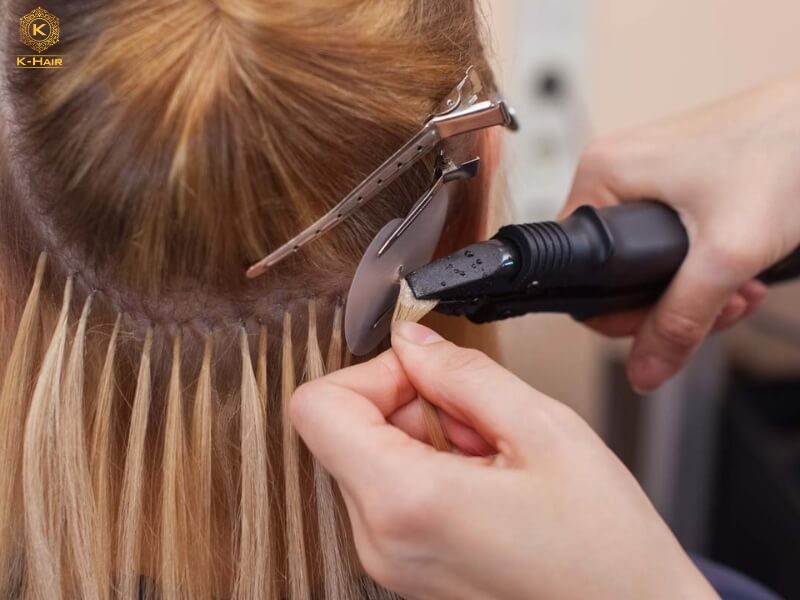
2.4. Tape-ins
Another widely-available type of hair extension in the market are the tape-ins, one of the most natural-looking, seamless and elegant extension options – widely favoured by many buyers across the globe.
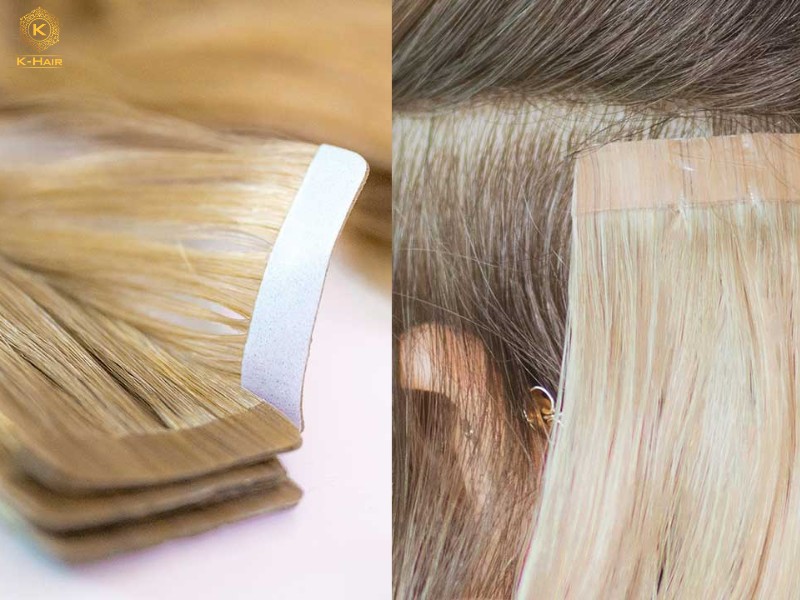
Tape-ins, much like clip-ins, tend to come in small, flat wefts, with a tiny, undetectable strip of double-sided tape attached at the root of the weft. Once the protection seal is taken off, the strip of adhesive can be glued directly into the surface of the user’s hair – lying flat against the natural direction of the hair strands and against the scalp base → seamlessly blend into the natural hair volume of the original hair look without causing potential bumpiness. One great thing about tape-ins is that, although professional application is recommended, if the hair users wish to install the piece by themselves, it is still completely doable. In fact, as long as they acquire the necessary and simple tools such as the parting comb, hair clips, to separate the hair and reveal the natural hairline, installing tape-ins would be a piece of cake! On top of that, the adhesive features in the root of the tape-ins are totally replaceable – clients can order stylists to replace the tape once it shows signs of deterioration → making the piece a more sustainable and a worthy investment compared to the other hair extension options.
Considering popularity, Tape-ins are in second place, accounting for as much as 36% of the total hair extension revenue in 2024, according to Fortune Business Insight – showcasing its wide customer base and market presence across the globe. This popularity, combined with the desirable effect of its installation, when it comes to “How much are the hair extensions?” for tape-ins, they often sit at a middle-higher pricing range on the market.
2.5. I-tip (Nanoring/Microbead) hair extensions
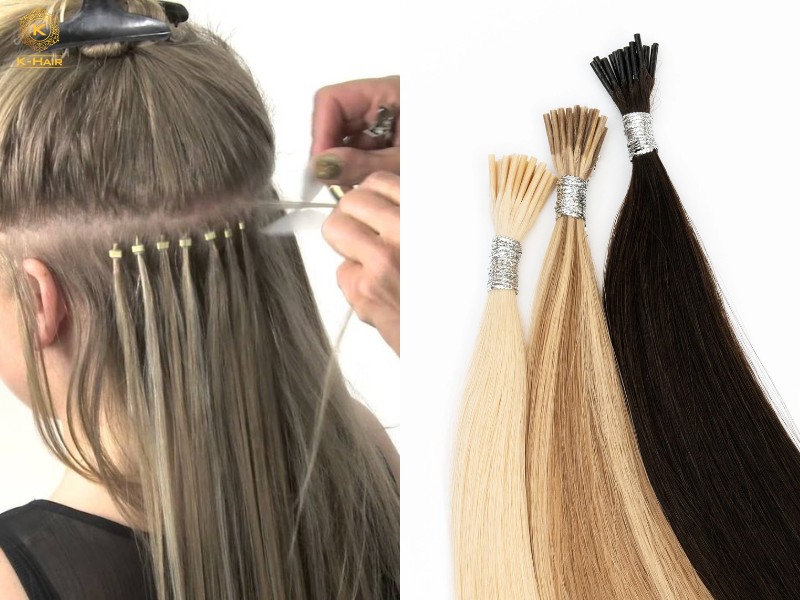
I-tip hair extensions, or also known as the microbeads, or nano ring hair extensions, are considered the advanced, improved and non-damaging version of the Keratin bond options – reserved specifically for hair clients wanting nothing to do with heat or adhesive application.
The name I-tip is mostly rooted from the shape of its head, an I-shape, cylinder figure with a nanoring or a small, plastic bead attached at the head. And much like the keratin bond extensions, this head is also completely sealed and hardened with keratin in order to simply keep the hair strands from falling out and provide a more secure grip once installed. However, the advanced feature of the I-tip compared to the keratin bond or tape in option is that, instead of depending on high heat from tools or adhesive, this particular extension type will be crocheted or tied tightly to small section of the user’s hair using the featured nanoring and the beads → creating a completely non-damaging application method suitable for those with weak, damaged or fragile natural hair. As the hair is only to be attached to the person’s head, instead of completely covering or overlapping their original hair look, I-tip hair extensions can provide a natural-looking volume increase to the appearance, elevating without replacing the user’s natural beauty.
I-tip hair extensions is rather a newly introduced hair extension option, however, it still managed to secure a considerable popularity in the market, mainly among natural beauty lovers and Caucasian hair buyers influenced by the Western beauty standards. Therefore, due to the signature feature and income level of these customer bases, as well as the advanced technology and dedication needed to produce it, I-tip hair extensions could be placed at the same pricing range, or in some cases – higher than the classic keratin bond extensions.
3. Factors affecting the price
Hair buyers, either you are a business owner looking to stock your inventory for the next sales rush, or you are an end-user looking for hair to use on yourself, the key thing to bear in mind is that, when it comes to how much are the hair extensions, the pricing will always vary! In reality, the pricing ranges for hair extensions listed above are only for reference, as in the market, there are numerous factors that can have their effect on the final price of the product you are aiming for. Hence, before starting your vendor hunt or placing an order at any manufacturers out there, it is crucial for all buyers to be aware of some factors relating to your product that can potentially cause the price to go higher or lower, and make changes in your buying plan accordingly.
3.1. Hair types
The type, or grade, quality of the hair has a lot to do with the hair piece’s final pricing, in fact, it is one of the defining factors – the better and higher the hair quality is, the more likely it is to perform well and last longer, the more expensive it is going to be. Nowadays, in the market, to target different customer bases with different spending power, as well as to diversify their market, many factories have introduced various types of hair into the market, each with their own features and pricing range:
3.1.1. Virgin hair
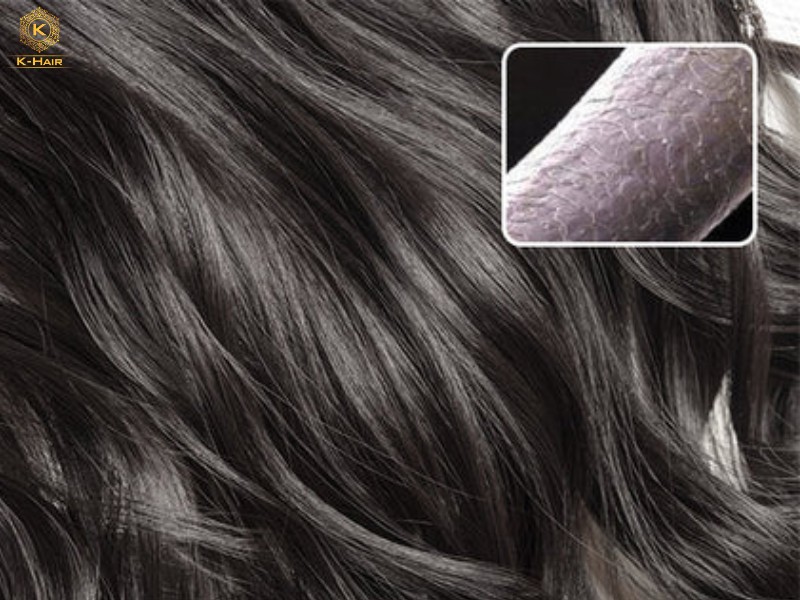
Being the highest hair quality in the market, Virgin hair often comes at a higher pricing range compared to the rest. In fact, this has a lot to do with its sourcing practice – Virgin hair must be collected from one healthy donor only, with no chemical processing involved prior and during the sourcing and production. Therefore, in terms of raw hair source, this hair type is not as widely available as other options – contributing to its premium pricing range. On top of that, Virgin hair (or also known as Raw hair in some markets) is extremely well-known for its high, supreme quality. Being the most durable, versatile and physically appealing hair option, Virgin hair is in favour of numerous hair buyers out there, and with such rising demands, no wonder why it is the most expensive hair in the market!
3.1.2. Remy hair
Compared to Virgin hair, Remy hair is a more economical option. In fact, instead of collecting and using hair from one person’s head only, hair collectors often source Remy hair from 2-3 healthy donors, whose hair must also be completely clean from any prior chemical involvement. By changing their sourcing approach, manufacturers have introduced a more widely-available hair type with an abundant raw material source. Because of this availability, Remy hair tends to position itself at a lower pricing range on the market – making it the more accessible and budget-friendly hair option. However, due to being collected from several donors, Remy hair is also slightly more prone to tangling and shedding, making it harder to maintain than the classic Virgin hair – a feature that all hair buyers should note when shopping for hair extensions.
3.1.3. Non-remy hair
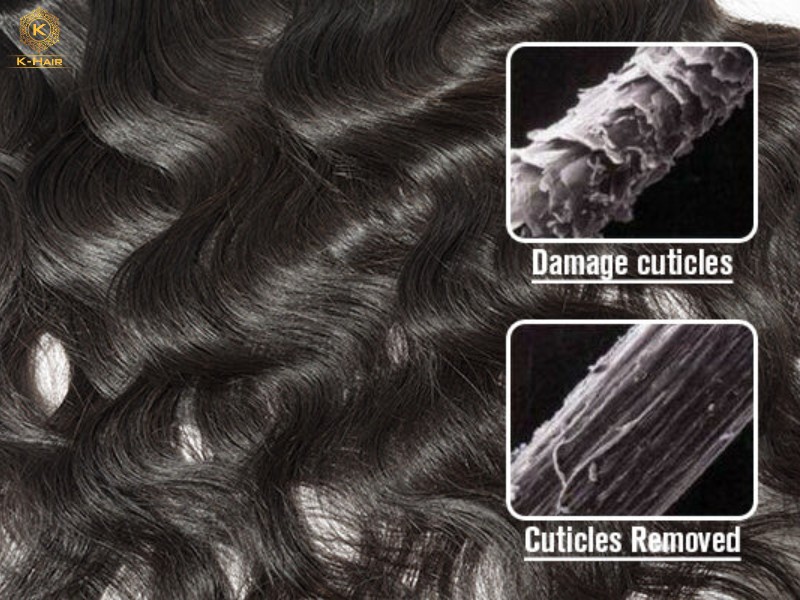
Being the lowest grade of human hair – Non-remy hair is the hair type to be avoided at all cost! Unlike Remy or Virgin hair – with clear and trustable sourcing method, Non-remy hair is strictly collected from thrown-away, messed up and tangled hair from salon floor, trash, or even public bathroom. After collecting, the hair will be washed, sun-dried,combed out and detangled, and treated with chemicals to make it appear more attractive and healthy to normal eyes. Due to this particular sourcing method, Non-remy hair enjoys a rich, abundant raw material source which ultimately leads to its lower pricing range. However, after a short-term use, Non-remy hair is quick to tangle and take damage, especially once the coating wears off – making it unsuitable for long-term, versatile hair use.
3.1.4. Synthetic hair
Made with plastic, chemical-based fiber, Synthetic hair is the most widely-available and affordable hair line in the market. To make Synthetic hair, manufacturers only have to use the available, cheap and abundant materials such as acrylic, nylon and polyesters,… material that can be found easily in the market. Furthermore, throughout the entire production, less labour is required for Synthetic hair than normal authentic human hair → making it as inexpensive and accessible as it is. Despite having brittle, coarse hair strands, modern Synthetic hair has been made to better copy the natural appeal of human hair, as well as be able to produce unique, exotic colors that cannot be seen in human hair, such as neon green, hot pink, rainbow,…
3.2. Hair length
The length of the extension is also another crucial factor in determining the overall hair price, as well as providing the answer to “ how much are the hair extensions”.
One key piece of information that all hair buyers, either inexperienced or experienced, can notice while shopping hair in the market is that, nowadays, it is getting harder and harder to find long, lustrous hair extensions. In fact, many long lengths such as 38” or 40” are becoming extremely rare, with other longer lengths such as the 48”, 50” seem to disappear almost completely from the human hair market. The reasons are simple. With the rapid growth of globalization and modernization, women are becoming more and more influenced by changes in the global image of beauty – more prone to follow globalized hair trends to keep up with the globalized beauty standards, such as bleaching, cutting and dyeing their hair. This change in the perception of beauty also affects the hair industry, making it harder and harder for hair collectors to get access to high-quality, long and lustrous raw hair sources needed for production.
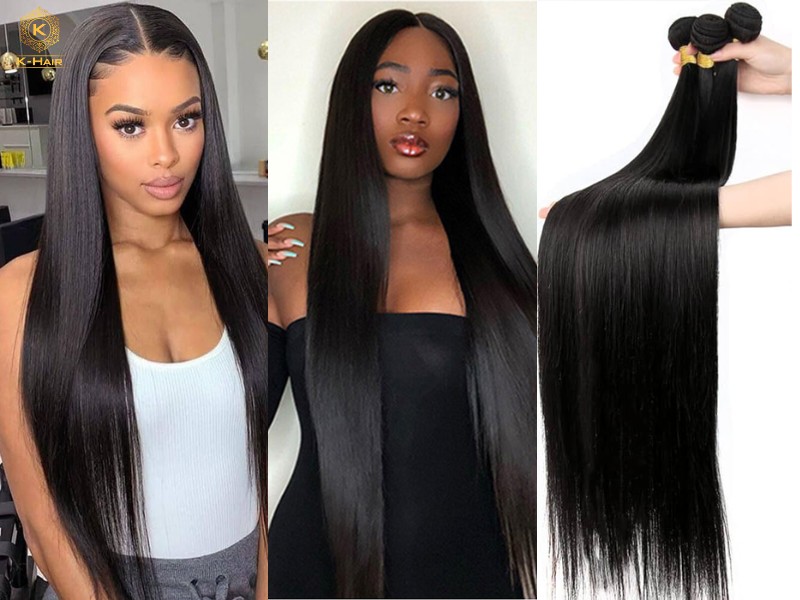
Therefore, for longer hair extensions, the harder it is for the manufacturers to source and produce, and ultimately, the more expensive the unit price will turn out to be. For example, the overall pricing for a standard 36” straight hair weft would be much more costly and is often of lower stock than the cheap and widely available 8” or 10” hair.
3.3. Hair density
The hair market rarely has a fixed and consistent set of requirements for the products provided, rather, for different hair buyers, the respective preferences for hair appeal, quality and pricing range would vary greatly, especially preferences for the hair’s volume and thickness. Therefore, as a response to this, hair manufacturers have introduced three main hair density levels – or in other words, the percentage of long hair strands included in the bundles, to the market, each with a distinct pricing range:
3.3.1. Single Drawn hair
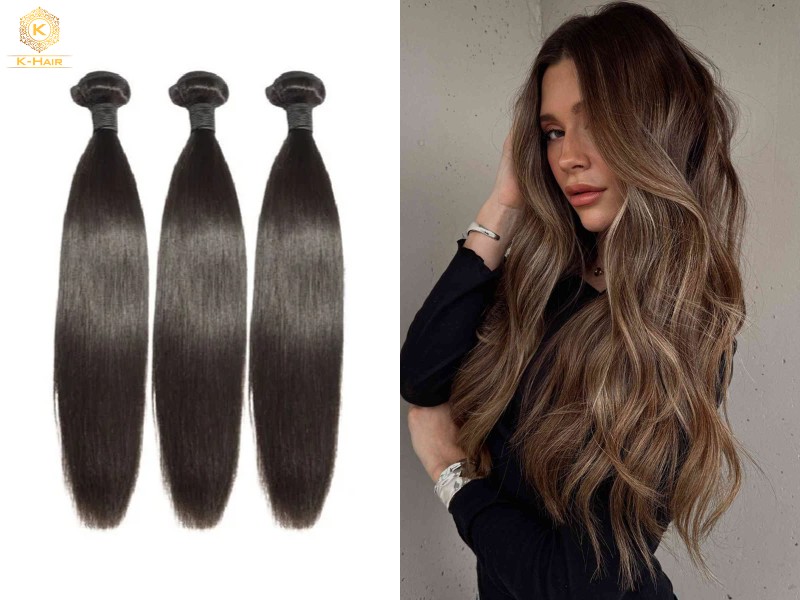
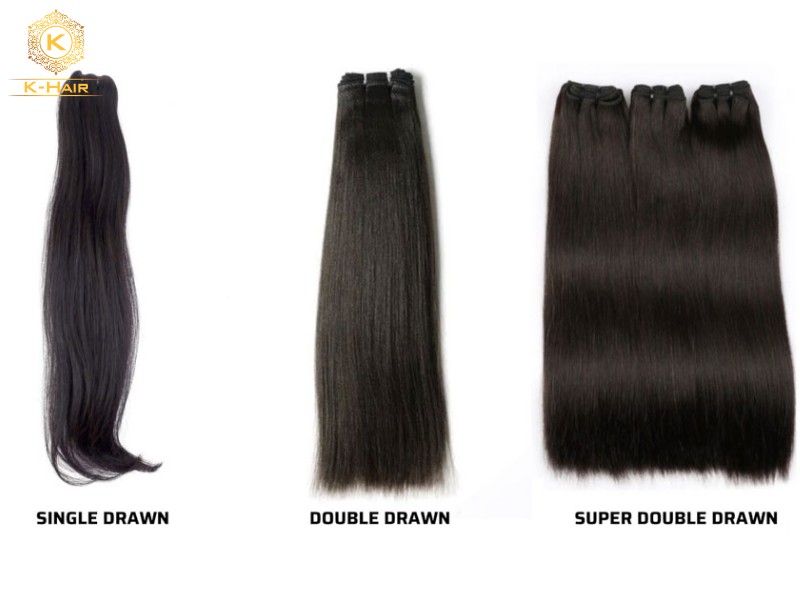
With 40-45% of long strands included in the bundles, Single Drawn is considered the standard density level, as well as the most natural-looking option among the three, as the percentage can best mimic the natural hair growth patterns of our own hair. Hence, for customers wanting a natural, seamless hair extension blend into their original hair, or aiming for a layered and textured look, Single Drawn hair is also the perfect candidate. Pricing-wise, this particular density level is also the most inexpensive and economical choice, as it requires less labour and effort in sorting and filtering out the short strands → making it as economical as it is.
3.3.2. Double Drawn hair
With 60-65% of long strands included in the bundles, Double Drawn hair is the safest density option, as it combines both the natural, layered look of the Single Drawn, as well as the luxurious and voluminous appeal of the Super Double Drawn. For customers hesitant to choose between Single Drawn and Super Double Drawn, or for clients wanting more volume and luxurious feel to their hair, without looking too dramatic or extra, Double Drawn hair can be the perfect options. However, please bear in mind that, because it contains more long hair strands, during production, more effort and sorting steps are required to sort out the precise percentage of short strands and deliver the desired final look. Hence, it would be quite obvious to see Double Drawn hair be placed at a slightly higher pricing range compared to Single Dawn hair.
3.3.3. Super Double Drawn hair
With 80-85% of long strands included in the extensions, obviously Super Double Drawn hair would be the most expensive one out of the three. In fact, during production, extensive and complex sorting practices, as well as more quality control are necessary to sort out a large amount of short hair strands, and make sure that the bundle is in that exact density level, with little space for inaccuracies – hence, the higher price. However, in exchange to that, hair buyers purchasing Super Double Drawn hair can benefit from having the thickest, most voluminous and lustrous hair extension ever → adding a sense of expensive, luxurious appeal to the final look, making the hair more eye-catching and dramatic.
3.4. Color & Customization
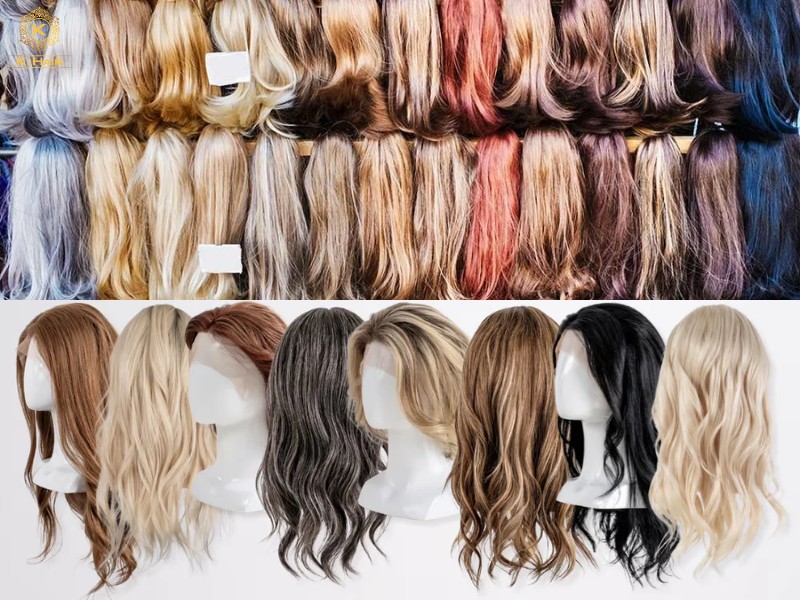
Unlike buying from a distributor, when working with a hair manufacturer, clients are offered with more freedom in deciding the final look of the hair products they are ordering. This is called customization, a special and comprehensive service that is only available in hair factories – those that are directly involved in hair production. During the inquiring stage, hair buyers are more than welcome to express their preferences regarding the colors, textures, length and density of the product – having more power in the making process of the extensions, as well as making sure that the final hair extensions are perfectly aligned with their personal interest and their target audience’s preferences.
This service also comes with a price. Indeed, to alter and personalize the product to fit a customer’s vision, more material, labour and effort are poured into the customization. Therefore, hair buyers ordering customized products might expect to pay a slightly higher amount – as the expense covers both the additional materials and labour costs of the process.
For example, in K-Hair, a Vietnamese hair manufacturer, the average texture customization expense for one hair bundle would be from $3-$5/piece, and similarly, the cost for coloring customization would be from $4-$7/piece.
4. How does hair origin affect price?
The next step of researching “How much are the hair extensions?” are to get to know some popular and possible international hair sources in the market. Instead of sourcing your inventory from your local hair distributors and willing to pay a higher amount for the same (or even lesser) quality, hair buyers can consider doing the alternative option – collecting hair from the direct manufacturers themselves. Indeed, as previously mentioned, thanks to the improvement made in international logistic networks and cross-border trades, international deliveries have been made much more convenient and effortless than in the past. As buyers, you yourself can order directly from the factories too, cutting down extra fees and becoming less reliant on local wholesale suppliers.
4.1. Hair Origin
Currently in the world there are 3 countries specializing in exporting human hair extensions including:
4.1. Vietnamese hair manufacturers
Reasonable, factory-direct pricing:
- Used to be raw hair suppliers for Chinese merchants, Vietnamese hair vendors have had their breakthrough – becoming the manufacturers themselves → able to provide factory-direct, wholesale-worthy pricing range for their customers.
- Rich domestic source: the local women of minorities residing in the North of Vietnam offer high-quality, abundant source of raw hair material needed for production → domestically source their hair, and produce extensions in larger quantities.
→ Offering reasonably-priced and authentic hair products for global consumption.
- Vietnamese hair has always been referred to as The Finest – soft, silky, with thick and lustrous hair strands – the most physically appealing hair origin in the market
- In terms of performance: Vietnamese hair can last for years without losing its shine and durability, can allow multiple styling and bleaching without breakage or damage.
- High diversity: with more than 30 years in the field, Vietnamese hair vendors have been able to adapt to the changes in the market → diversifying their product range and texture, color options.

4.2. Chinese hair manufacturers
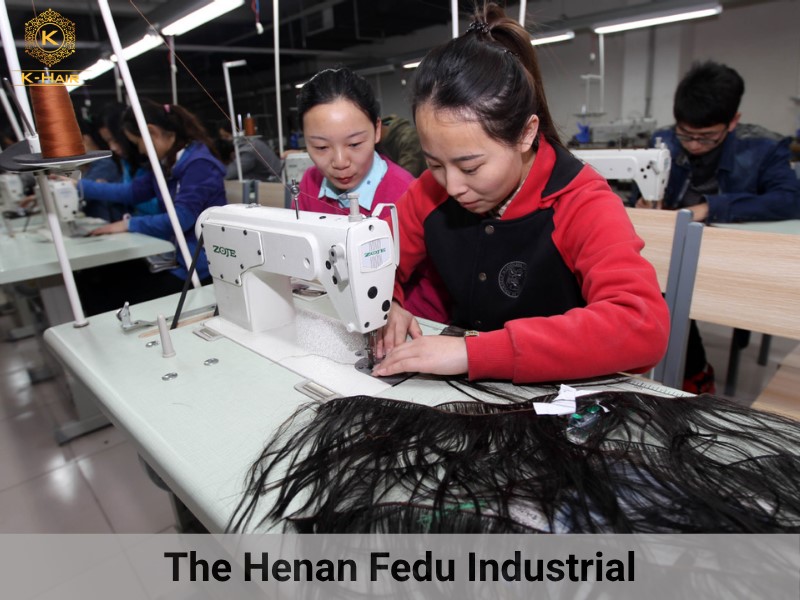
Low hair pricing, due to: China is home to the biggest and most advanced hair industry in the market (contributing ¾ of the global market) – applying and innovating their own production chain → mass-producing their own hair, which leads to the competitive pricing.
However, some notable features of Chinese hair extension might include:
- Mixed hair origin: due to the domestic hair scarcity, most Chinese hair vendors have to outsource their raw materials → leading to inconsistent, mixed quality for different hair batches.
- Diverse product diversity: over the years, Chinese hair vendors have been diversifying their catalogue, combined with their advanced technologies – including both classic and trendy hair textures and colors into their offerings
- Hair collected from external sources → cannot guarantee authenticity or ethical sourcing method for their material.
- One feature of mass-produced hair is that the output is more likely to be of inconsistent quality.
4.3. Indian hair manufacturers
The cheapest hair pricing, since:
- Widely available and abundant domestic hair source – thanks to developing economy and crowded population
- Cheap local labour → support hair production and enhance output volume.
Before being blinded by such cheap pricing, some features of Indian hair might include:
- Threat from unsanitized hair source: while a proportion of Indian hair is collected from Temple, most hair is still sourced from discarded hair collected in trash, bathrooms → raising suspicion in quality and ethics.
- Low diversity: most Indian hair factories function on a small scale, relying mostly on manual labour for production → extremely limited diversity, available only natural, simple textures and natural hair colors.
- Hair quality: Indian hair is thick, durable and naturally curly, however, due to having obsolete technologies, most Indian hair manufacturers have to resort to using chemicals to process and treat the hair → affecting its overall longevity and quality.
4.2. Additional Costs
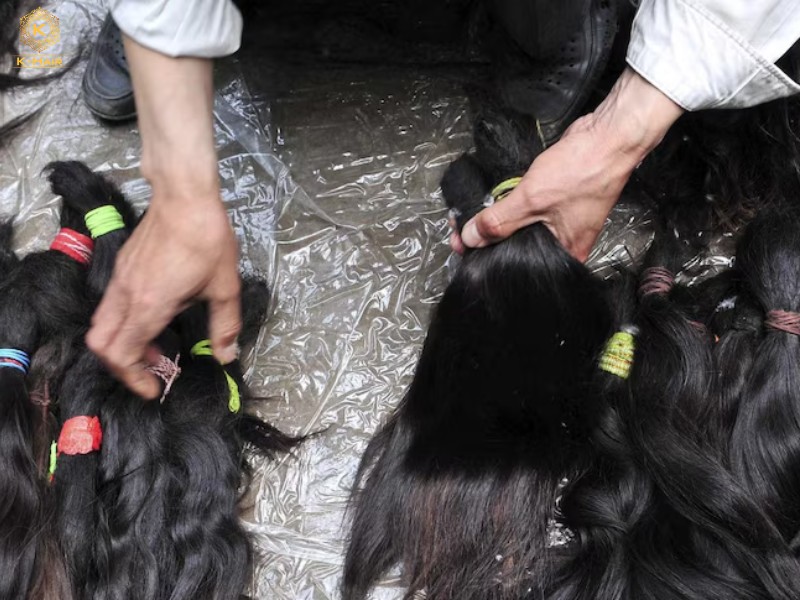
Importing hair from international sources is not as hard as many might assume. However, due to the nature of international trades in overall, for overseas customers buying hair from China, India, or Vietnam, here are some additional costs that must be researched upon and added up to your budget:
- Shipping costs: Because shipping distance and logistics systems vary for different regions, the transportation fees would obviously differ as well. For buyers in the US or European countries, the most common and trusted delivery agencies are FedEx, DHL and UPS. Their shipping fees are usually listed publicly on their official websites, with distinct regional pricing for different shipping destinations. For instance, for a hair parcel weighing under 0.5 kilogram delivering to the US, the shipping fee would be around $42.61. Meanwhile, for African countries, the shipping cost depends almost entirely on the specific agent handling the service. As each agent operates with their own independent rates, hair sellers often inform buyers of the exact fee beforehand, allowing both sides to agree on the most suitable agent in terms of cost and delivery time.
- Import duties: Alongside shipping fees, international orders also come with import taxes and duties. And similar to transportation costs, these charges vary greatly across different importing regions. For this reason, it is strongly recommended that hair buyers research their country or region’s duty requirements in advance, in order to avoid misinformation or potential exploitation from unreliable hair vendors.
4.3. Advices to Verify Your Suppliers
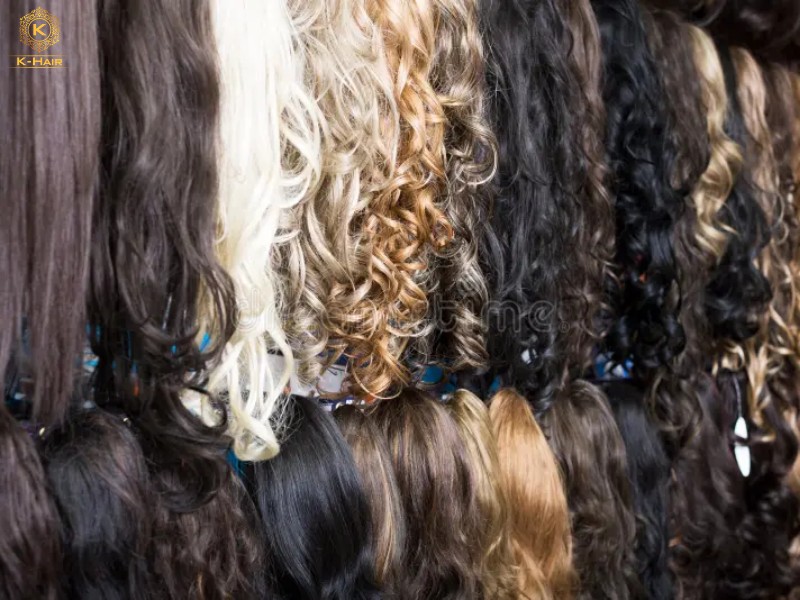
Now that you have learned about how much are the hair extensions from different suppliers in the market, you must have had a favourite option to consider for your next purchase. However, it is also worth noticing that, regardless of what supplier option you will entrust with your order, you should always verify their authenticity before committing to the final payment.
- For example, before inquiring with any specific company, you should start by researching information regarding that supplier’s experience, business registration, as well as their customer reviews and social media presence. Trustworthy hair suppliers should always have a professional brand name that can be searched easily through search engines; a professional website and social media showcasing their products, policies and contact information; as well as positive reviews from their past customers.
- Furthermore, when inquiring, make sure to demand proof to verify the supplier’s hair quality and authenticity – some proof to require your supplier can be: close-up images or videos of the hair, past customer feedback of the same hair line; hair tests,… Or for better and more honest results, you can schedule video calls or actual factory visits – to inspect the hair in person and get to know the person providing the hair.
However, the most effective way to put a supplier’s hair quality to the test is to make sample orders of the hair. In fact, before jumping directly to ordering bulk, hair buyers can place a small quantity first to test the hair authenticity and quality directly once the package arrives. This method is also widely-used by many big buyers from K-Hair, for example, for this sample order, clients would only purchase a safe quantify, like 3 bundles – just as much as the MOQ allows, and decide on the suitability of the hair before placing larger orders in the future.
5. Maintenance & Aftercare Costs
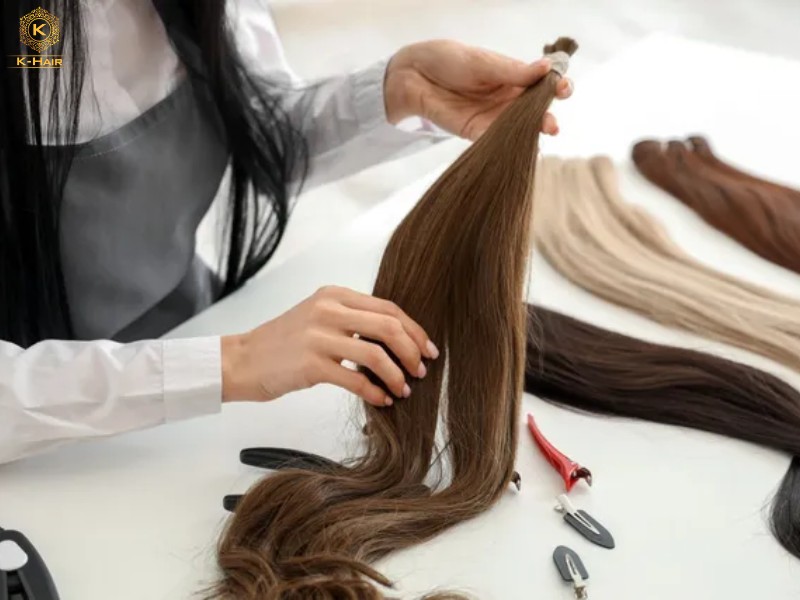
Buying or learning how much are the hair extensions is just surface-level information. In fact, many hair extension types in the market cannot be used as it is, and must be applied and installed by the professionals to achieve the desired final hair effect. Therefore, for these salon-dependent hair extensions, an additional installation cost is much required to be included in the budget. Furthermore, to better preserve and make the most use out of this hair investment, hair buyers would also have to properly maintain and care for it, which also calls for an additional cost covering aftercare products and tools to the purchasing plan.
Read more: Double Drawn hair
5.1. What are the Average costs for Application and Salon Maintenance?
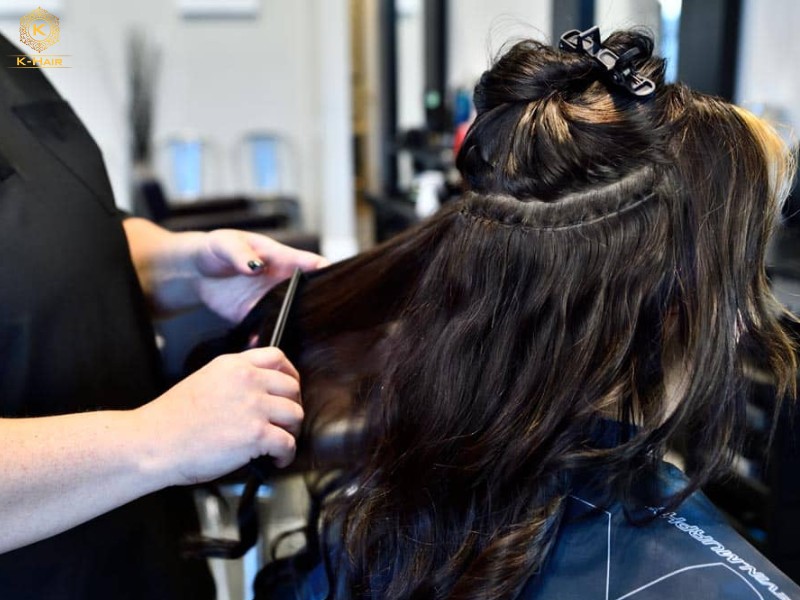
For professional types of hair extensions such as Tape-ins, hair wefts, I-tips and K-tips, hair buyers would also have to pay extra for the hair to be installed onto their natural hair, as well as paying a professional for touch-ups or reinstallation. However, due to the differences in their application method and requirement for expertise, each type of hair extensions would demand different ranges of installation and maintenance cost:
| Average Application Cost (excluding hair) | Maintenance Frequency | Average Maintenance Cost (per session) | |
| Tape-ins | $100 – $300 | Every 6-8 weeks for re-taping or to move up the tape to positions closer to the scalp | $100 – $300 |
| Hair wefts | $150 – $600 | Every 6-8 weeks for tightening or re-installation | $100 – $250 |
| Keratin bond extensions | $300 – $1,000 | Every 3-6 months for reapplication or adjustment → requiring the least salon visits among the four | $100 – $600 |
| I-tip extensions | $200 – $600 | Every 2-4 months for adjustments | $50 – $200 |
5.2. What are the Average Costs for Aftercare Products?
Applying and reinstalling is just the basics. In order to preserve the hair at its healthiest state, as well as to prolong its longevity and make full use out of this investment, hair buyers would also have to learn to maintain and care for extensions, too. However, compared to hair cost, and application cost, aftercare costs are much more affordable and are often more up-front, rather than demanding frequent payments:
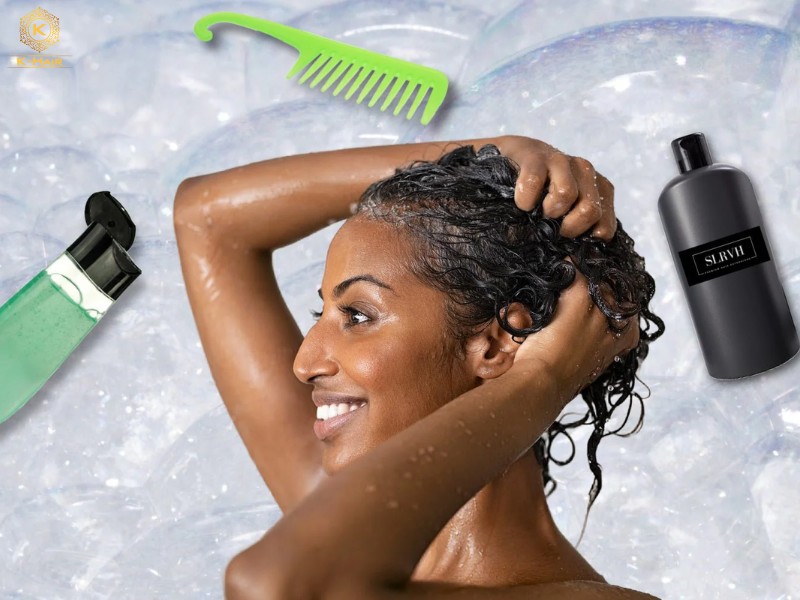
- Buying hair products: washing and conditioning are crucial parts of hair extensions maintenance, however, not every hair product in the market is friendly for your hair or your extensions. In fact, shampoos, conditioners, oils or hair masks with sulfate, silicone,… are unsuitable for hair extension care, mainly because the sulfate included in the product can easily cause dehydration, dryness with results to breakage, while silicon products are extremely heavy and can weight down the extensions, loosen its grip and cause product build-up. Hence, when going shopping for hair products, you should only have your eyes on natural, extension-safe options, with no inclusion of sulfate or silicone. These products mostly contain natural, plant-base ingredients, and their pricing falls between $10-$50, depending on the brand and the materials included.
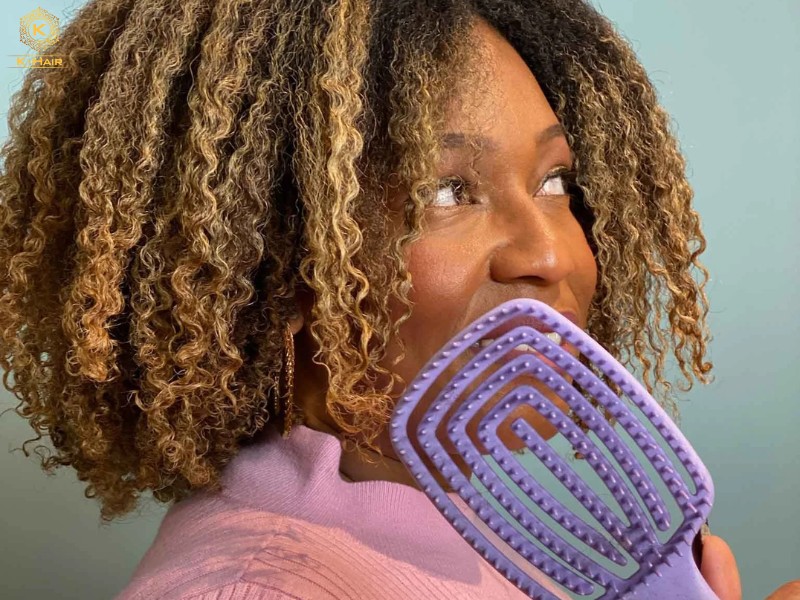
- Detangling tools and spray: one of the major problems for all hair extension users out there is tangling and shedding hair, especially for curly hair extension where frizziness is extremely common. Indeed, besides the basic steps of conditioning and using hair masks to provide moisture to help the hair strands push back dehydration – the number one culprit of tangling hair, customers would also need to pay more attention to the actual detangling process. As hair extensions are only enhancement items and are attached to our own hair, make sure to use light, gentle force when combing it, to set the extension up for detangling, you can also use conditioned water to spray on top to soften the strands, and use a wide-tooth, or a specialized comb to stroke the hair from the ends upward. Buying a detangling tool – a comb is easy and inexpensive, from $10-30 and you can get yourself a decent one that can be used for a long time.
- Heat protectant: if you are one to style your hair frequently, the advice would simply be “Don’t do that.” – as the constant heat that comes with straightening or curling your hair would not only cause more dryness and damage to the protective cuticle of your human hair extensions, but also loosen the grip at the attachment point, especially for sew-in hair extensions. However, if you still insist on styling your hair extensions, we would highly recommend that you prep the hair with heat protectant first, to minimize the damage that comes with the styling process. In the market, there are numerous options of these products for you to select, and their price range often falls between $10-40/item – quite affordable and is a must-have for clients wanting to switch styles regularly.
- Other types of products: besides the aforementioned, other products such as pillow cases – you heard that right – are also a necessity for hair extension users. Wearing hair extensions to bed can subject the hair piece to more friction from regular pillow cases → causing the hair to become frizzy, fluffy and out of control, with more flyout, tangled, messed up strands. To reduce friction between the hair strands and your pillow case, we would suggest you use frictionless bedding materials such as satin or silk – which could cost you $10-100, depending on the material. However, switching to these soft pillowcases will soon prove itself as a worthy investment, as it provides both the perfect amount of friction, but also offers you more comfort and satisfaction.
6. K-Hair: Best Vietnamese hair factory out there!
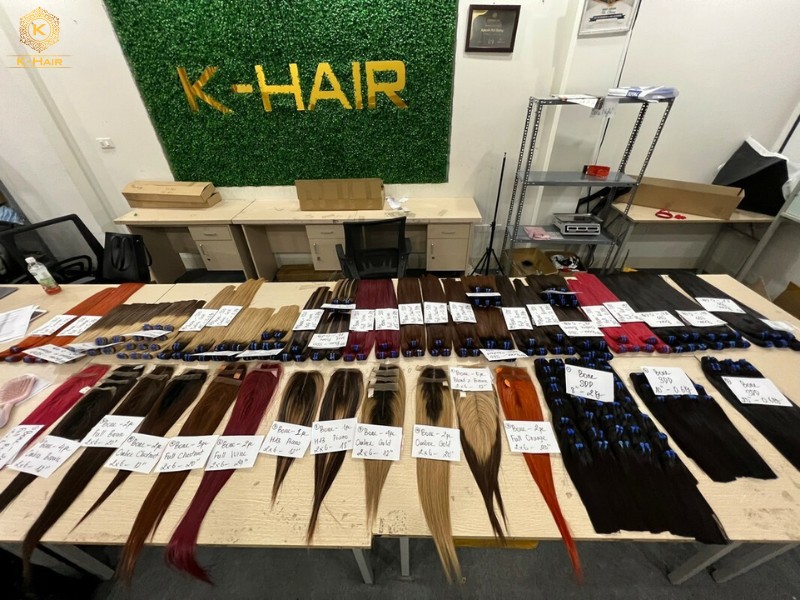
After figuring out how much are the hair extensions, the next thing to look into is the actual suppliers, and among all the options out there, K-Hair is one of the few names that really stand out. They’re known for their product quality, their transparency, and their dedicated support for their customers from start to finish. For any hair buyer wanting good-quality hair without the crazy price tag, this is the vendor I would personally point you to. Their long presence in the market, plus their reputation across so many regions, already says a lot about how reliable they are and how solid their production capacity is.
- With more than 30 years in the hair industry, K-Hair has basically established themselves as one of Vietnam’s most trusted and long-running hair factories. They’re well-known in the US, Europe, Africa, Latin America – pretty much everywhere. They’re very consistent with their standards, and all of their products are made from 100% real, ethically sourced Vietnamese human hair, which is something not every supplier can confidently say.
- When it comes to quality, K-Hair’s hair is often praised for exactly what Vietnamese hair is known for: the silky feel, the durability, the strength. The hair holds up extremely well under bleaching, colouring, and regular heat styling, while still keeping its original smoothness and softness. Their catalogue is also quite wide, from wefts, wigs, closures to customized pieces, so it’s easy for businesses to find what suits their target customers without stressing about unstable stock or uneven quality.
- Their commitment to customer satisfaction is also worth mentioning. Every order goes through several careful checks, with constant updates and clear communication along the way. Payment options are flexible, shipping is arranged quickly, and nothing feels rushed or uncertain. It’s a very convenient process overall, without compromising the hair quality.
- Their customer service is another thing that makes up their reputation. Throughout the buying process, the sales team stays supportive, responsive and straightforward, answering questions and updating clients from production to delivery. After-sales support is just as good, making every customer feel looked after even after the hair arrives.
- For new buyers, they even allow a 70% deposit, which is quite rare in this industry. It shows that they’re confident in their work and genuinely want to build long-term relationships instead of one-time transactions.
So, to wrap it up, if you’re looking for a Vietnamese hair factory that offers authenticity, reliability and fast, professional service, K-Hair is honestly one of the strongest options. Their experience, reputation and the way they treat their customers make them not just a supplier, but a dependable partner for long-term business growth.
Contact For More Information:
- Website: https://khairvn.com/
- Address: 10A, 171 Nguyen Ngoc Vu, Yen Hoa, Hanoi, Vietnam
- Phone: +8492 633 2545 (WhatsApp)
- Email: [email protected]
- Facebook: https://www.facebook.com/KHairFactoryVN/
- Whatsapp: +8492 633 2545
>>Check out this video reviews of K-Hair’s quality:
Raw hair vietnam reviews: 3 Nigerian girls bought Vietnam hair
7. Conclusion
With the information provided in this article, we hope that we have managed to assist young women in the hair industry with the overall information, tips, and most importantly, a thorough description about how much are the hair extensions. Navigating through the complex hair industry requires long-term commitment and support from trustworthy partners, we proudly present ourselves not only as a trusted hair expert, but also a supportive friend who will always have your back in this somewhat overwhelming market.