Ever wondered why your hair instantly drinks up water but dries out seconds later, or why your favorite deep conditioner feels like it just sits on top of your strands? Porous hair is a specific hair type characterized by its ability, or lack thereof, to easily absorb and retain moisture, oils, and styling products. If you are constantly battling dry, frizzy locks or struggling to get your hairstyles to hold, understanding what is porous hair is the ultimate first step to completely transforming your hair care routine.
Readers, no need to search far and wide, we have all the answers you need right here in this article, with knowledge about hair porosity grades, hair tests, as well as maintenance tips for each type: Low, Medium and High Porosity.
1. What is porous hair?
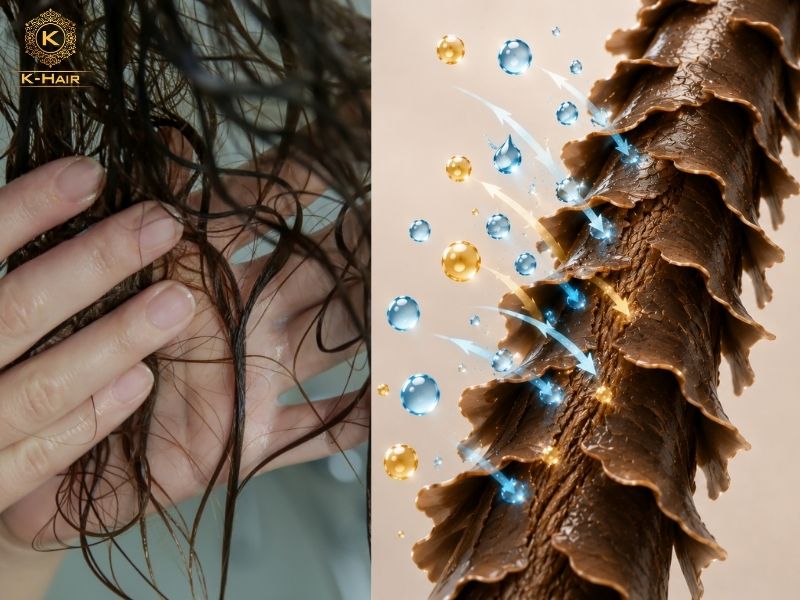
The name “porosity” which is rooted from “pore”. It is also an indicator representing how easily water can penetrate into the hair strands. Now, think of your hair shaft like a pinecone, covered in tiny, overlapping protective shingles called the cuticle. When people talk about “porous hair”, they are usually referring to high porosity hair. This means those cuticle shingles are lifted, torn, or widely spaced apart rather than lying flat. Because the protective barrier is wide open, water, oils, and hair products pass straight into the core of the hair incredibly fast. This makes the moisture escape just as quickly, leaving the hair chronically dry and prone to damage.
So, to answer the question “What is porous hair?” – the answer is: porous hair is hair that allows substances such as water, nutrients and moisture to penetrate and leak out easily.
2. Porous hair types
Learning the basic information and definition of hair porosity and their types is not enough to answer the question “What is porous hair?”. In fact, the next big step is to delve deeper into different types of hair porosity and identify for yourself what types your own hair belongs to.
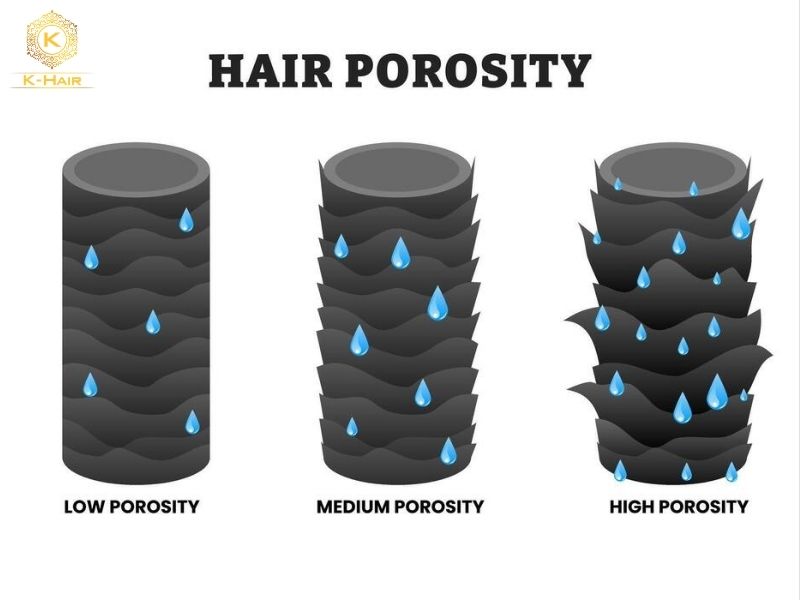
In fact, the outer cuticle layer is the defining factor that decides on the hair porosity – the more gaps and openings the cuticle layers have, the more porous the hair becomes. Hence, we can divide hair porosity into 3 three categories:
2.1. Low porosity hair
Low porosity hair is distinct by its completely closed and tightly pressed against one another cuticle scale, allowing only little water, vapor and nutrients to escape and penetrate into the inner hair strand layers. Therefore, low porosity hair tends to take longer to absorb nutrients and valuable moisture in conditioners and other hair products, or even in some cases, it would remain extremely resistant toward these external substances, as well as other hair treatment and styling, and more prone to gather build-up, oil,…
Key characteristics: Your hair resists water. When you step into the shower, water droplets roll off your hair strands before finally soaking in. Products tend to sit on top of the hair rather than absorbing, leading to rapid product buildup. However, once moisture gets inside, it stays locked in for a long time.
2.2. Medium (Normal) porosity hair
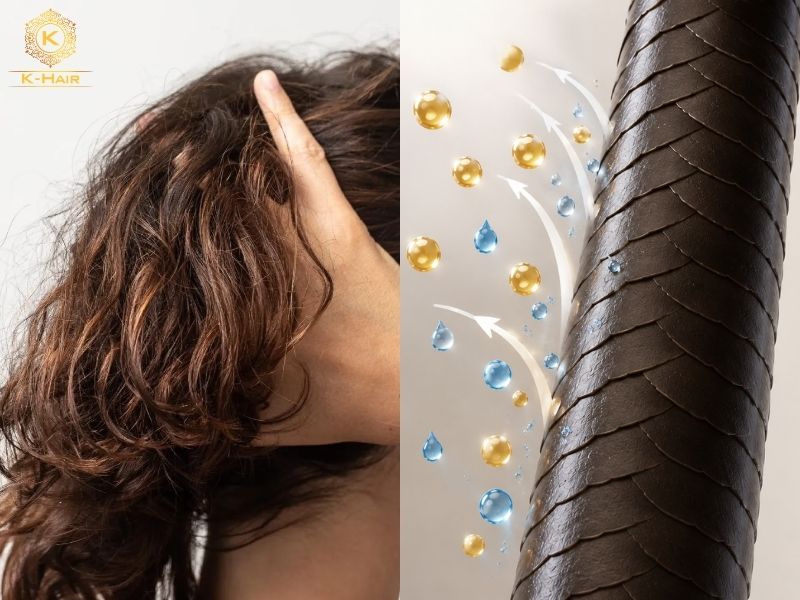
Unlike the Low porosity hair, this hair type features more open or slightly open cuticle scales, rather than consisting of only closed, tightly shut cuticles, allowing more space for the nutrients and moisture to penetrate through the outer layer and make way through the cortex.
In fact, according to Rodney Dawber MD – a professional cosmetic chemist – for normal or medium porosity hair, the hair is able to absorb 75% of the total amount of substance within the span of 4 minutes. Hence, during maintenance, Medium porosity hair can deliver better results, without demanding extensive effort and time like the other two: easier to absorb nutrients and moisture, without letting them slip through completely like the High porosity, easier to maintain and care for throughout hair use.
Key characteristics: It easily absorbs moisture, holds onto it for a long time, and responds wonderfully to styling, hair dye, and treatments. It takes a normal amount of time to air-dry.
2.3. High porosity hair
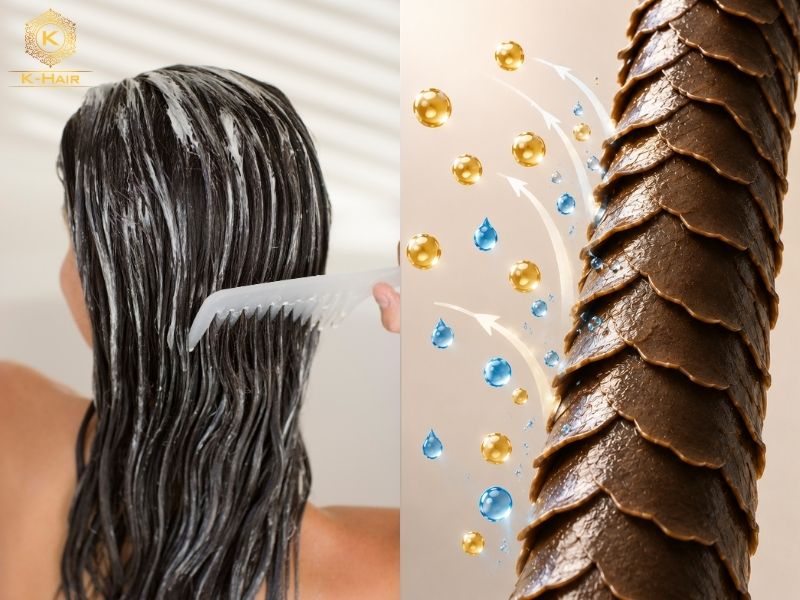
By definition, high porosity hair often consists of hair strands with completely open cuticle scales, leaving the inner cortex extremely exposed and providing more space for the outside moisture and nutrients to enter into the inner layers of the hair strands. To make it more simple to imagine, it behaves like a sponge: it drinks up moisture instantly but lets it evaporate just as fast, leaving the strands feeling perpetually dehydrated.
Key characteristics: Your hair gets wet instantly in the shower and absorbs products. However, it also dries incredibly fast and is highly prone to severe frizz, tangling, and breakage
3. What causes high porosity hair?
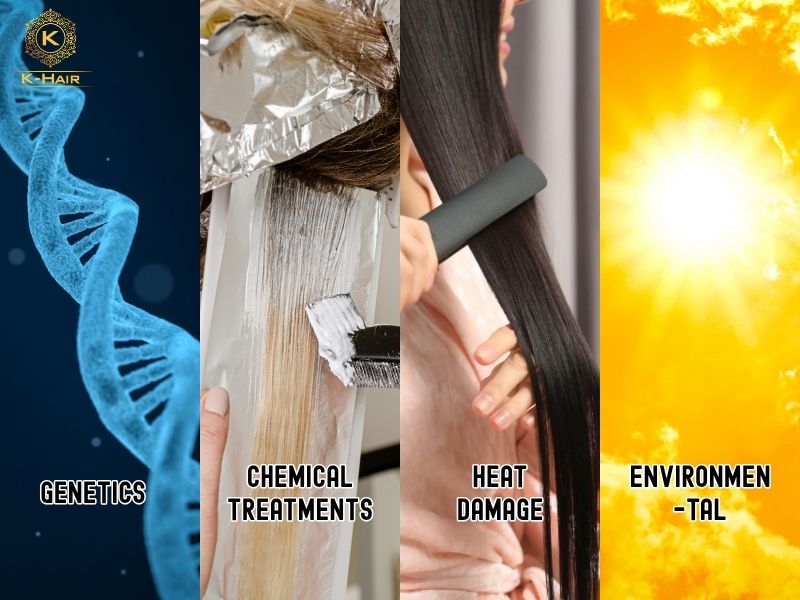
There are several reasons why hair develops a high porosity state. Genetics are the most obvious and prominent explanation; quite simply, many people are born with naturally porous hair due to their DNA, while others are not.
However, even if you weren’t born with it, external damage can structurally alter your hair over time. The following factors are the most common catalysts for acquiring high porosity hair:
- Chemical treatments (color, bleach, relaxers…): Chemical processing is the most aggressive and common cause of acquired high porosity hair. These harsh processes permanently alter the cuticle, leaving it propped open, torn, or completely blown out.
- Heat damage from styling tools: Using heat tools without proper protection literally bakes the moisture out of your hair and melts its defensive barriers. High heat degrades and melts the keratin proteins that form the structural walls of your hair cuticles. Once these proteins are compromised, the cuticles lose their elasticity and can no longer lay flat, permanently locking your hair into a high porosity state.
- Environmental factors: Even if you avoid bleach and heat tools, everyday exposure to the elements can slowly erode your hair cuticles over time. The UV rays produce free radicals that attack the natural oils and proteins in your hair cuticle. This breaks down the cellular “glue” that keeps the cuticle shingles bound together, leading to sun-bleached, rough, and porous ends.
4. How to test if you have porous hair?
Identifying your hair porosity is not a difficult task, you can perform these hair testes:
4.1. The float test
To conduct this test is simple:
- Wash with a clarifying shampoo: Wash your hair thoroughly with a clarifying shampoo to strip away all silicones, heavy oils, and product buildup. If you leave products on the hair, a high-porosity strand might float simply because it’s coated in oil.
- Let it completely air-dry: Allow your hair to air-dry naturally. Do not apply any leave-in conditioners, serums, or styling milks.
- Drop a strand in water and wait: Take a clean, dry strand of hair and drop it into a clear glass filled with room-temperature water. Do not push it down; just let it sit on the surface. Wait 3 to 5 minutes and observe where it settles.
Compare your glass with the breakdown below to determine your hair’s true porosity state:
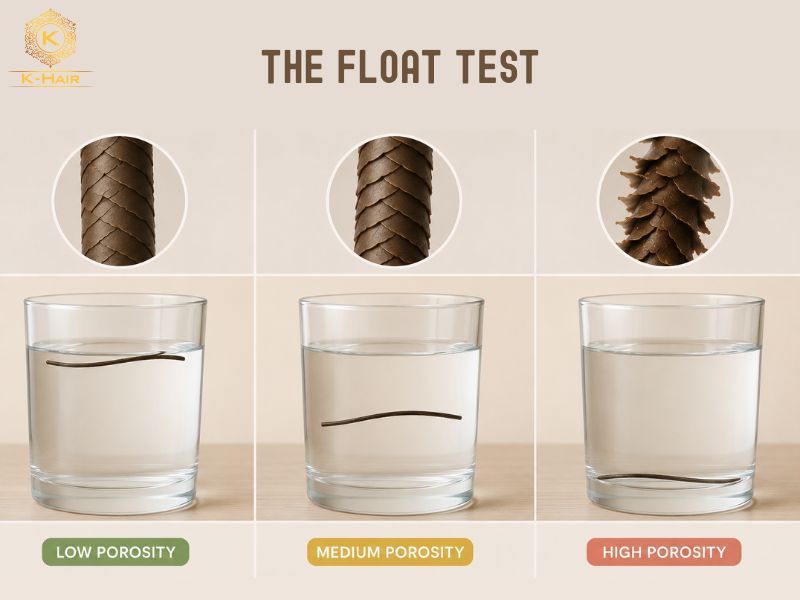
- High porosity: The strand sinks directly to the bottom of the glass almost instantly. The open cuticles let water rush in, weighing it down immediately.
- Medium porosity: The strand drifts slowly and floats comfortably in the middle of the glass.
- Low porosity: The strand sits on the very surface of the water and refuses to sink even after 5 minutes. The tightly locked cuticles are completely resisting the water.
4.2. The slip and slide test
Unlike the other two above, instead of testing the ability to absorb water of the hair, the Slide test will test the surface and cuticle layer of the hair to see if they are completely closed or not. The test would rely most on touch to feel the condition of the hair, so it is also the easiest to conduct. To prepare for this specific hair test, you must take a single hair strand and run your fingers along the hair shaft, from its end to its root – against the natural direction of the cuticle:
- When your fingers touch Low porosity hair, you could actually feel it: the strands are completely smooth from end to root, as the cuticle scales are lying completely aligned and pressed neatly against one another – creating an even, perfectly smooth touch sensation throughout the test.
- When your fingers slide through a High porosity hair, the touch will be completely different from Low porosity hair: the hair strand will feel rough, coarse and brittle, with small bumps along the ends to the roots, as the cuticle layers are lifted and completely open.
4.3. The spray test
You would start this test by thoroughly washing and rinsing the hair to completely eliminate any product buildup, before drying it from top to bottom. After these preparations, the person will now spray their hair with water using a bottle that sprays out a fine mist. The best spraying distance would be from about 6-8 inches away from your hair – you can ask your friend to do it to maintain this distance and deliver the most accurate result:
- If the hair hesitates to absorb in the water, there would be signs – the water will take the form of small beads and become extremely slow to be absorbed into the hair → which is the sign for Low porosity hair.
- If the hair still initially forms small beads of water on top of the hair, but quick to burst and dissolve into the hair after a minute or two → the hair is most likely to be Medium Porosity hair.
- If the water goes straight into the hair without even forming water beads → the hair is mostly High porosity hair.
4.4. Signs you have low/medium/high porosity hair
The table below breaks down the clear signs and daily behaviors for low, medium, and high porosity hair:
| Feature | Low Porosity | Medium Porosity | High Porosity |
| Shower reaction | Water droplets bead up on the hair; takes a long time to get fully wet. | Saturates evenly and comfortably within a few seconds. | Gets soaking wet the absolute second it touches water. |
| Drying time | 4 to 8+ hours, sometimes all day | 1 to 2 hours | Under 30 minutes |
| Product absorption | Products sit on top of the hair, making it feel greasy, heavy, or stiff. | Products sink in beautifully, leaving hair soft and manageable. | Hair drinks up heavy creams and oils instantly, yet looks dry an hour later. |
| Frizz tendency | Low. Frizz usually only happens in extreme humidity when forced open. | Normal. Easily managed with standard styling products. | Very High. Prone to a constant “cloud” of frizz as moisture escapes. |
| Chemical & Color reaction | Resists hair dye and bleach; takes a long time to process. | Takes color easily, processes predictably, and holds tone well. | Absorbs hair color instantly (often processes darker than expected), but color fades rapidly. |
| Elasticity & Breakage | Strong elasticity, but can become brittle if overloaded with protein. | Great elasticity; bounces back easily and rarely breaks. | Fragile and weak; snaps easily due to a lack of internal structural moisture. |
5. How to fix and care for high porosity hair
Although you cannot permanently alter your hair’s genetic structure or instantly reverse severe structural damage, you can strategically adapt your care routine to mimic the behavior of normal-porosity hair by utilizing the right techniques:
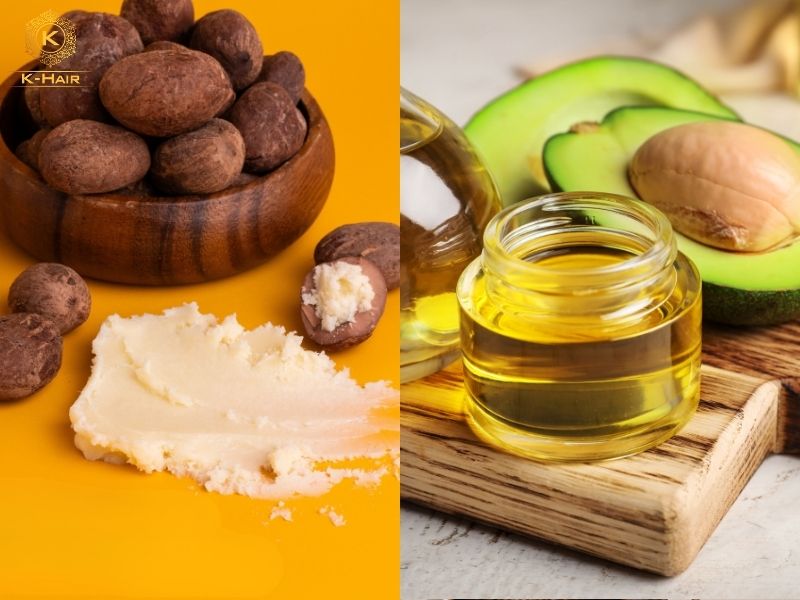
- Use rich, heavy-in-protein products: For High porosity hair, lightweight formulas usually don’t do much. Therefore, this particular hair type would definitely benefit from thicker, heavier products or creams, butters and leave-ins conditioners, as these product lines can actually fill in and shrink the gaps along the hair cuticles, and slow down moisture loss. Ingredients like shea butter, avocado oil,… can offer deep nourishment, helping the strands stay moisturised for longer periods of time rather than providing a temporary solution.
- Always rinse with cold water: When washing out your deep conditioner or treatment, turn the temperature down. While heat opens the hair cuticle, cold water physically forces the raised cuticle shingles to contract and lay as flat as possible, locking the treatment inside.
- Limit high heat tools: Avoid flat irons and curling wands over 180°C (350°F). If you must blow-dry, use a diffuser attachment on the medium or cool setting.
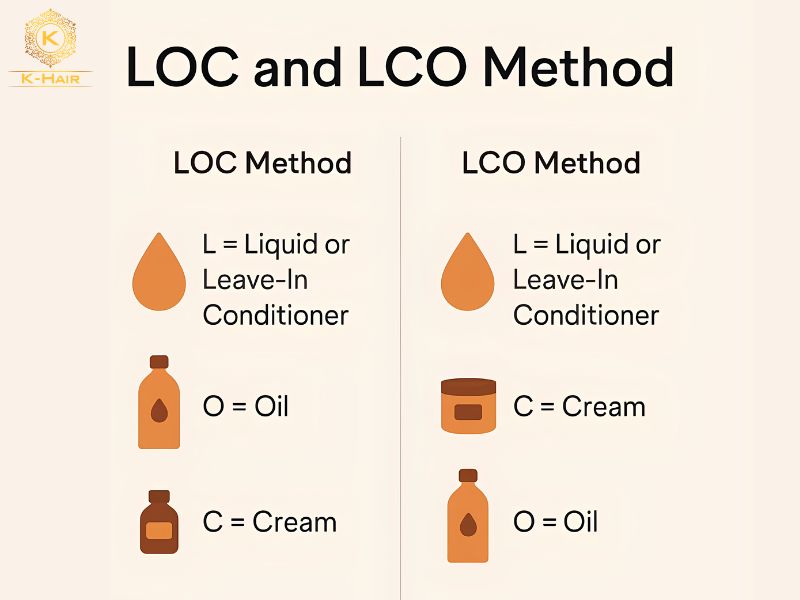
- Seal moisture using oils or creams after hydrating: Because High porosity hair loses moisture very quickly, sealing moisture becomes one of the most essential steps in the routine. Many high porosity hair consumers rely on layering methods such as the LOC or LCO routine, starting with a liquid or leave-in conditioner (L) to hydrate, following with an oil (O) to lock everything in, and finishing with a cream (C) for extra softness. This method is widely proven to achieve actual results by many cosmetic chemists, and is often highly recommended for people with this demanding hair type, especially for African American women.
6. FAQs about porous hair
After answering the fundamental question: “What is porous hair?” you might still have a few specific questions about how your hair behaves.
6.1. Is porous hair good or bad?
Porous hair is not necessarily good or bad. Hair porosity simply describes how well the hair absorbs and retains moisture. Low, medium, and high porosity hair all have different characteristics, care needs, advantages, and challenges.
6.2. Which porous hair gets frizzy in humidity?
High porosity hair is usually the most prone to frizz in humid weather because the hair cuticle is more open and absorbs moisture from the air quickly. This excess moisture causes the hair shaft to swell and become frizzy.
6.3. Which porous hair is good and healthy?
Medium porosity hair is generally considered the healthiest and easiest to maintain because it balances moisture absorption and retention well. It typically looks shinier, feels smoother, and responds better to most hair products and treatments.
6.4. Which porous hair grows faster?
Hair porosity does not directly affect how fast hair grows. Hair growth mainly depends on genetics, hormones, nutrition, and scalp health. However, low and medium porosity hair may appear to grow longer more easily because they are usually less prone to breakage than highly porous hair.
7. Conclusion
Understanding “What is porous hair” is the ultimate secret to mastering its care and styling. Whether your hair has high porosity, medium or low porosity, knowing how your strands behave helps you choose the right products and maintain healthy, beautiful hair.
However, dealing with highly porous, damaged, or naturally fine hair can sometimes make it difficult to achieve the thick, voluminous styles you want. This is where high-quality hair extensions come into play, allowing you to instantly add the density, length, and seamless fullness that your natural strands might be struggling to maintain on their own.
To ensure a flawless blend, K-Hair – the top-rated Vietnamese hair suppliers, provides 100% premium raw human hair extensions that perfectly mimic natural, healthy hair behavior and hold styling beautifully. Contact us to start your premium hair journey today!