
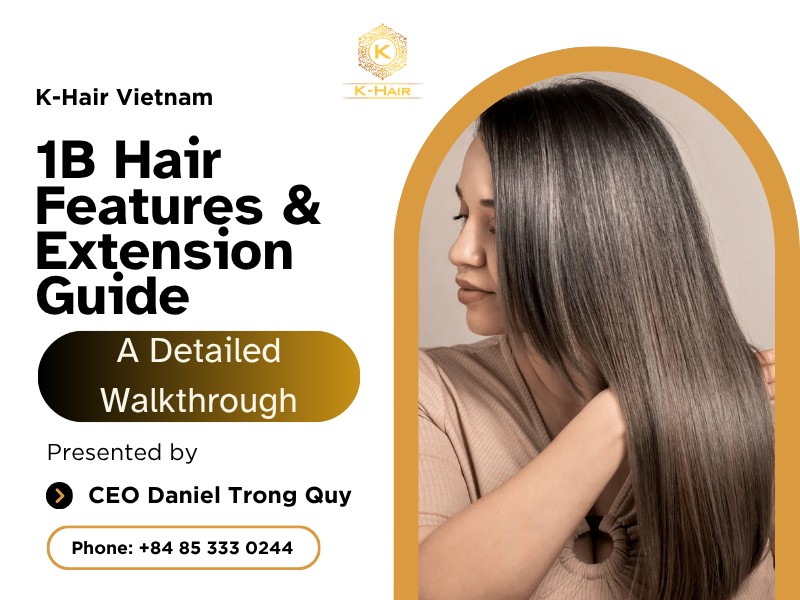
When discussing straight hair textures, most people will come up with pin-straight, ultra-sleek strands with no curls or bends. However, the straight hair spectrum is more diverse than that. The prime example is this straight classification with medium thickness and subtle, natural body, staying mostly flat but bending gently inward at the ends with a slight, curved finish, allowing more body compared to the thin 1A hair.
Day to day, this hair type’s three main maintenance priorities are oily roots, product build-up, and mild frizz at the ends, where the cuticle naturally lifts. Let’s learn more about its features, maintenance needs – as well as how similar and different it is compared to its straight hair siblings.
What Is 1B Hair?
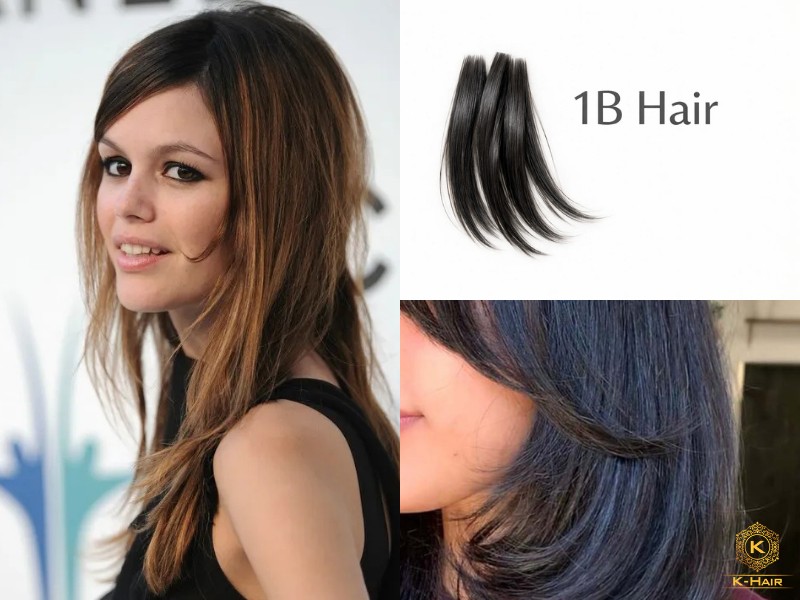
1B hair belongs to the type 1 (straight) family, and among the three straight subtypes, it sits in the middle for both strand thickness and texture. Upon first impression, it appears sleek, silky and somewhat pin-straight. But as you move downward, you can notice subtle, light waves and bends at the hair ends.
This is also the most widely seen straight type. Over generations, environment, genetics, and styling habits softened the classic poker-straight pattern into including more bends and movement, which partially explains its popularity. In fact, familiar examples include Kim Kardashian, Rachel Bilson, and Freida Pinto – if your hair looks like theirs, there’s a good chance it’s this texture.
How Do I Know If I Have 1B Hair?
You most likely have this hair type if you recognize several of these signs:
- Your hair looks straight overall but bends softly inward at the ends rather than hanging poker-straight.
- It has moderate natural volume, fuller than fine 1A but not as thick as 1C.
- It’s glossy, with a glass-like shine along the smoother lengths.
- Your roots turn oily fairly quickly, while your ends can feel drier or frizzier.
- It holds a curl better than 1A, though styles still need help to last.
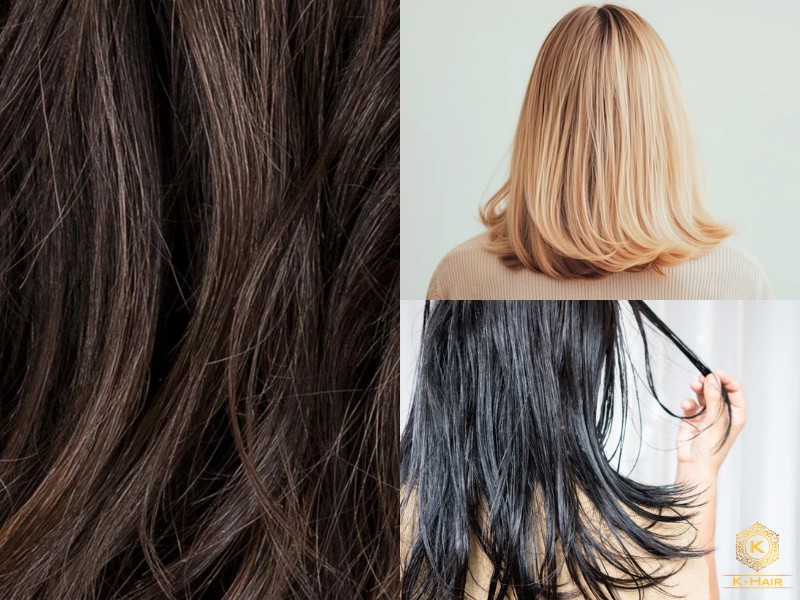
Manufacturer’s Insight (Mrs. Cherry, K-Hair Factory): Our single-donor bundles naturally carry this same medium thickness across an entire ponytail – no strand-to-strand inconsistency. That’s the advantage of sourcing from one donor rather than blending: the body and shine stay uniform from root to tip, the same quality you’d expect from healthy natural 1B strands.
1A vs 1B vs 1C: Where Does 1B Sit?
Belonging in the same straight hair category, 1A, 1B and 1C hair can still have many features in common. However, there are still several distinct and unique features that help to separate the three hair types from one another:
| 1A hair | 1B hair | 1C hair | |
|---|---|---|---|
| Texture | Delicate, fine and slightly fragile hair strands | Thicker and coarser than the standard 1A hair | Has the thickest, coarsest strands of all straight hair variations |
| Natural patterns | Completely straight from roots to ends, with no visible curls | Mostly straight texture, but also has subtle small waves at the hair’s ends | More curls and bends along the strands, besides the obvious straight texture |
| Volume | The least hair volume, due to sleek texture and fine hair strands | Middle-ranged volume | Offering the most volume out of the three |
| Styling ability | Takes more effort to style, and quick to lose its pattern | Much better at holding styles and heat styling compared to 1A | Can be styled more freely, and holds style much longer than 1A, 1B |
| Maintenance Priority | Excessive oiliness, lack of volume, inability to hold styles | Oily roots, product build-up, flyaways & mild frizz | Dryness & wiry texture, frizz & flyaways, inconsistent volume |
If you want to see how the whole type 1 family compares to wavy, curly, and coily hair, our Hair Typing System guide covers the full chart, and you can read about the neighbouring types in our 1A hair and 1C hair articles.
The 3 Biggest Challenges of 1B Hair
This hair type offers a perfect balance – having both the sleek and fine hair strands of 1A, and the slight waves seen in 1C hair. Hence, in terms of maintenance, this specific straight hair type demands a specific routine as well.
Why Does 1B Hair Get Oily at the Roots?
Having flat, oily roots is often one of the headaches that comes with this texture. Because scalp oils travel down the medium strands relatively fast, this can lead to flat roots or greasy build-up at the crown while the ends stay drier. Many people try to fix this by washing their hair more often – but this can do more harm than good! Overwashing can not only cause strand dryness, but also disrupt your scalp – causing it to produce even more oil in return. Make sure to avoid this mistake, by:
- Cleanse 2 to 3 times a week using a lightweight, sulfate-free shampoo to manage oil without stripping moisture.
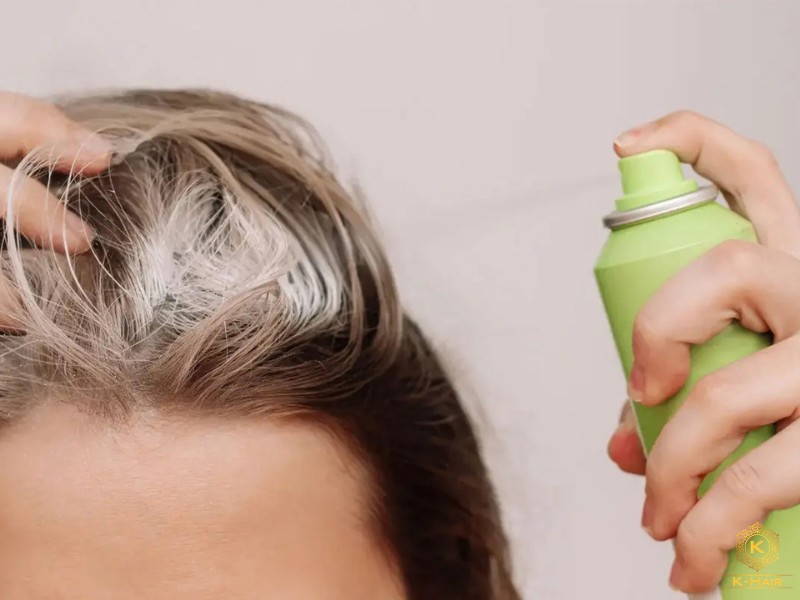
- Use dry shampoo between washes to absorb oil and stretch the time between cleanses.
- Brush less, and switch to a wide-tooth comb. Over-brushing drags root oil down the strands and worsens the greasy look.
How Do I Get Rid of Product Build-Up on 1B Hair?
Besides oil accumulation, this sleek straight hair type can also be quick to gather product build-up and residue. In most of these cases, using the wrong products, or washing your hair the wrong way, are often the leading causes of stubborn build-up.
Hence, our solutions should stem from these causes – by using the right products, and using them the right way:
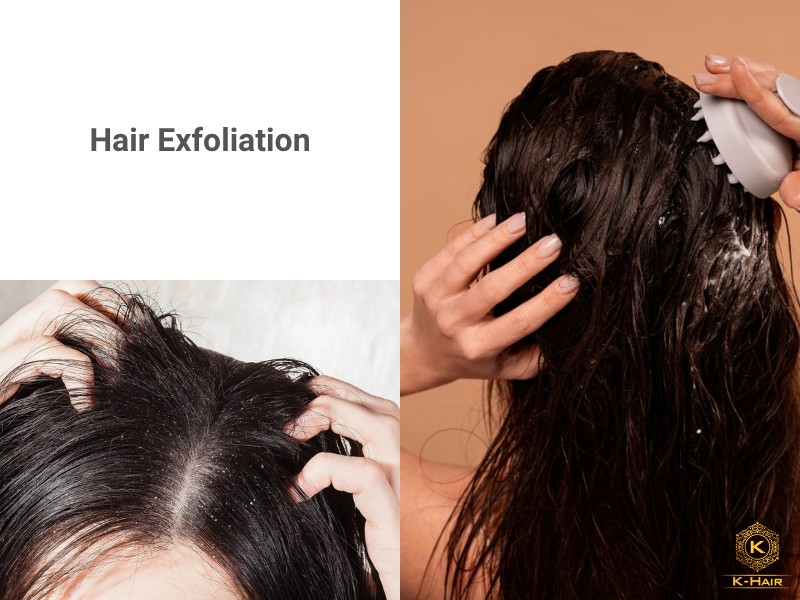
- Double-cleanse when hair feels coated or waxy: the first wash lifts surface grime, the second cleans deeper.
- Use a clarifying shampoo weekly if you notice product build-up – this resets the scalp without over-stripping the mid-lengths.
- Finish with a cool-water rinse for a cleaner, smoother surface.
Why Is My 1B Hair Frizzy at the Ends?
Much like any other hair issue, frizz is not impossible to solve – given that you know the root cause. And, mostly, this frizz comes from the lifted hair cuticles – as well as day-to-day hair friction. Hence, make sure to arrange your routine according to these causes for optimal results:
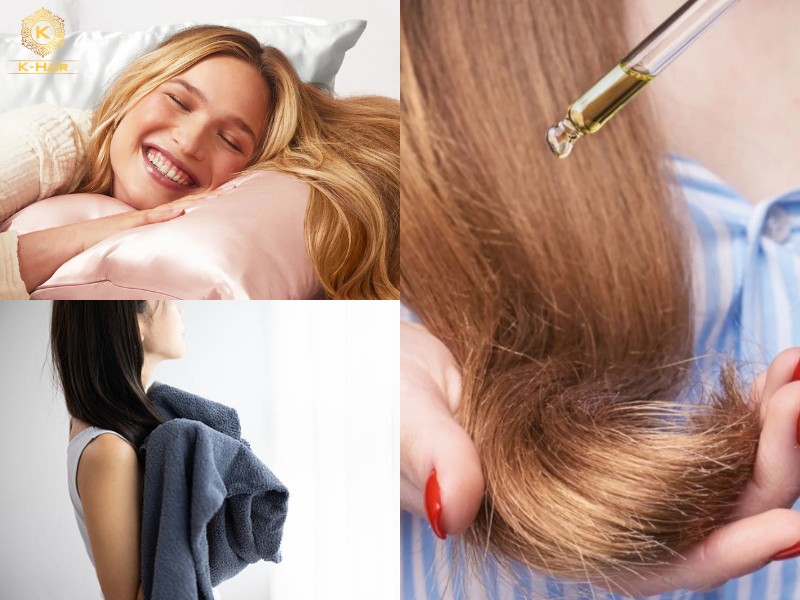
- Dry gently. Blot or squeeze with a microfiber towel or a cotton T-shirt instead of rubbing with a regular towel.
- Use an anti-humidity or smoothing product on the ends before going out in damp weather.
- Sleep on a satin or silk pillowcase to cut the overnight friction that creates morning frizz.
Best Products for 1B and Fine Straight Hair
The key principle of maintaining fine, medium-thickness straight hair is to keep the roots clean of residue and the ends well-moisturised. Therefore, choosing hair care products can no longer be based on personal preference, but rather on what your hair really needs:
| Do | Don’t |
|---|---|
| Double-cleanse and use a clarifying shampoo to clear product build-up | Layer on multiple styling products that build into residue |
| Use lightweight, water-based, sulfate-free formulas that rinse clean | Use heavy creams or butters that coat the strands |
| Apply conditioner strictly from the mid-lengths to the ends only | Condition the low-porosity roots, which don’t need it and go greasy |
| Air-dry when possible, or dry with a microfiber towel | Rough-dry with a regular towel or sleep on cotton |
| Smooth a light texture spray onto the ends for natural movement | Ignore humidity, which is what lifts the end cuticles into frizz |
Air-drying is usually the gentlest option for this texture, since it skips the heat exposure that can dry out the ends. If you’re short on time, a low-heat setting with a diffuser attachment keeps the natural movement intact without over-drying the roots. Either way, finish with a light texture spray rather than a heavy serum – it adds definition to the ends without weighing down the crown.
Expert tip: A light heat protectant before any styling is also worth keeping in the routine, since fine-to-medium strands scorch easily under high heat.
Best Extensions for Adding Length and Volume to 1B Hair
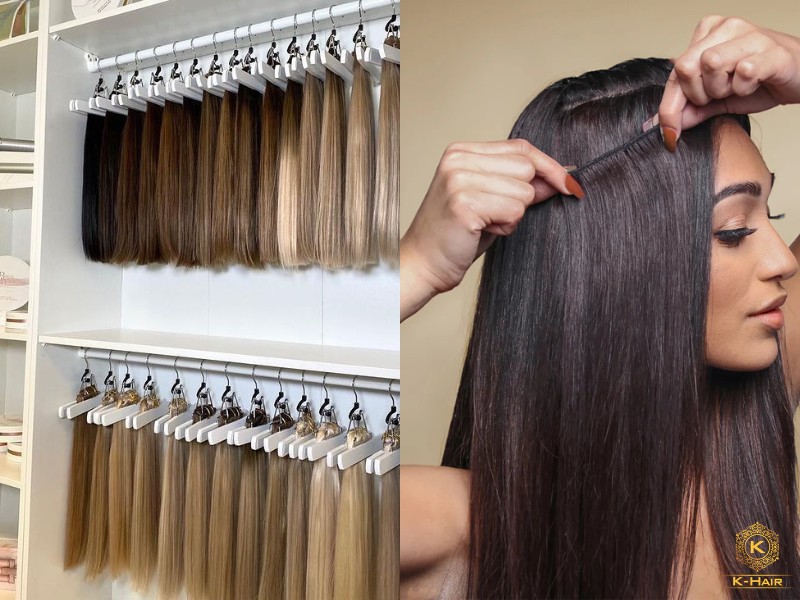
With its built-in natural body, the goal of hair extensions for this texture is no longer to add up more volume the way it is for 1A hair. Instead, when shopping for extensions, your priority should be lightweight, subtle volume lift and end-fullness that blends with the natural bends. Include these qualities in your shopping checklist:
- Natural straight texture – rather than bone straight: the signature is that slight inward curve at the ends, so choose our tape-in extensions or a texture that blends with soft movement rather than perfectly flat strands. Stiff, pin-straight textures might result in awkward blends that make your extensions look unnatural.
- Lightweight hair extensions only: heavy extensions put pressure on your scalp and accelerate oil accumulation. It’s best to use lightweight wefts, or extensions that sit lower rather than pulling directly at the roots.
- Fuller hair ends: the lifted-cuticle ends and frizziness are worth planning around – you’ll want extensions that conceal dry ends. Fuller, thicker extension density gives a smoother, fuller bottom line.
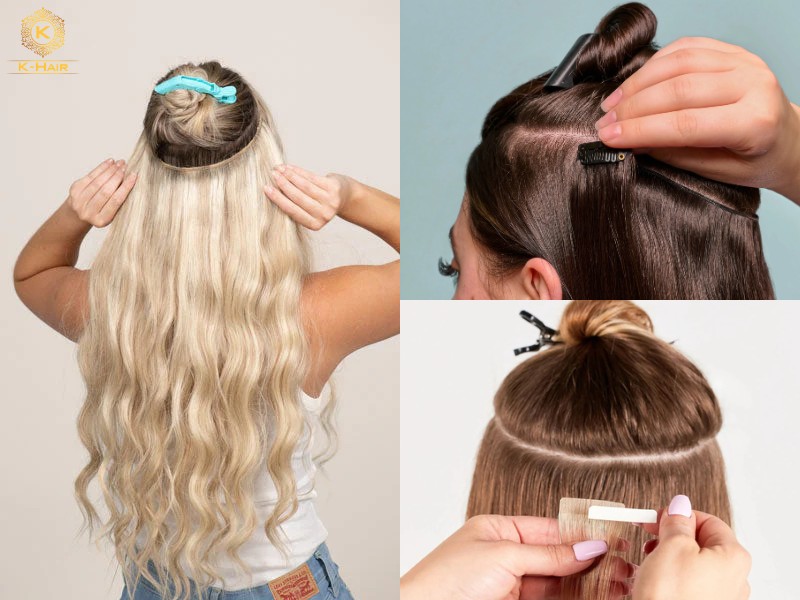
Therefore, some of the best hair extensions for this hair type include:
- Tape-in extensions, which lie flat and add subtle volume without bulking up oily roots.
- Halo extensions, which rest on a thin wire and put zero tension on the scalp, ideal for keeping weight off the roots.
- Seamless clip-in extensions for flexible, damage-free length and body you can add only when you want it.
- Super Double Drawn hair with 80%-85% full-length strands, or Double Drawn hair with 60%-65% full-length strands for maximum end-fullness.
It’s worth avoiding heavy sew-ins and tight methods, which strain fine strands and can cause breakage. For this texture, the aim is seamless length and natural movement, not added weight.
FAQs about 1B Hair
Here are some questions that most people ask when they searching for 1B Hair.
What is 1B hair?
1B hair is straight, but not completely flat. It has medium thickness with subtle, natural body and slight bends or curved ends, which makes it look fuller and more textured than 1A hair.
Why does 1B hair get oily so fast?
Because the hair is mostly straight, scalp oils travel down the medium strands relatively fast. This is why 1B hair often looks greasy at the roots much quicker than curlier hair types.
How often should I wash 1B hair?
Wash 2 to 3 times a week using a lightweight, sulfate-free shampoo. If you wash too often, your scalp may produce even more oil. If you wait too long, product build-up can make your hair look flat and heavy.
What products should I avoid for 1B hair?
Try to stay away from heavy oils, thick creams, and rich butters. These tend to sit on the hair rather than absorb, making it look greasy and flat.
Can 1B hair hold curls well?
It can hold curls better than very straight 1A hair, thanks to its slight natural bend. However, you’ll still need light styling products and proper heat techniques to make the curls last longer.
Is 1B hair rare?
No – it’s actually the most commonly seen straight subtype. Its medium thickness and natural body sit in the middle of the straight-hair spectrum, which is exactly why so many people fall into this category rather than the rarer, pin-straight 1A or the coarser 1C.
Ready to source premium Vietnamese hair?
Contact K-Hair Factory directly for wholesale pricing, MOQ details, and free samples.
Conclusion
With the information provided in this article, we hope that we have covered everything you need to know about this hair type. All in all, 1B hair can be identified by its generally straight appearance, medium thickness, and slight bends at its ends. To properly care for these strands, focus on its oil distribution, product build-up, and mild frizz.
This texture might struggle with flatness – a common problem for all straight-haired individuals. To add more volume and step up your hair game, using hair extensions might not be a bad idea. Discover the full range of textures and colors at K-Hair Factory, and let us match the right extension to your natural strands.


Pingback: What Is 1A Hair? Care, Styling, and Best Extensions Tips