Nowadays, with the development of technologies and hair care, more and more terminologies about hair health, textures and types are being introduced to the masses – hair porosity included. As a buyer yourself, you must have often found yourself confused or underwhelmed about technicals, vague hair terms on the market, and resorted to choosing whatever type of products convenient, without taking much consideration about these concepts. This is a big yet still common mistake for a vast majority of customers out there, as getting to know these terms, and being able to identify your hair type, your hair porosity level,… can enable you to make better decisions when shopping for hair products. So, before the next time you go shopping for shampoo, hair conditioner or hair oil, ask yourself these questions: “What is Porous hair?” What type of hair porosity do I have? And what type of products are suitable for my hair type?”
Readers, no need to search far and wide, we have all the answers you need right here in this article, with knowledge about hair porosity grades, hair tests, as well as maintenance tips for each type: Low, Medium and High Porosity.
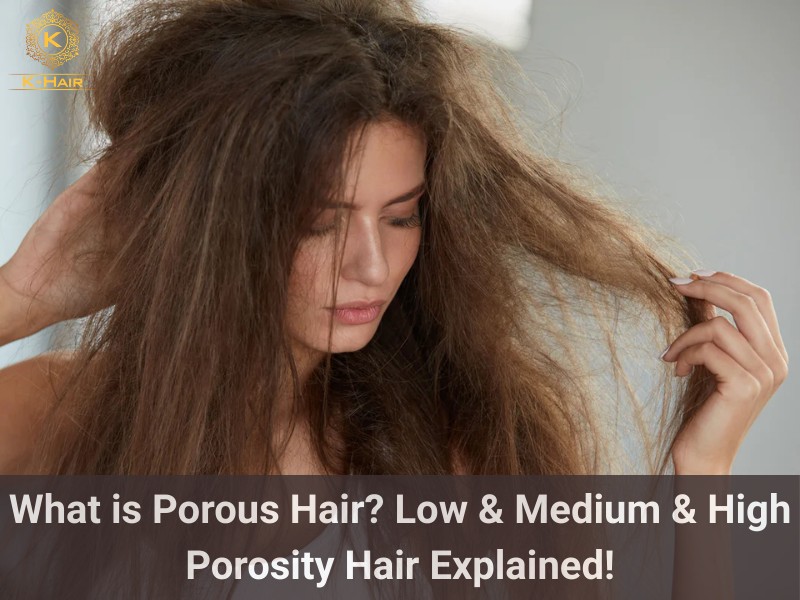
1. What is Porous hair?
Unlike most might assume, hair porosity, or what is porous hair is not a complex, hard-to-understand concept, rather, it is quite a simple one if you really look into it. However, before delving further into this, or introducing its definition, we figure that it is best to go over the ground information that can be crucial in identifying the concept of hair porosity. In fact, let us learn about the construction and layers of a typical hair strands which will affect your hair quality, as presented below:
1.1. The background Information – Layers of the hair strands
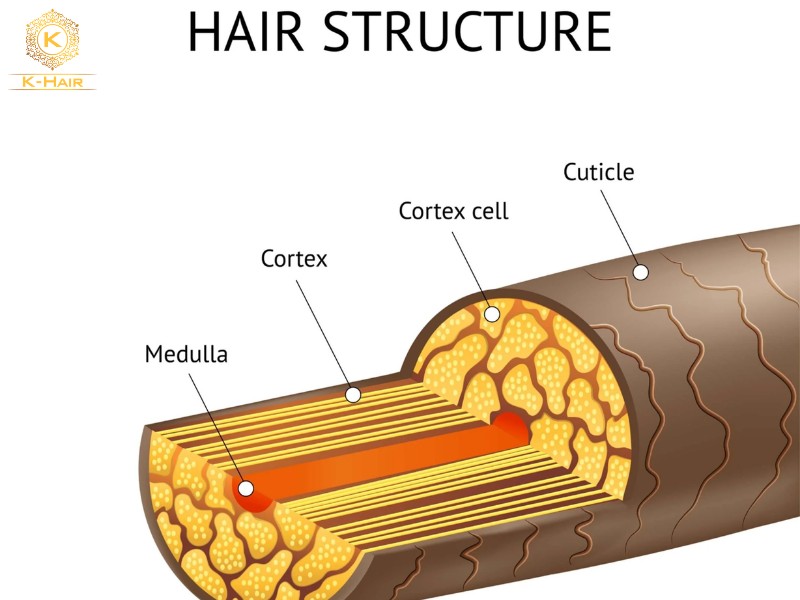
Overall, the typical construction of a hair strands consist of three main layers, each with its own purpose and location:
- The outer cuticles: this is the tougher, protective layer that takes on the role of a shield to conceal the inner part of the hair strands, locking in the moisture and nutrients inside, while reflecting light and providing a gorgeous shine to the hair look. This cuticle layer consists of smaller, tinier cuticle pieces that overlap one another like shingles on a roof.
- The cortex: this part lies in the middle of the hair strands layer, it is also the thickest and takes on the roles of nutrient-storage and contains fibrous protein that makes up most of the hair strands’ durability and well-being. On top of that, the pigment stored on the cortex also decides on the hair colors.
- The medulla: this is the soft center part of the hair shaft, however, not every hair type has this, as the medulla is mostly available in thicker hair rather than in thin, or blonde hair.
1.2. The terms Porosity Explained!
The term indicates how much the hair can absorb and retain water, moisture and nutrients – hence the name “porosity” which is rooted from “pore”. It is also an indicator representing how easily water can penetrate into the hair strands. So, to answer the question “What is porous hair?” – the answer is simple: porous hair is hair that allows substances such as water, nutrients and moisture to penetrate and leak out easily.
In fact, the outer cuticle layer mentioned above is the defining factor that decides on the hair porosity – the more gaps and openings the cuticle layers have, the more porous the hair becomes. In detail, we all know that the main task of the cuticles is to seal in substances and protect the hair from any external factor – as mentioned above, right? So, for tightly closed cuticle scales, the hair would be better shielded from foreign substances, which also makes it harder for moisture to be absorbed in. On the other hand, for dried out cuticles, the scales are more likely to be completely open and lifted – allowing moisture, nutrients and water to penetrate, but also make it easier for these substances to pass right through without being completely absorbed into the inner layer.
1.3. Factors affecting Hair porosity
There are many reasons for such tendencies. Genetics are the most obvious and prominent explanation for a person’s hair porosity. Many people are born with porous hair, while others are not – it is as simple as that.
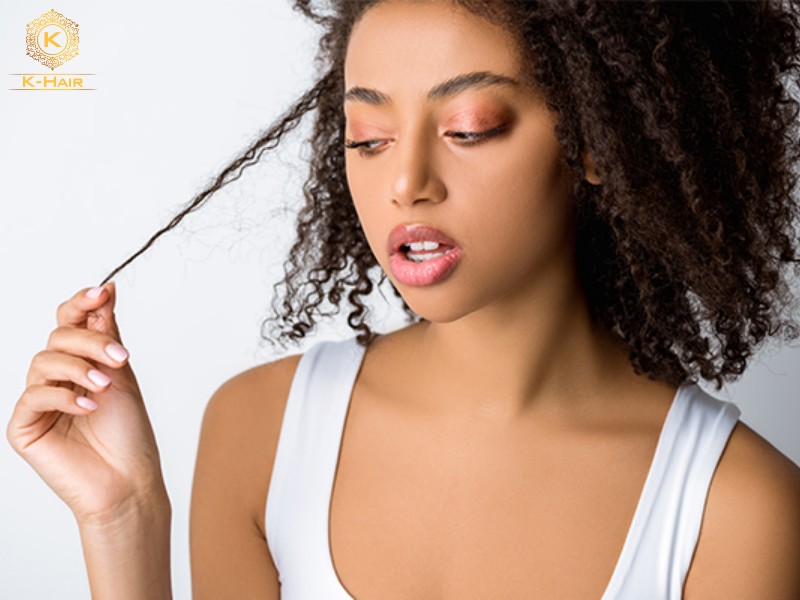
However, styling and maintenance habits can also contribute to hair porosity. For example, neglecting hair care can easily cause the cuticle to become dry and more prone to lifting, sticking out, while constant heat styling or bleaching, dyeing also cause severe dehydration and damage the healthy cuticle layer – increasing the level of porosity the hair originally has.
Furthermore, exposure to external factors are also to be blamed on the well-being of the cuticles, and ultimately – the changes in hair porosity. One major external factor that people need to pay more attention to is the exposure to sunlight. In fact, constant exposure to high heat and the UV ray from the Sun can not only damage and dehydrate the protective cuticle layer, but also allow the heat to penetrate in and make the natural color fade.
1.4. Different types of Hair Porosity
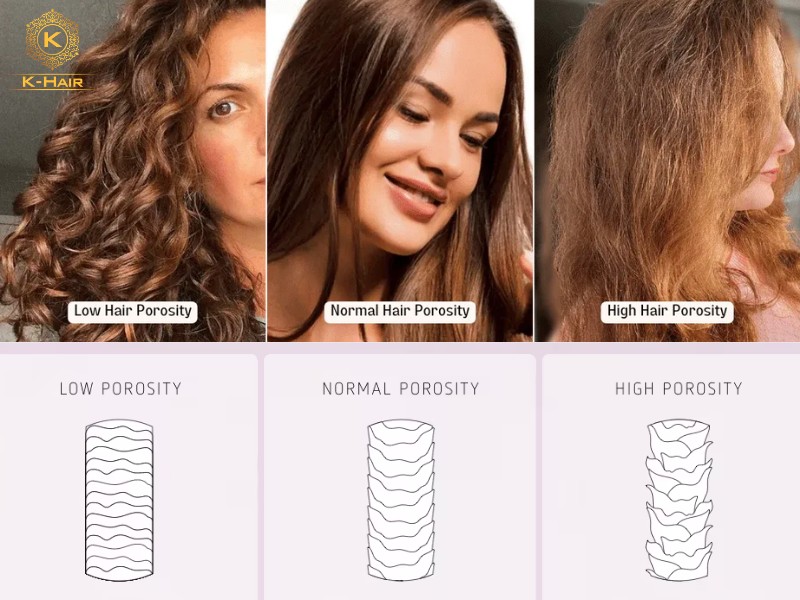
To understand different hair porosity and to answer the question “What is porous hair?”, we can start with comparing different objects and their ability to absorb water, such as sponge, wood, and leaf – with sponge being the material that is easiest to take in and push out water, with big holes in the surface; wood being the medium-range porous material with structure that allow water to flow in while still avoid being completely soaked in like the sponge; and the leaf being the least porous one – with no hole for water to pass through. These materials are similar to the three different types of hair porosity, presented below:
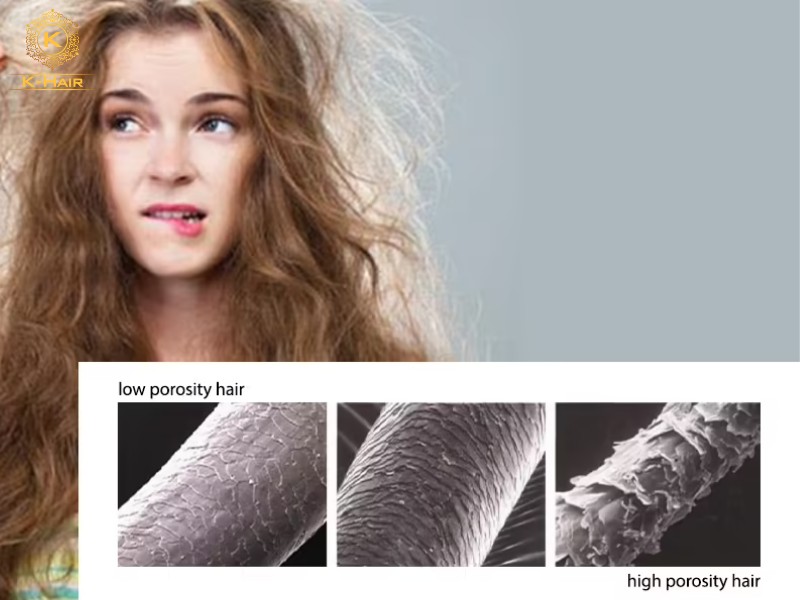
- Low porosity hair – Leaf: allow little moisture and nutrients to be absorbed in, with cuticles that are tightly pressed against one another, leaving no space or holes.
- Normal or Medium porosity hair – Wood: the cuticles shards are less tightly spaced and have opened, lifted cuticles from space to space – allowing more moisture and nutrients to penetrate in.
- High porosity hair – Sponge: the cuticle scales are completely opened and widely spaced, with more holes or open space for the substances to penetrate and pass through the hair strands.
2. What is Low porosity hair?
Learning the basic information and definition of hair porosity and their types is not enough to answer the question “What is porous hair?” In fact, the next big step is to delve deeper into different types of hair porosity and identify for yourself what types your own hair belongs to.
First, let’s start from the ground up: the Low porosity hair:
As previously mentioned, Low porosity hair is distinct by its completely closed and tightly pressed against one another cuticle scale → allowing only little water, vapor and nutrients to escape and penetrate into the inner hair strand layers – hence the name Low porosity. Therefore, Low porosity hair tends to take longer to absorb nutrients and valuable moisture in conditioners and other hair products, or even in some cases, it would remain extremely resistant toward these external substances, as well as other hair treatment and styling, and more prone to gather build-up, oil,… However, Low porosity hair is still the healthiest hair porosity level of the three, as once used the right products and the nutrients are finally absorbed into the inner layer of the hair strands – they are there to stay!
Furthermore, being equipped with such perfectly aligned and closed cuticle scales, Low porosity hair can better retain the inner nutrients, moisture from escaping, as well as protecting the hair strands from external factors, such as high-heat, humidity,… – guaranteeing the strength and durability of the hair.
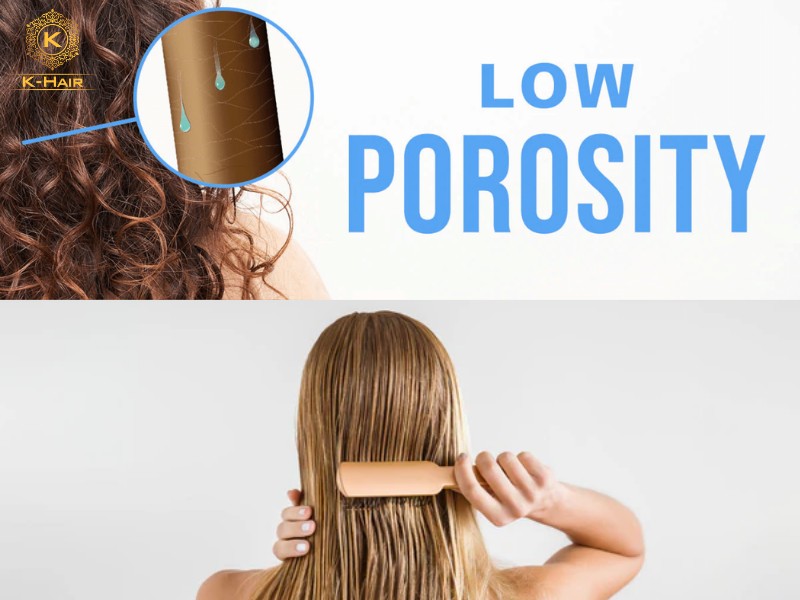
Here are some signs potentially indicating that your hair can be a Low porosity hair:
- Your hair takes longer to dry or wet completely and the water often forms small beads along the hair strands – as the hair is more resistant toward water.
- Your hair quickly becomes oily, sticky, with a large amount of product buildup instead of absorbing in the nutrients in those products.
- While styling or coloring, your hair might take a much longer time and require more effort to achieve the final look.
3. What is Medium porosity hair?
Discussing “What is porous hair?” we must go through one of the most popular levels of hair porosity out there – the medium porosity hair. Among the three, this type is also the easiest to work with, as it combines both the ability to absorb substances like the high porosity, but also the ability to retain them to an extent like the low porosity:
The basic description for this type include: unlike the Low porosity hair, this hair type features more open or slightly open cuticle scales, rather than consisting of only closed, tightly shut cuticles → allowing more space for the nutrients and moisture to penetrate through the outer layer and make way through the cortex. In fact, according to Rodney Dawber MD – a professional cosmetic chemist – for normal or medium porosity hair, the hair is able to absorb in 75% of the total amount of substance within the span of 4 minutes Hence, during maintenance, Medium porosity hair can deliver better results, without demanding extensive effort and time like the other two: easier to absorb nutrients and moisture, without letting them slip through completely like the High porosity → easier to maintain and care for throughout hair use.
Due to the increasing hair styling trends, the proportion of people with medium porosity hair is enlarging, and soon enough, it became the most popular porosity out there – with more hair products targeted for this specific type. Therefore, if your hair is of medium porosity, you would have a wider range of options when shopping for hair products.
Furthermore, unlike the other two options, Medium porosity hair is much more easy-going when it comes to hair care – it does not require any special, specific treatment like the Low porosity, or demand extensive and frequent care like the High porosity – you only need to care for it as you usually do – with balanced routine of shampoo, conditioner, and avoid excessive exposure to heat to prevent the cuticles to lift even further.
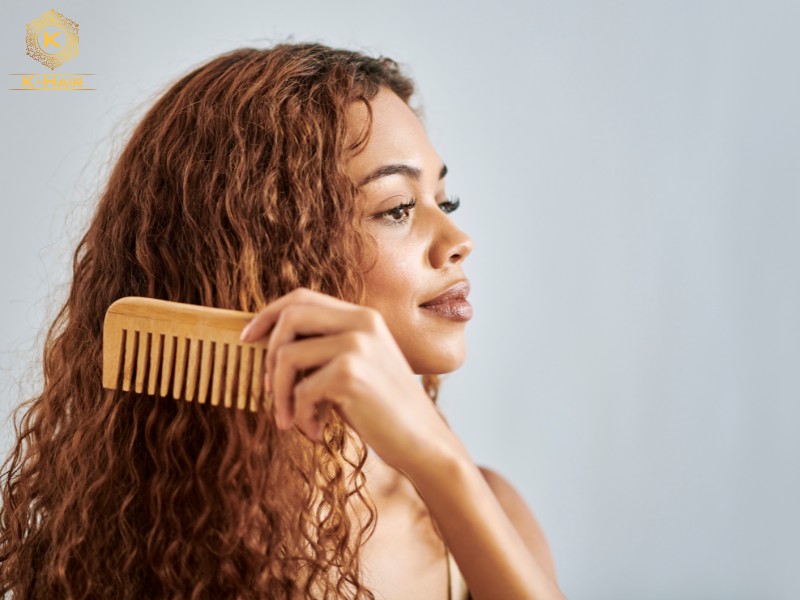
Here are some signs potentially indicating that your hair can be a Medium porosity hair:
- Your hair is easy to straighten and curl, and is able to hold the final styling look for a long time. Or that your hair reacts well with hair bleach and hair dye and is able to produce an even, desirable coloring outcome.
- Your hair is low-maintenance and can not take too long to dry like the Low porosity.
- Your hair tends to look healthy, shiny, or even glossy.
4. What is High porosity hair?
When it comes to “What is porous hair?” and what types of hair porosity one might have, the last type to be discussed is the High porosity hair:
By definition, High porosity hair often consists of hair strands with completely open cuticle scales → leaving the inner cortex extremely exposed and providing more space for the outside moisture and nutrients to enter into the inner layers of the hair strands. However, as easy as it is for these substances to penetrate through the cuticle, these substances cannot stay for long, as the water and nutrients will soon flow out of the hair strands without any absorption.
Hence, to an extent, we can say that High porosity is quite similar to Low porosity hair – as the strands are difficult to absorb water and nutrients and therefore, call for more effort, time, and careful consideration to be made into maintaining and caring for the hair. However, the difference is that for High porosity, the nutrients will pass right through after reaching into the cortex → needing more extensive care and heavier, more nutritious products.
Besides the cases where High porosity is inherent and genetic, most of the cases for High porosity hair are caused by extensive heat-styling and multiple chemical-based treatments like dyeing or bleaching. Therefore, the outer cuticles are dried out and become lifted – hence the ability to absorb and allow water to penetrate.Across the globe, High porosity hair type is the most heavily damaged or the easiest to be affected by environmental factors out there – is also the most demanding in terms of maintenance and the most breakable, the hardest to control hair type → demanding extremely extended and frequent care for the hair in order to maintain its health and protective layer.
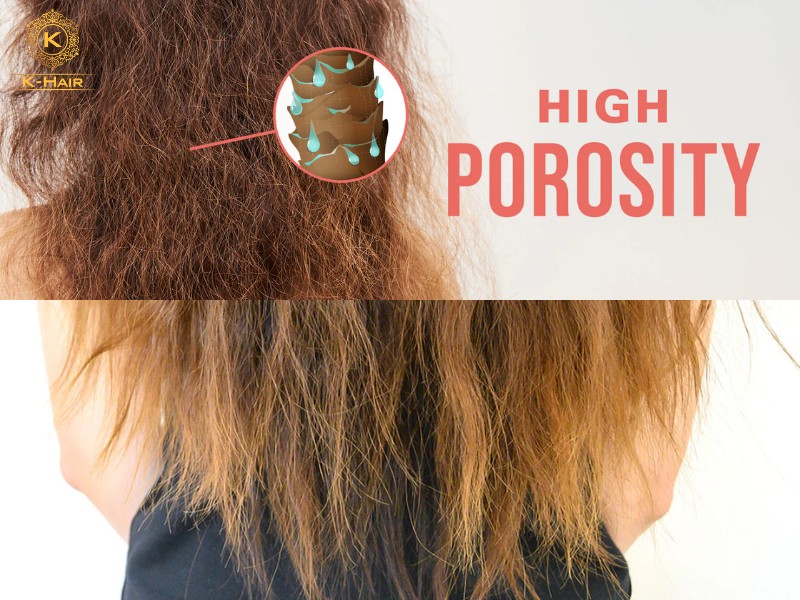
Here are some signs that your hair might be of High porosity itself:
- Your hair is extremely more prone to frizziness if it comes into contact with high humidity – as High porosity hair is the most affected by external factors such as humidity or high heat.
- Your hair is often super dry or dehydrated with many flyout strands that may ruin the overall look.
- Your hair looks extremely dull and lifeless – there are little or none hair shine appearing, with extremely coarse, brittle strands and texture.
- Once done with washing, the hair can air dry extremely fast.
- Your hair is extremely fragile and breakable – using heat styling will make your hair become coarser or even in some cases, it will break down completely.
5. How can I find out about my hair porosity?
One crucial step in finding out what is porous hair is to discover your distinct hair porosity type. In fact, this is one of the pivotal steps needed for all buyers to better navigate their buying purposes and hair care routine, however, this is also the step often ignored or neglected by most cosmetic hair product clients in the market. Knowing the grade of hair porosity your hair has is the first step to renewing your hair care habit, and enhancing maintenance results, as well as avoiding common hair problems that come with using the wrong products, such as frizziness, product buildup, irritation.
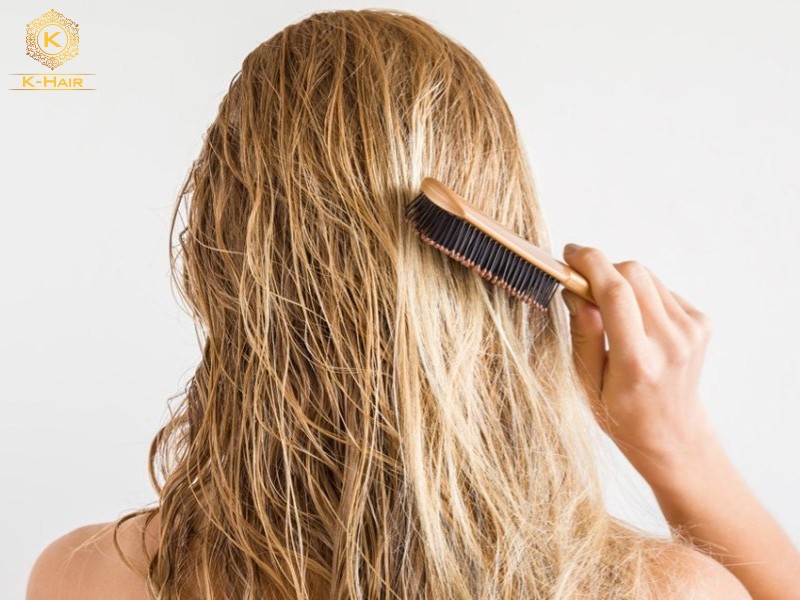
Identifying your hair porosity is not a difficult task, however, it takes much more than just making vague guesses based on how quick your hair dries, or how easy it is to style – like the signs mentioned above. In fact, to determine your hair porosity the right and accurate way, you can perform these hair testes:
5.1. The Float test
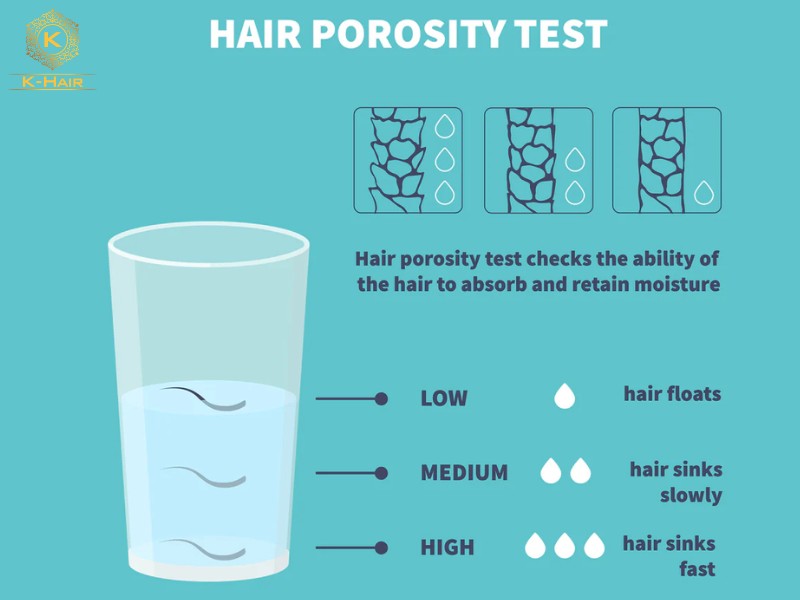
To conduct this test is simple: first you thoroughly wash and rinse your hair in cold water to get rid of any product buildup, and then dry it out completely (this is very important). By then, you will have to cut out or take a single strand of hair and drop it into a glass of room temperature water (avoid using hot water as the heat can open the cuticle):
- If the hair strand is floating above the water surface – this can be a sign indicating that all the cuticles in the hair are completely aligned and shut neatly – making the strand waterproof → a sign of Low porosity hair.
- If the hair falls in the middle-level of the glass water, this means that the hair can still fight back to avoid completely being soaked in, while still allowing a small proportion of the water to penetrate in → in such case, the hair is most likely Medium porosity hair.
- If the hair sinks fast and goes straight to the bottom of the glass, rather than fighting back the water, this means that all or most of the cuticles are completely open and hence, allowing the water to leak through the outer layer and weigh it down → a sign of High porosity hair.
5.2. The Spray test
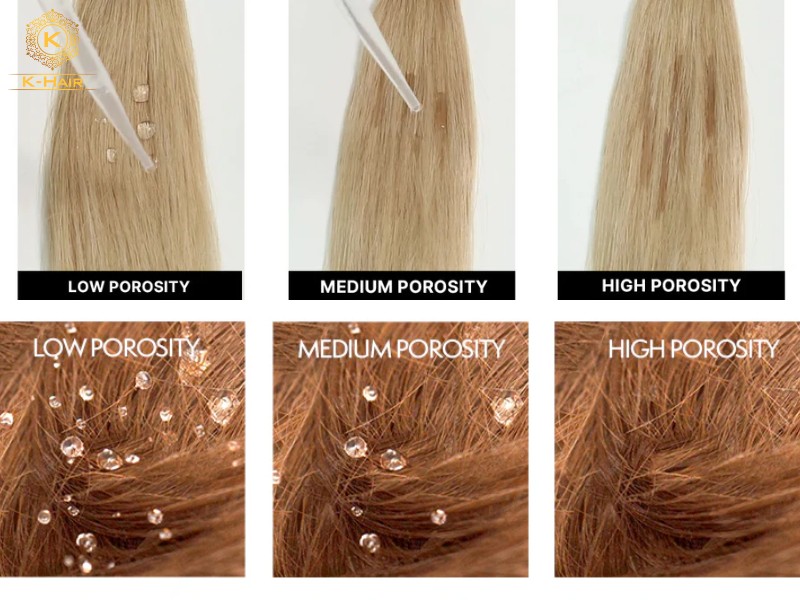
Much like the Float test, this specific hair test is also designed to test directly the ability to absorb water from the hair. And similarly, you would start this test by thoroughly washing and rinsing the hair to completely eliminate any product buildup, before drying it from top to bottom. After these preparations, the person will now spray their hair with water using a bottle that sprays out a fine mist. The best spraying distance would be from about 6-8 inches away from your hair – you can ask your friend to do it to maintain this distance and deliver the most accurate result:
- If the hair hesitates to absorb in the water, there would be signs – the water will take the form of small beads and become extremely slow to be absorbed into the hair → which is the sign for Low porosity hair.
- If the hair still initially forms small beads of water on top of the hair, but quick to burst and dissolve into the hair after a minute or two → the hair is most likely to be Medium Porosity hair.
- If the water goes straight into the hair without even forming water beads → the hair is mostly High porosity hair.
5.3. The Slide test (Cuticle test)
Unlike the other two above, instead of testing the ability to absorb water of the hair, the Slide test will test the surface and cuticle layer of the hair to see if they are completely closed or not. The test would rely most on touch to feel the condition of the hair, so it is also the easiest to conduct. To prepare for this specific hair test, you must take a single hair strand and run your fingers along the hair shaft, from its end to its root – against the natural direction of the cuticle:
- When your fingers touch Low porosity hair, you could actually feel it: the strands are completely smooth from end to root, as the cuticle scales are lying completely aligned and pressed neatly against one another – creating an even, perfectly smooth touch sensation throughout the test.
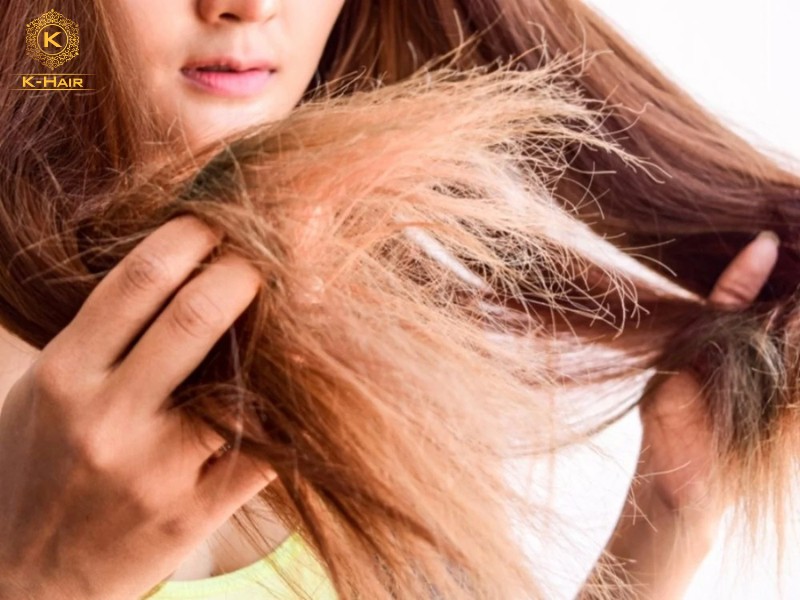
- When your fingers slide through a High porosity hair, the touch will be completely different from Low porosity hair: the hair strand will feel rough, coarse and brittle, with small bumps along the ends to the roots, as the cuticle layers are lifted and completely open.
Notes: When testing your hair porosity or answering “What is porous hair?”, especially when using the sliding or spraying test methods, you should also bear in mind that different sections of the hair would have different porosity. In fact, the hair’s ends are often the part with less nutrient provision from the root, as well as more often subjected to external factors such as high heat → the natural cuticle layer seen in the bottom lengths are often more damaged and lifted, hence, is of higher porosity.
Furthermore, just to be safe, we would recommend you to run multiple tests through the hair to achieve more accurate and precise results, as well as be more sure of the actual porosity of your hair. Plus, all the above tests are highly doable and convenient, requiring only a small amount of waiting time → hence, why not conduct them all for a better and more precise result?
Read more: Hair lowlights vs Hair highlight
6. What does Low porosity hair look like?
Generally, given its features and signature cuticle layer, Low porosity hair would come with a distinct appearance that cannot be mistaken for any other hair types.
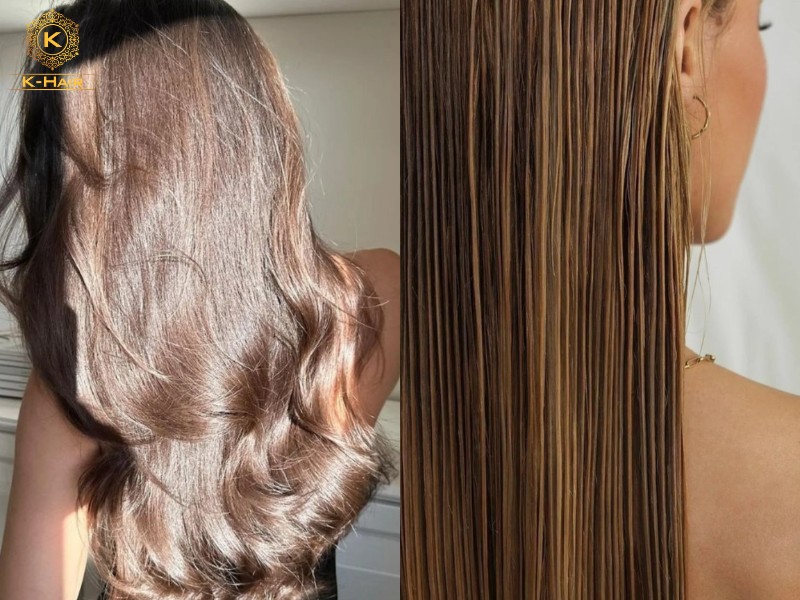
Low porosity hair is identified by its tightly pressed and closed cuticle scales that run along its entire hair shafts. Having intact, aligned cuticles would allow the hair to better lock in moisture and nutrients inside – delivering a healthy hair look that is accompanied by smooth, durable and strong hair strands that are extremely hard to break.
Furthermore, thanks to having all of its cuticles aligned in the same direction, this protective layer can also function as a mirror – reflecting light beautifully and waving, shifting flexibly with every movement → truly an eye-catching hair type that all want to achieve.
Although low porosity is not entirely associated with any specific hair texture or patterns, we also have to note that most people with natural straight, or naturally slightly wavy hair are often ones with Low porosity hair. In fact, as these textures are sleek and smooth, with little or only small curves throughout the strands – hence, the cuticles are more lightly to stay aligned and closed completely.
7. What does Medium porosity hair look like?
In terms of appearance, Medium porosity hair tends to be a combination of both Low and High porosity hair – given its mixed cuticle openness.
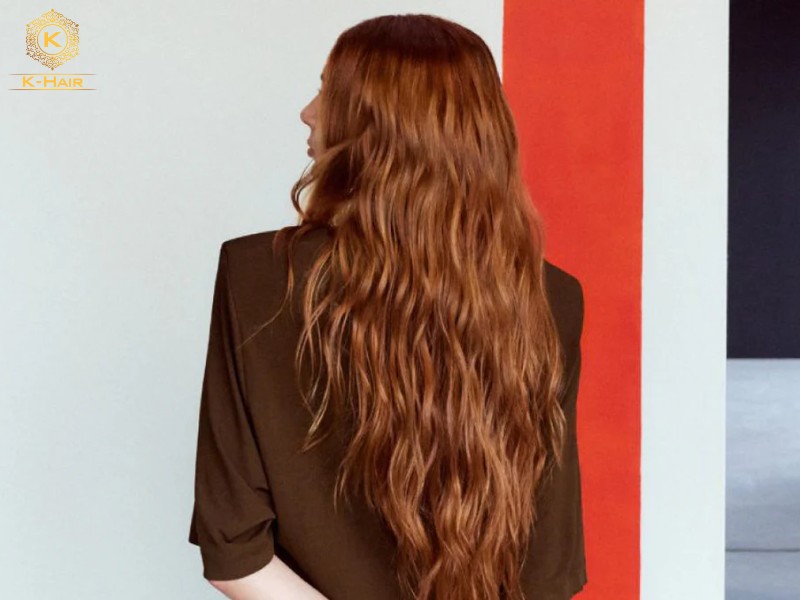
Unlike the other two, Medium porosity hair neither have completely closed or completely opened hair cuticles. Rather, the hair features both of these traits, with more lifted, or slightly lifted cuticle scales integrated into the original closed one – creating a perfect and low-maintenance balance. Therefore, when discussing appearance, Medium porosity hair would maintain most of the softness and smoothness seen in Low porosity hair, with a rather natural, evenly-distributed hair shine rather than the polished, lustrous look of the aforementioned Low porosity hair.
One common trait that all the porosity levels share that can also be seen in Medium porosity hair is that any hair texture could be of medium-range absorption ability. However, one of the most common hair textures and patterns to have this porosity level is the wavy, loose curly or textured straight hair. In fact, these textures offer the perfect balance of both sleekness and curls, allowing more opened cuticles alongside the original closed ones.
8. What does High porosity hair look like?
Discussing “what is porous hair?” – we have to mention the signature and unique look of the High porosity hair, which is heavily influenced by the signature cuticle structure of the hair strands.
High porosity hair – by definition, is hair with the most ability to absorb and let in water, hence, its cuticles are often completely lifted and open to allow more space for the substance to penetrate and pass through the outer layer. However, instead of going into the cortex and being absorbed in, most of the nutrients and moisture will pass right through the hair due to its openness. Therefore, High porosity hair tends to look quite dehydrated, with coarse, brittle and dry hair strands. Furthermore, the lack of moisture and nutrients also cause the hair to have more issues than other hair types – more prone to split-ends and flyout, more likely to frizz and fall out.
On top of that, as all of the cuticles are lifted, High porosity hair often appears dull and lifeless, with a significant lack of shine and luster. Indeed, having open and lifted cuticles also means that the hair cannot reflect light as well as the closed cuticles of Low porosity hair → making the hair look unappealing and dull.
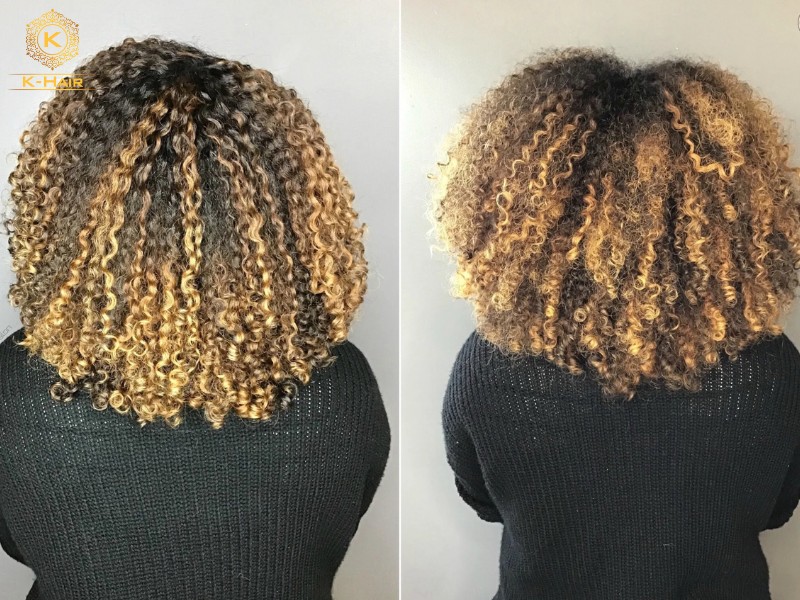
High porosity does not have a specific hair texture that is strictly associated with it, however, the most popular porous hair patterns tend to be coily, curly ones, especially the iconic Afro-textured hair often seen in the African American community. In fact, as these textures feature more curls and waves at its patterns, they would create more open cuticles especially at the twists of the curls → making the patterns inherently more porous.
9. How to care for Low porosity hair?
Discussing “what is porous hair?”, Low porosity hair, while being the healthier and more appealing hair type, often poses a challenge when it comes to daily maintenance and hair care. Because the cuticles lie flat and tightly closed, products tend to remain on the surface instead of penetrating deep inside the inner layers, leading many people experiencing huge buildup, finding it extremely hard to achieve long-lasting hydration. To maintain its softness, shine, and overall manageability, low porosity hair often calls for an extensive, thorough and specialized caring routine that focuses on lightweight products, with subtle nutrients rather than rich, heavy ones:
- Use lightweight, water-based hair products: For Low porosity hair, using heavy products is rarely ideal, as the rich nutrients inside cannot be absorbed into the inner layer and would only cause more product buildup. Therefore, the lightweight, water-based hair product would always be the better option compared to this. Furthermore, natural ingredients like aloe vera and honey can help to provide more moisture into the strand, which is exactly what low porosity hair needs. Indeed, these products keep the hair soft and hydrated without leaving that thick, greasy layer on the surface.
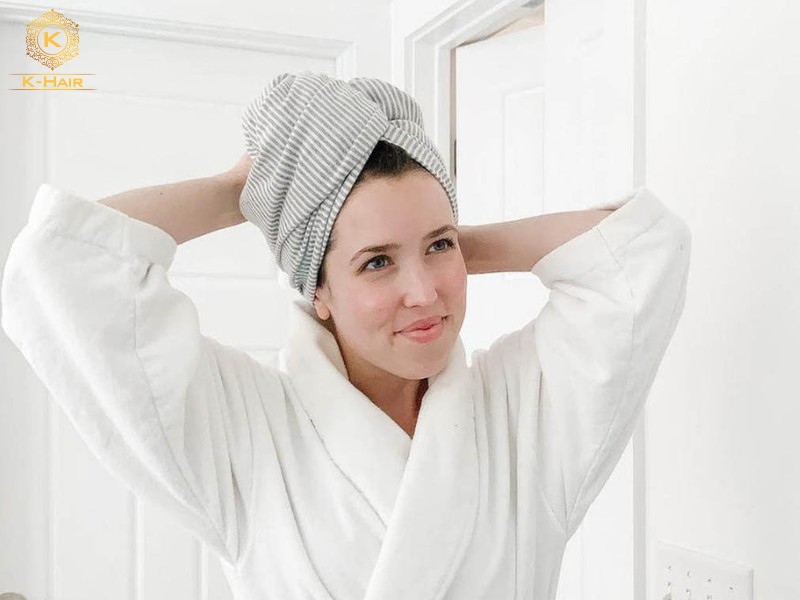
- Incorporate heat to improve absorption: Because low porosity hair has tightly closed cuticles, the external moisture cannot have the open space to leak into the inner layers of the strands. Adding a bit of heat during conditioning is among one of the easiest and most doable ways to fix that. Either using a steamer, a warm towel, or even a hooded dryer can help lift the cuticles slightly, allowing the conditioner to actually soak in. After that, to close the cuticles to re-seal the nutrients and moisture inside the outer layer, people would simply rinse their hair with cold water to finish the process. This step improves softness, elasticity and overall manageability often needed for clients with low porosity hair
- Wash the hair regularly to remove buildup: Since products tend to sit on the surface, low porosity hair builds up residue very quickly – causing the hair to appeal duller, stickier and oilier over time. That’s why washing the hair regularly every 2-4 days is so important to get rid of the long-standing product build-up. In fact, by doing so, the process can help to remove leftover oils, conditioners and styling products that block moisture from entering the hair shaft, as well as eliminating that dullness coming from too much buildup along the hair strands.
- Maintain a simple, moisture-focused routine: Low porosity hair doesn’t need too many steps as High porosity hair. In fact, the more products you layer, the more buildup it gathers and the harder it becomes for the hair to actually absorb anything. A simple routine that focuses on moisture, gentle heat during conditioning and occasional detoxing is always the most effective alternative. By doing so, the maintenance process can maintain the hair as balanced, manageable and naturally shiny as it is, without unnecessary buildup.
10. How to care for High porosity hair?
What is Porous hair – High porosity hair, as easy as it is to receive and let in moisture and treatments, still struggles to actually retain those substances very much often losing them due to the signature cuticle structure. In fact, because the cuticles are lifted, gaps and holes along the hair shaft make the strands more prone to dehydration, tangling, dryness, and breakage. To maintain strength, shine, and long-term manageability, high porosity hair requires a complex routine that focuses on sealing moisture in, reinforcing the cuticle layer, and protecting the strands from any further damage:
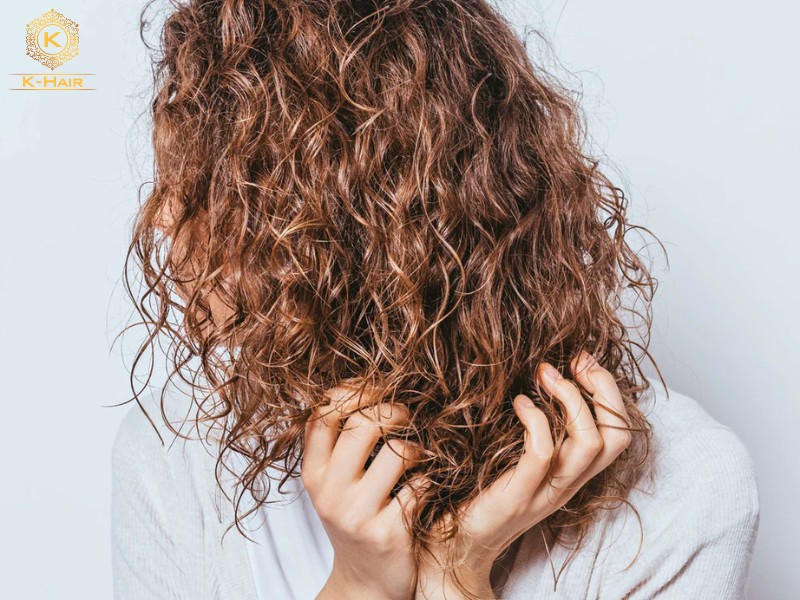
- Use rich, heavy-in-protein products: For High porosity hair, lightweight formulas usually don’t do much, because the raised cuticles cannot hold moisture for as long as Low porosity hair – the moisture tends to slip through rather than staying inside. Therefore, this particular hair type would definitely benefit from thicker, heavier products or creams, butters and leave-ins conditioners, as these product lines can actually fill in and shrink the gaps along the hair cuticles, and slow down moisture loss. Ingredients like shea butter,… can offer deep nourishment, helping the strands stay moisturised for longer periods of time rather than providing a temporary solution.
- Seal moisture using oils or creams after hydrating: Because High porosity hair loses moisture very quickly, sealing moisture becomes one of the most essential steps in the routine. Many high porosity hair consumers rely on layering methods such as the LOC or LCO routine, starting with a liquid or leave-in conditioner (L) to hydrate, following with an oil (O) to lock everything in, and finishing with a cream (C) for extra softness. This method is widely proven to achieve actual results by many cosmetic chemists, and is often highly recommended for people with this demanding hair type, especially for African American women.
- Avoid excessive heat and chemical exposure: Given that the hair is already more fragile than the other two types, too much heat styling, bleaching or chemical treatments can make the cuticles lift even further, worsening dryness and breakage for all hair strands. Hence, it is always necessary for customers to limit heat-inducing styling and chemicals as much as possible, and in cases where heat is necessary, such as mandatory styling, a proper heat protectant is the best way to minimize further damage and keep the hair manageable.
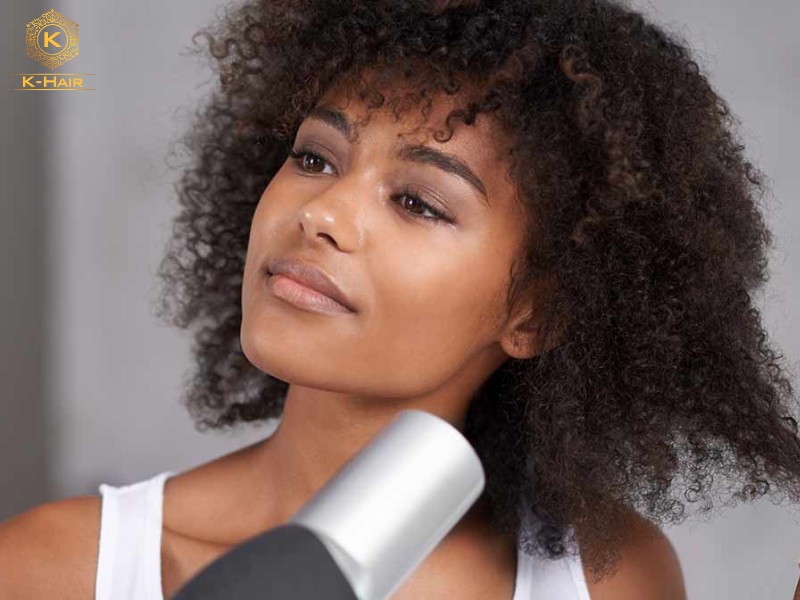
- Using protective hairstyles when possible: Protective styles such as braids, twists can help High porosity hair maintain moisture for a much longer time, as they reduce constant friction and exposure to external harmful factors like humidity or sunlight. These styles also minimise tangling and breakage, giving the hair time to stay hydrated and grow without too much environmental effect.
- Rinse with cool water to help close the cuticles: Ending the washing routine with cool water is a simple but highly effective step. Since High porosity hair has naturally raised cuticles, cool water helps them close and lie flatter against each other, allowing the hair to hold onto moisture better and reducing frizz at the same time. This step, though easy to do, makes a big difference in keeping the hair as smooth and as manageable as it can be.
11.Conclusion
With the information provided in this article, we hope that we have managed to assist young women in the hair industry with the overall information, tips, and most importantly, what is porous hair. Navigating through the complex hair industry requires long-term commitment and support from trustworthy partners, we proudly present ourselves not only as a trusted hair expert, but also a supportive friend who will always have your back in this somewhat overwhelming market.
Tired of taking care of your natural hair and thinking about switching to hair extensions and wigs? Contact us through the following link:
- Address: 10A, 171 Nguyen Ngoc Vu, Yen Hoa, Hanoi, Vietnam
- Phone: +8492 633 2545
- Email: [email protected]
- Facebook: https://www.facebook.com/KHairFactoryVN/
- Whatsapp: +8492 633 2545