
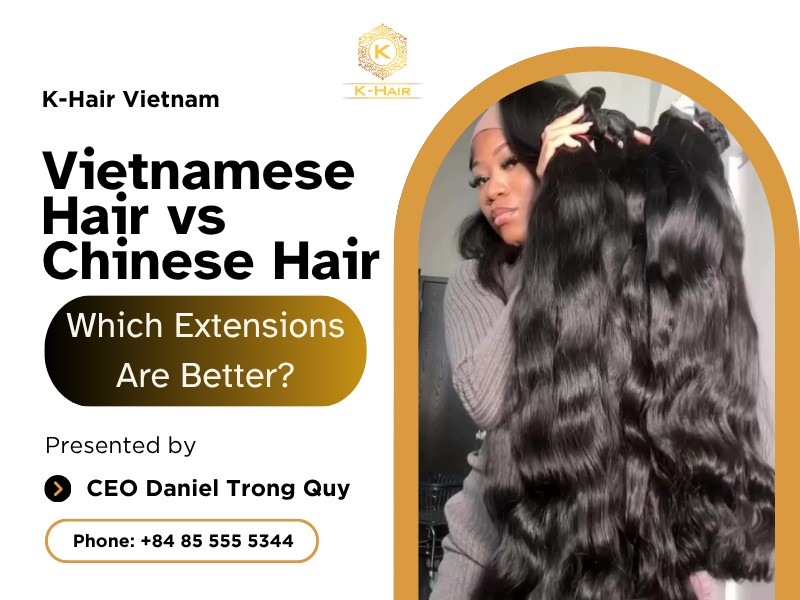
Sourcing hair extensions overseas and you’ll find yourself at the same crossroad every time. One road is Vietnamese hair – the market’s famous premium quality hair line, and the other leads to Chinese hair – claiming the same quality with just half the price. As a hair business owner, it is hard to tell apart marketing pitches from authentic, factual quality claims, let alone deciding between two hair origins like Vietnamese hair vs Chinese hair.
As the two dominant sources behind the global hair extension supply chain, Vietnamese and Chinese hair are locked in continuous competition. To settle the debate once and for all, this guide breaks down exactly what separates the two, and where the difference actually comes from: sourcing and processing.
1. What Is Vietnamese Hair? Origin & Quality
Throughout the years, Vietnamese hair has been taking over the hair extension market by storm, becoming one of the market’s go-to for quality and performance. However, as popular as it is, many questions were raised on how this hair origin came to live, and how its sourcing shapes its features and traits. These questions will meet their answer in the following sections:
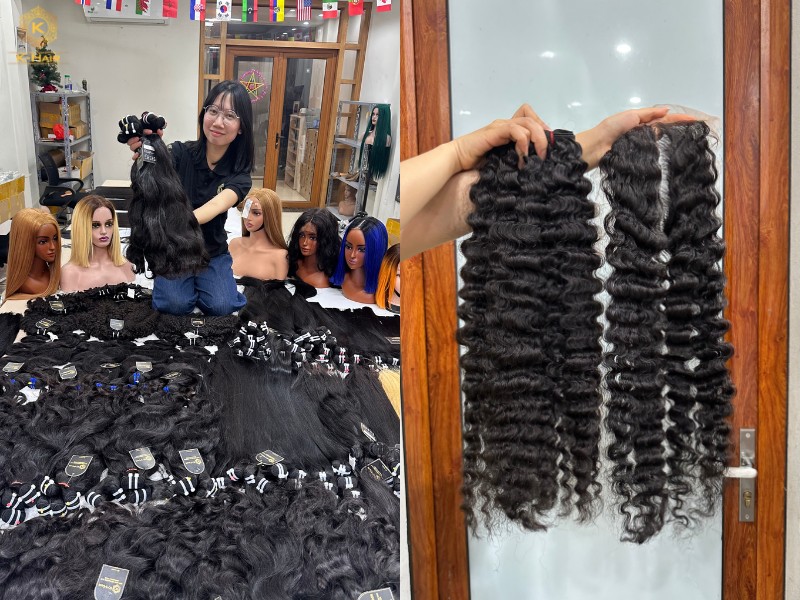
1.1. Vietnamese Hair Origin – How It Was Collected
By definition, Vietnamese hair is 100% natural human hair sourced directly from women in Vietnam, primarily from mountainous and rural regions. Thanks to the demographic’s traditions and economic states, the hair is grown long and left largely untouched by chemical treatment before being cut and sold.
This origin is best known for arriving in its uncompromised Raw state where the cuticle has never been chemically stripped or processed. Because these donors rarely dye, perm, or heat-style their hair before its collection, the strands are able to keep their natural dark brown to black color, along with a soft, silky, naturally straight texture.
This sourcing reality is the firm foundation backing Vietnamese hair’s reputation in the first place. Without harsh chemicals interfering along the way, each strand retains its natural strength, elasticity and cuticle alignment – resulting in an unmatched level of silkiness and tangle-resistance.
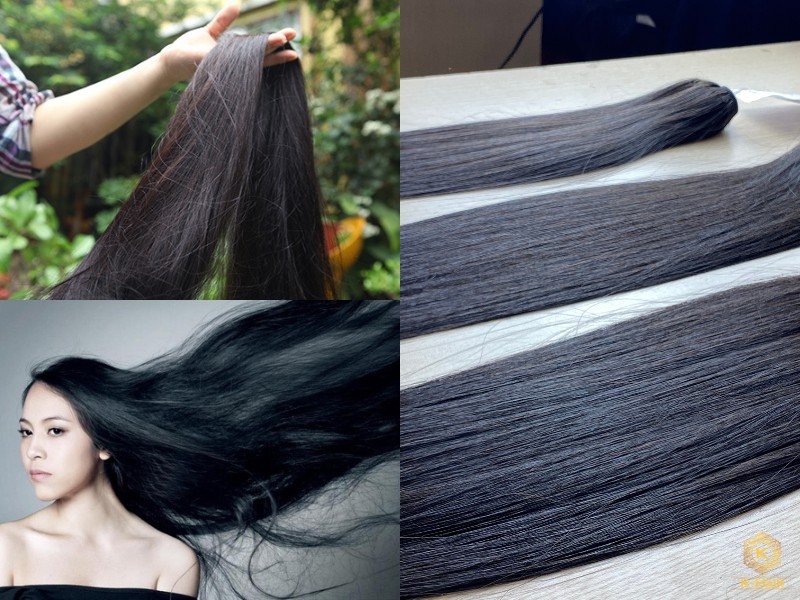
1.2. Is Vietnamese Hair Good Quality?
Yes – Vietnamese hair is widely considered one of the highest-quality, most premium hair extension options on the global market today, and its reputation is backed by multiple measurable traits:
- Extreme Durability: With proper care, Vietnamese hair typically lasts 2 to 5+ years – several times longer than most mass-market alternatives.
- Chemical-Free Integrity: Because it’s raw or virgin, cuticles stay intact and aligned, practically eliminating the matting and tangling common with heavily processed hair.
- Full Ends: High-quality bundles are usually Double Drawn, or even Super Double Drawn – meaning the bundle keeps a consistent thickness from root to tip, instead of thinning out toward the ends.
- Bleachability: Despite being naturally dark, it can safely be lifted all the way to a Level 10 (#60 Platinum Blonde) while still holding curls exceptionally well without any structural damages.

Vietnamese hair is widely considered one of the highest-quality, most premium hair extension options on the global market today
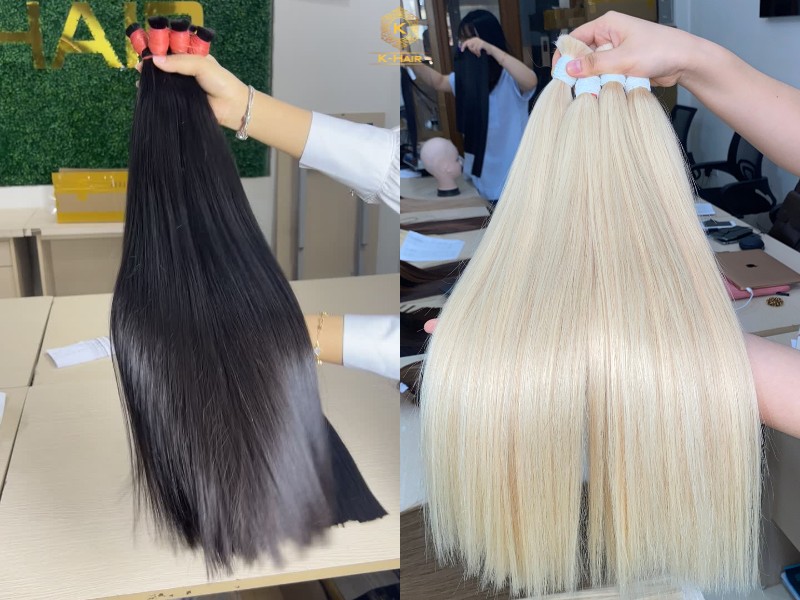
Expert Tips: One trait buyers often overlook is how well Vietnamese hair performs under repeated heat styling – a direct result of that intact cuticle layer. Curls and waves can last for hours when done on the thick, dense Vietnamese hair strands, which explains its higher price point than most other origins on the market.
2. What Is Chinese Hair?
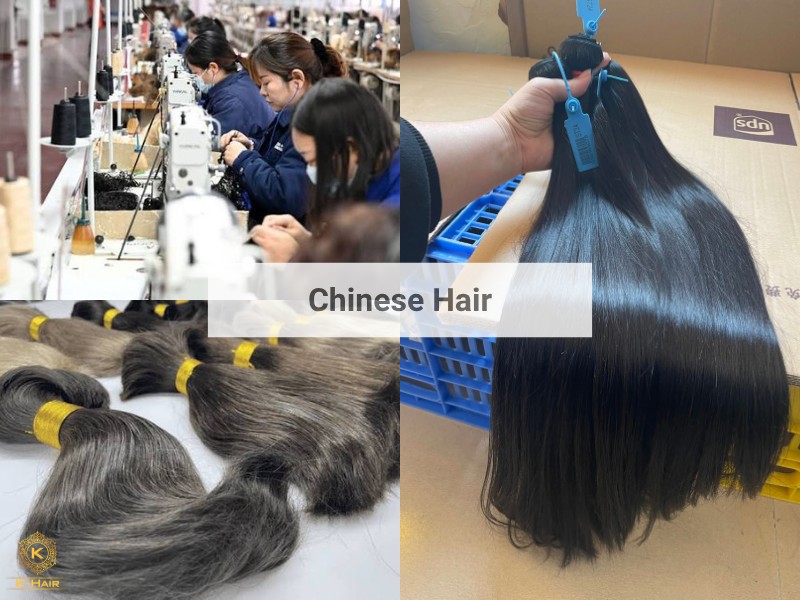
Chinese hair, on the other hand, is human hair collected from diverse, mixed sources across China and neighboring Asian countries. To make this mixed sourcing more appealing, after collection these hair strands will then be processed at scale to create a more uniform, market-ready product.
The reasons are simple. Due to the developed economy of the country, Chinese women are more exposed to modern, chemical-based trends like bleaching, heat-styling, leading to a steep decline of authentic hair sources. To supply for the growing wigs and extension market, most Chinese hair factories have to resort to sourcing hair from other places – India, Vietnam, Cambodia and Burma,….
After sourcing is where the silicone processing comes in. To create a uniform product out of mixed-origin bundles, manufacturers acid-wash the hair to strip away the original cuticles entirely, then coat the strand in a silicone bath. The result is hair with an incredible out-of-the-box shine – but one that only lasts until the silicone coating washes out. Once that happens, the stripped cuticle underneath is left exposed, and the hair becomes prone to severe tangling and dryness.
3. Vietnamese Hair vs Chinese Hair: The Ultimate Breakdown
Once you understand how each origin is sourced and processed, the difference between the two becomes far easier to spot at a glance. The table below lays out exactly where each one stands, across the criteria that matter most:
| Feature | Vietnamese Hair | Chinese Hair |
| Origin & Sourcing | Mostly raw/virgin hair collected directly from single donors (often in rural regions). | Often sourced from mixed suppliers (including imported hair) and mass-collected. |
| Texture & Feel | Naturally thick, dense strands with a smooth, silky feel thanks to intact, aligned cuticles. | Finer, lighter strands; silicone-coated for an initial glassy smoothness that fades once washed out. |
| Processing | Minimal chemical processing; cuticles typically remain intact. | Heavily processed chemically to standardize style, texture, and color. |
| Styling & Dyeing | Handles heat styling, bleaching, coloring, and structural bone-straight sets exceptionally well with minimal damage. | Harder to re-dye or bleach due to prior treatments; over-styling can cause quick damage. |
| Lifespan | 2 to 5+ years with proper maintenance. | Under 1 year on average before tangling or shedding increases, once the silicone coating wears off. |
| Price Point | Moderate to high initial cost due to quality and raw sourcing. | Generally lower upfront cost, making it ideal for budget options or short-term wear. |
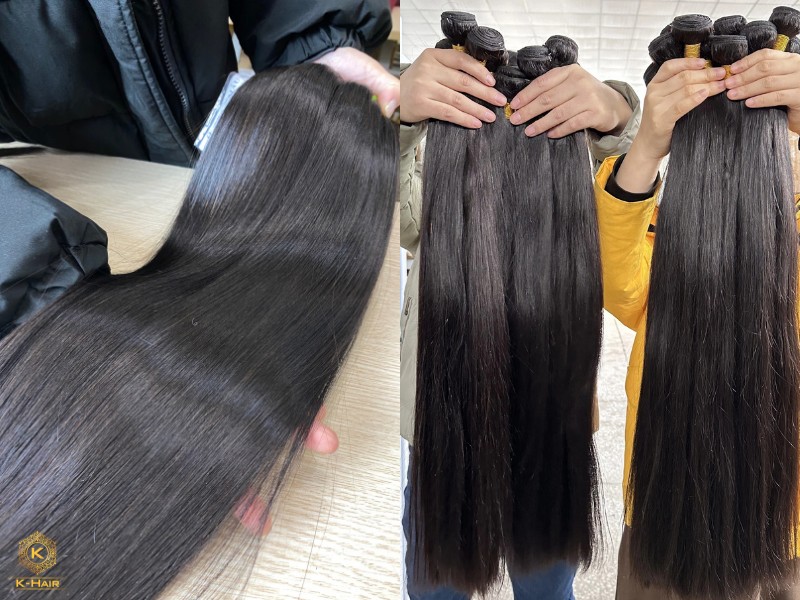
If you’re unsure whether the bundle in front of you is genuinely raw, our verification guide walks through the burn, bleach, and feel tests vendors use to prove it.
4. Top 3 Vietnamese Hair Vendors vs Top 3 Chinese Hair Vendors
After you have made up your mind between the two options of either Vietnamese hair vs Chinese – you would also have to choose the specific vendor to source from as well. Here below are three trusted names on each side of the market – an ideal list of recommendations for business startups:
4.1. Top 3 Vietnamese Hair Vendors
Vietnamese hair vendors are well-known in the industry for their dedication to quality, authenticity, and their commitment, support for their customers. Among the available names on the market – the three most trusted are:
4.1.1. K-Hair
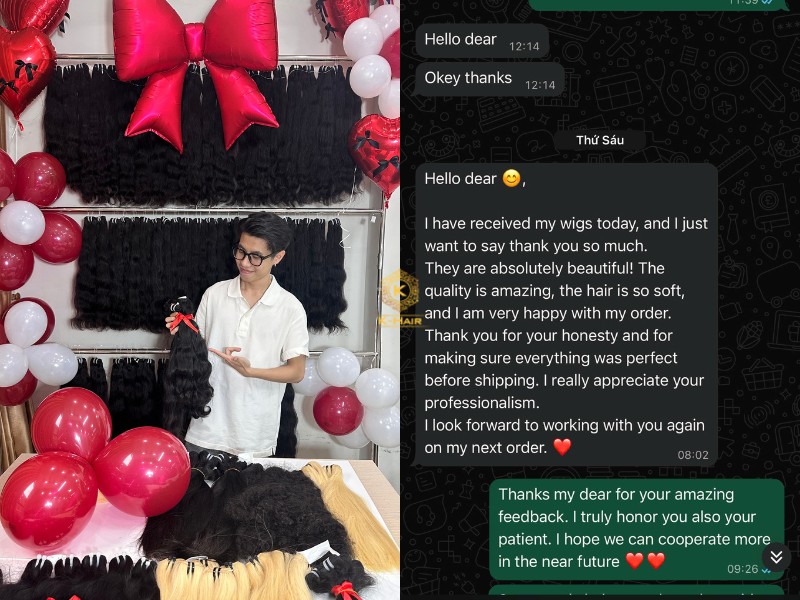
K-Hair has been operating since the 1990s, making it one of the pioneering names in Vietnamese hair export. Built around single-donor sourcing, minimal chemical processing, they provide an expansive, factory-direct wholesale catalog of 100% Vietnamese Raw human hair – with full OEM/ODM packaging customization for business owners building their inventory. With over three decades in the industry and 10,000+ clients served worldwide, K-Hair carries the longest verified track record among Vietnamese exporters.
| Feature | Details |
| Address | 171 Nguyen Ngoc Vu, Cau Giay District, Hanoi, Vietnam |
| Core Product | Wholesale 100% Vietnamese human hair (raw bundles, bone-straight wefts, lace closures/frontals, and custom wigs) |
| Price | $300 – $1000+/kg (Factory-direct wholesale B2B pricing depending on length and grade) |
| Pros |
|
| Cons | Production and international shipping lead times – as most of their products are made-to-order |
4.1.2. APOHAIR
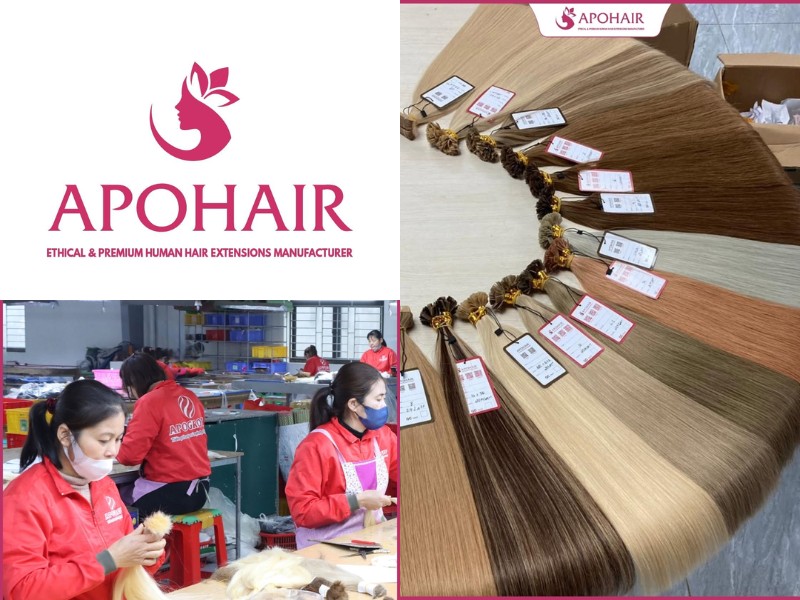
APOHAIR is known as one of the largest hair factories in Vietnam, catering especially to wholesale customers and salon networks. They specialize in ethically sourced, single-donor raw hair produced at a scale most competitors can’t match. However, international buyers must factor in overseas shipping lead times, import tariffs, and minimum order requirements typical of direct factory manufacturing.
| Feature | Details |
| Address | Duy Tan, Cau Giay District, Hanoi, Vietnam |
| Core Product | Wholesale 100% human hair extensions (raw bulk, wefts, tape-ins, nano tips, lace closures/frontals, and wigs) |
| Price | $200 – $800+/kg (Factory-direct wholesale B2B pricing depending on length and grade) |
| Pros |
|
| Cons | Potential batch-to-batch variation across large volume orders |
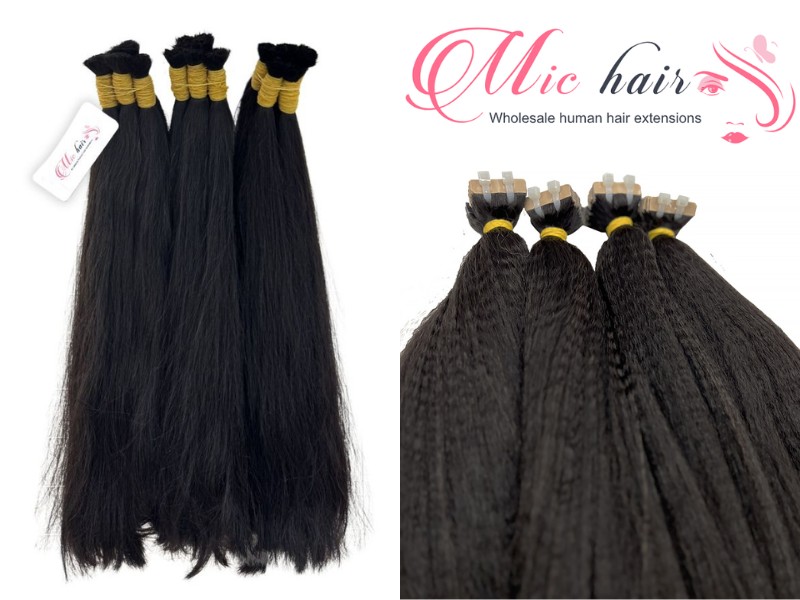
4.1.3. Mic Hair
Mic Hair has built its name on vast wholesale exports to the US and African markets, specializing specifically in premium human hair bulks and weaves. They also stand apart by specializing heavily in authentic raw Cambodian hair alongside raw Vietnamese hair – making them among the rare companies – besides K-Hair – to provide Cambodian hair in Vietnam.
| Feature | Details |
| Address | Ham Nghi Street, Nam Tu Liem District, Hanoi, Vietnam |
| Core Product | Authentic Raw Cambodian hair bundles, raw Vietnamese machine wefts, deep wave/curly textures, and bulk braiding hair |
| Price | $300 – $800+/kg (Priced by origin, length, and double/super-double drawn density) |
| Pros |
|
| Cons | Lengthy production and international transit time – from 2 to 4 weeks → not suitable for urgent orders |
4.2. Top 3 Chinese Hair Vendors
Chinese hair vendors, on the other hand, are the most experienced and well-established players of the industry – pioneering the hair wigs and extensions market. Some of the biggest names include:
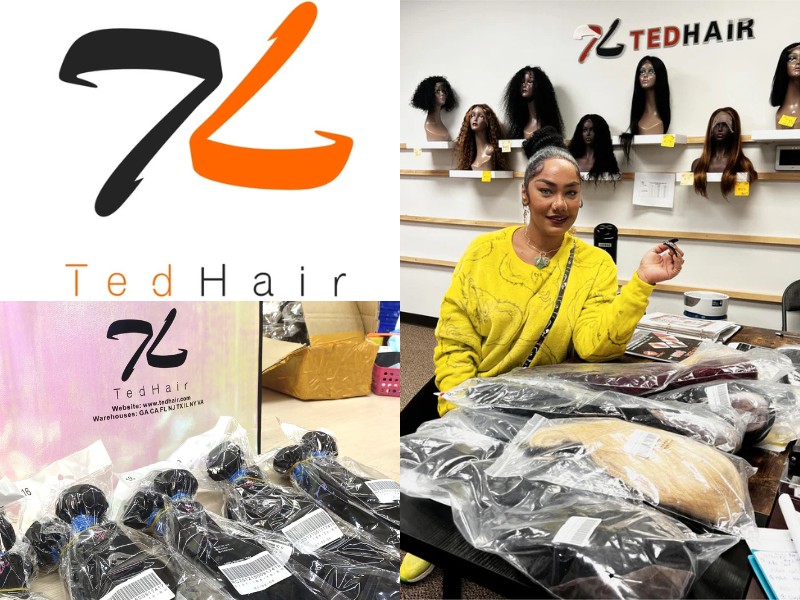
4.2.1. Ted Hair
Ted Hair is currently one of the largest hair manufacturers in the global market – with a dense network of showrooms and physical US warehouses in Atlanta, Houston, LA,… However, because they rely on industrial steam-styling and chemical processing to produce uniform textures at scale, their hair generally has a shorter lifespan than raw, unprocessed single-donor hair.
| Feature | Details |
| Address | Guangzhou, Guangdong, China US Showrooms: Atlanta, Los Angeles, Miami, Houston, Chicago, New York |
| Core Product | Human hair bundles of different origins: Brazilian, Peruvian, and Indian, HD lace closures/frontals, full lace wigs, and tape-ins |
| Price | $18 – $250+ per unit (Bulk factory pricing scaled by length, density, and lace construction) |
| Pros |
|
| Cons |
|
4.2.2. UNice Hair
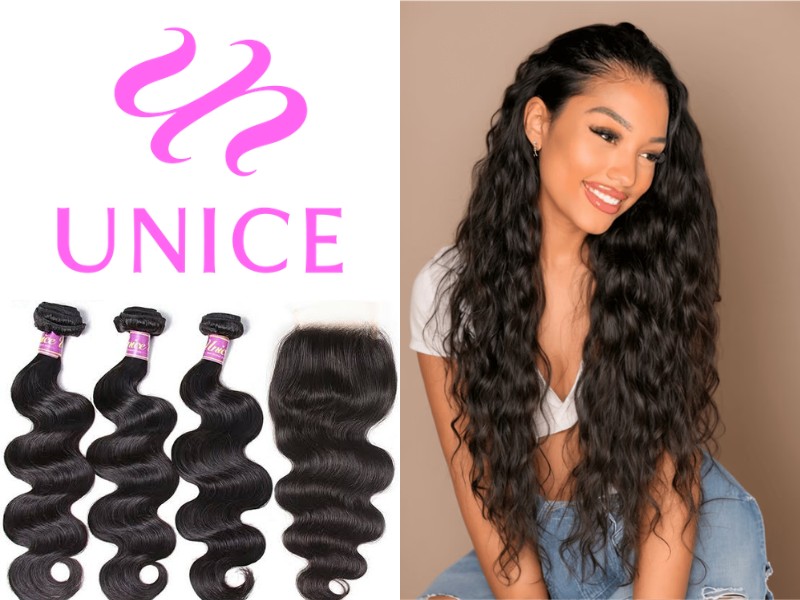
UNice dominates the AliExpress retail and wholesale space with affordable, fast-fashion wigs and bundles for individual consumers and small resellers alike. Its accessible pricing and style variety are the draw, but that same fast-fashion positioning means quality skews toward short-term wear rather than longevity.
| Feature | Details |
| Address | Xuchang, Henan, China
US Showrooms & Warehouses: Culver City & Carson, CA; Brooklyn, NY |
| Core Product | “Wear & Go” glueless wigs, HD lace front wigs, pre-colored human hair bundles, closures/frontals, and custom packaging |
| Price | $80 – $350+ per unit |
| Pros |
|
| Cons | Factory processing/steam-styling reduces hair lifespan compared to raw unprocessed hair |
4.2.3. Newtimes Hair
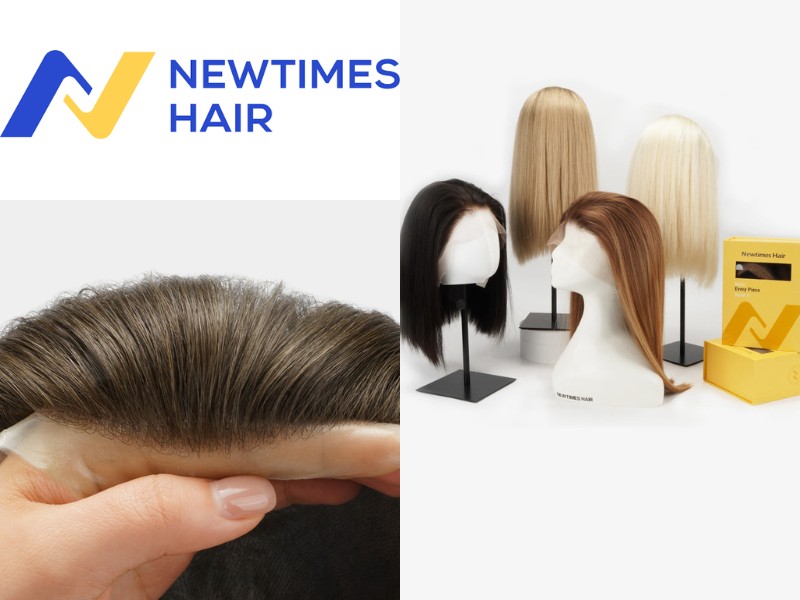
Newtimes Hair, headquartered in Qingdao, is a top-tier manufacturer specializing heavily in men’s hair systems, toupees, and custom full-cap wigs. That focus makes it excellent at what it does, but it also means fewer options for buyers specifically sourcing women’s bundles or weaves. Best for buyers sourcing men’s hair systems or toupees.
| Feature | Details |
| Address | Shandong Road, Qingdao, China |
| Core Product | Men’s hair replacement systems, women’s medical toppers, human hair wigs, and Remy extensions |
| Price | $80 – $350+ per unit |
| Pros |
|
| Cons | Their custom hairpiece production takes 6 – 8 weeks, this plus the international delivery will create huge time straints. |
5. Vietnamese Hair vs Chinese Hair: Production Scale Differences
On a deeper level – the differences between Vietnamese hair vs Chinese hair is never simply based on hair sourcing origins alone. In fact, the gap in quality between Vietnamese and Chinese hair often traces back to how each country’s factories are actually built. One prioritizes manual, small-batch craftsmanship, while the other is engineered for speed and volume:
| Vietnamese Hair Production | Chinese Hair Production |
→ High-quality, lasting and unprocessed hair |
→ Massive production volume, with a wide range of texture, color diversity |
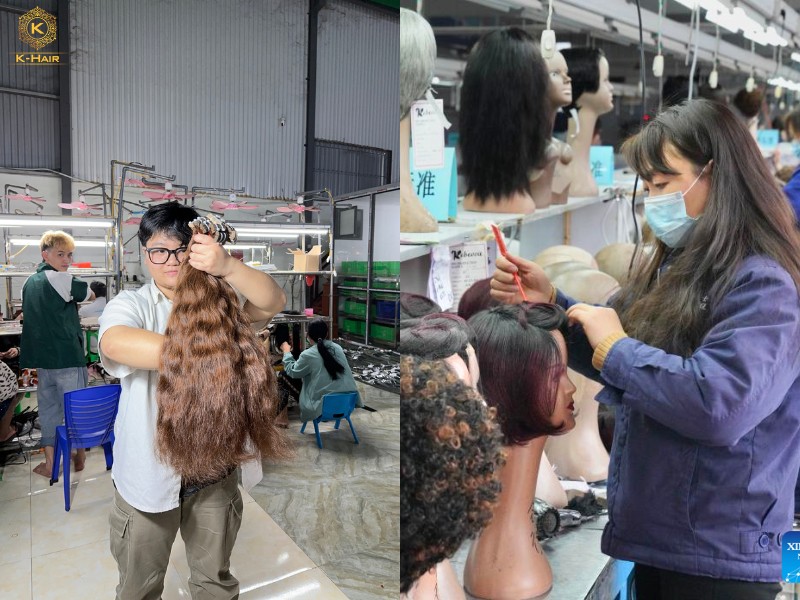
Expert Insight: Buyers often assume a bigger factory automatically means better quality control, but the opposite tends to be true here. Manual, hand-sorted wefting is what keeps Vietnamese cuticles aligned in one direction – scaling that process up to Chinese-factory volume is exactly what forces reliance on chemical shortcuts like acid-washing and silicone coating instead.
6. Vietnamese Hair Extensions vs Chinese Hair Extensions: Overall Market Appeal
Beyond the numbers, Vietnamese hair and Chinese hair also end up serving two very different segments of the market – and knowing which segment you’re selling to is what should really guide your sourcing decision.
6.1. The Vietnamese Market Appeal (The Premium Shift)
As more buyers become aware of what separates true remy hair from relabeled bundles, high-end salons, custom wig makers, and boutique brands across Europe and North America have been steadily shifting toward Vietnamese hair.
This segment values ethical sourcing, transparency about where the hair actually comes from, and hair they can treat as a long-term investment rather than a disposable product. It’s also the segment most willing to pay for traceability – proof of single-donor origin and consistent bundle-to-bundle quality – because their own clients expect a finished result that can survive repeated coloring, heat styling, and reinstalls.
6.2. The Chinese Market Appeal (The Fast-Fashion Engine)
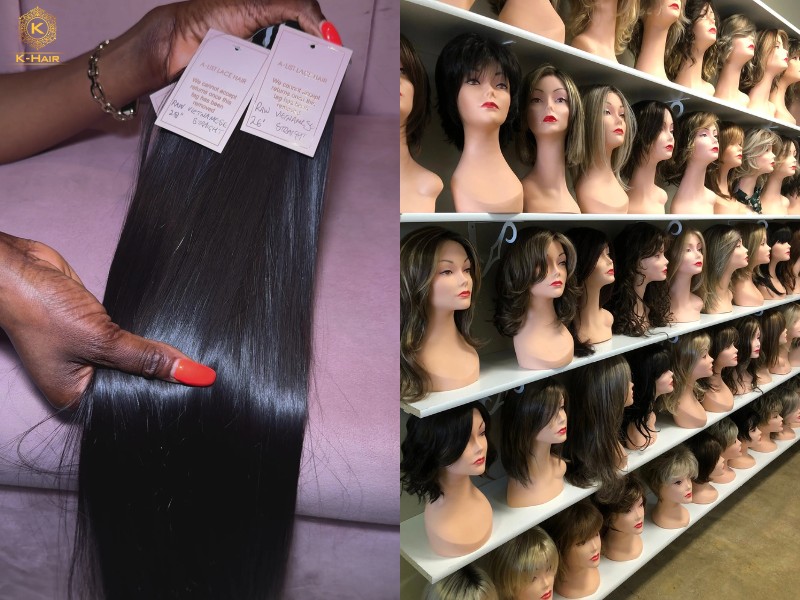
On the other end of the spectrum, Chinese hair continues to dominate the fast-fashion beauty space – AliExpress storefronts, drop-shipping retailers, and massive wholesale markets built around volume.
This segment appeals to consumers who want affordable, pre-styled, “wear-it-for-a-season” extensions, without necessarily expecting them to last beyond a single install cycle. It’s also the segment driving the fastest style turnover on the market – pre-bleached, pre-curled, pre-colored bundles that let buyers change their look every few months, which is exactly the flexibility this market is built around.
6.3. Which Hair Should You Buy?
At this point, the right choice really comes down to your budget and how long you actually need the hair to last – not which origin is objectively “better” in every scenario. You should:
- Choose Vietnamese Hair if: You cater to a luxury, high-end clientele seeking long-term ROI, premium raw quality, and ethical sourcing transparency. Investing in Vietnamese hair might demand a higher upfront cost. However, it will offer durable, dye-friendly extensions that build strong brand reputation, driving in repeat purchases.
- Choose Chinese Hair if: You run a fast-fashion or budget-conscious brand focused on rapid turnover, competitive wholesale pricing, and high volume. Sourcing this hair minimizes initial inventory costs and provides ready-to-sell, pre-styled options that will appeal to the huge proportion of price-conscious customer base.
7. Conclusion
With all the information provided in this article, we hope that we have been able to clear up the confusion behind Vietnamese hair vs Chinese hair. All and all, Vietnamese hair is an investment in longevity and raw quality, while Chinese hair offers budget-friendly convenience and volume – and neither is universally “wrong,” as long as it matches what you actually need it for.
Of course, that durability only holds up if the hair you receive is genuinely what it claims to be – and with resellers relabeling mixed-origin bundles as “premium Vietnamese hair,” sourcing from a vetted, reputable vendor matters just as much as the origin itself.
If you are ready to elevate your brand with authentic, top-tier raw extensions, K-Hair Factory is your ultimate direct-factory partner. Contact K-Hair today to secure premium, ethically sourced Vietnamese hair that keeps your clients coming back.
Ready to source premium Vietnamese hair?
Contact K-Hair Factory directly for wholesale pricing, MOQ details, and free samples.


Pingback: The Honest KBL Hair Review 2026: Are They Worth Your Money?
Pingback: Buying Hair Extensions Wholesale: How To Source Like A PRO