Be honest, have you ever caught yourself staring at a box of hair dye labeled “6A” or “5G” wondering what it means? Or have you ever sat in front of a mirror wondering which category your hair color belongs to?
For experienced stylists, colorists – understanding these hair color levels might be a piece of cake. However, for beginners, or everyday hair users, understanding hair colors and color codes can be a real challenge, whether you’re aiming for a solid single-process color or a multi-tonal Balayage look. And in many cases, this confusion is often left unanswered, leading to hair users ending up with a botched-up dye job, or a shade nowhere close to what they were aiming for.
To make hair color formulas make sense – once and for all – this article will provide the answer.
1. Getting To Know Hair Color Levels
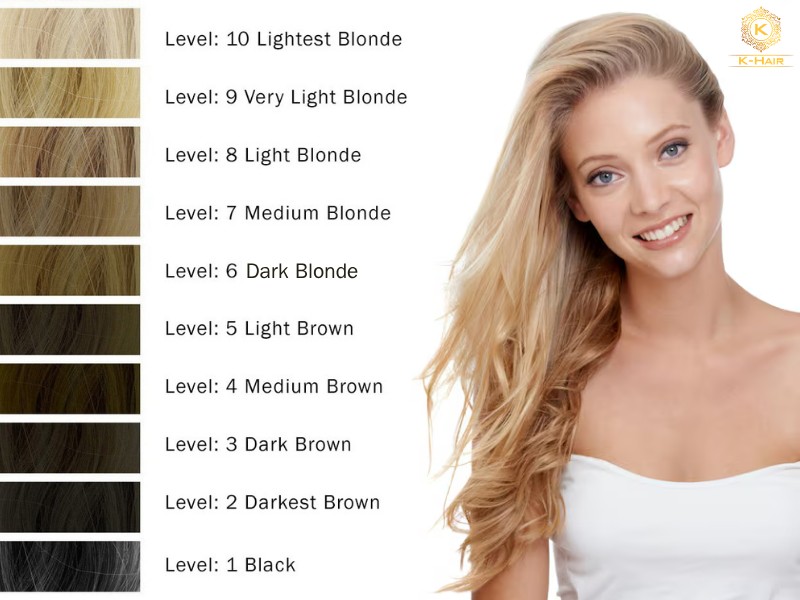
To begin with, hair color levels refer to a universal numbering system used by cosmetologists to measure the lightness or darkness of hair. The list ranges from Level 1 (black) to Level 10 (lightest blonde). Throughout the industry, regardless of the brand – Wella, Redken, L’Oreal – this level number stays consistent, acting as the common language of the coloring world differentiating different hair dye colors from one another.
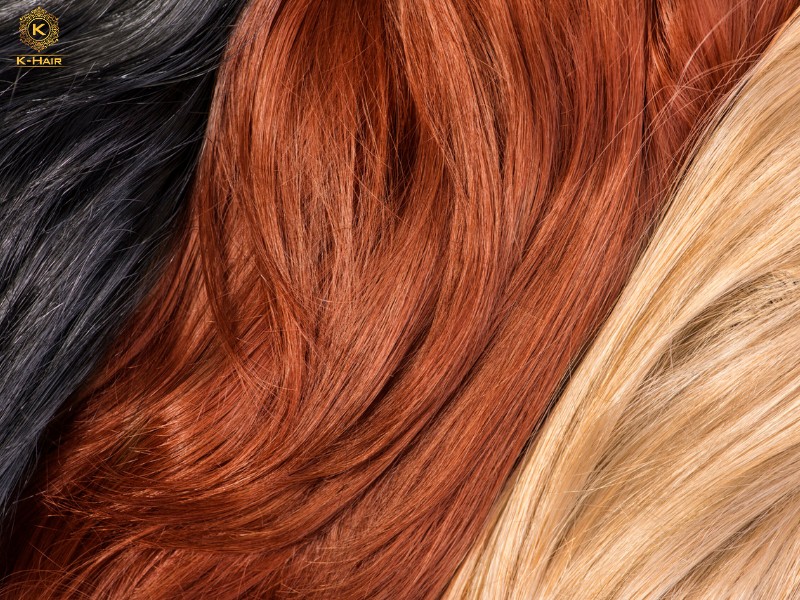
But where does this level actually come from – What decides the hair color in the first place? In fact, our natural hair color is decided by the ratio of two types of melanin sitting inside the cortex of each hair strand – the very same pigment-producing mechanism behind our skin and eye color:
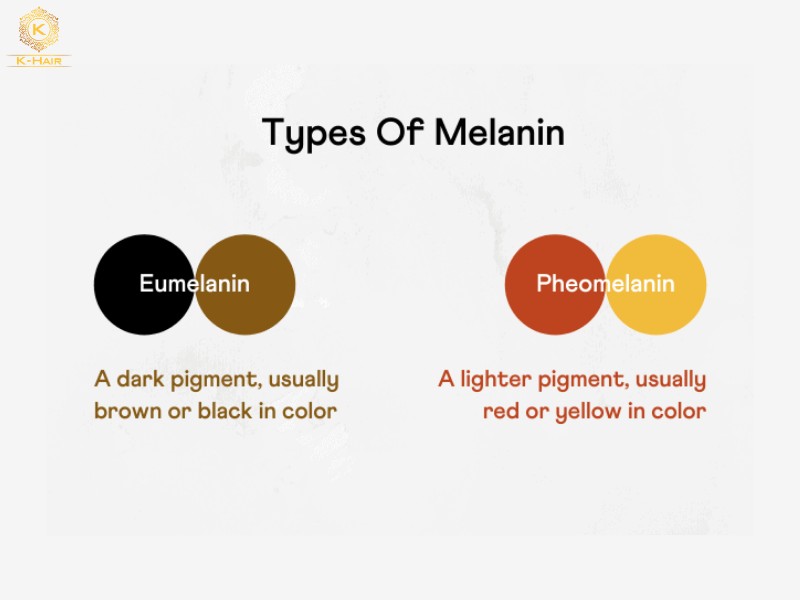
- Eumelanin: The pigment responsible for black and brown tones. The more eumelanin present – and the more densely it’s packed within the cortex – the darker and lower the level.
- Pheomelanin: The pigment responsible for red and yellow tones. Unlike eumelanin, this pigment is always present in the strand – but it only becomes visible once the eumelanin sitting on top of it has been lifted away, whether through genetics or through chemical bleaching.
In reality, it’s rarely about just one pigment being present or absent – it’s the ratio between the two that ultimately decides the final hair color level. A strand with a high eumelanin-to-pheomelanin ratio would naturally sit at Level 1 to Level 3, while a strand with next to no eumelanin would fall into the Level 8 to Level 10 range instead.
2. The Universal Hair Color Levels Chart
As previously mentioned, the universal hair color levels chart includes 10 different levels – from natural black, the darkest natural hair color shade, to platinum blonde, the brightest. Instead of guessing, referencing this chart as a framework will help remove all the blind guesswork from the process. Once you are more aware of your current level and target level, choosing the right shades and bleaching becomes far more effective. Beyond the shade name, this chart also maps out the underlying pigment that surfaces as you lift each level, along with the toner needed to neutralize it – the exact information a colorist needs before opening a bottle of developer:
| Level | Shade | Underlying Pigment When Lifted | Neutralizing Toner |
| 1 | Black | Dark Red / Darkest Brown | Green |
| 2 | Darkest Brown | Dark Red-Brown | Green |
| 3 | Dark Brown | Red | Green |
| 4 | Medium Brown | Red-Orange | Blue-Green |
| 5 | Light Brown | Orange | Blue |
| 6 | Dark Blonde | Orange-Gold | Blue-Violet |
| 7 | Medium Blonde | Gold / Yellow-Orange | Violet-Blue |
| 8 | Light Blonde | Yellow | Violet |
| 9 | Very Light Blonde | Pale Yellow | Violet |
| 10 | Lightest/Platinum Blonde | Pale Yellow / White | Soft Violet |
Expert Tips: Many hair users assume that their level and their shade name (like “chestnut” or “honey blonde”) are the same thing. However, shade names are only marketing labels – the level number underneath is what actually determines the final, real-life result.
3. Breaking Down The Scale: Black vs. Brown vs. Blonde Hair Color Levels
Knowing the hair color level chart is not enough. The next step is recognizing that it naturally splits into two very different territories – black, brown and blonde, each with its own features and bleach performance. Let’s break down the differences:
3.1. Black Hair Color
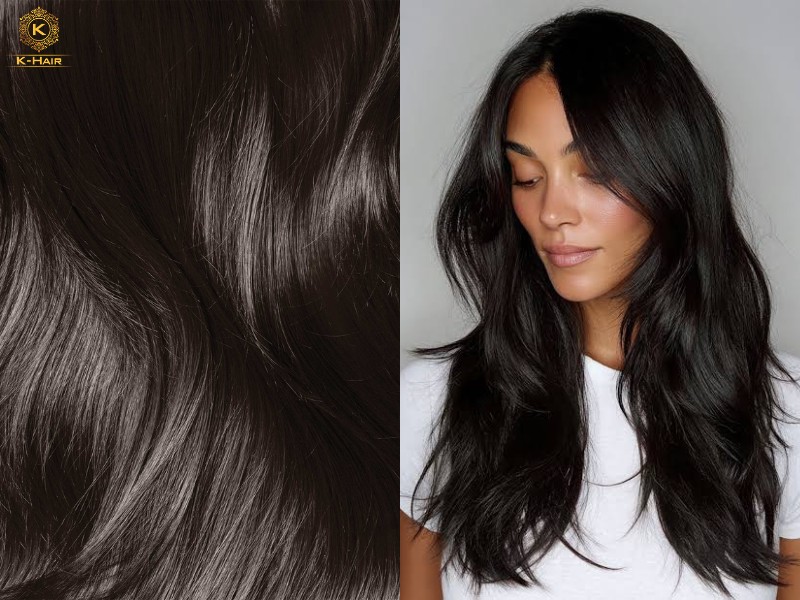
By definition, black hair color level sits alone at Level 1 on the scale – possessing the deepest, most saturated level of Eumelanin. Being eumelanin-dominant, black hair contains strands that are close to the maximum concentration the cortex can carry, leaving next to no underlying blondes or lighter tones visible under normal light.
However, this heavy saturation also makes black hair color levels the hardest and slowest to bleach. Getting from Level 1 to even a Level 6 or 7 often demands multiple sessions spread across several weeks, rather than an immediate result that blonde shades offer.
3.2. Brown Hair Color Levels
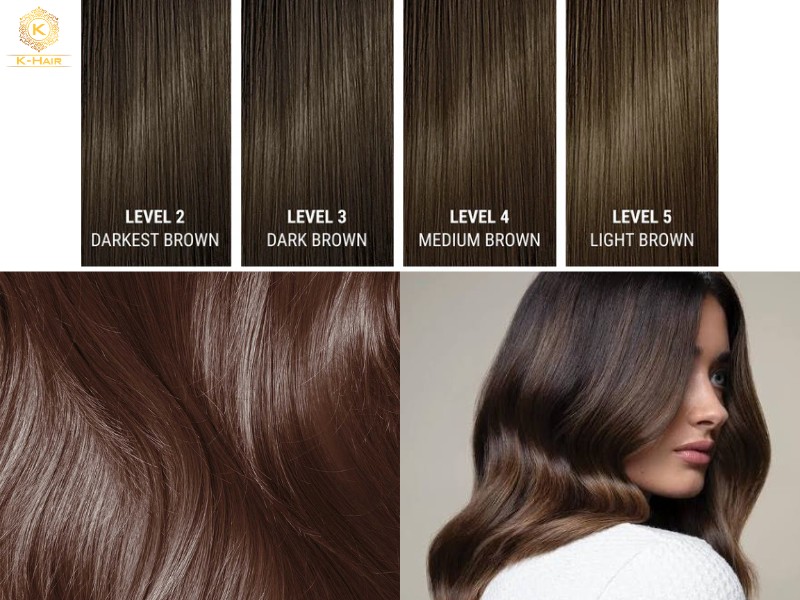
Brown hair color levels occupy the Level 2 through Level 5 range on the scale. And much like black hair, these levels are also eumelanin-dominant – meaning the strand is holding onto most of its natural dark pigment, with very little of the underlying warmth exposed.
However, when lightening brown hair, the underlying pigment exposed is always red or orange. This is because eumelanin lifts away first, unveiling the warmer pheomelanin tones sitting underneath – making a cool-toned result much harder to achieve without proper toning.
3.2. Blonde Hair Color Levels
On the other end of the scale, blonde hair color levels range from Level 6 (dark blonde) to Level 10 (platinum) – a range that dominates Light-colored lace front wigs demand. As hair gets lighter, pheomelanin becomes the visible pigment, exposing the yellow or pale gold undertones underneath the outer layers of the strand.
This is exactly why purple shampoos or toners become a necessity for blonde-level hair. These products work to neutralize the yellow underlying pigment, keeping the blonde clean rather than brassy.
To make the underlying differences between these three hair color tones, let’s look at the summary table below:
| Feature | Black Hair Color Levels | Brown Hair Color Levels | Blonde Hair Color Levels |
| Level Range | 1 | 2 – 5 | 6 – 10 |
| Dominant Pigment | Maximum Eumelanin | Eumelanin-dominant | Pheomelanin (once exposed) |
| Underlying Tone When Lifted | Red/Orange (slowest to show) | Red/Orange | Yellow/Pale Gold |
| Maintenance Need | Minimal maintenance | Minimal toning | Purple shampoo, regular toning |
4. Level vs. Tone: Decoding Hair Dye Numbers
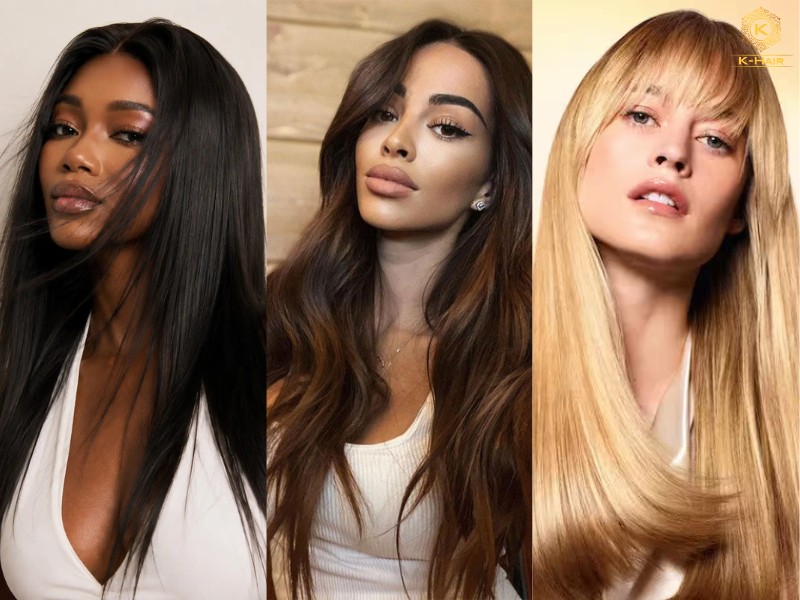
A complete hair color formula contains more than just the hair color levels as numbers. In fact, within one color level there are always underlying tones to it – the same logic behind Highlights and lowlights, which shift the tone without changing the base level. Therefore, the color code you often see on dye boxes always requires both a Level (the depth) and a Tone (warm, cool, or neutral). Missing either piece of the equation is often why a dye job turns out unexpectedly.
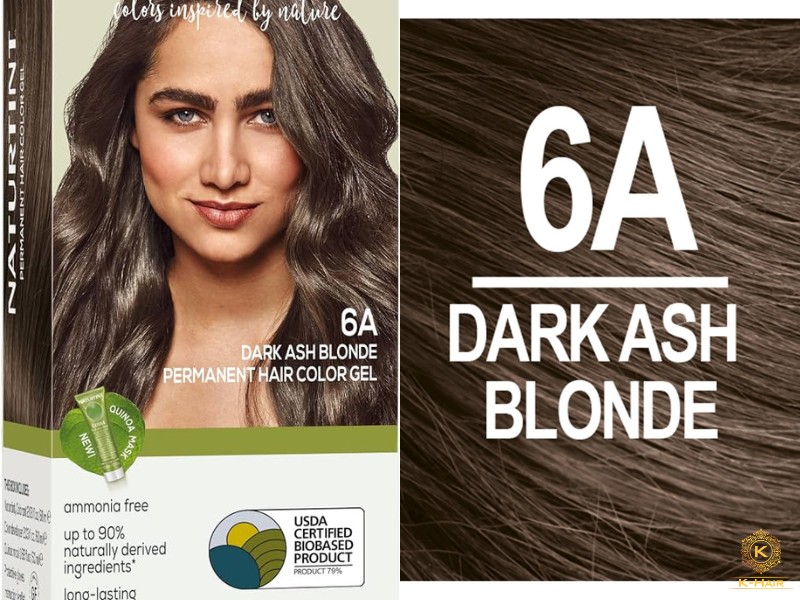
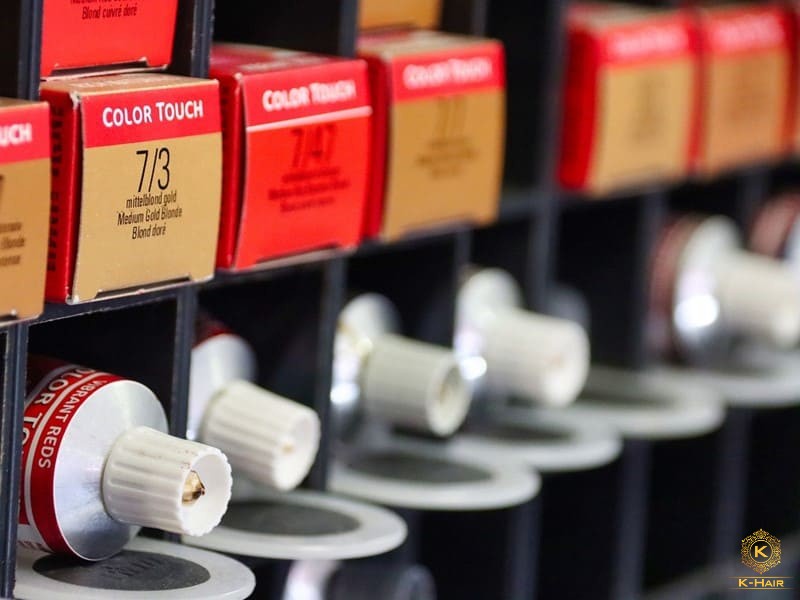
Reading the box, this level-tone combination is usually shown as a letter and number pair. The number – clearly – represents the hair color levels from 1 to 10, while the letter represents the tones:
- N : Natural/Neutral
- A : Ash (cool, blue/green base)
- G : Gold (warm, yellow base)
- C : Copper (warm, orange base)
- R : Red
- V : Violet (cool base to neutralize yellow)
With that same logic, “6A” means Level 6 Dark Blonde with an Ash tone, while “5G” would translate to Level 5 Light Brown with a Gold tone.
However, this is not the only way to represent tones in professional box dye. In fact, another popular way is using numbers after a decimal or a slash:
- .0 or /0 = Natural
- .1 or /1 = Ash (Blue/Green)
- .2 or /2 = Violet/Iridescent
- .3 or /3 = Gold
- .4 or /4 = Copper
- .5 or /5 = Mahogany (Red/Violet)
- .6 or /6 = Red
- .7 or /7 = Brunette/Chocolate (Warm earthy tones)
On the market, sometimes you will see two numbers after the decimal – like 8.13 for example. The first number is the primary tone – Ash, and the second number is the secondary tone – Gold. So with that logic, an 8.13 is a Light Blonde that is mostly cool, but with a slight hint of golden warmth.
5. How To Find Your Color Levels For Hair At Home
If you’re not a professional colorist, determining your own color levels for hair might seem intimidating – but the process can actually be broken down into a few simple steps:
- Isolate a Small Section: Pull a thin strand away from the rest of your hair before comparing – bunched-together hair looks darker than it actually is.
- Use Natural Light: Always assess your hair in indirect sunlight, never under artificial indoor lighting. Fluorescent and warm-toned bulbs can distort how a level actually looks, making a Level 5 appear closer to a Level 6 or 7.
- Check The Roots: Focus on the roots – your virgin, unprocessed hair – rather than the ends. Ends are often faded by sun exposure or old dye, giving a false, lighter color than your actual hair color.
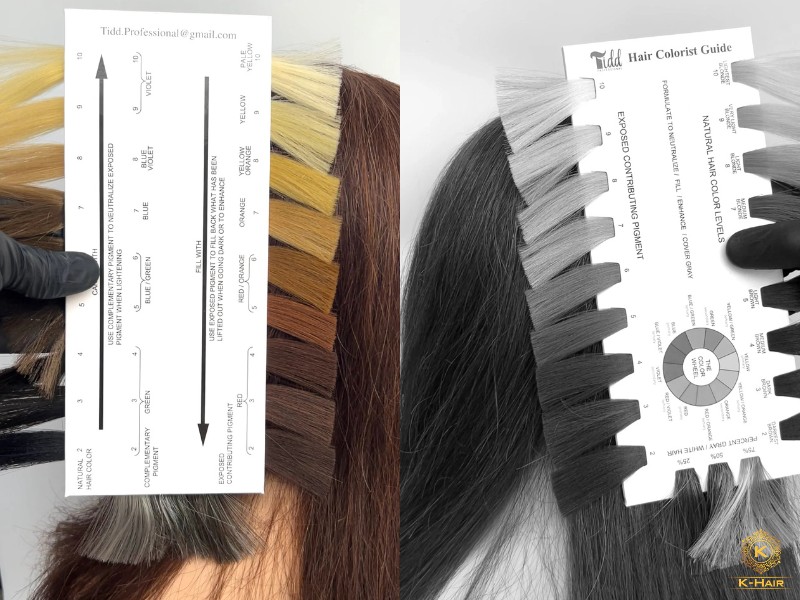
- The Black & White Test : Take a photo of your hair in natural light and convert it to black-and-white. This removes the distracting warmth or coolness from the identification entirely, allowing you to accurately compare your hair color with a greyscale level chart.

Using grayscale level chart is one of the most accurate methods to identify hair colors
Expert Tips: If you find yourself stuck guessing between two levels (somewhere between Level 5 to Level 6, for example), always assume you are the darker level. It is always better to formulate accurately and respect the hair’s safe lifting limits rather than under-processing the hair and getting stuck with a stubborn, brassy underlying pigment!
6. Chemistry and Safety: Moving Between Levels
Safely moving from one level to another isn’t just about picking a shade you like. In fact, it boils down to two things working together: the right chemistry, and the discipline to respect what the hair can actually handle.
6.1. Developer Choice
Coloring your hair can come with its own risks – especially considering the potential hair damage that comes with doing it wrong. One of the common mistakes is choosing the wrong developer.
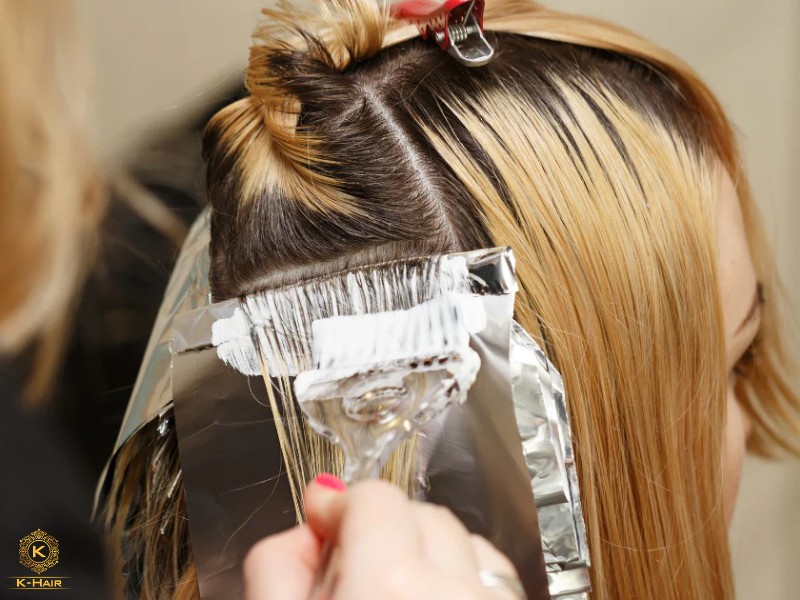
For those who don’t know, developer is a hydrogen peroxide mixture that you use together with your hair dye or hair bleach to open the cuticle and assist the color absorption. So, choosing the right developer volume – the amount of hydrogen peroxide in the product – is what determines how many levels the hair can safely lift or deposit. Generally speaking, the higher the volume, the stronger the lift, and the more damage risk involved:
| Developer Volume | Typical Use |
| 10 Vol | Deposit-only, no lift |
| 20 Vol | Lifts 1-2 levels |
| 30 Vol | Lifts 2-3 levels |
| 40 Vol | Lifts up to 4 levels (professional use only) |
6.2. What to Look Out For
Beyond developer choice, professionals also work within what’s known as a lifting threshold – the recommendation to only lift hair 2 to 3 levels per session.
This isn’t just a cautious guideline pulled out of thin air – it’s tied directly to how much the hair’s internal protein structure can take. Going beyond this threshold in a single appointment can be quick to do harm to the hair’s structural integrity, leading to severe damage, breakage, or an uneven, patchy result. And more often than not, forcing the extra levels doesn’t even get you the desired shade – the strand is far more likely to end up gummy, porous, or shedding before the color ever gets the chance to set properly.
7. K-Hair – Wholesale Colored Hair Solutions for B2B Buyers
For salon owners and distributors, giving your customers the right hair colors is more than just developers, charts or bleach. It also comes down to sourcing the right hair to begin with. Low-quality or mixed-origin hair extensions often react unevenly to color, no matter how correct your formula is.
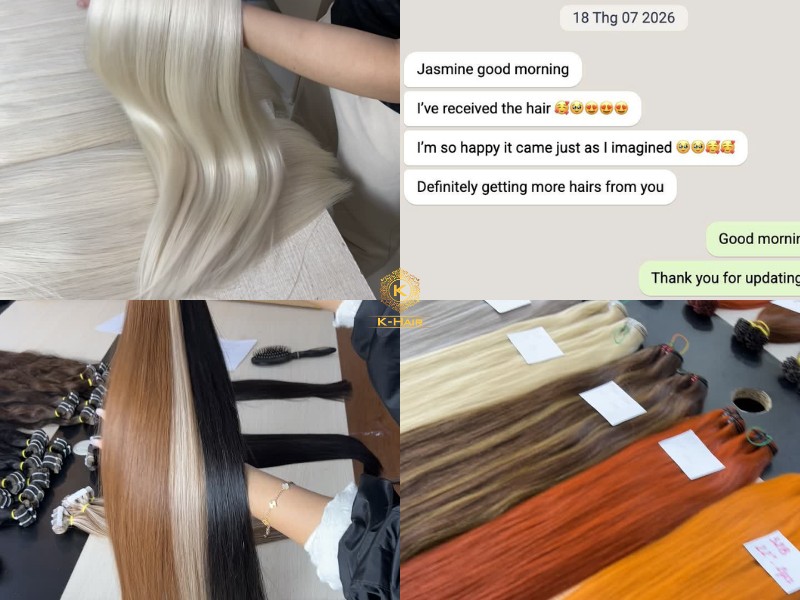
This is where K-Hair comes in. More than just hair, one huge advantage that K-Hair has over their competitions is their unprocessed Raw hair catalogue that can be bleached to #60 Platinum Blonde – equal to the brightest blonde shade of the hair color levels. This is – not only solid proof of their Vietnamese hair’s unprecedented quality, but also provide limitless coloring versatility for hair stylists and salon professionals.
Besides #60 Platinum Blonde, they also provide a wide range of Hair color choices for their buyers. From the natural-looking bright brown, natural black, to the fashion-forward colors like burgundy, blue, dark grey,… there is truly no limit to what they can offer.
8. FAQs about Hair Color Levels
Here are some of the frequently asked questions about hair color levels:
8.1. What is the difference between hair level and hair tone?
Level refers to how light or dark the hair is, on a scale from 1 to 10. Tone, on the other hand, refers to the color’s underlying character – whether it reads warm, cool, or neutral. A complete formula always needs both.
8.2. What hair level is medium brown?
Medium brown sits at Level 4 on the universal hair color levels chart, falling right in the middle of the brown range between Level 2 and Level 5.
8.3. How many levels can I lighten my hair at once?
For the sake of hair health, professionals recommend only lifting hair 2 to 3 levels per session – this is known as the lifting threshold. Going past this in a single sitting risks severe structural damage and breakage.
8.4. What does “N” mean in a hair color formula?
“N” stands for Natural, or sometimes Neutral – meaning the formula does not add any additional warm or cool reflect, staying as close as possible to the level’s natural, balanced tone.
9. Conclusion
With all the information provided in this article, we hope that we have been able to clear up the confusion behind hair color levels and its rather confusing code names. All and all, understanding hair color levels is the difference between a guessing game and a predictable, professional result. However, bleaching and coloring your hair can come with potential mishaps – especially if you fail to identify your natural hair colors or choose the wrong developer volume.
For those with damaged hair from multiple hair coloring sections – a safer alternative is to resort to Hair extensions. End-users, hair stylists, or beauty suppliers thinking about sourcing high-quality extensions that can actually match your/your customers desired shades? K-Hair Factory and their diverse color catalogue is a great way to start.
Ready to source hair that matches any shade on the chart?
Contact K-Hair Factory directly for wholesale pricing, MOQ details, and free samples.