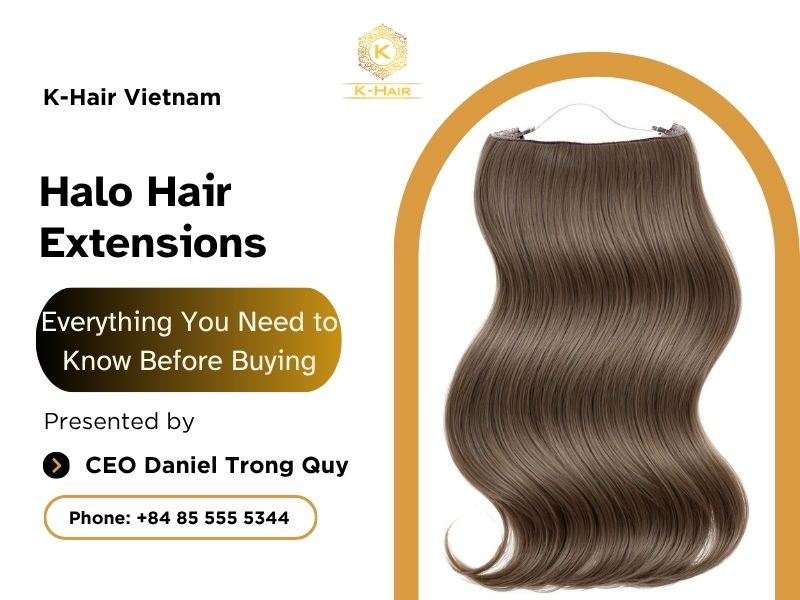
If you want longer, fuller hair without glue, tape, or multiple clips, halo hair extensions can be a practical temporary option. They use a hair weft supported by a thin nylon wire that sits around the crown. Your natural hair is then pulled over the wire to conceal the attachment and blend with the extension.
What Are Halo Hair Extensions?
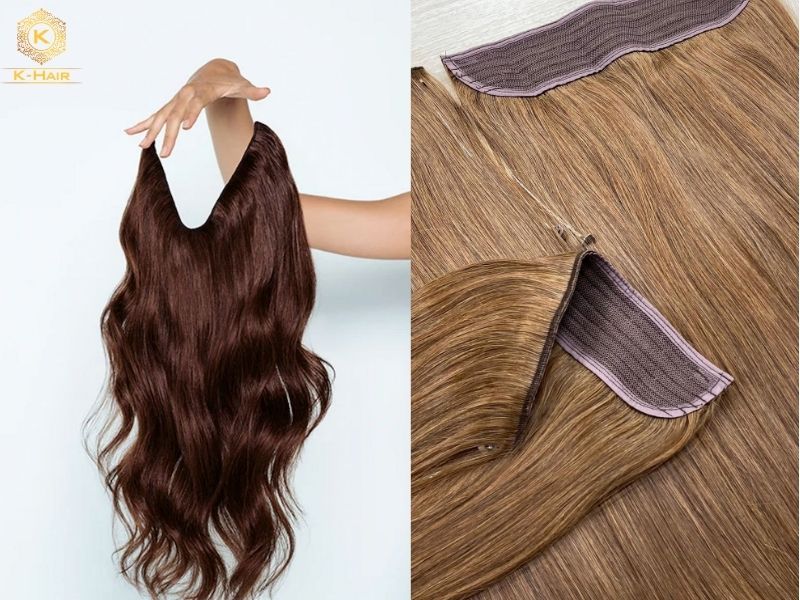
Halo hair extensions are temporary hair extensions designed to add length and volume without attaching the weft directly to individual strands. A typical halo consists of a hair weft connected to a thin, usually transparent nylon wire that rests around the crown of the head.
Halo hair extensions are also a wire-based extension method in which natural hair covers the wire and blends with the extension hair. Unlike tape-in or bonded extensions, the main weft does not require adhesive or chemical bonding. (For a broader look at how this method compares to others, see types of hair extensions.)
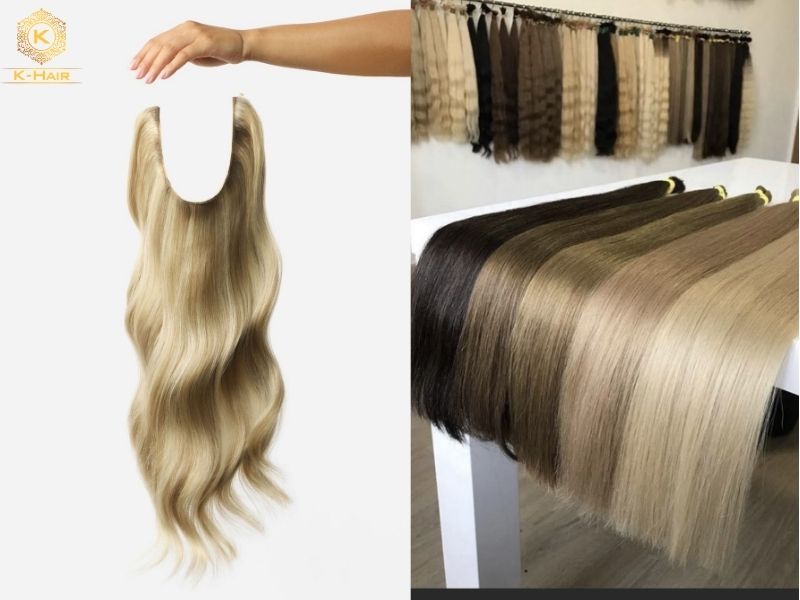
Halo vs. Clip-In: Which Should You Choose?
Halo and clip-in extensions solve a similar problem – temporary length and volume without a salon visit – but the two methods differ in a few practical ways worth knowing before you buy.
A halo typically installs in under a minute: fit the wire over the crown like a headband, then pull natural hair over it. There’s zero tension on individual strands, which makes it a common recommendation for fine or fragile hair. The trade-off is styling flexibility – a halo works well for hair worn down, but high ponytails or complex updos can expose the wire, so it’s not the best fit for those styles.
Clip-ins take longer to install, typically 5 to 10 minutes, since each weft has to be sectioned and clipped in individually. That extra step buys more control: wefts can be placed strategically for layering, highlights, or worn comfortably in a high ponytail or updo since nothing sits along the crown. (See wholesale clip-in hair extensions if you’re sourcing both formats.)
Types of Halo Hair Extensions
Halo hair extensions differ by hair material, texture, length, weight, density, color, and construction. These attributes influence the final appearance, comfort, styling options, and price.
Human Hair Halo Extensions
Human hair halo extensions are made from real human hair and generally provide more natural movement and styling flexibility than synthetic alternatives.
Remy human hair is one common option. Its aligned cuticles can help create a smoother surface and reduce friction when the hair has been properly collected and processed.
Human hair is also more suitable for heat styling than most synthetic fibers. However, the manufacturer’s care instructions should always determine the appropriate temperature and styling method.
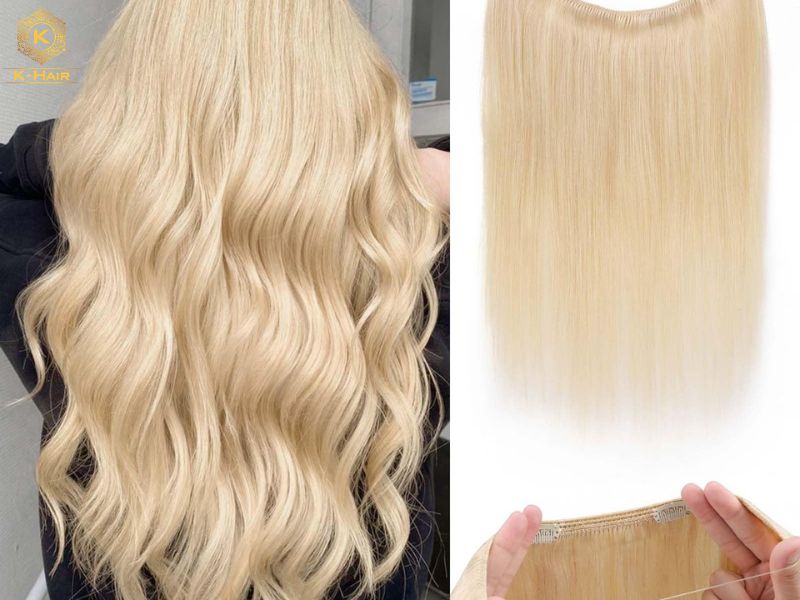
Synthetic Halo Extensions
Synthetic halo extensions are made from manufactured fibers rather than human hair. They can provide a lower-cost option and are often available in pre-styled textures.
Their main limitations are usually related to heat styling and customization. Many synthetic fibers cannot tolerate the same temperatures as human hair and cannot be colored in the same way.
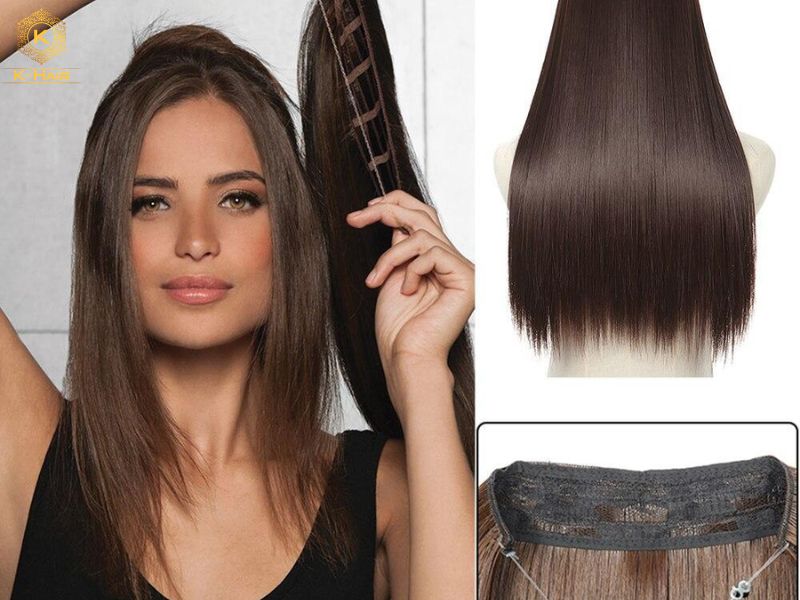
Halo Extensions by Weight
Weight is one of the clearest ways to compare halo sets across suppliers, since it determines how much length and fullness a piece can realistically add:
| Weight Range | Best For |
| 60g – 80g (Light / Fine Volume) | Thin hair or a subtle length boost |
| 100g – 140g (Standard / Medium Volume) | Everyday wear, moderate added length and thickness |
| 160g – 180g+ (Full Volume Set) | Maximum fullness – usually a main halo piece (110g-140g) plus side clip-in wefts for face-framing blend |
Halo Extensions by Texture
You can also select halo extensions according to texture:
| Texture | Suitable For | Main Consideration |
| Straight | Straight or sleek hair | Easier to blend with smooth hairstyles |
| Wavy | Naturally wavy hair | Requires a similar wave pattern |
| Curly | Curly hair | Curl size and density should closely match |
Matching texture is just as important as matching color. A correct color with the wrong texture can still make the extension look disconnected from the natural hair.
→ Read more: Wavy Hair vs Curly Hair Extensions: Style & Salon Guide
Benefits and Drawbacks of Halo Hair Extensions
Halo hair extensions offer convenience, but they also have limitations. Understanding both sides can help you determine whether this method fits your hair type and styling needs.
| Benefits | Potential Drawbacks |
| Quick application (under a minute) | Wire may become visible |
| No glue or tape | Can slip if fitted incorrectly |
| Easy removal | Heavy pieces may feel uncomfortable |
| Adds length and volume | Short hair can be difficult to blend |
| Reusable | Requires regular maintenance |
| Suitable for temporary styling | Not ideal for high ponytails or updos, since the wire can become exposed |
Benefits at a Glance
Halo hair extensions offer several practical advantages, especially for users who want a quick and temporary way to enhance their hairstyle. The key benefits include:
- Simple installation: A halo is installed as one primary piece instead of requiring several individual attachment points.
- Temporary wear: You can wear the extension for a particular occasion and remove it afterward without committing to a semi-permanent method.
- No adhesive attachment: The wire provides the main support, eliminating the need for glue or tape during normal application.
- Easy removal: Once the natural hair is separated from the wire, the halo can be lifted away without removing multiple clips or bonds.
- Reusable construction: With appropriate brushing, washing, styling, and storage, a quality human hair halo can be used repeatedly.
- Length and volume enhancement: The weft can create both additional length and fullness, depending on its weight and density.
- Multiple texture options: Straight, wavy, and curly versions allow users to select a pattern closer to their natural hair.
- At-home maintenance: Many human hair halo extensions can be washed, styled, and stored at home when the manufacturer’s instructions are followed.
Potential Limitations
The main drawbacks of halo hair extensions include:
- Blending and fitting: If your natural hair does not provide enough coverage, the wire or transition between the natural and extension hair may become visible.
- Hair length: Very short or blunt hair can make it harder to conceal the extension and create a smooth, gradual transition.
- Extension weight: A dense halo can add more volume but may feel less comfortable on fine hair if the weight is too high.
- Updo styling: High ponytails and complex updos tend to expose the wire along the crown, so a halo is better suited to hair worn down or in loose styles.
Are Halo Hair Extensions Suitable for Fine Hair?
They can be suitable for some people with fine hair because the extension does not require multiple clips or bonded attachment points. However, the weight of the extension still matters.
For fine hair, consider:
- Lightweight construction
- Moderate density
- Comfortable wire tension
- A realistic extension length
- A close color and texture match
Expert Insight: For fine hair, choose the extension by weight first and length second. A long, heavy weft can be harder to conceal and may place more tension on the natural hair than a lighter piece with a slightly shorter length.
Maximize the Value of Halo Hair Extensions
Choosing the right halo hair extensions is only the first step. To get the most value from your investment, you also need to choose a suitable design, make sure it blends properly, and follow the right care routine. These factors can affect the extension’s appearance, comfort, and usable lifespan.
Choose the Right Halo Hair Extensions
The right halo should complement your natural hair rather than simply add as much length or volume as possible. Before buying, consider:
- Length: Choose a length that can blend naturally with your existing haircut. A large difference between your natural ends and the extension can make the transition more noticeable.
- Weight: Fine hair usually works better with a lightweight halo, while thicker hair may need a denser weft for balanced volume.
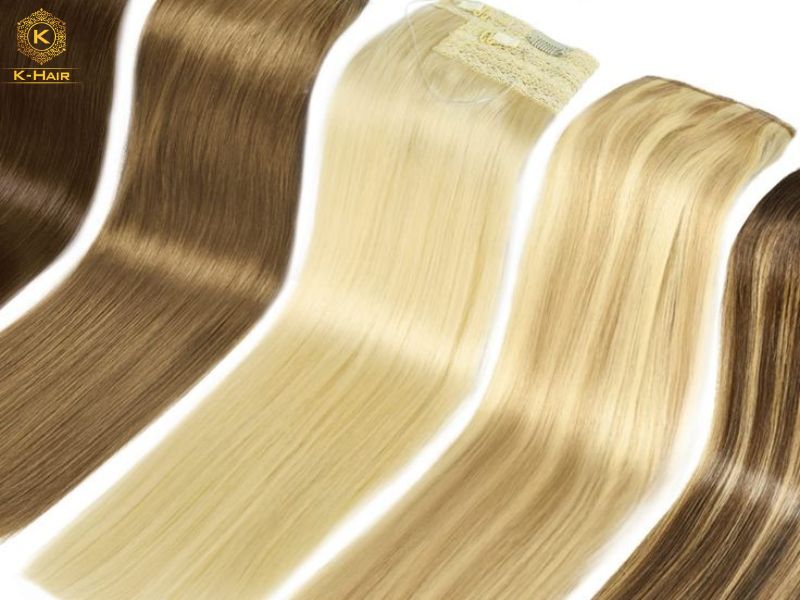
- Color: Match the extension with your base color, undertone, highlights, or balayage for a more seamless result.
- Texture: Straight, wavy, and curly hair require different extension textures. Matching the pattern can make blending much easier.
- Hair quality: Human hair offers natural movement and more styling flexibility, making it a practical choice for regular use.
(For a full matching checklist beyond halo pieces, see how to choose hair extensions like a professional.)
Get a Natural-Looking Fit
A correct fit can make a significant difference in both appearance and comfort. The wire should sit securely around the crown while the natural hair covers the weft completely.
For a better blend:
- Position the wire around the crown.
- Adjust it until the weft feels secure but not tight.
- Pull a layer of natural hair over the wire.
- Brush the natural and extension hair together.
- Trim or layer the extension if necessary to match your haircut.
If the halo slips during movement, check its position and adjustment before assuming that the product is unsuitable.
Maintenance Tips to Extend the Lifespan of Halo Hair Extensions
Once customers purchase the halo, proper aftercare becomes the key to preserving its appearance and usability. Clear maintenance instructions can also reduce avoidable complaints and help customers get more value from their purchase. (See how to keep hair extensions from tangling for a full care routine.)
Give customers this simple maintenance roadmap:
The “3 DON’Ts”:
- DON’T brush aggressively: Pulling through tangles from the roots can stress the weft and increase shedding. Start at the ends and gradually work upward using a suitable extension brush or wide-tooth comb.
- DON’T apply excessive heat: Frequent high-temperature styling can dry out human hair extensions and gradually reduce their softness. Always use heat protection and follow the supplier’s recommended temperature.
- DON’T store the extension while damp: Make sure the hair is completely dry before storage. Moisture combined with poor ventilation can contribute to unpleasant odors and tangling.
The “4 DOs”:
- DO brush gently: Detangle the ends first and work upward toward the weft. Support the hair near the attachment area when necessary to reduce unnecessary pulling.
- DO wash only when needed: Frequent washing can gradually affect the hair’s softness and appearance. Use a gentle shampoo and conditioner suitable for human hair extensions.
- DO use heat protection: If customers curl or straighten human hair halo extensions, heat protectant should be applied before styling to reduce heat-related dryness and damage.
- DO store properly: After use, gently brush the hair, allow it to dry completely, and store it in a clean, dry place where it will not become compressed or tangled.
FAQs About Halo Hair Extensions
Here are some of the most frequently asked questions about halo hair extensions:
Are halo hair extensions damaging?
Halo hair extensions do not attach directly to individual strands, which can reduce the pulling associated with some attachment-based methods. However, they should not be described as completely risk-free.
Incorrect wire tension, excessive extension weight, or prolonged discomfort can still create unwanted stress. Remove the extension if you experience persistent soreness or pulling.
How long can you wear halo hair extensions?
Wear time depends on the product, fit, extension weight, and personal comfort. Follow the manufacturer’s instructions and remove the halo if it causes pressure, slipping, or discomfort.
Can you sleep with halo hair extensions?
It is generally more practical to remove halo hair extensions before sleeping. Removing the extension can reduce friction and help prevent unnecessary tangling while you move during sleep.
Can you wash halo hair extensions?
Many human hair halo extensions can be washed. However, excessive washing can gradually affect the hair’s softness and appearance.
Use a suitable shampoo and conditioner and follow the specific care instructions supplied with the product.
Can you curl or straighten halo hair extensions?
Human hair halo extensions can generally be curled or straightened with appropriate heat protection. Synthetic extensions may have stricter heat limitations.
Before using heat, check the manufacturer’s temperature recommendations and avoid applying direct heat to the nylon wire.
Are halo hair extensions suitable for thin hair?
They can be suitable when the extension weight is appropriate for the natural hair density. Lightweight designs are generally easier to blend with fine hair than very dense pieces.
If the hair is extremely fine or fragile, consider professional advice before selecting a heavier extension.
Can halo hair extensions be used on short hair?
It depends on the length, density, and layering of the natural hair. Very short or blunt hair can make the transition more difficult to conceal.
If there is not enough natural hair to cover the wire and blend the weft, a different extension method may provide a more suitable result.
Do halo hair extensions slip?
They can slip when the wire is incorrectly sized, positioned, or insufficiently covered by natural hair.
If slipping occurs, check:
- Wire position
- Wire size
- Amount of natural hair covering the weft
- Extension weight
- Natural hair density
A correct fit should feel secure without creating excessive pressure.
Conclusion
With the tips above on how to choose, fit, and care for halo hair extensions, we hope you now have a better understanding of how to achieve a comfortable and natural-looking result.
For salons, retailers, and hair businesses, choosing a reliable supplier is just as important as selecting the right extension. At K-Hair Factory, we provide quality halo hair extensions and wholesale support to help you meet your customers’ needs.
Ready to source verified raw Vietnamese hair?
Contact K-Hair Factory directly for wholesale pricing, MOQ details, and free samples.
Or visit our Facebook: K-Hair Vietnam Factory to get the latest wholesale price list and find the right products for your business.