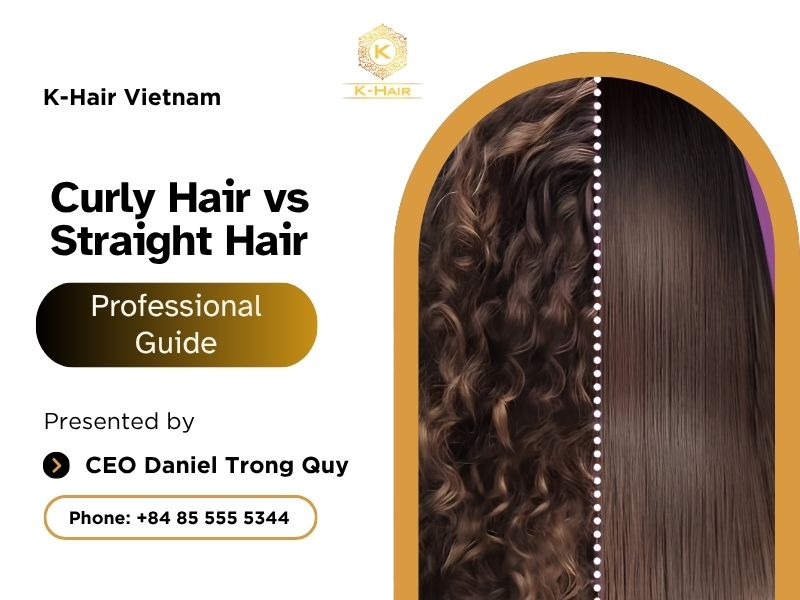
If you have ever stocked a texture that sat on the shelf for months while another sold out in weeks, you already know the story. Curly hair vs. straight hair is not just a styling question. It is an inventory question. The two textures come from different follicle shapes and behave differently on the head. They also carry different maintenance expectations for the end client. For salon owners, distributors, and wig brands deciding what to reorder, understanding those differences up front saves both money and returns.
What Is Curly Hair?
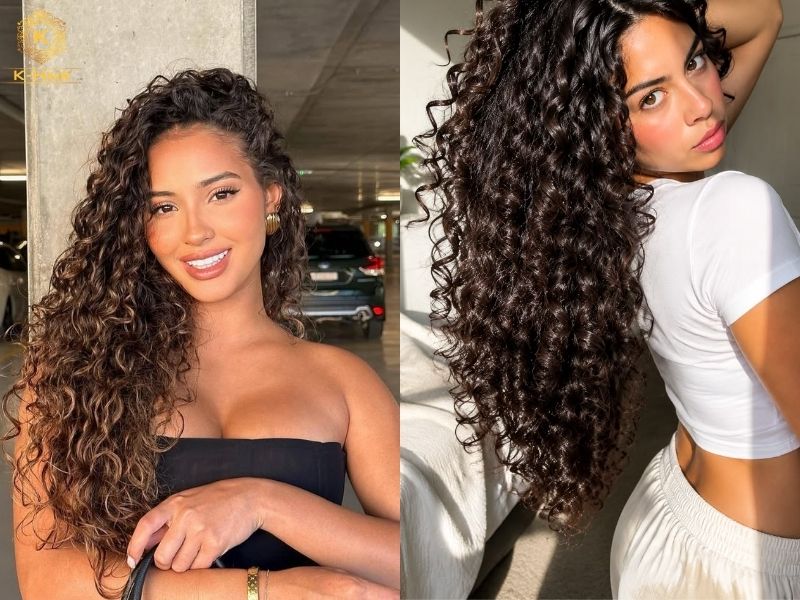
Curly hair grows from an oval or asymmetrical hair follicle. That shape forces each strand to bend as it emerges from the scalp rather than growing straight down. The bend repeats along the length of the strand, producing the coils, loops, or waves that define the texture. Because the follicle shape sits at an angle, curly hair also tends to have a raised cuticle layer. This is part of why it holds volume so well but loses moisture faster than straight strands. It is this follicle shape, more than anything else, that sets the terms for the comparison later in this guide.
A few entities matter here for anyone sourcing or grading curly hair: cuticle alignment, moisture flow along the shaft, and curl pattern classification. These are commonly grouped from loose waves to tight coils. Cuticle alignment in particular affects how long a bundle stays tangle-free. Strands running in the same direction shed less and mat less over repeated washes. When sourcing either texture for a new product line, cuticle alignment is worth checking on its own, not folded into the texture label.
What Is Straight Hair
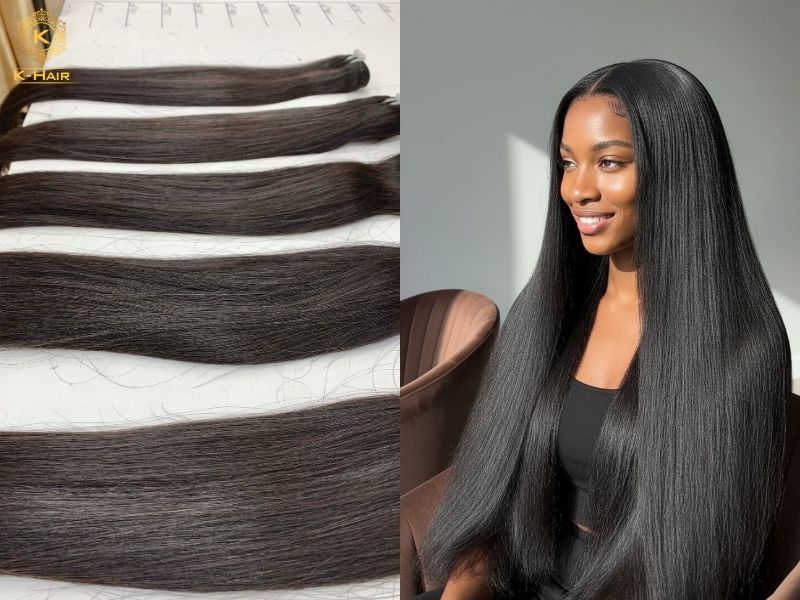
Straight hair grows from a round follicle, which lets the strand travel straight down without the bend seen in curly follicles. The cuticle lies flatter along a straight strand, so natural scalp oils move down the shaft more easily. That is why straight hair tends to look shinier and reach a greasy scalp faster than curly hair does. That gap starts here too, at the follicle, rather than at anything added later in processing.
Light reflection and oil distribution are the two entities worth remembering. A flat, smooth cuticle reflects light more evenly across the strand, giving straight hair its glossy appearance. Even oil distribution keeps strands slick and low friction, which is also why straight extensions tend to tangle less during install and removal. Under salon lighting, this shine difference is usually the first thing buyers notice when they set the two textures side by side.
With both textures defined at the follicle level, the next step is comparing how those differences play out for a buyer choosing between them.
The Differences Between Curly Hair and Straight Hair
With the basics covered, a direct curly hair vs straight hair comparison makes the practical differences easier to see. The table below breaks down the main differences that matter most for a wholesale buyer, from maintenance to price – and a couple that matter just as much to the end client trying the hair on.
| Criteria | Curly Hair | Straight Hair |
|---|---|---|
| Maintenance | Needs regular deep conditioning and sulfate-free products to manage dryness, but hides regrowth and frizz between washes | Low daily upkeep and easy to detangle, but shows oil buildup and needs washing more frequently |
| Lifespan and shrinkage | Curl patterns can shrink 1 to 4 inches (2.5 to 10 cm) depending on wave tightness, which buyers need to account for when quoting finished length | Holds its measured length with minimal shrinkage, making length claims more predictable for retail |
| Styling time | Faster daily styling since curls hold shape without heat, but restyling into straight takes a flat iron and heat protectant | Quick to straighten further but takes longer to add lasting curl, since the pattern relaxes without repeated heat styling |
| Price point | Often priced higher due to the steam processing step required to set the curl pattern | Generally the lower cost baseline in a factory’s price list, since it skips the extra processing step |
| Face shape fit | Adds balancing width for heart, diamond, or long face shapes | Adds visual length and symmetry for rounder faces or strong, prominent jawlines |
| Perceived style | Reads as creative, expressive, and approachable | Reads as polished, professional, and sleek |
Each texture carries a genuine trade-off rather than a flat win. Curly hair gives clients volume and texture without daily heat styling, though it demands more product and care instructions at point of sale. Straight hair is easier for staff to manage during install and for clients to maintain at home. Its trade-off is that it lacks the natural fullness curly textures offer out of the package. These are the trade-offs that should drive a reorder decision, not brand loyalty to one texture.
Which Type of Hair Is Best for You?
With the differences on the table, the decision comes down to fit for your specific buyers – not just their maintenance routine, but the face shapes and personal style each texture tends to complement, since retail and salon clients ask about both just as often as they ask about upkeep.
| Pros | Cons | |
|---|---|---|
| Curly Hair | Natural volume and texture, minimal daily heat styling, strong fit for clients wanting a low-heat routine | More prone to dryness and frizz, requires deep conditioning, tangles faster without proper care |
| Straight Hair | Easy to brush and manage, holds a sleek look with little effort, simpler for first-time wig or extension buyers | Can look greasy faster, lacks natural volume, less forgiving of regrowth or uneven parting |
The right pick depends on the buyer segment more than personal preference. If your client base is in a high humidity market, straight textures tend to reduce complaints about frizz and shape loss over the wear cycle. If your clients want a wash-and-go routine, curly textures typically perform better. They do not need to be reset with heat every morning. For distributors serving both retail and salon channels, a mix of both textures is usually the safer call. Betting your inventory split on one texture alone tends to leave money on the table.
Factory Insight: When buyers ask us to recommend one texture over the other, we tell them to look at their return rate data first. Curly returns are usually about dryness complaints, straight returns are usually about volume complaints. Fixing the actual pain point in your product description cuts down on both, according to Mrs. Cherry, Sales Manager at K-Hair Factory.
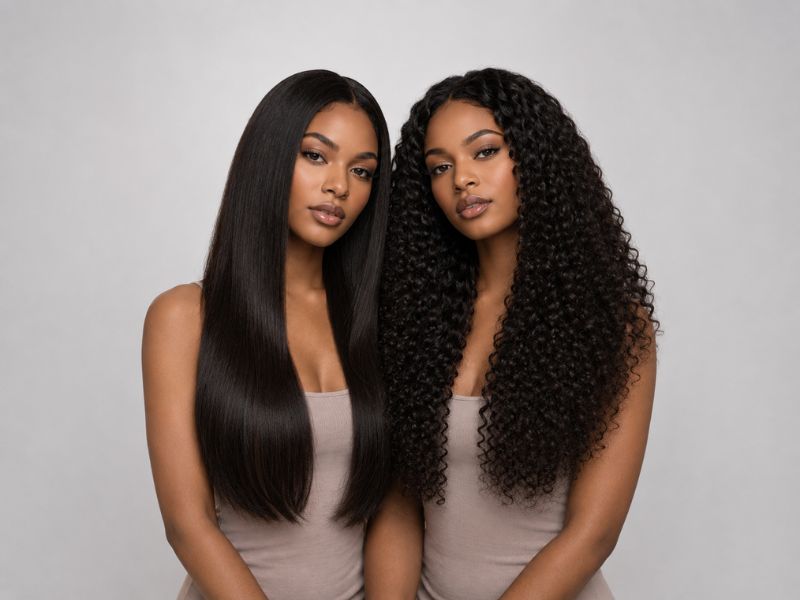
Curly & Straight Hair Wholesale Options at K-Hair
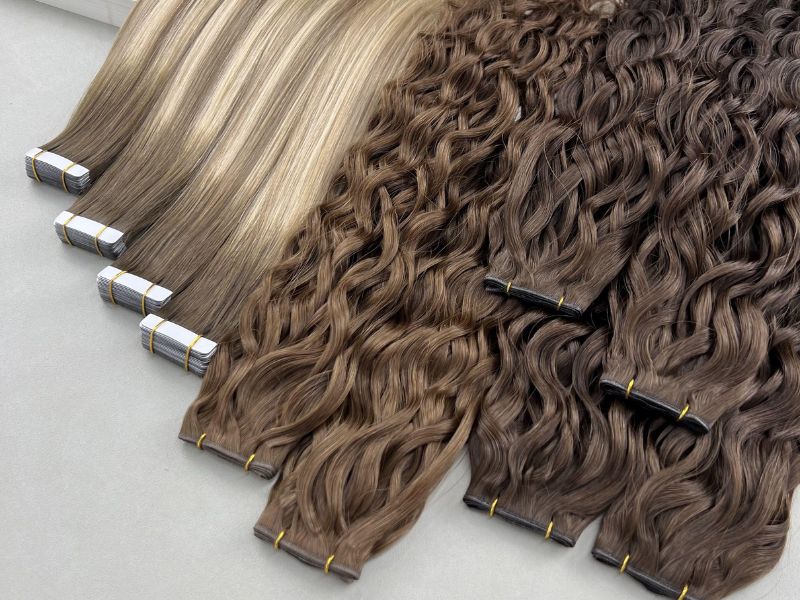
As a Vietnamese hair factory, K-Hair carries both textures in its wholesale catalog, so this section reflects an outside look at what is currently on offer rather than a specific product endorsement. Vietnamese factories, including K-Hair, typically collect raw hair as naturally straight material and process a portion of it into curl patterns using steam rather than chemical treatments. That approach keeps the cuticle intact and helps the finished bundle hold up to washing and bleaching. It is also why both textures in a Vietnamese factory’s catalog often start from the same raw material.
→ Curious whether Vietnamese hair is naturally curly or processed into curl patterns? Here’s the full breakdown
On the straight side, bone straight and light colored lace options make up a large share of the catalog. Prices run from roughly $79 to $552, depending on wig construction and length. On the curly side, bouncy curl and kinky curl options run from about $21 to $191, depending on closure size and density. Wholesale pricing tiers typically apply from the first order, with no fixed minimum order quantity required to start, though bulk pricing improves at higher volumes. Keeping this split handy makes it faster to quote both textures when a client asks for them together.
→ Want exact wholesale pricing by texture and length? See the current price list
Factory Insight: A lot of new buyers assume curly hair is automatically more fragile. In reality, single donor sourcing matters more than texture. A well sourced curly bundle with aligned cuticles will outlast a poorly sourced straight bundle every time, according to Mrs. Cherry, Sales Manager at K-Hair Factory.
Before placing a first order, it helps to have clear answers ready for the questions buyers ask most about curly and straight hair.
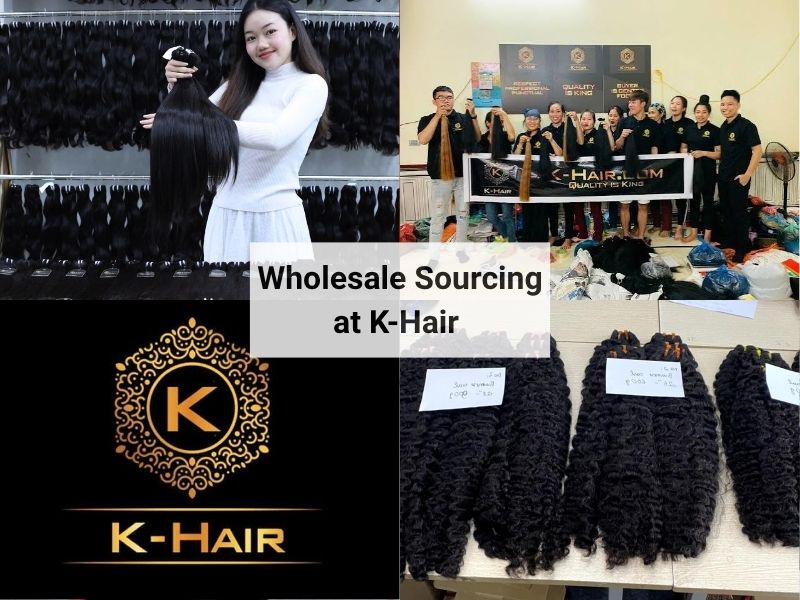
FAQs about Curly Hair and Straight Hair
Still comparing the two? Here are the key questions buyers often ask about curly and straight hair.
Which lasts longer, curly or straight hair extensions?
Lifespan depends more on sourcing quality than texture alone. Single donor hair with aligned cuticles tends to hold up well in both textures. Curly patterns do need consistent deep conditioning to avoid dryness-related breakage over time. In most lifespan comparisons between the two, sourcing ends up mattering more than the texture itself.
Can curly hair be steamed straight without damage?
Yes, when the hair is unprocessed and the cuticle is intact. Steam styling can shift the pattern without the damage caused by repeated chemical relaxing. Reverting the style later usually requires another round of steam processing rather than a home flat iron alone.
Which texture has higher demand for wholesale buyers?
Demand varies by market and client demographic rather than following one global trend. Buyers serving multicultural client bases often see steady demand for both. That is why many distributors stock a mixed inventory instead of picking one side over the other.
What’s the price difference between curly and straight bundles?
Curly bundles usually carry a modest premium over straight bundles of comparable length and grade. The extra cost mainly reflects the steam processing step needed to set and maintain the curl pattern. That gap is worth keeping in mind when budgeting an order that includes both.
Conclusion
At its core, curly hair vs straight hair comes down to two different follicle shapes. That single biological difference shapes everything from moisture retention to shrinkage to price – and, further downstream, which face shapes and personal styles each texture tends to flatter. Neither texture is the better default choice. The right stock decision comes down to your client base, your market’s humidity, and how much daily maintenance your buyers are willing to put in. For most distributors and salons, the safer long-term move is carrying both textures, priced according to the actual sourcing and processing behind each bundle. That should decide the texture split on your shelf, not personal preference.
For retailers looking to offer quality wigs with suitable cap constructions and customization options, K-Hair provides factory-direct human hair wigs from Vietnam.
Ready to source verified raw Vietnamese hair?
Contact K-Hair Factory directly for wholesale pricing, MOQ details, and free samples.
Or visit our Facebook: K-Hair Vietnam Factory to get the latest wholesale price list and start building your brand with confidence!