This post was sent to K-Hair from one of our loyal hair buyers – Ms Sandra Kalenski, the owner of a multi-franchise salon chain in South Africa, wanting to share her earlier experience in the hair industry. And to keep the flow of the story, we will retell the experience through her perspective.
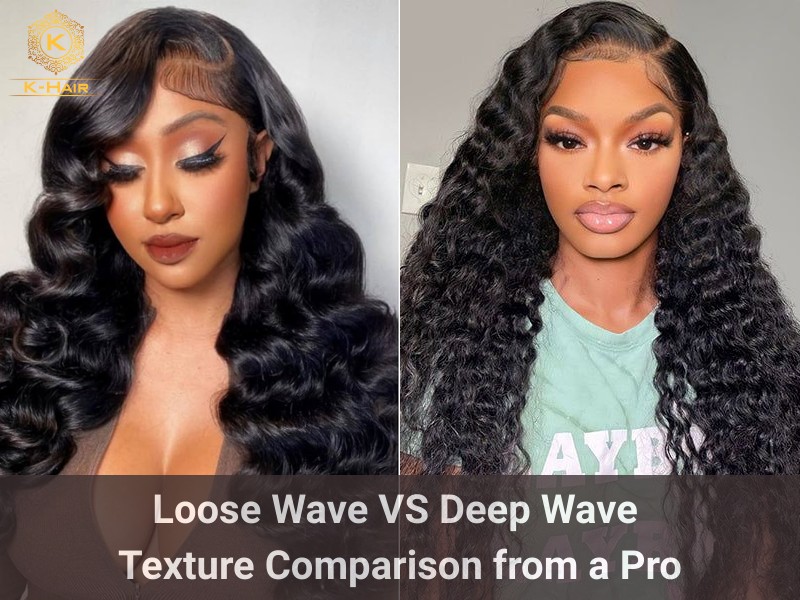
Hi guys, my name is Sandra – the owner of multiple salons and hair stores in South Africa, I am also the writer of the articles comparing other different textures such as Deep wave vs Water wave, Loose wave vs Body wave,… so if you have read those, you must have been a bit familiar with me by now. To continue the series Texture Comparison from A Pro, today I will introduce another unusual pair, Loose wave vs Deep wave.
Much like the Body wave and Deep wave, upon the first glance, anyone can clearly see the differences between Loose wave vs Deep wave – that’s how distinct they look from each other. However, due to their different features, many of my hair buyers or hair business owners colleagues often find it hard to decide between these two options. Therefore, to put an end to this issue, as well as to help other entrepreneurs to make better investments and texture choices, in this article, we will dig deeper into the characteristics of these options, as well as discussing which type of customers they work best with.

1. What is Loose wave hair?
Before getting into the details, it is best to first get to know them by their definition and be able to tell them apart by their appearance, to not get overwhelmed by the complex features at the first start. So, let’s begin with the basics, shall we?
First, let’s start with describing Loose wave hair.
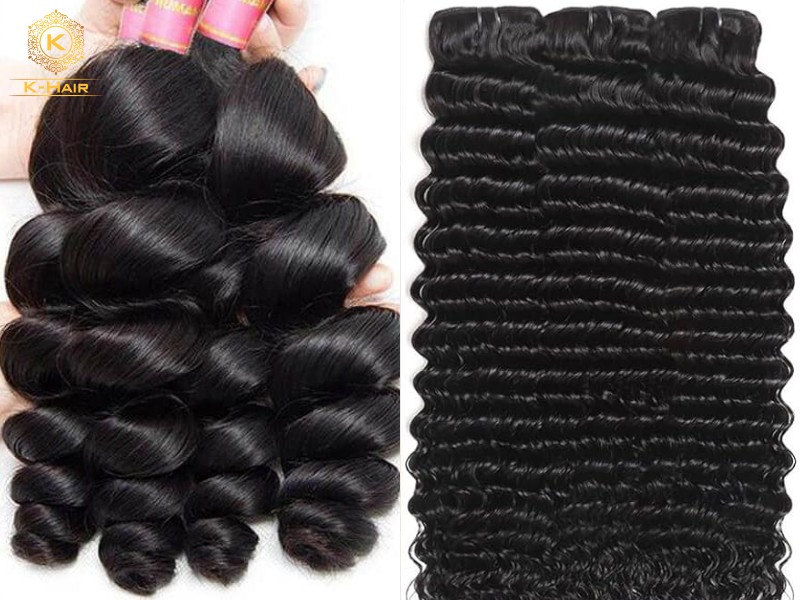
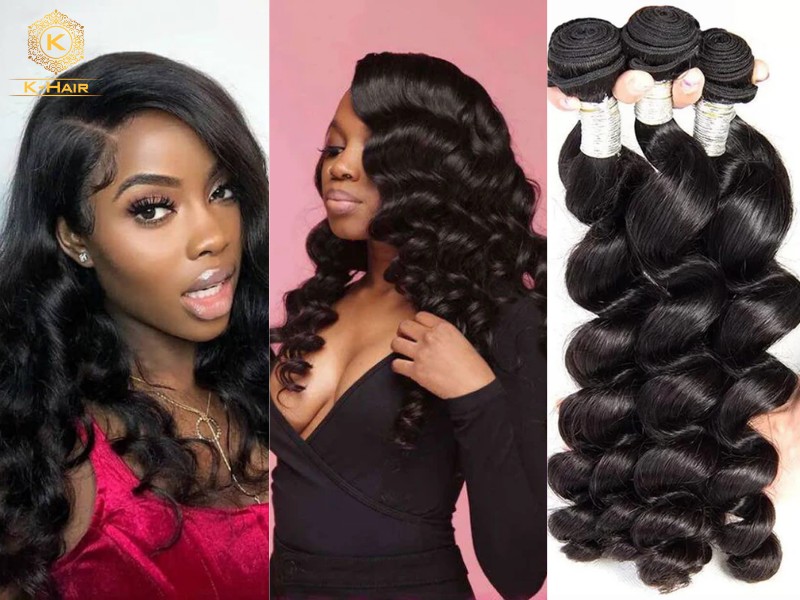
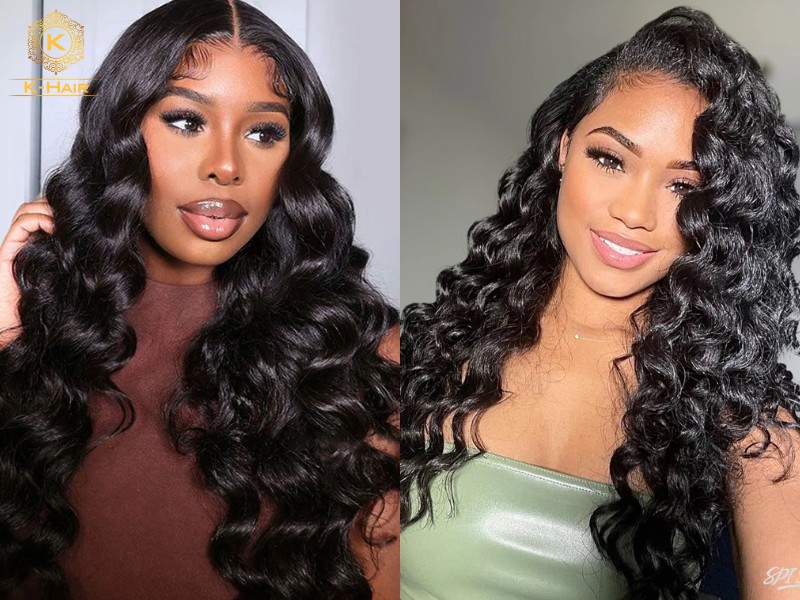
Compared to other tighter, curlier hair types, Loose wave is considered more relaxed and laid-back, with looser, softer wavy textures, while still maintaining a well-defined yet relaxed hair look → the perfect balance of the flowing hair look of the Body wave and the tight, voluminous look of the Deep wave.
Loose wave hair texture often features a signature spring-like look – unique from any other wavy patterns, with curls going consistently from the top to the bottom. However, when combed or stretched out, the hair reveals its true appearance – with free-flowing curls that follow no particular direction → delivering a dynamic, organic and natural hair appeal that looks identical to the natural 2B or 2C hair types seen in many women across the globe.
Among my clients alone, as well as in the global hair market, Loose wave is one of the most popular hair extension textures, with a loyal, stable amount of clients over the period. In fact, for the vast majority of clients wanting a safe option, a natural, well-defined and wavy hair look, hesitant against coily, curlier textures such as Deep wave, Kinky curly, but still unsatisfied with the flat, basic look of Body wave hair, Loose wave hair gets the best of both worlds and is often the safest, most balanced hair extension choice for these demanding hair needs.

2. What is Deep wave hair?
Despite both being wavy hairs, Loose wave vs Deep wave hair still have many differences. In fact, unlike Loose wave, Deep wave has a much more well-defined and dramatic hair look:
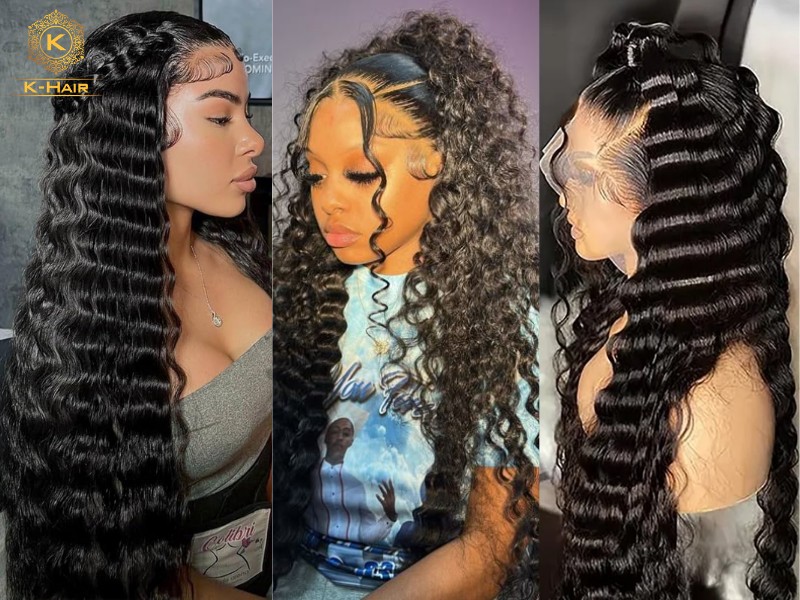
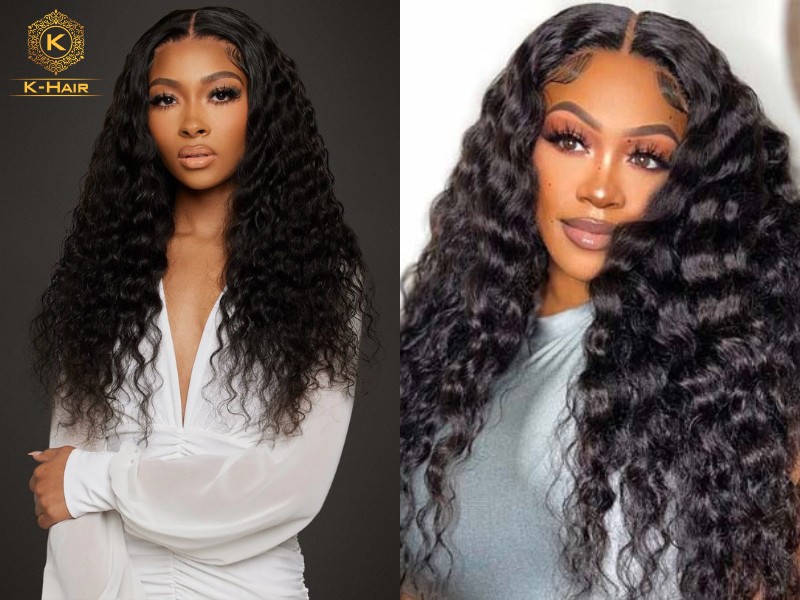
Compared to Loose wave hair, Deep wave’s patterns are much tighter, with smaller and more defined curls. Therefore, when it comes to lengths and volume, while Deep wave is rather shrunken and more limited in terms of length-extensions, in terms of volume and width, this particular texture is the more voluminous and thicker option → making the hair look fuller, more dramatic and striking.
Much like most wavy hair texture, Deep wave also has a S-shape wavy pattern. But the interesting feature of this pattern in Deep wave hair is that, combined with the tighter, smaller curves, the texture is 3-dimensional and more voluminous, rather than looking plain and flat like the standard Body wave. Furthermore, the above wave patterns of Deep wave hair do not fall out off shape when combed out like the Loose wave, rather, it remains consistent and aligned in complete uniformity from top to bottom → offering a more polished, well-kept and salon-made hair appeal – suitable for formal, high-class events without sacrificing its dramatic, thick hair look.
Much like Loose wave, Deep wave is also a year-round hair item – which means that the sales seasons of the two textures stretch throughout the years, rather than focusing on one or two particular periods. Hence, for all hair businesses out there, these two hair patterns should always be in-stock, to meet the year-round demands. Especially for clients wanting volume and definition to their wavy extensions, Deep wave would definitely be the way to go!

3. Differences between Loose wave vs Deep wave hair
The challenge that comes with deciding the suitable hair texture is not because of the similar appearance of Loose wave and Deep wave, as the two look completely unlike one another. Indeed, the problem is when hair buyers and business owners don’t know enough information about their versatility and performance, leading to them assuming that the two hair texture options are the same and hesitate to make the final selection. However, now that you have been able to tell apart the two texture choices based on their appearance, you are now equipped with the surface-level knowledge to move on to the next step: the differences between Loose wave vs Deep wave hair textures:
| Loose wave | Deep wave | |
| Wave patterns | Features a signature wave pattern:
→ Offering both the loose texture of the standard Body wave + the defined curls of the Deep wave |
Deliver a distinct, unique pattern:
→ Offering both drama and elegance in one single texture |
| Ability to hold curls | Medium-range: Having looser curls means that Loose wave would not be able to hold curls as well as Deep wave and other tighter textures
→ The hair is easier to be weighed down by product, or be straightened or stretched out during washing or styling → Also means that the hair would be more versatile and can jump between textures |
Extremely good: Having tighter, more defined and uniformed curls → Deep wave would be able to hold its original texture for a much longer time
→ Not easily affected by environmental factors; would be harder to straighten out due to having such defined patterns → can hold its waves for an extended amount of time without demanding restyling or revitalizing. |
| Volume | Lack volume and fullness compared to Deep wave:
|
Is the more voluminous and fuller hair texture option:
|
| Appearance | Is the more natural hair look: The relaxed and bouncy wavy hair look can best resemble the natural hair texture of 2B or 2C – seen in many women across the globe
→ Blend in seamlessly with their original hair and elevate their natural beauty |
Is the more polished, sophisticated look: Uniformed, consistent and well-defined curls → look like a salon-made, well-kept and elegant hair look
→ Delivering a polished, glamorous and luxurious hair look that suits most formal, professional surroundings. |
| Versatility | Is the more versatile hair texture: Looser waves mean that Loose wave can offer more styling ability for its users → easier to unravel and straighten out or curl to create flexible and versatile styling options
(However, also easier to lose its original texture and patterns) |
Medium-range flexibility: Even if styled, the curly, defined waves of Deep wave are extremely hard to straighten or curl without remaining its original texture and patterns
→ Demand more effort, time and higher heat to be styled to one’s liking. |
| Maintenance | Easier to maintain:
|
Slightly harder to maintain:
|

4. Pros & Cons Loose wave vs Deep wave hair
Learning the differences in versatility and appearance between Loose wave vs Deep wave is just a start. In fact, for hair buyers to make better choices, I highly recommend you guys to consider the benefits, as well as the drawbacks of purchasing these textures before actually stocking them. In fact, many of my colleagues also struggle with overstocking or buying the unsuitable hair product, leading to frozen inventory that loses its value and selling ability over time. To avoid making these mistakes, let’s walk through the pros and cons of each texture, that I have gathered and written below:
4.1. Pros & Cons of Loose wave hair
When choosing between Loose wave vs Deep wave hair, the benefits and drawbacks that come with sourcing and selling Loose wave hair texture can be:
4.1.1. Pros of buying Loose wave hair
For hair buyers considering purchasing Loose wave hair for their next order, here might be some benefits you can enjoy from using or selling these products:
- Natural looking hair: the looser, slightly defined waves seen in Loose wave texture are somewhat similar to the natural hair textures of 2B or 2C hair types seen in many naturally wavy hair women across the globe → can offer a more natural-looking hair extension solution that can blend in better with women of this hair types – creating a seamless blend and elevating their natural beauty
- Low maintenance: Having looser curls also means that Loose wave would be much more easy-going and manageable in terms of hair care. In fact, the free-flowing waves are less prone to tangle and shed – demanding less combing. Furthermore, the moisture is also more evenly distributed along the strands – demanding less conditioning.
- More versatility: having looser waves also allow the texture to be more versatile and flexible for different styling options: the hair can be curled to achieve tighter and more voluminous texture, while can also be straightened out to create the perfect sleek, classic straight or bone straight → offering more styling freedom and creativity for the user.

4.1.2. Cons of buying Loose wave hair
Despite its numerous benefits, Loose wave hair also comes with its own drawbacks:
- Short-lasting patterns: as versatile and flexible as it is, Loose wave hair is still easy to be straightened out and lose its original texture over time, especially after multiple washes, styling and uses → hair buyers would have to spend more time and money into revitalizing and restyle it to turn it back
- Easily weighed down by products: having looser, less defined curls also means that Loose wave cannot work with heavy hair cream or hair oil, as these products can cause buildup that linger on the hair strands → causing not only tangles and hair clumps, but also make the strands quicker to straighten out and lose its wavy texture
- Less coverage: unlike Deep wave, Loose wave can only offer a natural, seamless volume, instead of a dramatic one, hence, for hair flaws such as thinning or balding hair, the texture would require slightly more bundles to conceal them completely.
4.2. Pros & Cons of Deep wave hair
Similarly, when choosing between Loose wave vs Deep wave hair, the benefits and drawbacks that come with sourcing and selling Deep wave hair texture can be:
4.2.1. Pros of buying Deep wave hair
For hair buyers considering purchasing Deep wave hair for their next order, here might be some benefits you can enjoy from using or selling these products:
- Volume and Fullness: the tighter the curls are, the more volume and thickness it delivers: compared to Loose wave patterns, Deep wave hair can offer much more fullness – all thanks to its tight, defined and small curls. Such impressive volume can make the final hair look appear more dramatic, eye-catching and impressive – delivering a bold, attention-grasping and confident appearance for the users.
- More coverage: having more volume and thickness also means that the texture can provide more coverage for hair conditions. Patients with thinning, balding hair, could easily rely on Deep wave hair extensions to conceal all these unwanted flaws underneath – providing more space for the hair to recover.
- Long-lasting patterns: the tight, uniformed and well-defined waves of this particular texture are hard to wear out. In fact, after multiple uses, washing and styling, Deep wave hair extensions can still bounce back to the original texture, without having to restyle or revitalize the curls at all! → The curls can stay for an extended amount of time

4.2.2. Cons of buying Deep wave hair
Despite its numerous benefits, Deep wave hair also comes with its own drawbacks:
- High-maintenance: one major setback of the Deep wave hair extension is that the patterns are extremely hard to care for and often demands constant, daily hair maintenance. In fact, the tighter waves are easy to get tangled – demand more frequent detangling. The curlier texture makes it hard to absorb nutrients – demand more frequent maintenance. Hair users with busy lifestyles won’t be able to keep up with this, making the hair lose its healthy state over time.
- Less versatility: Deep wave hair cannot be styled freely – this is common knowledge → cannot be completely straightened out without remaining some of its original wave patterns, and demanding more effort and higher heat to style the hair, which can ultimately lead to more damage in the future.
5. Loose wave VS Deep wave: Which is better?
Comparing and selecting a “better” hair texture between the two options is extremely hard, even harder given that the two are completely different from each other, and each has their own features, benefits and drawbacks. Therefore, instead of going on and on about which is better than which, maybe the time spent on those exhausting arguments should be better spent on deciding which one is more suitable for your business.
As different as they are from each other, Loose wave vs Deep wave have their own specific and target audience. Now, as a hair business owner, it is crucial you guys are well-aware of this, so that for your next hair stock, you can be more confident about your investment and make sure that the texture purchased is the one that your clients want!
5.1. Target audience for Loose wave hair
If this is the portrait of your business’ target audience, investing on Loose wave hair would be ideal:
- Clients wanting natural volume increase: hair buyers looking for extensions with natural-looking, safe volume increase to their original look could always count on Loose wave hair to deliver. Thanks to its softer, lightweight and looser wavy texture, this particular pattern can blend in extremely well with the natural hair of its users, especially those with 2B or 2C hair types, instantly adding up more thickness without looking bumpy or awkward. Neither too flat or 2-dimensional like the Body wave hair, nor too thick and dramatic like the curlier Deep wave or Twist curly,… Loose wave offer the safest, most balanced thickness – the best of both worlds, hence, it is extremely suitable for hair buyers unable to decide between the two options.

- Clients wanting a specific aesthetic: Loose wave hair patterns come with its own unique and signature appeal. The dynamic, flowing and lively hair look of the Loose wave once combed out reminds many hair users of a beachy, Summer vibe – creating more energy and life to the original hair textures. Not only adding volume, it also brings the hair with more vibrance, creating the ultimate effortlessly chic, laid-back but still refined hair look, suitable for buyers wanting a Summer-ready look, but avoid looking too unkempt with free-flowing hair textures.
- Hair stylists or clients wanting flexible hair extensions: these specific hair buyers would have higher expectations for the versatility of the hair item, especially the stylists. In fact, I, myself, as a former hair stylist, would very much prefer versatile, flexible hair extensions over limiting, resistant ones. Therefore, if having to choose between Loose wave vs Deep wave, I would definitely choose to work with Loose wave hair, as they offer me much more room to work with: the texture can be straightened to create a sleeker, straight or bone straight look, or flatten it out to make a natural wavy texture, or even curl the hair to achieve a tighter texture – all is possible with Loose wave → allowing more styling flexibility and creativity freedom for users to personalize and transform their look.

5.2. Target audience for Deep wave hair
Similarly, Deep wave also have its own targeted audience:
- Clients wanting extra volume: volume and thickness are the major advantage of Deep wave hair texture. In fact, thanks to having tighter, more well-defined curls, Deep wave hair and its strands tend to shrink in length and expand in width → offering more fullness and volume to the hair, making the user’s hair look more extravagant, glamorous and dramatic. Hence, for clients with thin, shedding hair, wanting a dramatic volume transformation for their original hair and therefore creating a confidence boost, choosing Deep wave hair is the ideal decision. Furthermore, for hair clients struggling with hair conditions such as scalp irritation, thinning, balding hair, the full volume provided by Deep wave hair can also provide the perfect shield covering the unwanted hair flaws underneath, as well as protecting and providing an environment for the hair to recover.
- Clients wanting polished, elegant hair: clients wanting a polished, workplace-worthy hair look could also rely on Deep wave hair to satisfy their needs. In fact, the defined, consistent wave patterns from top to bottom of this particular texture can add a sense of class, sophistication, making the final hair look appear more well-kept and well-cared-for, which can be a sign of luxury and high-class. Therefore, for day-to-day work, Deep wave hair can bring more professionalism to a woman’s look – making them more sophisticated and trust-worthy, especially for occupations needing to establish a reliable image to their clients. Furthermore, celebrities, hair influencers can also benefit from the thick, dramatic and glamorous volume that this pattern brings out – suitable to wear to attend red-carpet, elegant and formal events.

- Clients wanting long-lasting curls: what Loose wave hair lacks in the ability to hold curls, Deep wave makes even. Yes, we can all agree that Loose wave hair texture is best for hair styling and personalizing, but due to the flexibility and styling freedom that the texture offers, the wave pattern of this particular hair texture is also more likely to be straightened out and loosened over multiple uses and styling. For clients wanting a long-lasting curly look, the tight, well-defined and uniformed curls seen in Deep wave is the perfect alternative. In fact, these wave patterns will stand with the test of time – they can be straightened, curled, or styled freely, but would still maintain their original textures every-single-time. Furthermore, they can also be used for an extended amount of time, hence, end-users would not have to spend a large amount of money on curl-revitalizer.
6. How much is Loose wave vs Deep wave hair extensions?
Even though the two textures look quite different and offer different levels of versatility, at the end of the day, they still belong to the same wavy category. Because of that, Body Wave vs Deep Wave usually end up sharing roughly the same price range in the market.
To create these textures, manufacturers would simply collect raw hair from donors, clean and sort it into bundles, and then texturize it into the final look. So basically, the pricing is just the standard cost of producing a straight bundle, plus the extra labor needed to create the wave pattern. And since both Loose wave and Deep wave fall under the same texture group, the labor cost for them is almost the same, which explains why their unit prices match. For example, at K-Hair, a standard 20” Loose wave or Deep wave bundle would both be priced at $42/unit.

7. Factors affecting the final hair price
As the hair market keeps expanding and evolving, the global industry is becoming more diverse, and honestly, more complicated, than ever before. After more than 10 years of selling hair, working with suppliers, and dealing with different customer groups, I’ve realized something: there are quite a few factors that can influence the final pricing of any hair product. And for fellow hair business owners who want to secure better profit margins, these are the points you definitely need to pay attention to:
7.1. Hair density & length
The thicker (more long strands included in the piece) or longer the hair extension is, the more expensive that it is going to be – this is no news in the market. Longer, fuller extensions require more effort to source and process, and high-quality long hair is getting rarer every year due to scarcity, so naturally, the price increases.
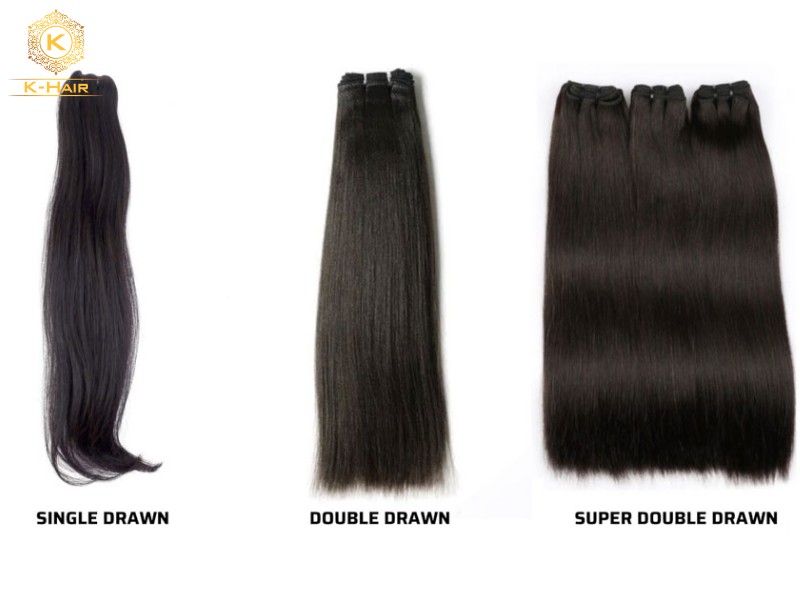
In the market, the most common density levels include:
- Single Drawn (40-45% long strands) → the thinnest and most affordable
- Double Drawn (60-65% long strands) → medium thickness, mid-range price
- Super Double Drawn (80-85% long strands) → very thick and always the most expensive
On top of that, extremely long lengths like 38” or 40” are considered luxury items because suppliers rarely have stock. Meanwhile, shorter lengths like 8” or 10” are always cheaper and widely available.

7.2. Hair types
Over the years, the types of hair used for extension-making have been diversified into different options, with different pricing ranges. The five most widely available hair types that I’ve often seen on the market are:
- Raw hair: sometimes often confused with Virgin hair, Raw hair is simply hair cut directly from the donor and tied into bulk form. It’s only available as bulks, and while it’s affordable, you’ll have to turn it into bundles and add texture yourself.
- Virgin hair: The highest-quality option – collected from one donor, no chemical processing, and extremely similar to our own natural growing hair. Because of its authenticity and durability, Virgin hair always positions itself at the top of the pricing range.
- Remy hair: the more affordable version of the Virgin hair, Remy hair is collected from 2-3 healthy donors, therefore, it is more widely-available and accessible. Despite having less durability and versatility, Remy hair can still preserve many good traits, such as appearance and longevity. Therefore, it is considered as the balance of both quality and affordability – loved by many buyers in the market
- Non-remy hair: the lowest grade of human hair out there, Non-remy hair is taken from mixed, unsanitary sources (trash, bathroom floors,…), so the strands are usually damaged and don’t last long. The only benefit is that it’s extremely cheap due to questionable sourcing.
- Synthetic hair: the only non-human hair types in the market, Synthetic hair is made from plastic fibers meant to mimic human hair. Like Non-remy hair, it may look shiny at first, but it can’t be used for long-term wear. Prices are similar to Non-remy hair, sometimes higher depending on technology.

7.3. Hair manufacturers
In today’s market, China, India, and Vietnam remain the top three international hair manufacturers, each country have a different pricing range for their products:
- Vietnamese hair manufacturers (This is also my trusted source): Vietnamese hair is often praised as one of the finest in the world, known for its shine, strength, and long-lasting quality. Because of that, and due to rising demand, the price is slightly higher. Still, thanks to a rich local supply and expanding factory production, Vietnamese hair remains surprisingly stable and reasonable in pricing.
- Chinese hair manufacturers: China currently leads the global industry in volume and export capacity. Thanks to advanced machinery and mass production, their pricing is competitive – usually slightly cheaper than Vietnamese hair and slightly more expensive than Indian hair.
- Indian hair manufacturers: India has the largest hair supply due to its huge population and abundant local sources. This makes Indian hair the cheapest and most widely available option on the market. However, hair buyers should be cautious, as a lot of Indian hair is sourced from unsanitary, unethical places
8. Final words
In conclusion, as highlighted throughout this article, the main distinctions between Loose wave vs Deep wave come down to their overall look, versatility, and the level of upkeep they require. Loose wave, with its defined, spring-like curls, tend to appear more natural, bouncy, and even manageable and low-maintenance. Meanwhile, Deep wave, featuring the iconic, voluminous tight S-shaped wave patterns, which lean toward a more dramatic, polished, and well-put-together appearance. Each texture carries its own strengths and drawbacks, and ultimately, it is our responsibility as hairstylists and hair business owners to guide clients with proper consultation and deliver the best, highest-quality hair products possible.

This information came from extensive research, supported greatly by the dedicated support I received from K-Hair’s Vietnam sales team. To be honest, in my early years, just like many new hair buyers in the market, I was also quite confused when choosing between Loose wave vs Deep wave, unsure which option would be the right fit for my target customers. But after connecting with K-Hair and receiving their consistent support throughout the decision-making process, I became far more confident in my choices. And now, with more experience under my belt, I’m able to pass this knowledge on to you all, thanks to everything I learned from them.
Throughout my years navigating this complicated hair market, as a buyer myself, I also struggled to find a trustworthy, high-quality source for Loose wave and Body wave hair that could truly satisfy my clients. That search essentially ended the moment I found K-Hair and their authentic Vietnamese hair products. Their items are among the very few that genuinely meet the strict standards of my VIP customers, without the overly high prices many other vendors demand. Our partnership has been going strong for 4 years now, and during that time, I’ve always worked closely with Cherry thanks to her constant and professional support. She even gave me the space to share my knowledge with fellow hair entrepreneurs through her platform, my own small way of giving back to the community.
Her contact information will be presented below, for those wanting to try K-Hair out yourself:
- Website: https://khairvn.com/
- Address: 10A, 171 Nguyen Ngoc Vu, Yen Hoa, Hanoi, Vietnam
- Phone: +8492 633 2545 (WhatsApp)
- Email: [email protected]
- Facebook: https://www.facebook.com/KHairFactoryVN/
- Youtube: https://www.youtube.com/c/KHAIRFACTORYBESTVIETNAMHAIR
- Whatsapp: +8492 633 2545