Finding the perfect hair extensions can feel like an endless search, but one name consistently tops the charts: Brazilian Hair. Brazilian hair is a versatile trade commodity in the global hair industry, predominantly prized for its “multi-ethnic” blending capability, which allows it to seamlessly integrate with varying hair textures.
But with so many options and varying grades on the market, how do you know what’s truly worth your investment? Being a hair salon or business owner, what you need to know about this type of hair is not just the tag of famous, it’s more than that. Hence, to help you get the 360 view about Brazilian hair, we provide you the fullest guide in 2026.
1. What is Brazilian hair extension?
The first secret you need to know about Brazilian hair is its definition. The truth behind this name may surprise you. Let’s dive in:
1.1. Secret behind the name “Brazilian”
Here is what most suppliers will never put in their product descriptions: the term “Brazilian hair” is a marketing construct, not a certificate of origin.
The name emerged in the early 2000s when the global hair extension market was consolidating around a few dominant texture profiles. Distributors, primarily operating out of the US, needed a term that evoked luxury, exoticism, and natural beauty to justify premium pricing. “Brazilian” delivered exactly that.
The association with Brazil’s reputation for vibrant, thick, naturally beautiful hair made it an instant commercial success. The label stuck, spread, and eventually became an industry-wide texture standard adopted by manufacturers across Asia regardless of where the raw material actually came from.
Authentic hair from Brazilian donors does exist, but it is extraordinarily rare, commands prices far above the standard market rate, and is virtually never what a buyer receives when ordering from a standard wholesale catalog. In reality, the vast majority of “Brazilian” hair on the market today is sourced from India or China, where high-quality hair is available in large quantities.
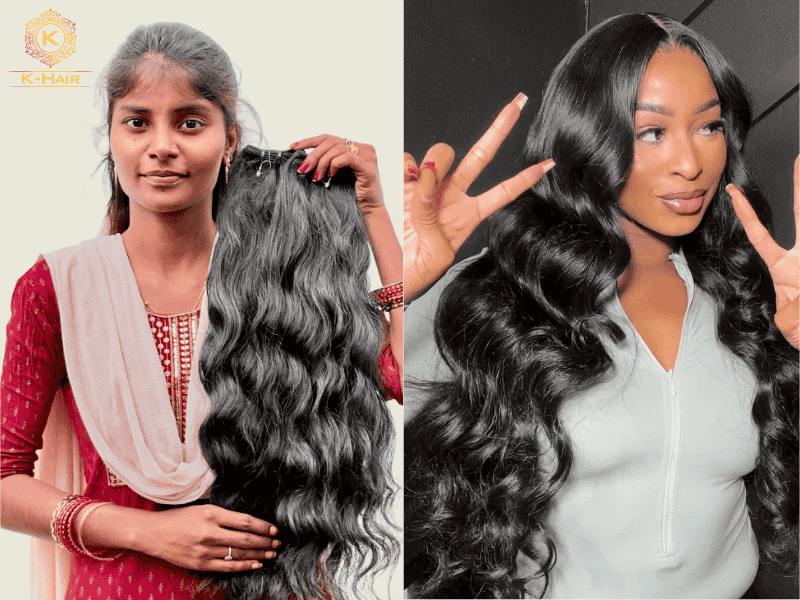
Therefore, if a supplier is selling thousands of identical “Brazilian” bundles, they are selling a specific look and feel, not a product from a Brazilian donor.
1.2. Brazilian hair’s characteristics
To carry the “Brazilian” label, the hair must mimic the sought-after traits of authentic Brazilian textures. These include:
- Texture: Soft yet thick with a naturally glossy finish.
- Density: Notable for its fullness, bounce, and body.
- Luster: A high-to-medium luster that looks healthy and natural, never plastic or oily.
- Low maintenance: Unlike some hair types that require heavy products to look healthy, it maintains a natural sheen even after multiple washes.
- Versatile blending: It blends seamlessly with a wide variety of ethnicities, performing exceptionally well with African American and Caucasian hair textures.
- Durability: Known for long-lasting wear and strong strands.
- Coloring potential: High-quality versions can be bleached to a level 10+ blonde without compromising the hair’s integrity.
- Styling flexibility: It holds curls beautifully and can be flat-ironed bone-straight, returning to its original wavy or curly pattern once washed (provided it is Virgin or Raw hair).
2. Brazilian hair classification
When talking about the classification of Brazilian hair, we are looking at how the industry categorizes these extensions to help consumers achieve specific looks. Since brazilian is a texture standard, these classifications are very consistent across the market:
2.1. Regarding to hair type
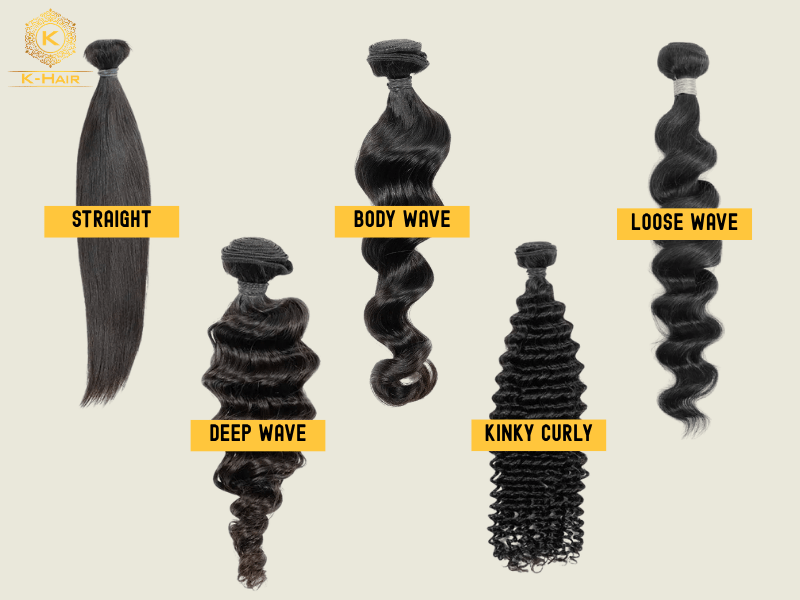
The type refers to the wave pattern, typically achieved through professional steaming to ensure the hair holds its shape after washing. Here are some most popular Brazilian bundles currently available on the market:
| Hair type | Characteristics | Best for |
|---|---|---|
| Straight |
|
US & Europe: High demand for “Bone Straight” looks in the corporate and luxury sectors. |
| Body Wave |
|
Global (Universal): The #1 best-seller in Africa (Nigeria/South Africa) and the US for first-time buyers. |
| Loose Wave |
|
US & UK: Popular among younger demographics seeking a tousled aesthetic. |
| Deep Wave |
|
Africa & Caribbean: Extremely high demand due to humidity resistance and the “wet-look” trend. |
| Kinky Curly |
|
US & Africa: Essential for salons specializing in Afro-textured blending. |
2.2. Regarding to hair color
Because high-quality Brazilian hair is intended to be raw or virgin, the color options are usually limited to natural shades unless they have been pre-dyed:
Brazilian hair typically appears in a Natural 1B (Natural Black). It is not a true jet black, but rather a very dark brown that looks black in most lighting, allowing it to blend perfectly with most natural hair.
Moreover, Natural Brown is also a common shade; this slightly lighter tone is often referred to as “chocolate brown.” These bundles often feature natural, sun-bleached highlights throughout the hair.
On the other hand, since Brazilian women do not naturally have blonde or brightly colored hair, any bundle seen in colors other than the two mentioned above has been chemically treated by the manufacturer. However, due to its thick and durable strands, Brazilian hair can be easily bleached or dyed to a variety of colors:
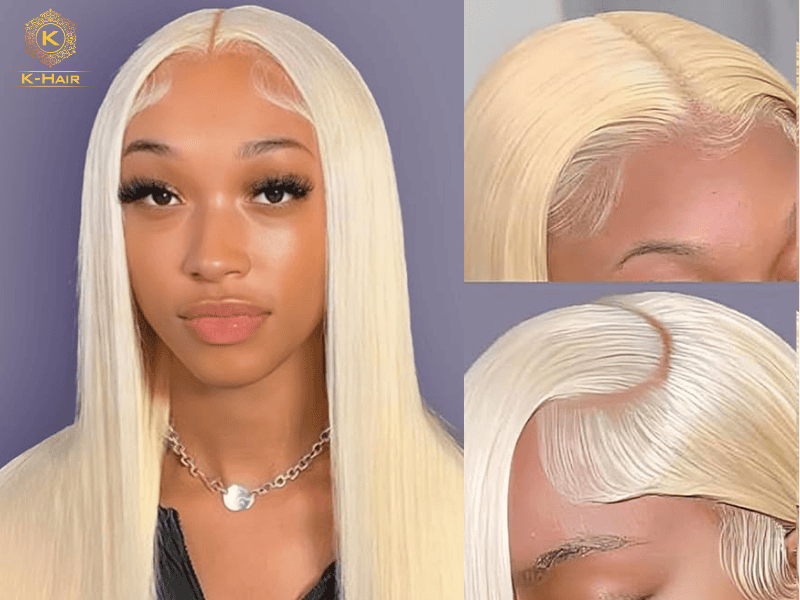
- #613 blonde: A very light, pale yellow. It is popular for those who want to dye their hair “fantasy” colors or achieve a platinum blonde look.
- Piano color: A streaked classification where two different colors are mixed within the same weft to create a highlighted effect.
- Ombre/Balayage: A modern classification where the bundle transitions from a dark root to a lighter color at the ends.

3. Scaling your business with Brazilian hair extension
If you are looking to enter the beauty market or expand your existing business, you may be wondering: Is Brazilian hair a worthwhile investment? Let’s analyze the market factors that make this texture a powerhouse for growth:
3.1. Is Brazilian hair worth the investment?
In short: Yes. Here are the reasons why:
- The prestige of the name: In the minds of clients, “Brazilian hair” represents the pinnacle of hair quality. Because the name is synonymous with thickness, natural gloss, and luxury, you can reduce your marketing costs. The name itself does half the selling for you.
- Versatility: Brazilian strands have a medium-coarse texture that blends perfectly with the natural hair of African women and those with naturally thick textures. It holds styles exceptionally well, especially curls and waves.
- High profit margin: Because it is categorized as a premium hair grade, you can command a higher price point than standard Indian or Chinese non-remy hair.
3.2. Profitable strategy with Brazilian hair
To truly scale a Brazilian hair business in 2026, you have to move beyond just selling bundles. The market is crowded, so profitability now relies on specialization and trust-building. Here is how to stay ahead:
- The ecosystem approach: Don’t just stop at “Brazilian.” Use it as your “hero product,” but offer a full ecosystem. Pair it with Peruvian hair (for those who love extra silkiness) or Vietnamese hair (for clients who want the most premium, raw, natural hair on earth).
- Focus on quality: Instead of worrying about whether the hair “truly” came from Brazil, market your processing technology. Promote the fact that your hair is steam-processed without chemicals. Quality is what justifies a higher price, not just a label.
- Upselling custom styles: Take advantage of the strength of Brazilian hair. Since it handles chemicals well, offer custom bleaching or dyeing services. It’s a safe way to add high-value revenue to every sale.
- Invest in the golden lengths: If you’re new, buying every hair length from 8 to 30 inches is a big risk. In our 30 years of experience, 18, 20, and 22 inches account for 60-70% of all sales. Focus your capital here to ensure your inventory moves fast.
- The ready-to-wear trend: In 2026, convenience is king. Instead of just selling bundles, offer ready-to-wear wigs. This helps clients see the final look immediately and makes the purchasing decision much easier.
Expert tip: Focus on HD Lace and Transparent Closures. A Brazilian bundle is only as good as the lace that finishes the look. High-quality lace is currently the biggest “bottleneck” in the industry. Hence, if you have the best lace, you’ll win the market.
3.3. Brazilian Hair vs Vietnamese Hair: The Truth for B2B Buyers
While Brazilian hair is a fantastic entry-point product due to its mass-market appeal, high-end salons and seasoned distributors are increasingly pivoting to Vietnamese Hair. Why? Because the “Brazilian” label on the market today often masks acid-washed Indian or Chinese hair, which can degrade over time. In contrast, Vietnamese hair is prized for being authentic, single-donor raw hair.
| Feature | Standard “Brazilian” Hair | Authentic Vietnamese Hair |
|---|---|---|
| Origin | Often mixed origins (India/China), processed to achieve the texture. | 100% ethically sourced directly from Vietnamese donors. |
| Cuticle Integrity | Sometimes stripped and silicone-coated to mimic shine. | 100% Cuticle-aligned (Unprocessed Raw/Virgin). |
| Bleaching Potential | Lifts to Level 27 (Honey Blonde) safely; struggles with #613. | Easily lifts to #613 Platinum Blonde without melting. |
| Lifespan | 6 – 12 months. | 2 – 5 years (Highest ROI for luxury clients). |
If your goal is volume and fast sales, Brazilian hair is excellent. However, if your goal is to build an elite, luxury brand with zero tangling complaints, Vietnamese hair is the ultimate upgrade.
4. How to identify high-quality Brazilian hair
Identifying high-quality Brazilian hair requires a mix of sensory checks and technical observation. Based on the industry standards for 2026 and our expert tips, here is every test you can take to spot the real deal from the fakes:
- Appearance: At first glance, Brazilian hair stands out due to its distinct characteristics: it appears thick, bold, dense, and naturally healthy. High-quality hair maintains its thickness to the bottom. If the ends are very thin or “stringy,” the bundle is full of cheap, short filler hairs.
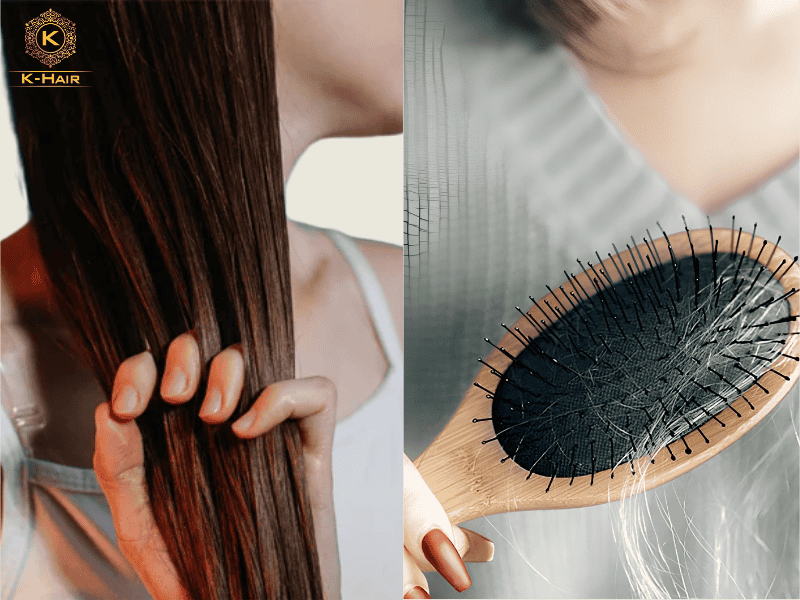
- Finger-comb test: Run your fingers from root to tip. High-quality hair should be soft and tangle-free. If your fingers snag or the hair feels “waxy” (silicone coating), it’s likely low quality.
- The shedding test: Pull a section of the hair firmly. If more than 2–3 strands come out, the weft construction is poor. True Brazilian hair should have minimal to zero shedding even under tension.
- Luster test: Observe the hair under natural light. It should have a soft, natural glow. If it has a mirror-like, “plastic” shine, it is a synthetic blend rather than authentic human hair.
- Bleach test: Apply a small amount of bleach to a strand. Virgin hair will lift to a lighter brown or blonde easily. If the hair doesn’t change color or turns a strange “ginger” hue instantly, it has been pre-dyed to hide its true origin.
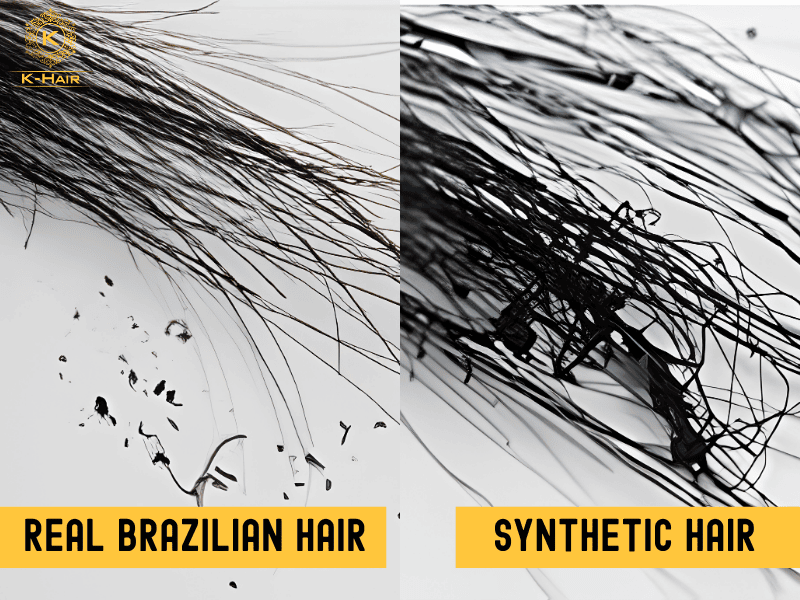
- Burn test: This is the fastest and most reliable way to verify quality. When you burn real human hair, the end product will turn into fine, powdery ash and smell like burning protein (similar to burnt feathers). However, if the hair is synthetic or a blend, the end product will melt and ball up like burnt rubber, producing a chemical odor.
5. FAQs about Brazilian hair
Here are the most frequently asked questions about Brazilian hair:
5.1. Brazilian hair after care?
Keep it hydrated but avoid heavy oils. Use a sulfate-free shampoo, detangle gently with a wide-tooth comb starting from the ends, and always use a heat protectant before styling. Sleep with a silk scarf or on a satin pillowcase to prevent tangling.
5.2. Brazilian hair price?
Prices vary based on length and quality (grade). Generally, a single bundle starts from $30 to $80+. For a full head (3 bundles with a closure), expect to invest between $150 and $350 for premium virgin quality.
5.3. Difference between Brazilian hair and Peruvian hair?
The debate between Peruvian hair vs Brazilian hair is a perennial one that often leaves hair salon owners and beauty entrepreneurs undecided. When compared, their distinct characteristics suit different client needs:
- Brazilian hair: Thicker, shinier, and holds curls exceptionally well. It’s the best for “bouncy” styles.
- Peruvian hair: More lightweight, coarser in texture, and has a matte finish. It blends better with relaxed natural hair and feels airier.
5.4. Is Brazilian hair 100% human hair?
High-quality Brazilian hair should be 100% human hair, ideally “Raw” or “Virgin”. However, beware of “synthetic blends” in very cheap versions. Always perform a burn test to verify: human hair turns to ash, while synthetic melts into a hard bead.
5.5. Brazilian hair extensions method?
Like the other hair type, Brazilian hair can be created with every extension method out there. Still, the most common methods include Sew-ins (Weaves), Tape-ins, and Micro-links. Because Brazilian hair is durable, it is also the top choice for creating custom Lace Frontal or Closure Wigs.
6. Conclusion
Brazilian hair is the ultimate choice for volume and bounce, making it a timeless favorite for glamorous styling. However, for those who prioritize guaranteed origin and the highest durability, Vietnamese hair is the superior investment. Naturally strong and silky, Vietnamese hair is highly adaptable, blending seamlessly with all hair types and ethnicities.
As a leading Vietnamese wholesale hair vendor, K-Hair provides 100% authentic, factory-direct hair that ensures your quality never wavers. Contact us now to receive our latest wholesale price list and a free expert consultation!
Ready to Upgrade to the Superior Hair Source?
While “Brazilian hair” is a great marketing term, the world’s top luxury salons are switching to authentic Vietnamese raw hair for unmatched durability, density, and pure 613-bleaching potential. Bypass the middlemen and source directly from K-Hair Factory to secure premium quality and maximize your profit margins.
True Origin Guarantee: 100% Raw Vietnamese hair—zero synthetic fillers or silicone coatings.
Factory-Direct Margins: Wholesale pricing with up to 50% discounts for bulk B2B orders.
Global Logistics: Fast, secure 5-7 day shipping to the USA, Nigeria, and Europe.