Much like any beauty investment, how to choose hair extensions the right way determines everything – get it wrong, and even premium hair looks off. We’ve all seen it, or experienced it ourselves: extensions that don’t quite match, blend awkwardly, and instantly erase the wearer’s confidence. However, the problem is never about hair extensions – after all, if done right, they can truly transform your entire look. The problem here is choosing the wrong extensions.
This guide walks through that process step by step. Whether you’re buying your first set of clip-ins or building a professional salon inventory, this guide covers how to choose hair extensions for your hair type, lifestyle, and budget.
1. The Starter’s Guide on How to Choose the Right Hair Extensions
Before you even look at colors or lengths, the real starting point for how to pick out hair extensions is your own hair. Extensions have to attach to, blend with, and be supported by your natural strands. The right choice depends on your hair’s current condition and texture.

1.1. How to Evaluate Your Hair
The most important factor when learning how to choose hair extensions is obviously to pay more attention to the hair’s health itself. Different hair extensions have different installation methods – hence, applying different levels of stress onto the strands. Determining hair health is the one way to select extensions with the least amount of risk – ensuring both scalp health and seamlessness:
- Dry, over-processed or prone to breakage hair cannot withstand high-tension methods – requires gentle, lightweight application techniques and zero-heat fusion to prevent further scalp distress
- Fine, low-density hair is best matched with ultra-lightweight wefts to avoid causing traction alopecia or root strain; while medium-to-thick hair offers far more flexibility, allowing for dense, double-drawn sew-ins,…
- The lengths of your hair also add to the equation: Shorter hair demands strategic, multi-layered extension placement and precise point-cutting to erase visible transition lines, while longer natural hair allows for seamless, effortless integration with fewer pieces.

Your hair health should be the top priority when learning how to choose hair extensions
1.2. How To Choose Hair Extensions based on Your Lifestyle
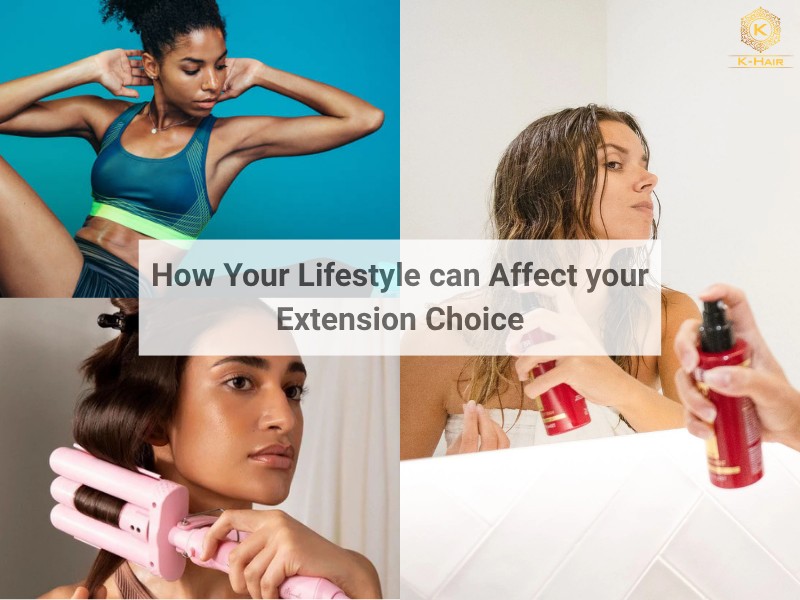
Before buying, it’s worth asking a few honest questions. Are you an active gym-goer who sweats daily, or someone who wears extensions only on weekends? Do you heat-style your hair every morning, or let it air dry? Trust me, these questions will determine your ideal hair extension type:
- Activity Level: An active gym-goer who sweats daily requires a vastly different, highly breathable application than someone who only wears extensions for weekend events.
- Styling Habits: Clients who commit to a rigorous morning heat-styling ritual have different structural durability needs than those who prefer to wash and air-dry.
- Maintenance Commitment: Low-maintenance routines are best served by temporary, removable methods (like clip-ins). Conversely, clients seeking a true “wash-and-go” lifestyle typically prefer secure, semi-permanent applications (like tape-ins or wefts).
Your level of activity, your styling routine and maintenance commitment can decide how you choose your hair extensions
1.3. Navigating Between Human hair vs Synthetic hair
Entering the hair extension market – the absolute first decision you must make centers on the raw material itself. This single decision can determine the product’s quality, price tag, and daily performance – drawing the line between long-term investments and temporary hair pieces. Typically, the market are made up of three main hair materials, stated as follow:
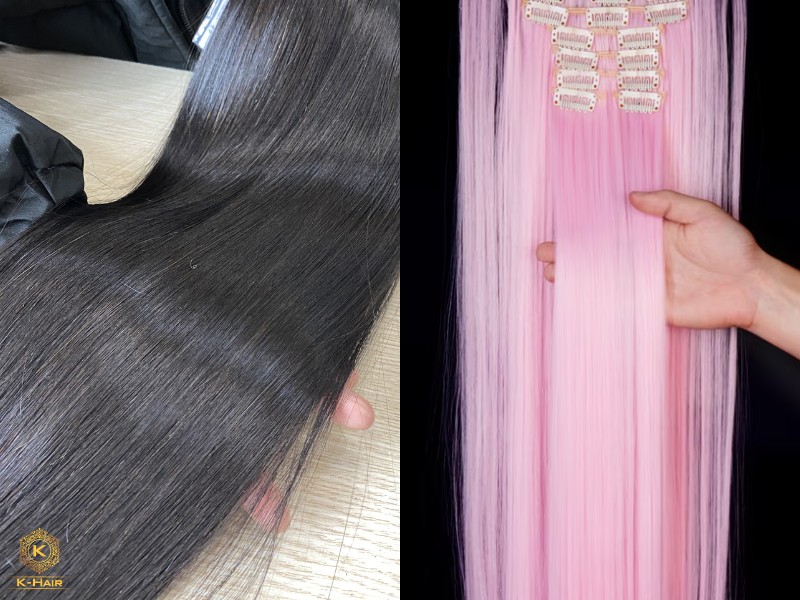
- 100% Human Hair: Considered the global gold standard of the industry. Because the cuticle layer remains completely intact and perfectly aligned from root to tip, this hair is able to perform naturally, resist tangling, shedding, and offer a much longer lifespan than its counterparts.
- Non-Remy human hair: Hair that had its cuticles stripped or realigned, often coated in silicone to fake a healthy shine. While it looks pristine on day one, the silicone quickly washes away, leaving behind a texture that is prone to severe tangling, matting, and a loss of luster after just a few washes. See the full breakdown of Remy hair before you buy.
- Synthetic hair: The most budget-friendly option, but it comes with real drawbacks: it cannot be heat-styled without melting, it has a noticeably artificial shine, and its lifespan is typically measured in weeks rather than months or years. Compare the trade-offs in our Synthetic hair vs human hair guide.
The Differences between Human hair and Synthetic hair extensions
2. From Clip-Ins to Fusion: What Type of Extensions Are Best for Hair?
Once you understand your hair’s needs, the next question is what type of extensions are best for hair like yours and your installation purposes. Oftentimes, application methods generally fall into two genres: temporary and semi-permanent. Browse the full Types of hair extensions range to compare every method side by side.
2.1. Temporary Methods – Low Commitment
For clients who desire maximum flexibility without a long-term commitment, temporary attachment methods offer the perfect answer. These options require zero chemical bonding, tapes, or salon equipment, making them an excellent choice for individuals who want to alter their look instantly without risking their lifestyle or hair health:
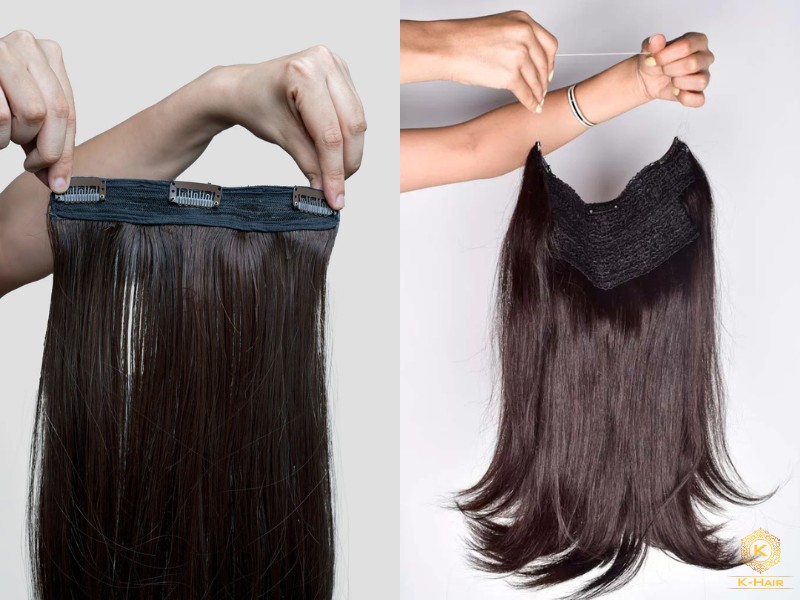
- Clip-ins: The most beginner-friendly option, causing zero damage, require no professional installation, and can be put in or taken out in minutes. Ideal for special occasions or occasional length and volume.
- Halo extensions: A single wefted piece that rests on the head using an adjustable wire, rather than clipping into or being bonded to individual sections of hair → damage-free and scalp-friendly installation – best suited for fragile, damaged hair.
Temporary hair extension methods are clip-ins and halo extensions
2.2. Semi-Permanent Methods – Medium to High Commitment
For those seeking a seamless, lasting solution that eliminates the need for daily installation, permanent and semi-permanent methods offer the ultimate convenience. These salon-installed techniques integrate directly with your natural hair, offering long-term wear and ultimate seamlessness that resemble your own natural hair:
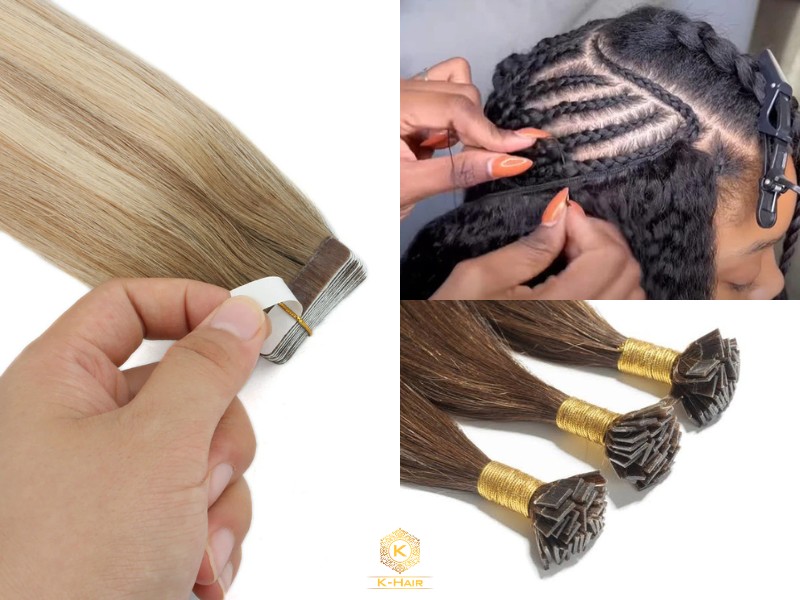
- Tape-ins: Thin, flat wefts, attached to small sections of natural hair using adhesive strips. They lay flat against the scalp, making them a favorite for fine hair, and typically last six to eight weeks before needing to be moved up as natural hair grows. See the full Tape-in hair extensions pros and cons before booking a salon visit.
- Sew-ins: Hair is braided into cornrows and used as tracks to sew in the wefts. This method is exceptionally secure and works particularly well on coarse, or naturally textured hair – making it extremely popular among the African-descent demographics.
- I-tip, nano ring, and fusion methods: Individual strands are bonded or fastened close to the root, allowing hair to move a full 360 degrees movement without visible wefts. These offer the most natural movement of any method but require a professional stylist for both application and safe removal.
Semi-Permanent methods include tape-ins. sew in hair extensions, and keratin bonded fusions
| Method | Commitment | Best For | Lifespan & Reusability |
| Clip-In | Temporary (Daily) | All hair types, beginners, special events | 6-12+ months
Reusable |
| Halo Extension | Temporary (Daily) | Fine, fragile, or thinning hair | 6-12+ months (Yes) |
| Tape-In | Semi-Permanent (6-8 weeks) | Fine to medium hair | 6-9 months (Yes, re-tape) |
| Sew-In | Permanent (8-10 weeks) | Thick, coarse, or textured hair | 6-12 months (Yes) |
| I-Tip/Nano/Fusion | Permanent (3-5 months) | Medium to thick hair, high-ponytail lovers | 3-6+ months (I-Tip/Nano yes; Fusion no) |
Expert Notes: The right choice comes down to matching your natural hair’s thickness to the method’s demands: fine or thin hair generally goes with halos or tape-ins, while thick or coarse hair can comfortably support sew-ins or fusion methods.
Matching correctly is the core of figuring out what type of extensions are best for hair like yours, rather than simply choosing what looks best in a photo.
3. Extension Guide: How to Choose Hair Extension Length
Length is often the first thing people think about, but it’s also where the most avoidable mistakes begin. Getting how to choose hair extension length right calls for strategic and calculated choosing – the wrong length can look fake or, worse, cause tension to your scalp.
3.1. How To Choose the Right Hair Extension Length – The Golden Rule
For those wanting to achieve a longer hair length on their blunt cut, the golden rule is to stay within 2 to 4 inches of your natural hair length. As a hard ceiling, never go more than double your natural hair’s length, or the blend will start looking obviously artificial no matter how skilled the application.
For example, if you want to add lengths on your 12-inch natural hair, you should go with 14-inch or 16-inch hair extensions. This range creates a seamless, believable blend where the extensions read as an extension of your own hair rather than an obvious addition. If you want a more dramatic length change, a professional stylist can perform a full-head cut-to-blend, gradually layering your natural hair into the extensions to disguise the difference.
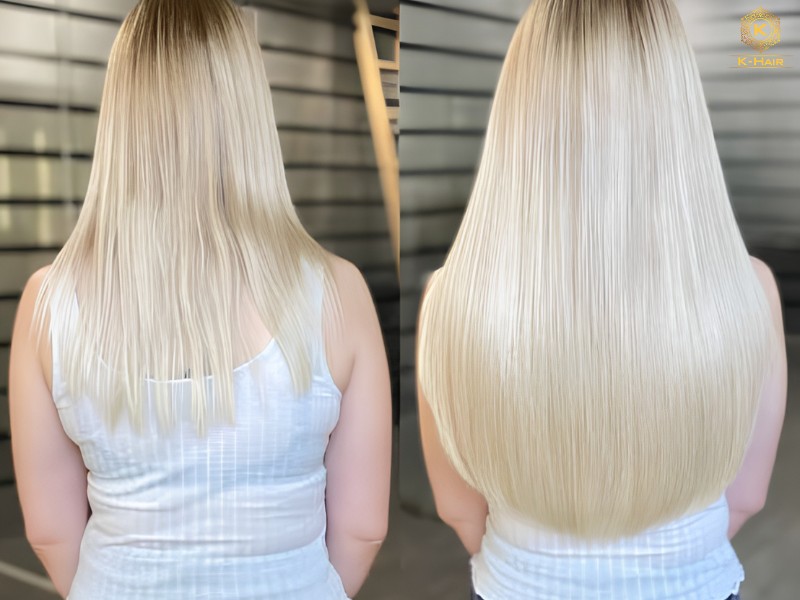
For those wanting to simply add volume to their limp, thinning hair – the rules change drastically. Instead of going for dramatic lengths – choosing your exact length or just 1-inch longer hair extensions can get you that thicker ends the fastest.
Weight matters just as much as length. For everyday volume on average-density hair, 100 to 150 grams is the standard full-head range. If you’re working with thick natural hair or chasing dramatic length and fullness, budget for 200 to 240+ grams, otherwise the ends will look wispy and thin no matter how long the pieces are.
3.2. Your Hair Texture & Its Effects on How We See Lengths
One thing about hair texture is that it can also affect your hair lengths and how to choose hair extension lengths. The density of the curls, their size, wave types,… can actively shrink your actual hair length:
- Straight hair falls flat and shrinkage-free → true to its measured length, so a 20-inch weft will hang at roughly 20 inches.
- Wavy hair has natural bend built into each strand, which visually shortens it by about 1 to 2 inches compared to its straightened measurement.
- Curly hair can shrink the most dramatically, appearing up to 2 to 3 inches shorter than its true, pulled-straight length due to the tightness of the curl pattern.
3.3. Step-by-step Measuring Guide
To measure the exact length where your hair extensions will land – you would need a measuring tape:
- Start at the ear line, or closer to the crown – this should be the starting point of your installation, and extend the tape downward.
- Stand straight in the mirror and let the tape drape down your back to see how different lengths will appear.
- If you have curly hair – add 3-4 inches to the measurement, if you have wavy hair – add 1-2 inches.
How to measure for your hair extensions

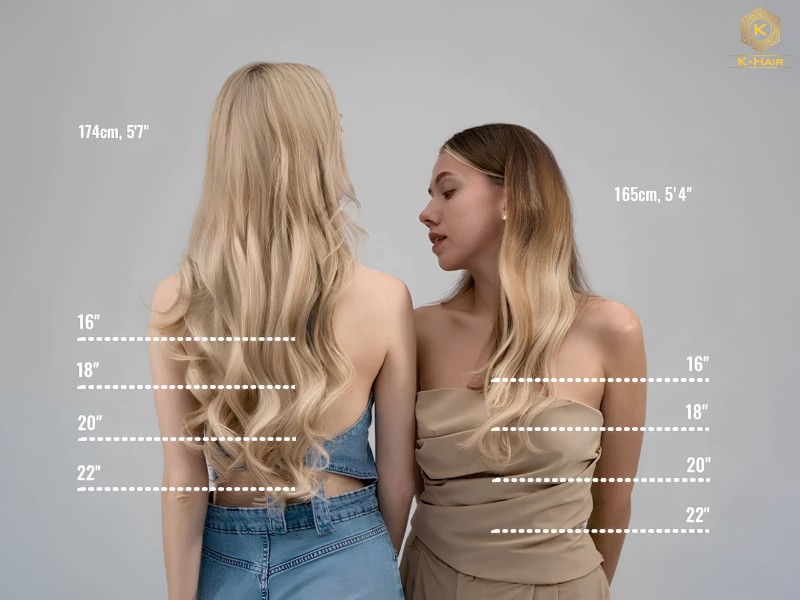
Standard industry lengths are 2-inch away from each other, for example: 12″, 16″, 20″, and 24″,… In reality, these tend to correspond loosely to different points on an average-height body: 12 inches typically lands around the shoulders, 16 inches around the mid-back, 20 inches near the waist, and 24 inches can reach past the waist depending on your torso length. Check the full Hair extension length chart for every size in between.
4. Flawless Blending: How to Choose Hair Extension Color
Even a perfectly measured, perfectly applied set of extensions will look obviously fake if the color fails to match your shades. How to choose hair extension color correctly is, hence, the next step to choosing the right hair extensions:
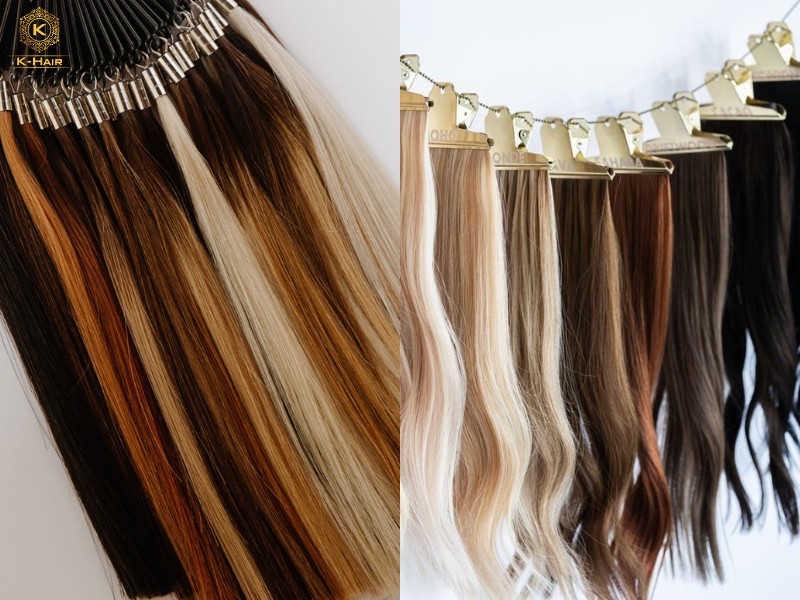
- Matching the Roots: One common mistake is matching the extension color with the roots. Because root hair is younger, its colors are often darker than the rest of the hair – root-color matching will only make the extension more and more visible! Therefore, when choosing hair extension color – make sure that the shade actually matches the mid-lengths and ends of your hair instead. Always double-check the match in natural daylight rather than under salon or indoor lighting, since artificial lighting can mask subtle yellow or ash undertones that become obvious outdoors.
- Multi-color Blends: Natural human hair never has a consistent color throughout – therefore, a single, flat extension color will only make the hair look unnatural and synthetic. Instead, multi-color blends with highlights, lowlights can offer that seamlessness that you need.
- How to safely dye extensions: If the available color range doesn’t quite match, extensions, especially authentic human hair – can be dyed and colored accordingly for shade match. However, constant heavy coloring strips the cuticle and dramatically shortens the hair’s lifespan, often leading to breakage and a dry, straw-like texture.
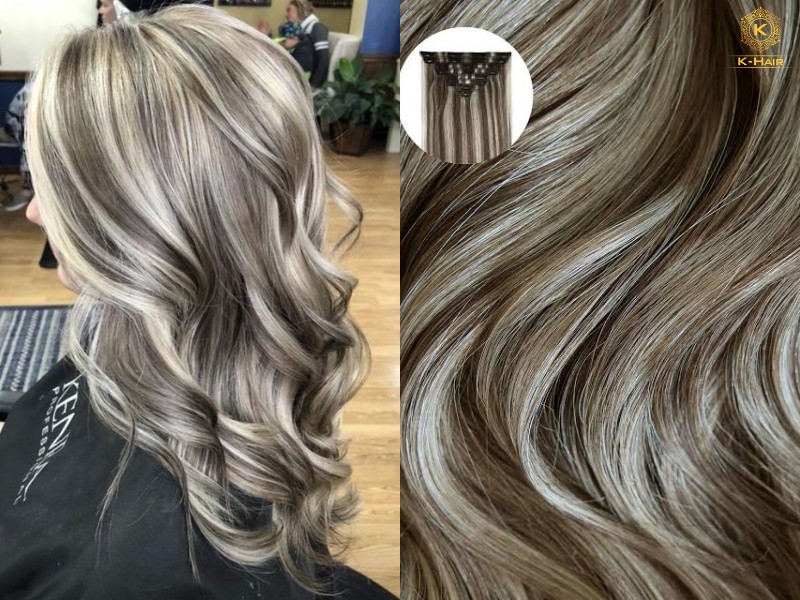
- How to use coloured hair extensions: To instantly add dimension or vibrant colors without chemical damage, place clip-in or tape-in colored extensions underneath natural hair near the temples and crown. This placement allows your natural strands to drape over the extensions, creating a blended – yet unique highlight or balayage effect.
You can also step up your hair game by infusing lowlights and highlights to your extensions
5. The Professional Perspective: How Salons Choose Hair Extension Brands for Wholesale Inventory
While individuals buy for themselves, salon owners stock hair extensions with a completely different objective in mind. In fact, rather than solving for one client’s hair, the goal shifts to covering the widest realistic range of client needs at scale.
- Strategic Stocking: A salon can’t stock a single texture or shade and expect it to work for every client – after all, building a sustainable business means appreciating and accommodating diversities. Therefore, as a salon owner – make sure that you stock a wide range of hair densities, color, textures, alongside the popular, most-requested lines.
- Sample Vetting: One huge mistake to avoid is purchasing bulk without testing. Before committing your big bill, order a small quantity as a sample first to check and examine the hair quality in person before using them on your clients. Learn more about proper storage in our How to keep hair extensions from tangling guide.
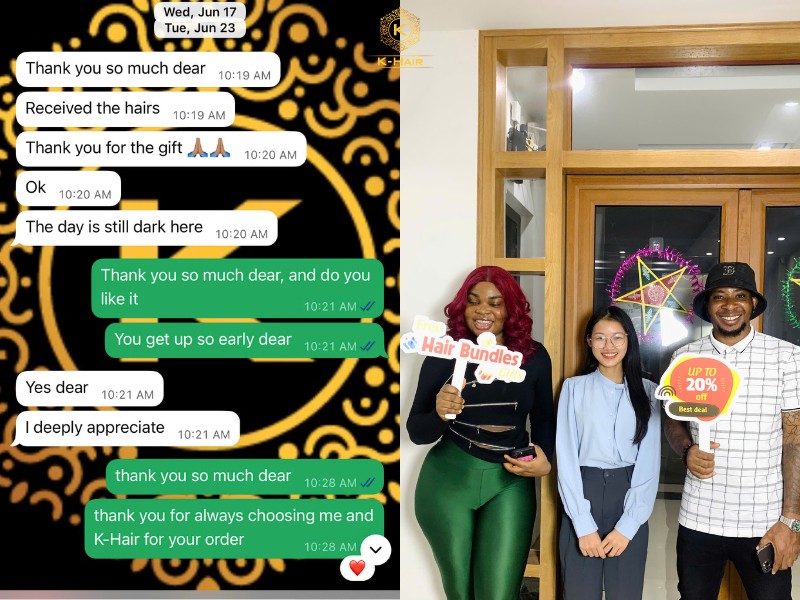
- Choosing the Right B2B partner: Don’t be distracted by price or discounts – partner up with vendors who can actually guarantee quality and consistency. Suppliers that offer accurate colors, customization, fast and large-scale production will be your biggest support as your business grows.
K-Hair – One of the most Trusted Wholesale Suppliers in Vietnam
6. Conclusion
With the information mentioned, we hope that we have been able to showcase to you the thorough steps on how to choose hair extensions. In the end, choosing the right hair extensions should be based on your hair state, density, lifestyle and length, color preferences. By replacing guesswork with a strategic plan, you ensure a seamless, head-turning look that looks beautiful and keeps your natural hair healthy.
Ready to experience the difference that premium, 100% RAW human hair can make? Explore K-Hair Factory‘s extensive collection of high-quality extensions today to find your perfect match and elevate your styling game.
Ready to source premium Vietnamese hair extensions?
Contact K-Hair Factory directly for wholesale pricing, MOQ details, and free samples.