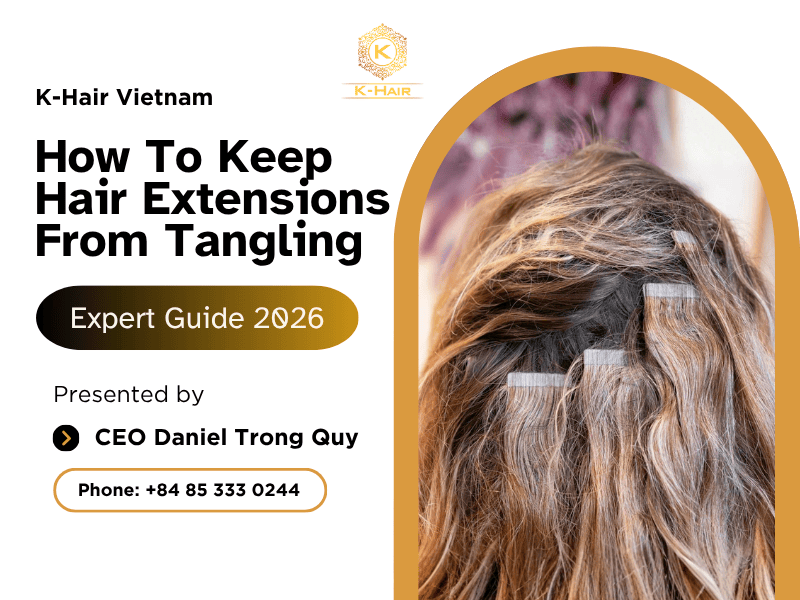
Tangled extensions are one of the most frustrating things that can happen to your hair – and the most preventable. Whether you woke up to a knotted mess or you just want to stop tangling before it starts, this guide walks you through every cause, every fix, and the daily habits that keep your extensions silky and tangle-free for as long as possible.
1. Why do extensions tangle?
Before fixing the problem, it helps to understand why it happens in the first place – even with hair that’s labeled “high-quality”.
The biggest culprit is “low-grade” hair, like non-remy or synthetic extensions. In these, strands are mixed together with their cuticles facing in different directions. When opposite-facing cuticles rub against each other, they catch like Velcro and create instant knots.
But it’s not always about hair quality. Even great extensions are “dead” hair – they don’t get the natural oils your scalp produces to keep strands slippery and hydrated. That alone makes them more prone to friction and tangling than your natural hair.
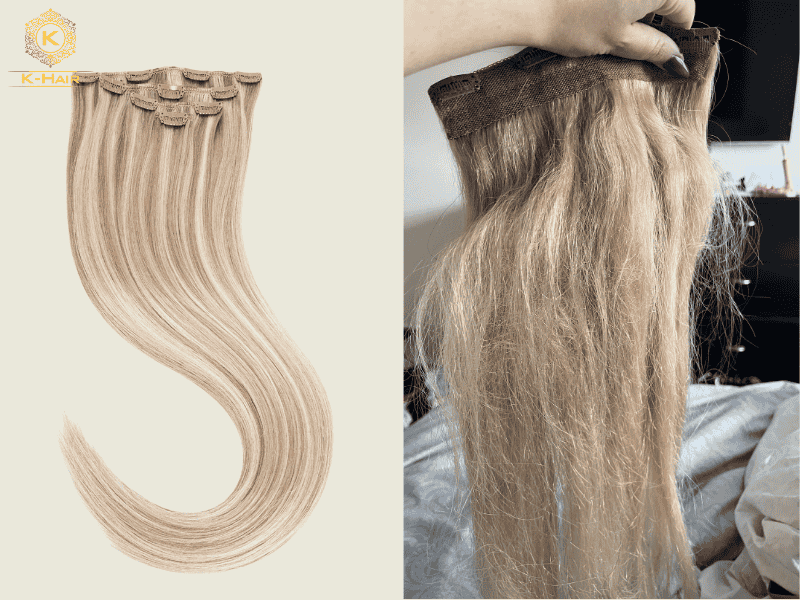
On top of that, a few everyday habits make tangling worse:
- Too much product: Heavy hairspray, gel, or silicone-based products build-up and attract dirt, making strands stick together.
- Harsh shampoo: Sulfates strip away the smooth coating that keeps extensions manageable.
- Dryness: Without enough moisture, strands roughen and catch on each other more easily.
- Friction from daily life: Rubbing against sweaters, coat collars, scarves, or a cotton pillowcase roughens the hair’s surface over time.
- Heat and chemical damage: Heavily bleached, dyed, or over-styled hair develops lifted cuticles that act like tiny hooks, catching on neighboring strands.
2. How to keep hair extensions from tangling
Here’s your full routine for tangle-free extensions, from the moment you put them in to the moment you take them out.
2.1. Sourcing high-quality hair extensions
The fight against tangles really starts before you even put your extensions in – it starts with the hair itself. No amount of brushing or conditioning can fully fix structurally poor-quality hair, so if you’re shopping for extensions, this is the single most important decision you’ll make.
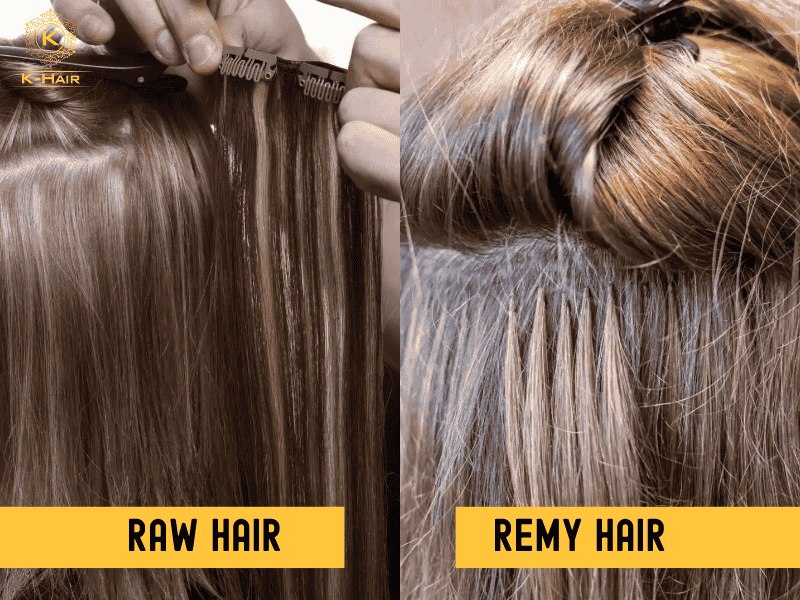
Most tangling comes down to cuticle misalignment. In lower-grade hair, strands from different donors are blended together without matching cuticle direction. When those opposing cuticles rub against each other, they lock together like Velcro – which is exactly what causes stubborn mats.
Raw hair avoids this problem almost entirely. Because it comes from a single donor and isn’t chemically processed, every strand has the same cuticle direction and the same natural protein structure. The result is hair that moves as one, resists friction, and stays manageable wash after wash.
2.2. Brushing
Frequent, gentle brushing is the most effective defense against mats. Try the 3-times rule: Brush in the morning, midday, and before bed.
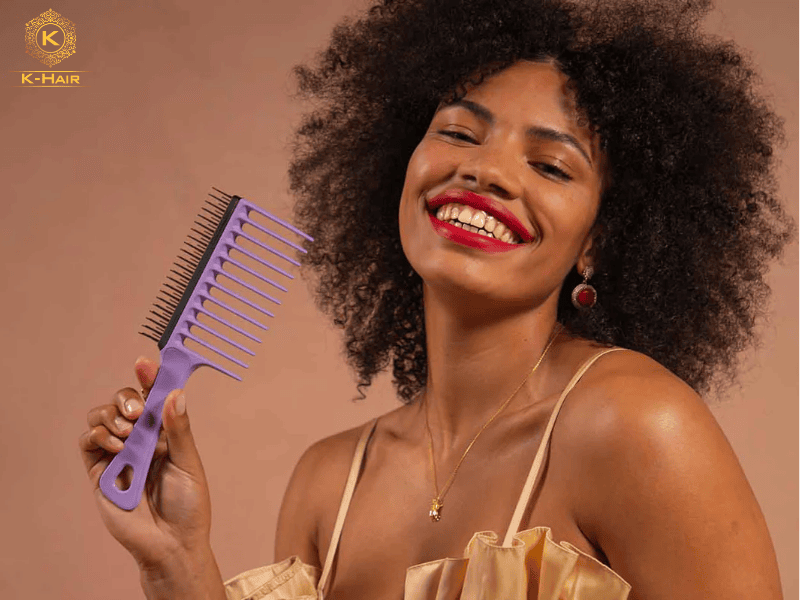
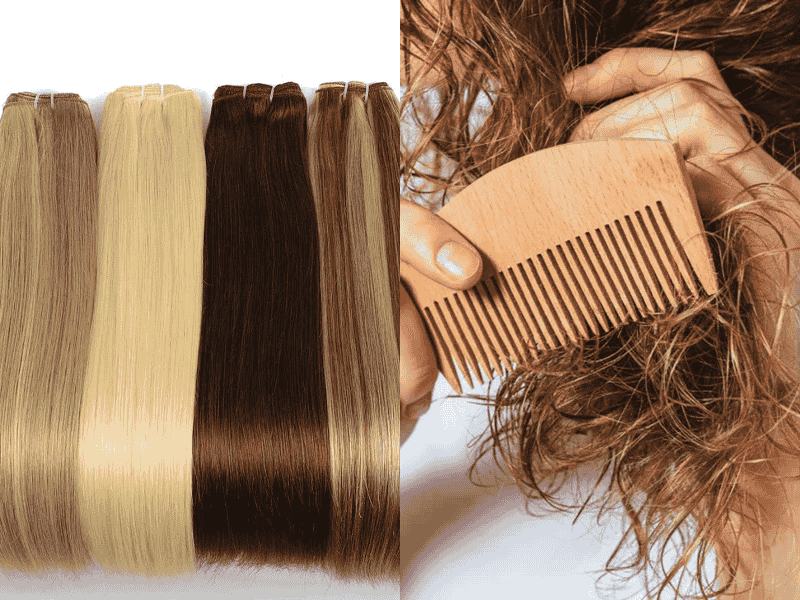
Use a loop brush or a wide-tooth comb that glides through without snagging at the attachment points. Always start at the ends and work your way up to the roots – this stops you from pushing knots tighter and causing breakage.
2.3. Washing
Washing too often dries out your extensions, washing too little lets product build up. The sweet spot is every 10-14 days. In this important process, use only sulfate-free and paraben-free formulas, and never scrub in a circular motion. Harsh sulfates and friction are the two primary culprits that strip the hair’s surface, leaving it rough and far more prone to knotting.
When conditioning, slather deep conditioner or hair masks from the mid-shaft to the ends. Keep all conditioner away from the root bonds. The lubricants will dissolve tape adhesive or cause keratin and slip wefts to slide out.
2.4. Sleeping
The friction caused by tossing and turning on a standard pillowcase is a primary cause of morning tangles and forever tangles. Therefore, switch to a silk or satin pillowcase. These materials allow the hair to glide smoothly rather than catching on cotton fibers.
Also, never go to bed with loose hair or wet hair. Dry your hair carefully and tie it in a low, braid to keep the strands contained and static-free. If you are scared about the curls in the morning, you can put the hair in the silk bonnets to create a perfect protection when sleeping.
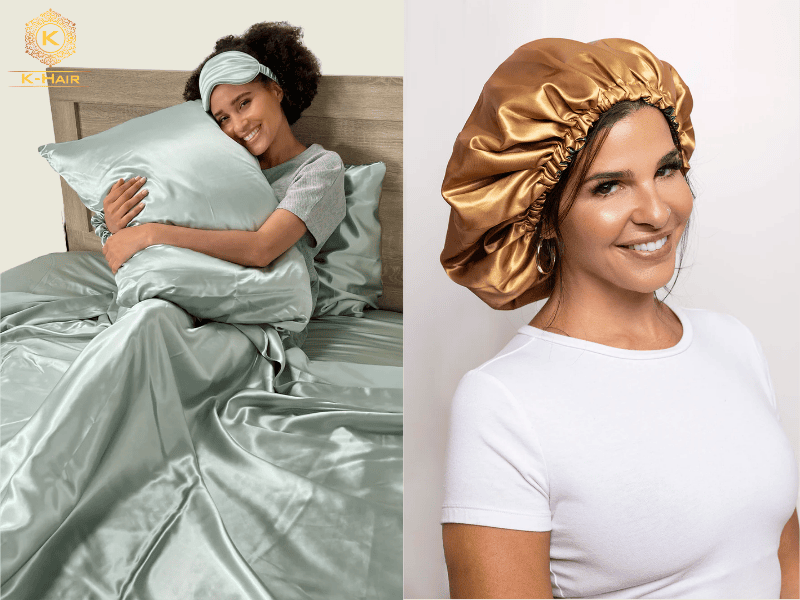
How to keep hair extensions from tangling with silk pillowcases and protective sleep care
2.5. Styling
Styling tools can either help or hurt the tangle-free goals. Always apply a heat protectant spray before using flat irons or curlers. Heat damage creates “split ends” on extensions that catch on another. Never clamp a hot iron directly onto or right below your bonds. Instead, leave a 1.5 to 2-inch safety gap from the root to prevent melting or warping the attachment points.
Finally, finish your style with a lightweight hair oil or serum to mimic natural sebum and provide a slippery barrier that prevents strands from interlocking.
2.6. Storage
How you store your extensions when you’re not wearing them affects how they’ll behave next time. Make sure the hair is completely dry and brushed before placing it in a dedicated extension hanger or a silk storage bag.
This prevents “storage crimps” and tangles caused by stuffing hair into drawers. If you have to use a box, gently roll the hair into a loose circle and place it in a silk pouch to keep it from shifting around.
3. How to fix already-tangled extensions
If you wake up to matted, knotted extensions, don’t panic – and don’t pull. Aggressive pulling at a mat irreversible shedding and breakage that no conditioning treatment can fix.

Here’s the step-by-step guide to fix already-tangled extensions:
- Step 1 – Apply oil or serum generously: Coat the tangled sections in hair oil or a silicone-based serum – don’t be shy with it! The hair should feel noticeable silky before you bring a comb anywhere near it.
- Step 2 – Detangle the hair: Using a wide-tooth comb, begin detangling at the very ends of the hair. Work in small sections, dissolving each knot completely before moving upward toward the roots. Slow but sure, rushing this step is the most common cause of unnecessary shedding.
- Step 3 – Deep condition: Once all knots are resolved, apply a heavy conditioner or hydrating hair mask and allow it to penetrate for a minimum of 30 minutes, or up to a few hours for severely dehydrated hair. If it still feels rough, reapply and repeat.
- Step 4 – The no water rule: This is the most critical and most frequently violated step. Wetting matted hair makes the fibers swell and the knots tighten further, making everything worse. Only wash once the hair is 100% smooth.
4. Which types of hair extensions are less prone to tangling
If you’re looking for hair extensions that don’t require a lot of maintenance, choosing the right type can make a big difference. Here is the breakdown of how each type behaves, so you can choose the lowest-maintenance options:While origin is key, the physical shape of the hair also plays a role in how easily it knots:
4.1. Hair grades
The answer is really simple: the higher the quality, the lower the risk of tangles. Here is a breakdown of how different hair tiers perform:
| Hair type | Lifespan | Tangling level | Reason |
| Raw hair | 2-5+ years | Least | Perfect cuticle alignment, no chemical damage |
| Virgin hair | 1-2 years | Low | Cuticle aligned, slightly processed |
| Remy hair | 6-12 months | Medium | Cuticle un-alignment, processed |
| Non-remy hair | 1-3 months | Extreme | Cuticles are clashing, processed harsh chemicals |
| Synthetic hair | <3 month | High | Plastic fibers create static and melt together over time. |
4.2. Hair textures
On the other side, texture matters too:
- Straight hair: Naturally the most tangle-resistant. The lack of loops and bends in the hair means there are fewer opportunities for strands to intertwine.
- Wavy/kinky hair: Since the texture is not “flat” like straight hair, but raised of “S” or “Z” shapes of the strands, this creates more friction and points of contact where hair can catch on itself.
4.3. Hair extension methods
Different application methods come with their own tangling quirks:
- Clip-ins extensions: Because you don’t wear them all day all night, they don’t experience the friction of you tossing and turning on a pillow. Furthermore, since they aren’t semi-permanently attached to your scalp, your naturally shedding hair doesn’t get trapped in the bonds.
- Tape-in extensions: These lie flat against the scalp in wide panels, with your natural hair sandwiched neatly between the tapes. This flat design leaves less room for hair to twist or wrap around neighboring sections, making them relatively easy to brush and maintain.
- Weft hair: These are more prone to tangling at the nape and the perimeter of the install, where they rub against clothing or pillowcase most. Also, you have to be careful to brush right up to the track to ensure your natural hair growing out doesn’t start to web or mat.
- Keratin tips: These attach tiny clusters of extension hair to tiny clusters of your own hair using a heated keratin protein bond. As your natural hair sheds over 2-4 months, those loose strands stay trapped inside the tiny bond. If you don’t actively separate the bonds with your fingers everyday, the shed hairs will cross-pollinate between strands, causing severe matting at the roots.
5. FAQs about how to keep hair extensions from tanglingTo conclude the guide, here are the most common concerns users face when trying to maintain a smooth, knot-free look:
5.1. How to keep hair extensions from tangling at home?
The secret to tangle-proofing your hair at home is consistency:
- The “3 times rule” that we mentioned before: Brush your hair in the morning, afternoon and before bed using a loop brush.
- The silk switch: swap your cotton pillowcase for silk or satin to significantly reduce overnight friction
- Protective styling: Never leave your hair loose while doing household chores or exercising, a simple low ponytail or braid prevents the strands from rubbing against your clothes and knotting at the nape.
5.2. What is the best detangler for matted hair?
For severely matted hair, you need a lightweight, silicone-based serum or a professional-grade leave-in conditioner. The top choice is products containing Argan oil or Marula oil. If you’re in a pinch, a mixture of 70% water and 30% sulfate-free conditioner in a spray bottle can provide enough lubrication to slide a wide-tooth comb through tough knots.
5.3. How to keep hair extensions from tangling after washing?
- Pat the hair with a microfiber towel to remove moisture after washing
- Never scrub the hair with a towel.
- Always use a hair dryer on a medium-cool setting and apply a pea-sized amount of hair oil to the bottom 3 inches of the extensions to keep them separated as they dry.
5.4. What is the least damaging hair extension method?
Among many hair extensions types, hand-tied wefts and tape-ins are widely considered the least damaging since they apply no heat and place minimal weight on the natural hair.
6. Conclusion
Mastering the art of tangle-free extensions is a combination of sourcing the right quality and educating your clients on daily discipline. By understanding why hair tangles and how to prevent this “nightmare” for both yourself and your customers, you will not only build deeper trust and brand loyalty but also ensure the hair remains beautiful – keeping your clients coming back.
By prioritizing Vietnamese raw hair, you eliminate the structural issues that cause matting from day one. At K-Hair – the best Vietnam hair factory, we’re dedicated to providing the high-durability, single-donor hair your business needs to keep clients happy and hair looking flawless.
Stop Losing Clients Over Tangled Extensions
As discussed, the ultimate solution to matting and tangling doesn’t start in the salon chair—it starts at the factory. Protect your salon’s reputation by upgrading your inventory to 100% Raw Vietnamese Hair. With cuticles perfectly intact and naturally aligned, our hair guarantees a silky, friction-free experience that keeps your clients coming back.
- Zero-Tangle Guarantee: Single-donor, unprocessed cuticles that naturally resist matting.
- Ultimate Longevity: Provides 2-5 years of wear with proper client maintenance.
- Direct Factory Margins: Premium quality at B2B wholesale prices, shipped direct from Vietnam.