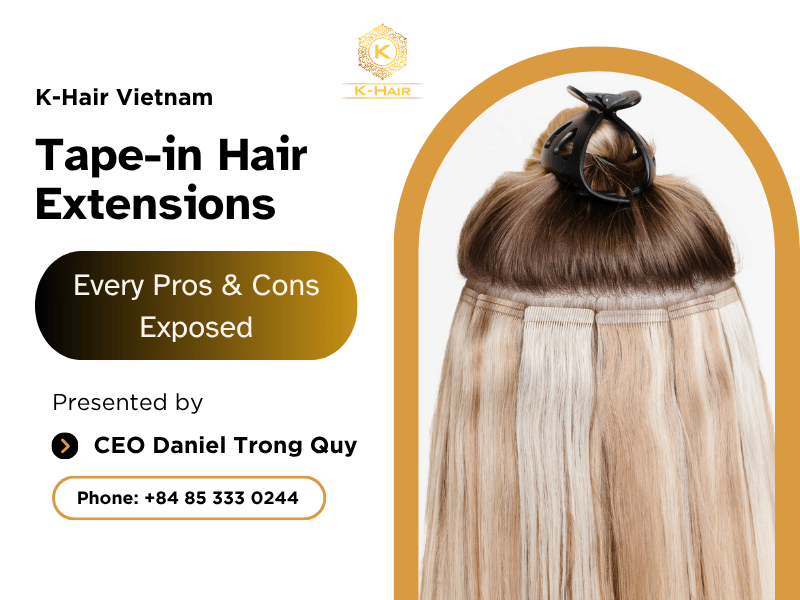
In the hair extensions industry, tape-in hair extensions are recognized as high-velocity salon services. They are famous for their incredible installation-to-profit ratio, offering the lowest barrier to entry for stylists while providing the highest level of comfort for the end-consumer.
However, despite these clear advantages, many salon and business owners still find themselves at a crossroads: Is sourcing tape-ins truly worth the investment? To answer that, we must look beyond the surface. Success in this category depends on understanding the technical pros and cons, managing client expectations, and uncovering the secret to generating maximum value from every tab:
1. What is Tape-in hair extensions
No heat, no glue, no sewing, no complex techniques, no difficult application, and no painful removal. These six “NOs” are the simplest way to describe why tape-ins have revolutionized the industry.
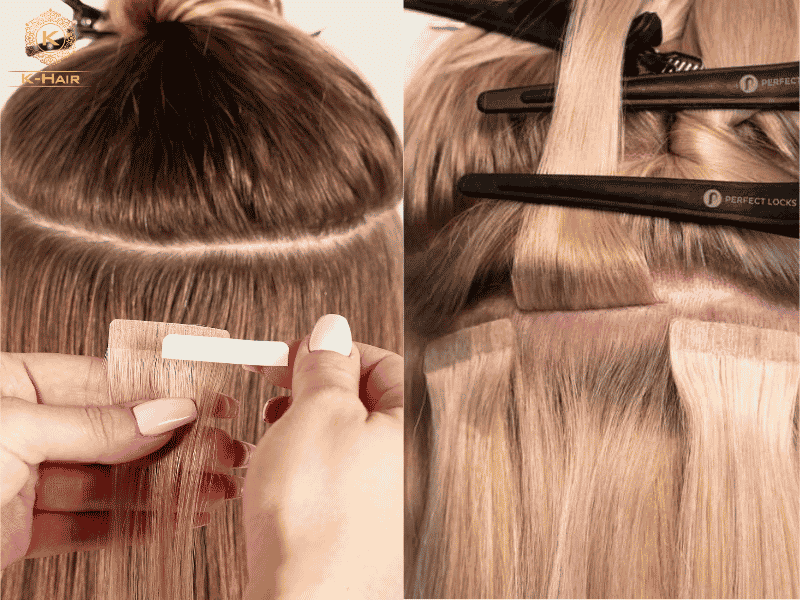
Technically speaking, tape-in hair extensions are a semi-permanent hair integration system. They utilize medical-grade, double-sided adhesive strips to “sandwich” a thin section of natural hair between two ultra-thin polyurethane (PU) wefts.
This professional-grade technology is designed for a seamless, lightweight finish that prioritizes scalp bio-compatibility and minimizes mechanical stress on the natural hair follicle. Unlike sewn-in weaves or tip extensions that require heat or metal rings, tape-ins lay completely flush against the head, making them virtually invisible, even on fine hair.
In short, this is the key characteristics of tape-ins hair extensions:
- Texture & feel: The tabs are thin and flexible, feeling like a part of hair scalp
- Installation time: Fast, a full head can usually be done in 30-60 mins
- Longevity: They typically last 6-12 weeks before needing to be moved up
- Reusability: The hair can be reused. A stylist uses a “remover” (alcohol or oil-based) to peel them apart, cleans the hair, and applies fresh tape.
2. Tape-in hair extensions pros and cons
If you are a stylist or salon owner, understanding the business side of Tape-in hair extensions is just as important as the technique itself. While they are a favorite for their seamless finish, they carry specific logistical and technical risks.
Here is a quick breakdown of the pros and cons of tape-ins extensions:
| ✅ Pros of Tape-In Extensions | ❌ Cons of Tape-In Extensions |
|---|---|
|
|
2.1. Pros of Tape-in hair extensions
From a business and technical perspective, Tape-in hair extensions are often the “sweet spot” for salons. They balance high-end results with operational efficiency, making them a favorite for stylists looking to grow their brand:
- Fast application time: Tape-ins are arguably the fastest permanent method to install. You can finish a full head in 30-60 minutes, while I-tips or weaves can eat up 2-4 hours of your chair time. Faster installs mean you can book more clients per day, skyrocketing your hourly revenue.
- Strong client retention: Sad but true: unless your client can move their eyes to the back of their head, reapplying tapes at home is nearly impossible. Moreover, Tape-in hair extensions require professional move-ups every 6–12 weeks. This technical difficulty ensures that clients return to your chair for professional maintenance rather than attempting a risky DIY, securing your long-term retention.
- Natural look and feel: The “sandwich” bond is incredibly flat. Unlike rings or knots that can create bumps, tape-ins lie flush against the scalp. This makes them virtually invisible even in fine hair and much more comfortable for the client to sleep on compared to metal beads or hard keratin bonds.
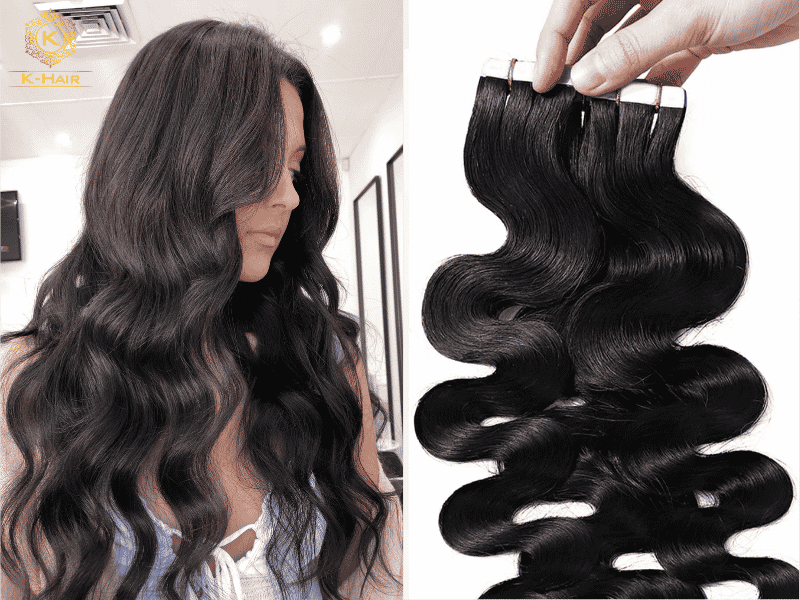
- Safety for natural hair: Tape-in hair extensions are made with waterproof, medical grade adhesive which is safe to wash, heat style, etc. Moreover, weight is distributed over a wide 4cm tab, reducing the risk of traction alopecia. When handled correctly, it is one of the least damaging permanent methods available.
- Lightweight volume: The hair feels significantly thicker without feeling heavy. Of course, there is added weight because there is more hair overall, but there is no noticeable stress on the natural scalp. During removal, you might see a few strands of hair come out with the tape. But let’s be honest: which extension method doesn’t result in a little shedding? It’s completely normal.
- Low skill barrier: You don’t need months of intensive training to master the Tape-in hair extensions. The skill barrier is lower than intricate weaving, making it the perfect starting point for stylists who want to break into the lucrative world of extensions.
- Easy to maintain: Once they’re in, they’re easy. Clients can wash, dry, and curl them just like their natural hair. As long as they keep the conditioner away from the actual tape tabs, it’s smooth sailing.
2.2. Cons of Tape-in hair extensions
While the benefits are numerous, tape-ins come with specific challenges that require careful management. Both the stylist and the client must be aware of the technical limitations and the discipline required to maintain the adhesive:
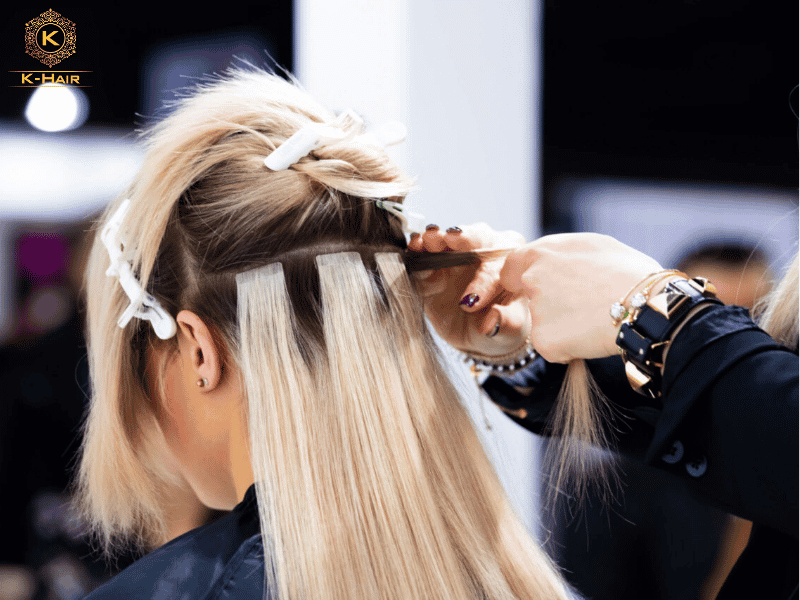
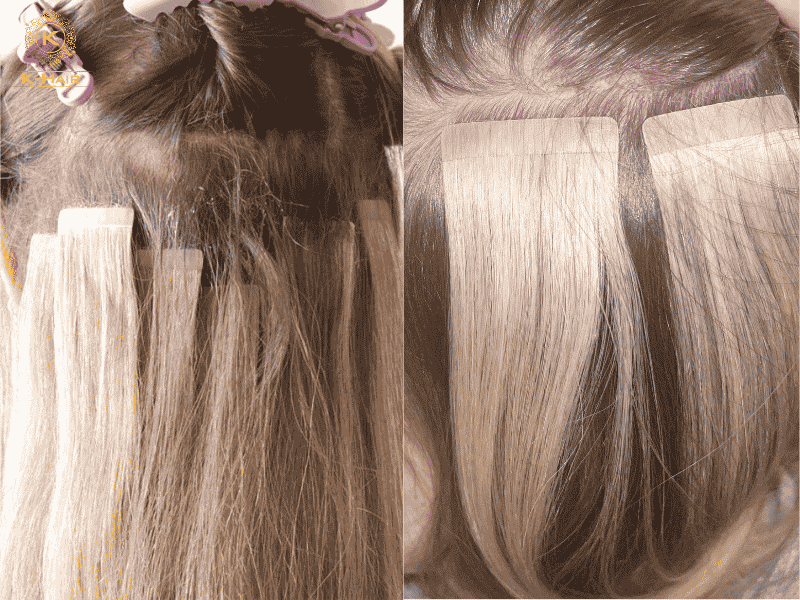
- The reveal risk: If the placement isn’t perfect, tape-ins aren’t so invisible. If you apply them too far from the root, they create a weird bulge. And if they aren’t blended correctly with a professional cut, you’ll see a “ledge” between the natural hair and the extensions. It takes a good eye to make them look seamless.
- Adhesive quality risks: The success of the service depends entirely on the quality of the adhesive. If the tape is too weak, the extensions will slide out within days. If it is too strong or poor quality, it can leave a gooey residue that is nearly impossible to clean. Hence, choosing a top-tier manufacturer is non-negotiable here.
- Risk of application/ removal damage: Tape-ins are safe in theory, but they can be destructive in the wrong hands. Placing them too close to the scalp or using insufficient solvent during removal can lead to significant breakage.
- Higher upfront product cost: Unlike bulk hair or simple wefts, tape-ins come pre-manufactured with medical-grade adhesive and specific tab sizes. This leads to a higher upfront product cost compared to other methods. This usually requires a larger client deposit.
- Not suitable for all hair types: Tape-ins are not a “one size fits all” solution. If a client has an excessively oily scalp or loves heavy oil-based hair masks, that adhesive is going to fail fast. Also, for clients with super curly or coarse textures, those flat tabs may not blend as seamlessly as a sewn-in weave or individual tips.
In short, if you are looking for a method that offers the most natural look with the least amount of chair time, Tape-ins are the winner. Just ensure your clients match the method to the right hair type and always invest in top-tier extensions to ensure the pros always outweigh the cons.
3. Maximize the value of Tape-in hair extensions
Understanding the pros and cons of Tape-in hair extensions is a great start, but it’s not the finish line. If you’re adding tape-ins to your service menu, the real goal is figuring out how to squeeze the maximum value out of every single tab. Think of it as a value loop – a cycle that turns a one-time purchase into a long-term profit machine:
Importing high-quality hair ➔ Customers are satisfied because the hair looks natural and lasts a long time ➔ You guide customers on proper care ➔ The hair lasts a long time ➔ Customers trust you and recommend you to others ➔ Revenue increases sustainably.
To really make this work, you have to stop seeing tape-ins as a “one-off” service and start viewing them as a long-term asset. It’s all about this two-pronged strategy:
3.1. Sourcing the quality Tape-in hair extensions
It all started with the very first of buying – choosing where to source the tape-in hair extensions. Indeed, if the hair is poor quality, no amount of maintenance will save it after the first wash. This factor will determine how many customers will come back. To be clear, a high-quality tape-ins have to meet these conditions:
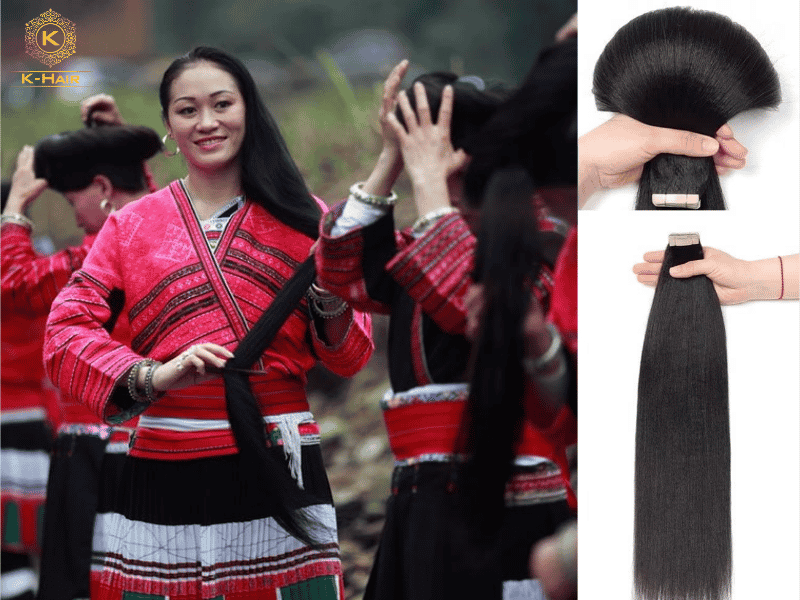
- Cuticle aligned: For tape-ins, the hair must be virgin or raw hair to show the best performance. Unlike one-time-use methods, tape-ins are designed to be removed, re-taped, and reapplied multiple times. If the hair lacks cuticle integrity (like low-grade or non-remy hair), it will essentially “die” after just three washes, turning into a matted mess that ends up in the trash within a month.
- Medical grade tape: Don’t just obsess over the hair, check the tape! The adhesive must be hypoallergenic to prevent scalp irritation, yet strong enough to resist slippage, especially for active clients who exercise or sweat frequently.
- Double drawn: Always look for “double drawn” extensions. This means the thin, scraggly ends have been removed, so the hair is thick from the tape tab all the way to the tips. No one wants “see-through” hair.
Expert tip: Vietnamese hair is the industry’s “secret weapon” for tape-ins. It’s naturally thick enough to create invisible tapes that feel light as air, and it’s strong enough to be bleached or re-dyed. This means your client doesn’t have to buy a new kit every time they want a color change, they just keep coming back to you to style their existing hair.
3.2. Maintenance tips to extend the lifespan of Tape-in hair extensions
Once the hair is installed, the goal is to keep the adhesive secure and the hair fibers hydrated. Educating your clients on proper aftercare of Tape-in hair extensions is the most effective way to protect your brand. If their hair looks ugly because they didn’t take care of it, they won’t blame themselves, they’ll blame you. Give them this simple roadmap:
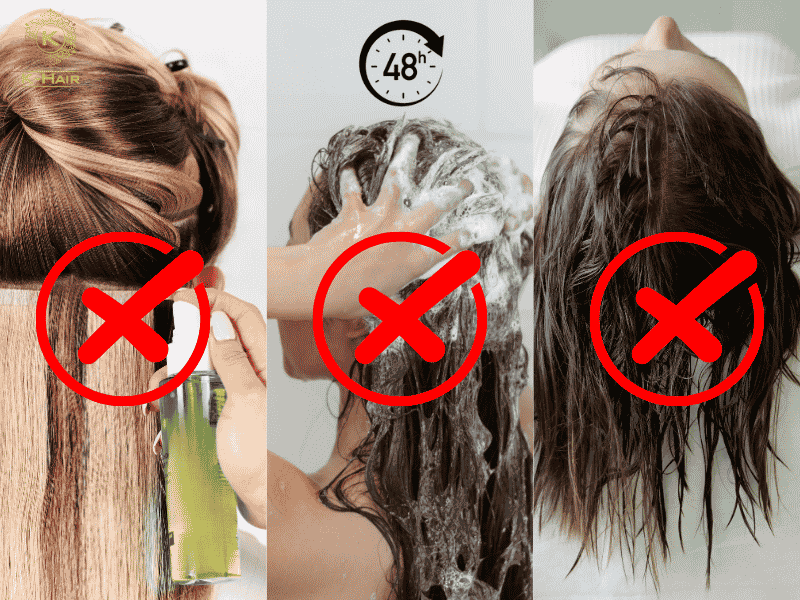
The “3 DON’Ts:
- DON’T use oil/alcohol-based products near the bond: Conditioners, hair oils, and silicone-based serums must never touch the tape tabs. They loosen the bond, causing the hair to fall out. Instruct clients to apply these products from the mid-shaft down only.
- DON’T wash the hair for the first 48 hours: This is the “golden” time for the adhesive to fully bond to your natural hair.
- DON’T go to sleep with wet hair: Sleeping with wet hair at the bond creates a damp environment that promotes bacterial buildup and causes irreversible matting at the attachment point.
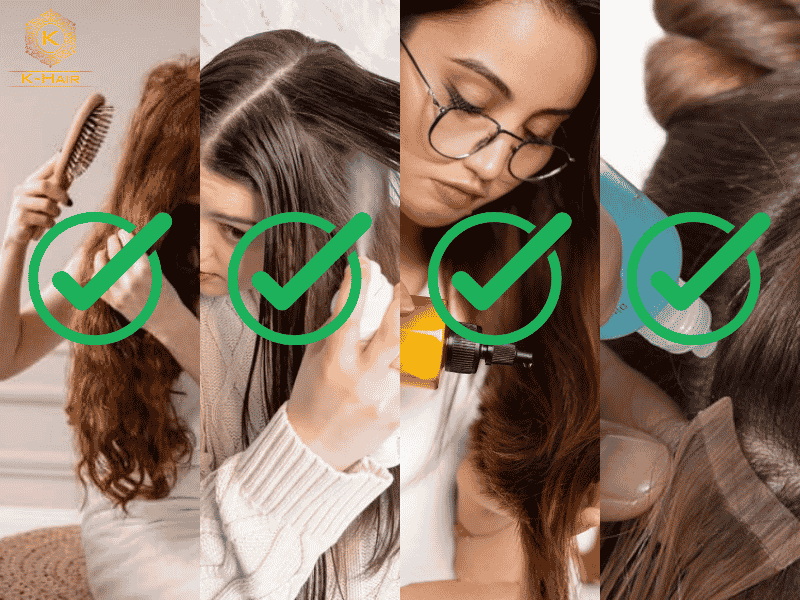
The “4 DOs”:
- DO use the proper brushing technique: Use a loop brush or a soft-bristle brush. Clients must hold the Tape-in hair extensions at the root (above the tapes) while brushing the ends to ensure they aren’t putting tugging pressure on the adhesive bonds.
- DO use dry shampoo: Advise clients to use dry shampoo to reduce the number of times they wash their hair with water, thereby reducing the chemical impact on the extensions.
- DO use heat protection: Let’s be honest, extensions can never truly replicate natural hair. Even though the Tape-in hair extensions is high quality, it is “dead”. Every pass of a flat iron or curling wand must be preceded by a professional-grade heat protectant.
- DO regular extension adjustments: Remind clients to return to the salon every 6-8 weeks. This helps maintain the health of the natural hair and provides an opportunity to check the hair quality and sell additional hair care services.
4. FAQs about Tape-in hair extensions
Here are some of the most frequently asked questions about tape in hair extensions:
4.1. Are tape in extensions good for thin hair?
Yes. They are the best semi-permanent option for thin hair because the flat, wide bonds distribute weight evenly, preventing tension and hiding easily under sparse hair.
4.2. Are tape in extensions reusable?
Yes. High-quality human hair can be reused 3–4 times. During maintenance, the old adhesive is removed with a solvent and replaced with a fresh tape strip.
4.3. How are tape in extensions applied?
Using a “sandwich” technique. A thin slice of natural hair is placed between two adhesive extension tabs, which are then pressed together to create a secure, flat bond.
4.4. How much do tape-in hair extensions cost?
Prices vary, but generally, Tape-in hair extensions costs $200–$800 and installation is $200–$600. Total initial investment usually ranges from $400 to $1,400.
4.5. Do tape in extensions ruin your hair?
No, provided they are professionally maintained. Damage only occurs if they are left in too long (over 10 weeks), applied too heavy, or ripped out without professional solvent.
5. Conclusion
Tape-in hair extensions are the modern standard for achieving a seamless, damage-free transformation with maximum efficiency. However, the true value of your investment lies in the quality of the hair. To ensure your extensions remain silky, reusable, and vibrant through multiple move-up cycles, Vietnamese hair is the undisputed champion due to its natural strength and longevity.
For those looking to secure the best in the market, K-Hair stands out as a top-tier raw Vietnamese hair vendor, delivering premium sourced hair that guarantees both client satisfaction and high salon margins. Ready to elevate your salon’s offerings? Contact us today for exclusive wholesale pricing and our latest premium catalogs!
Never Suffer from Weak Tape Adhesives Again
The biggest “Con” of tape-in extensions is poor adhesive and shedding. Protect your salon’s reputation by sourcing directly from K-Hair Factory. We combine 100% Cuticle-Aligned Vietnamese Raw Hair with hypoallergenic, medical-grade USA tapes for a flawless, non-slip experience.