In the modern world, following the rising prominence of social media and globalized beauty standards, more and more women are considering hair coloring as a way to further elevate their look and keep up with the modern, new image of hair beauty. Thanks to their increasing interest and diverse needs, hair coloring no longer stops at only bleaching or dyeing the hair – as new, advanced and more natural-looking hair color options have been introduced to the market, with two of the most popular options being hair lowlights vs hair highlights.
However, due to their similar names, and the fact that they can be used simultaneously, many salon clients tend to mistake the two, thinking that they can be applied interchangeably – a common misconception among most inexperienced clients. To avoid making the same mistake, it is highly recommended for all salon-visitors out there to better prepare themselves with the adequate knowledge needed, so that, for your next trip to the salon, you can have a clearer picture of what you actually need.
1. What are hair lowlights?
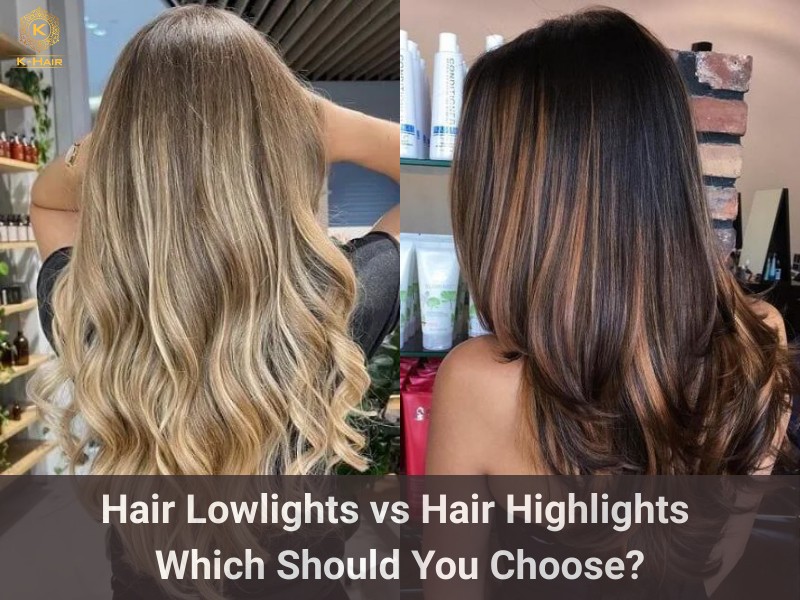
Despite being less acclaimed and well-known as hair highlights, comparing hair lowlights vs hair highlights, the former are still among the most popular coloring techniques widely favoured by hair stylists and customers alike. In fact, among the numerous pictures of hair coloring results you see online, it is possible that most of the defined, voluminous effects of the final look are actually brought about by using low-lights – showcasing its profound yet often underestimated performance and depth.
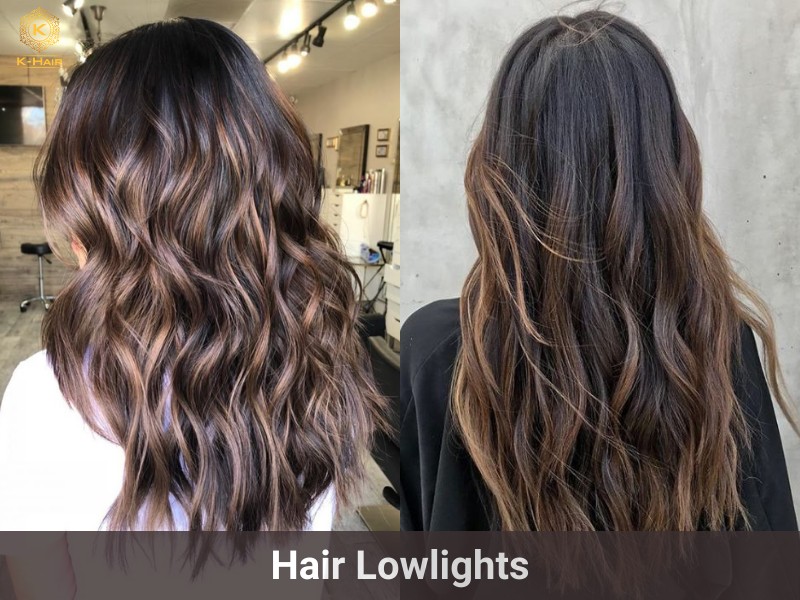
So, what is hair lowlights, what makes it so wonderful and gorgeous you might ask? By definition, low lights are the opposite of hair highlights – instead of adding bright colors, hair lowlights only integrate the hair with darker, more in-depth tones than the natural hair color of the clients. For example, if your natural hair is in medium-brown or dark brunette, the ideal lowlights color would be black, or deep-brown; while if your hair is in a bright shade like blonde, platinum, a honey-blonde, or a dirty, ash blonde lowlight color would be integrated.
The darker shades can be either evenly distributed throughout the entire head area or along different layers or sections of the hair – purposefully creating a sense of dimension and depth, as well as hide away any strands of gray or white hair. Furthermore, for clients with thin hair, using hair lowlights can also add more volume and thickness to the final look, concealing the unwanted hair flaws and bringing out more beauty in your natural hair appeal.
2. What are hair highlights?
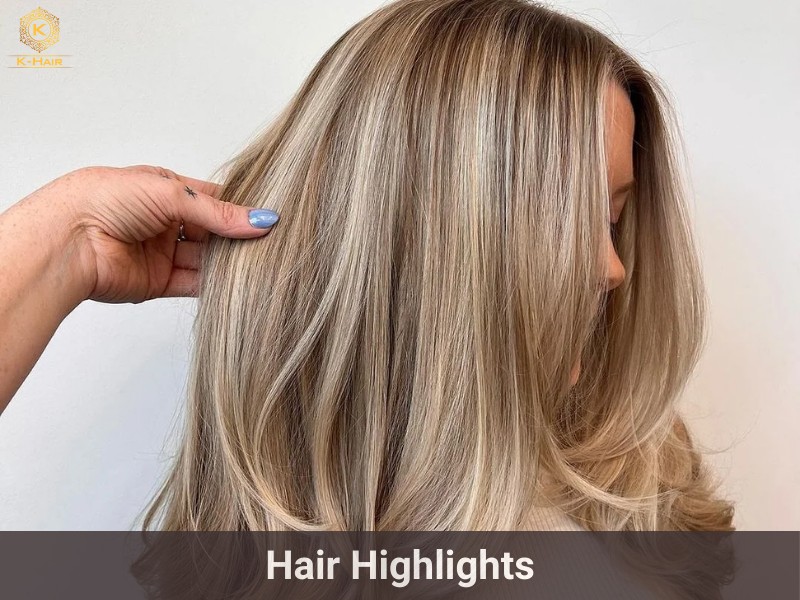
Whether you are a frequent salon client, or an inexperienced customer, you must have been somewhat familiar with the term “hair highlights” – considering how popular it is. In fact, thanks to the wide-spread hair demands for striking, sun-kissed and eye-catching coloring hair options, comparing hair lowlights vs hair highlights, the latter will surely be the more popular and in-demand one.
While hair lowlights focus more on creating depth and volume to the hair using darker tones, hair highlights tend to have a different approach for the same priority. In fact, to create more dimension, instead of resorting to dark colors, hair highlights will only use brighter, more striking and vibrant tones than the original color of the hair. Therefore, besides bringing more volume to the table, hair highlights are also able to deliver a brightening effect – making the hair more eye-catching and dynamic hair look rather than the subtle appeal of the lowlights.
As different types of shades tend to come with their own level of contrast and brightness, based on personal preferences, hair stylists can choose the highlight colors accordingly. For example, for brown hair clients wanting a sharp contrast in their highlight, you can consider choosing tones such as sandy blondes for a natural yet striking contrast, or you can resort to using fashion hair colors such as copper, red or platinum for an even more vibrant and unique look. However, for clients wanting only a slight lightening effect to their natural hair color, it is best to choose a bright tone that is not too contrasting or clashing with the original hair color. For example, a platinum blonde to go with bright blonde natural hair can deliver that subtle brightening effect that the clients want for their look.
3. Differences between hair lowlights vs hair highlights
Unlike what most people might believe, despite both being hair coloring techniques and sharing a common aim to elevate one’s hair appeal and add more dimension to the final look, lowlight and highlight are still completely different options. In fact, the differences between hair lowlights vs hair highlights can be presented as below:
| Hair lowlights | Hair highlights | |
| Color shade | Involves using a darker shade than the original hair color: Using a darker toned hair dye to color sections of the hair → creating the ultimate look | Involves using a brighter shade than the original hair color: Using hair bleach or other hair lightening substances to lift the original color up (usually 2-3 shades brighter) → brightening the hair |
| Effect | Focusing more on dimension and subtleness:
|
Can also be used to add more volume and thickness to the original hair look by using bright color for contrast addition.
However, highlights tend to focus more on lightening effect:
|
| Maintenance | Manageable, and low maintenance:
|
High-maintenance: Using hair bleach also means that the hair would be severely damaged by the process
→ Demanding specialized products, and more frequent moisturising to keep it from tangling → Demanding more touch-ups as the hair growth will make the highlight line more visible |
| Hair health | Less damaged to the hair as the product used are not as damaging as hair highlighters: The hair dyes only deposit or add more pigments to the hair strands rather than completely lifting them by penetrating to the inner core of the hair. | More damaged due to the substance used in the process: Hair bleach will damage the cuticles and erase the pigment inside the hair strands → making the strands dry and lifeless
→ The more contrast wanted for the highlight, the more hair bleach is required – the more damaged the hair will turn out to be |
4. Technical Process: How to Create Hair lowlights vs Hair highlights?
Nowadays, given the rising DIY trend and the available and accessible hair products in the market, more and more women are considering coloring their hair at the comfort of their own home, rather than depending on salon services. As money-saving and rewarding as it can be, giving yourself lowlight or highlight can be somewhat risky and potentially causing uneven, undesirable results. Therefore, most clients tend to entrust their hair in the hands of professionals rather than DIY-ing it.
Hair lowlights vs hair highlights, for each of these coloring techniques, hairstylists will have distinct procedures to achieve the desirable effect. And to better understand these steps, as well as be aware of some cautions regarding these methods, before paying a visit to the salon, you can prepare yourself with the knowledge on their technical process as presented below:
4.1. How Stylists Dye Lowlights & Highlights
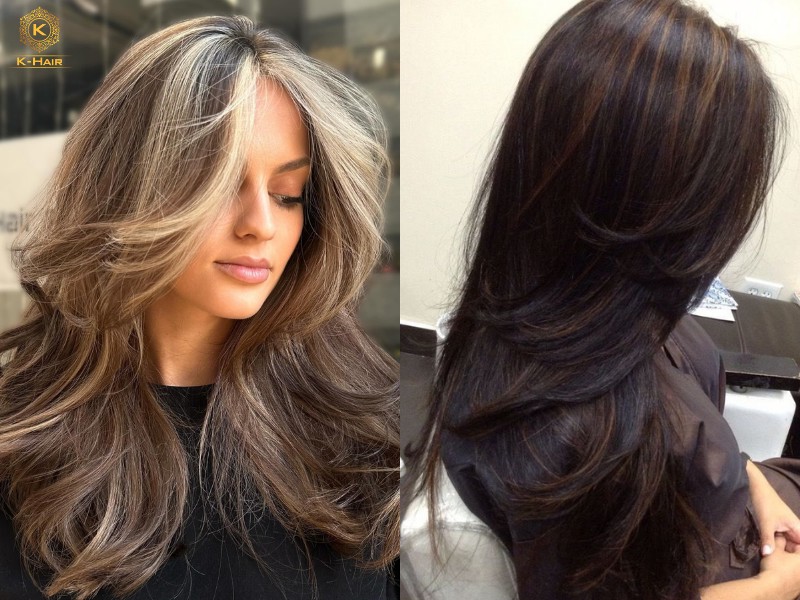
Despite the differences between hair lowlights vs hair highlights, the two coloring methods still share a lot of common ground when it comes to application techniques. As previously mentioned, both hair highlights and lowlights’ main objectives are to add more volume, depth and thickness to the natural hair of the clients by using darker/brighter tones to create shadows and dimensions. To create the desirable lowlight effects hairstylists often resort to different application method – with the chosen hair sections be left out to create more contrast to the original hair color:
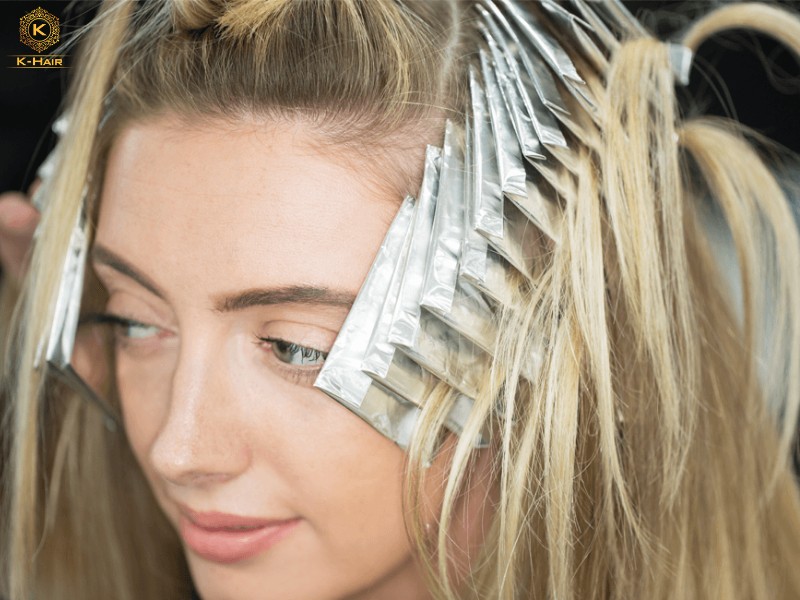
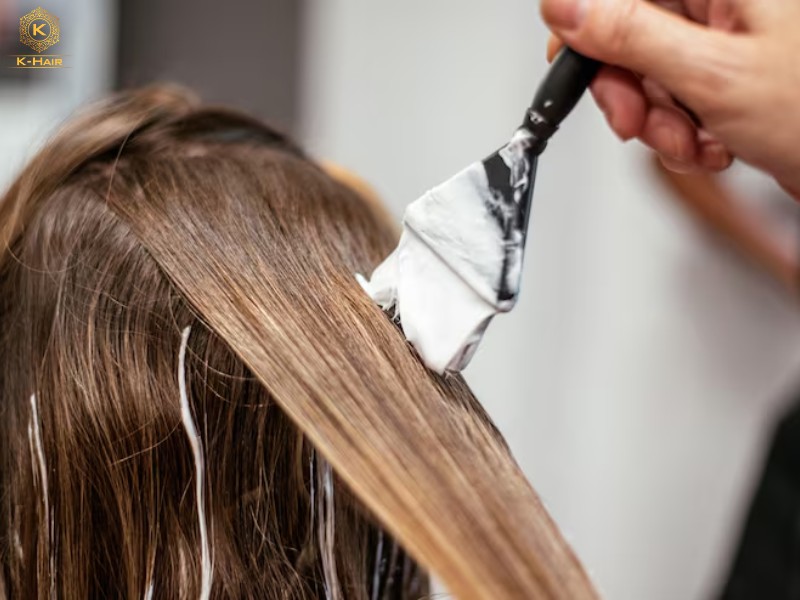
- Foiling technique: one of the most common lowlighting and highlighting methods is the foiling technique – often used alongside with each other, combining both methods in one application for more color contrast. Normally, the chosen hair sections will be applied with hair dye and wrapped completely in foil – not only to deliver a more accurate coloring outcome, but also to keep the different layers of hair dye and bleach from mixing up with one another, especially when combining both highlighting and lowlighting.
- Free-hand painting: for clients wanting a more natural, blending hair coloring result without the sharp contrast that comes with the foiling technique, free-hand painting is the way to go. The steps are much similar to the foiling technique: starting by sectioning the hair and adding hair dye on to, however, instead of using a foil to keep the colors from melting, the stylist will leave out the dye to dry normally – creating a nice fade-in, soft transitioning from light colors to the dark tones of the final coloring outcome. And since the color will only gradually shift, leaving no visible or harsh color transition lines, the effect from this technique will not only create an elegant, natural look, but also demand for much less touch-ups and maintenance like the classic foiling method.
- Placements: sectioning the hair and deciding on the distribution of the shades are a crucial part of the process. Indeed, this can define the actual style and overall appearance of the hair – whether the clients want it to be natural or striking. All and all, coloring placement tends to go according to the application method used for the process. For example, for the foiling technique, the shades would most likely be distributed in different sections of the hair, which can be onto small group of hair strands, or the entire thick clump of hair; while, for the free-hand painting technique, the hair dye or hair bleach will be placed near the roots or at the ends for a more seamless transition.
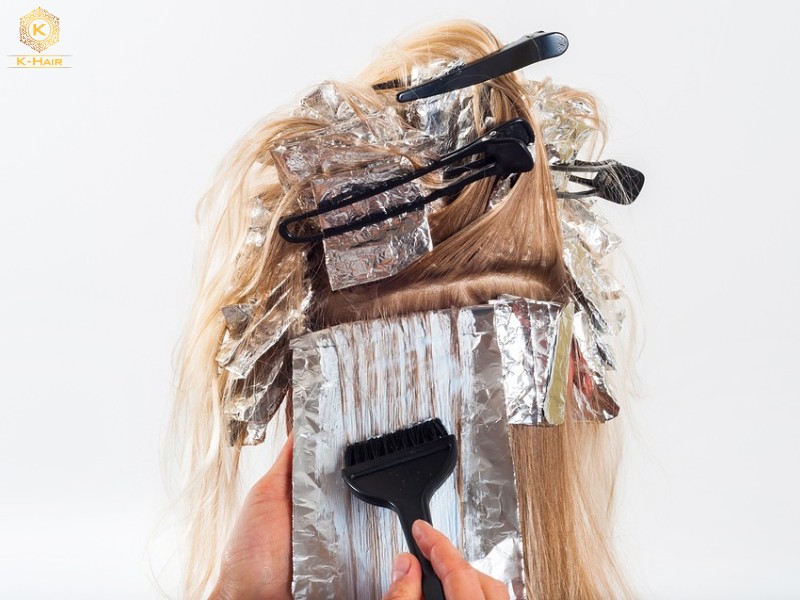
- Weave size: the size of the hair section, or the weave size are crucial, especially when you choose to apply the color using the foil method. Based on your preferences, you can choose between these weave sizes:
- Fine weaving (Weaves): as the hair dye or hair bleach will only be applied upon smaller, finer amount of hair strands, the final hair coloring result will be much more subtle, with brighter, or darker-toned hair strands can seamlessly blend in with the natural hair color while still creating small, dimensional color streak.
- Chunky weaving (Slices): instead of gathering small, insignificant amounts of hair strands to dye and bleach, using the Slices foiling method, the stylist will pick out a thicker section, often running horizontally from one side to another. The result would be a much more defined and striking streak of colors, with high color contrast from sections to sections.
The average time spent on hair lowlights vs hair highlights would range immensely: with 1.5-3 hours for lowlighting and 2-4 hours for highlights – due to the time needed for the hair dye or hair bleach to be absorbed into the hair strands and complete the coloring process. Therefore, this service would truly be an investment of both time and money to achieve the overall desired coloring outcome.
4.2. Another Alternative – Using Hair Extensions!
For hair clients wanting to try out lowlighting or highlighting but hesitant about completely transforming their hair look permanently or for customers allergic to the odor or the chemicals used in the process, they can also consider using hair extensions as a flexible, chemically-free alternative of the traditional coloring methods.

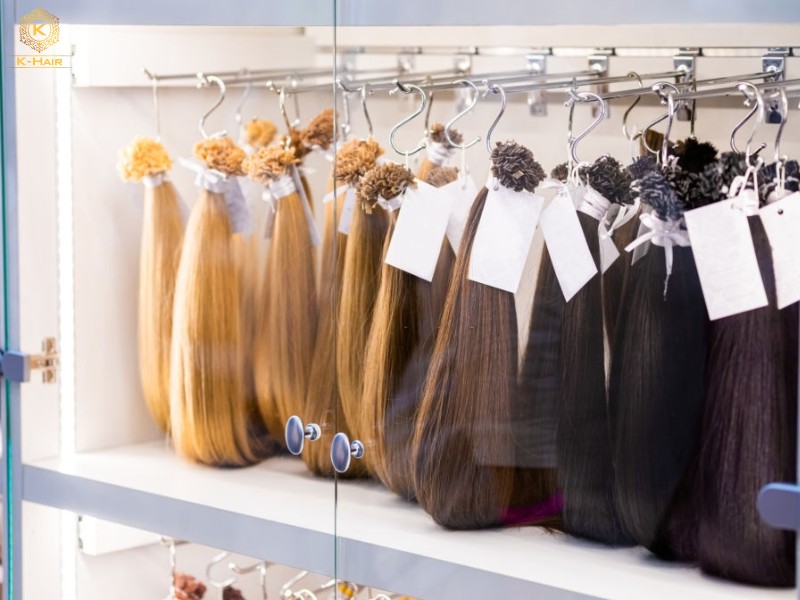
Nowadays, in the market, there exists numerous hair extension options that can be used to add highlight or lowlight colors to their wearer’s original hair look, among which are the most popular extension lines: hair wefts, keratin bond extensions, tape-ins, or I-tips,… each with their own function and purposes.
- Less damaging application: Regardless of their distinct types and features, one notable benefit that comes with using hair extensions is that your hair remains completely untouched by the chemicals – adding gorgeous, striking color streaks without being at the expense of your own hair health. Therefore, for clients with heavily damaged hair from prior chemical processes but still want to add lowlight or highlight to their look, using hair extensions would be an ideal option.
- Adding more volume: using lowlight and highlight is great and all, but when it comes to volume and dimension, nothing can beat using hair extensions. In fact, these types of enhancements do not stop at only creating an optic illusion using color, but they can also add actual, realistic volume, length and thickness to the original hair. Hence, for clients with extremely thinning hair, using extensions would be the better solution for their hair problems.
- Time-saving application: for salon-dependent hair extension types such as I-tips or keratin bond extensions, the time needed for their application would also be much shorter compared to actually sitting through the process of dyeing or bleaching your hair. For example, the average time spent on keratin bond extension’s installation would range from 1-2 hours, or slightly more – much more time-saving than the lengthy 2-4 hours of the regular coloring process.
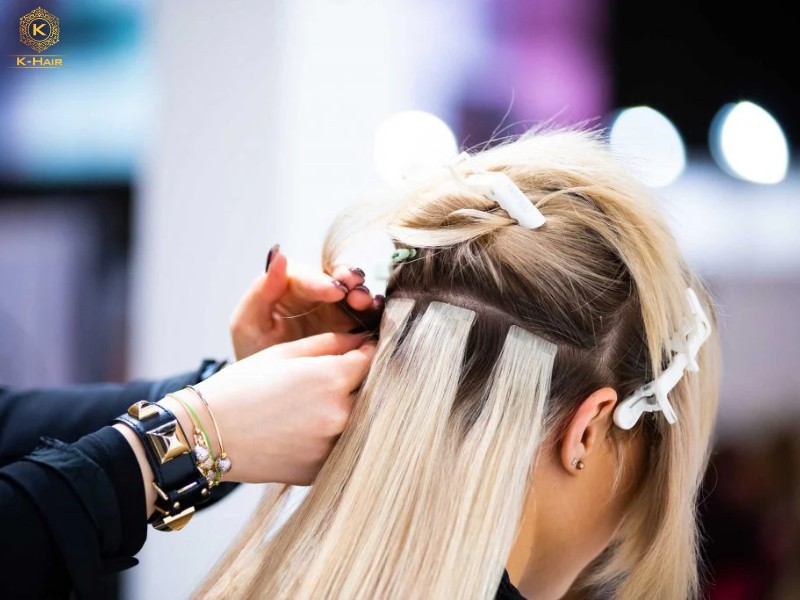
- DIYable: many types of hair extensions are extremely user-friendly and can be applied directly to your own hair without needing lengthy salon visits or dependence on professional help. In fact, for clip-ins, you can actually install the piece by yourself, and the best thing is that the entire application and uninstallation would take only seconds!
- Reusable & Sustainable: and did you know that hair extensions are completely reusable? For most hair extensions, it doesn’t end with you taking it off and putting it in the trash, in fact, these hair enhancements are easy to reuse. For example, for tape-ins, when the tape attached has become loose and unable to be glued to the hair, you can simply purchase new extension tapes and reinstall them at the root and continue to use them like usual.
Unlike dyeing and bleaching your own hair, of which results will only last for a few months tops, for high-quality hair extensions like ones available in K-Hair, hair buyers can even use them for an extended amount of time, with many able to be kept for years to come under proper care. Especially hair extensions made out of their Virgin hair – the highest, most premium and chemically-free hair quality, collected from one donor only, whose hair cuticles are completely intact and untouched, these types can even be kept for 4-5 years while still able to withstand styling and bleaching. Hence, for clients wanting to add lowlights or highlights to their original hair look, buying hair extensions would definitely be the better alternative compared to the traditional chemical-coloring methods.
5. Hair Lowlights vs Hair Highlights: Which Should You Choose?
Choosing between hair lowlights vs hair highlights would definitely be one of the hardest decisions any salon clients would have to make. Indeed, they are so similar, yet are still so different from one another at the same time: both can complement natural hair beauty by adding more depth and dimension, however, one does so by using darker shades, while the other uses lighter colors. Therefore, the choice would completely depend on your own color preferences:
- If you are in favour of subtle natural colors: using hair lowlights would definitely be the perfect choice. By adding darker tones into the hair look, customers can add a sense of sophistication, elegance and depth, without making it look too dramatic or unnatural.
- If you want striking colors: using hair highlights would match with your needs perfectly. In fact, the bold, striking bright colors integrated in the highlight will be sure to make your hair pop, creating a sun-kissed, dynamic and striking hair look, capturing the attention of everyone in the room!
However, for the best result, as well as to balance out the striking colors of the highlight and to bring out more contrast for the lowlight, most hair stylists will recommend their customers to use these methods simultaneously. Indeed, salon stylists often use darker shades at the roots combined with brighter tones at the ends; or using bright and dark-tone streaks of hair side by side to create a bigger and more eye-catching color contrast.

6. Maintaining Hair lowlights vs Hair highlights
When it comes to coloring techniques, knowing the difference between hair lowlights vs hair highlights is only the first step; learning how to properly maintain each coloring method is what truly determines how well the color will last over time.
Indeed, despite belonging to the same coloring category, lowlights and highlights differ greatly in terms of application methods, and hence, each requires its own distinct set of aftercare steps to preserve its vibrancy, prevent unnecessary fading, and maintain that fresh-from-the-salon hair look. Hence, for clients wanting to keep their colored strands healthy, shiny, and long-lasting, understanding the distinct maintenance needs of lowlights vs highlights becomes an essential part of the entire coloring experience.
Read more: What is a Brazilian Blowout
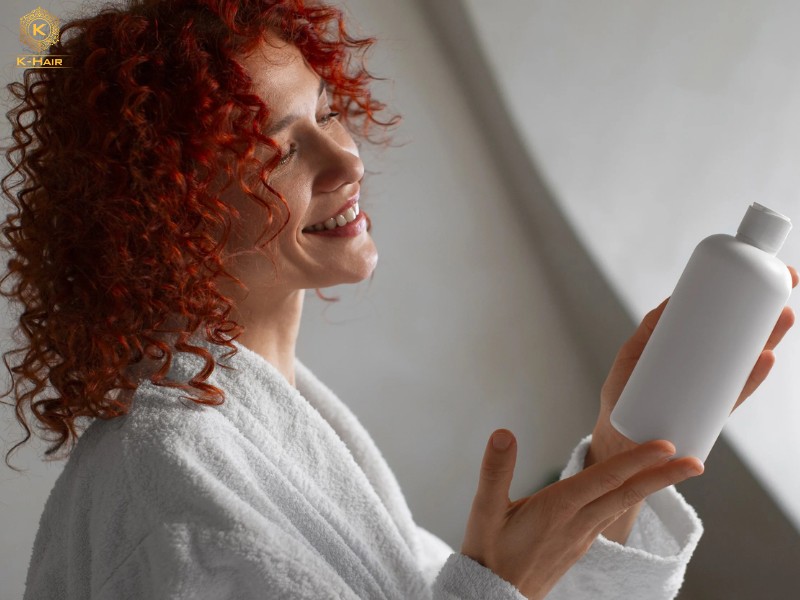
- Choosing the right washing products: to preserve the longevity of both lowlights and highlights, choosing the right washing products is an absolute essential, as the wrong shampoo can quickly strip away pigment and leave the hair looking dull and lifeless. Among the available hair products in the market, clients should prioritize sulfate-free, color-protecting shampoos and conditioners, as these gentle formulations help maintain moisture levels while preventing the hair cuticles from opening too much, a common cause of color fading for most dyed hair. Additionally, for highlighted hair in particular, investing in a purple or blue shampoo can help neutralize brassiness and keep blonde tones bright and clean, while lowlighted hair benefits more from color-depositing conditioners that help refresh color dimension and depth after every wash.
- Enhancing the colors: to keep the colors vibrant, shiny, and salon-fresh, clients can also add a few extra enhancing products into their weekly hair routine. For highlighted hair, glossing treatments or toning masks are highly beneficial, as they help push away unwanted yellow or orange undertones while restoring brightness and reflective shine. Meanwhile, lowlighted hair can benefit greatly from moisture-rich hair masks or lightweight oils infused with color-enhancing substances, helping the deeper shades remain smooth, dimensional, and well-defined. Using these products consistently not only boosts the color’s longevity but also helps counteract dryness, one of the main issues caused by chemical coloring.
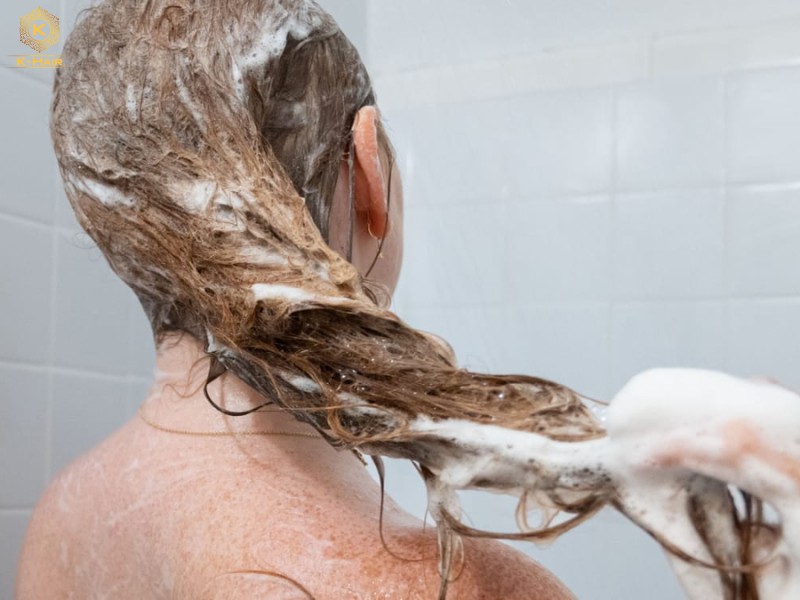
- How to properly wash the hair: proper washing techniques also play a major role in preserving lowlights vs highlights, as excessive or incorrect washing can quickly fade the color. Clients are encouraged to reduce their washing frequency to 2-3 times a week to avoid stripping away natural oils that protect the hair and its color molecules. Furthermore, it is recommended to wash the hair with lukewarm or cool water only, since hot water can raise the hair cuticles, causing the color to rinse out faster and making the strands more susceptible to dryness and frizz. Gently massaging the scalp while avoiding aggressive scrubbing on the colored lengths can also help preserve pigment and maintain an even, shiny color result.
- Protection from external factors: external factors such as heat styling, UV rays, chlorine, and environmental pollutants can heavily impact the lifespan of both lowlights and highlights. Hence, clients are strongly advised to limit direct heat exposure by using heat protectants before styling, and keeping daily heat usage to a minimum. When spending time outdoors, wearing a hat or using UV-protectant sprays can shield the hair from sun-induced fading, which tends to affect highlighted hair even more due to its lighter pigment. Additionally, clients who swim frequently in chlorine-filled water should take extra precautions: wetting the hair with clean water beforehand, applying a protective leave-in conditioner, or wearing a swim cap can greatly reduce chlorine absorption – a common cause of color distortion and dryness.
- Schedule regular touch-ups: maintaining either lowlights or highlights also requires scheduling regular touch-ups to keep the color fresh, evenly blended, and visually appealing. For highlights, touch-ups are typically recommended every 6-10 weeks, depending on how quickly the client’s natural hair grows and how visible the roots are. Lowlights, on the other hand, generally last longer due to their deeper pigment and can be refreshed every 8-12 weeks without compromising the overall look. Regular salon visits not only help maintain color vibrancy but also allow professional stylists to evaluate the hair’s condition, apply nourishing treatments, and correct any uneven fading that may have occurred.
7. Conclusion
With the information provided in this article, we hope that we have managed to assist young women in the hair industry with the overall information, tips, and most importantly, the differences between hair lowlights vs hair highlights. Navigating through the complex hair industry requires long-term commitment and support from trustworthy partners, we proudly present ourselves not only as a trusted hair expert, but also a supportive friend who will always have your back in this somewhat overwhelming market.
Tired of taking care of your natural hair and thinking about switching to hair extensions and wigs? Contact us through the following link:
- Website: https://khairvn.com/
- Address: 10A, 171 Nguyen Ngoc Vu, Yen Hoa, Hanoi, Vietnam
- Phone: +8492 633 2545 (WhatsApp)
- Email: [email protected]
- Facebook: https://www.facebook.com/KHairFactoryVN/
- Youtube: https://www.youtube.com/c/KHAIRFACTORYBESTVIETNAMHAIR
- Whatsapp: +8492 633 2545