Finding a reliable Chinese hair factory or legitimate wholesale Chinese hair vendors requires distinguishing between actual manufacturers and trading companies. China produces ~90% of finished wigs globally, with major hubs in Xuchang and Guangzhou. However, the 2026 US import tariff updates have drastically shifted landing costs for US buyers. Below is our verified list of the top 5 Chinese suppliers, the critical “Factory vs. Vendor” difference, and the exact protocol to verify them before your first wire transfer.
| Supplier Name | Factory or Vendor? | Location Hub | Best For |
|---|---|---|---|
| 1. Henan Rebecca | Direct Factory | Xuchang | Massive volume & distribution |
| 2. KBL Hair (Kabeilu) | Hybrid Vendor | Guangzhou | African-American textures |
| 3. UNice Hair | Trading Vendor | Xuchang/US | E-commerce & Dropshipping |
| 4. Ted Hair | Factory | Guangzhou | OEM & Private Label Brands |
| 5. Qingdao Emeda | Direct Factory | Qingdao | Premium HD Lace Systems |
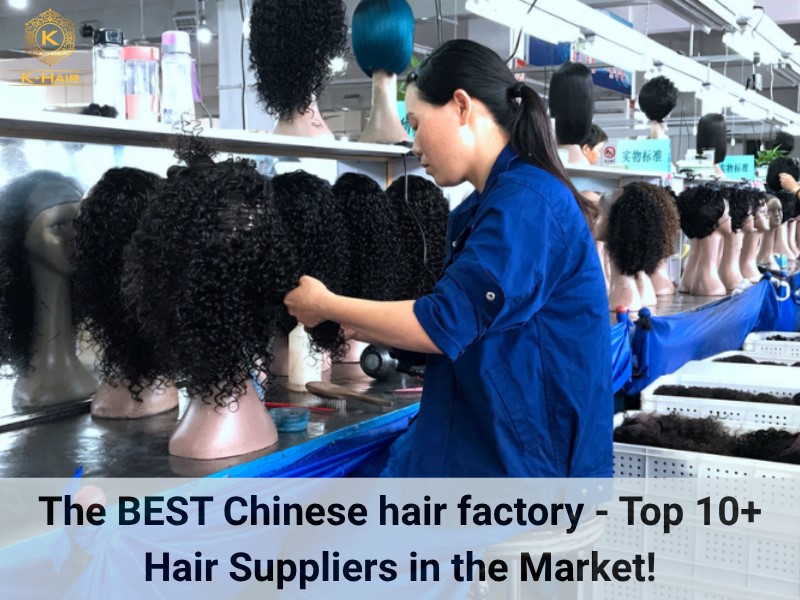
1. 2026 Tariff Alert — What US Buyers Must Recalculate Before Ordering from Chinese Hair Vendors
The biggest mistake a wholesale buyer can make in 2026 is calculating their profit margins based on outdated pricing. The regulatory landscape has fundamentally changed how you must source your products.
1.1. The End of De Minimis & The 2026 Tariff Shift
In 2025, the industry was temporarily paralyzed by threats of a 125% tariff. While the Supreme Court struck down that specific IEEPA tariff in February 2026, the US government immediately countered with a 10% global surcharge and—most importantly—the permanent removal of the $800 De Minimis exemption for China.
What does this mean? Previously, small wholesale orders under $800 bypassed customs completely. Today, every single shipment from Chinese hair vendors faces formal customs clearance, the new 10% surcharge, baseline duties, and steep brokerage fees. Here is how your actual landed cost has shifted for a typical small B2B order:
| Cost Breakdown (Small B2B Order) | 2024 (With De Minimis Exemption) | March 2026 (Post-Supreme Court) |
|---|---|---|
| Base Wholesale Price | $300.00 | $300.00 |
| Duties, 10% Surcharge & Formal Entry Fees | $0.00 (Tax-free) | $85.00 – $115.00 |
| Total Landed Cost | $300.00 | ~$400.00 |
1.2. The China+1 Sourcing Strategy
Smart B2B buyers are adopting the “China+1” strategy. They continue to keep fast-fashion synthetic wigs and trend-driven collections from Chinese vendors due to their massive variety. However, to bypass the mounting Chinese customs fees and secure stable pricing, they are actively switching their premium, salon-grade virgin hair orders to Vietnamese factory-direct suppliers like K-Hair to protect their margins.
2. Why Chinese Hair Vendors Dominate Global Supply
Despite the recent tariff challenges, China remains the undisputed manufacturing powerhouse of the global hair extensions industry. By importing raw materials from Southeast Asia and India, Chinese facilities process massive volumes of hair annually to meet global demand.
Their manufacturing dominance is categorized by three highly specialized regional hubs. Understanding these locations helps you target the right Chinese hair factory for your specific business model:
- Xuchang (The Wig Capital): Home to thousands of factories focusing on massive volume, machine-weft production, and synthetic blends.
- Guangzhou: The ultimate trading hub and specialty center for HD lace, closures, and complex lace systems.
- Qingdao: Known for meticulous handcrafting, catering to the high-end Jewish wig market and premium hand-tied extensions.
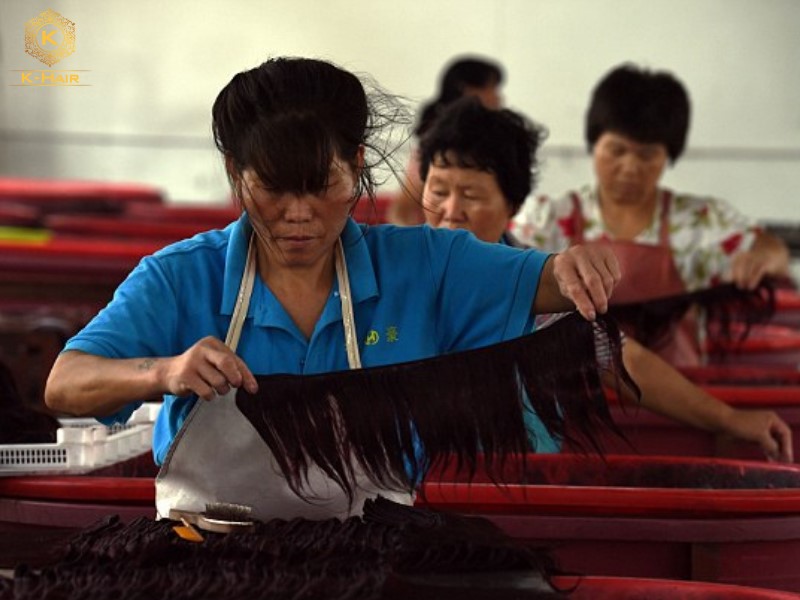
3. Chinese Hair Factory vs. Chinese Hair Vendors — The Difference That Protects Your Margin
Most wholesale buyers searching on Alibaba believe they are communicating with a direct manufacturer. In reality, a vast majority of those accounts are trading companies. Knowing how to distinguish a true Chinese hair factory from retail Chinese hair vendors directly impacts your bottom line.
Here is the exact framework to differentiate them before you place an order:
| B2B Verification Feature | The Direct Factory | The Trading Vendor |
|---|---|---|
| Business License (营业执照) | Registered as “Manufacturing” (生产) | Registered as “Trading” or “Commerce” (贸易) |
| Pricing Structure | True base price (Factory-direct) | Base price + 15% to 30% markup |
| Minimum Order (MOQ) | High (Often 50+ units or 5kg+) | Low and flexible (1-3 bundles) |
| Facility Proof | Can show running machines on live video | Only shows polished showrooms or stock photos |
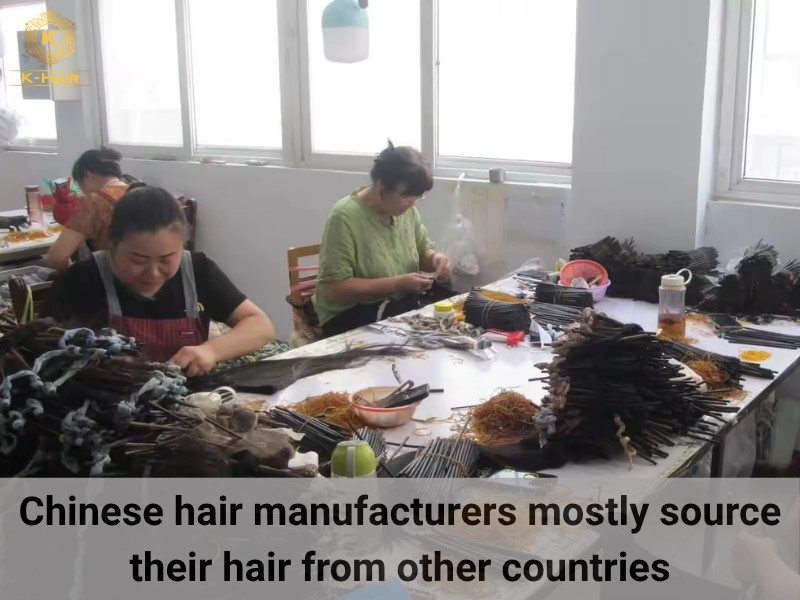
4. Top 5 Best Chinese Hair Vendors & Factories — 2026 In-Depth Review
Instead of overwhelming you with a generic list of 50 suppliers, we have narrowed down the top 5 industry leaders. Each of these suppliers dominates a very specific niche in the market. Here is the unfiltered breakdown of their strengths and weaknesses.
4.1. Henan Rebecca — Largest Scale Factory (Xuchang)
Founded in 1992, Henan Rebecca is the undisputed giant of the Chinese hair industry, employing over 10,000 workers. They are a publicly listed company and function as a pure manufacturing powerhouse.
- Key Feature: Massive production lines for both synthetic fibers and human hair wefts.
- Pros: Unmatched production capacity; highly standardized quality control; true factory-direct pricing at scale.
- Cons: Extremely high MOQs (often 100+ units); very slow communication for small buyers or startups; limited customization for niche orders.
- Best For: Large-scale national distributors and retail chains who need thousands of units per month.
4.2. KBL Hair (Kabeilu) — Best for African-American Market (Guangzhou)
With over 13 years in the Guangzhou hub, KBL bridges the gap between a direct factory and a highly accessible trading vendor. They have a deep understanding of US market trends.
- Key Feature: Specialized in diverse curl patterns (deep wave, water wave, kinky curly) and vibrant colored bundles.
- Pros: Excellent physical showrooms in China for direct visits; flexible MOQ for growing salons; strong understanding of Western aesthetics.
- Cons: Their pricing includes a vendor markup compared to deep-inland raw factories; hair is heavily chemically processed to achieve the perfect curl patterns, which reduces its lifespan.
- Best For: Salon owners targeting the African-American demographic who prioritize styling variety over raw virgin longevity.
4.3. UNice Hair (Xuchang Longqi) — Best Chinese Hair Vendor for E-commerce
UNice is a masterclass in B2C and small B2B marketing. They dominate platforms like AliExpress and operate heavily as a trading vendor with massive logistics power.
- Key Feature: Multiple localized US warehouses ensuring lightning-fast domestic shipping.
- Pros: 2-3 day delivery within the US; highly dropshipping-friendly (1-unit MOQ); excellent retail packaging out of the box.
- Cons: You are paying retail/B2C markup, not wholesale pricing; high risk of mixed hair lengths within bundles; quality consistency fluctuates wildly between batches.
- Best For: Shopify dropshippers, Amazon sellers, and influencers who need fast shipping and low upfront inventory risk.
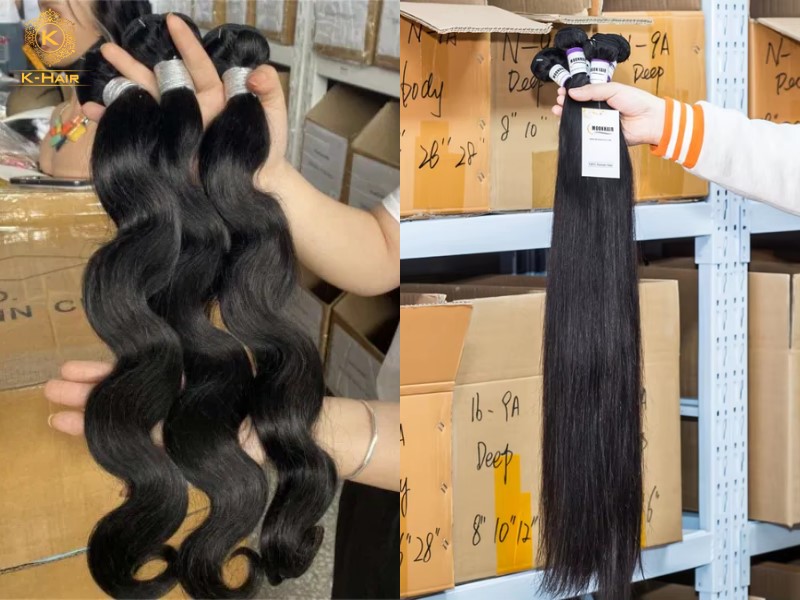
4.4. Ted Hair — Best for OEM & Private Label (Guangzhou)
Ted Hair has positioned itself as the go-to partner for hair entrepreneurs who want to build their own brand from scratch without investing in manufacturing infrastructure.
- Key Feature: Turnkey “business in a box” solutions, including custom tags, silk bags, and branded boxes.
- Pros: Exceptional white-label services; they operate regional warehouses in US cities (Atlanta, Miami, LA) allowing buyers to pick up stock locally; responsive English-speaking reps.
- Cons: They source most of their raw hair from other regions before processing, meaning their “virgin” hair is often standard-grade rather than premium single-donor.
- Best For: Brand builders and stylists launching their own private label collections who need ready-made branding support.
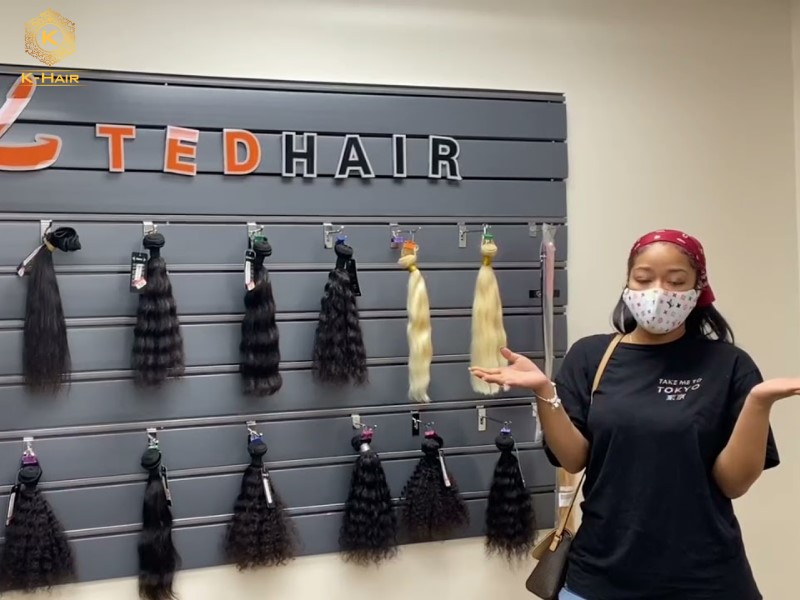
4.5. Qingdao Emeda — Premium HD Lace Specialist (Qingdao)
Unlike Xuchang’s mass-volume approach, Qingdao is the artisan hub of China. Emeda has spent 20 years perfecting hand-tied techniques and premium lace materials.
- Key Feature: High-end Jewish wigs, toupees, and ultra-thin, undetectable HD lace systems.
- Pros: Superior craftsmanship on closures and frontals; highly transparent about material origins; accepts bespoke custom sizing for medical hair loss patients.
- Cons: Significantly higher price point than southern factories; long lead times (hand-tied lace pieces can take weeks to produce).
- Best For: High-end salon owners, medical wig providers, and stylists who work with delicate HD lace installations.
5. How to Verify Any Chinese Hair Vendor Before Wire Transfer – 6-Step Protocol
Never wire funds internationally without completing this strict 6-step due diligence process:
- Request the 营业执照 (Business License): Translate it to verify they are classified under “Manufacturing” (生产) and not just “Trading” (贸易).
- Demand a Live Factory Video Call: Ask them to walk the actual production floor with the machines running. Showrooms do not count.
- Check Raw Hair Origin Documentation: Since China imports most of its raw hair, ask for customs proofs. Is it from Vietnam or India? Single or mixed donor?
- Conduct a Bleach Patch Test: Order a paid sample and bleach it to #613. An even lift indicates healthy cuticles; patchiness means chemically treated hair.
- Cross-Check the Price: If their quote is >15% below the market average, it is a massive red flag for acid-washed or silicone-coated hair.
- Ask for the “Mixed Hair Ratio”: This is the ultimate test. A legitimate factory will admit to their mixing ratio (e.g., 70% long strands, 30% short). A fake vendor will always claim “100% virgin strands of the same length.”
Manufacturer’s Insight:
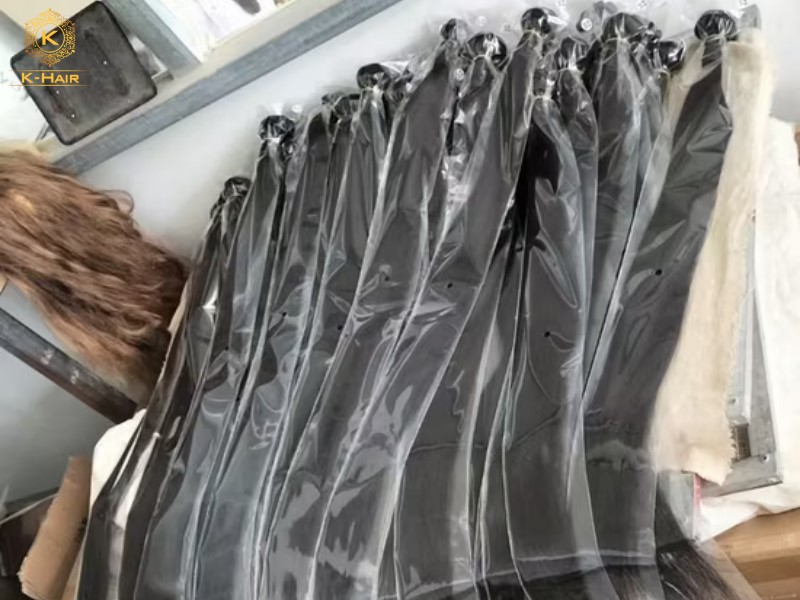
With 15 years of manufacturing experience, we have guided hundreds of wholesale clients away from costly mistakes. The biggest financial trap buyers fall into is treating an Alibaba trading vendor like a direct factory. Always ask for the “Mixed Hair Ratio” and demand a live WhatsApp video call of the production floor. A true factory will show you the sewing machines within 24 hours; a trading vendor will make excuses and send polished studio photos instead.
6. When Vietnamese Hair Vendors Outperform Chinese Factories
In 2026, finding the lowest base price is no longer the key to profitability. You must calculate the total landed cost and the lifetime value of your client.
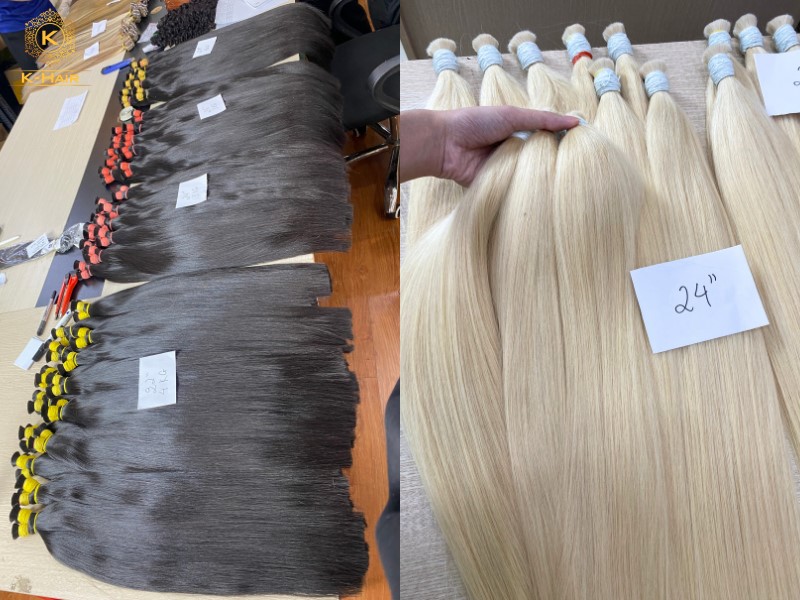
When you factor in the new Chinese customs fees, 10% surcharges, and the loss of De Minimis, Vietnamese hair vendors often provide a superior economic advantage. Beyond tax benefits, if your brand requires single-donor virgin hair, strictly aligned cuticles (that bleach flawlessly to platinum blonde), and total origin transparency for US Customs compliance, factory-direct Vietnamese sourcing changes your business economics entirely.
If you are ready to secure a tariff-free, premium supply chain, partnering directly with a manufacturer like K-Hair is your most secure business decision.
While China’s infrastructure is unmatched, savvy importers know that “biggest” doesn’t always mean “best” for every business model. Depending on whether you prioritize raw hair longevity, bleachability, or lower tariffs, your ideal sourcing destination might shift. To see how China stacks up against the world’s other two hair titans in a head-to-head quality and price battle, read our definitive verdict: Which country has the best human hair for wigs – Vietnam vs. India vs. China.
7. FAQ — Chinese Hair Factory & Vendors: Questions US Buyers Ask Most
Navigating the Chinese hair market from thousands of miles away can feel like walking through a minefield. Over our 15 years in the wholesale hair industry, we have fielded countless questions from US buyers who have either been burned by bad vendors or are terrified of making their first bulk wire transfer. Before you finalize your 2026 sourcing strategy, here are the unfiltered answers to the most critical questions keeping buyers awake at night.
7.1. Where are the best hair factories located in China?
The best factories are concentrated in three main hubs: Xuchang (Henan Province) for massive volume and wefts, Guangzhou for trading and lace products, and Qingdao for premium hand-tied and Jewish wigs.
7.2. How do I find reliable Chinese hair vendors on Alibaba vs. direct factories?
Filter your search by checking the “Verified Manufacturer” badge rather than just “Trade Assurance”. Then, ask to see their Business License (营业执照) to confirm they are registered for manufacturing, not just wholesale trading.
7.3. Are Chinese hair vendors affected by the 2026 US import tariffs?
Yes. The US removal of the De Minimis exemption and the imposition of a 10% global surcharge means that all hair products imported from China, regardless of order size, are subject to heavy taxation and formal entry fees, significantly raising the landed cost for US buyers.
7.4. What is the standard MOQ when buying from a Chinese factory?
A true Chinese hair factory typically requires a high Minimum Order Quantity (MOQ) ranging from 50 to 100+ units, or 5-10kg of bulk hair. If a supplier allows you to buy 1 or 2 bundles, you are almost certainly dealing with a trading vendor.
7.5. Is it safe to buy hair from Chinese vendors?
It is safe if you perform rigorous due diligence. Always use secure payment gateways like PayPal for your first trial orders, request live video inspections of the factory floor, and never place a bulk order without testing a physical sample first.
7.6. What is the difference between Remy and virgin hair from Chinese vendors?
Virgin hair from a Chinese vendor should be chemically unprocessed hair collected from a single donor with cuticles intact. Remy hair also has intact cuticles but is collected from multiple donors and often gently processed for texture or color uniformity.
8. Conclusion
The global hair supply chain in 2026 is no longer just about finding the lowest price—it is about navigating trade stay-laws, fluctuating tariffs, and maintaining extreme quality consistency. While identifying the right Chinese hair factory or wholesale Chinese hair vendors remains a viable strategy for fashion-forward, high-volume synthetic or processed hair, the economic “sweet spot” for premium human hair has officially shifted.
Ultimately, if you are still weighing which country has the best human hair for wigs, the March 2026 trade data points toward a “China+1” model. By sourcing your trendy, large-SKU collections from the top Chinese suppliers and anchoring your high-end, salon-grade line with factory-direct Vietnamese hair, you protect your business from both fiscal shocks and quality fatigue.
Secure Your 2026 Profit Margins with K-Hair
Navigating international sourcing requires a partner with 15 years of boots-on-the-ground manufacturing experience. At K-Hair, we don’t just supply hair; we provide a tariff-advantaged, 100% transparent supply chain that helps you scale without the traditional risks of the Chinese wholesale market.
Take the next step in your business journey:
Upgrade to Premium: Explore our Vietnamese Virgin Hair Collection (The tariff-free alternative).
Get a Custom Quote: Contact our factory experts through Whatapps: +84 85 333 0244 or Facebook: K-Hair Vietnam Wholesale