
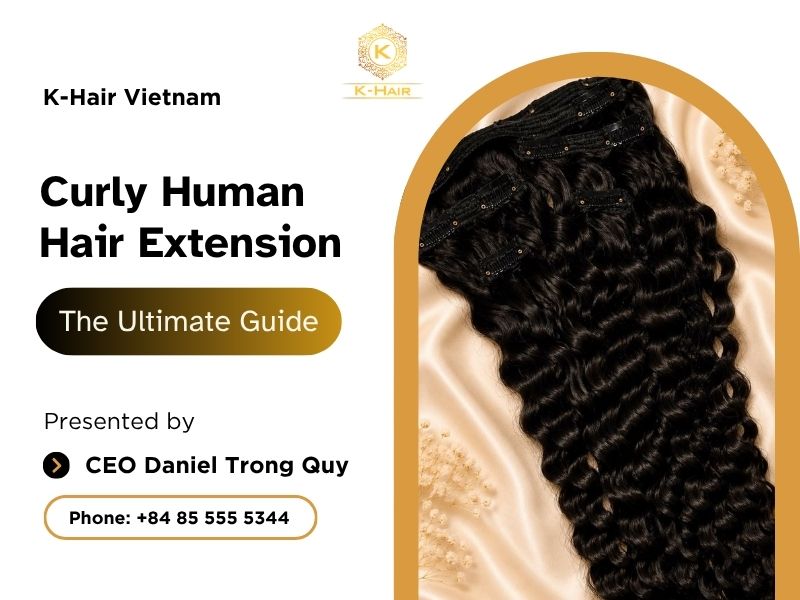
Most buyers picture human hair extension as straight, sleek wefts, so does curly texture even exist in real human hair, or is it always a synthetic trick? Can a curly human hair extension actually hold its curl wash after wash, or does it relax back to straight within weeks? Let’s talk about it, and we’ll also cover how this hair type is processed, graded, and sold to salons and distributors worldwide.
What is curly human hair extension?
Curly human hair extension is defined as strands of remy or non-remy human hair, chemically or steam-processed into a lasting curl pattern. Common patterns include deep wave, kinky, and water wave. Unlike straight hair pressed into a temporary curl with a styling tool, this hair holds its texture through the internal cuticle structure, not through product buildup. That structural hold is why the curl survives washing and humidity, and why genuine curly human hair can be heat-styled safely up to 450°F, the same as any other unprocessed bundle.
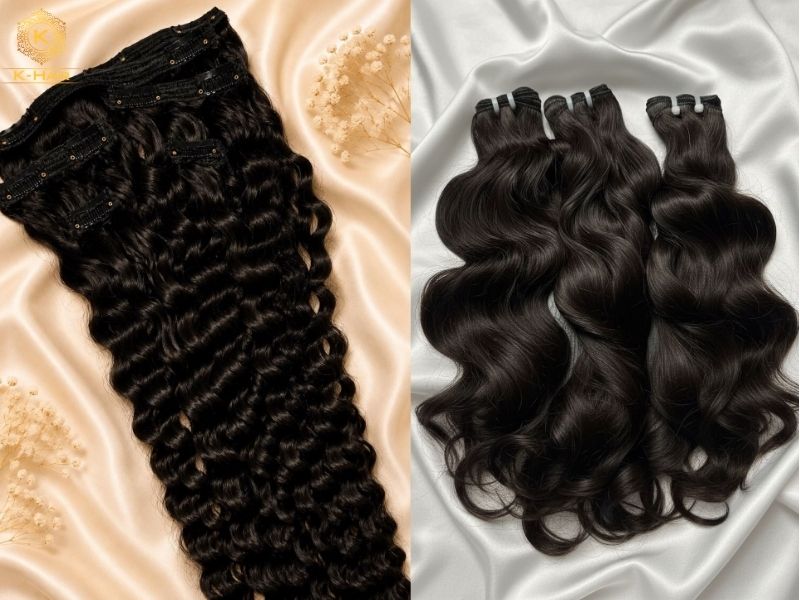
A curly human hair clip in extension follows the same processing but attaches to pressure-sensitive wefts. It is a no-heat, no-bond option for clients who want temporary volume rather than a semi-permanent install.
This hair type blends naturally with type 3B through 4C natural hair, which reduces the amount of heat styling needed to match texture. It also adds volume without the extra weight of straight bundles. It works across multiple install methods, including clip-in, tape-in, and sew-in, giving retailers one product line that serves several client segments.
Key Characteristics of Curly Human Hair Extension
Curly human hair extension are characterized by their authentic human-hair composition, pre-defined curl patterns, natural movement, and relatively consistent curl definition. These features allow them to blend with naturally curly or coily hair while offering more styling flexibility than synthetic alternatives.
- 100% real human hair: Sourced from single donors or cuticle-aligned bundles rather than synthetic fiber, so the hair can be dyed, bleached, and heat-styled the same way as natural hair.
- Pre-textured curl patterns: The curl is set through steam processing or a perm rod system, not achieved by ironing, which is why the pattern returns after every wash.
- Natural movement and appearance: Cuticles remain aligned in one direction, which keeps the hair from tangling or matting during regular wear.
- Texture consistency: Reputable suppliers grade bundles so strand diameter and curl tightness stay uniform across a full wig or weft set.
Weft density is another marker worth checking before a bulk order. A weft sewn too thin will look sparse once installed. An overly dense weft adds unnecessary weight at the root and can cause tension on natural hair over time. Most factory-direct suppliers list weft density in grams per weft, making it easier to compare bundles across vendors. Lace ventilation matters too for curly units built on a closure or frontal base, since tighter curl patterns trap more heat against the scalp.
Buyers should also ask about the herbal hair care process used before shipping. Hair rinsed with locust bean or lemongrass-based treatments, a common step among Vietnamese factories, tends to arrive with less residual buildup. Hair treated with silicone-based conditioners can mask a lower-quality cuticle underneath a temporary shine.
Popular Curly Hair Extension
Not all curls are the same, and matching the right pattern to a client’s natural texture is one of the most common sourcing mistakes. Salons and distributors most frequently order these five patterns:
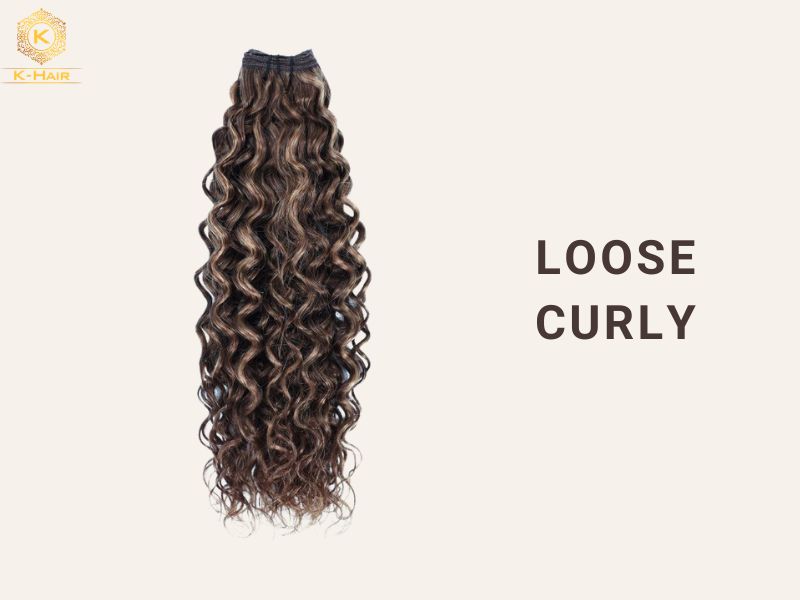
- Loose Curly: Has a relaxed curl formation with wider loops and more open spaces between curls. It generally requires less manipulation to maintain its shape and can be easier to restyle between washes.
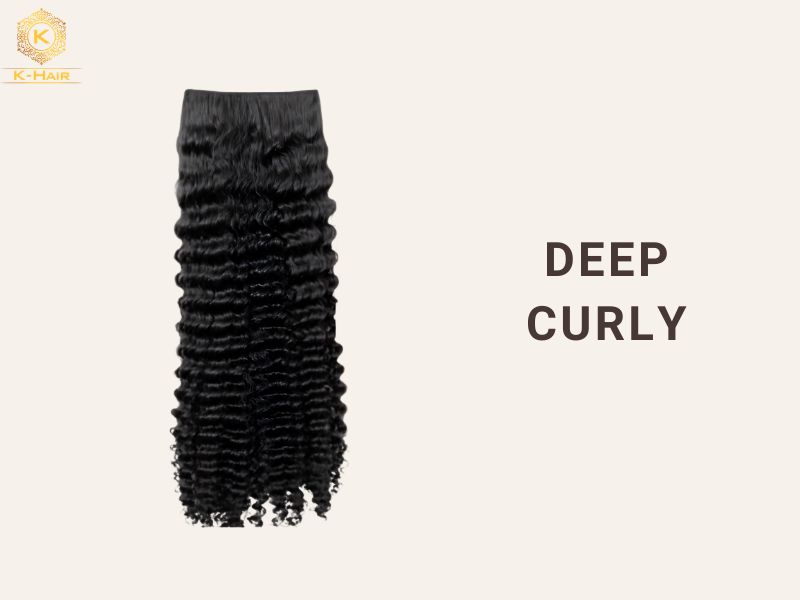
- Deep Curly: Forms more defined, compact curls that create greater density throughout the hair. This pattern tends to need more moisture and careful detangling to keep the curls defined and reduce frizz.
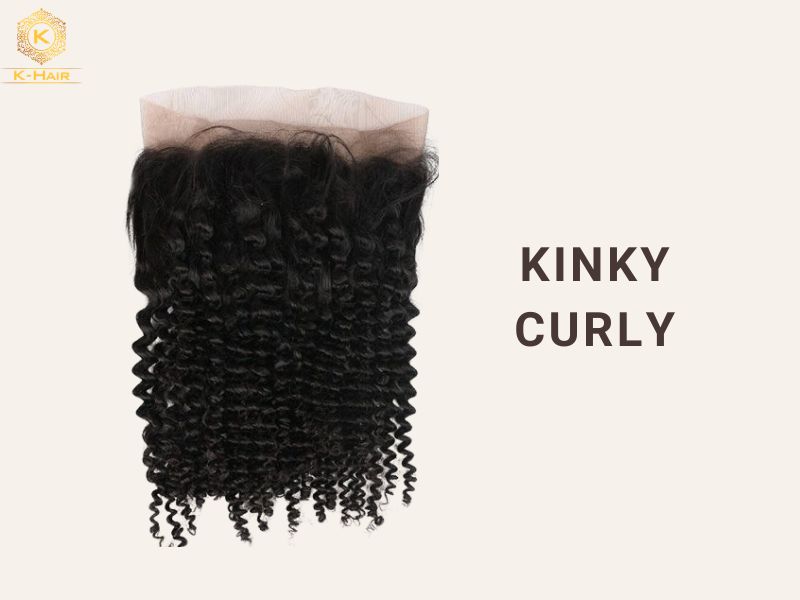
- Kinky Curly: Characterized by tightly formed curls with a coily structure and substantial shrinkage. It is often chosen when the goal is to closely replicate naturally kinky or coily textures and requires gentle handling to preserve the curl pattern. Buyers stocking this pattern in volume can browse kinky curly hair in bulk.
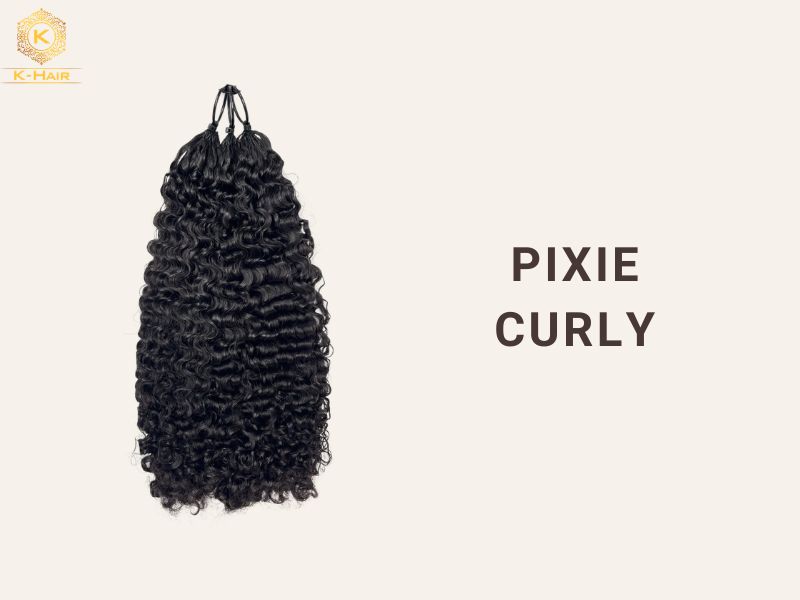
- Pixie Curly: Made up of very small, spring-like curls that create a highly textured finish. Because of its compact curl structure, this pattern can require more careful separation and moisturizing than looser curl types.
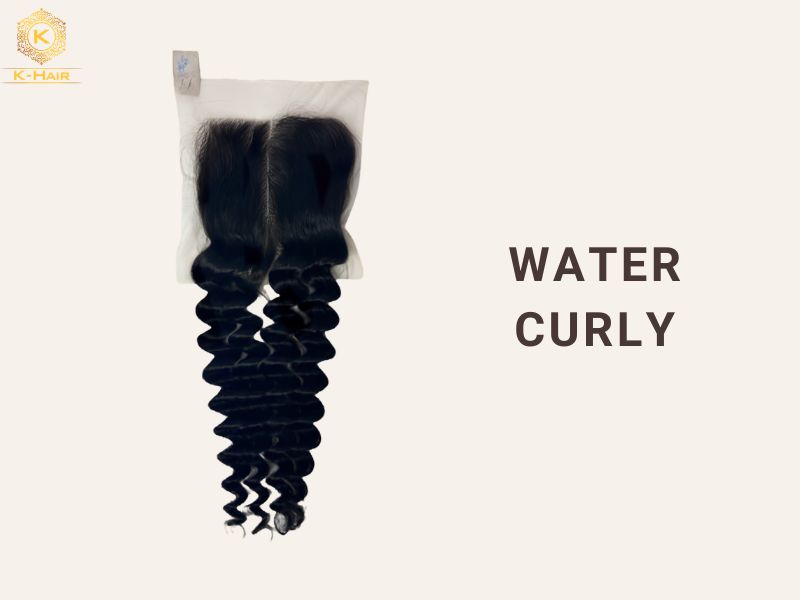
- Water Wave: Combines flowing waves with soft curl formations, creating a texture that moves easily rather than forming tightly packed coils. Its looser structure generally makes it more versatile for brushing, separating, and restyling.
→ Not sure which wave suits your clients? See Loose Wave vs Deep Wave: The Ultimate Comparison Guide or Loose Wave vs Body Wave.
To make these differences easier to compare, the table below breaks down each curl pattern by tightness, volume, maintenance, and suitability:
| Curl Pattern | Appearance | Typical Characteristics |
| Loose Curly | Wide, S-shaped waves | Low frizz, blends with relaxed or straight hair, holds shape 6-8 weeks with proper care |
| Deep Curly | Tight, defined S-curls | High volume, performs well in humid climates, average curl retention of 3-4 months |
| Kinky Curly | Very tight, springy coils | Highest shrinkage rate, 50-75% when wet (up to 90% for the tightest coils), best for blending with natural Type 4 hair |
| Pixie Curly | Small, tight spring-like curls | Mimics natural 4A or 4B texture, low shine, common in protective styles |
How to Choose Curly Human Hair Extension
Choosing the right curly extension inventory comes down to four decision points: curl match, hair origin, install method, and budget tier.
- Curl match: If a shop primarily serves clients with type 3B-3C hair, deep wave or loose wave will blend more naturally than kinky. If clients wear type 4A–4C hair, kinky coily extension blend without added heat styling.
- Hair origin: Single-donor Vietnamese raw hair tends to hold curl patterns longer because the cuticle layer has not been stripped by prior chemical processing. Multi-donor blended hair is generally priced lower but can show more shedding after 3-4 months of daily wear. (See Raw hair vs Virgin hair for the full grading breakdown.)
- Install method: Clip-in sets work best for temporary volume and require no bonding agent. Tape-in and sew-in curly extension suit clients who want a look that lasts through multiple wash cycles.
- Budget tier: Entry-level Single Drawn curly bundles run roughly $20-25 per 100g at shorter lengths (8″-12″), scaling up to $75-80 at 28″-30″. Premium Super Double Drawn curly bundles start around $27 at 8″ and reach $100-110+ at 28″-30″, reflecting both the density grade and the extra sorting curl patterns require.
A few other factors are worth checking before placing an order:
- Stretched vs. dry length: Curly patterns are usually sold shorter than the tag length, since shrinkage pulls the visual length up as the hair dries. A bundle labeled 18 inches (46cm) in a kinky coily pattern may only measure 12-13 inches (30-33cm) once fully dry, so ask whether a supplier’s listed length is measured stretched or in its natural curl state.
- MOQ: For wholesale orders, most Vietnamese factories set an MOQ of 1kg, roughly 10 bundles. Some will accommodate smaller trial orders for new B2B accounts testing a curl pattern before a full container commitment.
- Super double drawn grading: This grading affects how full a wig or weft looks at the ends. A true super double drawn bundle keeps close to the same strand length from root to tip, rather than tapering, which matters more for curly patterns than straight ones since thinning ends make a curl pattern look uneven once styled.
Industry Insight: Curl retention is less about the shampoo brand and more about water temperature. Rinsing curly extension in hot water opens the cuticle and relaxes the wave pattern faster, while a cool-water final rinse helps seal the cuticle and preserve the curl for additional wash cycles.
How long does Curly Human Hair Extension Last?
With daily wear and proper maintenance, this hair type typically lasts 6 to 12 months before the curl pattern starts to relax. Pixie curly and kinky curly patterns tend to hold shape longer, since tighter coils create more surface friction. Loose curly and deep curly patterns may need re-steaming after 4-6 months of frequent washing.
Washing frequency also affects lifespan. Hair washed more than three times a week with sulfate-based shampoo tends to lose curl definition within 8-10 weeks. Hair washed once or twice weekly with a sulfate-free formula can hold its pattern for several months longer.
Lifespan also varies significantly by install method, independent of curl pattern:
- Clip-ins and halos: 6-12+ months, since the hair isn’t worn continuously and sees far less daily friction.
- Tape-ins: The hair itself can last 6-9 months, but requires a salon refit every 6-8 weeks to replace the adhesive tape as natural hair grows.
- Sew-ins and weaves: 6-12 months total reuse, though the weave must be removed and reinstalled every 6-8 weeks to protect natural hair underneath.
- Keratin bonds / K-tips: 3-5 months. These are single-use, semi-permanent strands that can’t be reused once removed, so the hair’s lifespan matches the length of one install.
FAQ
Here are some quick answers to the questions we hear most often from salons and distributors sourcing this hair type.
Does curly extension need special shampoo?
A sulfate-free, moisture-focused shampoo helps preserve the curl pattern longer than a standard clarifying shampoo.
Can curly extension hair be straightened?
Most curly extension hair can be flat-ironed at a low-to-medium heat setting, though the curl pattern may not fully return without re-steaming.
What is the average price for this hair type?
Wholesale pricing generally runs from around $20 for short, entry-level Single Drawn bundles to $110 or more for long, premium Super Double Drawn curly hair, depending on length, density, and donor grade.
How do I know if curly hair extension is real human hair?
A burn test on a small strand is one common method. Real human hair singes and smells similar to burnt hair, while synthetic fiber melts into a hard bead.
Why do curly extensions shrink so much when wet?
Curl shrinkage happens because the hair strand physically coils tighter as it dries. The visible length pulls up even though the strand itself has not gotten shorter. Kinky and kinky coily patterns show the most shrinkage – typically 50-75%, and up to 90% for the tightest 4C coils – while looser wave patterns shrink only slightly.
Conclusion
In short, curly human hair extension is a versatile way to add length, volume, and definition with a natural-looking finish. The key is choosing a supplier that offers consistent curl patterns, quality human hair, and reliable sourcing. Looking for curly human hair extension for your salon or business? K-Hair Factory supplies single-donor Vietnamese curly bundles across all five patterns above, with consistent grading and factory-direct pricing.
Ready to source verified raw Vietnamese hair?
Contact K-Hair Factory directly for wholesale pricing, MOQ details, and free samples.


Pingback: Curly Hair vs Straight Hair: How to Choose What's Best