
The North American hair extension market is expanding rapidly as consumers seek new, non-damaging ways to add colors to their hair look. For salon chains, distributors, and e-commerce brands, stocking colored hair extensions eliminates long service times and unlocks high profit margins.
However, scaling a colored hair line brings distinct supply chain risks. Inconsistent factory dye batches, aggressive chemical lifting, and stripped cuticles can quickly erode margins through client refunds and damaged brand reputation. Long-term success in colored hair extensions requires looking past consumer trends to master bulk procurement – from manufacturing chemistry and sample testing to supplier auditing and batch-to-batch consistency.
The High-Margin Opportunity in Colored Hair Extensions
Demand for dimensional color-balayage, ombré, and piano highlights – is now a baseline expectation in the US hair market. Fueled by celebrity styling and social media trends, consumers are now driven toward multi-tonal shades like mocha mousse, warm caramel, and blondes, making colored hair extensions one of the fastest-growing categories in the industry.
Coloring raw hair in-salon is costly and risky; stylists waste hours lifting and toning, risking over-processed hair and unsalvageable inventory loss. Luckily, factory colored hair extensions eliminate this bottleneck by shifting chemical risk and labor upstream to the manufacturer. And by using this product line, salons gain faster chair turnover and predictable service pricing, while distributors gain scalable, high-margin SKUs without needing in-house colorists.
The Manufacturing Reality – How Colored Extensions Are Made
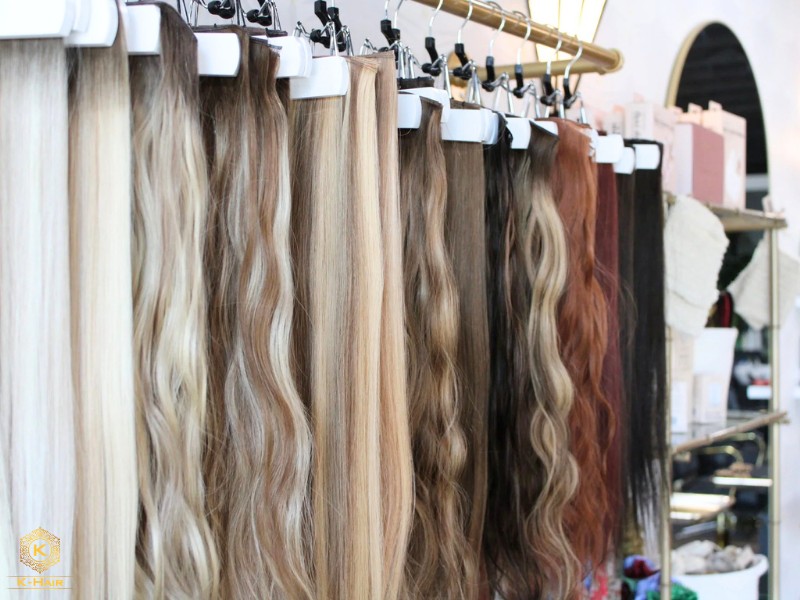
Producing factory colored hair extensions requires a multi-stage process that replaces aggressive salon bleaching with low-temperature, gradual chemical baths to strip away dark pigments. As a seller yourself – it is crucial that you are aware of this process, as well as how can it affect your final inventory quality:
Raw Material Selection
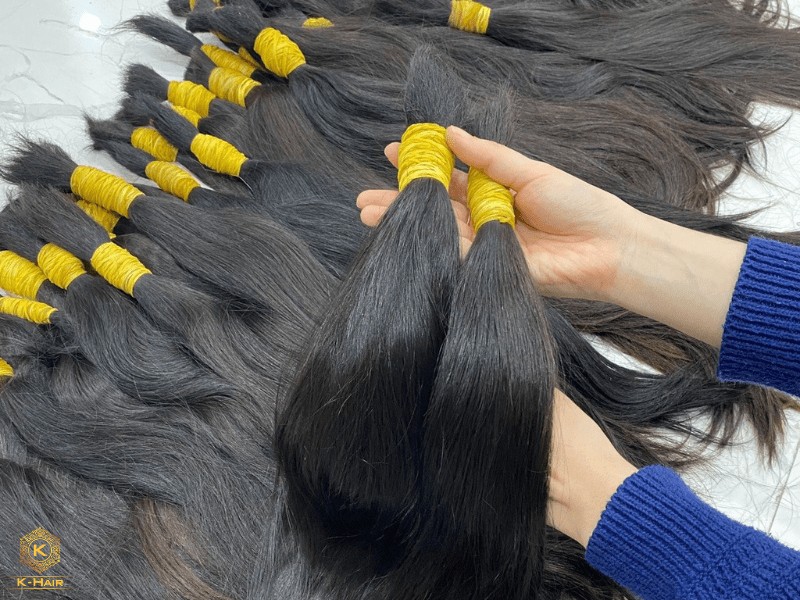
Colored hair extensions should start from unprocessed Virgin or Raw hair – hair that has never been chemically treated and still has its cuticle layer running in a single direction. This matters more for colored hair extensions than for natural-shade ones, as the hair needs to be as strong as possible to withstand the coloring. (Not sure which grade you’re sourcing? See Raw hair vs Virgin hair.) On the other hand, hair that has already been permed, relaxed, or previously dyed has a compromised cuticle and porosity profile. This means it lifts unevenly, over-processes in some sections while under-processing in others, and is significantly more prone to breakage during the bleaching stage.
Raw hair origin also affects how the hair responds to chemical lifters. Thicker, coarser cuticle structures generally require longer processing times to reach lighter levels evenly, while finer, thinner cuticle structures lift faster but are more vulnerable to over-processing.
As a buyer sourcing platinum or fashion-color shades, you should ask suppliers directly what raw hair grade and origin is used as the base for those specific colors. In many cases, factories will often use a different (cheaper) base for hard-to-process light shades.
Processing Methods Compared
There are two broadly different approaches factories use to reach light and vivid colors, and the difference between them is the single biggest driver of product longevity.
- Rapid chemical processing/Acid baths: Budget-tier factories use high-volume chemical baths to strip hair to pale base shades in days rather than weeks. To conceal the resulting fiber damage, hair is heavily coated in industrial silicones for immediate softness. However, these coatings strip away within 2-3 washes, exposing severe cuticle degradation, dryness, and persistent tangling.
- Slow, gentle decolorization (or cold processing): Premium manufacturers lift pigment gradually over 2-3 weeks using low-volume developers paired with restorative conditioning treatments between stages. Once the target shade is reached, factories using this method also rely on specialized textile or acid dyes rather than standard salon color to deposit pigment, then dry the hair slowly over 4-6 days at low heat to lock in color and prevent thermal shock. While this labor-intensive method increases wholesale unit costs, it preserves natural elasticity, protects cuticle alignment, and ensures long-term moisture retention through repeated styling and washing cycles.
The True Cost of Cheap Colored Hair Extensions
The connection between processing method and business outcomes is direct, even if it isn’t always visible on the sample swatch a supplier sends.
Extensions that degrade rapidly generate a disproportionate share of client complaints, return requests, and chargebacks relative to their unit cost. For a salon or brand, the reputational cost of a client whose $400 balayage set looks matted and dull after six weeks tends to outweigh whatever was saved on the wholesale invoice. When evaluating a new colored-extension supplier, unit price should be weighed against expected client-facing lifespan, not treated as the primary decision variable.
High-Demand Color Categories & Technical Specifications
A successful business owner needs to do two things at once: capture what people actually want right now, and hold up under real-world production constraints. Below is a breakdown of the color categories currently driving market demand, along with the technical specs required to reproduce them accurately across different materials and displays.
Core Color Stocking Categories
Having the right color range in stock comes down to balancing safe, high-volume drivers with the trend-focused shades that actually pull people in. Here is a clear breakdown of the core stocking colored hair extensions categories you need to maintain a balanced, high-converting inventory.
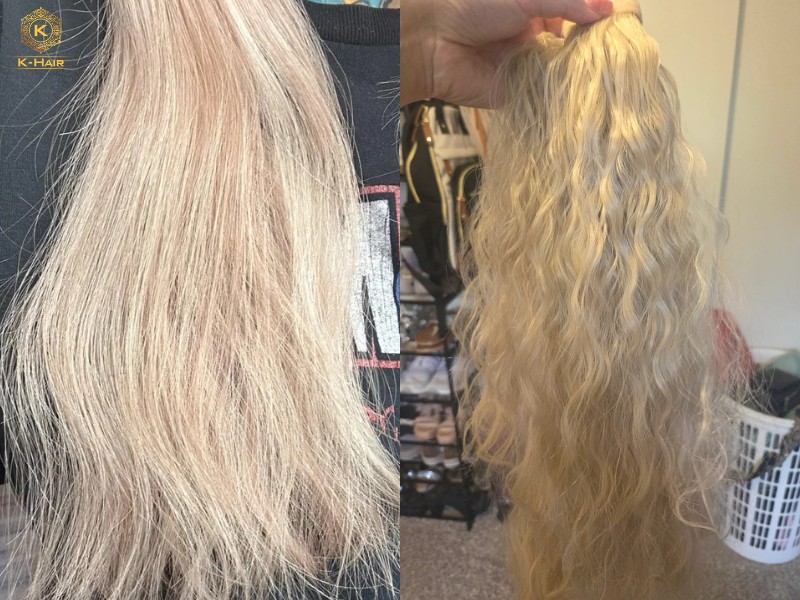
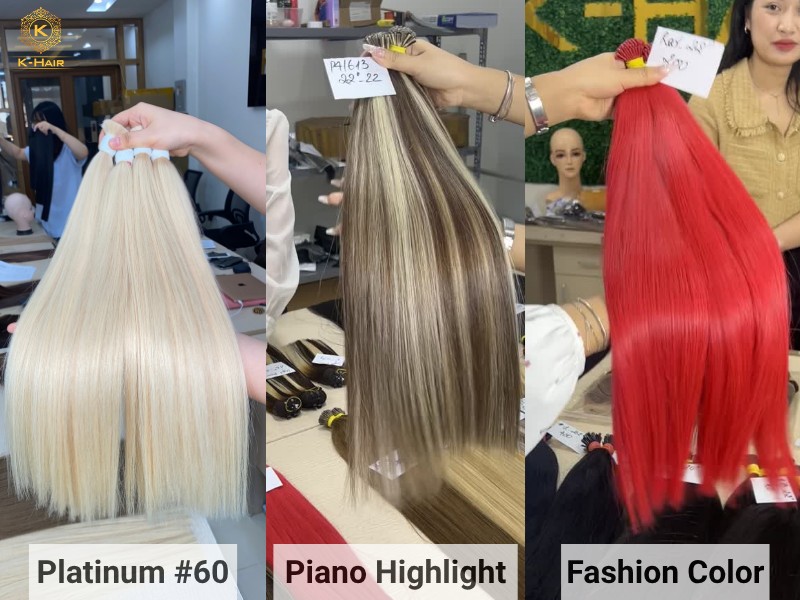
- Foundation and bleach shades: Base tones – such as platinum (#60), lightest blonde (#613), and honey blonde (#27) – provide a pre-lifted canvas for custom toning. Stocking these foundation shades allows salons to deliver bespoke client colors without requiring factory-customized orders. (See the full breakdown of shade numbering in our hair color levels guide.)
- Dimensional and pre-blended shades: Hand-painted balayage, ombré gradients, and piano highlights command the highest wholesale margins. Because factory technicians must manually section-process each bundle to achieve natural multi-tonal transitions, this skill-intensive work cannot be automated at scale.
- Vivid and fashion shades: Neons, pastels, and jewel tones represent a high-growth niche built on heavily pre-lifted bases. These direct dyes are prone to premature fading and bleeding, requiring rigorous wash testing before resale.

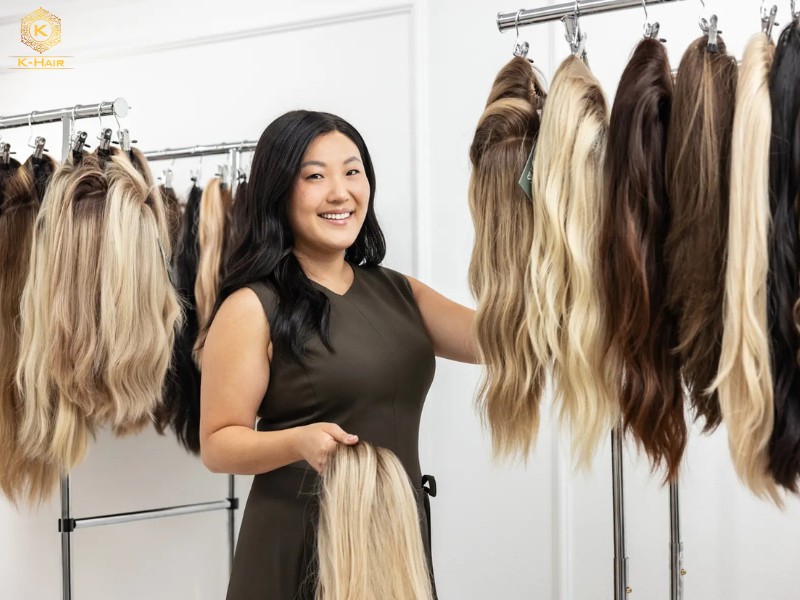
The most popular hair extension colors on the market
Application Types & Construction Methods
The color category a factory offers is only half the sourcing decision – the construction method determines how that color performs in application:
- Genius wefts and hand-tied wefts: Ultra-flat, minimally bulky tracks that are well suited to seamless color blending, particularly on fine hair where a thicker weft would create visible demarcation lines. (See Genius Weft hair extensions for a full breakdown.)
- Keratin extensions (flat-tip, I-tip, U-tip): Individual bonds that need precise color matching at the bond itself, since any mismatch is highly visible close to the scalp; these are generally positioned for longer-wear installs.
- Tape-in and injection tape extensions: Fast-install formats well suited to temporary highlight or dimension accents, popular with salons offering quick express-color services. Stocking wholesale tape-in extensions in pre-toned foundation shades keeps this SKU moving fast.
The 5-Step B2B Quality Control Checklist
Before placing a bulk order, every new colored hair extensions supplier should be evaluated against physical samples using a consistent testing protocol. The following five tests are standard practice among experienced B2B buyers:
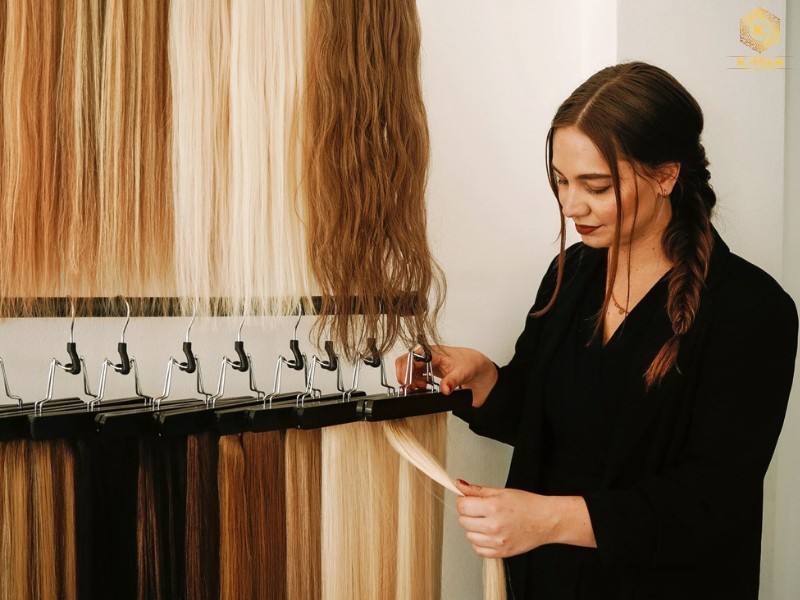
The wash and dye-bleed test
Wash the sample with a sulfate-free shampoo under lukewarm water and observe the runoff. Well-processed, properly sealed color should show minimal color bleed. Heavy dye runoff in the first wash is a strong signal of surface-coated rather than properly saturated color, and predicts fading complaints down the line.
Cuticle integrity and alignment test
Run fingers down a strand from tip to root, then root to tip (the reverse-rub friction test). Properly aligned, intact cuticles will feel smooth in the natural direction and noticeably rougher against it; hair with a stripped or randomized cuticle will feel similarly rough in both directions, or unusually smooth in both – a sign the cuticle has been chemically removed rather than preserved. A microscope inspection, where available, gives a more definitive read on cuticle presence and directionality.
Shedding and weft construction stress test
Grip a section of weft and gently pull and shake it for a fixed interval (commonly around 30 seconds) over a dark surface. Some shedding is normal for any weft – buyers should agree on a maximum acceptable strand count with the supplier in advance, since tolerances differ between factories and are often negotiated per contract rather than fixed by a universal industry standard.
Thermal tolerance and synthetic fiber detection test
Flat-iron a sample at a standard styling temperature (typically in the 350°F-400°F / 175°C-205°C range) and observe how it responds. Genuine human hair will style normally; hair cut with low-melt synthetic fiber fillers will singe, curl unnaturally, or emit a distinct plastic odor. This test is particularly important for vivid and pastel shades, where synthetic fiber blending is more common as a cost-cutting measure.
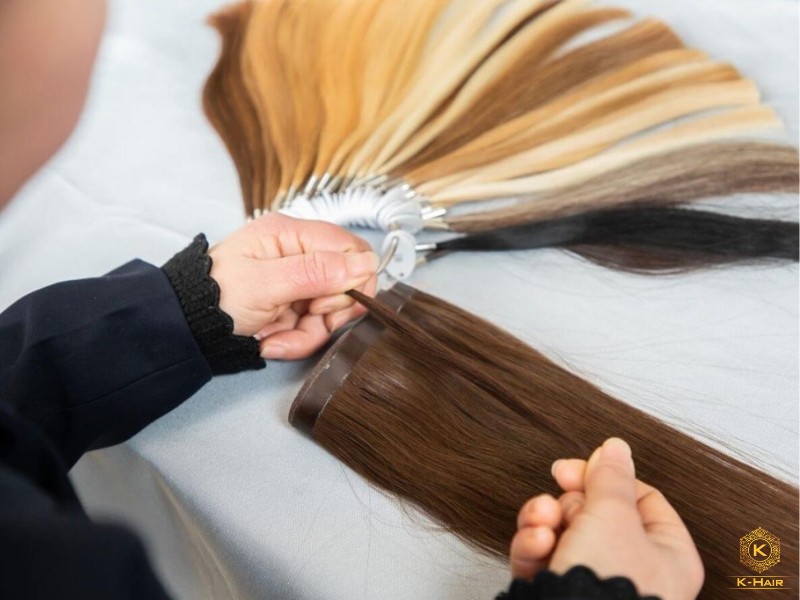
Batch color swatch accuracy test
Compare samples from the actual bulk production run – not just the original approval sample – against an international color ring to check for shade drift across the batch. Requesting swatches from multiple points in a production run, not just the first units off the line, is the most reliable way to catch batch-to-batch inconsistency before it reaches a client’s head. Always view swatches under natural daylight, not fluorescent warehouse or office lighting, since artificial light can visibly shift how warm or cool a shade reads.
Supply Chain Management, MOQs, and Factory Negotiations
Managing color variations efficiently is where creative vision meets bottom-line reality. Balancing Minimum Order Quantities (MOQs), production lead times, and factory capabilities determines whether a palette stays profitable. Below are the core strategies for negotiating terms and optimizing supply chains to keep production lean and flexible.
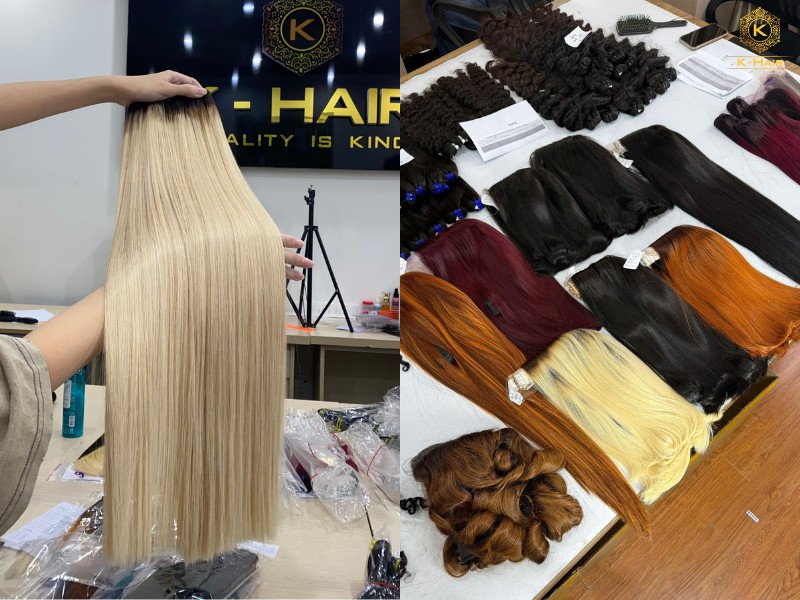
Understanding MOQs (Minimum Order Quantities)
Minimum order quantities for colored hair extensions are typically higher than for natural-shade stock, since factories need to justify setting up a custom color run. Buyers should expect MOQs to vary significantly by factory size and shade complexity – a stock foundation shade a factory already runs regularly will generally carry a lower MOQ than a fully custom balayage blend developed to a brand’s specific color formula. Exact figures should be confirmed directly with each supplier rather than assumed, as they vary widely across the industry.
Lead Time Planning
Custom multi-tone color work takes materially longer to produce than natural or single-process shades, since it typically involves multiple lift-and-tone stages plus quality checks between them. Buyers should build in a logistics buffer on top of quoted factory production time to account for international shipping, customs clearance, and any rework if a batch fails quality control on arrival. Requesting a factory’s typical production calendar in writing, rather than relying on a verbal estimate, helps set realistic delivery expectations with downstream clients.
Private Labeling & Packaging (OEM/ODM)
For distributors and brand founders building a private-label line, packaging and documentation are part of the product:
- Custom silk bags, rigid magnetic boxes, branded color rings, and care cards all reinforce brand positioning at the unboxing stage and are standard OEM/ODM offerings from established factories.
- A Certificate of Authenticity helps substantiate claims of virgin or remy hair origin to end customers.
- Non-disclosure agreements and supplier contracts protect proprietary color formulas – especially important for brands that have developed a signature dimensional blend and don’t want it replicated for competitors sourcing from the same factory.
Wholesale Pricing Matrix & Margin Breakdown
The table below outlines illustrative wholesale economics for colored hair extensions by grade tier. These figures are directional estimates meant to frame how processing method and hair grade typically map to cost and retail positioning – actual factory pricing fluctuates with raw hair market conditions, shade complexity, order volume, and currency exchange rates, and should always be confirmed against current supplier quotes rather than treated as fixed benchmarks.
| Extension Type | In-Salon Toning & Processing Risk | B2B Profitability & Re-Order Dynamics | Price |
| Genius & Hand-Tied Wefts | Low – as long as you keep bleach off weft seam | Highest Margin: Premium service; reusable (9-12 mo lifespan). | From $40 to $200 per 100gr |
| Keratin Bonds (K-Tips/Flat-Tips) | High – toners/solvents can potentially melt keratin bond | High Re-Orders: Single-use hair drives recurring inventory sales. | From $40 to $170 per 100gr |
| Tape-Ins | Moderate-High: Alcohol or oil-based toners can degrade the PU adhesive. | Fast Turnover: 30-45 min install; high volume retail/salon sales. | From $30 to $120 per 100gr |
| Nano Rings & I-Tips | Low-Moderate: No glue to dissolve, but can leave residues if not thoroughly rinsed | Steady Demand: Reusable (6-12 months); popular strand-by-strand choice. | From $30 to $150 per 100gr |
| Clip-Ins & Halo Extensions | Low Risk: Processed completely off-scalp; easy to apply direct-deposit toners. | High Volume E-Com: Great for retail sales; zero salon labor required. | From $35 to $250 per piece |
Expert Insight: Buyers stocking multiple tiers should segment marketing and pricing accordingly rather than presenting all colored extensions as a single undifferentiated product line; client expectations (and complaint tolerance) differ sharply between a $160 and a $550 price point.
Conclusion
Success in wholesale colored hair extensions comes down to three disciplines: rigorous sample testing before any bulk commitment, a clear understanding of the chemistry and labor behind each processing method, and pricing that reflects true product lifespan rather than just unit cost. Buyers who treat the five-step QC checklist as a mandatory gate – not an optional courtesy – consistently avoid the return-and-chargeback cycle that erodes margin on cheaper, rapid-processed stock.
For salons, distributors, and private-label founders evaluating a new factory relationship, the practical next steps are to request a full sample kit across the shade range under consideration, run each sample through the testing protocol in Section 3, and confirm MOQ, lead time, and private-label terms in writing before placing a first bulk order.
If you’d rather start that relationship with a factory built on single-donor Raw hair from the ground up, K-Hair Factory supplies the unprocessed, high-strength base material that colored-extension lines depend on for even lifting and long-term color retention.
Ready to source verified raw Vietnamese hair?
Contact K-Hair Factory directly for wholesale pricing, MOQ details, and free samples.

