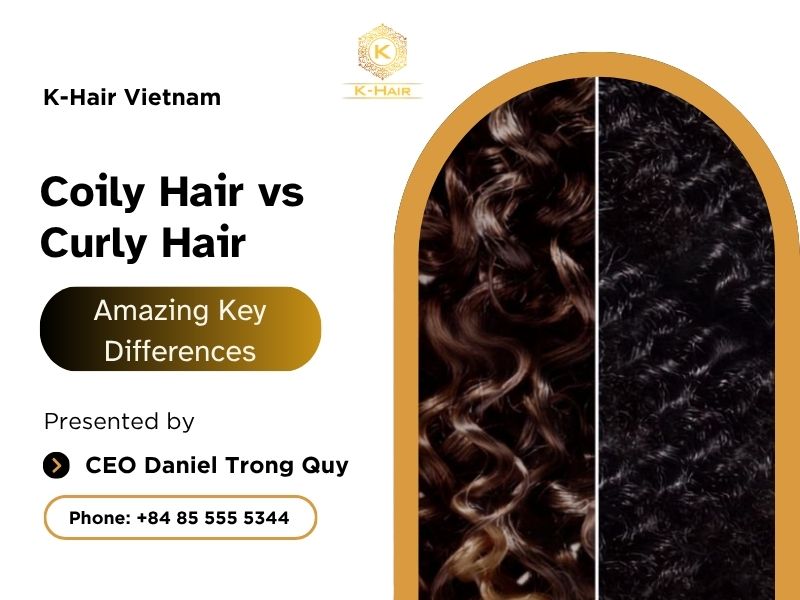
Two extension photos look almost identical, yet the bundles that arrive don’t match your client’s texture. That mismatch usually comes down to one confusion: coily hair vs curly hair. Both are natural textured hair types, but they differ in curl pattern, shrinkage, moisture behavior, and care needs. This guide breaks down each difference so you can order the right texture for your next extension or wig project.
Coily Hair vs Curly Hair: Key Differences
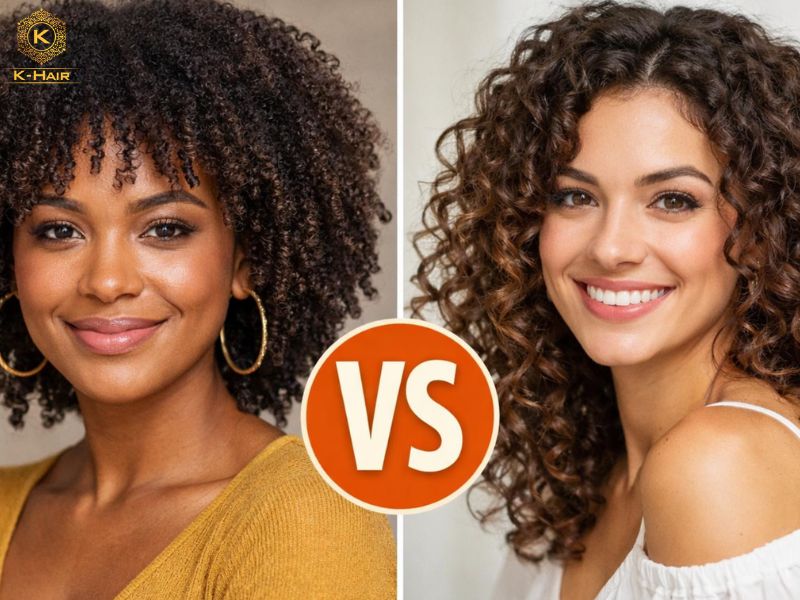
Curly hair and coily hair differ mainly in their curl pattern, structure, and how natural oils move down the strand. Here is what defines each texture.
What Is Coily Hair?
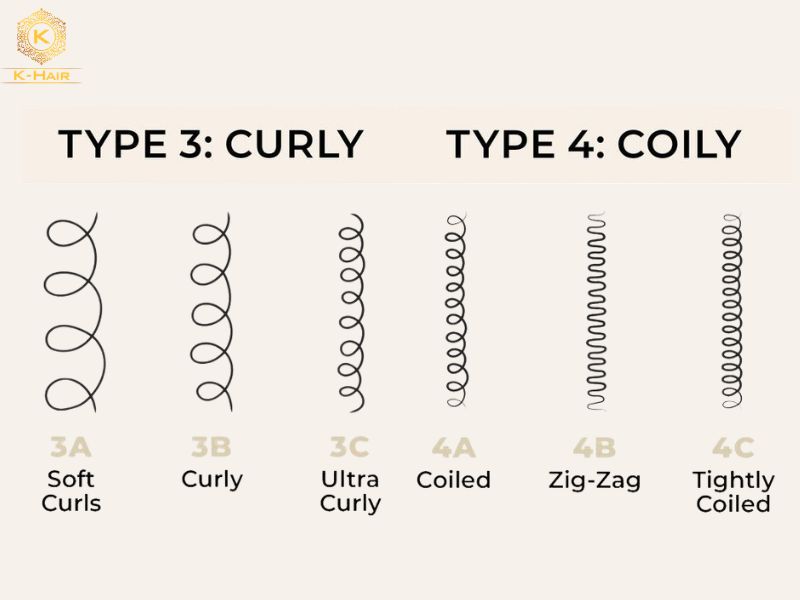
Coily hair is Type 4 hair, the tightest and most voluminous texture on the natural hair spectrum. It forms small, springy coils or sharp zigzag strands in S- or Z-patterns that often wrap around themselves. The hair typing chart classifies it from Type 4A to 4C Hair.
Coil diameter is small, roughly the width of a crochet needle or a pen spring. Because the strand winds so tightly, coily hair experiences high shrinkage. A strand measuring 12 inches stretched may appear only 6 to 8 inches long in its natural state.
What Is Curly Hair?
Curly hair is Type 3 hair, classified from 3A to 3C. It forms loose-to-defined S shapes, loops, and corkscrew ringlets, ranging from large loose spirals to pencil-circumference curls.
The curl diameter is noticeably larger than coily hair, close to the width of a marker, pencil, or straw. The strand keeps an open, cylindrical curl shape instead of winding into micro-loops. Curly hair also shrinks less, so more of the strand’s actual length stays visible.
→ Wondering how curly textures come from Vietnamese hair? Read our guide: Do Vietnamese Have Curly Hair?
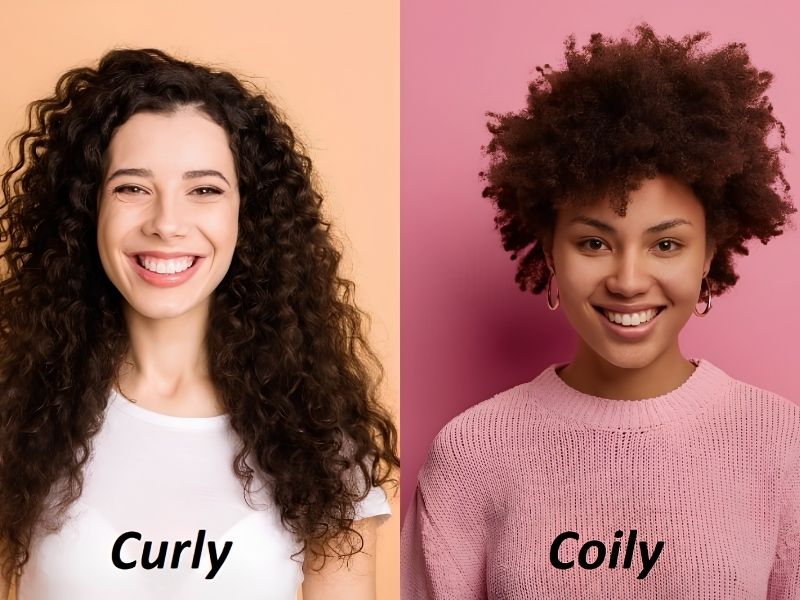
Curl Pattern and Hair Typing: 3A–3C vs 4A–4C
Curl shape, diameter, and pattern are the fastest way to separate the two textures. The hair typing chart turns those traits into labels that buyers and stylists share.
Curl Diameter and Shrinkage
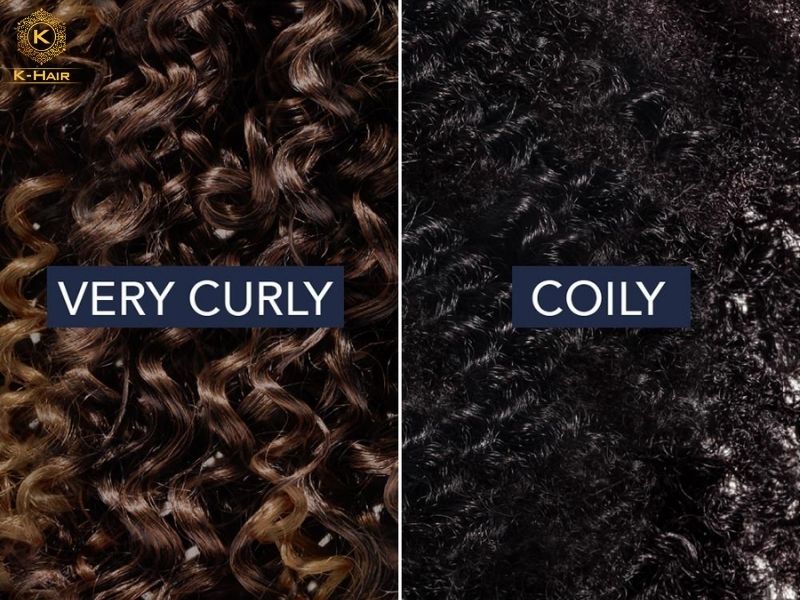
Curl diameter is the single biggest visual identifier. Curly hair forms loops about the width of a marker or pencil. Coily hair forms coils the width of a crochet needle or smaller.
As curl diameter shrinks, shrinkage increases. That is why coily hair shows more length loss than curly hair once it dries naturally.
Coily Hair Subtypes: 4A, 4B, and 4C
- Type 4A: small, defined, springy S-shaped coils, roughly the width of a crochet needle or pen, with moderate shrinkage.
- Type 4B: sharp Z-shaped or compressed angles with less defined curl patterns and a more wiry or cottony texture.
- Type 4C: the tightest, densest zigzag pattern, where coils wrap around themselves and show the highest shrinkage.
Curly hair runs the same way in reverse. Type 3A has loose, springy ringlets, while 3C has tight corkscrew curls.
Is 4A Hair Curly or Coily?
Type 4A hair is coily within the official hair-typing system, though people often call it curly in everyday conversation. It sits right next to 3C curls on one side and 4B zigzag coils on the other. Its densely packed strands can show up to 50% shrinkage when dry.
The 3C–4A overlap zone is where most misidentification happens. Curl diameter and shrinkage in that range look similar at first glance, so ask for a stretched and unstretched sample photo before ordering.
→ Need the full classification from 1A to 4C? Read our guide: Hair Typing System
Coily and Curly Hair Moisture Differences
Curl pattern is not the only distinguishing factor. Strand structure, porosity, and how each texture handles oil also separate coily hair from curly hair.
- Oil distribution: Scalp oils travel more easily down a curly strand, so curly hair looks shinier, softer, and more naturally lubricated.
- Dryness and fragility: Tighter twists and bends block natural sebum from reaching the ends. Coily hair is therefore drier, spongier, and more fragile, despite looking full and dense.
- Porosity: Coily ends often show higher porosity. They absorb moisture quickly and lose it just as fast, while curly hair holds moisture longer between applications.
Worth noting: extensions are cut hair, so they receive no scalp sebum at all. Both textures need moisture applied by hand, but coily wefts lose it faster because of their structure.
Curly vs Coily Hair Comparison Table
This table summarizes the key characteristics side by side.
| Criteria | Curly Hair (3A–3C) | Coily Hair (4A–4C) |
|---|---|---|
| Curl pattern | Defined S-shaped loops and ringlets | Tight coils or sharp Z-angle zigzags |
| Curl diameter | Pencil to marker width | Crochet needle width or smaller |
| Shrinkage | Lower; more visible length retained | High; up to 50% at 4A, more at 4C |
| Moisture behavior | Oils travel down the shaft easily | Oils struggle to reach the ends; dries faster |
| Products | Light gels, sprays, water-based leave-ins | Rich leave-ins, oils, butters, LOC method |
| Best for | Bouncy ringlet styles and looser curl wigs | Natural-look textured units and protective styling |
| Styling difficulty | Moderate | Higher; needs consistent hydration and gentle detangling |
How to Care for Coily Hair vs Curly Hair Extensions
The two textures need different wash frequency, product weight, and styling methods. Here is what each one needs to stay healthy.
Care Tips for Curly Extensions
Curly extensions respond best to a lighter touch. Heavy products make the looser curl pattern go limp.
- Wash regularly: Use a sulfate-free shampoo about once a week, or whenever buildup dulls the curls.
- Keep products light: Choose gels, sprays, or water-based leave-ins. Heavy oils weigh the curls down and flatten the bounce.
- Hydrate anyway: Apply leave-in conditioner a couple of times a week and deep condition occasionally to prevent brittleness.
- Style on damp hair: Apply gel to damp hair, scrunch for definition, then air-dry or diffuse on low.
Care Tips for Coily Extensions
Coily extensions need a heavier hand, because the tight coil structure makes them prone to dryness and breakage.
- Wash infrequently: Once every one to two weeks is enough. Frequent washing strips moisture the strand already struggles to hold.
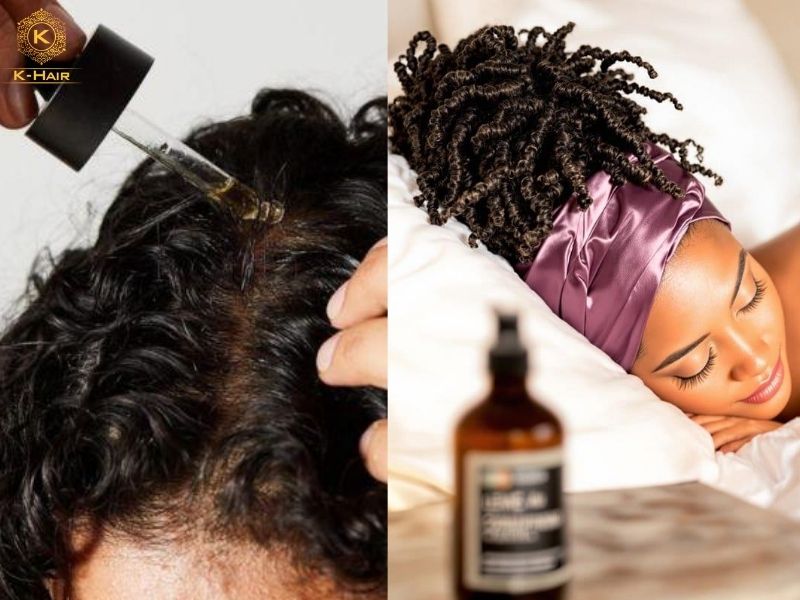
- Layer rich products: Use the LOC method (Leave-in, Oil, Cream). Argan oil, olive oil, and shea butter suit coily wefts without looking greasy.
- Deep condition consistently: Make masks a regular step, not an afterthought.
- Use sectional detangling: Saturate the hair with conditioner, then use a wide-tooth comb or fingers from the ends up to the roots. Never detangle dry coily hair.
- Protect it: Twists, braids, and a silk or satin pillowcase reduce friction and moisture loss.
Factory Insight: When sourcing curly or coily bundles, don’t judge quality by curl appearance alone. Wet a small section, stretch it, and release it. Hair that springs back evenly to its original pattern points to an intact cuticle, while hair that turns stringy or uneven after one wash points to over-processing, according to Mrs. Cherry, Sales Manager at K-Hair Factory.
Choosing Curly or Coily Extensions for Your Clients
The right choice depends on the look and maintenance level the end wearer accepts.
- If the client wants bouncy, voluminous curls with moderate upkeep, choose curly (3A–3C) extensions or wigs.
- If the client has naturally coily hair, choose coily (4A–4C) extensions to avoid an obvious texture mismatch at the blend point.
- If the client wants a relaxed curl look regardless of natural texture, curly extensions offer an easier routine.
At K-Hair, our Kinky Curly texture is the closest match for coily clients. For the curly range, our Burmese Curl and Bouncy Curl bundles cover defined spirals and ringlets.
Here’s the bottom line on cost. Curly-texture bundles cost $3.50 more per 100g bundle than natural straight at the same length and grade. A 20-inch Super Double Drawn curly bundle runs $684/kg, versus $649/kg for natural straight.
Common Misconceptions About Curly and Coily Hair
A common mix-up treats “curly” as a catch-all term for any non-straight texture. In product listings, however, curly and coily describe distinct curl diameters and shrinkage behaviors. They are not interchangeable labels.
Another misconception holds that coily hair is always harder to maintain. Coily hair needs more intensive moisture care, but with a consistent routine it is just as manageable. The difference lies in care frequency and product type, not overall durability.
FAQs About Coily and Curly Hair
Here are direct answers to the questions buyers and stylists ask most.
Can hair be both coily and curly?
Yes. Many people have more than one pattern, with looser curly sections in some areas and tighter coily sections around the nape and crown.
Which type shrinks more, coily or curly hair?
Coily hair (4A–4C) shrinks more than curly hair (3A–3C), because of its tighter coil diameter and more frequent bends along the strand.
Is coily hair better than curly hair for extensions?
Neither is better. The right choice depends on the client’s natural texture, the desired look, and how much moisture care the wearer will commit to.
Can curly hair be styled into a coily pattern, or vice versa?
Temporary styling changes curl appearance. The natural curl diameter and shrinkage behavior of each type stay structurally different.
Conclusion
Coily hair vs curly hair comes down to curl diameter, shrinkage, and moisture behavior. Curly hair (3A–3C) forms open ringlets and holds oil well. Coily hair (4A–4C) forms tight coils, shrinks more, and needs richer care.
For salons, retailers, and hair businesses, sourcing from a reliable supplier matters as much as choosing the right texture. Contact K-Hair Factory for texture samples and wholesale support for both curly and coily lines.
Ready to source verified raw Vietnamese hair?
Contact K-Hair Factory directly for wholesale pricing, MOQ details, and free samples.
Or visit our Facebook: K-Hair Vietnam Factory to get the latest wholesale price list and start building your brand with confidence!