Dyeing hair extensions is a professional modification process applied to human hair wefts to achieve specific color levels. Within the salon ecosystem, custom coloring is a high-margin, value-added service. It allows you to transform wholesale bundles into bespoke, luxury products. With clients constantly craving trending shades like Ash Blonde or Balayage, mastering this skill is essential for staying competitive.
However, the primary concern for salon owners is post-treatment dryness or premature color fading. The real challenge isn’t just asking: “Can you dye hair extensions?”, but mastering the professional execution. From deciding whether to lift or deposit color to protecting the hair cuticle throughout the transition, let’s explore the secrets to transforming raw extensions into lasting works of art.
1. Can you dye hair extensions
To answer this question, we must look at the hair’s biological composition and its history of processing. To eliminate any confusion, we have tested every common hair types on the market to create this comprehensive guide:
1.1. Based on hair grades
Think of it this way: if you can dye the hair growing out of your own head, why wouldn’t you be able to do the same with extensions? Hence, the short answer is a big fat YES – as long as it’s 100% human hair, it’s fair game for a color change!
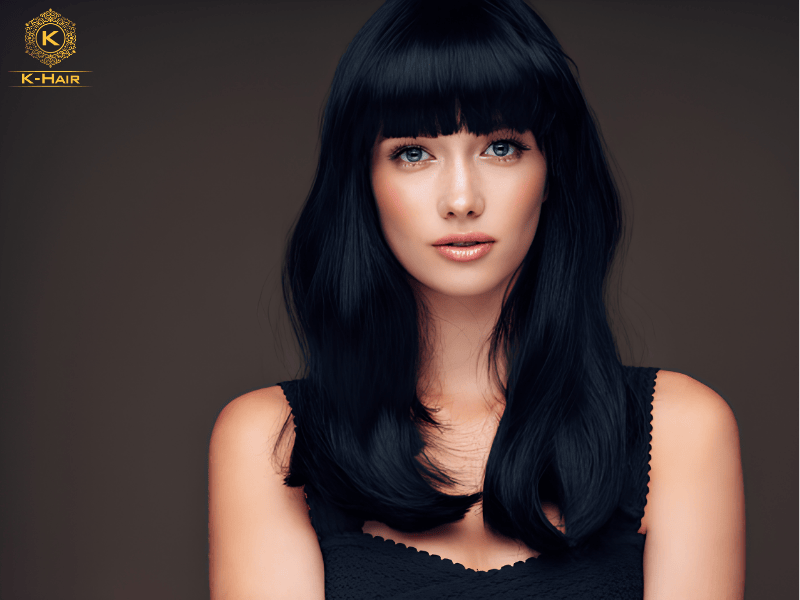
Whether you’re holding raw, virgin, remy, or even non-remy hair, the green light is on. But if you’re looking at synthetic strands? That’s a hard pass. Trust me, trying to dye plastic is just a recipe for a melted mess.
However, in a professional salon setting, “Can I?” is not the same as “Should I?”. While you can technically deposit color on most human hair grades, the risk of ruining the structural integrity increases significantly if the hair has been previously processed.
The success of your custom color depends entirely on the hair’s history and its current health:
| Hair grade | Origin & processing | Can you dye it | Risk of ruining quality |
| Raw hair | 100% human hair
Single donor Unprocessed |
Yes | Very low |
| Virgin hair | 100% human hair
2-3 donors Steam-processed |
Yes | Low |
| Remy hair | Human hair
Multi-donor Processed |
Yes | Moderate |
| Non-remy hair | Human hair (hair balls)
Multi-donor Harsh processed |
Yes, but not recommended | High |
| Synthetic hair | Plastic/ acrylic fibers | No | Extreme |
1.2. Based on hair types
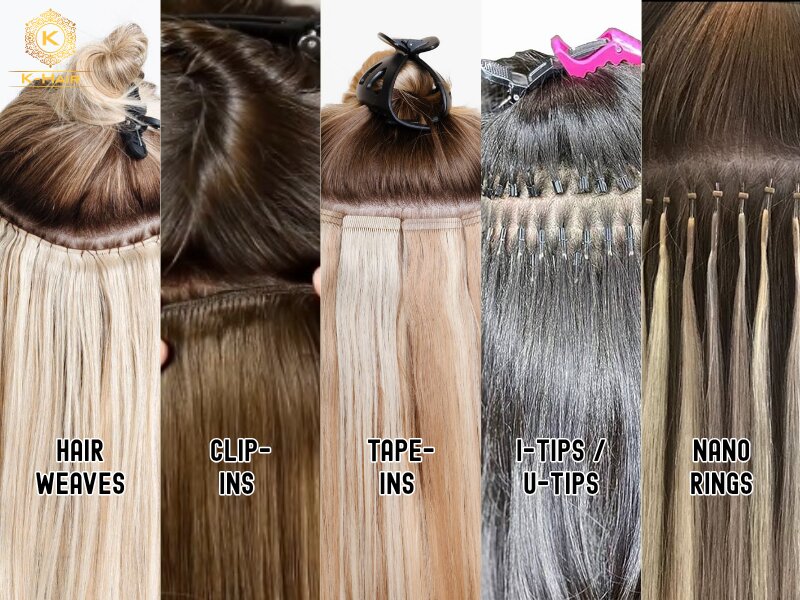
In the extensions world, there are so many ways to switch up your look, from hair wefts and tape-ins to clip-ins and I-tips. But here’s a pro tip: when you’re thinking about dyeing them, the attachment method matters just as much as the hair itself.
It’s not just about the strands anymore; you’re also dealing with adhesives, beads, and fabric wefts that don’t always play nice with hair dye chemicals.
The “weak point” isn’t just the hair itself, but the bonds, tapes, or rings that hold the extensions together. If the dye or developer touches these attachment points, it can cause the extensions to slide out or break.
Therefore, for these hair types that have specialized construction (keratin bonds, adhesive strips, or metal rings…) that are highly sensitive to chemical exposure and require careful handling during any coloring process
| Hair type | Construction & materials | Can you dye it | Risk of ruining quality |
| Hair weaves | Machine or hand-tied fabric weft | Yes | Very low |
| Clip-ins | Metal or plastic clips sewn onto a fabric/lace base | Yes | Low |
| Tape-ins | Medical-grade adhesive strips | Yes | High |
| I-Tips / U-Tips | Keratin protein glue or “tips” | Yes | Moderate |
| Nano Rings | Small metal loops with a tiny keratin/wire tip | Yes | Moderate |
1.3. Based on color – lighter or darker
Although the necessary condition to dye hair is that the hair must be completely human hair, you still have to keep in mind the sufficient condition that color results on extensions will differ from results on natural hair because the starting level, tone, and porosity of the two are rarely identical.
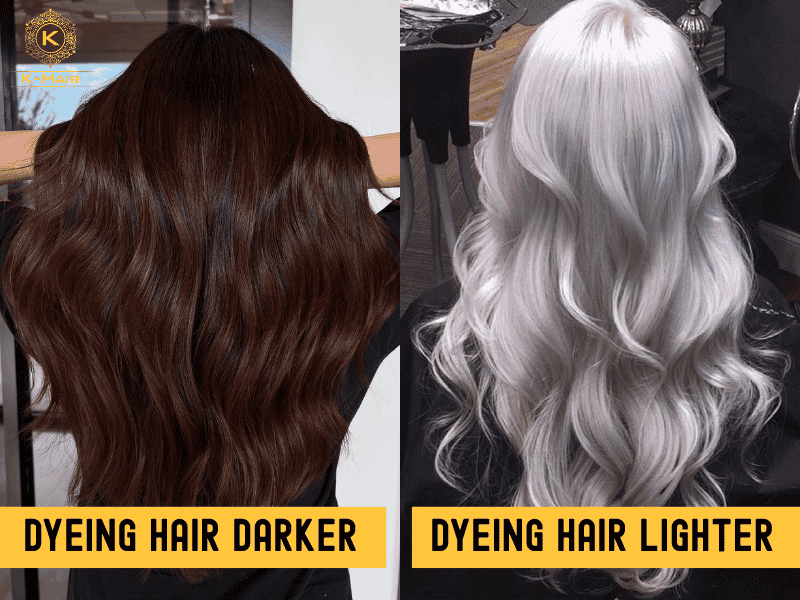
The biggest thing you need to ask yourself is: Are we going lighter or darker? This one choice is the difference between a stunning transformation and literally throwing your money in the trash.
A crucial part of knowing can you dye hair extensions safely is understanding the difference between depositing pigment and lifting it through bleaching. Extensions follow the same rules of color theory as natural hair, but with much less forgiveness since they cannot regenerate:
- Going darker is the safest way to change the look of your extensions. This process is known as depositing. Since you are only adding pigment into the hair cuticle rather than stripping it away, the structural integrity of the hair remains largely intact.
- Going lighter is a subtractive process. To make hair lighter, you must use bleach and a higher volume developer to blast open the cuticle and dissolve the existing melanin or previous dye.
Because of those risks, we recommend that stylists and business owners invest in extensions that are pre-dyed at the factory. Professional factories use specialized equipment and slow-processing techniques to preserve hair quality, ensuring the strands don’t become brittle or broken.
| Dyeing color | Technical | Difficulty | Chemical impact | Best for |
| Darker | Depositing | Easy | Minimal | All human hair grades |
| Lighter | Lifting/Bleaching | Hard | Serve | Raw hair for Level 10+
Virgin hair for medium blondes |
2. Can you dye hair extensions while on your head?
The short answer is yes, but it is highly discouraged. While it is technically possible to apply color to extensions while they are installed, it’s a risky, expert-level maneuver that often leads to a mess or tangles, ruined bonds, and uneven color.
If you apply dye to your own hair at the same time as your hair extensions, your hair extensions could process more quickly and you could end up with a patchy, mis-matched mess!
Moreover, if you’re wearing nano, bond or micro ring hair extensions, be super careful not to get dye on the keratin. When you’ve rinsed the dye out, make sure you give your bonds a couple of good shampoos. If dye contacts the keratin attachments, micro-rings can slip, bonds can shed, and nano tips may break down entirely.
3. How can you dye hair extensions safely
Now that we’ve answered “Can you dye hair extensions?” and you’ve decided to go for it, remember this: gentleness is everything. Unlike your natural hair, extensions don’t receive oils from the scalp to help them recover from chemical stress. Your goal is to achieve that perfect shade while keeping the cuticles flat, closed, and hydrated.
This process requires a careful eye from the moment you start prepping until the final rinse. Here’s how to do it professionally.
3.1. Preparation and tips
Before you mix your bowl, double-check that your extensions are high enough quality to handle the process. If you’re ready to proceed, follow these preparation steps:
- Choose the right dye and developer: Extensions are more fragile than natural hair. Avoid harsh bleaches or high-ammonia permanent dyes. Instead, go for:
- Semi-permanent or demi-permanent dyes.
- Deposit-only colors.
- A low-volume developer.
Expert tip: Since extensions aren’t nourished by the scalp, prioritize health over speed. Use a 10 or 20 Vol developer. It might take a bit longer to process, but it prevents the cuticle from “exploding” or becoming over-processed. Being patient ensures the hair keeps its natural luster and shine after the color sets.
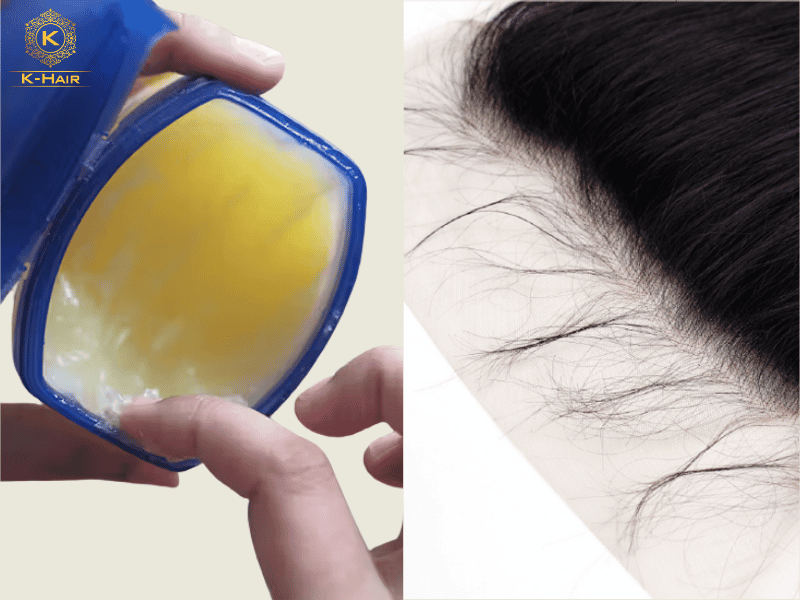
- The Vaseline trick: If you are dyeing a wig or a closure, apply a thin layer of Vaseline (or a protective spray) to the lace. This acts as a barrier that prevents the dye from seeping into the mesh and staining the “knots.” This keeps the lace looking natural rather than “yellow” or stained.
- The strand test: Never skip this! Even if you’re a pro, both natural hair and extensions can react differently to the same tube of dye. Testing a small, hidden strand first prevents a full-head disaster and ensures the color matches your expectations.
- Prepare an acid rinse: The dyeing process is alkaline, which forces the hair cuticle to open. To fix this, have a low-pH conditioner (3.5–4.5) ready for the final step. This acid rinse closes the cuticle immediately, locking in the color and restoring that silky, smooth flow.
3.2. Step-by-step dyeing hair extensions
With your tools ready and your workspace prepped, it’s time for the transformation. Follow these six steps to ensure a flawless, salon-quality result.
Step 1: Inspection and pre-treatment
Before dyeing, the hair must be in its purest state:
- Wash away impurities: Use a clarifying shampoo to remove any residual oils, silicones, or dust from the packaging process.
- Dry and detangle: Ensure the hair is completely dry and thoroughly combed out. Even a tiny knot can prevent the dye from penetrating, resulting in “spotty” or uneven color.
Step 2: Mastering the formula
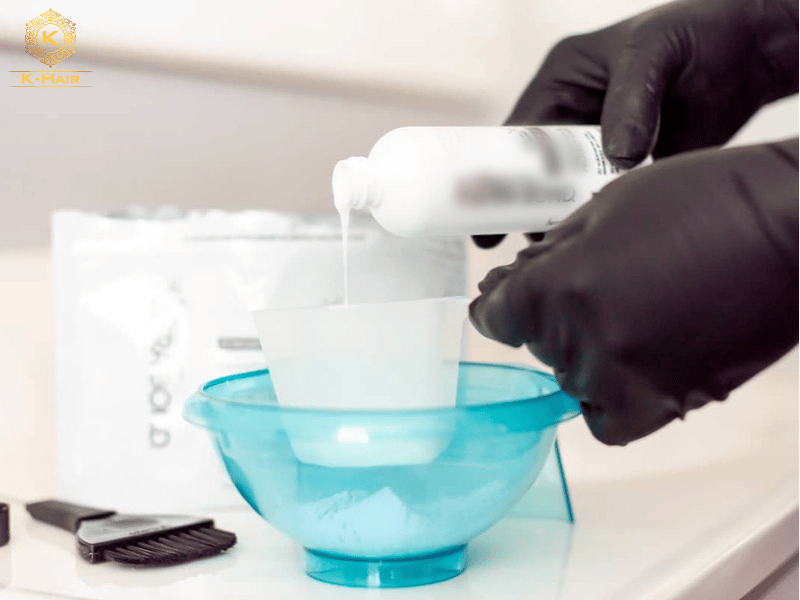
Do not “eyeball” your measurements. Use a precision digital scale to ensure the ratio between dye and developer is absolutely accurate (usually 1:1 or 1:1.5, depending on the brand).
Step 3: Application strategy
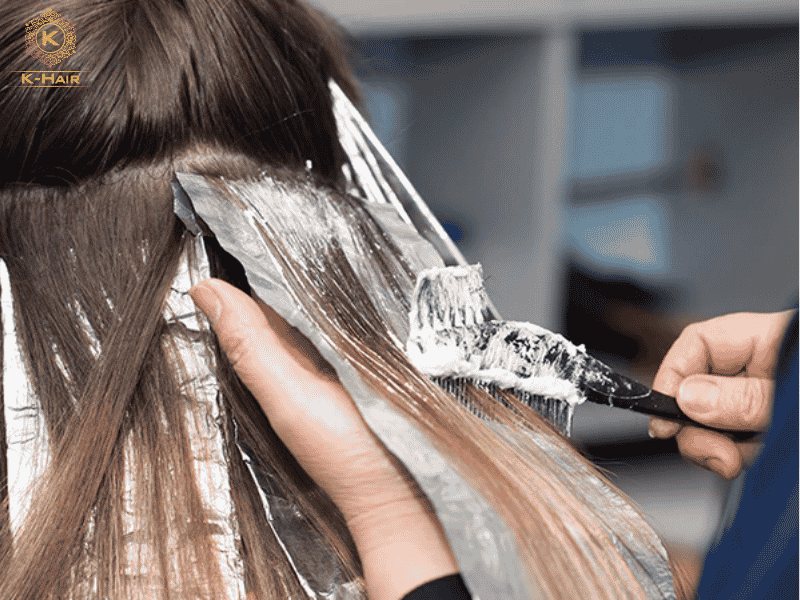
This is the step that distinguishes a beginner from a professional. Divide the hair into four sections, then subdivide into thin 0.5cm layers. Apply dye from root to tip, massaging the strands to ensure full saturation.
- If the extensions are installed, keep dye away from the bonds, tapes, or keratin tips since chemical exposure can break them down, leading to slipping or fallout.
- If dyeing a wig, place the lace side down on a mannequin wrapped in plastic and work extremely carefully at the roots to avoid staining the lace.
Step 4: Time and temperature management
Let the hair process at room temperature. Avoid hairdryers, as artificial heat can blow out the cuticle and cause permanent damage. Wipe a small strand with a paper towel every 5–10 minutes to check progress, as different hair origins (like Vietnamese, Peruvian hair vs Brazilian hair) process at different speeds.
Step 5: Rinse and color locking process
This step determines whether the hair color will fade quickly or not. Use cool water to rinse since hot water will wash away the new pigment. Apply an acidic conditioner immediately after rinsing. This lowers the pH, “snapping” the cuticle shut to lock in color and create a high-gloss finish. Follow with a 15-minute deep conditioning mask to restore elasticity.
Step 6: Finishing
Use a towel to gently pat dry, never rub or twist. Allow the hair to air dry to 80% before using a blow dryer on a cool setting to finish the style.
4. FAQs about dyeing hair extensions
To help you further, here are some of the most frequently asked questions about dyeing hair extensions:
4.1. Can you dye hair extensions black hair?
Yes, but it depends on the starting point. Natural Black (1B) or Raw hair can be lifted or dyed easily. However, if the hair was factory-dyed Jet Black, lifting it to a lighter shade is extremely difficult and risks severe damage.
4.2. Can you dye hair extensions at home?
Yes, if they are 100% human hair. While possible, home-dyeing requires a controlled environment and professional tools. For a seamless result and to protect your investment, we recommend having a professional stylist perform the service.
4.3. Can you dye hair extensions without bleach?
Only if you are going darker or changing the tone at the same level (depositing color). To go significantly lighter (e.g., Black to Blonde), bleach is mandatory to strip the existing pigment before the target shade can be applied.
4.4. Can you dye synthetic hair?
No. Synthetic fibers lack a porous cuticle, so standard dye will simply slide off. Furthermore, the chemicals in hair dye can melt or permanently frizz the plastic fibers.
4.5. Can you dye your hair with microbead extensions in?
It is not recommended. Dye can get trapped inside the beads, causing matting, slippage, or weakening of the silicone lining. To avoid a messy, uneven result, always have a professional handle the color.
5. Conclusion
In summary, the answer to ‘can you dye hair extensions’ depends entirely on the quality of the hair and the precision of your technique. Starting with high-quality, 100% human hair ensures that the color remains vibrant and the texture stays silky long after the chemical process is complete.
For those seeking the ultimate results, Vietnamese Raw Hair is the gold standard. Its unmatched strength and intact cuticle structure allow it to endure bleaching and dyeing while maintaining its natural luster. K-Hair – one of the best Vietnamese wholesale hair vendors, we provide premium hair – the only way to guarantee a result that looks as good as it feels.
Contact us today to explore our wholesale collections and start your journey toward flawless hair!