Did you know that our own hair textures also have names – or to be more precise – categories and classification. And no, the names or classifications are not just simple or vague titles or adjectives like kinky, coily, or straight, they are 1B, 1A, 2C, 2B,… with the number representing the overall texture: 1 for straight, 2 for wavy, 3 for curly, and 4 for kinky, while the capital letters stand for how tight or thick the texture patterns are.
Among these texture categories, 4B falls inside the kinky hair pattern spectrum – if you have kinky, coily hair, there is a high chance that your hair belongs to this specific hair type. However, because of the shared similarities between 4B and other 4x hair types, mistaking this specific curl pattern with the others has become one common mistake for many people out there, leading to more challenges in hair maintenance and styling.
This article will go over all the necessary information about this hair type – what is 4B hair, features, maintenance tips,… so that when our dear readers are done with the reading, they can better identify their hair patterns and avoid maintenance, styling mistakes in the future.
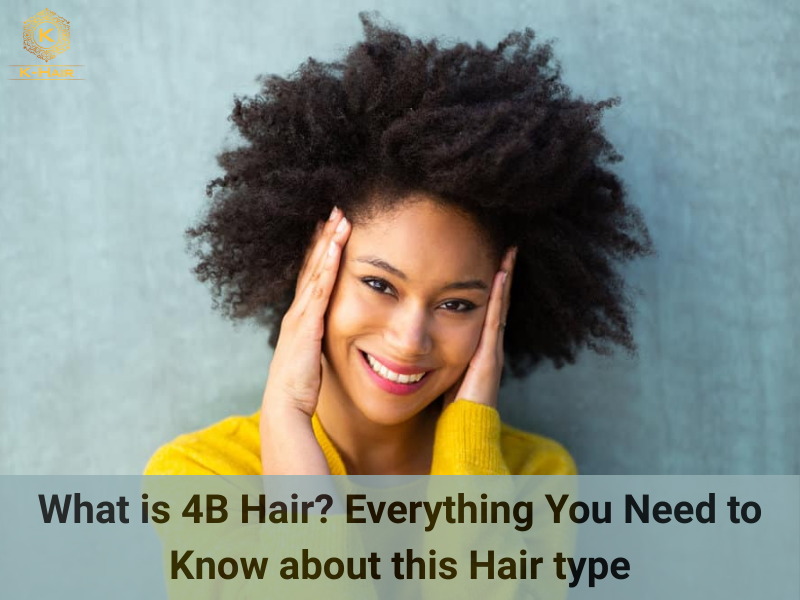
1. What is 4B hair?
Among the kinky hair spectrum, 4B hair stands in the middle ground – its textures are tighter than the typical 4A hair, but are not as defined and thick as the ultimately kinky 4C hair. Hence, it is placed in the middle of the spectrum in terms of looseness – from 4A, to 4B, and to 4C.
4B hair is distinct from the other, mainly due to its signature zig-zag, Z-shape kinky curl patterns, with sharper angles and thick, tight hair kinks, hence, under normal condition, the hair tend to be extremely voluminous, fluffy, especially when the strands are combed out. However, the hair strands tend to have a mind of their own, hence, instead of falling into a singular defined and uniform texture, 4B curls tend to be more free-flowing, creating the ultimate and iconic full, afro-textured look often seen in most African American women.
Read More: what is 4c hair
Some iconic public figures who have 4B hair types might include: Issa Rae – the famous American actress, writer, and producer; Solange Knowles – the talented R&B singer, and Viola Davis – actress and Hollywood film producer. So if you have ever thought that your hair looks just like what they got, there is a high chance that your hair also falls into the same sorting category, 4B hair.
2. What does 4B hair look or feel like?
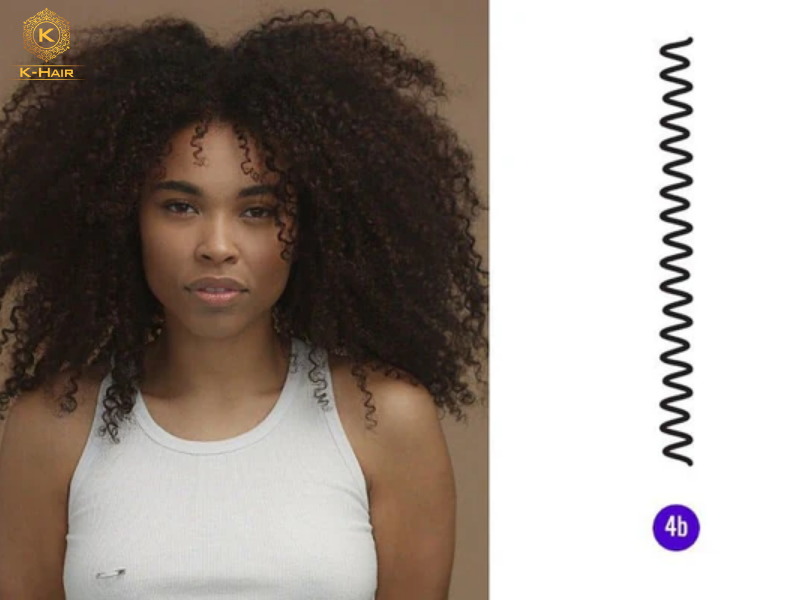
One signature feature of 4B hair is that the patterns almost always come with a distinct Z-shape look, with a free-flowing, yet uptight hair kinks. And as it belongs to the kinky hair category, 4B hair still carries a wide range of features deeply associated with this hair class, such as shrinkage, dryness, and volume. To answer the question “What is 4B hair?” we need to go over both the common traits of the kinky hair family, as well as the distinct features of the specific 4B hair line:
- Curl patterns: as previously mentioned, 4B hair is identified by its Z-shape hair kinks – with sharper angles and bends. Hence, the strands are also more densely packed and tend to clump together, creating a similar appeal to the iconic afro seen in most African-American natural hair. Furthermore, due to having such tight, dense kinky patterns, the hair strands’ texture can range enormously from different sections – one hair length section can be fine and thin, while another can be coarse, wiry.
- Curl size: compared to other kinky hair types, 4B hair tends to come with a distinct curl size. Many hair specialists have mentioned that the curls and hair kinks seen in 4B hair are quite similar to a ball pen’s spring or a pen – larger compared to the size of a crochet needle seen in 4A hair. This curl size allows 4B hair to showcase its signature kinky texture and patterns, without shrinking completely like the 4C hair types.
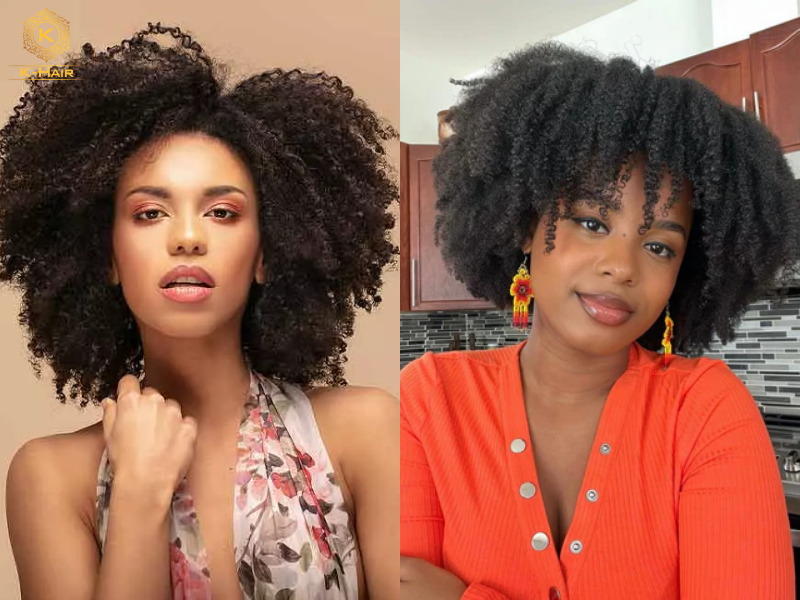
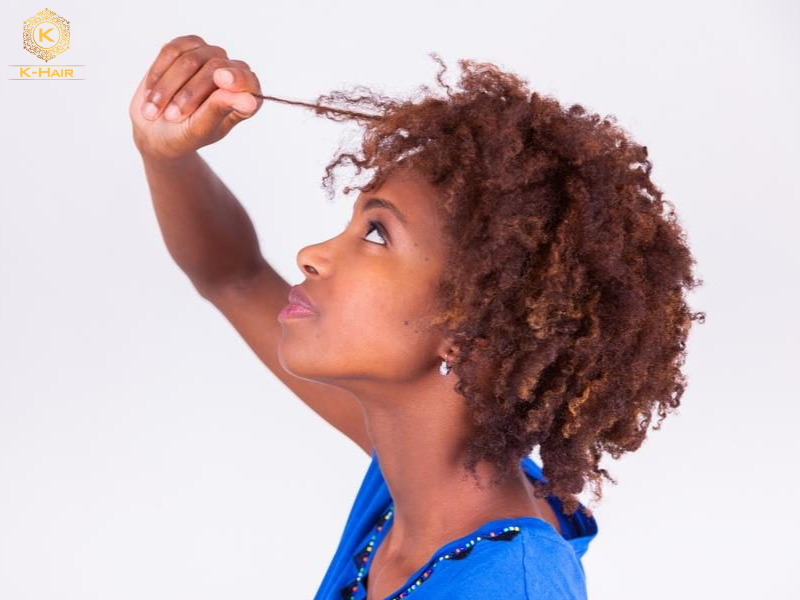
- Shrinkage: shrinkage is a signature trait of all kinky, curly hair types. And indeed, for such a tight and densely packed hair kinks pattern such as one seen in 4B hair, shrinkage would be much more visible. In fact, when you pull and stretch your hair out, you can actually see that the stretched out strands are twice or three-time longer than the natural curled strands you often see. Having such shrinkage in your kinky hair can be a display of pristine and untouched hair health, however, for hair lovers prioritizing lengths, this shrinkage and elasticity can be quite hard to work with.
- Volume: another iconic characteristic of 4B hair is its impressive volume. Indeed, this is also one favourable perk of having kinky hair. With such densely packed hair kinks, as well as such natural hair shrinkage, it would be obvious that all the hair lengths would be transferred into width – making the hair appear more voluminous and fuller. For most cases, the volume seen in 4B hair would be quite similar to the tight afro hair look of natural African people’s hair.
Read More: what is 4a hair
Can you distinguish what is 4B hair just by its appearance? The answer is “No.” In fact, not only by its look and physical appeal, hair lovers can also identify this hair category by touching or feeling it:
- Dryness: one signature trait of most kinky, coily hair is dryness. One feature that comes around such extreme hair kinks is that, the outer protective layer – the cuticles are more likely to be lifted and raised, especially in the sharp angled and bends of the curls, leading to a serious lack of uniformity of the cuticle scale’s placement. And due to having raised cuticles, the inner moisture and nutrients are more likely to be vaporized and leak through the gap → causing severe dryness and dehydration for most people with 4B hair.
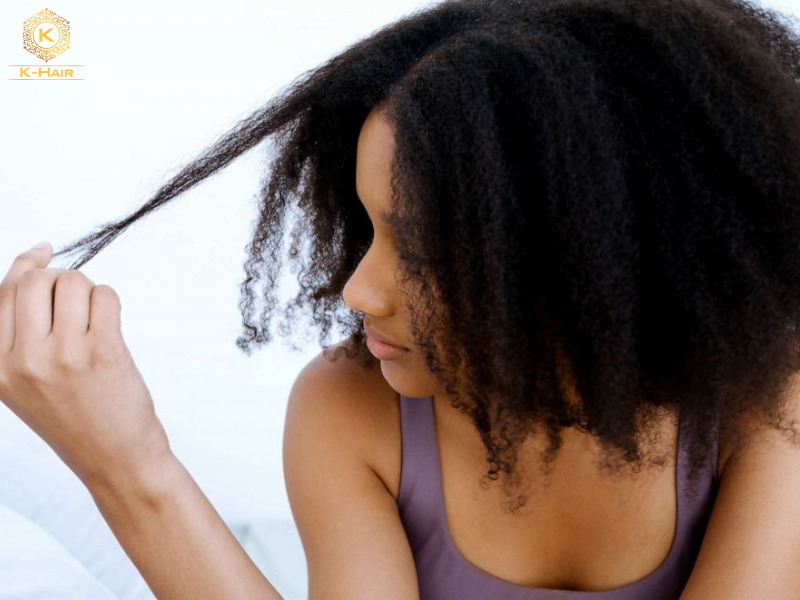
- Easily subjected to humidity: due to the hair being more prone to dryness and dehydration, 4B hair is also more prone to hair frizz. The reasons are simple. The signature dried out hair strands with raised cuticles are most likely of high porosity – meaning that they are extremely porous and thirsty for water. When come into contact with high humidity, the hair will take in more water vapor than it can handle → causing the cuticles to raise even further, causing frizziness and ruin the overall prior styling outcome.
- Possible tangles: as it contains more raised cuticles, 4B hair is also more prone to tangling. In fact, raised cuticles also means that different hair strands would be of different cuticle placement directions → which leads to the hair strands more likely to tangle and stick with each other. If this situation continues to develop, the tangled hair strands will also shed, causing hair loss if not cared for properly.
- Hard to style: having such a tight and densely packed kinky pattern also means that the hair would be much harder to control and style. Indeed, such tightness of a hair kink can rarely be curled any further to achieve a tighter texture by normal styling equipment. Furthermore, the densely packed and fragile hair strands also make it extremely difficult to be straightened out. And, to work with such a hair, the stylist would have to use higher heat and more force → causing the fragile hair even more damage.
3. How Does 4B Hair Differ From Other Hair Types?
One thing for certain, identifying 4B hair and distinguishing this specific hair line from other types of hair out there is no doubt among the hardest parts of learning “What is 4B hair?” However, it is still a crucial step one needs to take to identify their own hair type and decide on suitable maintenance, styling methods accordingly. To start the distinguishing, let’s start with the easier step: comparing 4B hair to 3x, 2x and 1x hair types:
| 4B hair | 3x, 2x and 1x hair types | |
| Patterns |
|
Most of these textures tend to have more uniformity in their hair patterns:
|
| Porosity & Moisture | Due to the nature of the kinky patterns, 4B hair is much more porous than the other:
→ More prone to dehydration and dryness – causing the hair to become more fragile.
|
Lower porosity and less prone to dehydration:
|
| Shrinkage | More visible shrinkage than most 3x, 2x and 1x hair types:
→ Much more elastic than the usual wavy or straight hair |
1x or 2x hair rarely displays any shrinkage, due to having straight or slight wavy hair.
3x hair is much more prone to shrinkage, but still – not as much as 4B hair |
| Volume | Much more voluminous than the other, due to having shrunken, dense and free-flowing hair curls | Less voluminous, focusing more on lengths than width |
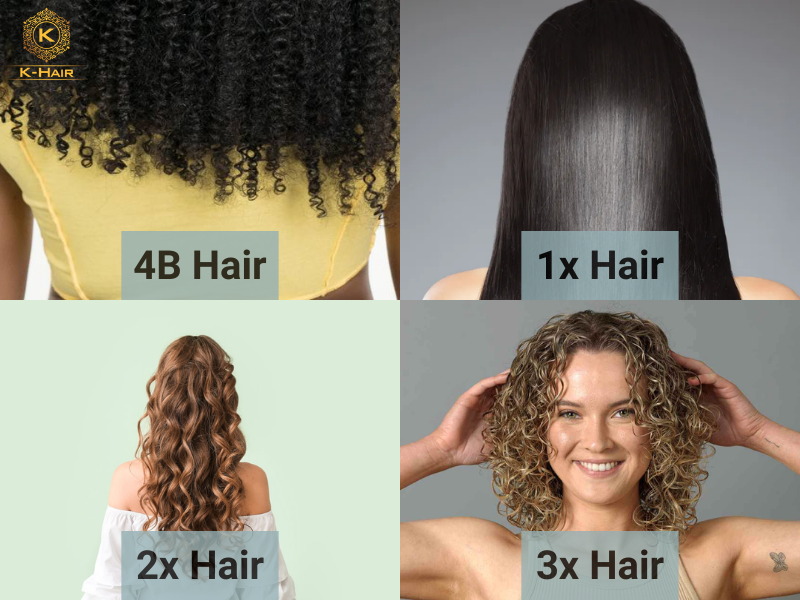
Since that you have learnt the ropes on the differences between 4B hair and the other 1x, 2x and 3x hair, now is the harder part on learning “what is 4B hair” – to identify the differences between 4B hair and other kinky hair types: 4A and 4C hair.
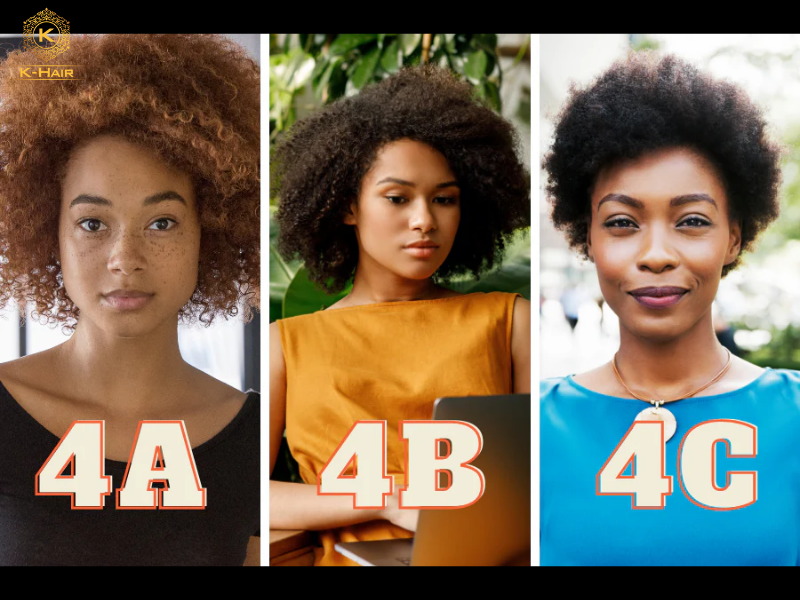
Because they all come from the same kinky hair category, 4B and 4A, 4C hair would have many common traits. However, if you really look into it, you can actually see that, the three types are still completely distinct from each other:
| 4A | 4B | 4C | |
| Curl pattern | 4A hair has the loosest curl compared to other kinky hair textures.
The hair kinks often follow a tight S-shape spiral |
4B hair has a medium-range tightness when it comes to textures.
The curls have a much sharper and tighter bends following a Z-shape |
Unlike the rest, 4C hair type is the ultimate kinky texture, with extremely tight and dense coil, with no visible patterns |
| Curl definition | As a transitioning hair type from the 3C to the 4B – 4A hair have the most defined and uniformed curls out of the three | Much less uniformed and defined, with free-flowing and densely clumped hair strands | 4C hair is the least defined curl texture of all – the hair strands always look flowy and cloud-like with the most free-flowing hair strands |
| Moisture | 4A hair is the least prone to dehydration among the three.
→ Better retaining moisture and nutrient, due to having less kinky patterns |
4B hair is slightly more prone to dehydration, due to having tighter and curlier hair patterns
→ The hair strands are much more porous and more likely to dry out |
Most prone to dryness, due to having the tightest and densest patterns
→ Demands more care and moisturizing than the rest |
| Shrinkage | Moderate hair shrinkage of ~40-50% only | Higher shrinkage: 60-75% | The highest shrinkage of more than 75% |
| Fragility | One benefit of 4A hair is that the hair strands are much softer and more durable than most kinky hair textures, as the hair is less prone to dehydration and hair frizz | Tends to be much more delicate, due to the nature of the sharp and tight curls
→ Extremely fragile, especially on the curly edges → More prone to dryness – causing the hair to become less durable |
Is the most fragile hair type ever – extremely hard to care for
→ Having the driest hair strands – most likely to break → The most porous hair – easier to tangle and shed |
4. How to Care for Type 4B Hair?
Knowing “what is 4B hair” hair lovers will have to face that, 4B hair is among the hardest hair types to tend to. Indeed, its natural hair texture tends to be highly porous, leading to more leakage of innate moisture and nutrients, causing the hair to be more easily subjected to dryness, frizz, and breakage. Therefore, when it comes to hair maintenance, 4B hair can be more demanding than most of the other hair types. However, just because it is hard does not mean that it is impossible, in fact, for people with natural 4B hair types, here are several experts tips on hair care routine for this specific hair pattern:
- Prioritizing moisture: one thing that 4B hair desperately needs would indeed be moisture, therefore, make sure to provide as much moisture and nutrients as possible for this highly fragile and porous hair.
- One effective and widely used moisturising method favoured by most people with natural 4B hair is the LOC, or the LCO method – in which the process will start off by applying a liquid or leave-in conditioner (L) to prepare for the deep moisturizing that follow, and a heavy hair oil (O) – to lock all the nutrients and moisture inside the hair strands, and finishing off with a hair cream (C) to add more softness to the dried out and coarse hair strands.
- On top of these steps, hair lovers should also take an extra step to care for their hair, by providing deep conditioning from a hair mask or heavy, protein-filled conditioner, and applying a moderate amount of heat – from steam or warm towel, to open the closed cuticles gently to let the moisture penetrate in.
- Daily moisturizing is also a necessity – from time to time, you should also spray your hair with a water-based hydration mist or a light daily hair cream to better ensure that your hair actually has the adequate amount of moisture it needs, especially for hair lovers living in sunny, hot and dry climates.
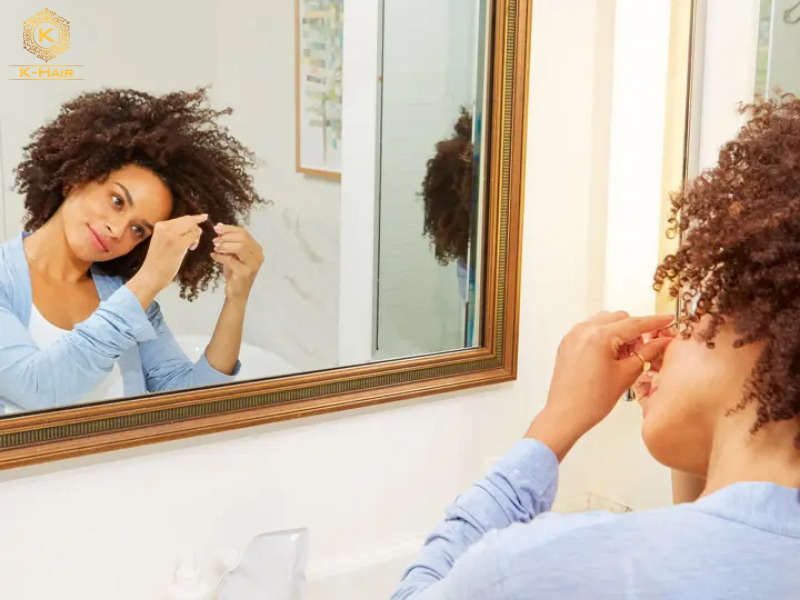
- Gentle handling: 4B hair is extremely fragile – this is no news to us. However, as much as it is prone to tangling and clumping, by all means, we should never use strong force to handle it.
- In fact, detangling should be best used when your hair is wet and thoroughly conditioned – by now, the hair strands are softened, soaked in water and saturated with slippery conditioner, making it easier to maintain and combed out, without breaking or snagging the hair.
- Furthermore, the combing tool is also to be considered, instead of the usual harsh or fine-tooth hair comb, you should better turn to using your fingers or a wide-tooth comb to do the job, as these can do the trick when it comes to such tight and dense curls like 4B hair.
- Washing habits: one of the crucial aspects of learning “what is 4B hair” is that caring for your 4B hair is the washing habits, although these are often ignored or underappreciated by most people with natural kinky hair out there – mainly for the inconvenient time it demands. However, if done wrongly this habit can also easily break off the damaged and fragile hair strands, making all that prior care and effort go to waste.
- Overwashing your 4B hair is to be avoided at all cost, as this can easily strip the hair off its natural oil and nutrients, expose the hair to more dehydration or in worse cases, cause excessive shedding and irritation. Therefore, to avoid this, it is better to tone down your washing frequencies – the perfect number of washes for one week would be from 1-2 times only, to help cleanse the hair off any excess and residue, without disrupting the natural hair oil provision.
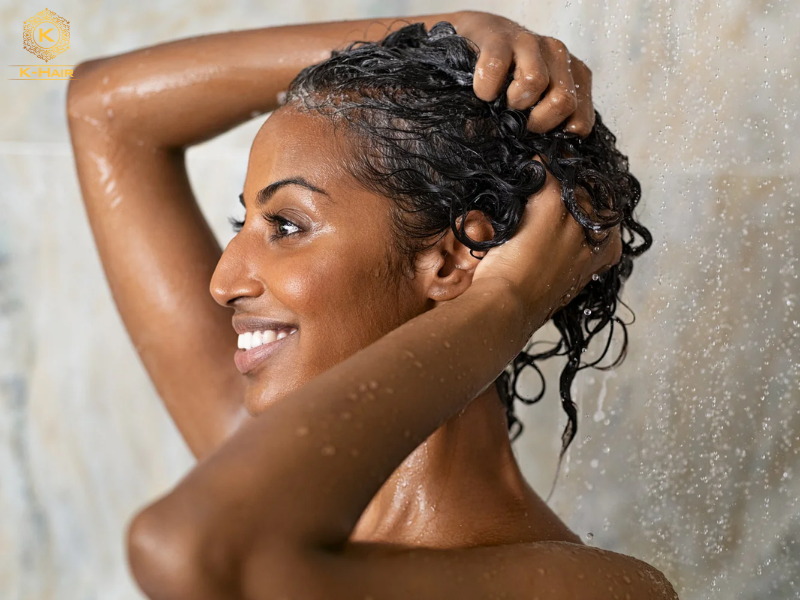
- Choosing the right washing product is also crucial, and unlike most people assume, not every hair hygiene products in the market are the same or are all suitable for your 4B hair. For such fragile hair like 4B hair, products with sulfate in them should be avoided completely, as the substance can easily bring more dehydration and coarseness to the hair. On top of that, as moisture is the top priority of 4B hair maintenance, you can also switch to co-wash (using cleansing conditioner as a washing product) to refresh your hair and bring it more life and strength.
- After you have done with washing and conditioning the hair, it is crucial to finish it off with a cold water rinse, to close off tightly the raised cuticles and make sure that the moisture provided by conditioning stays inside of the strands.
- Styling tips: for people with natural 4B hair, styling your hair can be hard due to the fragile and coarse strands, but never impossible. In fact, if you insist on heat-styling your hair, it is best to start with spraying a heat-protectant first to minimize the possible damage that comes with the process. However, over-using heat to style your hair cannot be ideal, as the collective damage from the process can further deteriorate hair’s health, causing even more raised cuticles and dryness. Hence, it is best to style your hair with non-damaging, non-heat styling such as twist-outs, Bantu-knots,… One suitable, protective hair style to try out is the popular braid – the best hair styling method to trap in your hair moisture and natural oil.
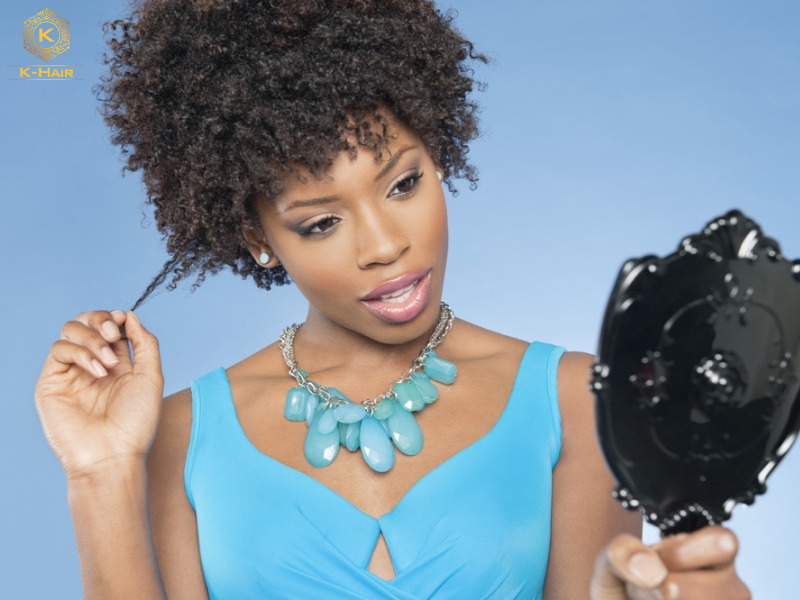
- Night care: one major maintenance step that is often ignored by most people is maintaining consistent night care. Products as simple as your bedding or pillowcase can directly affect your hair’s wellbeing – shocking, I know. Popular materials like cotton can be harsh and more prone to friction – the number one culprit to that annoying hair frizz you see in the morning. Hence, it is best to switch to frictionless, soft materials such as silk, satin bedding and pillowcase to minimize this.
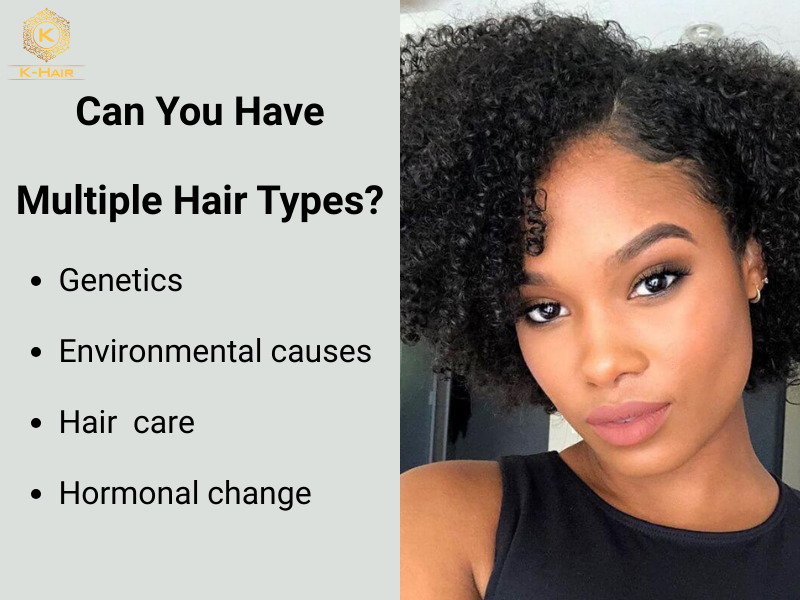
5. Can You Have Multiple Hair Types?
Learning what is 4B hair, you will also know that having multiple curl patterns all at once is not a rare occurrence. Indeed, the rigid categorizing system of hair type, from 1A to 4C can only serve as a reference for you to get to know your hair better, not to completely identify it. In fact, most people tend to have multiple hair types in their textures, which is caused by a series of impact, both internal and external:
- Genetics: for some, it is due to external factors, but for many people out there, they were born with different hair types on their head. For example, they can have thicker, tighter curly hair at the nape of their head, while the strands on their top head or near the ears area are looser and thinner. This is mainly due to genetics – as the traits deciding the features of their hair were pre-written in their body.
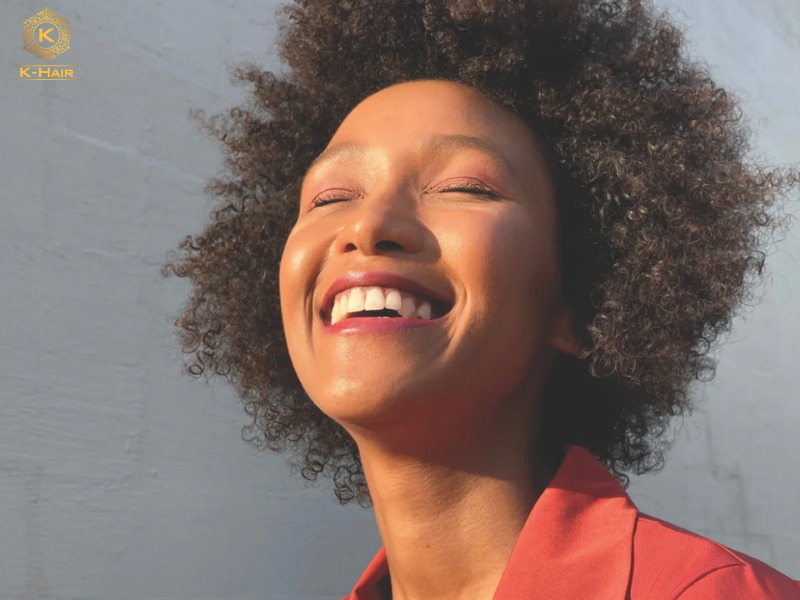
- Environmental causes: besides the usual internal affecting factors like hormones or genetics, your surroundings can also contribute to the varied hair textures in your hair. External factors such as:
- Sun exposure and UV lights can cause the hair to lose its elasticity but also its color;
- Humidity: the hair part mostly exposed to high humidity can become frizzier, leading to swelling and expanding curly patterns, compared to the denser curls in parts of the hair less exposed to this factor
- Pollution: living in a highly polluted area also means that there is a high chance your hair will gather more build-ups from its environment → causing the hair strands to be weighed down and loosened out, as well as losing its shine along the process.
→ Therefore, for hair sections most affected by these factors, mostly hair in the top head area tends to have varied and slightly more damaged hair health compared to the healthier hair near the nape.
- Hair care: when learning “what is 4B hair” you will see that much similar to the above factors, how you care and maintain the hair will also affect its texture. If you distribute the products unevenly, the hair strands with less moisture and nutrients will continue to be dehydrated, coarse and lifeless, compared to the elastic, healthy and well-cared for hair. Furthermore, subjecting your hair to heat or chemical-induced styling and also alter the original patterns → making the affected hair looser and thinner, with damaged and fragile strands.
- Hormonal changes: hormonal changes during puberty, pregnancy or menopause can cause major changes in your body, and your hair is no exception – after these shifts, your hair can be curlier, straighter in some parts, causing multitextured hair.
6. The Best Hairstyles and Cuts for 4B Hair
Now that you have gone through all this provided information about what is 4B hair, you must now be able to identify your hair and decide if your hair falls to the 4B category or not. Every type of hair is beautiful in its own way, and 4B hair is no difference – with the right hair style and styling method, you can actually bring out the inner beauty of this tight and voluminous hair type, as well as be more confident and cherish your own natural beauty and this God-given gift:
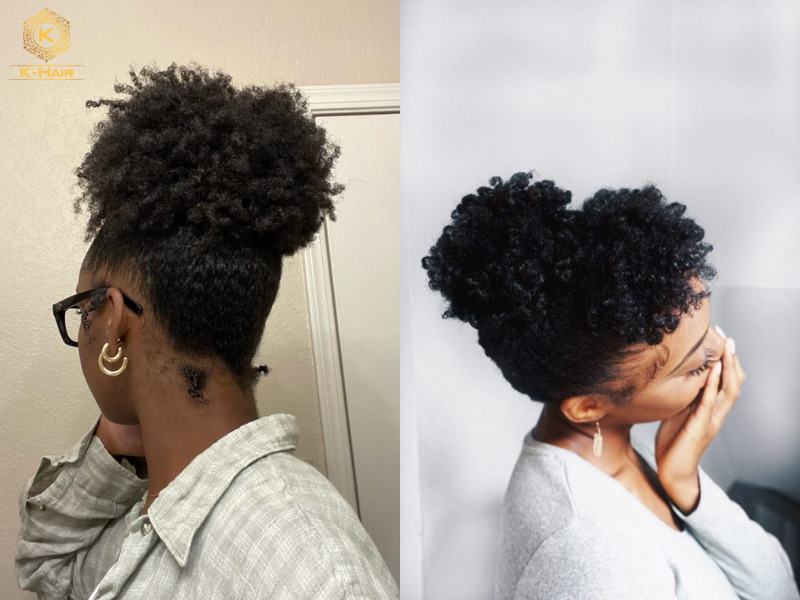
6.1. Afro puff
The Afro puff remains one of the most iconic and universally flattering hairstyles for 4B hair, especially because it celebrates the texture’s natural volume and fullness without requiring heat or heavy texture-alteration – extremely suitable for the natural beauty lovers out there wanting to embrace their traditional beauty.
To achieve this look, you can:
- Start by gently stretching the hair using a soft banding method or light blow-drying on cool air, but avoid excessive tension to preserve curl integrity.
- Next, gather the hair into a high or mid-level puff using a soft, snag-free elastic band; tight bands should be avoided to protect the edges.
As prone to dehydration as your hair can get, you should apply a moisturizing cream or leave-in conditioner beforehand to reduce frizz while enhancing the puff’s rounded, fluffy appearance. For extra definition or a sleeker finish, smooth the afro up with a soft-bristle brush and a gentle, alcohol-free gel. The Afro puff not only highlights the natural texture beautifully but also works perfectly for everyday wear due to its quick, simple styling process.
6.2. Twist-outs and Braid-outs
Twist-outs and braid-outs are ideal for clients who want to elongate their curls while maintaining a soft, defined, and voluminous appearance.
- Begin by sectioning freshly washed or lightly dampened hair into small or medium parts, depending on how tight or loose you want the final pattern to be.
- Apply a curl-defining cream or twisting butter to each section, ensuring even distribution from roots to ends.
- Then, twist or braid the hair firmly but not tightly, as excessive pulling may cause breakage.
- Allow the twists to fully dry, air-drying is ideal, but a hooded dryer on low heat can also be used for time-saving.
Once dried completely, gently unravel each twist or braid using a lightweight oil to prevent frizz and add shine. You can separate the curls further to achieve additional volume. This style is perfect for 4B hair because it helps stretch the coils, minimize shrinkage, and showcase a beautifully defined curl pattern.
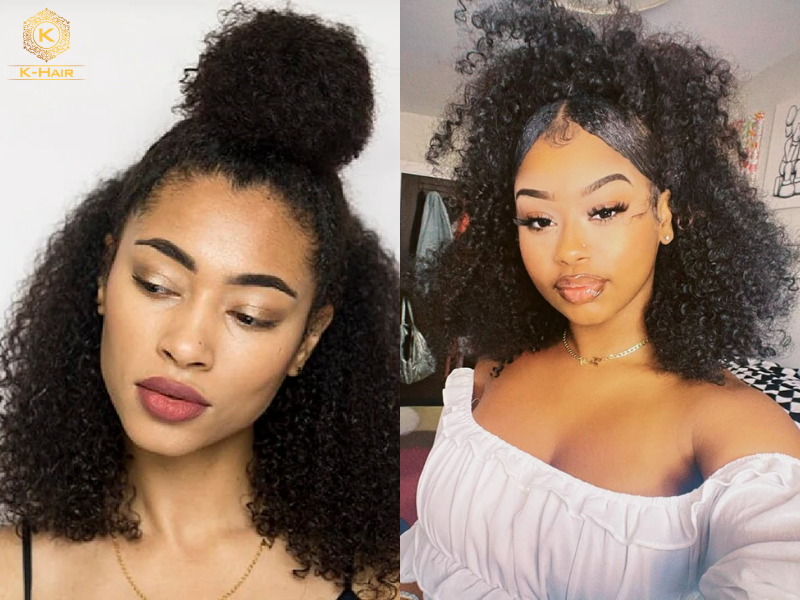
6.3. Coily Topknot
When you know “what is 4B hair” you will have to acknowledge that for clients wanting a clean, elegant, and easy-to-maintain hairstyle, the coily topknot offers an excellent balance between practicality and beauty for this specific hair type:
- Start by applying a hydrating leave-in conditioner or styling cream to soften the hair and ensure smoother manipulation.
- Then, gently stretch the roots using a wide-tooth comb or your fingers, and gather all the hair into a high topknot or a bun at the crown. Because 4B hair can be fragile at the edges, use soft hair ties or adjustable bands to avoid unnecessary tension.
- Once secured, shape the bun by tucking in the ends, or leave some coils out if you prefer a more textured, natural look.
To create a sleeker, more polished topknot, lightly smooth the hairline with a gentle, non-alcohol gel, and wrap a silk scarf around the perimeter for 10-15 minutes to set the style. This hairstyle works exceptionally well for formal events or busy days when you want your hair neatly styled without sacrificing texture or personality.
6.4. Cornrows
Cornrows are a timeless protective style that suits 4B hair beautifully, helping to minimize breakage while keeping the strands neat, stretched, and manageable for an extended period.
- Before braiding, it is important to fully moisturize the hair using a nourishing cream or butter, followed by sealing with oil to lock in hydration.
- Section the hair according to your desired pattern: straight-back cornrows for a classic look, or curved, zigzag, or creative partings for a more stylish and expressive finish. When braiding, maintain consistent tension, but avoid overly tight grips to protect the scalp and edges.
Cornrows can be worn on their own, accessorized with beads or hair cuffs, or used as a base for wigs and crochet hairstyles. Additionally, wrapping the hair with a satin scarf at night helps extend the style’s longevity while preserving moisture inside. On top of that, cornrows not only elevate the natural beauty of 4B hair but also offer a practical way to reduce daily maintenance and lengthy styling, and allow the hair to grow and thrive.
7. Conclusion
With the information provided in this article, K-Hair hope that we have managed to assist young women in the hair industry with the overall information, tips, and most importantly, what is 4B hair. Navigating through the complex hair industry requires long-term commitment and support from trustworthy partners, we proudly present ourselves not only as a trusted hair expert, but also a supportive friend who will always have your back in this somewhat overwhelming market.
Tired of taking care of your natural hair and thinking about switching to hair extensions and wigs? Contact us through the following link:
- Address: 10A, 171 Nguyen Ngoc Vu, Yen Hoa, Hanoi, Vietnam
- Phone: +8492 633 2545
- Email: [email protected]
- Facebook: https://www.facebook.com/KHairFactoryVN/
- Whatsapp: +8492 633 2545