The beautiful thing about hair is that there is not a single hair that looks like the others – all natural hair is gorgeous and unique in its own ways. Indeed, different hair texture and wave patterns, from straight to wavy to curly to kinky – all are beautiful and should be celebrated the same way. However, as different as they are from each other, varied types of hair textures and wave patterns would come with their own features and hence, would demand a completely different caring routine.
Among the kinky hair spectrum, 4A hair type is among the most popular kinky hair types – some famous public figures who also have this specific hair type include Monique Coleman, Leela James, and Zendaya,… However, despite its distinct features, this kinky hair pattern still often gets mistaken for 4B or 4C curls, leaving many men and women confused and unknowing how to identify their natural hair texture.
In this article, we will clear up on this issue, and by digging deeper into What is 4A hair, as well as its curl patterns, signs and maintenance tips, readers will surely be able to identify whether their natural hair is similar to the 4A type or not by the time they reach to the end of the article.
1. What is 4A hair?
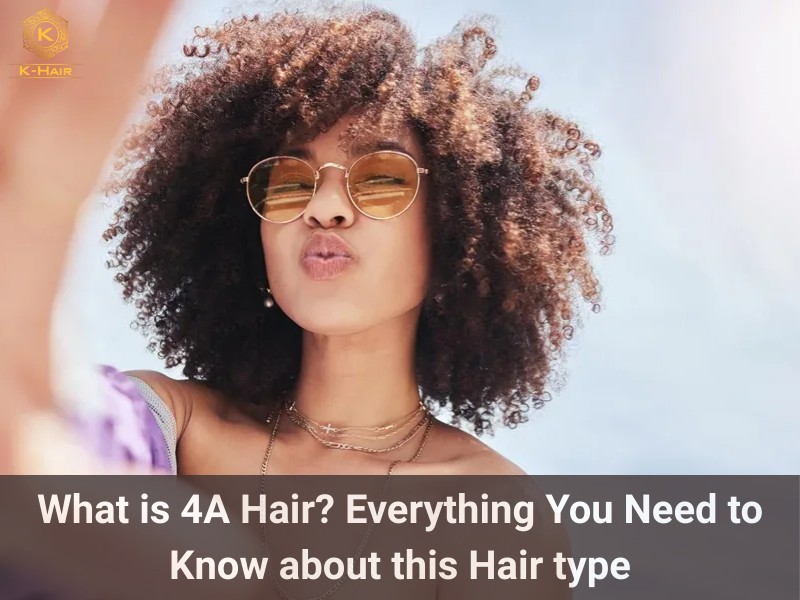
To better categorize different kinky hair textures, hair specialists have thought of using a combination of number and letter to represent and group various kinky patterns, including the 4A, 4B, 4C. The number 4 represents the overall texture type – kinky hair, while the letter A, B, C represent the tightness and define curls of the pattern.
Among the three types, 4A can be considered the loosest curl texture of the kinky hair spectrum. Indeed, unlike other kinky, coily textures, 4A curls often feature a tight S-shape figure – which can sometimes be mistaken for the curly 3C type. However, compared to the deep curly 3C type, the patterns seen in 4A hair are much tighter and more defined, with more shrinkage and density applied. But, if we take the same hair, and compare it to other coily textures 4B or 4C, we can actually see that the curls are much softer and looser. Hence, if you often find your hair falling between the 3C and 4B hair textures, there is a high chance that your hair is actually a typical 4A hair, just like Monique Coleman, Leela James,…
2. What does 4A hair look or feel like?
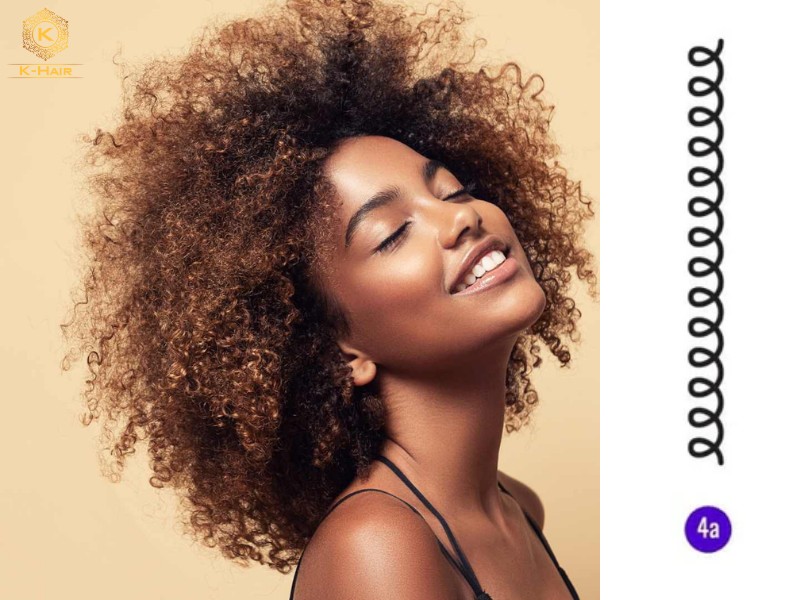
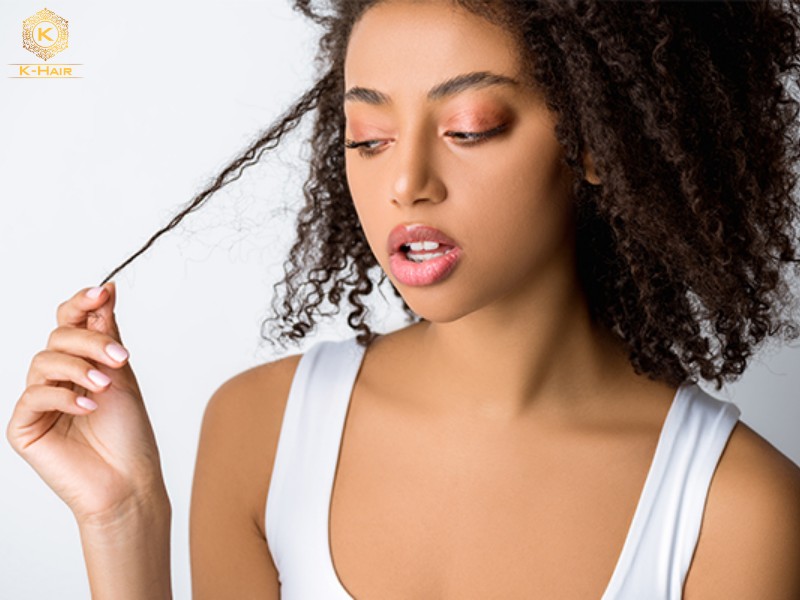
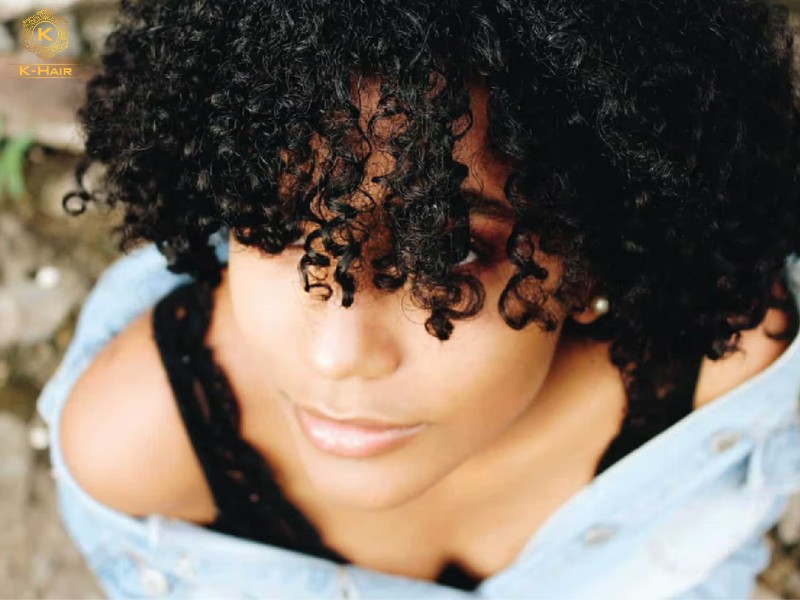
One signature feature of 4A hair is the way the curls naturally fall into a well-defined S-shaped coil – springy, tightly positioned, yet still soft and flexible in appearance. And since it still sits within the kinky-curly family, 4A hair carries many of the familiar traits seen across this category, including shrinkage, dryness, and that naturally full, cloud-like body. So to answer the question “What is 4A hair?”, we will need to look at both the shared traits of kinky-curly textures, as well as the specific characteristics that make 4A stand out from the remaining curl patterns in this group:
- Curl patterns: as previously mentioned, 4A hair is mainly identified by its rounded S-shaped curls, with small, spring-like loops that are noticeably more uniform than the sharper bends usually found in 4B hair. The strands tend to cluster together naturally, creating clearly outlined rings with a smoother curve instead of abrupt, sharp angles. Because these curls follow a continuous S-shape, 4A hair generally feels a bit softer to the touch while still carrying that signature fullness seen in Afro-textured hair. And like most natural curls, the texture isn’t exactly the same everywhere, one section can feel fine and lightweight, while another might lean firmer, thicker, or slightly wiry depending on the hair’s density and overall health.
- Curl size: compared to the tighter and more zig-zag-shaped 4B and 4C patterns,4A curls come with a noticeably more consistent coil size. Many hair experts describe them as roughly the diameter of a crochet needle or even the size of a small makeup brush, smaller and more compact than 3C curls, but not as tightly pulled into the sharp zig-zag shape we often see in 4B hair. This sizing gives 4A hair that beautifully defined look that holds its shape extremely well, without shrinking as drastically as the tighter coils in the 4B and 4C categories.
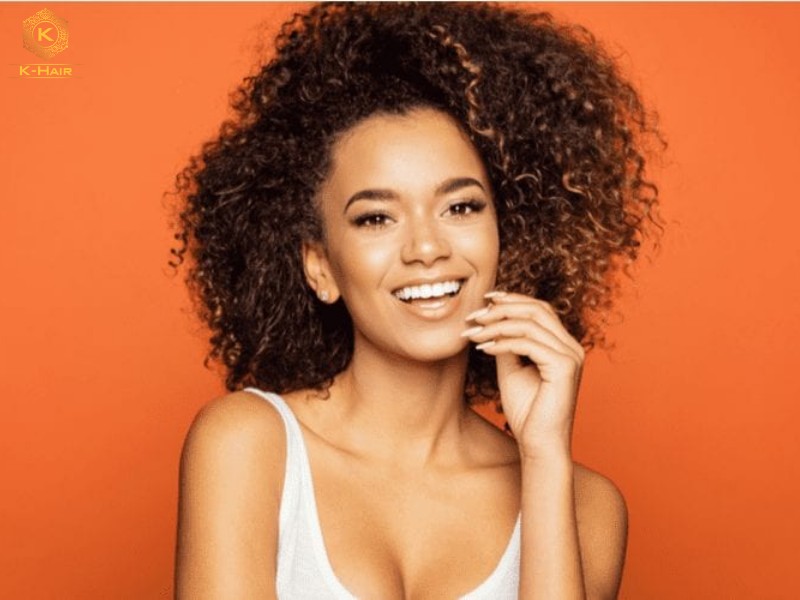
- Shrinkage: shrinkage remains a signature trait across all kinky and curly textures, and 4A hair is certainly no exception. However, compared to the intense, ultra-tight shrinkage seen in 4B and 4C hair, 4A curls typically hold on to a bit more visible length because of their smoother S-pattern. When stretched, the difference between the elongated curl and its natural state is still noticeable, usually up to twice its length only, but the shrinkage tends to look more “coiled” instead of tightly compressed. While shrinkage is a sign of healthy elasticity, it can be unfavouring for clients who prefer more visible length or want their stretched styles to last longer.
- Volume: another recognizable characteristic of 4A hair is its naturally voluminous and full-bodied appearance. Because the curls are densely arranged and tend to shrink inwards, 4A hair naturally expands outward, creating a rounded, fluffy silhouette. While it doesn’t widen as dramatically as 4B or 4C afros, 4A still carries an impressive amount of fullness, perfect for anyone who loves big, bold, and well-defined curly styles. In many cases, its overall volume falls right between the highly defined look of 3C curls and the denser, more cloud-like fullness of 4B hair.
Read More: what is 4b hair
By distinguishing “what is 4A hair”, you should notice that not only by its appearance, hair lovers can also identify this hair category simply by touching and feeling the strands:
- High porosity: high porosity and proneness to dehydration remains one similar trait for almost all kinky-curly hair types. Because 4A curls form tight S-shaped patterns, the cuticles along the bends tend to be slightly lifted or uneven, preventing natural oils from traveling smoothly from root to tip → creating an extremely porous hair type. This leads to moisture loss and leaves the strands more prone to dryness. Even though 4A hair is usually a bit easier to moisturize than 4B and 4C textures, it still doesn’t hold onto hydration for very long due to the raised cuticles along the curls.
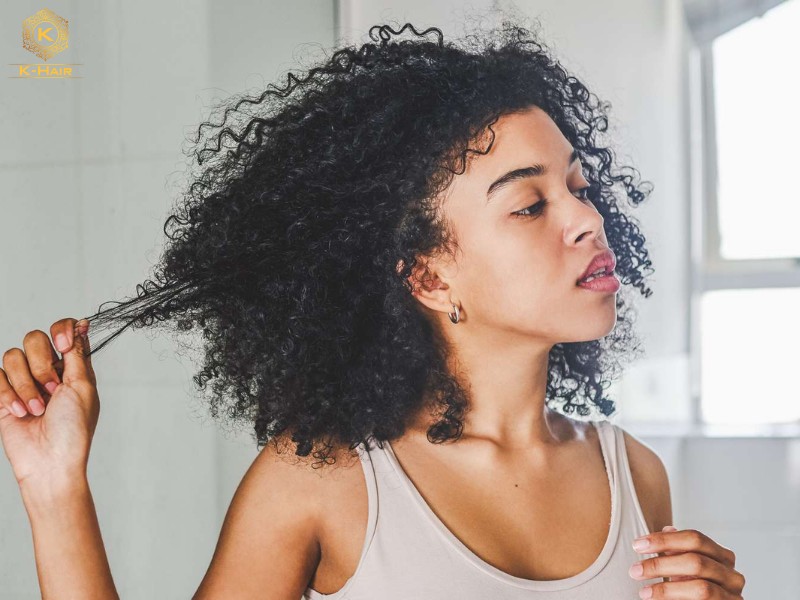
- Easily subjected to humidity: as a result of being naturally drier and more vulnerable to moisture imbalance, 4A hair is also quite prone to frizz, especially in humid conditions. The raised cuticles allow the strands to absorb more atmospheric moisture than they can manage, causing the curls to swell, lose definition, and appear frizzy or puffed out. Since 4A curls are highly reactive to external moisture, styling results can easily be disturbed when exposed to high humidity, particularly if the hair is not properly sealed or protected beforehand.
- Possible tangles: due to its coiled structure and naturally lifted cuticles, 4A hair also tends to experience tangling, especially at the ends where the curls are tighter. Raised cuticles mean that different strands can easily catch onto one another, leading to knots or matting if the hair is not detangled regularly. If left unmanaged, these tangles can worsen over time, causing shedding, breakage, and unnecessary stress on the fragile curls.
- Hard to style: although 4A hair offers more definition and manageability than the sharper 4B and tightly packed 4C patterns, it can still be challenging to style due to its spring-like coil structure. The hair’s tightness limits how much further it can be curled using standard styling tools, and straightening the hair requires careful handling to avoid heat damage. The dense coils, while beautiful, can be fragile, meaning excessive heat or force will only worsen dryness and breakage. Stylists working with 4A hair must rely on gentle techniques, controlled heat, and proper product layering to achieve the desired results without compromising the curl’s natural integrity.
3. Difference between 4A hair and 3x, 2x, 1x hair types
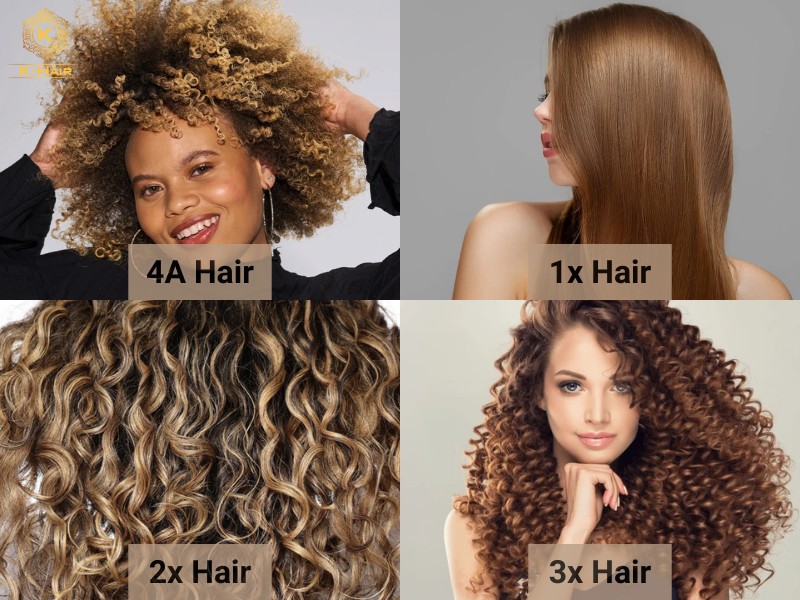
One thing for certain, identifying 4A hair and differentiating this specific curl category from the countless hair types out there is no doubt one of the most challenging steps in the entire journey of learning “What is 4A hair?” Nonetheless, it remains an essential starting point for anyone wanting to properly understand their natural texture and select suitable maintenance or styling routines that best align with their hair’s unique needs. And to begin this distinguishing process, it is always easier to start by comparing 4A hair with the broader, more familiar curl families such as 3x, 2x, and 1x hair types:
| 4A Hair | 3x, 2x, and 1x Hair Types | |
| Patterns | 4A hair is defined by its tightly coiled, spring-like curl formation, typically resembling a miniature S-shape that loops closely and consistently from root to ends.
|
Hair types in the 1x-3x range usually display a much more relaxed curl formation:
|
| Porosity & Moisture | Due to its coily formation, 4A hair often experiences moderate to high porosity, especially along the inner bends of the curls where the cuticles naturally lift.
|
1x and 2x hair textures typically have lower hair porosity levels because their smooth, less-bent cuticles allow the hair to retain moisture more effectively. Natural oils also travel more easily down straighter or wavier strands, reducing dryness.
3x curls may show signs of moderate porosity but are still less prone to moisture imbalance compared to 4A hair, thanks to having fewer curl bends and fewer raised cuticle points. |
| Shrinkage | Shrinkage is a standard characteristic of all curly and coily strands, and 4A hair is no exception. While not as extreme as the shrinkage experienced in 4B or 4C hair, 4A coils can still retract noticeably, often appearing around 50% of their actual stretched length.
→ This visible shrinkage is a direct result of the spring-like curls contracting into their natural coil form |
Straight 1x and wavy 2x hair rarely experience any shrinkage due to not having any tight curl formation.
3x curls may shrink slightly, but the effect is usually far less intense than that seen in 4A hair. |
| Volume | With its bouncy, compact coils and gentle shrinkage, 4A hair naturally carries a beautiful fullness, voluminous, soft, and round in appearance. The coily patterns encourage the hair to expand outward rather than downward, giving the hair an airy yet dense shape.
→ While not as dramatically voluminous as 4B or 4C kinks, 4A hair still provides a noticeable level of body and thickness that many people admire. |
These hair types tend to focus more on length and flow rather than volume:
|
4. Difference between 4A, 4B and 4C hair
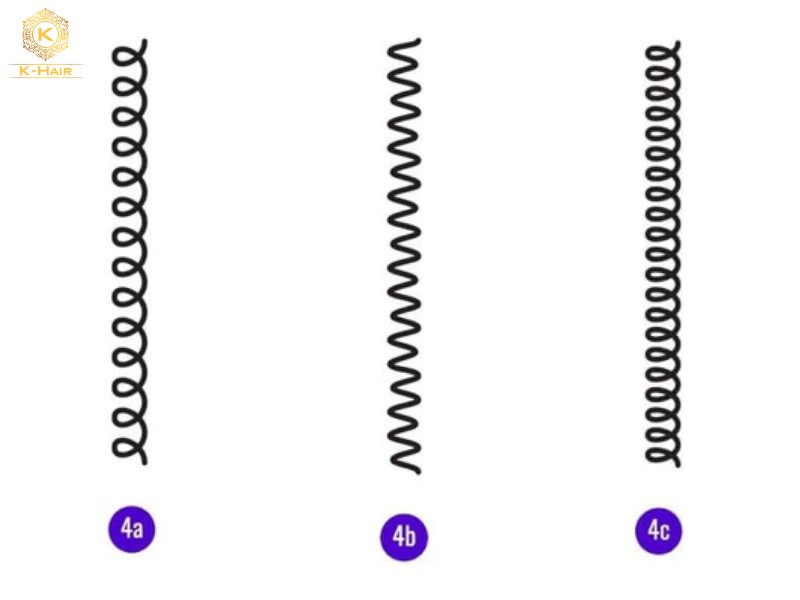
After learning the ropes on how 4A hair differs from the more familiar 1x, 2x, and 3x textures, the next stage of understanding “what is 4A hair” becomes a little more challenging: distinguishing it from the two other members of its own kinky hair family: 4B and 4C hair.
Although these three categories all fall under the same kinky, coily category and naturally share several overlapping traits, a closer, more attentive look will reveal that each hair type still carries its own unique identity, its own curl formation, and its own maintenance requirements.
Below is a clearer breakdown to help you differentiate these closely related, yet completely distinct kinky hair patterns:
| 4A Hair | 4B Hair | 4C Hair | |
| Curl Pattern | 4A hair carries the loosest coil structure among the kinky hair group.
→ The curls often follow a defined, tight S-shaped spiral, creating a soft and springy appearance. |
4B hair sits right in the middle when it comes to curl tightness.
→ Its strands form sharper bends and zig-zag kinks, often described as a Z-shaped pattern. |
4C hair represents the most intense version of kinky textures – extremely tight, densely packed coils with almost no visible, consistent curl pattern. |
| Curl Definition | As the transitional point between the other kinkier types, 4A hair has the most defined, uniform, and consistent curl pattern of the three. | 4B hair is less uniform, with hair that clumps together in dense sections, creating a more free-flowing, fluffy, and less predictable curl formation. | 4C hair has the least definition, often appearing cloud-like, soft, and airy, with strands that move freely and rarely form visible curls without manipulation. |
| Moisture Retention | 4A hair is the least prone to dehydration, as its looser curls allow for better moisture retention and smoother cuticle alignment. | 4B hair experiences moderate dryness, due to its tighter, sharper curl bends which naturally lift the cuticles and increase porosity. | 4C hair is the most prone to dryness, its ultra-tight coils create the highest porosity and require the most intensive moisturizing routines to stay healthy. |
| Shrinkage | Shrinkage is noticeable but moderate, typically around 40-50% of its actual stretched length. | Shrinkage becomes more dramatic, ranging from 60-75%, due to tighter curl formation. | 4C hair experiences the most extreme shrinkage, often 75% or more, making its true length almost unrecognizable unless fully stretched. |
| Fragility | One major benefit of 4A hair is its relative durability. The strands are softer, more flexible, and less prone to breakage, thanks to better moisture retention. | 4B hair tends to be more delicate, especially at the sharp bend points. Higher porosity makes the strands more vulnerable to dryness, frizz, and damage. | 4C hair is the most fragile of all kinky types. Its extreme dryness and high porosity lead to frequent tangling, shedding, and breakage without careful, consistent care. |
5. How to Care for Type 4A Hair?
Knowing “what is 4A hair,” hair lovers will quickly realize that although 4A hair is considered the softest and most defined among the kinky hair family, it still demands proper care and intention. Indeed, its naturally coily S-shaped curls tend to be moderately porous, making it easier for moisture to escape and causing the strands to be more susceptible to dryness, frizz, and wear over time. Therefore, when it comes to maintenance, 4A hair can still be quite demanding in its own way. However, just because it needs effort does not mean it is impossible – in fact, for people with natural 4A hair, below are several expert-backed care tips tailored specifically for this curl pattern.
5.1. Prioritizing moisture
One thing that 4A hair consistently craves is moisture, although not as severely as tighter textures, 4A hair still relies heavily on regular hydration to keep its curls soft, springy, and defined.
- A widely favored moisturizing routine among natural 4A hair lovers is the LOC or LCO method. The process begins by applying a liquid or leave-in conditioner (L) to prep the hair and soften the curls, followed by a nourishing hair oil (O) to seal all the hydration inside the hair cuticles, and finally finishing off with a creamy product (C) to enhance smoothness and maintain curl definition.
- In addition to this routine, hair lovers should take an extra step by incorporating deep conditioning sessions using a rich, hydrating mask or protein-infused conditioner. Applying gentle heat, such as steam or a warm towel, helps open the cuticles slightly so the moisture can penetrate deeply and fully nourish the strands.
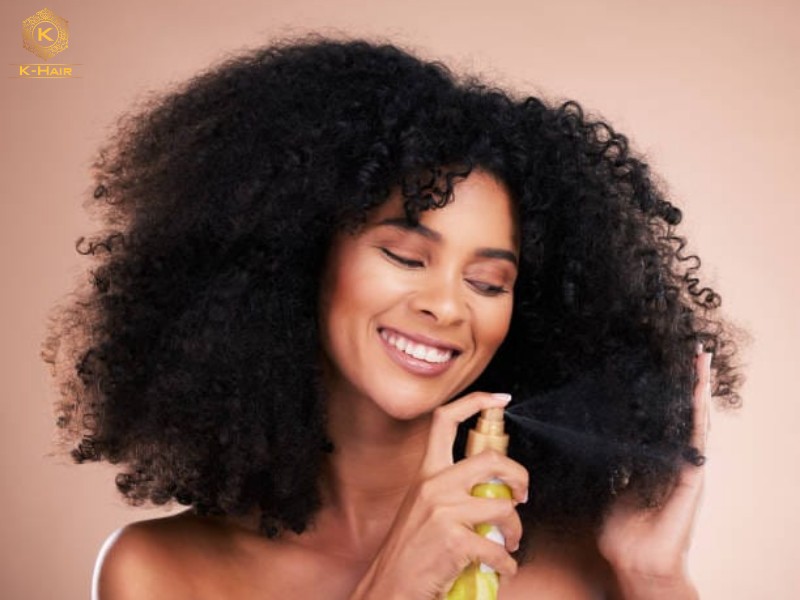
- Daily hydration is also necessary. From time to time, lightly misting your hair with a water-based spray or applying a lightweight daily moisturizer can help ensure your curls remain bouncy, hydrated, and well-maintained – especially for those living in sunny, hot, or dry climates.
5.2. Gentle handling
4A hair, despite its beautifully defined curls, is still fragile, this is no surprise when you learn “what is 4A hair”. And although 4A hair tangles less aggressively than 4B or 4C textures, strong force should still be avoided at all cost.
Detangling is always best done when the hair is wet, softened, and saturated with conditioner. At this stage, the strands are at their most manageable, making it easier to remove knots and maintain curl integrity without causing unnecessary breakage. Your detangling tool also matters. Instead of fine-tooth combs, it is much safer to use your fingers or a wide-tooth comb, as these provide enough flexibility and gentleness for the natural S-shaped curls of 4A hair.
5.3. Washing habits
One crucial aspect of caring for 4A hair is building healthy washing habits, yet this step is often overlooked due to the time it requires. However, when done incorrectly, improper washing can undo all your previous efforts and damage the delicate curl structure.
- Avoid overwashing your 4A hair at all cost, as this can strip away necessary oils, lead to dryness, and in severe cases cause increased shedding or irritation. To prevent this, tone down your washing frequency to about 1-2 times per week, which is enough to cleanse buildup without disturbing the natural moisture balance.
- Choosing the right cleansing product is also essential. For such delicate curls, sulfate-based shampoos should be avoided, as they can quickly strip the hair and cause coarseness. As moisture remains a top priority, switching to a co-wash (a cleansing conditioner) can refresh the hair gently while leaving it nourished and more resilient.
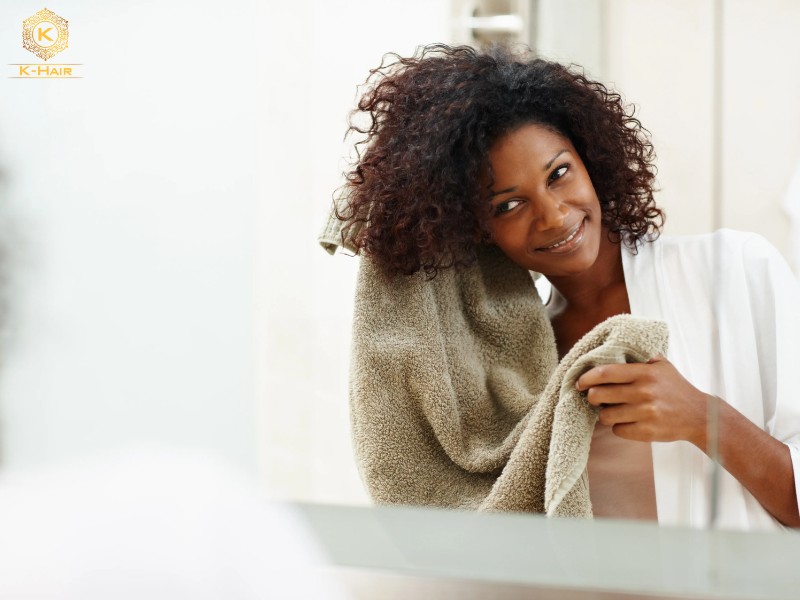
- Once washing and conditioning are complete, always finish with a cold water rinse to help close the cuticles and lock all the hydration inside the strands.
5.4. Styling tips
Discussing “what is 4A hair”, for people with natural 4A hair, styling can be challenging, not because the curls are too tight, but because the strands can still be fragile when handled incorrectly. If you insist on heat styling, always begin with a heat protectant to minimize the potential damage. However, relying too heavily on heat cannot be ideal, as repeated exposure may weaken the curl structure, increase porosity, and cause additional dryness.
Instead, 4A hair thrives with non-heat, curl-friendly styling techniques such as twist-outs, braid-outs, flexi-rod sets, or Bantu knots, all of which help enhance the natural curl pattern without causing harm. Protective hairstyles, especially braids, are also excellent options for retaining moisture, minimizing friction, and reducing manipulation throughout the week.
5.5. Night care
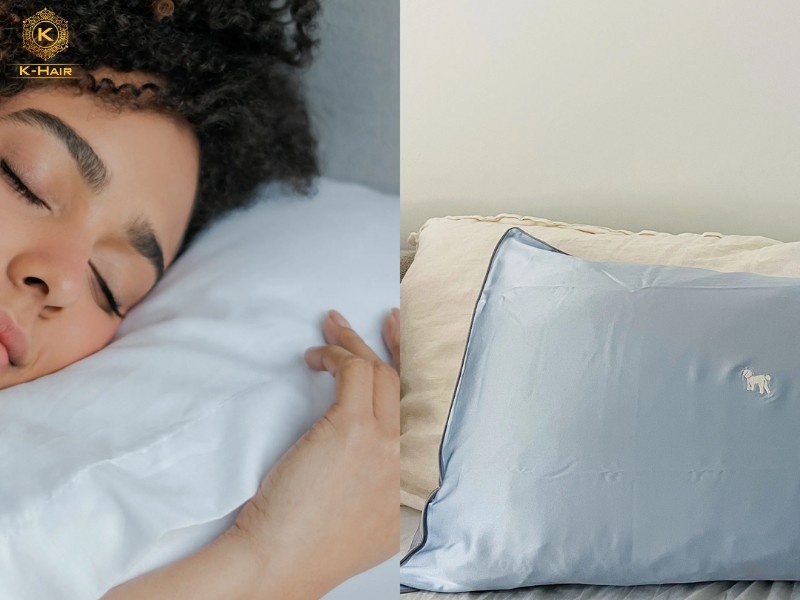
One major maintenance step that many people forget is consistent night care. Even something as simple as your pillowcase material can directly affect your hair’s health. Fabrics like cotton are known for absorbing moisture and creating friction, which often results in frizz, dryness, and rough strands in the morning. To avoid this, switch to soft, frictionless materials such as silk or satin pillowcases and bedding, which significantly reduce moisture loss and protect your curl definition throughout the night.
6. Can You Have Multiple Hair Types?
Once you understand what is 4A hair, it becomes easier to see that curl patterns don’t always fit neatly into one strict category. In reality, having multiple hair types on one head is extremely common, and it’s something many people don’t even notice until they begin learning about hair porosity, texture, and curl definition. The traditional 1A-4C chart is helpful as a reference, but it does not fully capture the natural complexity of human hair. Most people naturally have a mix, for example, tighter coils at the nape, looser curls near the crown, or even straight pieces around the temples. This multitextured pattern is shaped by a combination of internal and external factors, including the ones below:
- Genetics: for a lot of people, having mixed textures has nothing to do with how they treat their hair, they simply grew up with it. Some naturally have tighter, denser curls sitting at the nape, while the strands near the crown or around the ears come out noticeably looser, softer, or even finer. This happens because the traits that determine our hair’s thickness, curl shape, and overall behavior are already pre-written in our genetic traits, so each section can grow slightly differently without any outside influence.
- Environmental causes: aside from internal factors like hormones and genetics, your daily surroundings also play a huge role in creating varied textures. External conditions such as:
- Sun exposure and UV light can strip the hair of its elasticity and vibrancy, making the exposed strands lighter, weaker, and less defined.
- Humidity affects the hair by lifting the cuticles and drawing moisture into the strands, causing the curls in highly exposed areas to swell, frizz, and expand outward, while the less-exposed sections stay more compact and defined.
- Pollution also contributes heavily. If you live in an environment with dust, smoke, or heavy pollutants, build-up forms more quickly on the hair shaft, weighing the strands down and making the curls appear looser, duller, and less reflective.
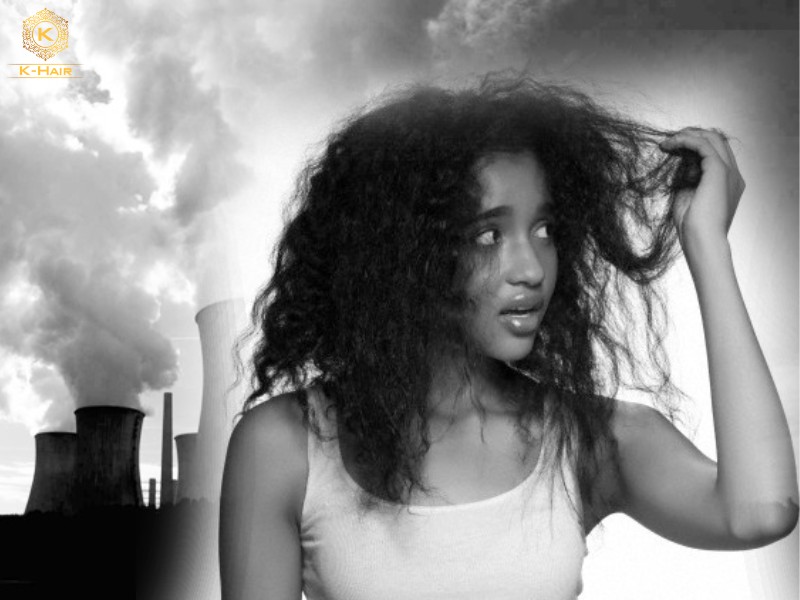
→ Because of all these factors, the hair on the top or outer layers, which typically takes the most environmental impact, often ends up showing more variation and slightly more damage than the healthier, more protected hair near the nape.
- Hair care habits: similarly, the way you maintain your hair can easily influence its texture. When products are not spread evenly, the sections receiving less moisture and fewer nutrients continue to stay dry, coarse, and lifeless, compared to the healthier, more elastic curls that are consistently cared for. And if the hair is often exposed to heat styling, bleaching, dyeing, or any chemical-altering methods, these treated sections can lose their original pattern over time, becoming looser, thinner, and noticeably more fragile than the untouched parts.
- Hormonal changes: during major hormonal phases like puberty, pregnancy, or menopause, the body goes through significant internal shifts, and the hair naturally reacts to those changes as well. After these transitions, it is very common for some parts of the hair to start growing curlier, looser, or straighter than before, leading to a naturally multitextured appearance.
7. The Best Hairstyles and Cuts for 4A Hair
Now that you have gone through all this provided information about what is 4A hair, you must now be able to identify your hair and decide if your hair falls to the 4A category or not. Every type of hair is beautiful in its own way, and 4A hair is no difference – with the right hair style and styling method, you can actually bring out the inner beauty of this tight and voluminous hair type, as well as be more confident and cherish your own natural beauty and this God-given gift:
7.1. Braids
When it comes to braids, 4A hair honestly works perfectly for this kind of protective style. Because the curls are dense and naturally springy, braids tend to stay neat, last longer, and resist frizz way better than many looser textures. This makes it a great option for anyone wanting something low-maintenance that also cuts down on daily manipulation and supports healthier growth.
- To get the look started, it’s best to work on clean, stretched, and well-moisturized hair so the braiding process feels smoother. After that, just part the hair into even sections, this makes it easier to create box braids, knotless braids, feed-ins, or literally any braid variation you prefer. Keeping the tension consistent helps avoid unnecessary pulling, and if you want more length or fullness, adding extensions is always an option.
- To finish everything off, a bit of mousse or braid gel can help control flyaways, and accessories like cuffs or beads can give the style some extra personality. For maintenance, wrapping your hair in satin or silk at night is basically non-negotiable.
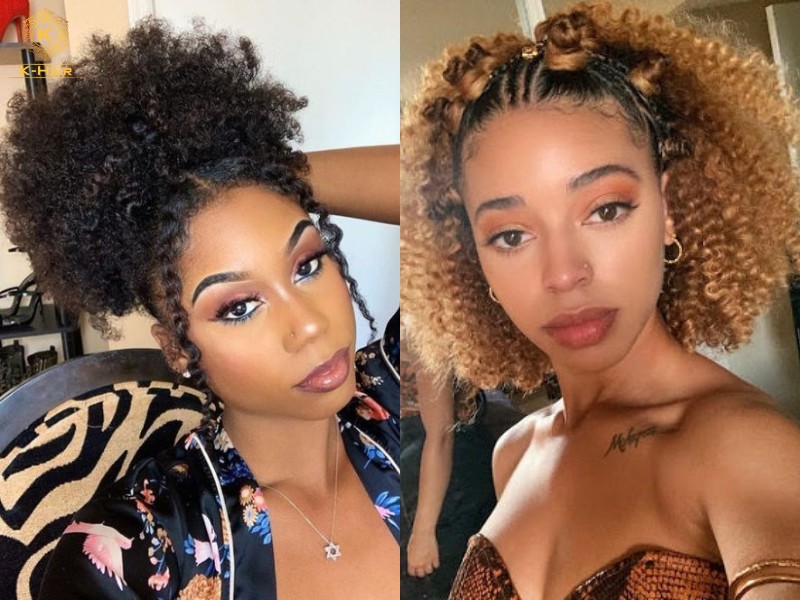
7.2. Dramatic updo
A dramatic updo is another option that works really well, especially if you want something more sculpted or elevated for a special event. Because 4A hair already has natural volume, the updo tends to look fuller, textured, and overall more put-together without you having to over-manipulate anything. This style is easiest with medium to long hair, but adding extensions is always an option if you need more volume.
- To create it, start with moisturized, lightly stretched hair, then pull everything into a high or mid puff. From there, you can twist, roll, or pin sections however you want to build height or structure.
- Leaving the natural curls still visible helps the style look softer and more dimensional. Smoothing the edges with a gentle edge control product and defining any visible curls with cream makes the final look even cleaner.
7.3. Slicked Back Ponytail
Lastly, the slicked-back ponytail is a classic look that pairs nicely with 4A hair because the smooth base contrasts really well with the curlier, fuller ends. It works for casual days or more formal settings.
- To do it, start with stretched or blow-dried hair so smoothing is easier. Choose your part: middle, side, or no part, and apply a strong-hold gel or cream. Brush everything down with a firm brush and secure the ponytail with a snag-free elastic.
- You can leave your natural curls out, define them with curl cream, or attach a ponytail extension if you want extra length. Wrapping a small piece of hair around the ponytail base gives a cleaner finish, and laying the edges with a bit of gel helps tie the whole look together.
8. Conclusion
With the information provided in this article, K-Hair hope that we have managed to assist young women in the hair industry with the overall information, tips, and most importantly, what is 4A hair. Navigating through the complex hair industry requires long-term commitment and support from trustworthy partners, we proudly present ourselves not only as a trusted hair expert, but also a supportive friend who will always have your back in this somewhat overwhelming market.
Tired of taking care of your natural hair and thinking about switching to hair extensions and wigs? Contact us through the following link:
- Address: 10A, 171 Nguyen Ngoc Vu, Yen Hoa, Hanoi, Vietnam
- Phone: +8492 633 2545 (WhatsApp)
- Email: [email protected]
- Facebook: https://www.facebook.com/KHairFactoryVN/
- Whatsapp: +8492 633 2545