
As we move on from generalized beauty standards, we soon learn to appreciate different types of beauties, features, as well as hair types. And, following this development, we also grow more and more curious about our own hair – its patterns, its maintenance needs,… Indeed, even when it is a part of our own body, there always seems to be so little yet known about these strands.
In light of these trends, many specialists have come up with new ways to classify and provide more information about these hair types. However, the most successful among these is undoubtedly Andre Walker Hair Typing system – one of the most widely-used hair typing systems out there.
1. What Is Andre Walker Hair Typing System?
By definition, a hair typing system provides a way to classify and sort out different types of hair out there, as well as distinguish their features and maintenance needs.
The Andre Walker hair typing system is currently the most popular and highly recommended hair classification method. The system was developed in the 1990s by Oprah Winfrey’s celebrity stylist Andre Walker.
Acknowledging the public need, the Chicago stylist was determined to create an improved system in which people can depend on for hair classification. With this in mind, Mr. Walker has successfully introduced his idea to the masses, revolutionizing the hair care industry and making hair care easier for those with textured, kinky natural hair.
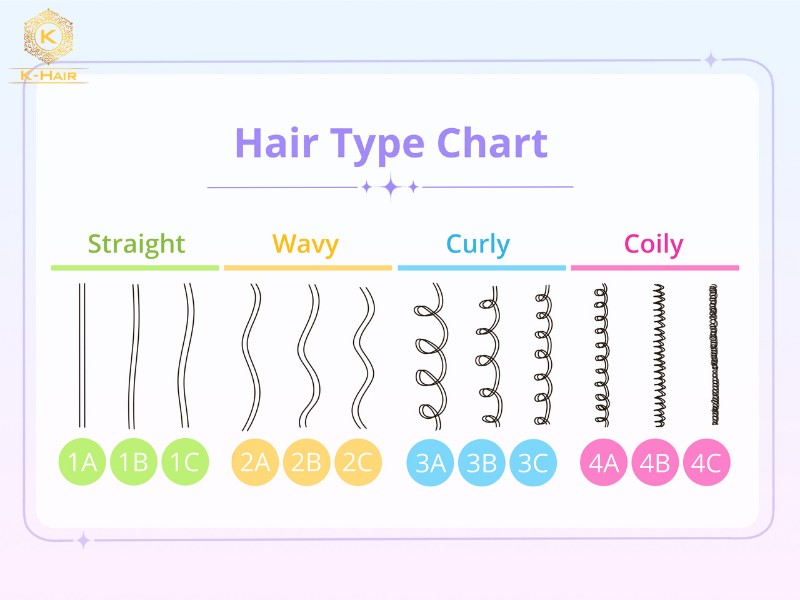
In this system, different hair types from different individuals are divided into 4 main types, each has their own patterns, structures, and care needs. These types are respectively – straight, wavy, curly, and kinky – with 4 subtypes A, B, and C based on their distinct features.
2. What Are The Hair Types Included in the Andre Walker Hair Typing System?
The four hair types featured on this hair typing system are numbered from 1 to 4: 1 is for straight, 2 – wavy, 3 – curly, and 4 is for kinky. This classification is not just based on the overall appearance only, but also on the strands’ shrinkage, moisture retention, and other innate features.What Are The Hair Types Included?
2.1 Type 1 Hair – Straight
The first hair type is also the least textured one – straight hair. This type of hair pattern can be seen mostly in Asians, or people living in cold, temperate regions – due to genetics, adaptations, and inherited features.
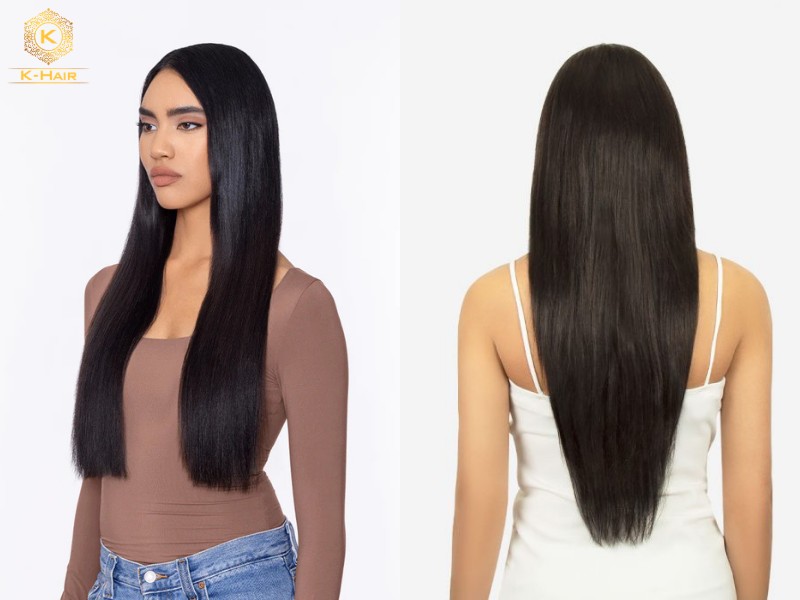
In terms of appearance, these hair strands are defined by their sleek, straight and smooth look – often from the top to the bottom. In several cases, these strands can feature small bumps and waves, however, in the majority, straightness is still its most defining physical trait.
Having straight strands also means type 1 hair will have an all-aligned cuticle layer. This also leads to this hair type having faster oil distribution, lower porosity, and more durability compared to the others.
Not all straight-haired individuals have the same texture. In fact, type 1 hair can also be divided into three sub-types:
- 1A Hair: the ultimate sleek straight hair – no bumps in sight.
- 1B Hair: sleek, straight, with light waves or curves near the ends.
- 1C Hair: overly straight hair, with slightly more waves than 1B hair.

Type 1 Hair – Straight
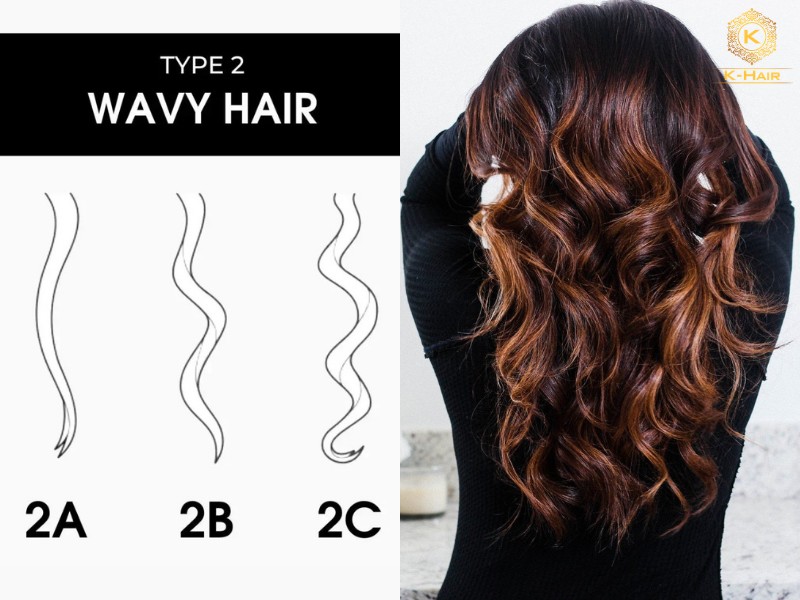
2.2 Type 2 Hair – Wavy
The second hair type on the hair typing system is wavy hair – type 2. And, much like the name suggests, this class will feature more visible, S-shaped waves, creating a soft, beachy look for the individual. This type of hair pattern is often seen in those of European, Hispanic descents, or those with mixed genetic features.
Being the medium ground between straight and curly hair, wavy type 2 hair would have more volume and waves than type 1, but not as much as type 3. On top of that, this texture would also lead to faster oil accumulation at the roots and a slight shrinkage.
Its 3 subtypes include:
- 2A Hair: slight S-shaped waves, focused more on the hair ends.
- 2B Hair: firmer, tighter waves, starting from the high mid-length downward.
- 2C Hair: denser, more defined waves from the roots to the ends.Type 2 Hair – Wavy
Type 2 Hair – Wavy
2.3 Type 3 Hair – Curly
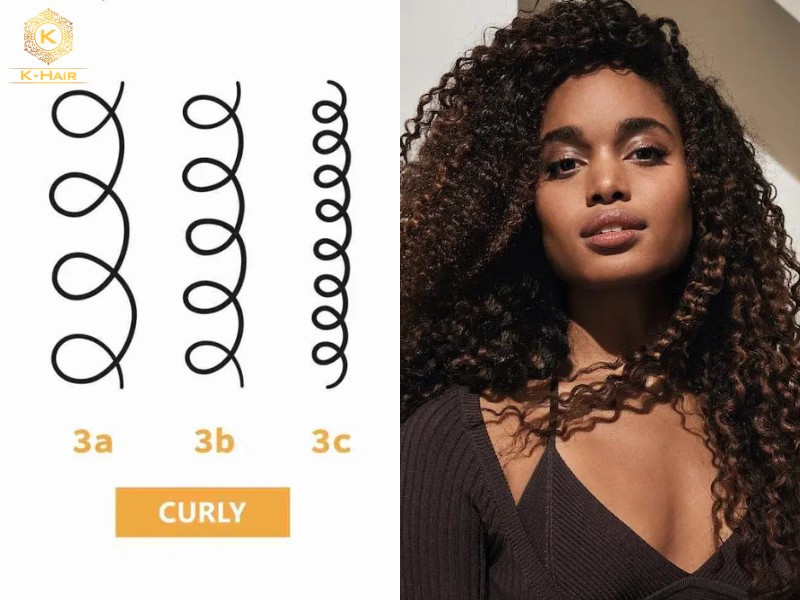
Next on the list is type 3 hair, or also known as curly hair. This hair texture can be seen mostly in Mediterraneans, Latin Americans, North Africans, or those with mixed features.
In terms of appearance, this hair type is well-known for their liveliness, curl definition and bounce. When stretched out, the curly hair strands will show a tighter, spring-like and uniformed curl from roots to ends.
Having more curl definition would also mean more volume, bounce in general. However, one drawback is that these strands’ cuticles tend to be more lifted – leading to dehydration especially at the hair ends.
Much like all the other classes, type 3 hair also has three subtypes:
- 3A Hair: the transition between wavy hair and curly hair, 3A hair would have the least tightness among the three curly types.
- 3B Hair: tighter, more uniform curls.
- 3C Hair: having the tightest, corkscrew-like curls from top to bottom.
Type 3 Hair – Curly
2.4 Type 4 Hair – Kinky/Coily
The last one on the hair typing system is type 4 hair – stands for kinky, coily hair textures. This type is mostly seen in those of African descent, living in hot, dry and harsh environments.
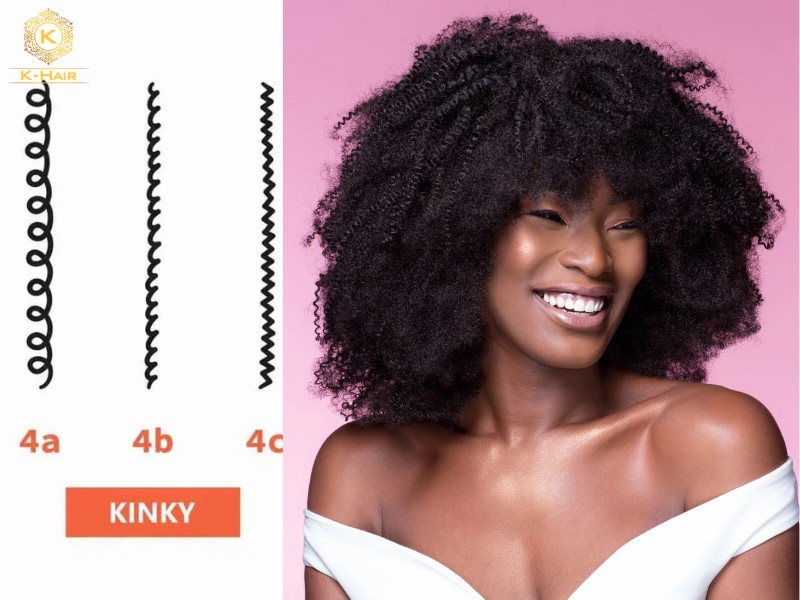
The signature feature of this hair type is its afro-textured, voluminous hair with dense curls – patterns that help ventilate heat better in such harsh natural conditions. And, due to the nature of these curls, the strands often have extreme shrinkage, making them look much shorter than they actually are.
In terms of innate features, type 4 hair is often accompanied by lifted cuticles, frequent dryness and hair frizz. Hence, among the four types, this is also the most porous and high-maintenance hair pattern.
The three types of kinky hair might include:
- 4A Hair: featuring larger, slightly more uniformed kinks.
- 4B Hair: featuring smaller Z-shaped kinks, with sharper angles and bends.
- 4C Hair: the kinkiest hair type, with kinks so tights their forms are not even visible until stretched out.
Type 4 Hair – Kinky/Coily
To make comparison easier, here is a compact table describing the four main hair types according to Andre Walker Hair Typing system:
| Type 1 – Straight | Type 2 – Wavy | Type 3 – Curly | Type 4 – Kinky | |
| Overall appearance | Straight, sleek, lustrous but thin hair | Beachy, soft and thin hair, but often with oily roots | Bouncy, uniformed curls, with dry ends in most cases | Afro-textured, voluminous and thick hair look, but oftentime frizzy. |
| Oil distribution | High – throughout the strand | High – especially near the roots | Medium – mostly gathered at the roots | Low – due to tight hair kinks |
| Shrinkage | Little visible shrinkage | Low shrinkage | 10-40% | 40-75% |
| Maintenance priority | Oil cleansing
Volume management |
Oil cleansing
Wave definition |
Detangling
Deep moisturizing |
Protection
Deep moisturizing |
3. What Can You Get From Learning About The Hair Typing System?
The Andre Walker hair typing system wasn’t made just for show, instead, its application into the hair business can be monumental.
Its main purpose is to further categorize different hair into one easy to understand system – and it did just that. On top of that, based on this hair typing system, we can also learn more about our hair’s structures, its innate traits, as well as their corresponding maintenance needs.
Ever since its invention, hair care has become more specific and well-tailored for different needs. In fact, this system has been applied as the foundation for hair care – with multiple hair-type-specific products introduced to the market.
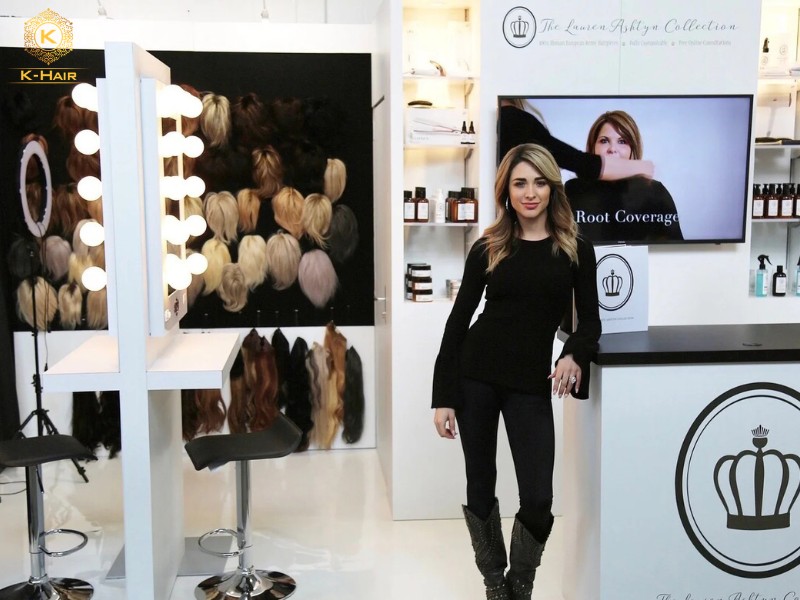
Not only salons, stylists, hair care professionals are benefitted, but those selling extensions, wigs, or owning a supply store can also rely on it to run a smooth business.
- For individual buyers: Knowing your hair type and what it needs make the decision-making easier in general. This means you can spend less time standing in the isles confused – and pick out the most suitable options for your hair state.
- For hair supply stores: This accurate classification can help cut down your store’s return rates. In fact, including hair-type-specific products can not only make it easier for customers to find their best match, but also ensure more satisfaction.
- For salons, stylists, professionals: Having the hair types classified makes it extremely easier to provide tailored and personalized hair consultation. On top of that, based on your customers hair types – you can also recommend suitable salon-grade products and earn extra from these transactions.
- For extension, wig sellers: Learning more about hair types means you are able to customize and recommend the best extension textures to match your customers’ needs. This allows you to better cater your brand to the market’s demand, securing more satisfied sales for your business.
The benefits that the hair typing system bring forth
4. What are Some of Its Limitations?
However, throughout its 30 years of applications, the hair typing system has met with some criticism over their limitations. In fact, many professionals have pointed out the lack of science-backed evidence in the system, including many crucial factors left out of the conversation, such as:
4.1 Hair styling and maintenance habits
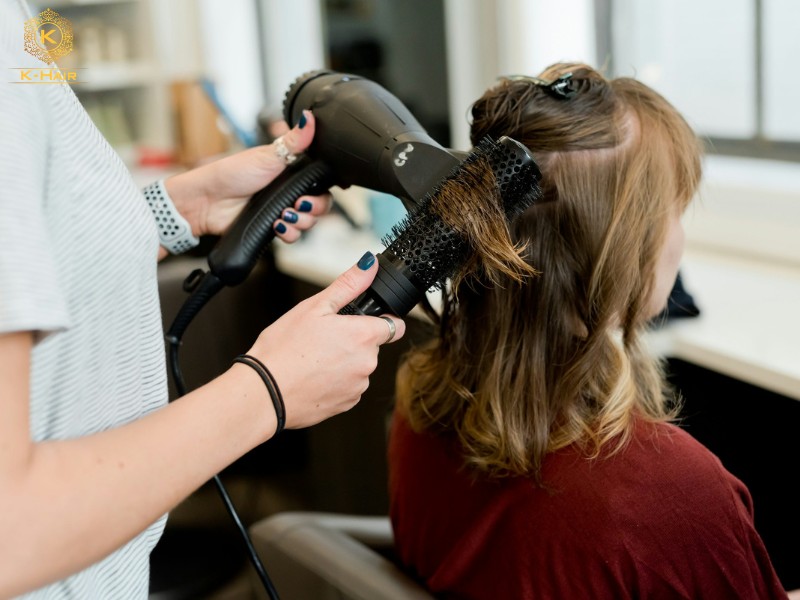
One of the most important factors that the Andre Walker hair typing system fails to include into their classification is the styling and care routine itself.
In fact, too frequent styling can easily alter your hair texture permanently – especially for the ends with less lubrication and moisture. For example, too much heat styling can make your straight hair frizzy, and bring out more curls and curves at the ends. And, for those with natural curly hair, this habit can also flatten and stretch out your strands beyond returning.
On the other hand, if styling can add more damage to your hair, then hair care can help you get it back in shape. In many cases, for those with flattened out hair due to styling, maintenance can further alter the strands, restoring its natural features gradually.
4.2 Hormone change
Another key feature that should have been included into the hair typing system is hormonal changes.
Indeed, during a lifetime, there are quite a number of occasions where your hormonal changes can deeply affect your hair patterns and density. For example:
- Puberty – Androgen spike: higher oil distributions, more frequent appearance of curls and kinks.
- Pregnancy – increased Estrogen & Progesterone: thicker, shinier and generally more durable and well-moistured hair.
- Postpartum – Estrogen drop: regrow baby hair tends to have different textures – often curlier or straighter compared to the original ones.
- Menopause – Androgen increase: smaller hair follicles – leading to smaller, thinner hair strands.
Besides these major hormonal transformations, certain health conditions can also disrupt your hormone balance and alter your textures:
- Hypothyroidism – Low thyroid: drier and stiffer hair → creating a wiry, frizzy hair state.
- Hyperthyroidism – High thyroid: thinner, sleeker and smoother hair strands.
- Stress – High Cortisol: changing the hair’s porosity – creating a frizzy, unmanageable look.
4.3 Porosity
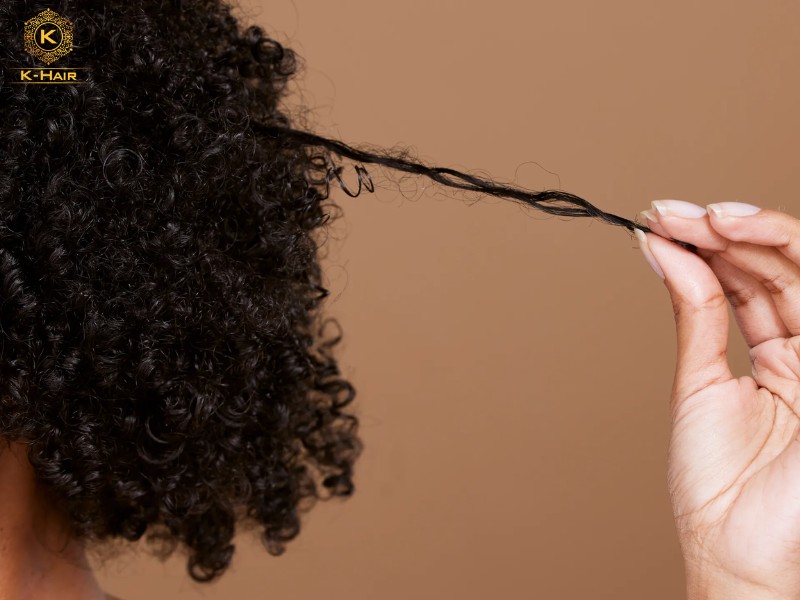
One thing that can also change your texture is the strands’ porosity – which can be determined by hair damage and genetics. In fact, different levels of porosity can have great influence on your hair textures:
- Low porosity – best moisture retention: closed cuticles → most likely to result in straight hair.
- High porosity – low moisture retention: open, lifted cuticles → most likely to result in curly, kinky hair with bends.
One thing that can also change your texture is the strands’ porosity
Expert Insight: Due to many factors, such as uneven hair care, styling, aging, or oil distribution,… it is extremely normal for your hair to have multiple textures all at once. In these cases, do not fret, seek consultation from a hair specialist and provide hair care accordingly.
5. What are Some Alternative Systems You Can Consider?
Considering the limitations that the Andre Walker hair typing system has, many have recommended turning to other classification for better results.
In fact, with the development of technology and hair research, multiple other alternative hair sorting systems have been introduced to the market. And, given the fact that, most of these are better catered to modern hair needs, with proven scientific proof, these can be quite the option to consider rather than the classic:
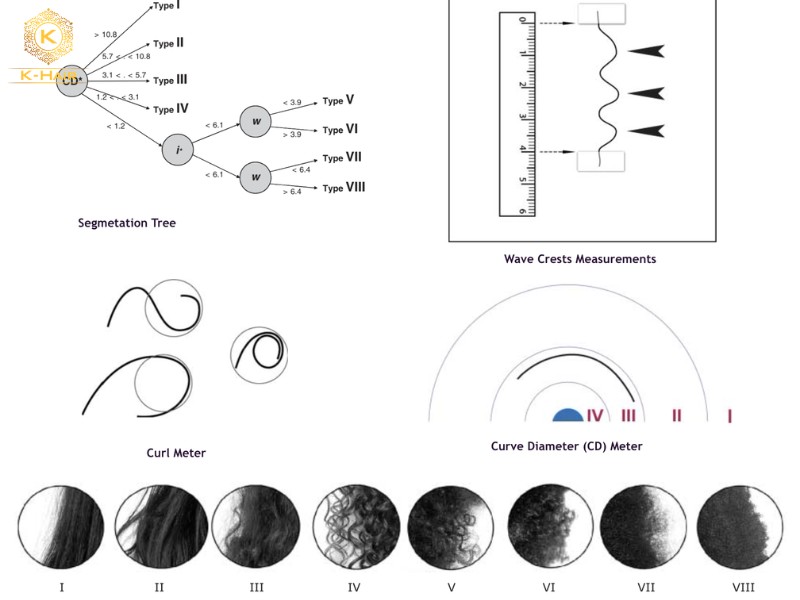
- L’Oréal Hair Classification System: This scientific system classifies your hair type based on strictly accurate features like curl geometry, frequency, fiber shape,… Hence, for those wanting a more reliable classification, this might be it.
- Hair Cross-Section Shape Classification: This method depends on the cross-sectional shape of the hair shaft to determine your hair type. For example:
- Round shapes – straight hair.
- Oval shapes – wavy hair.
- Elliptical/flat – curly or kinky hair.
- FIA Hair Classification System: Unlike others, this system combines many defining traits to classify one’s hair. These factors include: texture, strand thickness, density, porosity, scalp oiliness. One example classification can be 2B/medium/high density/low porosity.Different science-based hair typing system
Different science-based hair typing system
6. FAQs about Hair Typing System
Here are some frequently asked questions about the hair typing system.
6.1 What is a hair typing system?
A hair typing system is a method used to classify hair based on its texture, curl pattern, and structure. The most widely known system is the Andre Walker Hair Typing System, which divides hair into four main categories: straight, wavy, curly, and coily.
Hair typing helps people understand how their hair behaves and which products, hairstyles, and care routines work best.
6.2 What are the main types in the hair typing system?
Most hair typing systems classify hair into four primary categories:
- Type 1 – Straight hair
- Type 2 – Wavy hair
- Type 3 – Curly hair
- Type 4 – Coily or kinky hair
Each type is further divided into subtypes (A, B, and C) depending on the tightness of the wave or curl pattern.
6.3 How can I determine my hair type?
To identify your hair type:
- Wash your hair with shampoo.
- Let it air dry without styling products.
- Observe the natural shape of the strands.
Look for:
- Whether the hair is straight, wavy, curly, or tightly coiled
- The size of the curl or wave pattern
Many people also consider density, porosity, and strand thickness for a more accurate analysis.
6.4 Can one person have more than one hair type?
Yes. It is common for individuals to have multiple hair textures on different parts of the scalp. For example:
- Wavy hair on the crown
- Curly hair at the back
- Straighter hair near the hairline
Because of this variation, the hair typing system is often used as a general guideline rather than a strict rule.
6.5 How do hair businesses use hair typing systems?
Hair typing systems are widely used in the hair industry to:
- categorize wig and extension textures (straight, body wave, curly, kinky)
- develop specialized hair care products
- guide professional salon consultations
- understand regional hair preferences
This makes hair typing useful for both consumers and B2B hair companies.
7. Conclusion
For both individual buyers and hair businesses, the hair typing system has soon become an important part – navigating hair lovers through confusion and misconceptions. On top of that, it also laid the foundation for texture-specific hair care and consultation – making the process easier for both the buyers and the sellers.
However, working with your natural hair can be quite a long battle – especially for those with damaged hair in need of a deep protection routine. For such a case, as a hair expert, we highly recommend using wigs as a protection piece – shielding your hair from external stressors and encouraging its natural recovery. And, as a top Vietnamese wig manufacturer and seller – we would like to recommend ourselves as the perfect candidate.

