For salons and independent stylists, buying hair extensions the right way isn’t a side decision – it’s the financial foundation of the business. However, scaling an extension business requires a bulletproof supply chain, and unfortunately, the global hair market is quite a crowded competition.
Chasing the “cheapest” vendor is a trap: a bad batch means free redo appointments, refunds, and lost clientele. This guide moves past consumer-level buying tips and into business operations – how to read sourcing geographies, tell a manufacturer from a reseller, and test a sample batch before you ever place a bulk order.
Manufacturer vs. Trading Company: Who You’re Really Buying From
Buying hair extensions will ultimately boil down to 2 options – either you source them from a distributor, or from their manufacturer.
By definition, a manufacturer is the factory that owns the facility, sources raw hair directly from collectors, and controls every chemical process from washing to wefting. They are often located in Southeast Asian regions – where raw hair materials are the most abundant.
A trading company, by contrast, is a reseller that buys finished bundles from several factories and re-brands them under its own label – it never touches the hair itself. Unlike manufacturers, these companies are more widely-available across the globe – playing a key role in connecting end-users with manufacturers.
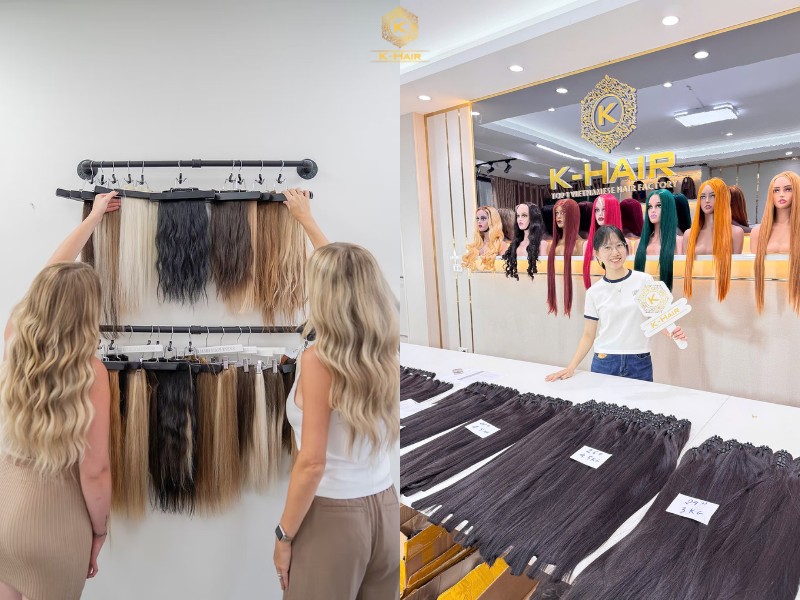
Because of their different roles in the supply chain, sourcing from them would be two entirely different experiences:
| Buying from a manufacturer typically means | Buying from a distributor typically means |
|
|
Expert Insight: For bulk orders – the more ideal choice is buying hair extensions from factories themselves, as they are more wholesale-friendly, quality, capacity and price-wise. However, for small, urgent orders, sourcing indirectly from your local distributors can provide a quicker fulfillment.
→ See how a factory-direct supply chain works: Vietnamese hair factory
Where Does the Hair You’re Buying Actually Come From?
When buying hair extensions, who you buy from matters – but so does the country where the hair was actually grown and collected.
On the market – it is not hard to come across terms like “Brazilian, Malaysian, Peruvian hair,…” Most of these terms are purely marketing tactics, processing and re-texturizing Asian hair to achieve the so-called “exotic textures.” In fact, the real hair trade relies on authentic supply chains from only a few core Asian origins: Vietnam, China, India, Cambodia, and Myanmar:
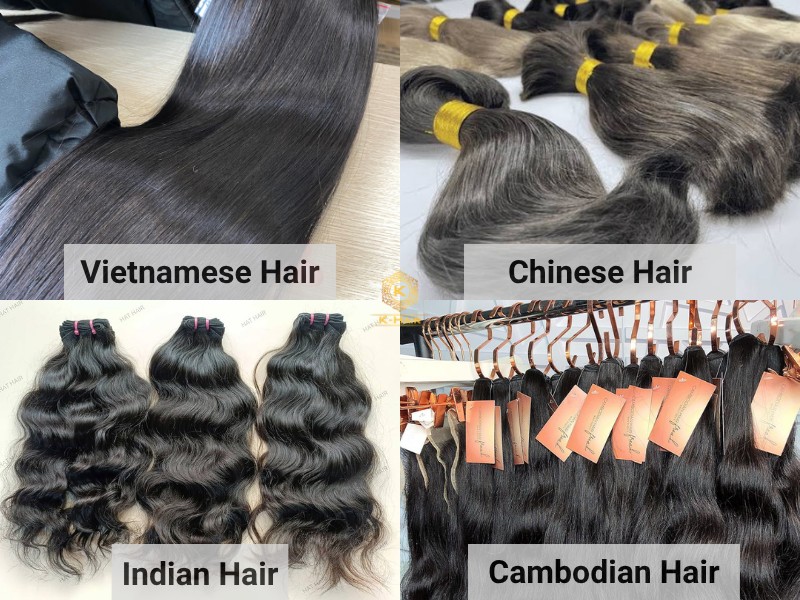
| Hair Origin | Texture & Feel | Processing Realities | B2B Vendor & Supply Chain Traits |
| Chinese | Naturally coarse and straight – processed for more sleekness | Often mixed-sourced chemically stripped and coated in silicone | Massive factories. → Highest production technology and capacity |
| Vietnamese | Silky, dense, naturally straight with high strand density | Mostly unprocessed donor raw or virgin hair. Intact cuticles and strong hair shafts. | Quality & Consistency → Consistent batch quality, reliable bulk volume |
| Indian | Fine to medium thickness; naturally wavy, light, and airy | Sourced either from ethical temple donations or floor hair | Raw Wholesalers & Exporters: Vast supply pool provide the most abundant hair source |
| Cambodian & Burmese | Coarse, wavy textured, with a distinct natural grip | Sold as unprocessed hair. Highly durable cuticle structure | Niche Boutique Vendors → Scarce raw supply justifies the higher price |
A few things worth knowing before you commit to an origin:
- For Custom Platinum Blonde Sets: Go with Vietnamese vendors. The thick hair shafts survive harsh bleaching cycles without snapping or tangling → making it ideal for stylists and high-end markets.
- For Natural Body & Waves: Indian or Cambodian, Burmese hair are top choices for raw, textured hair. Indian is lighter and airier; Cambodian is thicker and holds massive volume.
- For Fast Turnaround & Lower Budget: Chinese suppliers dominate in logistics, hardware (tapes, clips, beads), and fast shipping times → ideal for brands targeting the budget-conscious segment.
However, country of origin on a spec sheet is a starting point, not a guarantee – the same country can produce very different grades depending on which factory processed the batch.
→ Compare two of the most sourced origins side-by-side: Vietnamese hair vs Chinese hair
The Product Matrix: Extension Types, Grades, and Density
Beyond origin, buying hair extensions wholesale means specifying three separate variables: the attachment method, the raw material grade, and the density ratio. Skipping any one of these on a purchase order is how buyers end up with a shipment that doesn’t match the sample.
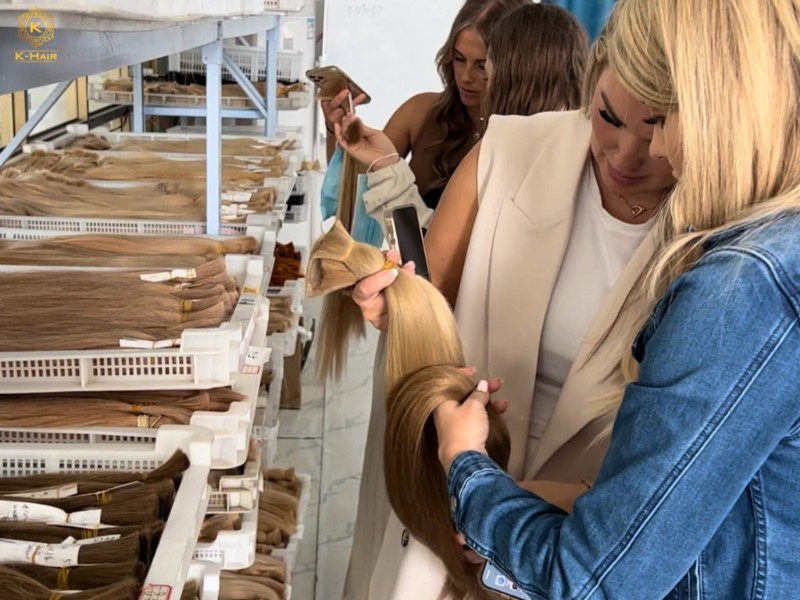
Extension Types
Choosing the right extension methods for your inventory directly impacts your salon’s service menu, application speed, and client retention. Whether you are sourcing inventory for your retail shelves or buying hair extensions for professional salon application, below is a concise breakdown of the primary wholesale extension types and their core business advantages.
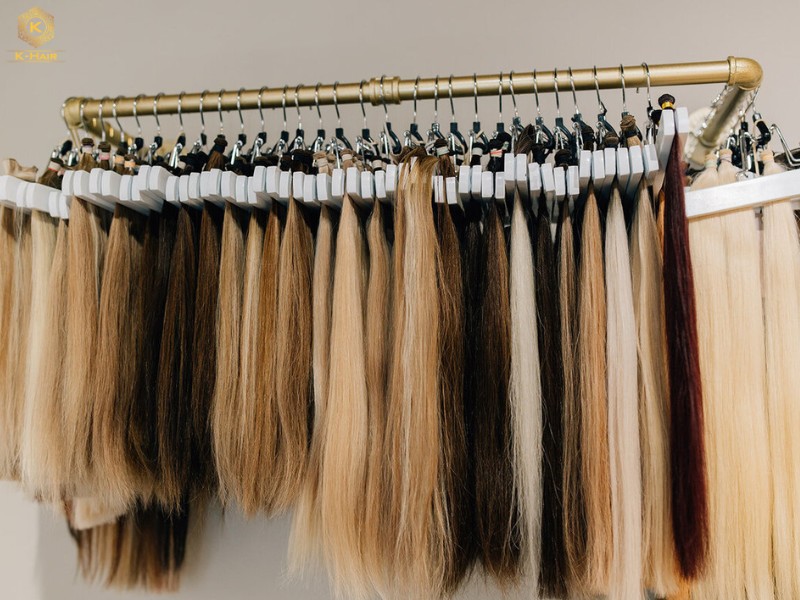
- Weft Extensions: Long curtains of hair applied through sew-in – can also be made into other hair extension variations:
- Hand-Tied wefts: Ultra-thin tracks that lay flat against the scalp; cannot be cut along the seam and require advanced installation skills.
- Machine wefts: Durable, thicker tracks that can be cut anywhere, making them a cost-effective option for medium-to-thick hair.
- Genius wefts: The modern standard – as thin as hand-tied, fully cuttable without unraveling, and free of prickling short return hairs.
- Clip-In Extensions: Temporary sets with pressure-sensitive clips, perfect as a high-margin retail product for special events with zero salon chair time.
- Tape-In Extensions: Pre-taped sections sandwiched around natural hair, offering quick 30-minute installations and predictable recurring revenue through re-taping appointments. Stocking wholesale tape-in extensions in multiple widths is one of the fastest ways to add recurring chair-time revenue.
- Keratin Bond Extensions (K-Tips): Individual strands fused using melted keratin bonds, generating the highest service revenue and offering the longest wear time (3-5 months).
- Nano Ring Extensions: Micro-strands attached with tiny metal rings, providing an invisible, heat-free, and chemical-free solution for fine hair, with the same lasting duration of Keratin bond extensions.

Different types of hair extensions you can sell
Hair Quality Grades
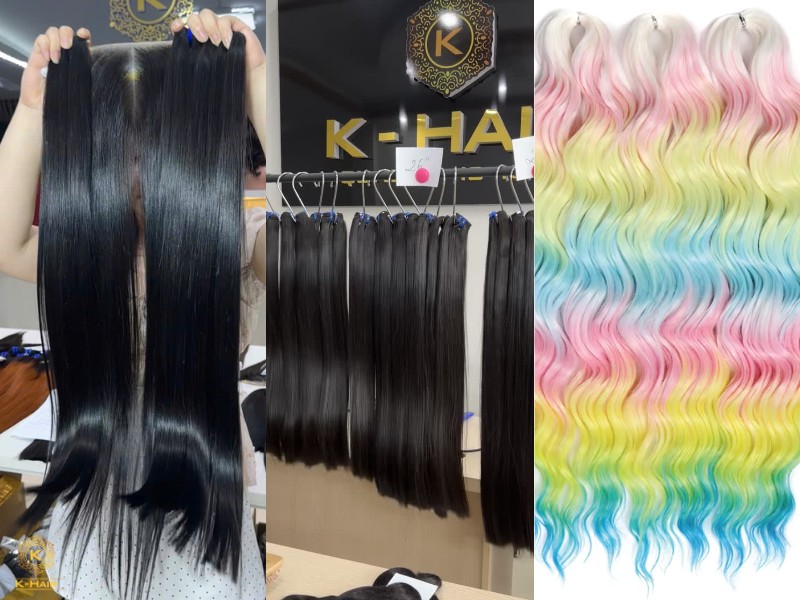
For salon owners, mastering raw material grades is essential for setting confident service pricing and preventing batch failures when buying hair extensions. Depending on your target audience, their income level, as well as your actual budget – your choice should be one, or several – among these options:
- Raw Hair: 100% unprocessed hair collected from a single donor with intact, unidirectional cuticles. It offers maximum durability and is the only grade that can be safely lifted to a Level #60 platinum blonde without breaking or degrading. → The premium choice for high-end installs and clients who bleach or restyle frequently. Wholesale raw virgin hair bundles sit at the top of this tier.
- Virgin Hair: Unprocessed human hair variation collected from 2-3 donors, Virgin hair is the more widely-available version of the Raw hair. It provides an excellent balance of longevity and cost, lasting 3+ years and can be bleached to #27 honey blonde → the ideal workhorse option for everyday salon installations and standard color services.
- Synthetic Hair: Man-made acrylic or nylon fibers engineered to imitate the look of natural hair. While cheap and pre-styled, it cannot withstand standard heat styling or chemical coloring, rendering it unsuitable for high-end, long-term professional applications.
Depending on your target audience, their income level, as well as your actual budget
Density Levels
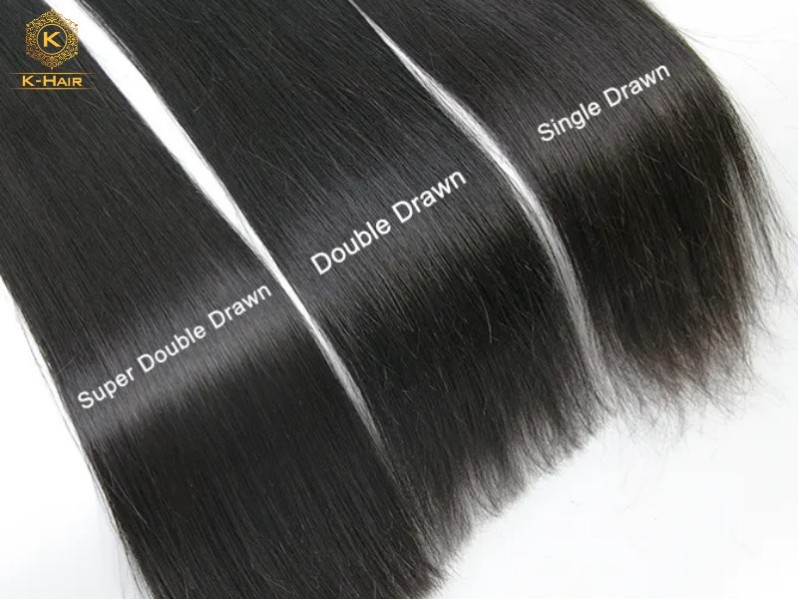
Another factor to look out for is density levels – or in other words – the percentage of full-length strands included into the weft, dictating its thickness and performance. Understanding these ratios allows wholesale buyers to optimize inventory costs while delivering precise volume for varying client hair types:
- Single Drawn (SD): roughly 50-70% of strands run the full length, tapering naturally – the cheapest option, though stylists often trim the thin ends.
- Double Drawn (DD): 70-80% of strands match the full length; the industry standard for full, thick extensions without excess weight.
- Super Double Drawn (SDD): 90-100% of strands are cut to the exact same length, producing a dramatically thick, blunt edge at a premium price.
When buying hair extensions and placing orders with wholesale suppliers, itemizing attachment methods, quality grades, and density individually is essential to avoid costly miscommunications. A “virgin double-drawn tape-in” and a “raw single-drawn tape-in” represent two unique product tiers at very different price points.
Rather than trusting vague terminology, always require suppliers to confirm exact full-length strand ratios in writing before issuing payment.
→ For a full breakdown of these ratios: Single Drawn vs Double Drawn vs Super Double Drawn
How to Test a Sample Batch Before You Commit
However, sometimes, or most of the time – what you get is far from what you buy. Your premium bundle might just be mixed-quality hair masked with silicone and artificial processing – far from its advertisements. In a market with these low-quality hair still exist – the only way secure the best deal when buying hair extensions is to test them first:
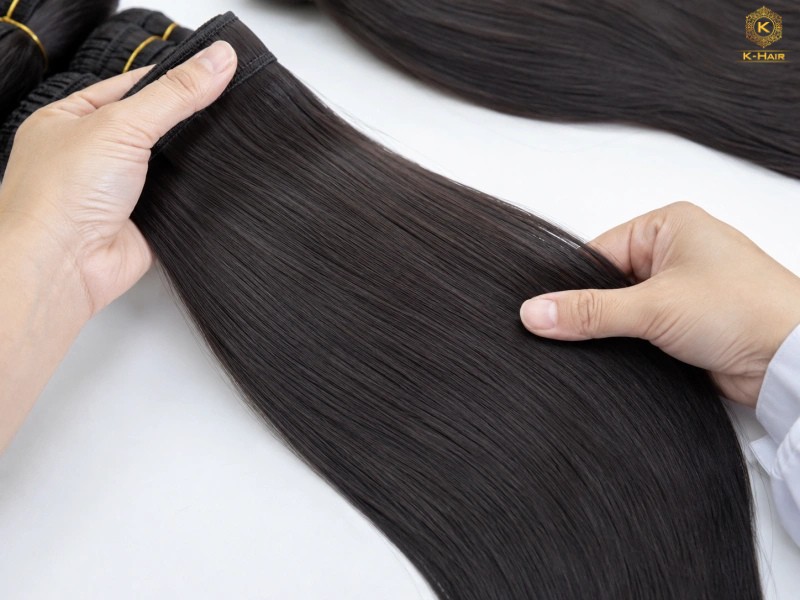
- Sensory Check: The first test to run is to check on the physical features of the hair once it reaches your doorsteps – its textures, smell, appeal,…:
- The Smell Test: A distinct corn-chip or sharp acidic odor indicates the hair has undergone an acid bath to forcibly strip damaged cuticles.
- The Touch Test: An unnaturally slick, slippery feel usually means a heavy silicone coating was applied to mask underlying texture flaws.
- The Clarifying Wash Test: Wash the sample with a clarifying shampoo and observe how the strands behave when wet. Any signs of discoloring, losing waves, textures or tangling, matting should be a sign to turn to another vendor for a change.
- The Styling Test: Apply heat styling/hair bleach to the weft and watch the results unfold. If the weft can actually lift to #27 or #613, #60, and offer lasting curl life without structural damage – it can and will survive your customer’s wear.
- The Wear Test: Install the sample on a team member for 4 to 6 weeks to evaluate real-world performance. Throughout the trial, actively monitor signs of shedding at roots; matting, tangling at the nape; and overall longevity through uses.
How to Test a Sample Batch Before You Commit - Burn Test: if you have a spare strand, light a small section with a lighter. Real human hair burns slowly, smells like burning feathers, and turns to soft ash when rubbed between your fingers. Synthetic hair melts into a hard plastic ball, gives off a chemical smell, and sticks to your fingers.
Expert Insight: Key supplier red flags include evasive sourcing details, refusal of live video calls, and high-pressure tactics to bypass sample testing. Furthermore, walk away if a vendor insists on unprotected payment methods, demonstrates poor communication, or degrades hair quality between sample and bulk shipments.
Building a Bulletproof Vendor Relationship
Once you have settled on a vendor who can secure all your inventory requirements, treat the process of buying hair extensions as an ongoing strategic partnership rather than a one-off transaction. Nurturing this connection while maintaining clear boundaries ensures consistent quality as your business grows:
- Scale Volume Incrementally: Begin with a small 3-bundle trial, scale to a 10-bundle test order, and expand to a 50+ bundle bulk order only after verifying batch-to-batch consistency at each volume tier.
- Formalize Specifications in Contracts: Never rely on verbal agreements or casual messaging apps. Explicitly document specification – such as full-length strand ratios, exact bundle weight, density, and quality grade – with a traceable agreement.
- Maintain a Rigorous Documentation Trail: Archive all proforma invoices, approved sample photos, and written specification sheets. This documentation serves as your primary leverage for remakes or refunds if a bulk shipment deviates from your control sample.
- Leverage Private Labeling (OEM/ODM): Transition from unbranded bundles to custom packaging, silk bags, and branded tags. Custom labeling elevates your professional image, justifies higher retail pricing, and builds long-term client retention under your own brand identity.
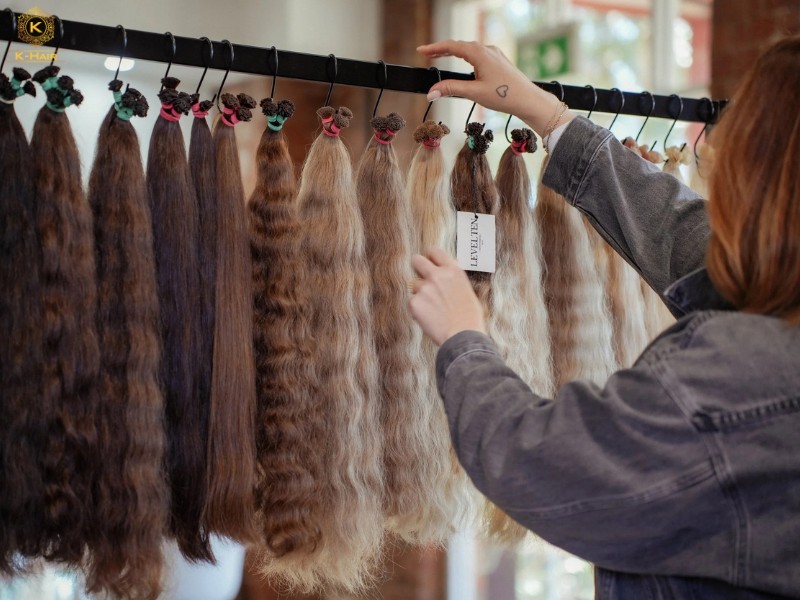
How can you build a relationship with your vendor
→ Not sure where to start looking? How to find good hair vendors
K-Hair: A Sourcing Partner Built for This Standard
Even after applying these testing standards, finding a truly reliable partner when buying hair extensions can be challenging. As a leading factory-direct manufacturer in Vietnam, K-Hair Factory operates under these exact quality protocols, offering the manufacturing scale, quality control, and transparency serious hair brands require:
- 100% Raw, Unprocessed Sourcing: Our raw hair inventory is maintained in its authentic, single-donor, cuticle-aligned state – completely free from chemical baths, silicone coatings, or synthetic fills before reaching your hands.
- Tailored Density Customization: Bundles are prepared to your exact specifications, including custom Double Drawn or Super Double Drawn full-length strand ratios to meet your brand’s density requirements.
- High-Volume Factory Capacity: Backed by expansive manufacturing facilities and skilled craftsmanship, K-Hair can comfortably fulfill large-scale bulk orders (handling hundreds of kilograms monthly) with stable inventory, tight quality control, and rapid global shipping.
- Risk-Free Sample Vetting: We encourage low-volume sample ordering before committing to bulk Minimum Order Quantities (MOQs), allowing you to independently run your own wash, bleach, and 4-week wear tests first.
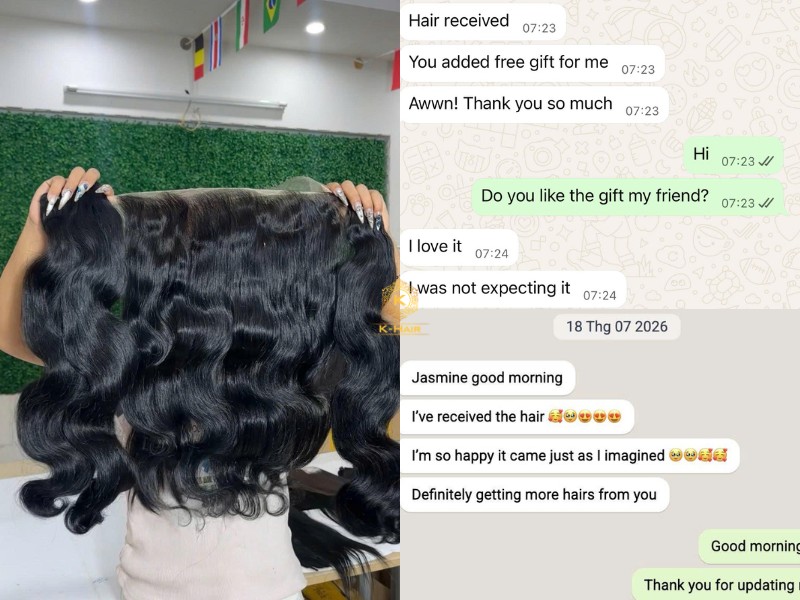
K-Hair: A Sourcing Partner You Can Actually Trust
FAQs About Buying Hair Extensions
Here are some frequently asked questions about buying hair extensions:
How can you tell if hair extensions are Raw or non-Remy?
Raw hair keeps its cuticle running in one direction and resists tangling through multiple washes, while non-Remy hair tangles and mats quickly because the cuticles run in mixed directions.
How long should a wear test run before placing a bulk order?
A 4-6 week wear test on a staff member is enough to reveal shedding, nape matting, and real-world longevity issues that a same-day inspection can’t catch.
Should you order from more than one supplier at once?
Once you’ve found a vendor that passes sampling and a small first order, running a second supplier in parallel for a low-volume line item is a reasonable way to avoid depending entirely on one factory’s consistency.
Conclusion
Buying hair extensions at the wholesale level isn’t a one-time purchase decision – it’s an ongoing process of testing, renegotiating, and re-verifying as suppliers change staff, factories, and raw material stock. The salons that protect their margins are the ones that treat their hair vendor as a strategic partner, not just the cheapest line on an invoice.
If your current supplier has never passed a wash-and-wear test, that gap is worth closing before your next bulk order. Partner with K-Hair today to experience true supply chain transparency and uncompromised raw hair quality. Contact our sales team to request your sample pack and secure a dependable partner for your growing brand.
Ready to source verified raw Vietnamese hair?
Contact K-Hair Factory directly for wholesale pricing, MOQ details, and free samples.