The multi-billion dollar industry of hair extensions and wigs function on quite an interesting foundation. Although most of the hair in the market is collected from Asian countries, a huge proportion of its clientele are Caucasians. This conflict leaves hair buyers questioning the blending ability between Asian hair vs Caucasian hair.
But worry not – because the differences between these distinct hair types will be discussed thoroughly in this article. By the end, you will understand why Asian hair remains the best pick when it comes to production.
1. Asian Hair vs Caucasian Hair – Getting Into Details
Due to differences in climate, geography, and hair care,… Asian hair vs Caucasian hair cannot be more distinct from one another. These distinctions can be reflected through their structure, cuticles, pigment and porosity.
1.1. Hair Structure & Cross-Section
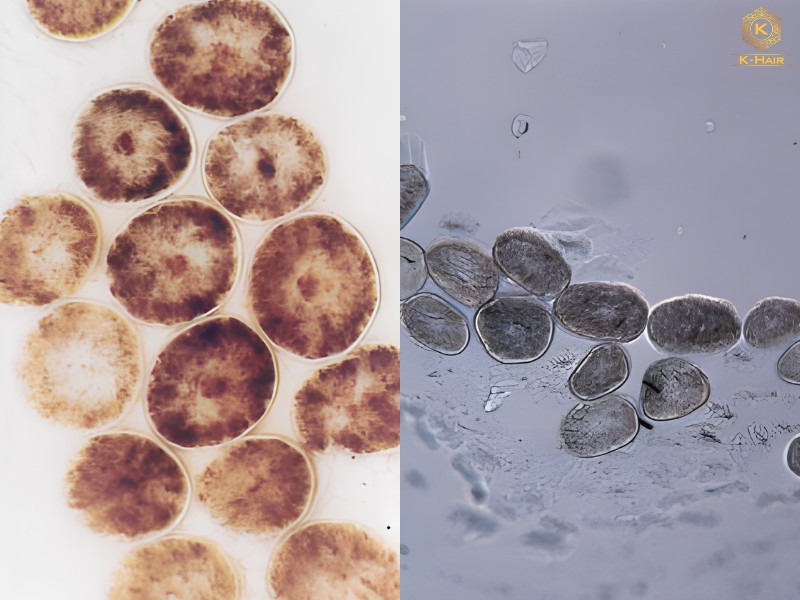
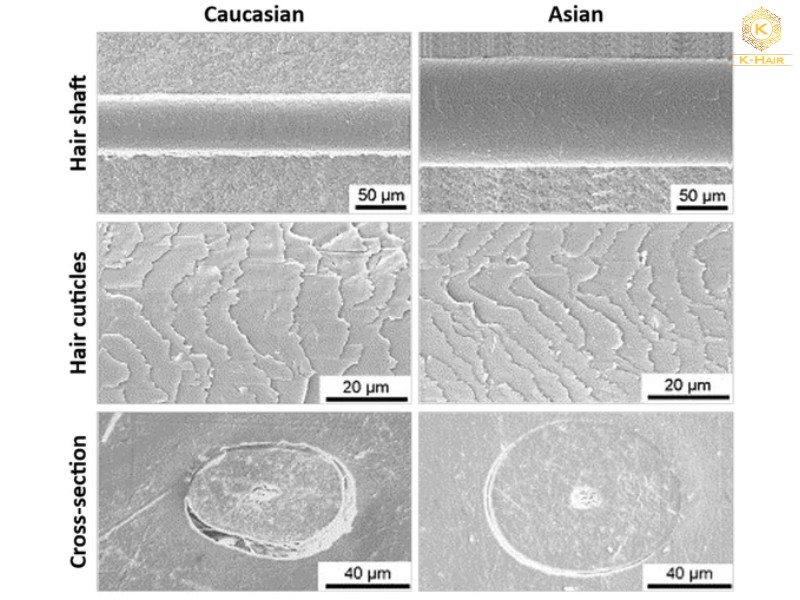
The first and foremost difference between Asian hair vs Caucasian hair remains the shapes of their own hair shafts:
- Asian Hair: Under a microscope, Asian hair has a perfectly round cross-section. This roundness allows the hair to grow straight, with a natural “glass-like” shine because light reflects evenly off a circular surface.
- Caucasian Hair: Caucasian hair is oval or elliptical – making the strands naturally prone to being wavy or curly. And, when light hits the surface, the strands often appear in a “matte” or “muted” shine compared to Asian hair.
The differences also lie in the inner structure of the strand itself – particularly, the medulla, the inner core of each strand.
- Asian hair stands out for its consistent medulla that serve as a stable foundation on which the strand continues to grow.
- Caucasian hair however, does not have a clear medulla, especially for those born with naturally thin, brittle hair.

Asian hair has a perfectly round cross-section, while Caucasian hair is oval or elliptical – Microscopy of Hair – Deedrick D.W. & Koch S., 2004
1.2. Cuticle Layers
By definition, the cuticle is composed of flat, overlapping scale-shaped cells that protect the inner layers of the hair shaft. The thickness of this outer protective layer is also another difference between Asian hair vs Caucasian hair:
- Asian Hair: Naturally, Asian hair tends to have a much thicker cuticle layer compared to the others – Caucasian hair included. Typically, a healthy Asian hair strand would feature 5-10 layers of cuticle scales, aligned at a steeper angle → making them more tightly packed and pressed against one another.
- Caucasian Hair: Structurally, Caucasian hair would be much more vulnerable than Asian hair. Compared to its 5-10 layers, Caucasian hair only has 4-7 layers of cuticles. And, these scales also tend to be slightly flatter and less densely-packed.
This feature inherently affects the overall durability and lifespan of the strands. Having more cuticle layers means more protection against external stressors, and ultimately longer lifespan. After being collected, Asian hair can still be kept for 3-5 years, while Caucasian hair can only last 6-12 months.
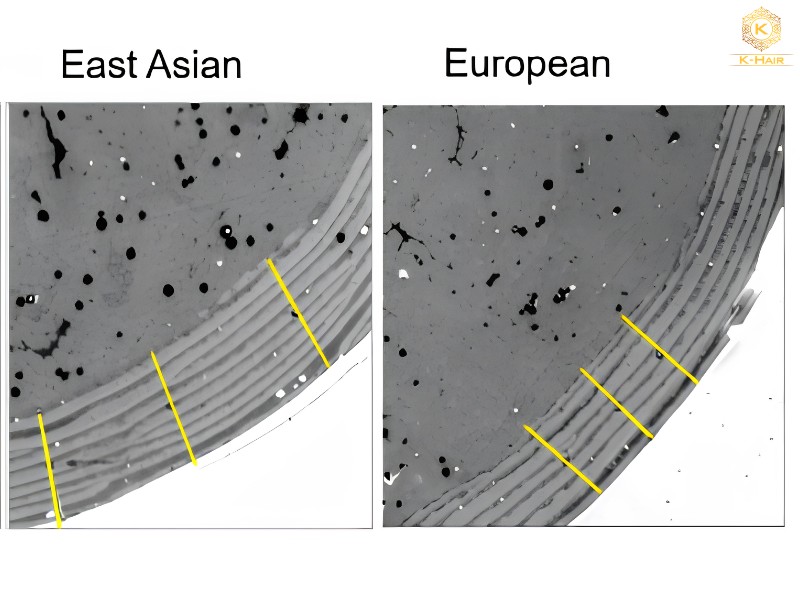
Variation in human hair ultrastructure among three biogeographic populations – Koch, S.L., Shriver, M.D. and Jablonski, N.G., 2019
1.3. Diameter
Another key dissimilarity between Asian hair vs Caucasian hair is the strand’s diameter – the size of the strand itself:
- Asian Hair: This hair type typically comes with a larger overall strand diameter – their thicker cuticle layers might be one of the reasons. This measurement can range from 80-120 micron → making the strands appear thicker, coarser and heavier on the touch.
- Caucasian Hair: Typically range from 50-70 microns → making the strands feel finer, softer than Asian hair, giving off this “airy” sensation.
Asian hair tends to have a larger average diameter
On Hair Care Physicochemistry: From Structure and Degradation to Novel Biobased Conditioning Agents – Fernandes C., Medronho B., Alves L., Rasteiro M. G., 2023
1.4. Pigment
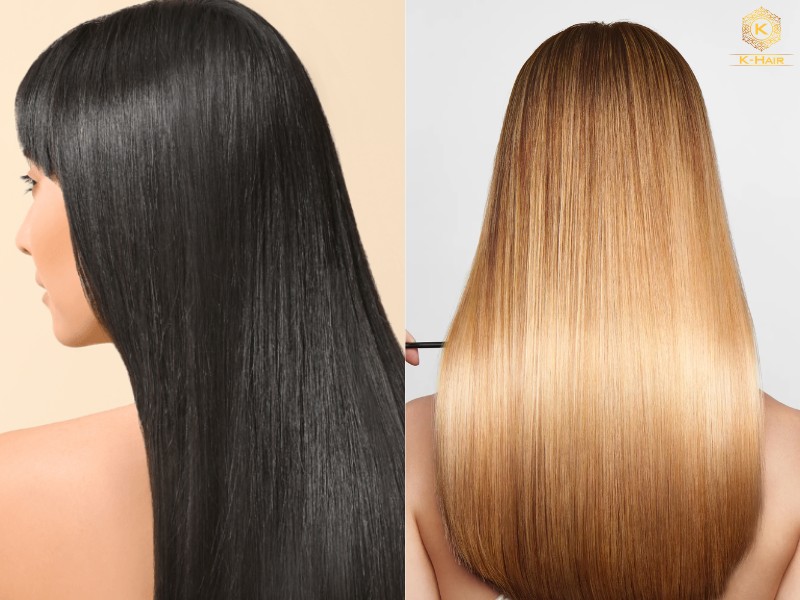
The color of the hair is one of the most significant and noticeable differences between Asian hair vs Caucasian hair. Due to the varying levels of melanin – the key component deciding strand pigment, these two hair types will appear in different colors, and hence, different bleachability:
- Asian Hair: Heavily concentrated on Eumelanin focusing on black, darker pigment. Therefore, natural Asian hair, without the help of manufacturer processing, might take more time and multiple bleaching efforts to be lifted to blonde.
- Caucasian Hair: Featuring a mix of Eumelanin and Pheomelanin (the red/yellow pigment) → easier to be bleached and colored.
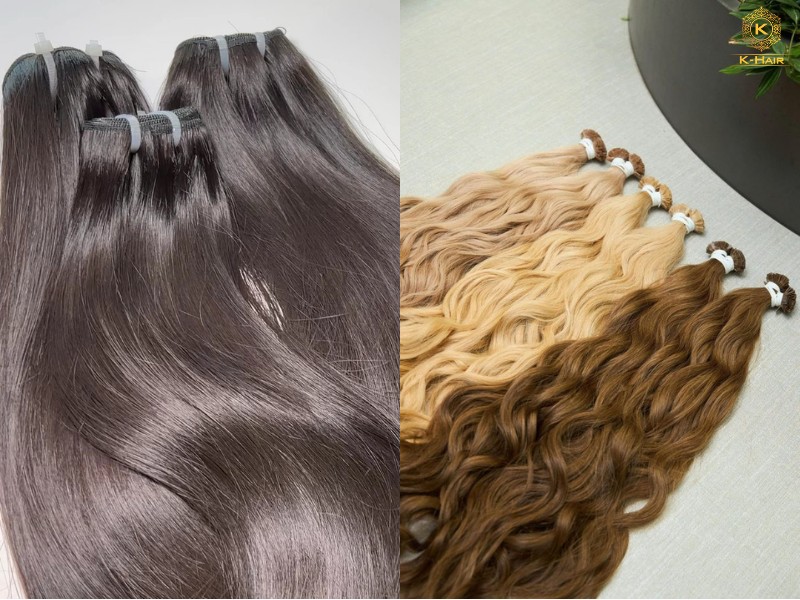
Due to differences in melanin level, Asian hair tends to be black, while Caucasian hair has a lighter blonde, brown color
1.5. Porosity & Moisture Retention
Porosity is, by definition, the ability to absorb or retain moistures, and this feature often has a lot to do with the cuticle layers and alignment mentioned above:
- Asian Hair: More waterproof – lower hair porosity compared to any other hair types, mainly due to their closed and dense cuticle scales. This can be translated directly to – more hair shines, silkiness, as well as overall moisture retention.
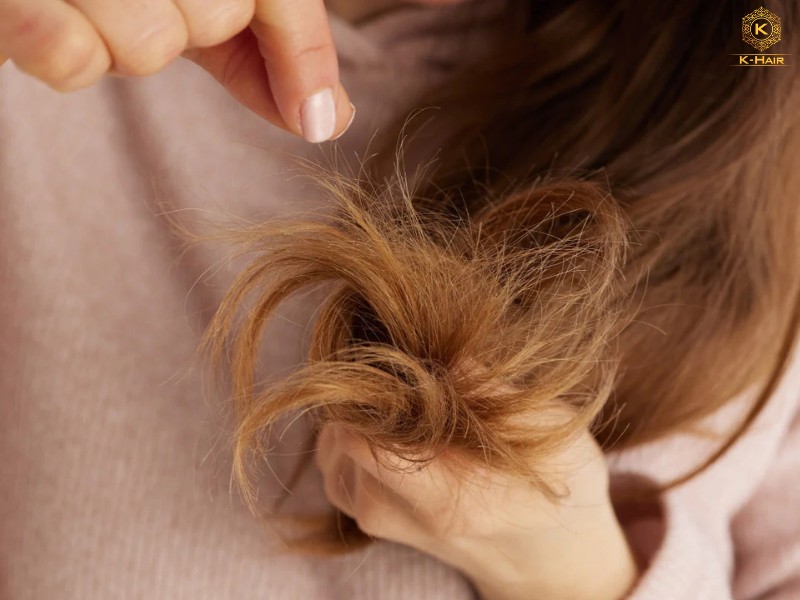
- Caucasian Hair: Medium to High porosity, Caucasian hair is quicker to absorb and lose moisture – creating a sponge-like effect. Hence, in high humidity, these Caucasian strands would be much more prone to frizziness and fragility.
Caucasian hair has higher porosity – more prone to dehydration
For a brief comparison between Asian hair vs Caucasian hair, let’s check out this table below:
| Feature | Asian Hair | Caucasian Hair |
| Cross-Section | Round | Oval or elliptical |
| Visual Texture | Overall straight textures | Wavy or curly |
| Medulla (Core) | Present and consistent | Does not have a clear medulla |
| Cuticle Layers | Thicker – from 5-10 layers | Finer, from 4-7 layers |
| Lifespan | 3-5 years | 6-12 months |
| Diameter | 80-120 micron | 50-70 micron |
| Melanin Type | Eumelanin → black, darker pigment | Mix of Eumelanin and Pheomelanin → Red, yellow and brown hair pigment |
| Porosity | Low porosity | High porosity |
2. Why Asian Hair is The Better Pick for Hair Enhancements?
As can be inferred from the table above, Asian hair vs Caucasian hair might not have too much in common with one another. So, why would the market and its manufacturers keep on using Asian hair as raw materials for wigs, extensions? Can they actually make a texture match for Caucasian end-users?
Read more: Do Vietnamese have curly hair?
As a hair manufacturer and hair sourcing expert myself, I’m fully convinced that despite popular belief, between Asian hair vs Caucasian hair, the first one is a much better choice for raw hair material. And, this statement is not based on my preferences, but on multiple factors and features that Asian hair seem to excel its counterparts:
- Durability: Thanks to their thick cuticles and higher moisture retention – Asian hair can maintain their pristine, healthy and tangle-free state for a much longer time. And, this protective layer can also shield the strands from external factors like the UV ray, humidity and dehydration – guaranteeing a longer lifespan for the product made.
- Versatility in Processing: While Caucasian hair takes less time and products to be bleached and texturized, the thin strands themselves are fragile and vulnerable, hence, more prone to severe damage. Asian hair on the other hand – not only can allow longer texture hold, but also minimize the damage during the process – ideal for customization and production.
- Steady Supply: Unlike European, American countries, Asian countries like Vietnam, Cambodia, India,… are the lasting, well-established hair empires with a huge abundance of raw hair to back their production. Their wigs and extensions dominate the market, creating a stable and affordable source – a safer sourcing option for hair businesses across the globe!
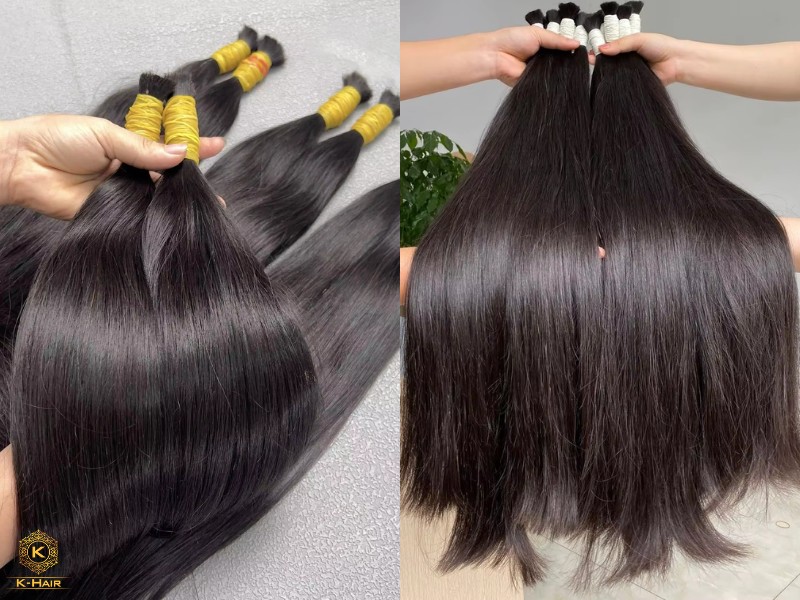
Durability, Versatility and Availability are the factors that make Asian hair a better raw hair source than Caucasian hair
3. The Truth About Caucasian Hair In The Market
If you still doubt the blending ability of Asian hair for Caucasian users – and still prefer using Caucasian hair for your clients – you will not like this. However, the truth needs to be said – most of Caucasian hair you see in the market is Asian hair! That’s right – the title, Russian hair, Slavic hair,… are all just marketing claims.
Due to the fragility of the strands, as well as the low rates of raw hair donation, most manufacturers have soon turned to Asian hair as their go-to source. Not only because Asian hair is more durable and versatile, but also because of the countries’ low income leading to higher donation rates. Standing between these two choices – Asian hair vs Caucasian hair, the former is obviously the better option.
To please niche market segments preferring Caucasian hair – vendors will stock Asian hair, subject it to aggressive bleaching and texturizing. Hence, when you buy these products – you are risking your budget to purchase processed hair with a much higher price, just for a marketing title. So, if Caucasian hair is – inherently – Asian hair in disguise, why choose authentic Asian raw hair and enjoy its superior durability at a fairer price?
4. Conclusion
With all the information mentioned in this article, we hope that we have been able to clear up on the debate of Asian hair vs Caucasian hair. All and all, being two different hair origins, Asian hair and Caucasian hair, each would have their own distinct, unique features and attributes. However, for those looking for a suitable hair source – considering its durability, availability and performance, Asian hair would be a superior choice.
Manufacturers – especially well-established ones with well-trained staffs are the best hair source for Caucasian hair buyers wanting natural-looking hair extensions. Try K-Hair – one of the best Vietnamese hair factory, and we can provide you the best quality hair in the most natural shades: blonde, light brown, honey,… to match your client’s diverse needs.
Need help finding the ideal hair extensions for your brand? Feel free to contact us via WhatsApp: +84 85 555 5344 or Facebook: K-Hair Factory for a direct consultation. Let’s elevate your hair business together!