If your hair is too wavy to be considered straight, but too loose and sleek to be considered wavy by standard – you are not alone. In fact, this particular hair type is included in Andre Walker’s hair typing system, categorized as 2A hair.
This class is often known for their loose waves, thin and soft strands. While it is relatively easy to tend to, 2A hair still requires specific maintenance procedures in order to remain in perfect shape. Let’s explore these needs, as well as 2A hair traits, appearance, and how to identify its waves in this article below.
1. What is 2A hair?
Belonged to the type 2 hair category, 2A hair is a type of wavy hair – distinct by their S-shaped waves. The “A” in its name suggests that 2A hair is the loosest out of the three subtypes 2A, 2B and 2C hair, with larger, more relaxed waves. On top of that, typically, the strands seen in 2A hair are often thinner, softer compared to the other wavy variations.
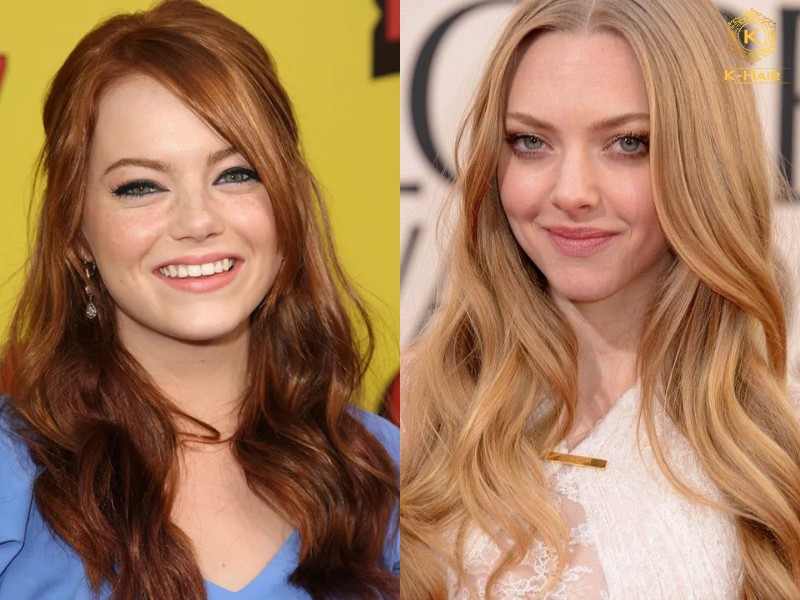
Across the globe, 2A hair is also one of the most iconic and popular wavy hair types out there. In fact, many of your favourite actresses and celebrities actually have this hair classification. These faces might include Emma Stone or Amanda Seyfried – Hollywood’s favourite actresses winning multiple awards,… So, if you ever feel like your hair looks exactly like what they have, there is a high chance that your hair falls into the same category as these famous celebrities’.
2. Getting to Know 2A Hair Features
Much like most of the other wavy hair subtypes, 2A hair carries some of the shared features of this hair family, such as its manageability and styling ability. However, besides these similarities, 2A hair can still have its own distinct characteristics – features that make it stand out in its own lane.
2.1. Hair look
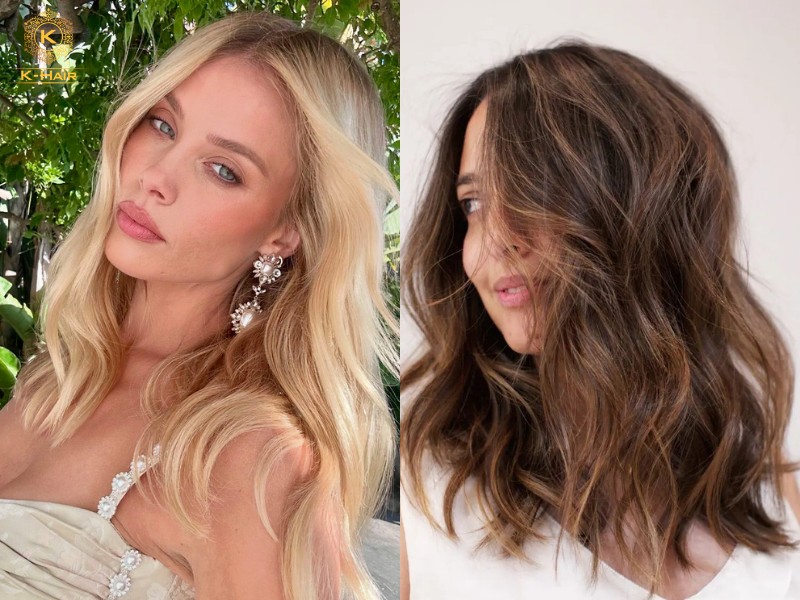
In terms of how 2A hair looks, its appearance can initially be mistaken for sleek and straight with slight waves seen in 1C hair. However, when paid more attention to, the hair can show many of its unique patterns and texture in its strands:
- Loose wave patterns: Most of the 2A curls would be distributed from the upper-mid hair lengths downward, with only loose and light S-shape waves throughout.
- Fine, thin hair strands: 2A hair strands are mostly lower-medium in terms of texture – slightly thicker than the ultimate fine 1A strands, but still not as thick as the other wavy types.
- Volume: This hair offers the least volume among the wavy hair family. In fact, most of the loose waves can only create little shrinkage and volume – making the hair appear thinner than 2B, 2C ones.
- Natural hair shine: as sleek and loose as the strands can get, 2A hair tends to be much shinier when compared to the rest. In fact, as the hair strands are sleeker, it is much easier for natural hair oil to travel downward – creating a lustrous, glass-like finish.

Loose waves, thin, soft strands and natural luster are the physical features of 2A hair
2.2. Innate traits
Describing “what is 2A hair?” – we cannot overlook its innate qualities and traits, as they are a huge part of the hair’s characteristics, shaping their maintenance needs. Indeed, as unique as it can get, it carry a lot of both shared and exclusive traits:
- Secure cuticles: Oftentimes, the lack of hair bends would lead 2A hair to having closed and tightly shut cuticles along the hair shafts → making it a low-medium porosity hair type. However, raised cuticles can still be spotted along the hair bends, especially near the ends where all the waves are.
- Prone to oiliness: Having sleeker hair strands would also make 2A hair more subjected to oiliness and oil accumulation. This is especially worse for the top hair length near the scalp – causing the part to appear dull and oily faster.
- Styling versatility: The loose wave pattern of 2A hair can, not only make it easier, but also more effortlessly to be styled and texturized. However, the natural oiliness can be a huge problem, potentially ruining the final result and reducing the hairstyle’s lifespan.
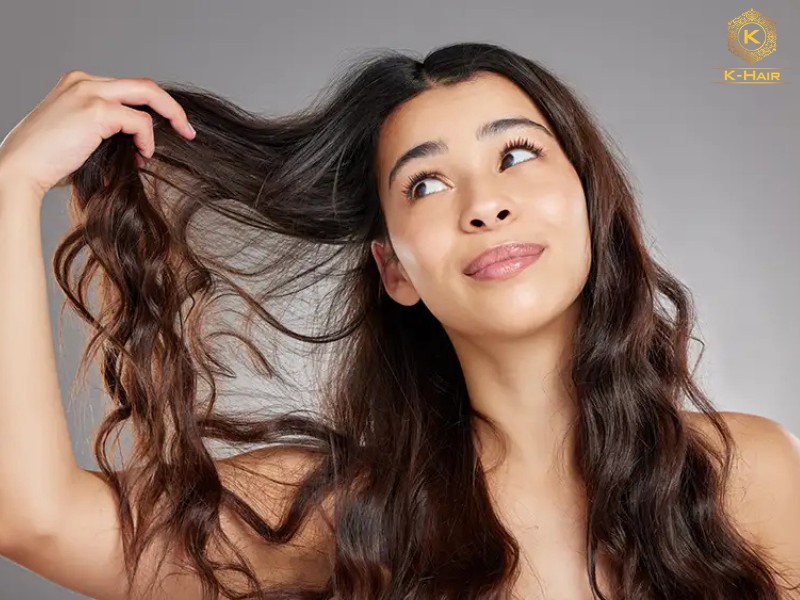
- Easily weighed down: One common problem for fine and thin hair types is that the hair strands are quick to gather buildups- this issue is universal for all those with 2A hair. What’s more is that the heavy residue can easily weigh down the strands, loosening their natural hair patterns and volume over time.
2A hair can be quick to gather buildups – making the strands easier to be weighed down
Expert tips: The best way to identify your natural hair type is to wash your hair, skip all styling products, and let it air dry naturally. This should show your hair’s true texture and wave pattern.
3. What’s 2A Hair Like Compared To Others?
In reality, this hair type is often mistaken for other similar textures. Mistaking 2A hair with 2B hair or straight hair types are some of the most common misconceptions for many hair lovers out there.
To shed more light on this issue, let’s go over the table below for better comparison:
| 2A Hair | 2B Hair | Type 1 Hair | |
| Natural patterns | Loose S-shape waves | Tighter S-shape waves | Mostly straight, sleek hair strands |
| Curl starting points | Mid-length to ends | Upper mid-length downward | Small bumps and flicks at the ends |
| Volume | Low-medium | Medium | Low |
| Oiliness | More prone to oiliness at the roots to mid-lengths | Most oil is gathered at the roots and areas near them | Oil is distributed along the strands |
| Styling ability | High versatility, but low texture hold | Medium versatility | Low versatility due to oiliness |
| Reaction to brushing | Waves are likely to disappear | Waves tend to stay | No reaction |
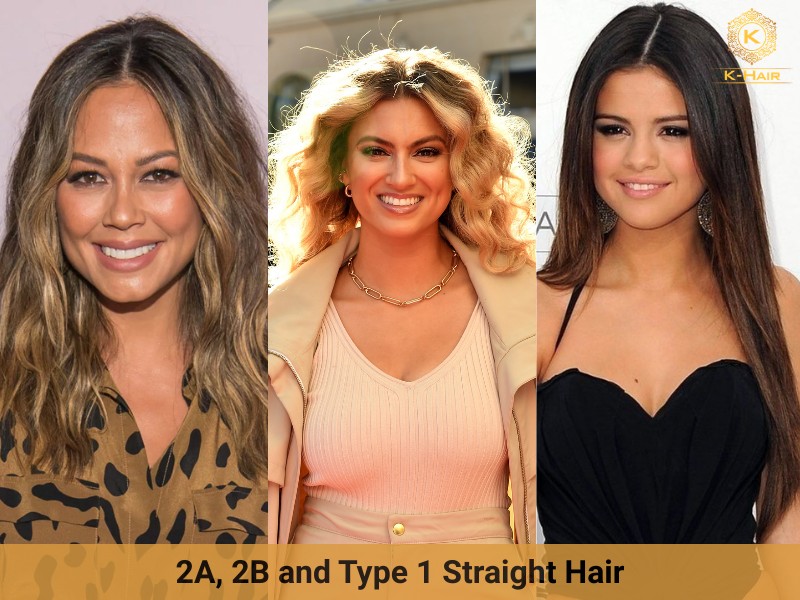
To see a clearer picture, you might want to check out a more thorough comparison between 4 types of hair in the article about Hair Typing System.
4. Three BIGGEST Problems for 2A Hair
Much like any other hair types, 2A hair also has its own disadvantages. In fact, for most natural-born 2A hair, the three most reported issues for this hair type are its oiliness, lack of volume, and its being easily weighed down.
So, as someone who was born with 2A curl, or just currently purchased a 2A hair wig, what can you do to solve these tricky issues? The answers are right below:
4.1 How to Solve Oiliness?
Oiliness is common for 2A hair, particularly for its loose pattern. For those with 2A hair, this condition can easily lead to residue, making styling more and more difficult, as well as affecting your overall clean look. To push back oiliness, here are what you need to do:
- Adjust your hair wash frequency: The perfect routine should be to wash your hair each and every 2-3 days.
- Make sure to apply your conditioner the right way: Apply your conditioner only to mid-lengths and ends – make sure to avoid the roots, as this part is the most prone to oil accumulation.
- Dry shampoo: You can also use dry shampoo to settle the excess oil and extend the time between washes. However, this method should not be used to replace washing completely.
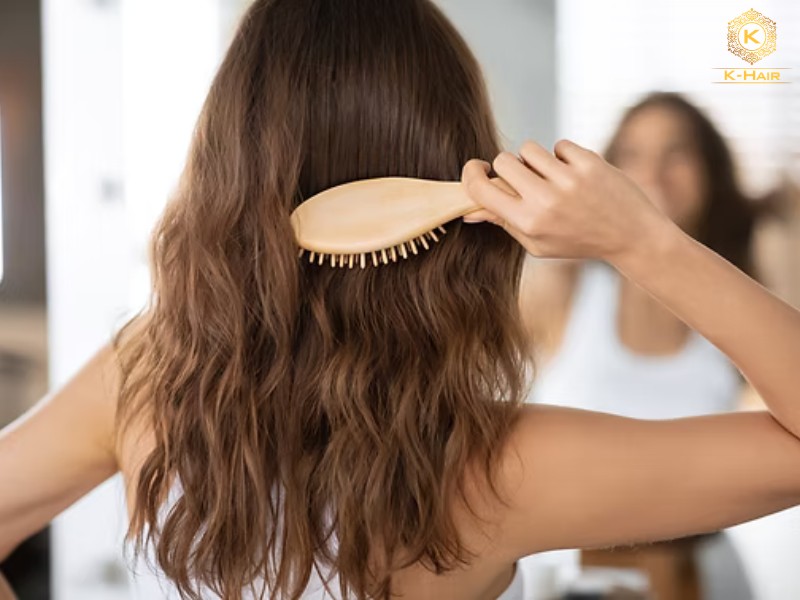
- Brushing: Brushing your hair often can also help distribute sebum more evenly – avoid over oiliness at the roots and dehydration at the ends. Oiliness is common for this type of hair, particularly for its loose pattern
Brushing can help distribute oil more evenly
4.2 How to Give Your 2A Hair More Volume?
Its loose, relaxed waves often make it appear less voluminous than other wavy hair types. Hence, this thin look is also a huge headache for many. If you wish to increase hair thickness, you can consider doing the following:
- Use volumizing products: Products like sea salt spray, texture spray, volumizing mousse,… can increase your volume and wave formation by a great deal.
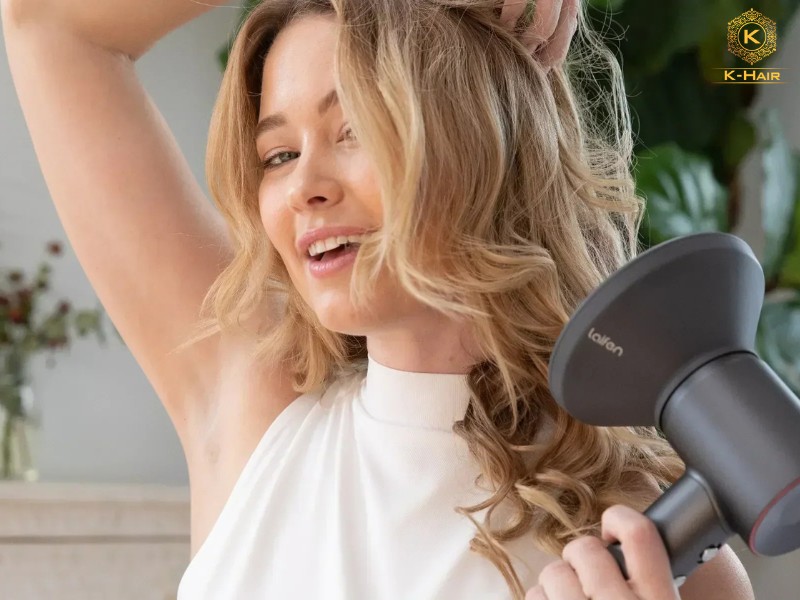
- Diffuse your hair instead of drying: Make sure to attach a diffuser head to your hair dryer or use a diffuser to make the waves appear fuller.
- Use the Scrunch method: When applying mousse or wave spray, you should also scrunch your hair ends upward to make the texture appear more defined.
Using a diffuser can help to enhance your volume
4.3 How to Keep Your 2A Hair From Weighing Down?
One major setback for stylists when working with 2A hair is that the strands are quick to get weighed down and lose their textures. However, there are still many ways to get rid of the residues, preserve the waves and make them last longer:
- Use the right products: For all maintenance and styling processes, 2A hair can only use lightweight products only. Thick, creamy options can easily overwhelm the strands, causing the waves to disappear gradually.
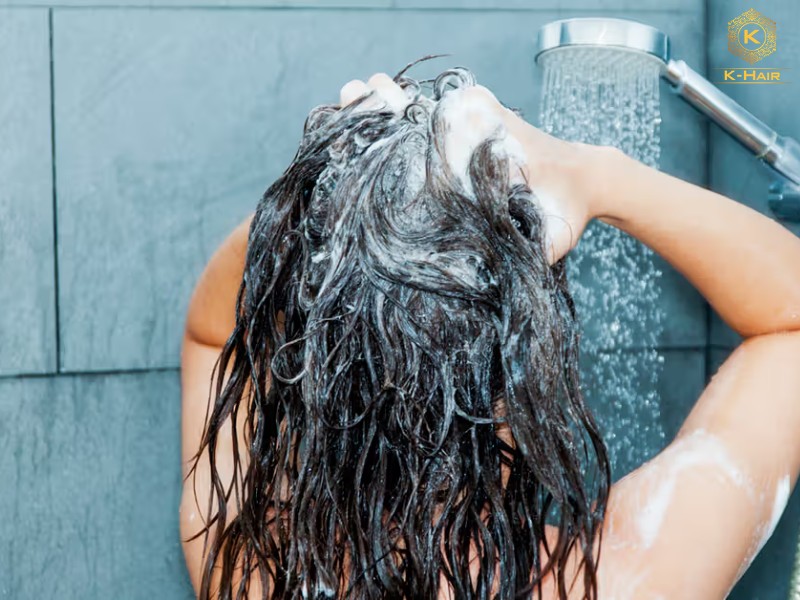
- Wash your hair the right way: To get rid of all residue, you should rinse the hair in cold water, and make sure that the water runs clean, before finishing it off with drying.
- Besides these tips, you can also consider switching to a clarifying shampoo every 1-2 weeks, to achieve a better cleansing result.
Rinsing your hair with cold water can help to get rid of all residue
5. FAQs About What is 2A Hair
Here are some frequently asked questions about what is 2A hair:
5.1 What is 2A hair?
It is the loosest type of wavy hair in the hair typing system. It features soft, gentle S-shaped waves that usually start from the mid-lengths of the hair rather than the roots. This hair type often has a fine to medium texture and can appear almost straight when brushed.
5.2 How can you tell if you have 2A hair?
You may have 2A hair if your hair:
- Forms loose S-shaped waves
- Looks mostly straight near the roots
- Develops waves mainly toward the ends
- Loses its wave pattern when brushed
Letting your hair air-dry without products is one of the easiest ways to identify your natural texture.
5.3 What is the difference between 2A and 2B hair?
The main difference is wave definition and volume.
- 2A hair: loose waves, lower volume, smoother texture
- 2B hair: more defined waves, more body, slightly higher frizz
2B waves often begin closer to the roots, while 2A waves typically start mid-length.
5.4 Is 2A hair rare?
No, 2A hair is actually quite common. Many people naturally have this hair type, but it can sometimes be mistaken for straight hair because the waves are subtle.
5.5 What are the biggest problems with 2A hair?
Common challenges for people with 2A hair include:
- Hair becoming flat or lacking volume
- Oiliness at the roots
- Hair being weighed down by heavy products
Using lightweight styling products can help maintain wave shape and volume.
6. Conclusion
Understanding what is 2A hair helps you better care for and style this loose wavy hair type. With its soft S-shaped waves and lightweight texture, 2A hair is in its best shape when properly cared and tended to. And, with this article above, we hope that we have provided you with just the right information and tips for this type of hair lovers out there.
However, we understand that from time to time, you might want to switch to different styles, colors. To achieve that without damaging your hair, we highly recommend switching to wigs as a protective hair piece. Try purchasing a premium wig for once, and see if this alternative is suitable or not.