
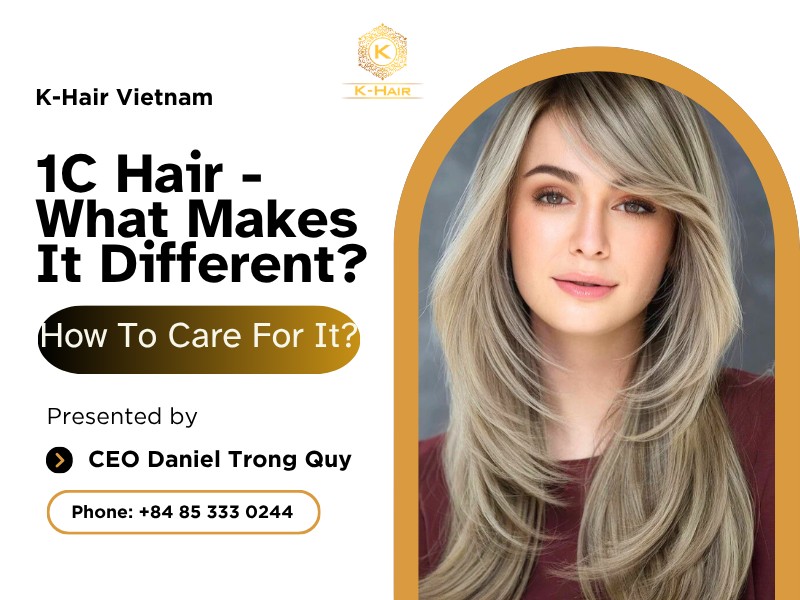
For the longest time, straight hair has received many praises for its ultimate lustrous, sleek and silky look. However, this sleekness is not universal for all straight hair types. In fact, 1C hair – the last straight hair classification, often appears with slight curves at its ends.
This causes confusion, as many people, based on these curves, often wrongly classify 1C as a wavy variation and treating its strands as such. To avoid the misunderstanding, as well as to adopt the right maintenance routine for this hair type, make sure that you are well-informed about its hair features and behavior.
Luckily, this needed knowledge is within reach – as all of these details will be mentioned in our article right here!
1. What is 1C Hair?
By definition, 1C hair is one of the three straight hair types – identified by their overall straight, sleek appeal. On top of that, being placed last in the straight hair spectrum would also suggest that its strands would also have the most texture and thickness. Which means – besides the straight patterns, 1C hair also features some degree of curls and curves to it.
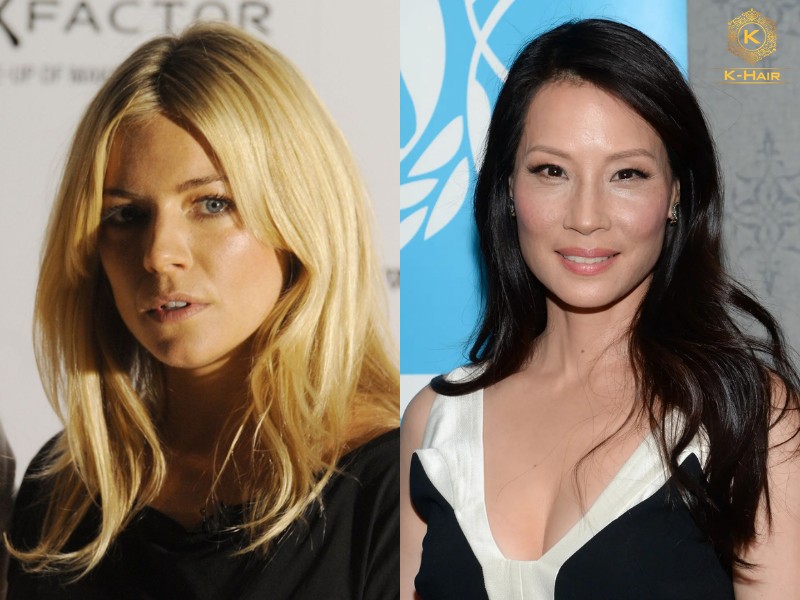
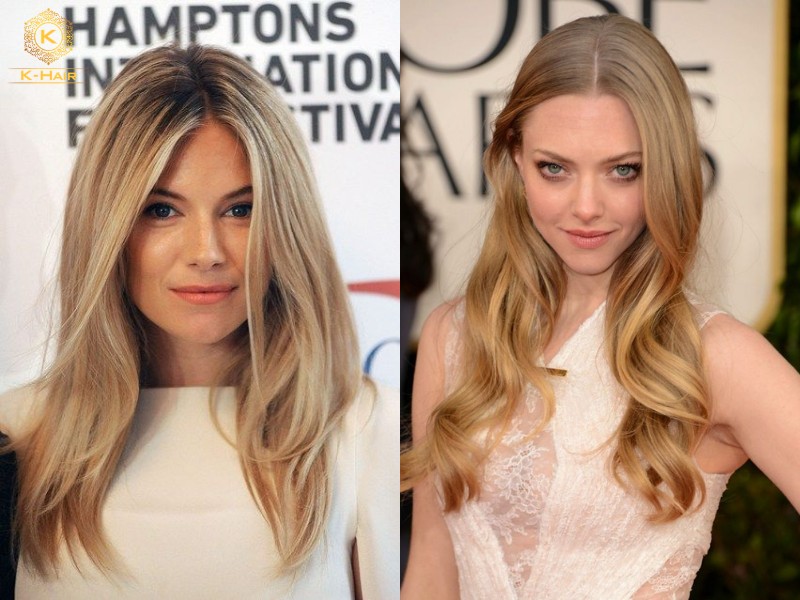
1C hair is quite a popular sight, especially when compared to the ultra-rare 1A hair. In fact, some famous celebrities with this natural hair type might include:Sienna Miller – the talented rom-com leading lady; and Lucy Liu – the iconic Charlie’s Angel,… So, if you have hair that looks just like theirs – you might also be a member of the 1C Hair Club!
2. Getting to Know 1C Hair Features
1C hair is unique in its own ways. Being placed among straight hair types, these strands would also have many shared traits, such as its straightness and oil distribution. However, 1C hair also strands out – with its unique patterns and strand thickness. Discover more on these characteristics, and how they complement one another in these sections below:
2.1. Hair Appearance
In terms of how 1C hair looks, its appearance can initially look quite similar to the sleek 1A hair. However, when paid more attention to, the hair can show many of its unique patterns and texture in its strands:
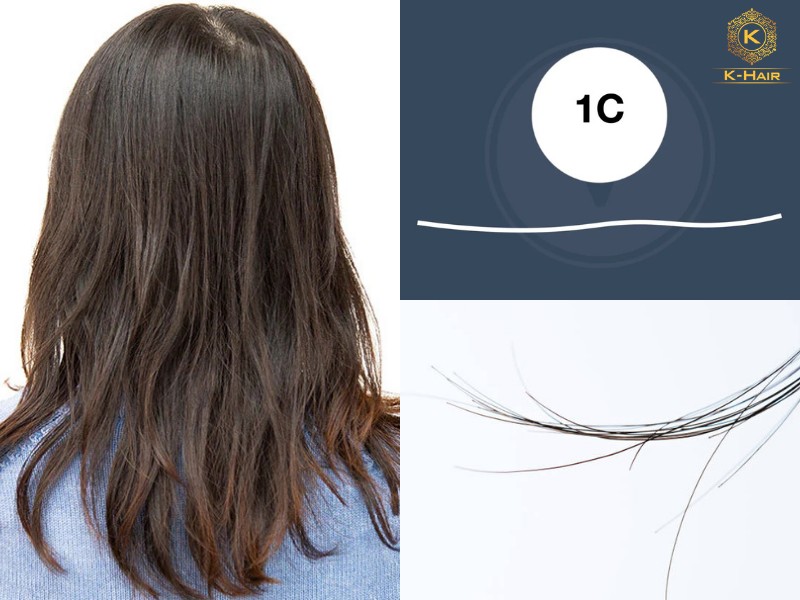
- Patterns: Upon first impression, we can see that most of the hair strands are still lying completely straight, with notable sleekness and smooth appeal. However, with closer observation, you can actually spot visible bends and curves from here to there, especially at mid-length parts, as well as the very ends of the strands.
- Thick hair textures: Considering 1C hair is still among the straight hair family, its strands mostly lean toward a generally fine texture. However, if you compare it to other 1A and 1B hair types, you will see that, despite being straight and sleek, the typical 1C hair strands would be much coarser and thicker than the rest.

1C hair has the thickest strands of the straight hair type - Natural volume: Having more curls would also mean that 1C hair can offer much more volume. Furthermore, the thicker, coarser hair strands also contribute to the overall full look, making the hair appear thicker than most other straight hair types.
- Textured surface: Thanks to its overall straight patterns, 1C hair can still preserve the luster seen in type 1 hair. However, due to the slight waves, 1C hair does not appear as sleek and shiny as 1A or 1B hair – especially at its wavy ends.
2.2. Hair Behaviors
1C hair is a whole package. Beside its looks – you would need to study its behaviors as well to truly understand its inherent characteristics:
- Its cuticles: As the overall pattern of 1C hair is still relatively straight – most of the hair strands’ cuticles tend to be closed, and tightly shut. However, the further the hair lengths are from their roots, the more likely they are to have raised cuticles – especially along the waves at hair ends.
- Dryness: Dryness is one huge problem for hair types with waves like 1C hair. Indeed, due to the raised cuticles, moisture is quick to escape. On top of that, the waves also make it harder for hair sebum to travel downward and moisturize these dry ends – causing dehydration and poor moisture retention for 1C hair.
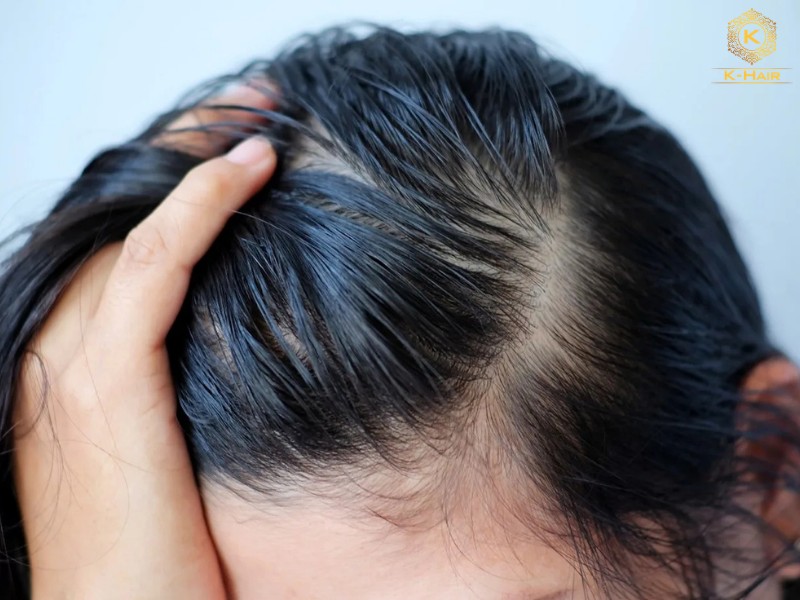
- Oily hair at the roots: Oily hair is also another feature for 1C hair, especially at the upper lengths near the roots. In most cases, this hair length is much sleeker than the bottom lengths, making the section more prone to oil build-ups, especially if not washed frequently.
Oiliness at hair roots is one signature feature of 1C hair - Styling ability: One major advantage of 1C hair is its versatility when it comes to styling. Due to its textured patterns and thickness – 1C strands can hold curls for a much longer time compared to sleeker types. On top of that – being slightly wavy also allows more range – 1C hair can be either straightened, or curled up to one’s liking.
To expand your knowlegde to more than just 1C hair and see the differences between these diverse types – check out our article on Hair Typing System.
Expert tips: 1C hair pattern might vary greatly due to different aspects like frizz, residue, or styling. To identify its texture correctly, you should let the hair dry out naturally to observe its patterns.
3. What Are the Differences Between 1C and 2A Hair?
Being placed in the border between straight and wavy hair – 1C and 2A hair often get mistaken for one another. However, as similar as they might be, 1C and 2A hair are still completely distinct hair types, each with their own set of unique features:
| 1C hair | 2A hair | |
| Hair patterns | Overall straight hair patterns, with slight waves or bends at the ends | More defined and visible S-shaped waves, starting from the mid-length downward. |
| Thickness | Usually has thick or coarser hair strands | Featuring finer or medium-thickness hair strands |
| Volume | Generally lower hair volume due to sleek patterns | Light natural volume – but still appear thicker than 1C hair |
| Styling ability |
|
|
| Response to heavy products | When applied with heavy hair products, 1C hair would become extremely oily, shineless. | When applied with heavy hair products, 2A hair would not only become oily, but will also be weighed down completely, losing its waves and styling results |
4. 3 BIGGEST Problems for 1C Hair
1C hair is rarely a demanding hair type, its maintenance is genuinely easy and doable, provided that you hit the right spot. In fact, for this specific hair type, you would need to focus your routine to treat and care for its 3 biggest hair issues: dryness, hair frizz, and inconsistent volume.
4.1. Dryness & Wiry textures
Having more lifted cuticles means that 1C hair is more prone to dryness and moisture loss. This issue tends to be worse at the hair ends – the section with the most hair bends and the easiest victim to external factors. On top of that, the strands thickness itself also causes the overall hair to appear wiry, coarse to the touch.
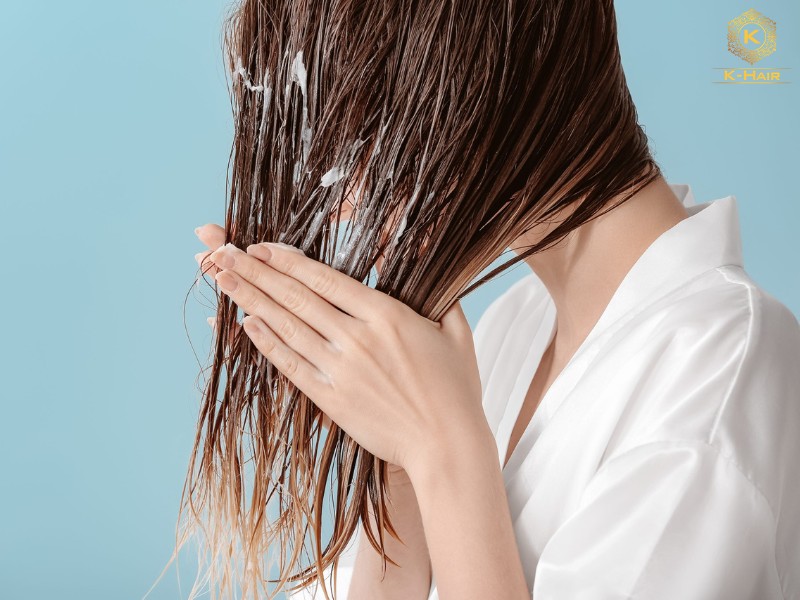
Despite being two different issues, both dryness and wiry texture can be solved by proper moisturizing. And, for 1C hair, this process includes:
- Focus on hydration should be your number one priority: make sure to integrate deep conditioning with a hair mask to your routine, besides the basic after-wash conditioning steps.
- Sealing the cuticles gaps and locking the moisture inside: by rinsing your hair with cold water, blow-drying downward in lower heat, or applying serums, lightweight cream with silicones – for smoother strands with less lifted cuticles.
- Applying oil has multiple benefits – it can not only better seal moisture inside the hair shafts, but also create a shiny, softer surface for the coarse 1C strands.
- Make sure to use all the right products only – avoid overly-stripping hair shampoo with sulfate or alcohol, and look for lightweight products with humectants like glycerin, aloe; and emollients (shea butter, fatty alcohols)
Using the right product can help with dryness and wiry strands
4.2. Frizz & Flyaways
Another thing about 1C hair is that the coarse strands are often extremely prone to frizz and that messy flyaway hair look you see first thing in the morning. However, unlike dryness which is rooted from moisture loss, hair frizz often results from different causes – dehydration, friction and humidity.
Hence, to solve this issue, hydrating your hair is never enough – you would need to adopt a comprehensive routine:
- Humidity is your biggest enemy – as it can swell up your strands and make the hair appear fluffy and uncontrolled. Hence, before going out – use anti-humidity sprays or serums to shield your hair from the external environment.
- Your brushing habits need correcting. Oftentimes, excessive brushing is the leading cause of friction and frizz. To minimize this, use a wide-tooth comb, and detangle your hair gently to avoid further cuticle lifting and hair frizz.
- For other hair types air-drying might be the best method – but for 1C hair, this can lead to puffy and frizzy surfaces due to uneven drying results. Hence, instead of this, you should blow-dry it with a nozzle attached for better distribution.
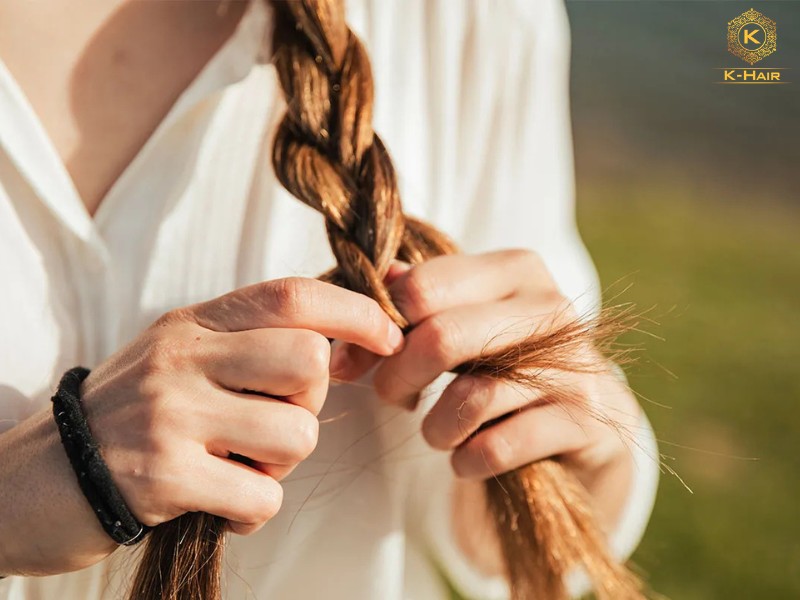
- Friction can also result from your own bedding material and night time care – make sure to switch your bedding to silk or satin, and wrap your hair in loose braids.
Wrapping your strands in a loose braids can also help with friction reduction
4.3. Inconsistent Hair volume
The nature of 1C hair patterns & its oil distribution are the leading causes of the inconsistent, uneven volume. Indeed, the roots are often easier subjected to oil and product build-up, while the ends are often frizzier and puffier due to its bends and curls.
However, you can still elevate your volume and even the sections out, by adopting the right methods:
- One quick fix is to use volumizing, lightweight products at the roots, while applying heavier products at the ends to even out the volume.
- When applying conditioner – make sure to apply at the hair ends and mid-lengths only to avoid excessive buildup that can flatten your roots.
- If your volume ranges drastically for different occasions – the root of the problems is mostly due to buildups. Hence, you should include clarifying hair products to your routine and use them once every week to get rid of the stubborn residue.
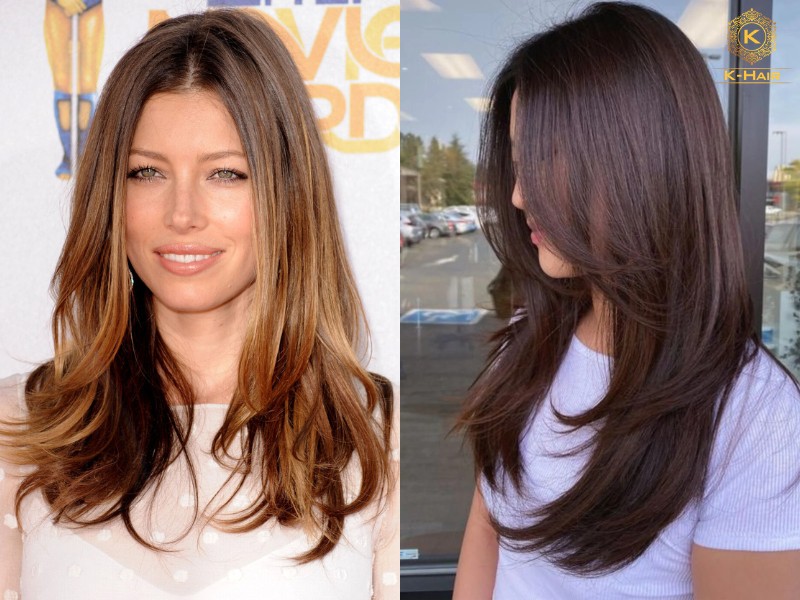
- In my opinion, the best way to control your hair volume, for all hair types alike is to get the right haircut. Normally, styles with long layers are often the best way to go – as they trim out the excessive hair bulks at the ends, while creating a natural, face-flattering look.
Cutting your hair in layers is a great way to distribute volume
5. FAQs about 1C Hair
Here are some frequently asked questions about 1C hair:
5.1. What is 1C hair?
1C hair is the thickest and most textured type of straight hair. It’s mostly straight but may have slight bends, body, or subtle waves, especially at the ends or in humid conditions.
5.2. How is 1C hair different from 1A and 1B?
1C hair has more volume and coarseness compared to 1A and 1B. While 1A is very fine and flat, and 1B has a bit of body, 1C tends to feel thicker and can sometimes look slightly wavy.
5.3. How often should I wash 1C hair?
Most people do well washing every 2-3 days, depending on oil buildup. Since 1C hair is thicker, it may not get greasy as quickly as finer hair types.
5.4. How can I reduce frizz in 1C hair?
Focus on hydration and smoothing products, like lightweight serums or leave-ins. Also, avoid over-washing and use a microfiber towel or T-shirt to reduce friction.
5.5. Why does my 1C hair lack volume sometimes?
This is often due to product buildup or excess oil at the roots. Using lighter products and clarifying occasionally can help bring volume back.
6. Conclusion
With the information provided in this article, we hope that we have managed to give you all the details needed to properly understand 1C hair and its needs. This hair type is often identified by this sleek look with slight waves at the ends, and its styling versatility has made these strands a stylist’s favourite! However, to give it proper maintenance, make sure to address its proneness to dehydrations, frizz, and uneven volume.
Indeed, styling can be a piece of cake for 1C hair, however, too frequent styling can easily cause more damage – limiting its potential. To switch between different styles without damaging your own hair – try using high-quality, human hair wigs from K-Hair for a change.

