Have you ever bleached a bundle over and over and still couldn’t hit a bright, even shade? Or had a client return hair, complaining it’s “not silky enough”? Both problems usually trace back to one thing: hair origin. Vietnamese hair is a single-origin human hair type collected from Vietnamese donors, prized for its thick, resilient strands and clean cuticle structure. It solves both problems because it lifts predictably and holds its silky finish wash after wash.
Buying direct from overseas factories comes with its own rules, though. Whether you’re a distributor upgrading your catalog or a salon owner making your first bulk import, this guide covers Vietnamese hair origins, grading realities, texture options, and factory sourcing for 2026.
What Is Vietnamese Hair?
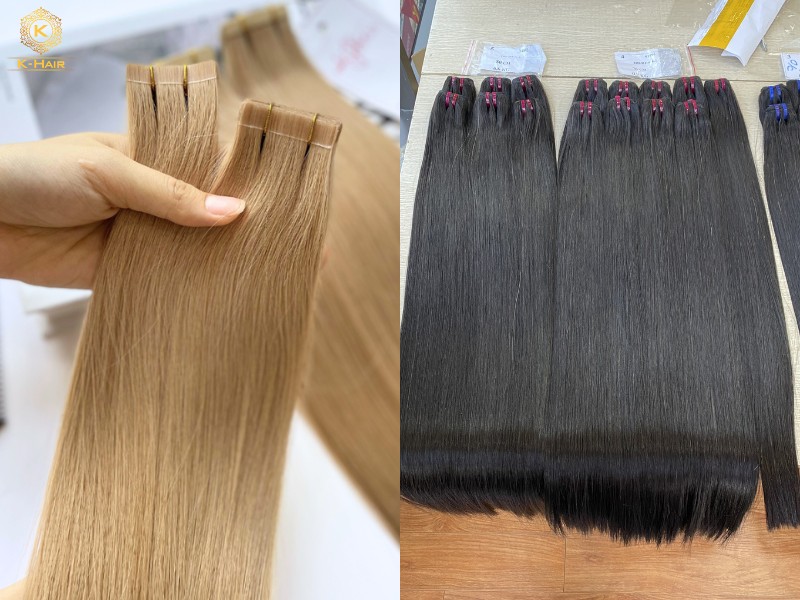
Vietnamese hair is collected from young, healthy donors, largely women from ethnic minority communities in Vietnam’s rural, mountainous provinces who still follow traditional herbal hair care practices. That origin gives the hair specific, repeatable qualities buyers pay a premium for: exceptional density from root to tip, natural thickness, and a silky finish that mass-market hair struggles to replicate.
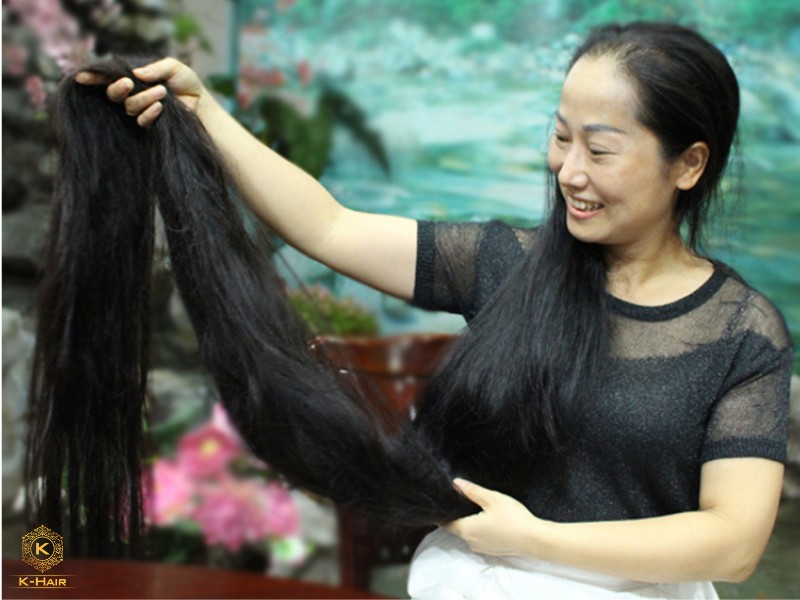
Vietnamese hair has grown into one of the most sought-after origins in the luxury extension and wig market. A few factors drive that reputation:
- Diet and Climate: donors in rural, mountainous areas benefit from a nutrient-rich diet that protects strands from environmental stress, resulting in naturally thick, resilient hair that holds up under intensive salon styling.
- Unprocessed Integrity: unlike mass-market hair stripped with acid and coated in silicone, authentic Vietnamese hair is prized in its raw state. Sourced from single or limited donors, the cuticle stays intact and chemically untouched, so it can be safely bleached to #613 blonde without losing strength.
- Natural Hair Appeal: lightweight density, smooth flow, and a texture that mimics high-grade human hair closely. With a shelf life of 4 to 5+ years, it delivers the reliable performance premium salons and luxury wig makers demand.
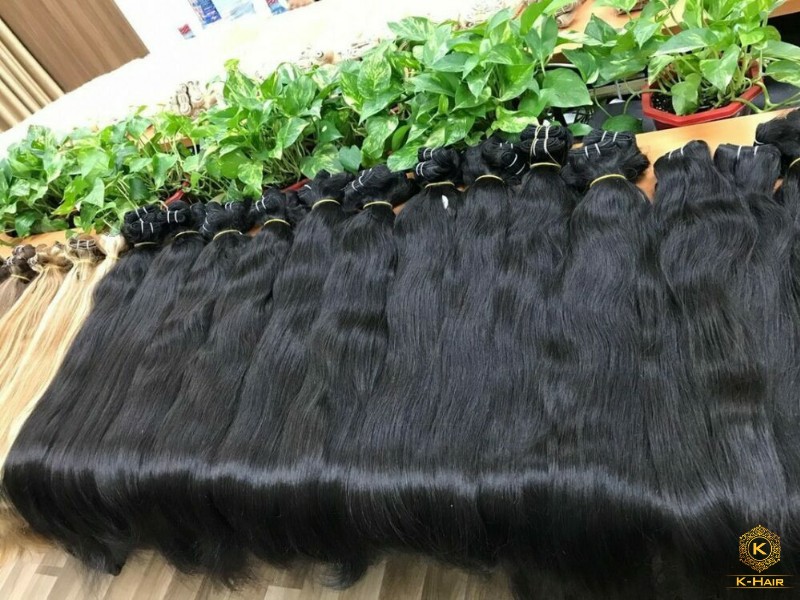
Exporter Notes: There’s a real difference between factory-direct Vietnamese hair and what passes through middlemen. Blended stock from middlemen often mixes donors and origins to hit a price point, which is where shedding and tangling problems start. Sourcing at the factory level means the hair is graded and bundled before anyone blends it down.
Not all Vietnamese hair regions perform equally, either. Donors from the northern mountain provinces tend to produce the thickest, most resilient strands due to the cooler climate and diet, while hair from central and southern regions runs slightly finer. Factories that disclose donor region as part of their grading are generally more transparent about the rest of their sourcing chain too, since region-tracking only makes sense if the supply chain is genuinely traceable back to individual donors.
Popular Vietnamese Hair Textures and Styles
Vietnamese hair is naturally straight at the root, but its cuticle-aligned structure makes it versatile enough to hold curls beautifully or press flawlessly flat, which is why it dominates three distinct product lines:
- Natural Straight: the classic, sleek texture Vietnamese hair is best known for, with minimal frizz straight off the donor.
- Bone Straight: an ultra-flat, glass-like finish achieved through thermal processing, meaning the hair is flat-ironed and heat-set rather than chemically altered. Structure changes, not color, which is why bone straight hair still takes bleach and dye the same way natural straight hair does. See the full breakdown of Vietnamese bone straight hair if this is your target texture.
- Wavy and Curly: though naturally straight, Vietnamese hair holds a curl pattern well once styled, since the intact cuticle gives the strand enough structural memory to keep a wave or curl through multiple wears. Browse the full Vietnamese hair textures range to compare options side by side.
Texture choice should match your client base: natural straight and bone straight dominate the sleek, polished-look market, while wavy and curly textures serve clients who want volume without daily heat styling.
Vietnamese Hair Quality Grades – Raw, Virgin, Remy and Non-Remy
Vietnamese hair ships in several quality grades to match different budgets. The main differentiator is donor count and how the hair was processed before it reached the weft.
What Is Raw Vietnamese Hair?
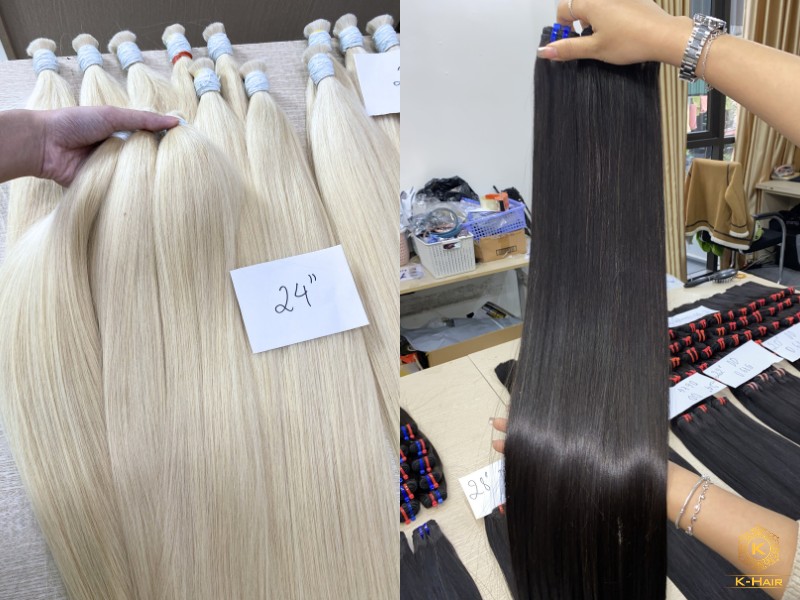
Raw Vietnamese hair is collected from a single donor and is completely unprocessed: never steamed, dyed, or chemically altered. The cuticles stay intact and aligned in one direction, which is why raw hair offers the widest performance range. It can be bleached to #60 Platinum Blonde, the highest bleaching standard in the market, and lasts 4-5 years with proper care. This is the highest grade and commands the highest price. Compare it directly against the next tier in our Raw hair vs virgin hair guide.
What Is Virgin Vietnamese Hair?
Virgin Vietnamese hair is also unprocessed, but it may be collected from 2-3 donors of similar texture rather than one. It’s excellent quality, though the multi-donor sourcing means slightly less consistency and cuticle alignment than raw. Virgin hair can be lifted to Honey Blonde #27 and lasts 2-3+ years under proper care, giving clients a soft, silky, premium finish that closely resembles raw hair at a lower price point.
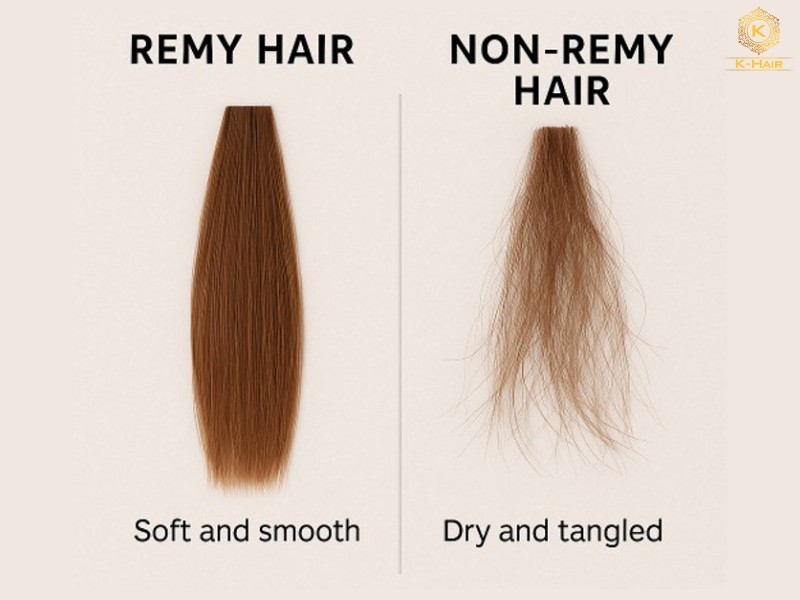
Remy vs. Non-Remy Hair
Remy Vietnamese hair is slightly processed to enhance structural strength, so it can’t lift to bright blonde shades or match the lifespan of virgin or raw hair, but it remains a popular, affordable, tangle-resistant option. It’s frequently confused with the much lower Non-Remy grade:
- Non-Remy hair is collected from multiple, under-qualified sources with cuticles running in mixed directions. To stop it tangling, factories strip the cuticle with acid and coat the hair in silicone. It looks fine at first, but the coating wears off after a few washes, exposing tangle-prone, damaged hair underneath. Only unreliable vendors sell this grade without disclosing it.
| Grade | Cuticle | Donor | Lifespan | What You’re Paying For |
|---|---|---|---|---|
| Raw | Intact, aligned | Single | 4-5+ years | Maximum consistency and longevity |
| Virgin | Intact, aligned | 2-3 donors | 2-3+ years | Near-raw quality, lower cost |
| Remy | Slightly misaligned | Multiple | 1-2 years | Tangle-free, versatile |
| Non-Remy | Stripped | Mixed, unqualified sources | Under 6 months | Lowest price, lowest quality |
Double Drawn: The Term Every Buyer Should Know
Alongside grade, factories also sell hair by draw type. Double drawn (DD) hair has the shorter strands pulled out of the bundle before bundling, so the weft stays thick and full all the way to the tips instead of tapering off. Single drawn hair keeps the natural taper, which is lighter and cheaper but thinner at the ends. DD costs more per bundle because it takes more raw hair to produce the same weight, but it eliminates the wispy-ends problem retail clients complain about most. For a full breakdown of draw types and how they affect pricing, see DD vs SDD vs SD.
Exporter note: We verify grades with tests buyers can run themselves. The burn test: real human hair burns slowly, smells like burning feathers, and turns to ash; synthetic melts into a ball and smells like plastic. The wash test: genuine raw hair stays smooth after repeated washes, while silicone-coated non-Remy starts tangling once the coating wears off.
Vietnamese Hair Extensions – What Are the Product Types?
Because Vietnamese hair extensions serve diverse markets, the right format depends on your target client, their preferred installation method, and your brand’s price point.
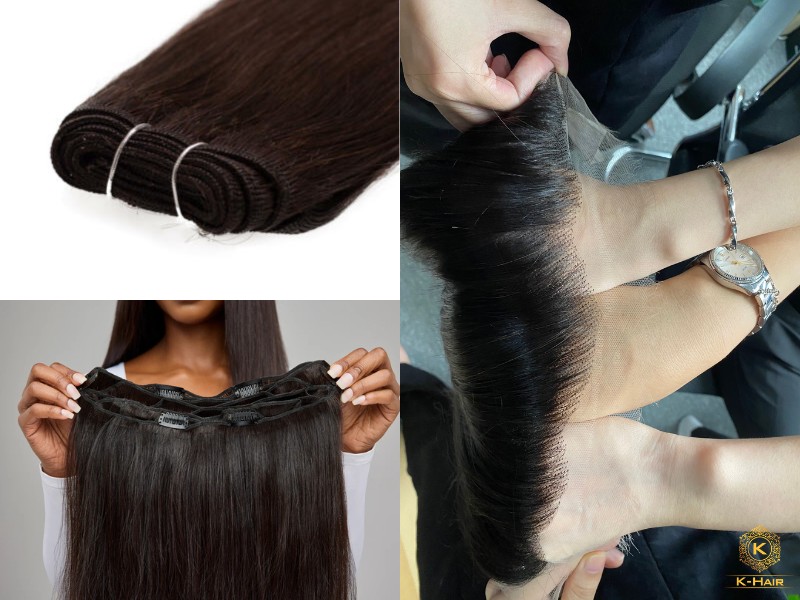
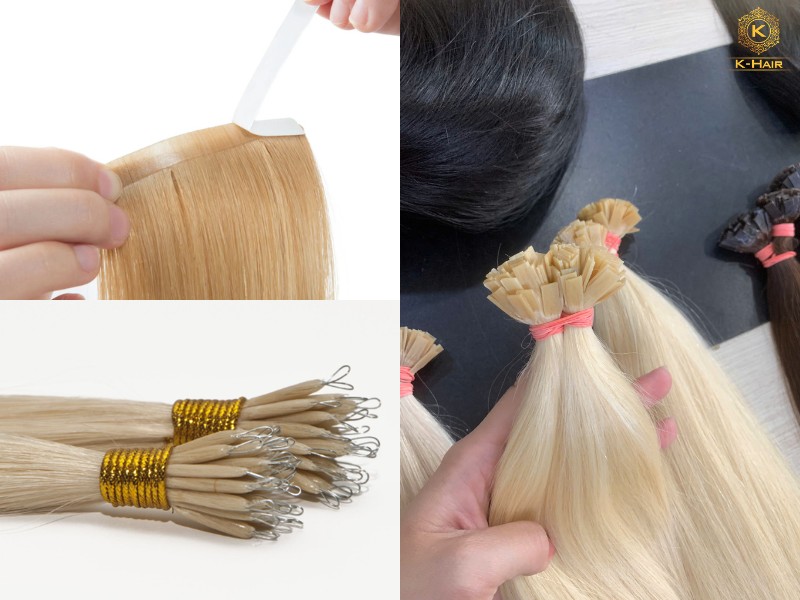
- Standard Vietnamese hair wefts: the go-to raw material for sew-ins, custom wigs, and clip-ins. Durable, reusable across installs, and the safest high-volume stock item.
- Lace Closure and Frontal: a closure covers a small section of the part or crown; a frontal runs ear to ear to recreate the full hairline. Both use scalp-mimicking lace for undetectable blending, functioning as finishing pieces for sew-ins and wigs.
- Temporary Clip-In Extensions: wearer-applied sets that clip in and out in minutes with no salon visit. The strongest retail line in the lineup and the easiest format to sell online.
- Tape-In Extensions: medical-grade tape attaches the piece to thin sections of natural hair. A full head installs far faster than a sew-in or fusion method, which is why tape-ins dominate busy salon channels.
- Keratin Bonded Extensions (K-Tips): individual strands tipped with keratin, heat-bonded to small sections of the client’s own hair. Semi-permanent, lasting four to six months, with the most seamless individual-strand movement of any method.
- Nano Ring Extensions: installed with tiny silicone-lined beads instead of heat, making this one of the few non-damaging semi-permanent formats on the market.
| Extension Type | Typical Price Range | Best Suited For |
|---|---|---|
| Standard Vietnamese hair weft | $23-$200 per 100g | Salons and resellers doing sew-in installs |
| Lace closure and frontal | $16-$185 per piece | Fine-hair clients, premium retail |
| Clip-in extensions | $28-$120 per 100g | Retail / DTC, first-time buyers |
| Tape-ins | $30-$150 per 100g | Salon channels, fast application |
| Keratin bonded / nano ring | $25-$130 per 100g | Wig makers, braiders, custom units |
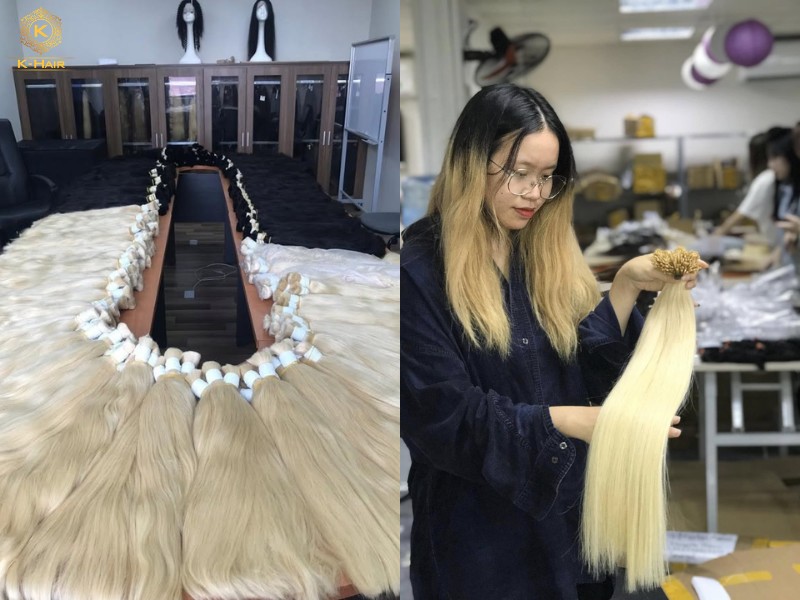
Expert Insight: Invisible PU wefts and raw clip-ins are the two fastest-moving formats off our floor right now. The retail and salon market is shifting toward lighter, flatter, more natural-looking installs, and the thick bulky weft is losing ground to seamless PU. If you’re stocking for next season, that’s where demand is concentrated.
Hair Quality Criteria – What Does the Best Vietnamese Hair Look Like?
The difference between a premium bundle and a dressed-up lower grade comes down to a handful of checks you can run before you commit.
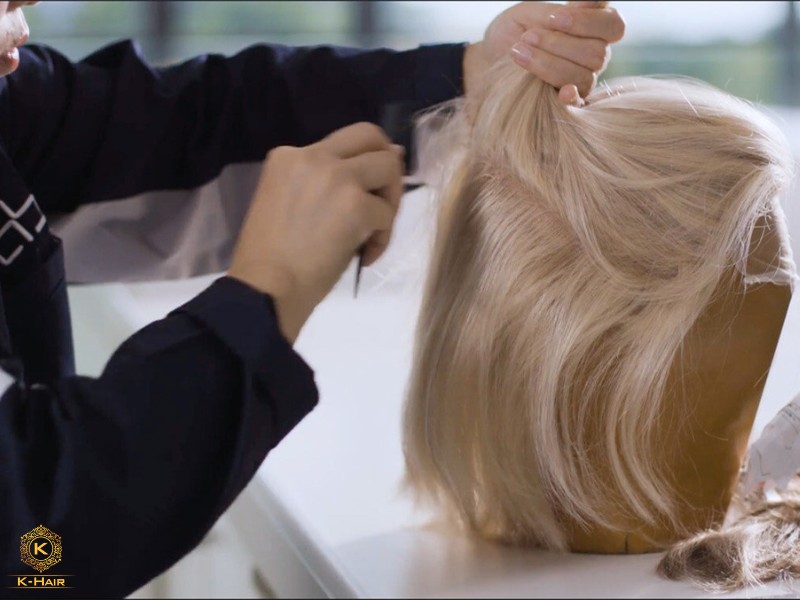
- Single-donor consistency: color, texture, and thickness should be uniform from weft to tip. Patchy color shifts or sections that feel different are a sign of blended, mixed-origin hair.
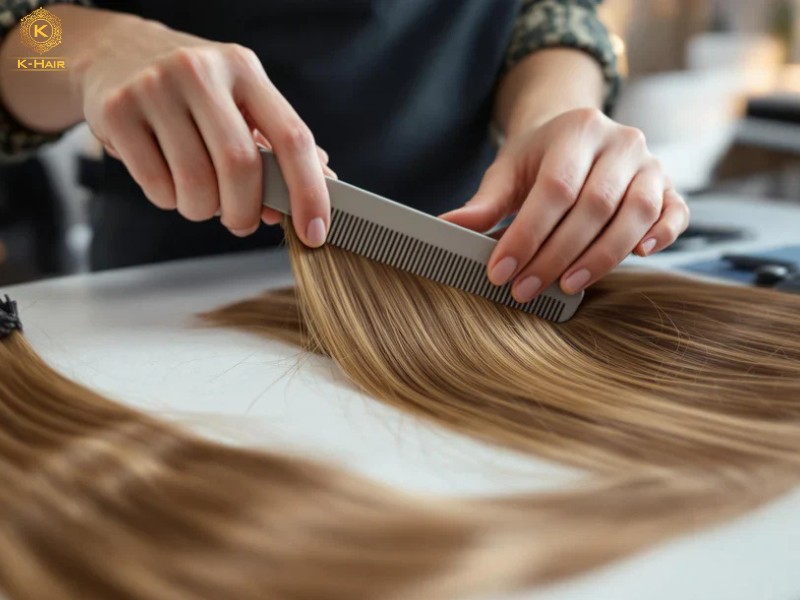
- Cuticle alignment: run your fingers down the strand both ways. It should feel smooth root-to-tip and slightly resistant tip-to-root, which is the intact cuticle doing its job of preventing tangles.
- Minimal shedding: give the bundle a gentle tug. A few loose strands are normal; a handful means the weft was poorly sewn.
- True-to-weight bundles: a 100g bundle should weigh 100g. Underweight bundles padded with filler are a common way to disguise thin, low-yield hair.
- Thick ends: the bundle should stay full toward the tips, not taper into thin, stringy ends, which signals blended or falsely-marketed double drawn hair.
One authenticity issue worth flagging directly: some sellers market processed Indian hair as Vietnamese hair to cash in on its premium reputation. The two origins behave differently under bleach and have distinct cuticle textures, so always request origin documentation or run the tests above rather than trusting a label. Our Vietnamese hair vs Indian hair comparison breaks down the exact differences to check for.
Red flags to watch for: an unusually low price for “raw,” a strong chemical or perfume smell, excessive shine (often a sign of silicone coating), or a seller who can’t provide single-donor proof.
Cost-per-wear framing: raw hair costs more upfront but lasts years and can be washed, colored, and restyled repeatedly. Cheap non-Remy lasts a few months before it’s thrown out. Divide price by lifespan and raw is almost always the lower true cost, which is the number that protects your margins and client retention.
These checks also show up directly in your return numbers. Retailers stocking verified factory-direct raw or virgin grades typically see return rates well under 5%, driven mostly by color-matching preference rather than quality complaints. Retailers stocking unverified or blended stock report shedding and tangling complaints several times higher, which quietly erodes margin through replacements and refunds long after the sale is closed.
| Do | Don’t |
|---|---|
| Request single-donor proof for anything sold as “raw” | Judge quality on upfront price alone |
| Run the burn, wash, and feel tests on samples | Trust excessive shine, it’s often silicone |
| Calculate cost-per-wear, not just sticker price | Assume “virgin” and “raw” mean the same thing |
| Confirm true-to-weight bundles | Ignore thin, tapered ends |
| Order samples before a bulk commitment | Skip verification because a seller seems reputable |
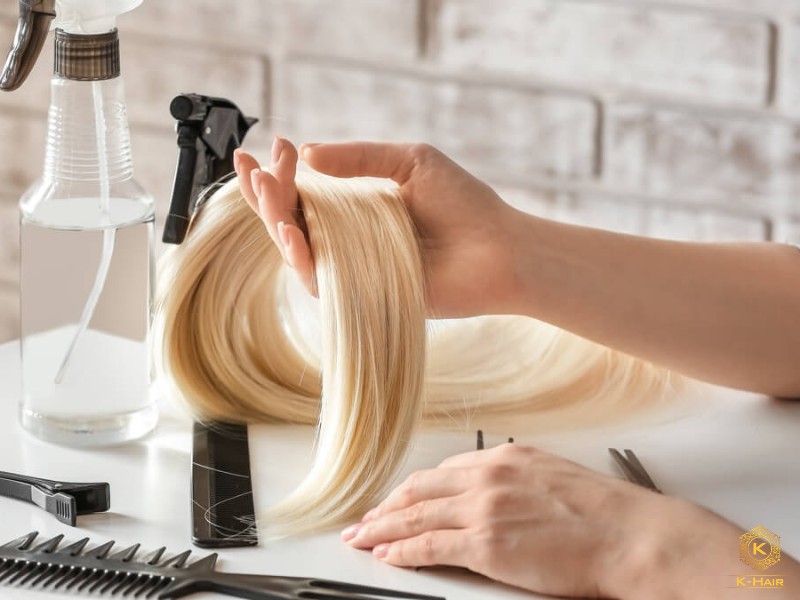
Why Source Vietnamese Hair From Factories?
Sourcing from distributors and importers saves time, but every added middleman means less control over the hair’s true origin and quality, plus stacked markups that eat into your margin. Direct factory sourcing offers four advantages resellers can’t match:
- Pricing: you pay the factory-direct production cost, not a reseller margin layered with distributor fees.
- MOQ flexibility: order volumes scale to your business instead of forcing you into a large wholesaler’s minimum.
- Customization: texture, length, color, and weft type are built to your spec rather than picked from a reseller’s existing stock.
- Full traceability: no multi-tiered supply chain means zero risk of the hair being blended, diluted, or relabeled along the way.
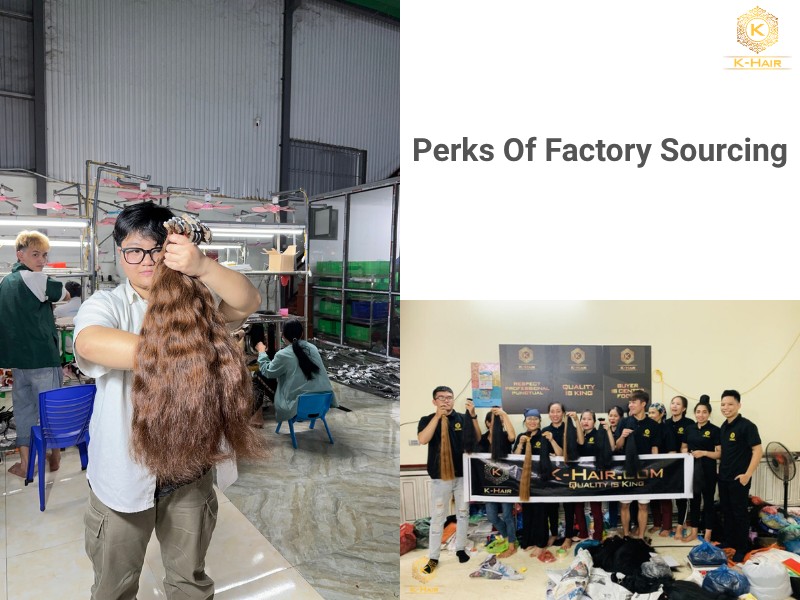
All four advantages only hold if your supplier owns and operates their entire supply chain. At K-Hair Factory, we collect, grade, and manufacture in-house under one roof, which is what lets us guarantee the single-donor sourcing and grade consistency a reseller simply can’t verify, since they never saw the hair before it reached them.
FAQs About Vietnamese Hair
Even after reading a full grading breakdown, buyers usually come back with the same handful of questions before placing a wholesale order. Here are the ones we hear most, answered straight.
Is Vietnamese hair good quality?
Yes. Vietnamese hair is among the most sought-after origins because donors typically have thick, low-damage hair with an intact cuticle, giving it strong longevity and clean blending. For a deeper breakdown of what makes it good and how to verify quality yourself, see Is Vietnamese hair good quality.
How long does raw Vietnamese hair last?
With proper care, raw Vietnamese hair lasts 4-5 years or more, because the cuticle is intact and never chemically stripped. Lower grades like non-Remy last only a few months.
What’s the difference between Vietnamese, Indian, and Cambodian hair?
Vietnamese hair tends to be thick, straight, and strong; Indian hair is often finer with a natural wave; Cambodian hair is coarse and very thick. The right choice depends on the texture your end clients want.
Can Vietnamese hair be colored or bleached?
Yes. Because raw and virgin Vietnamese hair is unprocessed, it lifts and takes color more predictably than pre-treated hair. Always test on a sample strand first.
What’s the minimum order quantity for wholesale?
MOQ varies by product and customization level. Factory-direct sourcing usually allows lower, more flexible MOQs than resellers, contact us for current terms.
Can Vietnamese hair be used for both wigs and weaves?
Yes. The same raw or virgin grade works for both formats, the only difference is construction: wefts are sewn flat for weaves and sew-ins, while wigs build that same weft onto a lace base for a natural hairline. Buyers sourcing both formats from one factory-direct supplier avoid grade inconsistency between their wig and weave lines.
Conclusion
Vietnamese hair earns its reputation on real material qualities: intact cuticles, single-donor consistency, and a texture that holds curls or presses flawlessly straight. The difference between a profitable line and a returns problem comes down to grade, knowing raw from virgin from non-Remy, and verifying it yourself instead of trusting a label.
If you’re ready to source factory-direct, request a sample bundle or a wholesale quote from K-Hair Factory and test the grade in your own hands before you commit to volume.
Ready to source premium Vietnamese hair?
Contact K-Hair Factory directly for wholesale pricing, MOQ details, and free samples.