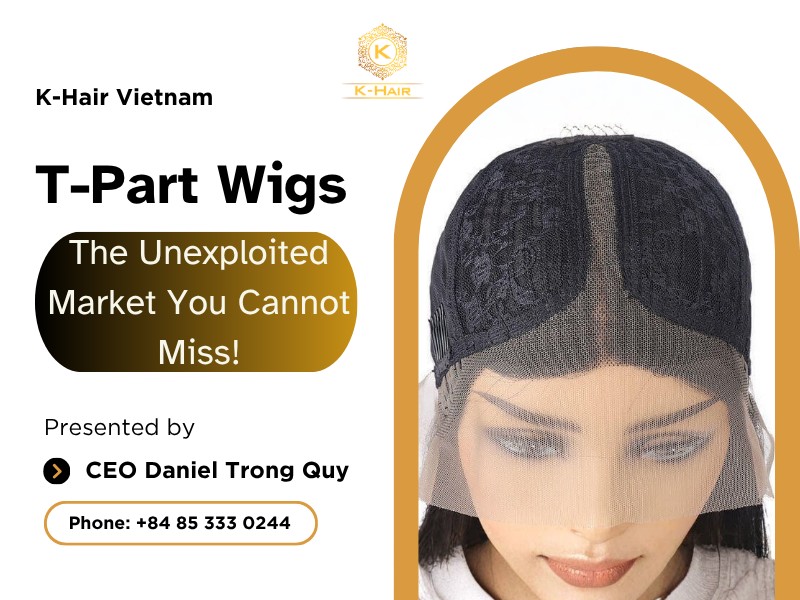
One universal mistake that almost all hair startups make is assuming that only premium or popular hair product types are worth investing in. Trendy wig types like frontal and closure lace wigs can target a wide customer base — however, for a new business, competing in these saturated segments often means a costly battle for brand recognition against already well-established players.
To ensure more profit and avoid excessive competition, one proven approach is to widen your customer base by targeting different product lines. In such a case, T-part wigs — one of the safest and most cost-effective wig lines — can be the unexploited market in which your startup thrives.
1. Getting To Know T-Part Wigs
Before jumping into market standing and potentials, let’s start with the definition and work things up from there.
1.1. What is a T-Part Wig?
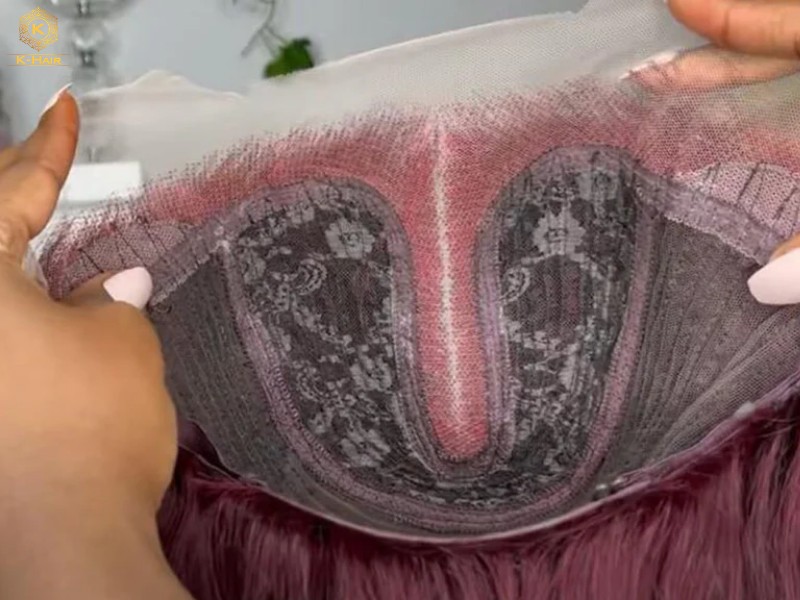
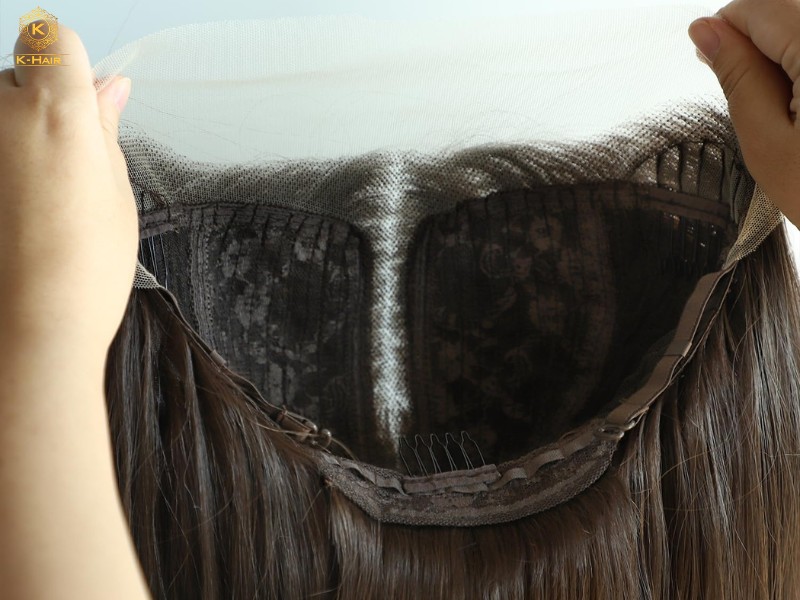
In terms of construction, T-part wigs have a lot in common with traditional lace front wigs. They consist of an elastic wig cap sewn with hair wefts, combs, clips, and hairbands — with a lace part at the front to better blend into the user’s natural scalp.
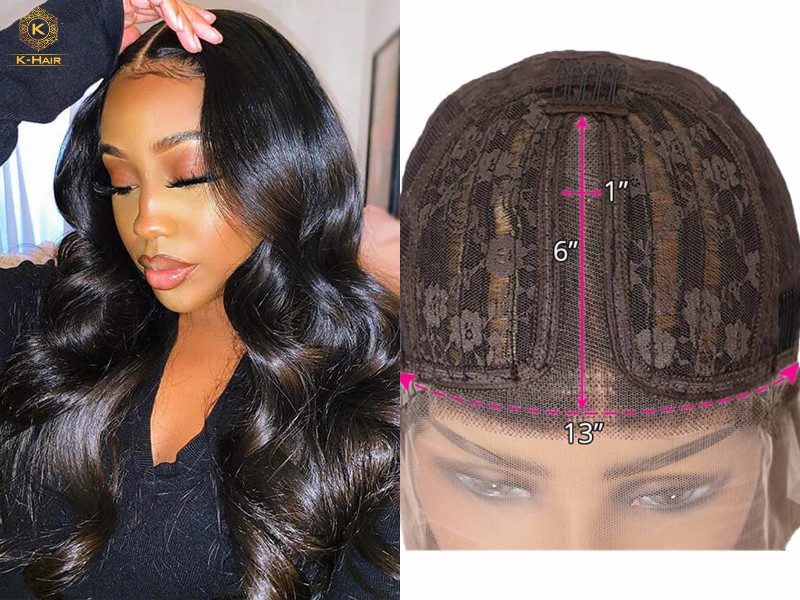
However, the defining difference is the lace shape. Much like the name “T-part wigs” suggests, the lace piece features a T-shape — a horizontal bar stretching from ear to ear, and a vertical bar reaching the top of the head. This creates a narrow space for natural-looking parting. The standard structure follows a 13x1x6 format: 13 inches ear-to-ear width, 6 inches for the length, and 1 inch for the width of the vertical bar.
→ Deciding between lace types for your catalog? See: Frontal vs Closure Wigs — Full Comparison.
1.2. What’s So Special About T-Part Wigs?
In the world of complex, high-maintenance lace wigs, T-part wigs truly stand out — not just because of their unique lace area, but also for their functionality and accessibility.
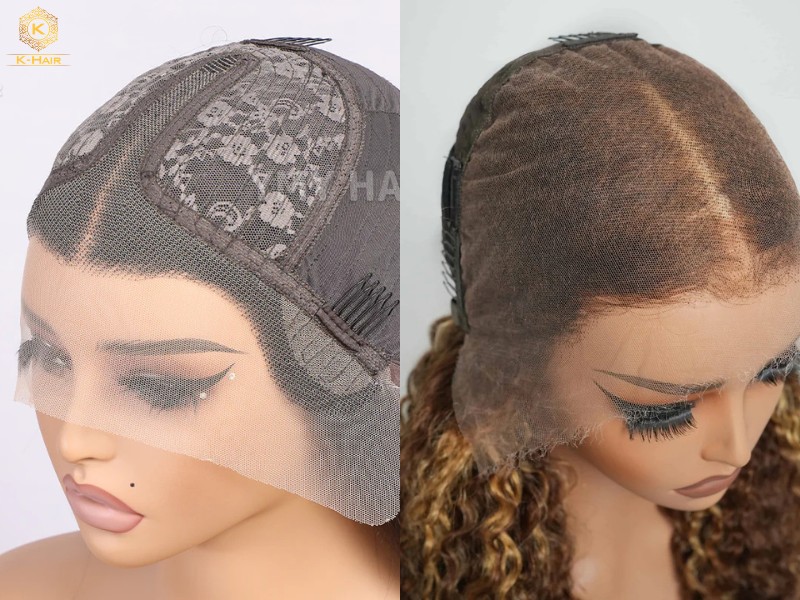
For hair users, the T-shape lace offers the seamless blending ability of a traditional lace wig, with a built-in hairline as an added bonus. Clients save significant time from daily parting and managing excess lace areas. Having less lace also makes T-part wigs inherently more durable — with less potential for tearing, stiffening, and residue than standard closure or frontal lace wigs.
To better visualize the key differences, here is a direct comparison:
| Feature | T-Part Wig (13x1x6) | Lace Front Wig (13×4 / 13×6) |
|---|---|---|
| Lace Construction | Minimal “T” shape (ear-to-ear + vertical part) | Full ear-to-ear coverage with deep hand-tied lace |
| Wholesale Cost | Low — maximum margin potential for startups | High — premium investment per unit |
| Style Versatility | Fixed part (Middle or Side); best worn down | 100% versatile (half-up, ponytails, multi-part) |
| Ease of Use | Beginner-friendly; often glueless | Professional/Intermediate skill required |
→ Another beginner-friendly format gaining traction in 2026: Why Headband Wigs Are a Must-Stock for Retailers.
2. T-Part Wigs — What’s In It For Hair Businesses?
For hair users, T-part wigs are an attractive alternative to traditional lace units. For businesses, they represent an untapped market full of exploitable potential. Let’s break down exactly where the opportunity lies.
2.1. T-Part Wigs’ Selling Points
Compared to traditional lace front wigs, T-part wigs offer multiple signature selling points that can give your catalog a clear competitive edge:
- Cost-Effectiveness: Less lace area means lower production costs — and for T-part wigs, the T-shaped lace allows customers to achieve that perfect lace melt without the premium price tag. For businesses, this translates to a more cost-effective wholesale unit with stronger margin potential per sale.
- Minimal Styling Required: Most T-part wigs come with built-in partings and pre-plucked hairlines — delivering a brand new level of convenience right out of the box. Sellers benefit from higher customer satisfaction rates and a significantly lower rate of returns and complaints.
- Beginner Friendly: T-part wigs are not only easier to install, but also easier to maintain. With less lace area, they are more durable and immune to tearing or stiffening — making them longer-lasting than standard lace wigs and a far less challenging product for beginner stylists and customers alike.
2.2. Potential Markets & Customer Bases
T-part wigs cater to specific, well-defined audiences. Running marketing campaigns without understanding these segments is a common and costly mistake for new sellers.
The primary customer base is time-constrained professionals and beginner stylists who require simplicity without sacrificing aesthetics. By stocking T-part units, startups can capture high-volume demand from buyers who prioritize a quick, reliable install — ensuring faster inventory turnover and consistently high customer satisfaction.
→ Building your hair business from scratch? See our complete guide: How to Start a Hair Business.
Beyond the beginner segment, T-part wigs are also essential inventory for budget-conscious buyers. These wigs offer a lower entry price than traditional lace wigs, while delivering stronger durability and a longer lifespan. For price-sensitive customers, that combination — affordable upfront cost plus long-term value — makes T-part wigs a significantly higher-value purchase than ordinary lace wigs.
→ Compare all major wig cap constructions: 360 Lace Wig vs Full Lace Wig.

3. FAQs About T-Part Wigs
Before you wire any deposit, here are the questions every B2B buyer asks us about T-part wigs — answered without the sales pitch.
3.1. Can you customize or change the parting on a T-part wig?
Because the lace is built into a fixed “T” shape, the parting is permanent. This fixed construction ensures the “scalp” always looks perfectly aligned and saves the wearer from the daily struggle of re-parting and styling. For businesses, we recommend stocking both middle and side-part units to give customers options while maintaining that ready-to-wear convenience.
3.2. How should a business price T-part wigs compared to lace frontals?
A successful retail strategy uses Psychological Tiering. Price your T-part wigs at approximately 60% of the cost of your 13×4 lace frontals. This creates a clear “Value Option” for customers. While the unit price is lower, the higher sales velocity and reduced stylist labor costs often result in a higher net profit margin at the end of the quarter.
3.3. What are the common red flags when sourcing T-part wigs from a new vendor?
The most critical area to inspect is the transition point where the lace meets the machine-made wefts. In low-quality units, there is often a visible bump or gap at this junction. B2B buyers should also closely check density consistency — some manufacturers provide 180% density on the lace section but quietly drop to 130% on the wefts to cut material costs.
💡 From Our QC Floor at K-Hair:
The density drop is the most common scam in T-part wig sourcing — and the hardest to catch without a trained eye. A supplier quotes 180% density. The lace section delivers it. But the machine-made weft section at the back quietly drops to 130% to cut material costs. The result: the wig looks full in photos, but thins out visibly when the customer pulls it into a ponytail or clips it back. This is the number one driver of 1-star reviews in the T-part segment.
How to catch it before you commit: Request a pre-shipment photo of the wig folded in half with the weft side exposed. Measure density at 3 points — lace section, mid-weft, and nape weft. All three should be within 10% of each other. If a supplier refuses this request, walk away.
3.4. Which lace type should a B2B buyer prioritize for 2026 inventory?
While Transparent Lace was the previous standard, the 2026 market demand has shifted heavily toward HD Lace for T-part units. Investing in HD lace T-parts allows you to market a “Seamless Melt” — which is the primary conversion driver in the US market right now.
→ Full breakdown: HD Lace vs Transparent Lace — Which Should You Stock?
3.5. How does the lifespan of a T-part compare to other wig types?
Because T-part wigs have less lace area, they are less prone to the balding or tearing that commonly occurs with delicate 13×4 frontals. If customers treat the hair with proper care, a high-quality human hair T-part can easily last 6 to 12 months — significantly outlasting standard lace front units at the same price tier.
4. Conclusion
T-part wigs are not a compromise — they are a calculated inventory decision. Lower wholesale cost, beginner-friendly installation, built-in parting, and a 6-12 month lifespan make them the highest-margin entry point in the lace wig segment for 2026.
For startups and scaling businesses alike, the play is straightforward: stock T-part wigs as your volume driver at 60% of your lace frontal price point, then upsell premium units to clients who want more versatility. The margin difference compounds fast. If you’re looking for a factory partner that guarantees density consistency from lace to nape, K-Hair is where to start.
→ Explore our full sourcing network: Wholesale Hair Vendors Directory.
Source T-Part Wigs Factory-Direct From Vietnam
K-Hair produces custom T-part wigs at scale — HD lace, consistent 180% density top-to-nape, pre-plucked hairlines, single-donor Vietnamese hair. Over 5,000 B2B clients globally. 2,000+ kg shipped monthly to the US.
- ✅ Density guaranteed top-to-nape: No hidden drops between lace and weft sections — documented and verifiable.
- ✅ Custom parting options: Middle part, side part, or custom T-shape specs available on bulk orders.
- ✅ Sample before bulk: MOQ from 1 unit — verify density and lace quality before committing to volume.