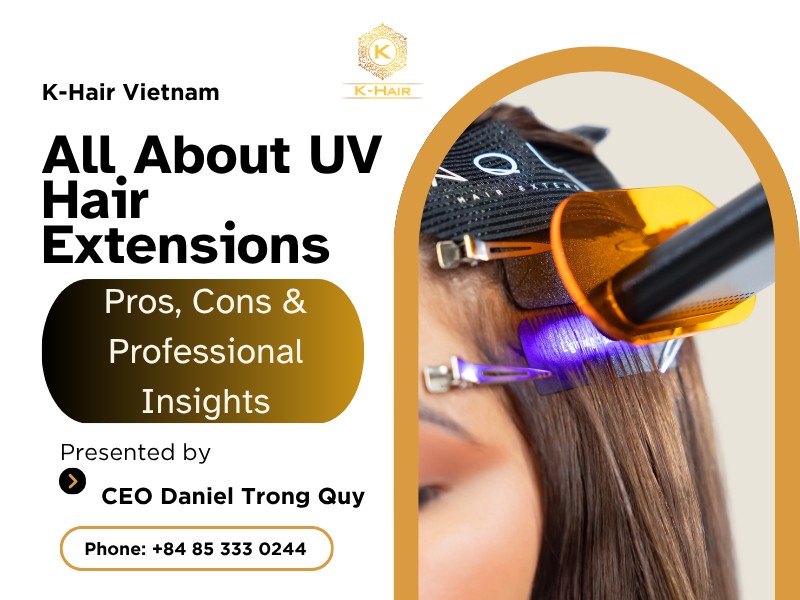
As salon goers and hair buyers are becoming more and more selective – manufacturers rush to keep up, launching “new and improved” application methods every year. After the eras of Tape-ins and Keratin fusions, the professional beauty world has turned to an unexpected source: the UV-curing technology used in gel manicures.
Marketed as UV hair extensions, or V-Light hair extensions, these advanced extension variations are known and loved for their discreet bond, as well as their light weight and extra comfort. However, for hair professionals, evaluating its potential as a service relies more on its actual chair performance – rather than just on viral social media contents.
1. What Are UV Hair Extensions?
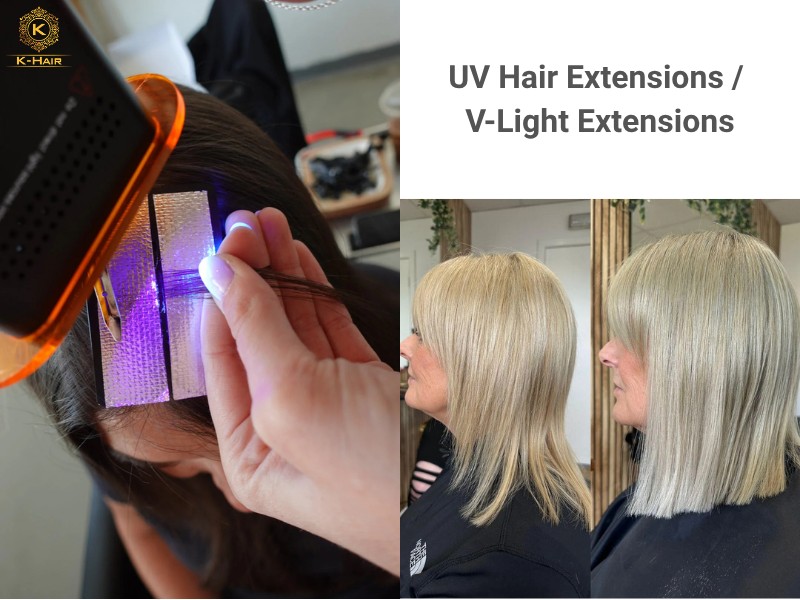
UV hair extensions – or V-Light hair extensions – are the most advanced and unique hair installation method of 2026.
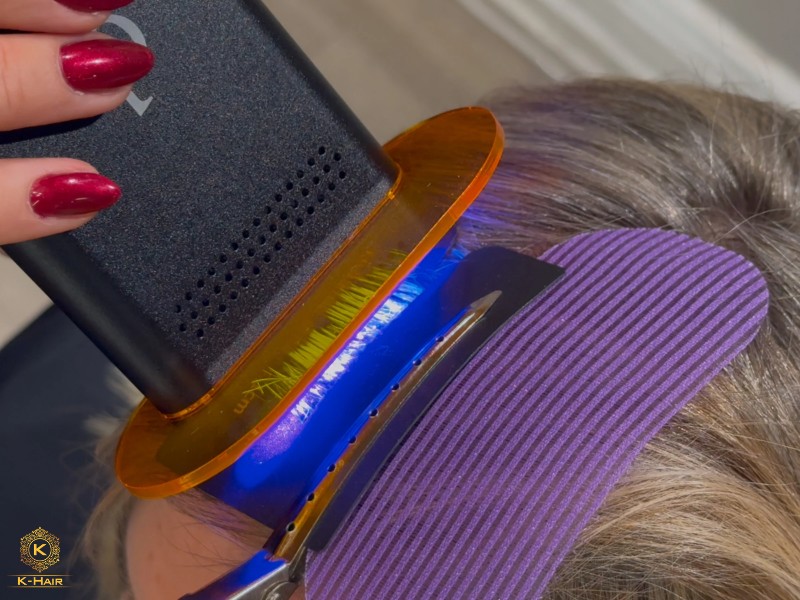
Much like keratin bond extensions, UV hair extensions use a strand-by-strand bonding installation. Each piece is attached to a small section of hair strands. However, instead of using invasive heat, UV hair extensions – like their names – will be attached using a UV light tool to secure the cyanoacrylate-based adhesive to the hair strands.
The result is a flat, low-profile bond that sits close to the scalp and blends more discreetly than bulkier methods like microbead or classic fusion. It’s why the method is often marketed toward people with fine, thinning, or fragile hair, where visible attachment points are the biggest complaint with traditional extensions. The bond sits flat enough to stay hidden even when hair is pulled up into a high ponytail.
Notes: Despite the similar names, UV hair extensions should not be mistaken with UV-protective hair extensions – extensions treated with a UV-protective coating to resist sun fading.
2. How Does a UV Hair Extensions Application Work?
Advanced as they are, UV hair extensions application can be relatively complex – demanding not only a complete and specialized UV hair extension kit, but also skills and precision. Therefore, these extensions are strictly dependent on professional installation – which means that they cannot be DIY by its users.
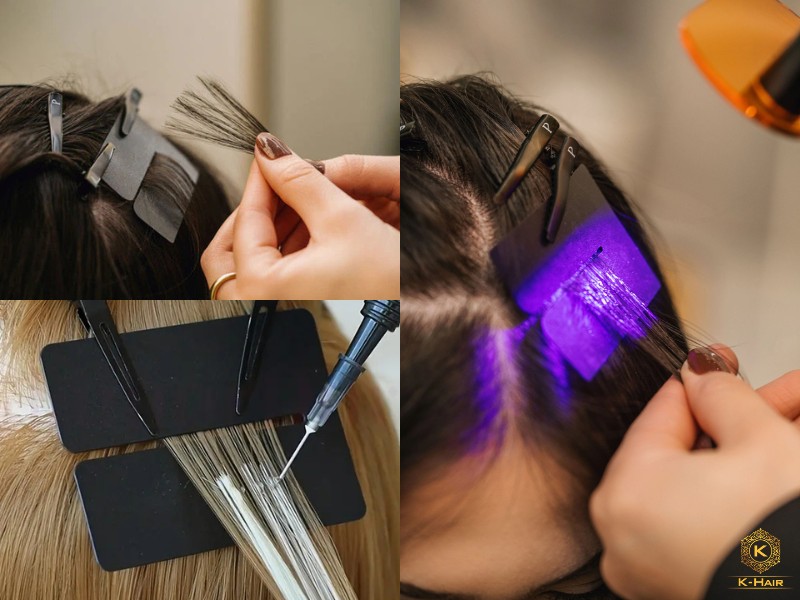
Typically, the application process typically follows four steps:
- Sectioning & Placement: The stylist will first separate the user’s natural hair into small sections, typically starting at the nape of the neck and working upward. Clean parting is crucial to prevent cross-hairs and ensure comfortable weight distribution.
- Adhesive Application: A precise, minimal amount of specialized UV-curable resin or adhesive is applied to the bond point of the extension, ensuring just enough product is used without causing excess bulk.
- UV Light Curing: The extension strand will be pressed against the natural hair section. The stylist then activates a handheld UV/LED curing device, exposing the bond to the light for 3-5 seconds until the adhesive hardens.
- Repetition & Blending: This strand-by-strand process will then be repeated across the designated sections of the head. Once application is complete, the hair will be styled thoroughly to perfectly blend the bonds with the client’s natural hair.
A full head installation will take stylists around 30 to 90 minutes to complete. Each individual only takes around 2-8 seconds to complete under the UV light – much faster compared to the lengthy 2-to-3-hour wait for keratin bond extensions. However, the trade-off is that these installations are also shorter-lasting – from 5-8 weeks before needing touch-ups.
3. UV Hair Extensions & What You Should Look Out For
Due to their specific installation method, the newly-introduced UV hair extensions have met with many speculations and doubts about their use. Let’s debunk some of the misunderstanding, and discover the target audience for UV extension with the sections below:
3.1. Are UV Hair Extensions Safe?
This is the question most marketing pages skip, but for end-users and stylists directly using UV hair extensions for their service – this part is worth taking seriously.
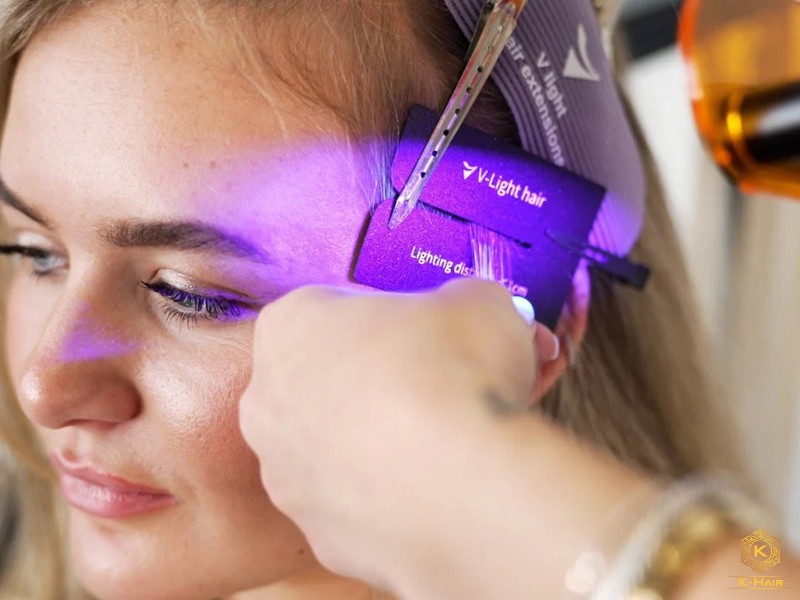
On the one hand, the UV light used to cure V-Light adhesive typically falls in the UVA range, around 395 nanometers. UVA radiation in the 315-400nm band has been classified as a Group 1 carcinogen by the International Agency for Research on Cancer (IARC) – similar to UV tanning devices.
However, that doesn’t mean a single extension appointment is equivalent to tanning bed use – exposure time, frequency, and distance from the scalp all matter. But it doesn’t change the fact that: repeated, frequent scalp exposure to UVA light can become a serious trade-off, therefore, it’s reasonable to ask your stylist about exposure time and frequency before committing.
Beyond the light itself, the adhesive used in UV bonding contains cyanoacrylate-based compounds, which can cause scalp irritation, dryness, or an allergic reaction in some clients, particularly with repeated use or improper removal.
Notes: This article is for general information and isn’t medical advice – for personal risk questions, a dermatologist is the right resource.
3.2. Do UV Hair Extensions Damage Your Hair?
UV hair extensions do not damage your hair when installed and removed by a trained professional. In fact, the method itself is heat-free and low-tension, which actually makes it gentler on natural strands compared to traditional heat fusion. However, damage becomes a real risk under four conditions: inexperienced installation, improper removal, low-grade adhesives, and neglected maintenance appointments.
In reality, most breakage complaints are not caused by the UV bond itself, but by excessive pulling and poor maintenance – creating more tension at the attachment point. For salon owners, this means two things: invest in certified stylist training, and educate clients firmly on the removal rules below.
3.3. Aftercare and UV Hair Extensions Maintenance
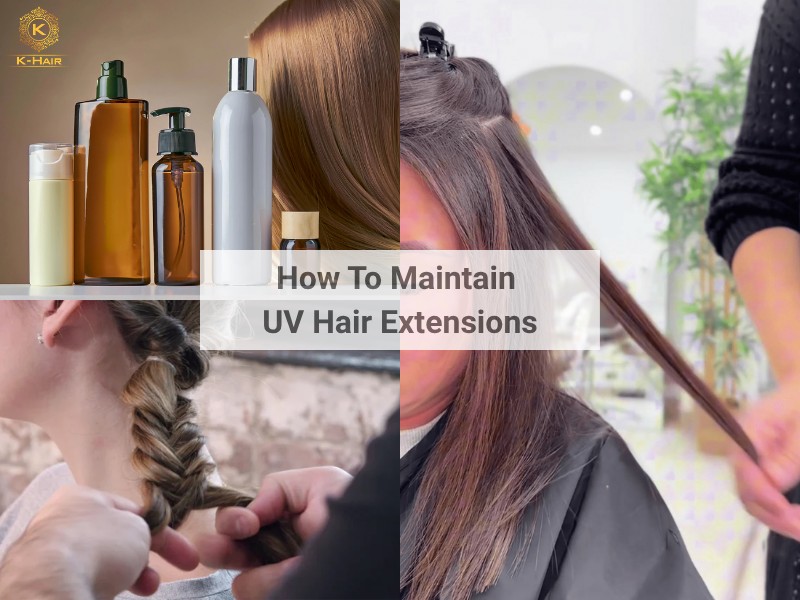
The mentioned lifespan of 5-to-8 weeks can only be maintained under the right hair care routine. In fact, to ensure the optimal long-term wear, stylists and end-users should be educated with proper maintenance and aftercare rules:
- Avoid washing hair for 24-48 hours after application to let the adhesive fully set and reach maximum durability against moisture.
- Use sulfate-free, extension-safe shampoo to avoid breaking down the bond prematurely, leading to excessive shedding,
- Instruct clients to secure their hair in a loose braid or a low, soft ponytail before sleeping to reduce friction that could cause the extensions to tangle.
- Keep heavy oils, serum treatments, and rich conditioners completely away from the root area and attachments, as this can weaken adhesive bonds over time.
- Advise your clients against pulling or cutting bonds out – improper removal is one of the more common causes of natural hair breakage with this method.
- Remind your customers to schedule maintenance every few weeks as bonds shift with natural hair growth, rather than waiting until they visibly loosen.

Aftercare and UV Hair Extensions Maintenance
3.4. Who Are UV Hair Extensions Best For?
UV hair extensions have their own target audience – where its fast and advanced installation will be most appreciated and sought-after. In reality, UV hair extensions for fine hair is often the most popular selling point for this particular product. As a hair business owner, to secure the most profit, this is what you need to look out for:
| Best Used For | Not Suited For |
|
|
4. UV Hair Extensions: Pros and Cons
Sourcing UV hair extensions depends strictly on their suitability for your target market. And – to know if they are the ideal service or not – you would need to be aware of its pros and cons:
| Pros | Cons |
| Very thin, low-visibility bonds | Repeated UVA exposure raises unresolved safety questions |
| Good option for fine or thinning hair | Adhesive can irritate scalp with repeated use |
| Fast bond-curing time (seconds per strand) | Shorter lifespan than tape-ins or keratin bonds in many cases |
| Frequent touch-ups → a stable recurring service revenue for salons | Requires a specialized, trained stylist – not widely available |
| Can be applied to targeted, hard-to-reach areas (crown, part line) | Higher cost than most traditional methods |
| Compatible with high-quality human hair strands | Removal requires professional adhesive-dissolving, and bonds generally can’t be reused once removed, unlike tape-ins. |
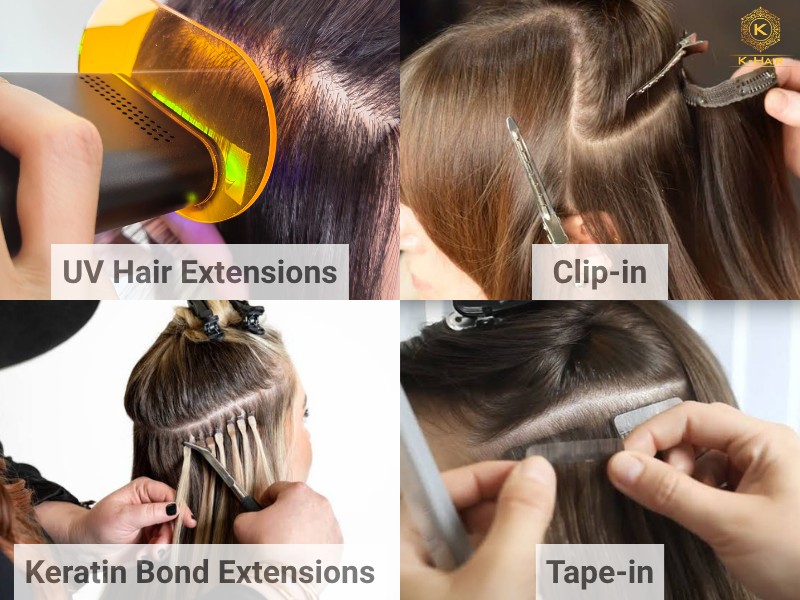
To support your decision-making – you can put UV hair extensions under comparison with other installation methods, for example, popular, familiar names like Clip-ins, tape-ins, keratin bonded extensions:
UV Extensions vs. Tape-Ins vs. Keratin Bonded vs. Clip-Ins
| Method | Bond Type | Typical Wear Time | Best For | Removal |
| UV/V-Light | UV-cured adhesive | 5-8 weeks | Fine/thinning hair, invisible bonds | Professional adhesive dissolving |
| Tape-ins | Adhesive tape strips | 4-8 weeks | Fast application, reusable wefts | Using tape-release solution |
| Keratin bonded | Heat-fused keratin tip | 3-6 months | Long-term wear, natural movement | Heat or solvent-based removal |
| Clip-ins | Mechanical clips, no adhesive | Daily wear, removable | Occasional use, zero commitment | Simple – detaching the hair clips |
Expert Advice: If the recurring exposure to UV light might make UV hair extensions ill-suited for your clientele – you can always resort to traditional alternatives like tape-ins, keratin-bonded extensions. However, no matter what type of services you are providing to your clients – the top priority should be on hair quality, as it is the main driver of customer retention and business profit.
5. How Much Do UV Hair Extensions Cost?
For this specific service, hair stylists can use bulk hair, hair weft cut-outs – or fragments from tape-ins, keratin bond extensions as material. Therefore, for stylists and salon owners, you would have quite a range of wholesale UV hair extensions to choose from. However, the primary factor you should consider is not what type of hair extensions to buy – but what Hair quality grades best suit your market position.
| Raw
Single-donor Hair |
Virgin Hair | Remy Hair | |
| Short lengths
8” to 14” |
$400 to $650 per 1kg | $350 to $500 per 1kg | $100 to $220 per 1kg |
| Medium lengths
16” to 24” |
$670 to $1300 per 1kg | $550 to $1000 per 1kg | $250 to $600 per 1kg |
| Long lengths
26” to 36”+ |
$1200 to $2000 per 1kg | $1000 to $1600 per 1kg | $500 to $800 per 1kg |
| Best for | Luxury hair services and salons targeting picky, high-end clienteles. | Standard salon baseline – targeting clients preferring everyday hair wear. | Salons targeting budget-conscious clienteles. |
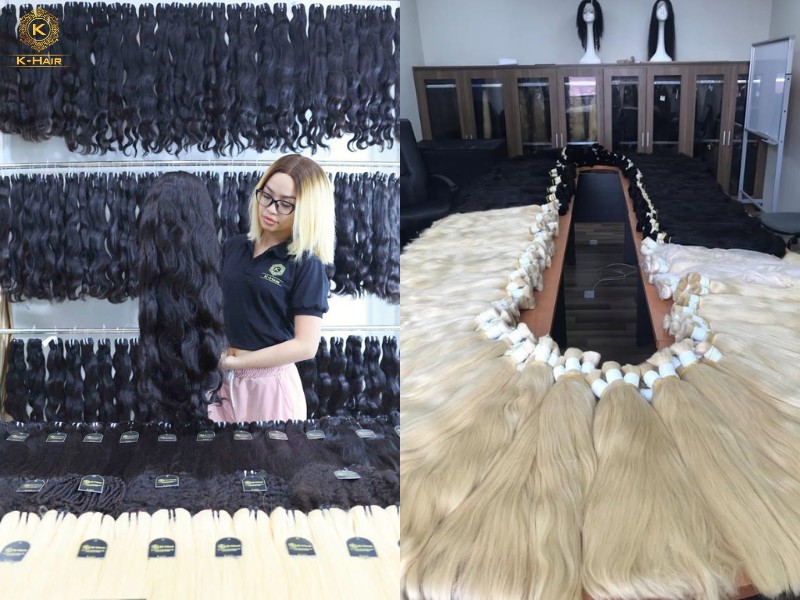
The price mentioned above is not entirely fixed – there are multiple features that can affect your final UV hair extensions sourcing prices. For example:
- Types of hair extensions used: In the market – hair bulks are your most affordable option due to its minimal construction, followed by keratin bond extensions and regular machine wefts. However, if you source tape-ins or genius wefts – you would have to pay a much higher price.
- Hair origin: Standard Southeast Asian hair from India, Vietnam, Burma is the more cost-effective source – costing around $100 to $1000 for 1kg. However, fine, rare and authentic Slavic hair commands a luxurious price of $500 to $3000+/kg.
- Color & Texture Customizations: To match your UV hair extensions with your client’s natural hair – you can have them colored and texturized. The process can cost you around $30 to $100 per kilogram.
6. What Actually Determines Your Customer Satisfaction & K-Hair’s Raw Hair Quality
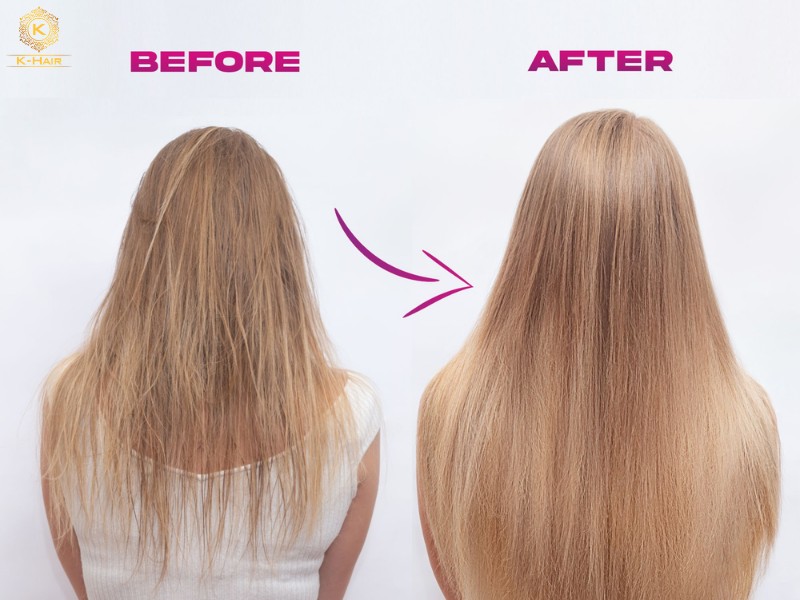
Regardless of bonding technique – the most important feature that decides your customer satisfaction is not your service price, but the quality of the hair you offered itself. Long-lasting, high-quality hair will sure to keep your customers coming to your doors, while cheap, poor-quality ones will only leave negative reviews and unhappy clients.
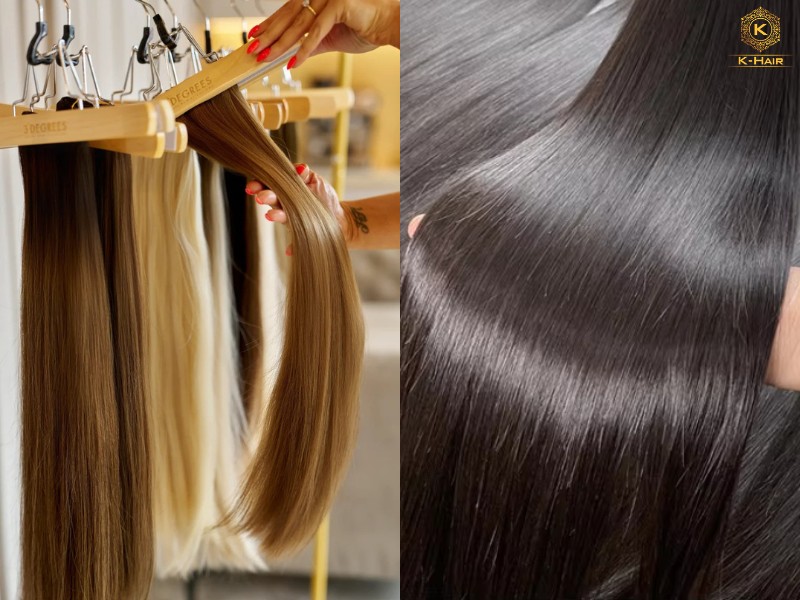
So, how to tell if the hair you had is high-quality or not? There are always criteria you can depend on:
- Cuticle alignment – strands that are cuticle-aligned resist tangling far better than hair processed without regard for direction.
- Single-donor sourcing – hair from one donor blends and ages more consistently than hair pooled from multiple sources, which can shed, tangle, or fade unevenly
- Minimal chemical processing – heavily silicone-coated or acid-bathed hair may look glossy on day one but loses that finish within a few washes
- How it responds to heat styling – high-quality Remy hair holds curls and blowouts similarly to natural hair; lower-grade hair often reacts unpredictably to heat tools.
This is where sourcing and manufacturing control matter more than the trend of the moment – which leads you to K-Hair, one of the most trusted Vietnamese hair vendors out there.
K-Hair’s raw and virgin Vietnamese hair is sourced through a single, traceable supply chain rather than pooled from multiple collection points. This is the kind of donor sourcing depth and strict quality control that keeps cuticles aligned, regardless of which bonding method a stylist ultimately uses to apply them.
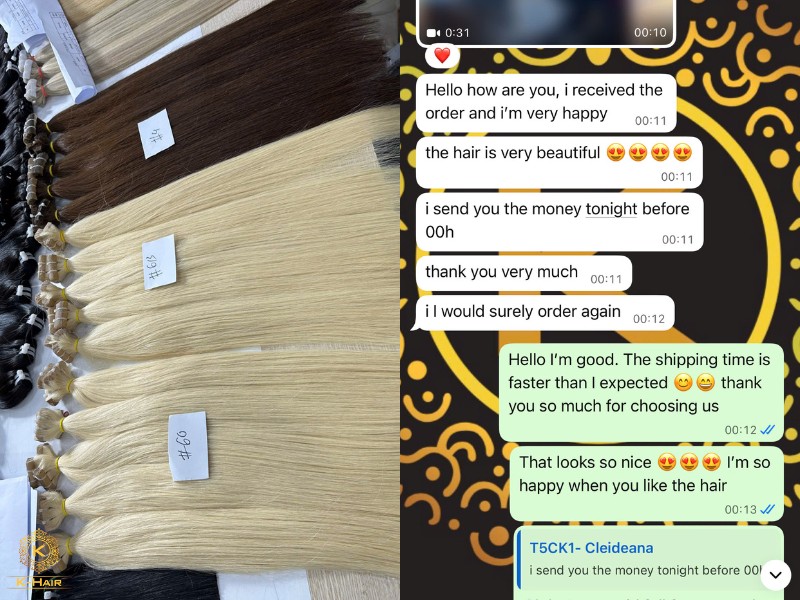
Trusted by more than 10.000 clients worldwide – K-Hair is also among the most reliable names on the market. For stylists and salon owners, our thousands of glowing customer testimonials offer the ultimate peace of mind and an undeniable guarantee of premium quality.
7. FAQs about UV Hair Extensions
Here are some frequently asked questions about UV hair extensions:
7.1. How long do UV hair extensions last?
With professional application and care, UV extensions typically last several weeks to a few months before requiring maintenance, though lifespan depends heavily on hair quality and aftercare.
7.2. Can UV hair extensions be applied to any hair type?
They’re most commonly recommended for fine, thinning, or fragile hair due to their lightweight, low-tension bonds, but a stylist consultation is the best way to confirm fit for your hair type.
7.3. What’s the difference between UV extensions and tape-ins?
UV extensions use a UV-cured adhesive and light tool for a nearly invisible bond, while tape-ins use adhesive tape strips. Tape-ins are more widely available and don’t involve UV light exposure to the scalp.
7.4. Do UV hair extensions work with any hair extension brand?
The UV-cure adhesive itself is compatible with most human hair strand extensions, but results depend heavily on the quality of the hair being bonded – single-donor, cuticle-aligned Remy hair blends more naturally and holds up better under any bonding method, UV included.
8. Conclusion
With the information mentioned, we hope that we have been able to bring you closer to UV hair extensions and their potentials. All in all, UV hair extensions offer a genuinely thinner, more discreet bond than many traditional methods – making them ideal for advance installation and high-end clientele. However, the extension’s real performance – its shine, tangle resistance, and longevity – still comes down to the quality of the hair strand underneath the bond.
Ready to elevate your inventory with hair that stands the test of time?
Contact K-Hair Factory for our wholesale catalog and a live video factory tour.