Peruvian hair is a category of 100% human hair extensions defined by its naturally medium-coarse texture, exceptional compatibility with heat styling and chemical coloring. Prized for its unique blend of durability and effortless luxury, this type of hair has long been a global favorite.
Whether you are a stylist or a wholesaler seeking high-margin products, understanding the unique characteristics of this hair type is essential for your business. In this comprehensive guide, we will explore everything about Peruvian hair and provide professional tips to ensure your investment maintains its premium quality.
1. What is Peruvian hair?
Peruvian hair, in theory, is human hair from women in Peru – an origin now widely recognized in the global extensions trade.
But in reality, authentic “Peruvian hair” on the market nowadays accounts for only a small fraction, even though suppliers all claim that it is “100% hair from Peru”. Most products are actually hair from Vietnam, which has characteristics most similar to genuine Peruvian strands.
These unique features include a texture that is thick enough to deliver visible volume, yet light enough to avoid the heavy feel common in lower-grade extensions. This balance is what makes this hair a top choice for wholesalers, who seek longer lifespan and versatile styling options.
Especially in the African market, where volume and bounce are non-negotiable, this premium-sourced hair have gained immense popularity for blending well with natural hair textures, providing a flawless look without feeling heavy.
2. Peruvian hair texture guide
Peruvian hair is available in several natural and processed textures, they are:
2.1. Straight Peruvian Hair
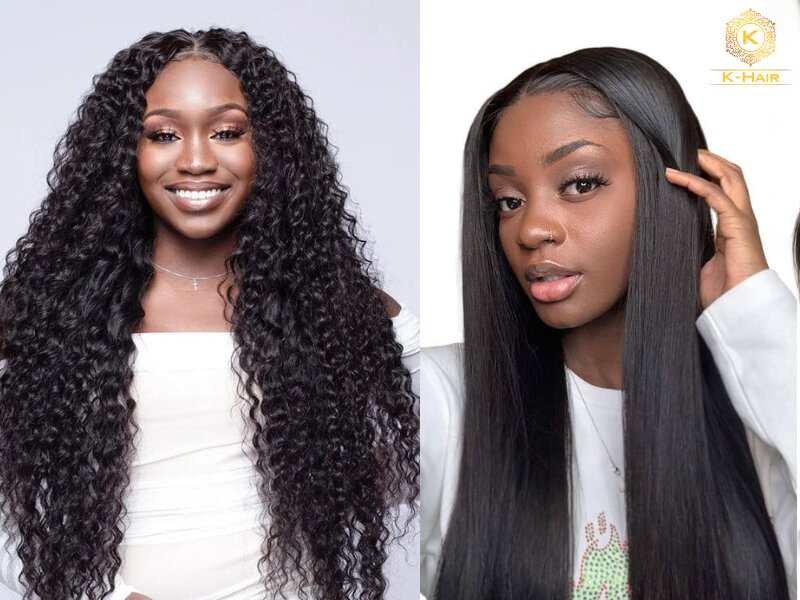
It is impossible not to mention straight hair – a classic, never outdated texture. It not only offers a sleek, polished appearance, but also can be worn flat-ironed for a formal look or lightly curled for a casual style. This makes straight hair consistently the first texture new wholesale buyers stock, and one of the last they ever drop from their catalog.
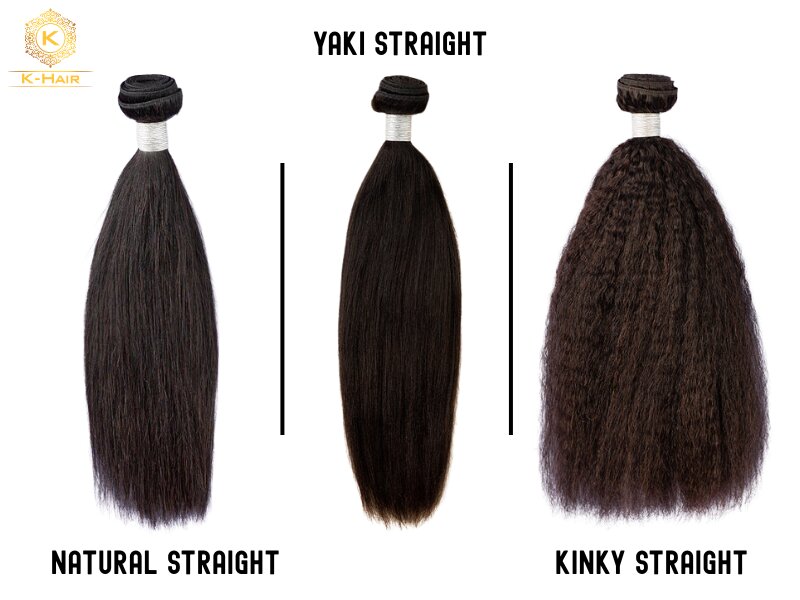
Diving deeper, there are many types of straight hair from Peru. From the smooth flow of Natural Straight to the silky texture of Yaki, and the deep volume of Kinky Straight, there is a silhouette for every identity.
2.2. Wavy Peruvian Hair
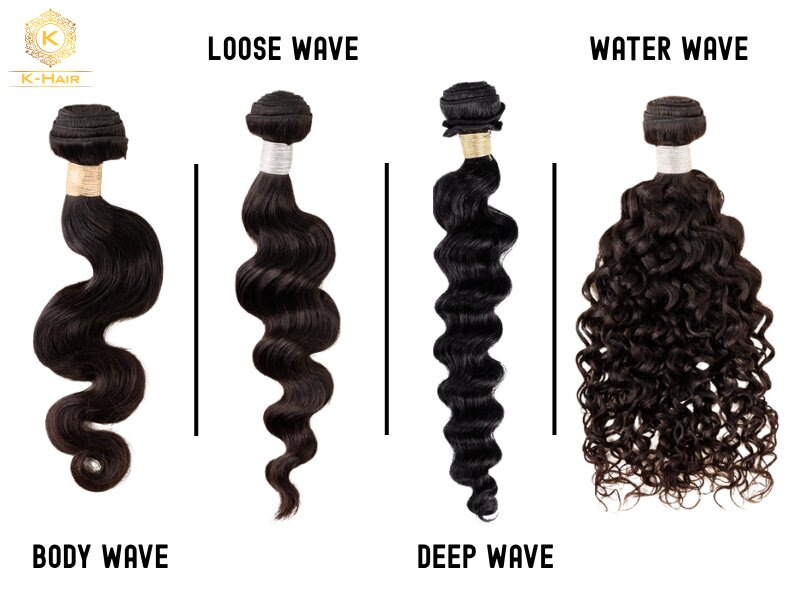
Wavy is the most popular texture in the Peruvian hair category. In particular, customers’ favourite is the loose, flowing S-shaped pattern known as Body Wave texture. That’s why for distributors and salon owners, body wave bundles are typically the highest-turnover SKU in any Peruvian hair product line.
Besides that, the Peruvian category is further defined by the varying degrees of curl tightness in its other wavy textures. This starts with Loose Wave offering the most relaxed loops, followed by the more defined, rhythmic spirals of Deep Wave. For the most textured look, Water Wave features the tightest curl pattern for maximum volume.
2.3. Curly Peruvian Hair
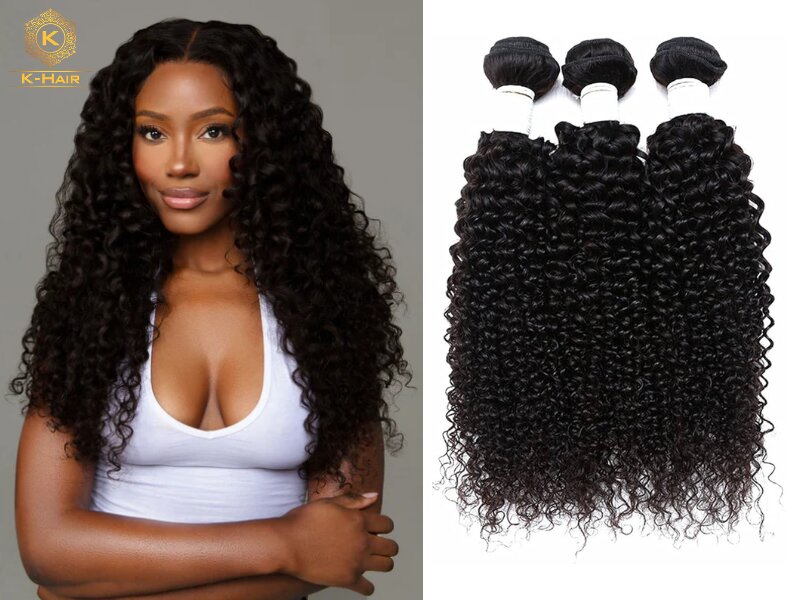
Curly Peruvian hair delivers tighter curl patterns that create significant volume and a bold aesthetic. It has seen a surge in demand driven by natural hair movement trends, particularly in the US and European markets. Beyond the look, this pattern is prized for its ability to hold moisture, making it a go-to for customers.
3. Colour range of Peruvian hair
The true value of this hair lies in its exceptional color compatibility. Due to its high structural integrity, Peruvian hair perfectly caters to both enthusiasts of the natural look and those seeking custom-colored transformations regardless of the extension type.
3.1. Natural shades: The essence of authenticity
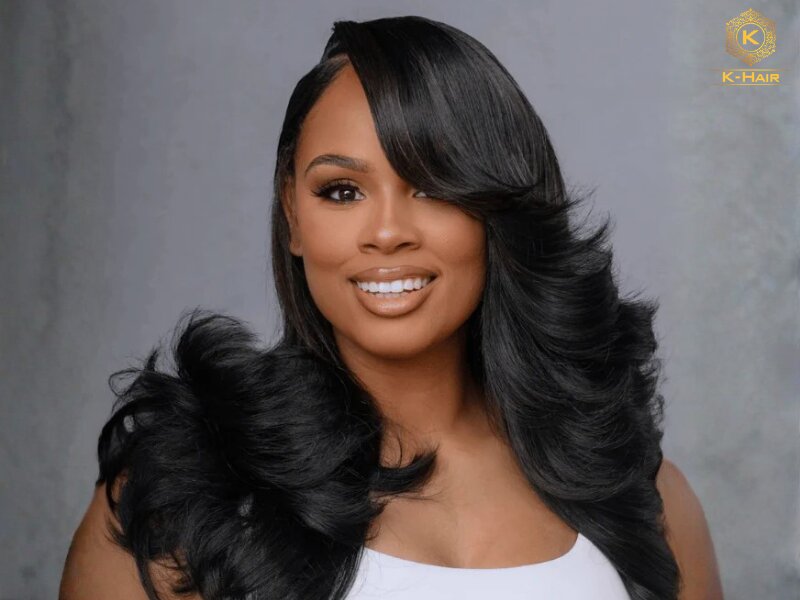
Authentic hair sourced from Peru typically features a natural color spectrum ranging from Jet Black (#1) and Natural Black (#1B) to Dark Brown (#2). These organic tones integrate perfectly with most natural hair bases, minimizing the visible contrast at the weft line that lower-grade extensions typically leave.
As 100% human hair, these bundles exhibit natural color shifts under sunlight – the same way natural hair does. You can never find any synthetic fibers that can replicate this effect.
3.2. Custom coloring and bleaching capabilities
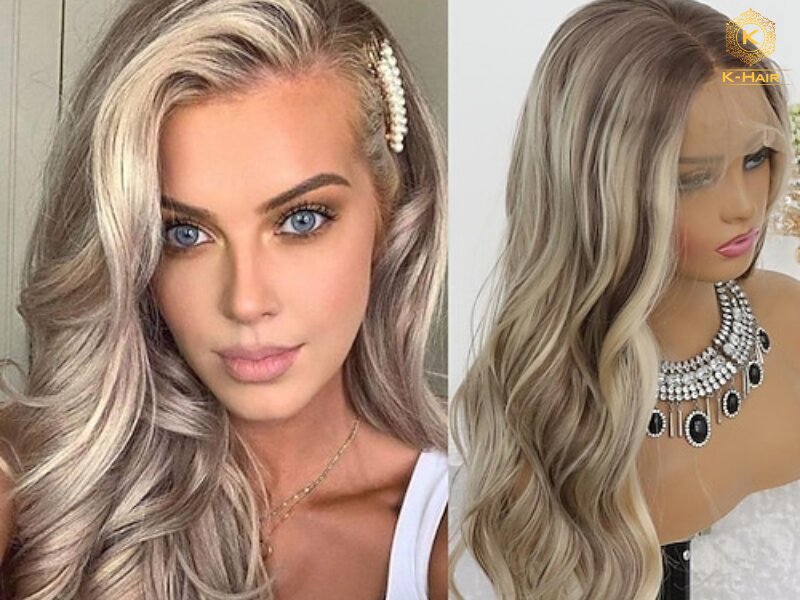
Thanks to its robust structure and intact cuticles, these high-integrity strands can be bleached to light shades without risks of brittleness or breakage. Favoured colors such as Honey Brown, Burgundy, or even Blonde (#613) can all be easily created from this hair.
The strand’s moisture retention also plays a role in color longevity – pigments bind deeper into the cortex, which means less fading between salon visits. This is a crucial benefit for salon owners creating trendy Ombre or Balayage styles.
4. Virgin Peruvian hair vs Raw Peruvian hair
Similar to other hair types on the market, Peruvian hair is also divided into two main types: virgin and raw. Although both are high-quality options, they exhibit starkly different characteristics in terms of processing methods and long-term durability.
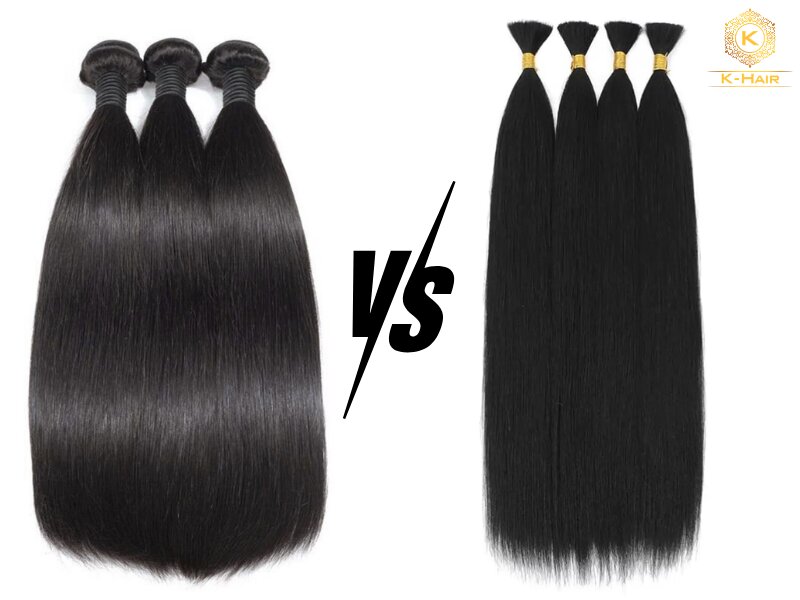
Understanding the raw vs virgin Peruvian hair debate is the first step toward making a smart wholesale decision. Let’s dive into the specifics right now!!
4.1. What is Virgin Peruvian hair?
No perms, no bleaches, and no harsh dye treatments – that is exactly how to define Virgin Peruvian hair. Never been chemically treated, all cuticles remain intact and are aligned in a single direction to minimize tangling.
The main distinction here is steam-styling. To give you those perfectly uniform “Deep Wave” or “Body Wave” patterns that customers love, the hair undergoes a high-pressure steam process. It stays healthy and resilient, but the texture is set by human intervention.
For most professional salons, virgin hair offers that sweet spot—an ideal balance of premium quality and an accessible price point.
4.2. What is Raw Peruvian hair?
If Virgin hair is the workhorse, Raw Peruvian hair is the luxury thoroughbred – the highest grade available. True to its name, “raw” signifies hair in its purest, most authentic state: entirely untouched by chemical processing or heat treatments, including steam-styling for texture.
Sourced from a single donor, this premium selection preserves its original texture and fully intact cuticle layers. Don’t be fooled by its slightly less uniform look at first glance, cause that’s the mark of authenticity. That unmatched longevity and natural movement is what makes it a premium product that commands the highest margins for your business.
4.3. Raw vs Virgin Peruvian hair – Key differences
Understanding the raw vs virgin hair debate is the first step toward making a smart wholesale decision. Let’s dive into the specifics right now!!
|
Virgin Peruvian hair |
Raw Peruvian hair |
|
| Donor source |
Multiple donors |
Single donor |
| Processing |
0% |
Light processing |
| Texture consistency |
High — uniform across bundles |
Natural variation between bundles |
| Lifespan (with proper care) |
1–2 years |
3–5 years |
| Price |
Mid-range |
High |
| Best for |
High-volume retail, salon packages |
Luxury segments, premium retail |
So, how do you choose the right strategy when importing these types of hair? How should you allocate your resources to maximize profits? It depends on your business model:
4.3.1. For Service-Based Salons
If your salon focuses on hair extensions or coloring services, raw hair is your best bet. Because raw hair withstands chemicals extremely well, it helps stylists avoid the risks of “burned hair” or “hair loss after coloring” – issues often encountered with Virgin hair, which may have undergone light prior processing.
However, stocking a 100% Raw hair inventory may not always be budget-friendly. You can still import a small percentage of virgin hair and use the upsell technique. A smarter approach is to import a small percentage of Virgin hair and utilize upselling techniques. Offer your customers two clear tiers, for example:
- “The Basic Package (Virgin)” with a 6-month warranty.
- “The Luxury Package (Raw)” with a 2-year warranty.
Most customers will gravitate toward raw hair once you explain its superior long-term economic value.
4.3.2. For Local Brands/Online Stores
Based on your long-term strategy, if you want to position yourself as a “High-end Brand,” raw hair is the quickest way. American customers, in particular, highly value uniqueness. The fact that each bundle of hair has slightly different patterns (due to being from a single donor) is a selling point to prove authenticity.
On the other hand, if your goal is to optimize cash flow, virgin hair is ideal for “Ready-to-wear” products such as pre-made wigs. Thanks to its uniform texture, you can easily maintain consistent quality across your entire inventory without needing constant adjustments.
5. How to choose the best wholesale Peruvian hair bundles
Now that you have the basics, do you know how to distinguish true quality Peruvian hair among the many wholesale suppliers on the market? Don’t worry, the following guide covers everything you need to know to secure the premium inventory your business deserves
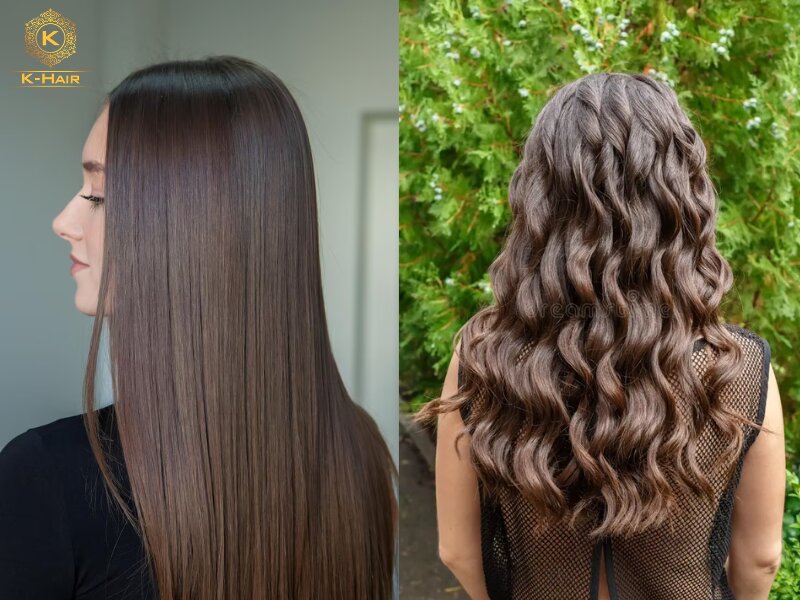
5.1. Key features of high-quality Peruvian hair
For Virgin Peruvian hair, double drawn hair bundles guarantee consistent thickness from root to tip. In contrast, Raw Peruvian hair may exhibit a slight natural taper toward the ends, but it maintains a healthy, substantial volume without appearing thin.
- Cuticle-aligned hair reduces tangling and matting.
- For Virgin Peruvian hair, double-drawn bundles guarantee consistent thickness from root to tip. In contrast, Raw Peruvian hair may exhibit a slight natural taper toward the ends, but it maintains a healthy, substantial volume without appearing thin.
- Available lengths range from 8-30 inches.
- Shedding rate is typically below 5%.
- Moisture retention is higher than synthetic blends.
- Heat resistance allows styling up to 180–200°C.
5.2. Evaluating criteria when choosing wholesale Peruvian hair bundles
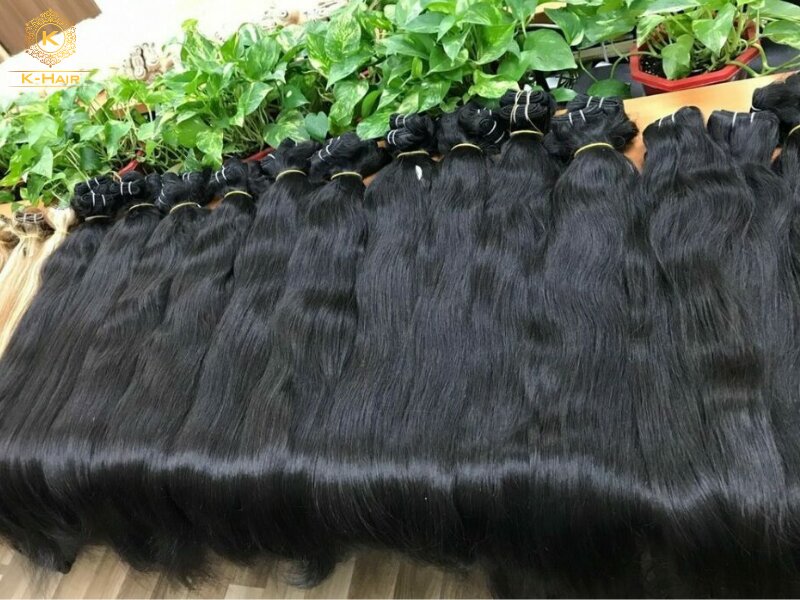
Mastering the theory is one thing, conducting a hands-on inspection is what really matters. To simplify this process, we’ve outlined the essential criteria to help you identify and secure the best wholesale Peruvian hair bundles for your business:
- The cuticle test: Use a sharp blade to gently scrape a few strands of hair. If a white, powdery substance appears, you have confirmed the presence of intact, natural cuticles. However, if the hair remains unnaturally smooth or shows no residue, it has likely been stripped by an acid bath to mask poor quality.
- Assess weft quality: Closely inspect the stitching for any gaps or loose threads. A tightly sewn, reinforced weft is non-negotiable since it minimizes shedding and significantly extends the product’s lifespan.
- The scent test: Raw and virgin hair should smell like natural hair or clean shampoo. Avoid hair with harsh chemical odors as this indicates heavy processing and poor quality.
- Assess fullness: Moving to the ends, check for consistent thickness from top to bottom. Even for raw hair, the ends should never appear thin or stringy; if the volume drops off too much, the bundle is considered sub-standard.
- The shedding test: Run a wide-tooth comb or your fingers through the hair repeatedly. This simple action allows you to quickly disqualify any batches that exhibit excessive hair loss before you place a large order.
- Elasticity & heat verification: Request a live heat-stress test from your supplier. If the hair maintains its bounce and shape after styling, you have found a reliable, high-tier source.
- Bleachability grade: The ultimate proof of quality shows through the lifting process. Raw Peruvian hair of the highest grade should reach #613 Blonde or #10 Platinum without losing its texture. If the hair stops at a copper/ orange stage, it is likely a mix of lower-grade fibers.
Expert tips:
- If you are looking at ‘raw’ Peruvian hair and every bundle looks exactly the same, be cautious – cause it has likely been processed. True high-grade raw hair always shows slight variations between bundles.
- Always test samples from at least 2–3 different suppliers before scaling. A price difference of $20–$30/kg often reflects significant differences in lifespan and customer satisfaction.
6. How to care Peruvian hair
Securing the best wholesale Peruvian hair bundles is a major win for your business, but the work doesn’t stop at the purchase. Even the highest-grade Peruvian hair requires a consistent routine to preserve its natural luster and strength. To ensure your investment stays beautiful for years, follow these essential maintenance steps:
- Since Peruvian hair is naturally thicker, it requires deep hydration to stay supple. Use sulfate-free shampoo and moisturizing conditioner every 1–2 weeks, and always wash in a downward motion to keep the cuticles aligned.
- Whenever possible, allow your Peruvian bundles to air dry. If you must use styling tools, always apply a thermal protectant and keep the heat at a medium to low setting to avoid damage.
- Peruvian hair provides great volume, but to manage it safely, always use a wide-tooth comb. Start from the ends and work your way up to the roots to minimize shedding and prevent unnecessary breakage.
- Apply a lightweight hair oil, such as Argan or Macadamia oil to maintain the natural luster without weighing the hair down.
- When not in use, store your Peruvian hair in a silk or satin bag. This simple step helps preserve moisture, prevents friction, and keeps the texture smooth until the next installation.
7. FAQs about Peruvian hair
To help you further, here are some of the most frequently asked questions regarding Peruvian hair:
7.1. Can Peruvian hair be dyed?
Yes. If your clients often ask “can you dye hair extensions“, the answer is an absolute yes for Peruvian bundles. Since it is premium virgin or raw hair, it takes pigment exceptionally well. However, we always recommend having a professional handle the bleaching process to maintain the hair’s structural integrity.
7.2. How many bundles do I need for a full head?
For lengths between 12 and 18 inches, 3 bundles are usually enough. For lengths 20 inches and longer, we recommend 4 bundles for a full, voluminous look.
7.3. Does Peruvian hair shed?
All hair extensions experience “minimum” shedding, just like natural hair. However, high-quality wholesale Peruvian bundles with reinforced wefts should not have noticeable shedding.
7.4. Is it better than Brazilian hair?
“Better” is subjective. When comparing Peruvian and Brazilian hair, Brazilian hair tends to be slightly thicker and heavier, with a natural shine, while Peruvian hair is lighter, softer, and often holds volume better. Both are premium human hair types, but if you want more volume and a more natural blend with textured hair, the Peruvian one is the winner.
8. Conclusion
Ultimately, Peruvian hair remains one of the most versatile and durable investments in the global market. Whether you choose the consistent elegance of virgin hair or the high-end, raw appeal of single-donor bundles, you are investing in a product built to last.
If you are looking for the quality of Peruvian hair, K-Hair bypasses the labels and brings you the source: 100% high-grade Vietnamese hair that offers the exact thickness, durability, and luster you seek in Peruvian bundles. By partnering with us, you aren’t just buying a name, you’re investing in authentic, long-lasting hair directly from the source.