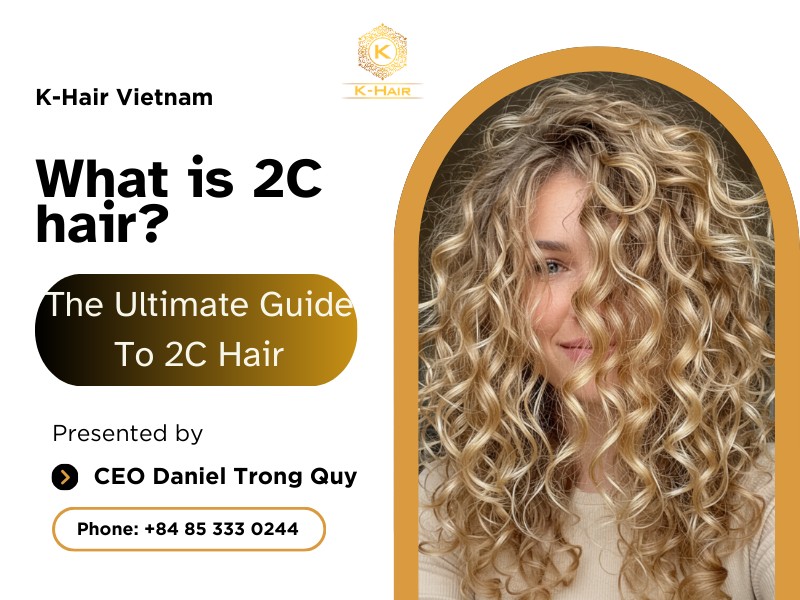
In general, 2C hair sits at the border between wavy hair and curly hair, hence, it is one of the most unique, sharing common traits of both type 2 and 2 hair types. Therefore, it is extremely easy to mistake it with other wavy, curly hair types – making maintenance confusing and ineffective.
To avoid this mistake, as well as to find out more about this interesting hair type, let’s walk through this article together, as we unfold to you all the information you need about the unique 2C hair type.
1. What is 2C hair?
The name itself “2C hair” is rooted from the Andre Walker Hair Typing system invented in the 1990s. Generally, the number suggests that 2C hair is a type of wavy hair, similar to other subtypes like 2A, 2B hair. And, the capital letter here means that the strands would feature the most thickness and texture density among the wavy hair variations.
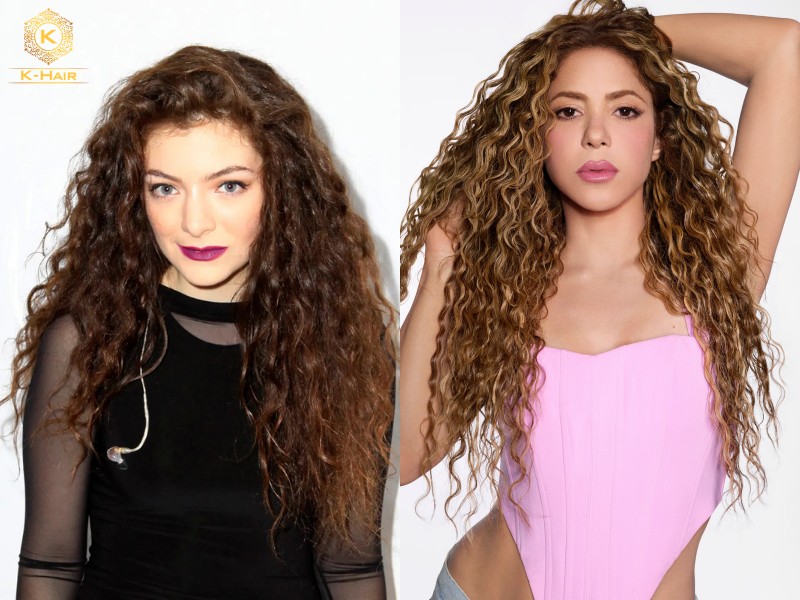
In reality, some celebrities with this natural hair type might include: Lorde – the talented music prodigy; or Shakira – the famous singer and performer. So, if you ever feel like your hair looks exactly like what they have, there is a high chance that your hair falls into the same category as these famous celebrities’.
2. Getting to Know 2C Hair Features
Much like most wavy types, 2C hair can also be briefly defined by their S-shaped waves. However, when we give it a deeper look, we can clearly see that this hair type can hold many signature traits that cannot be seen in any other variations. These signature characteristics includes:
2.1. Physical Traits
Being the last member of the wavy hair family, 2C hair would definitely heighten most of the shared traits of a typical wavy hair pattern:
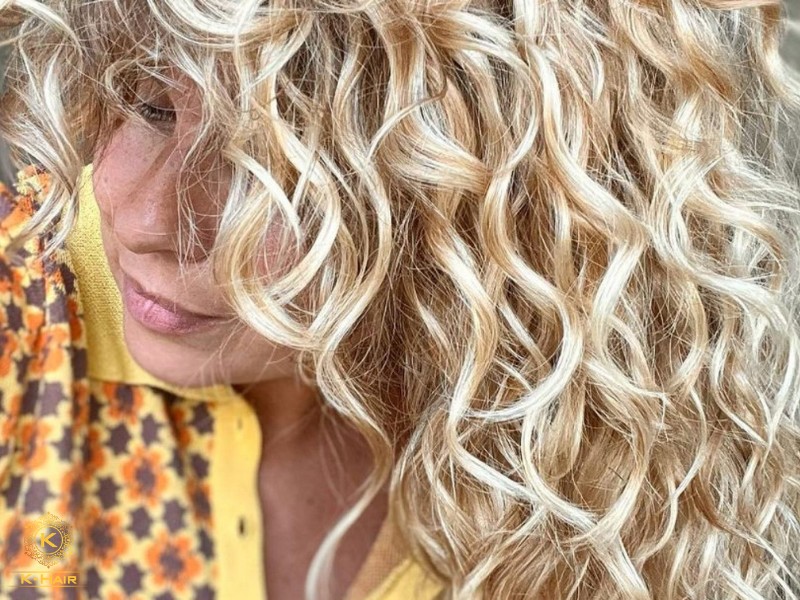
- Wave patterns: The waves seen in 2C hair are much tighter and smaller, with more curl definition than the rest. On top of that, these waves tend to start directly from the hair roots themselves – completely different from the other wavy hair types.
- Texture thickness: A typical 2C hair strand would be much thicker and coarser than that of 2B or 2A hair. In fact, when you feel along the strands or hold the hair up close you can even physically feel its coarseness and wider strand diameter.
- Volume: One best feature of 2C hair would be its thick natural hair volume – delivered by its pattern and thick hair strands. Furthermore, the coarser, thicker strands also contribute → creating a fuller body from hair roots to hair ends.
- Mixed patterns: A noticeable feature of 2C hair is that the patterns are not entirely uniformed, with several alternatives included besides the S-shaped waves. In fact, some of these patterns can appear wavier than the rest, or featuring a spring-like ring pattern that is somewhat similar to a typical curly hair.

2C hair often has mixed patterns of both waves and loose curls
2.2. Innate traits
Describing “What is 2C hair?” – one crucial aspect that makes up most of this hair type’s identity is its innate, inherent traits,… In fact, most of these features are rooted from the wave patterns itself:
- Cuticle layer: Having thicker, denser curls would also mean that the hair strands would have more raised cuticles, leaving gaps along the hair shafts. This renders 2C hair more porous, with less moisture retention ability compared to the other subtypes.
- Prone to dehydration: Being more porous also means the strands are more prone to dryness, especially along the curls. This feature can further lead to more problems, such as frizz, tangles, and breakage – making the hair harder to maintain.
- Moisture and oil distribution: As the waves start directly at the roots, the natural hair oil cannot make its way to the bottom lengths. In most cases, most of this natural oil tends to be stuck and accumulated at the scalp rather than travelling downward – causing oil accumulation and scalp itch.
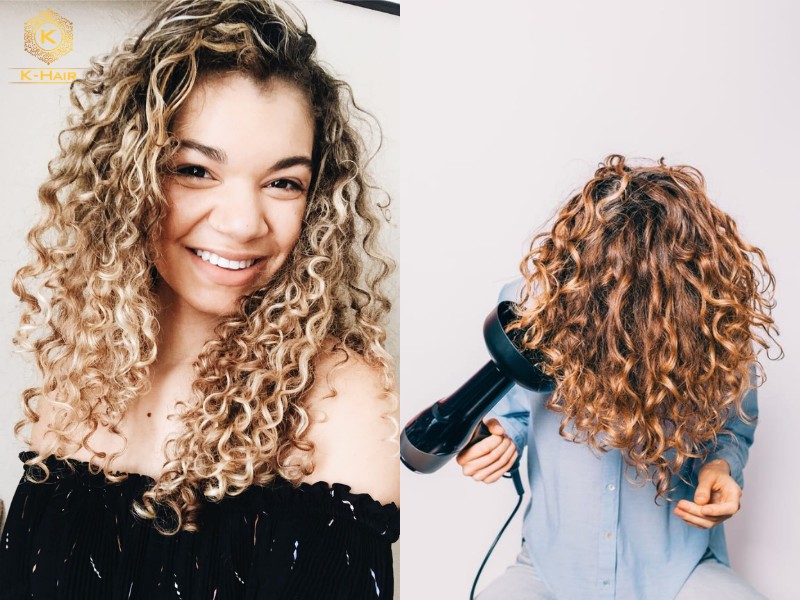
- Styling versatility: the dense curls of 2C hair can make it extremely hard to style – often demands more effort, time and heat to produce the desired hair effect. However, once styled thoroughly, the result would stay put for a much longer time compared to the sleeker and oilier 2A or 2B hair.
Due to its natural patterns, 2C hair might be quite hard to style
Want to see the whole picture? Curious about the differences between the overall type 2 wavy hair compared to the others? Check out our article on the Hair Typing System.
3. What are The Differences Between 2C and 3A Hair?
Having mixed patterns, 2C hair can get easily mixed up with other curly types, especially 3A hair – considering their somewhat similar patterns. However, this confusion can be cleared out, once you consider the differences between these two types:
| 2C hair | 3A hair | |
| Curl patterns | Strong, thick and defined S-shape waves, mixed with some spring-like curls at the hair ends
→ Diverse hair patterns throughout the strands |
Defined, bouncy and loose corkscrew-like ringlets, lying more in complete unison with each other
→ Tighter, bouncier curls with more definition |
| Starting points | The curls start at the roots of the hair lengths | The curls typically stem right out of the scalp |
| Volume | Lower natural hair volume, easier to be weighed down due to looser waves | Higher volume and hair bounce |
| Maintenance problems | Extremely more prone to frizz, due to coarser and dryer hair strands | More prone to dehydration – as the curls make it even harder for the sebum to travel down |
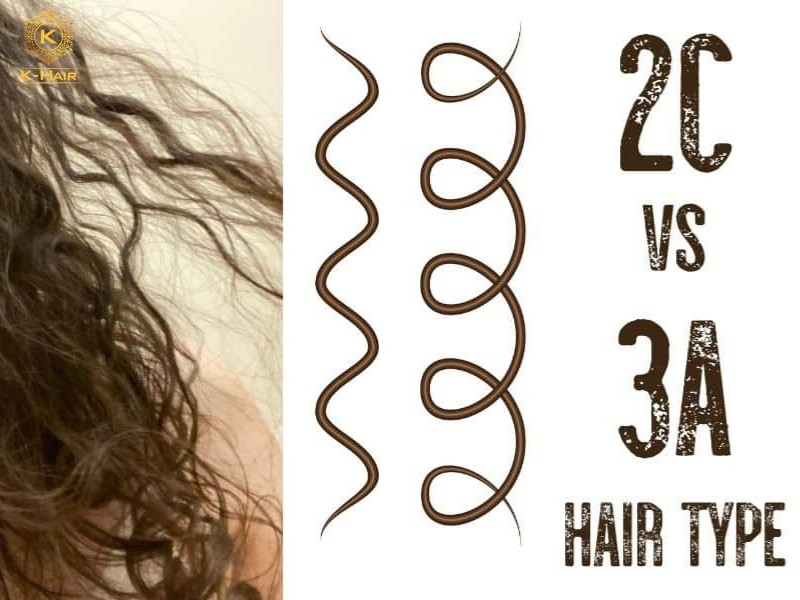
Quick tips: one quick way to identify your hair types is to wrap your strands around your finger. If the strands fall back into an S-shape wave, it is 2C hair, but if they form a spiral – the hair is most definitely 3A.
4. 3 BIGGEST Problems for 2C Hair
The real challenge begins when it comes to how to properly maintain the hair, and how to keep your strands in their healthiest state possible. In fact, due to the nature of the strands, those with 2C hair often have to struggle with frizz, tangling, dehydration, and styling resistance:
4.1. Dryness
The porous nature of 2C strands means that moisture can have a hard time getting absorbed in the inner layer of the shafts. Most times, the moisture will simply slip through the gaps between these cuticles. Through time, these 2C strands soon lack the needed moisture – making the waves dry and lifeless.
However, we can still solve this issue, by:
- Using moisturizing, sulfate-free shampoo, or products designed for curly, wavy hair.
- Following deep conditioning methods: use a deep conditioner once a week, use leave-in conditioner, or seal moisture with natural hair oil.
- Making sure to keep the washes at a moderate frequency: 2-3 times/week only.
- Applying conditioner at the hair ends – finishing the wash with a cool water rinse to seal the cuticles and lock the moisture inside.
- Avoiding heat-styling, or using a protectant spray before curling or straightening your hair with a heat tool.
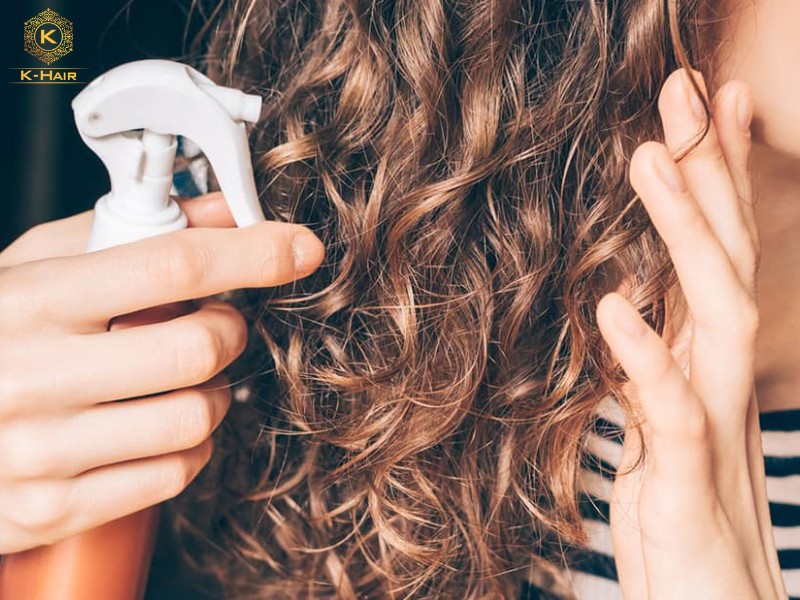
Using a heat protectant can shield your hair from styling heat damage
4.2. Friction-caused Frizz & Tangling
Frizz and tangles in 2C hair is a common appearance. In fact, the floofy, fluffy and messy hair look you see on bad hair days are the perfect example of frizz and tangles.
In most cases, friction is the leading cause of these occurrences. Hence, to solve the issue, you have to take it to the root itself – by targeting the harmful hair friction:
- One thing that makes friction more dominant is dryness itself – hence, make sure to follow all the steps above to avoid this indirect cause.
- Avoid friction in your daily life by: switch to silk, satin beddings; avoid towel-drying or at least switch to a microfiber towel; avoid over-brushing your hair.
- Before going to sleep, you should follow a night-time care routine, applying a leave-in conditioner and wrapping your hair in a silk bonnet.
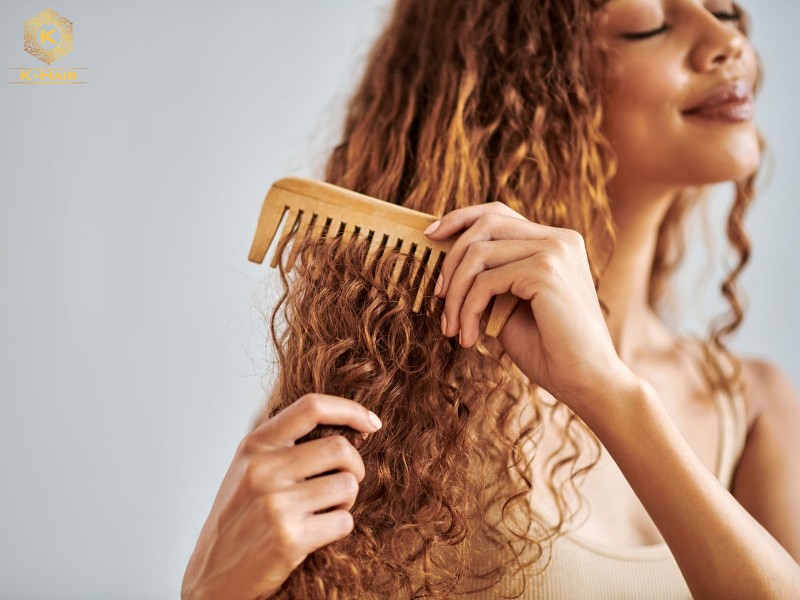
- Detangle your hair gently when the hair is thoroughly damped and conditioned, using a wide-tooth comb.
Detangling is an essential for 2C hair care
4.3. Styling Difficulty
Having tighter waves also makes 2C hair harder to be styled. And what’s worse is that, the process can not only take you more time and effort, but the higher heat can also deal more damage to the strands.
However, if you follow these expert tips, your 2C strands can turn out just the way you like them – without costing time or hair health:
- Instead of heat-curling, you can resort to curl-enhancing products to embrace your own natural waves, bringing out more definition without harming your strands.
- Style your hair while it’s damp – and you can actually see that the results take much less time to show.
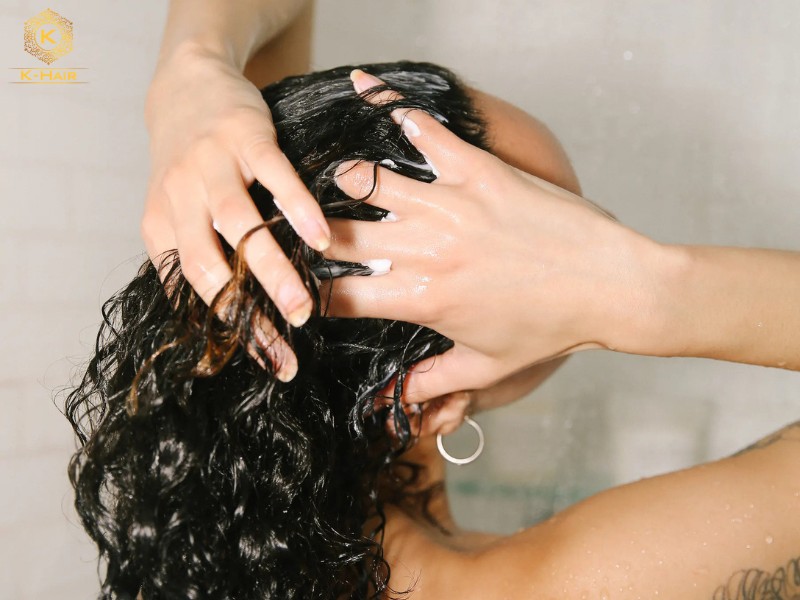
- Meanwhile, residue and buildups can also affect styling results – make sure to use a simple routine only to ensure the strands stay light and workable.
Keep your strands clean and light is one way to make them easier to work with
5. FAQs about 2C Hair
Here are some frequently asked questions about 2C hair:
5.1. How can you tell if you have 2C hair?
You may have 2C hair if your hair:
- Forms deep S-shaped waves
- Starts waving close to the roots
- Has noticeable volume and frizz
- Occasionally forms loose curls or ringlets
Letting your hair air-dry naturally without products can help reveal its true pattern.
5.2. What is the difference between 2B and 2C hair?
The main difference is wave intensity and volume.
- 2B hair: defined waves that start around the mid-lengths
- 2C hair: stronger waves that often start near the roots and may resemble curls
2C hair is also more prone to frizz and dryness.
5.3. What is the difference between 2B and 2C hair?
The main difference is wave intensity and volume.
- 2B hair: defined waves that start around the mid-lengths
- 2C hair: stronger waves that often start near the roots and may resemble curls
2C hair is also more prone to frizz and dryness.
5.4. Is 2C hair hard to maintain?
2C hair can require a bit more care than looser wave types because it is more prone to frizz and dryness. However, with a consistent routine and the right products, it can be relatively easy to manage and style.
5.5. What products work best for 2C hair?
2C hair usually responds well to products that provide both moisture and hold, such as:
- Curl creams
- Leave-in conditioners
- Lightweight gels
- Frizz-control serums
These products help define waves while controlling frizz.
6. Conclusion
With the information provided in this article, we hope that we have provided all the needed information, tips, about 2C hair. In general, 2C hair is known for its strong waves, diverse patterns and thick, durable strands , giving it a natural, voluminous look. And, with the right routine, this hair can stay healthy, frizz-free, and beautifully defined for a long time to come.
At K-Hair, we do not stop at providing knowledge. In fact, we are also one of the largest wigs and extensions manufacturers in Vietnam – able to fulfill each and every of your hair fantasies. If you ever get tired of taking care of your damaged hair and consider using high-quality hair enhancements instead – we will be right here providing you with just what you need!