For the longest time, kinky hair has become one of the most iconic hair patterns – famous for their tight coils and impressive volume. Belonging to this exotic hair family, 4B hair is obviously a perfect representation – possessing many features of kinky hair. However, being positioned in the middle, 4B hair often gets mistaken with its peers – 4A and 4C hair.
This misunderstanding is mostly rooted from lack of knowledge. Hence, to clear out the confusion, as well as to give these strands what they actually need – deeper research is needed. This is also what this article aims to achieve – with in-depth knowledge into its features, curl behaviors and of course – crucial maintenance needs
1. What is 4B Hair?
Based on the Andre Walker Hair Typing system, among the kinky hair spectrum, 4B hair stands in the middle ground. In fact, generally, its textures are tighter than the typical 4A hair, but not as thick as the ultimately 4C hair. Hence, it is placed in the middle of the spectrum in terms of looseness – from 4A, to 4B, and to 4C.
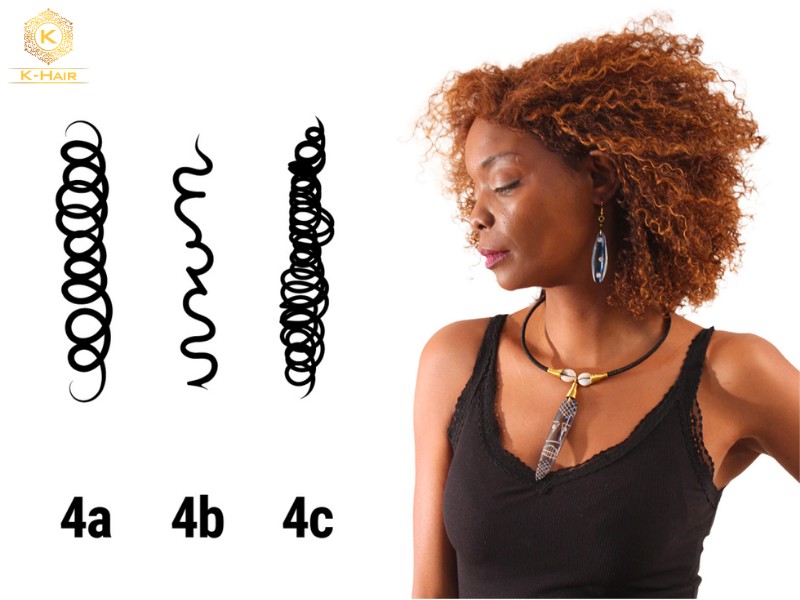
4B hair is highly unique, mainly due to its signature zig-zag, Z-shape curl patterns, with sharper angles and tight hair kinks. However, in reality, the hair strands tend to have a mind of their own. Instead of falling into a defined texture, 4B curls tend to be more free-flowing, creating the iconic afro-textured look seen in most African descents.
There is a high chance that you have actually seen this hair type on the big screen before. Some public figures with 4B hair types might include: Issa Rae – the famous actress, writer, and producer; Solange Knowles – the talented R&B singer,… So, if your hair looks similar to theirs, there is a high chance that your hair also falls into the same category!
2. Getting to Know 4B Hair Features
There is a lot more about 4B hair than what meets the eye. Indeed, rooted from the curl pattern itself, 4B hair has developed many related features like shrinkage, volume, frizz,… Unwrap more on what make these kinks unique in these sections below:
2.1. Physical Traits
Physical characteristics here mean actual features that can be observed easily, and for 4B hair, these traits are its patterns, kink size, volume, shrinkage,…:
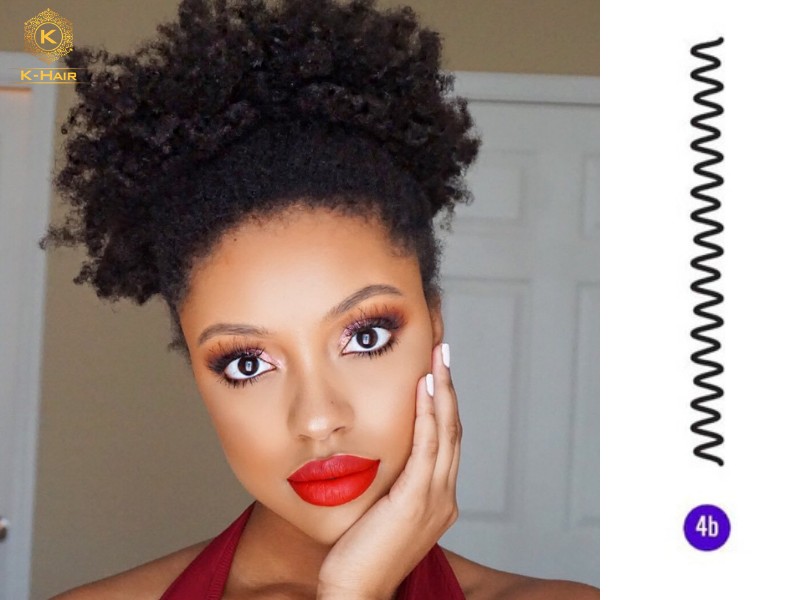
- Curl patterns: 4B hair is identified by its free-flowing, tight Z-shape hair kinks – with sharp angles and bends. Hence, the strands are also more densely packed and tend to clump together, creating a similar appeal to the iconic afro seen in most African-American natural hair.
- Strand textures: 4B strands are mostly identified as thick and coarse. However, this feature can range drastically for different hair sections with different moisture provision and exposure to external stressors.
- Curl size: In most cases, the curls and hair kinks seen in 4B hair are quite similar to a ball pen’s spring or a pen – smaller compared to the size of a crochet needle seen in 4A hair.
- Shrinkage: For such a tight and densely packed hair pattern such as 4B hair, shrinkage would be much more visible. In fact, when you pull and stretch your hair out, you can actually see that the strands are twice or three-time longer than the natural curled look you often see.
- Volume: Another iconic characteristic of 4B hair is its impressive volume. With the natural tight patterns and high hair shrinkage, most of the hair lengths would be transferred into width – making the hair appear much more voluminous.

Zig-zag, free-flowing curls & High hair volume are what’s make 4B hair special
2.2. Innate Traits
Not only by its look and physical appeal, hair lovers can also identify this hair category by touching or feeling it:
- Cuticles: Much like any other kinky, curly hair types, 4B hair also struggles with lifted cuticles. However, the situation is worsened for these strands, as the curls are much more tightly packed with sharper, smaller hair bends.
- Dryness: Having raised cuticles also means that these strands would also have poor moisture retention ability. Indeed, most of the moisture – if not properly sealed, would escape through the gaps between the cuticles → causing dryness, frizz, and multiple other hair problems.
- Easily subjected to humidity: Frizz is also another huge problem for 4B hair. When come into contact with high humidity, the hair will take in more water vapor than it can handle. This causes the cuticles to rise even further, making the curl appear frizzy and poofy.
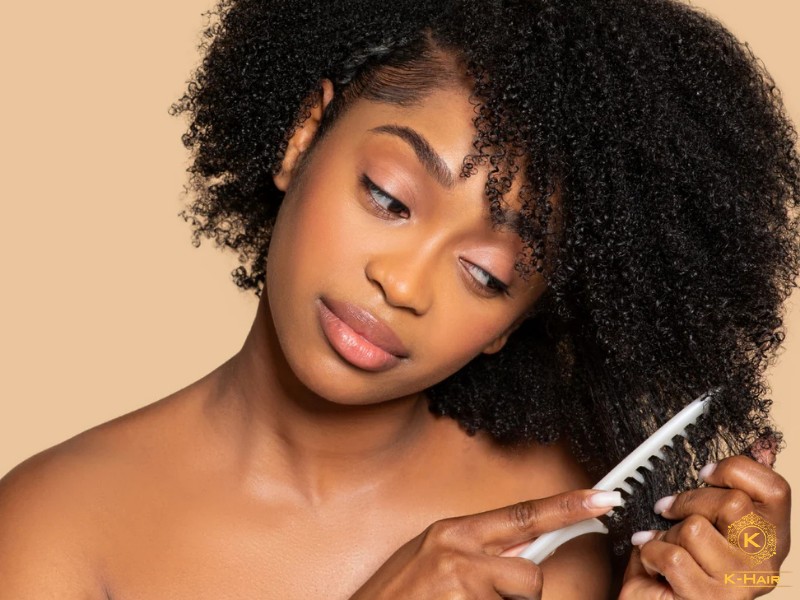
- Possible tangles: Raised cuticles also means more tangles – as the curls are easier to get mixed up with each other – creating lasting knots and matting from time to time. If this situation continues to develop, these will directly result in massive shedding, ruining your overall hair volume and appearance.
4B hair is easy to get tangled, due to its tight curls
3. How Does 4B Hair Differ From Other Hair Types?
As previously mentioned, being placed in the middle, 4B hair can be quite easily mistaken for its siblings – 4A hair and 4C hair. To shed more light into this misunderstanding, let’s take a closer look and put them up for comparison:
| 4A | 4B | 4C | |
| Curl pattern | The loosest hair patterns – featuring looser S-shaped and O-shaped curls. | Tighter overall patterns – sharper and tighter bends following a Z-shape | The tightest hair kinks, with little visible patterns |
| Curl definition | The most defined and uniformed curls | Much less uniformed, with free-flowing and densely clumped kinks | No definition at all – afro and cloud-like with free-flowing strands |
| Strand texture | Soft & Thin strands | Thicker, coarser strand textures | The ultimate thick & coarse strand texture |
| Moisture | Better moisture retention, due to having less kinky patterns | Slightly more prone to dehydration, due to having tighter and curlier hair patterns | Most prone to dryness → Demands more care and moisturizing than the rest |
| Shrinkage | Moderate hair shrinkage of ~40-50% | Higher shrinkage: 60-75% | The highest shrinkage – more than 75% |
| Maintenance focus | Moisture balance
Hair definition Buildup control |
Moisture retention
Detangling Manageability |
Lasting moisture
Breakage prevention Hair protection |
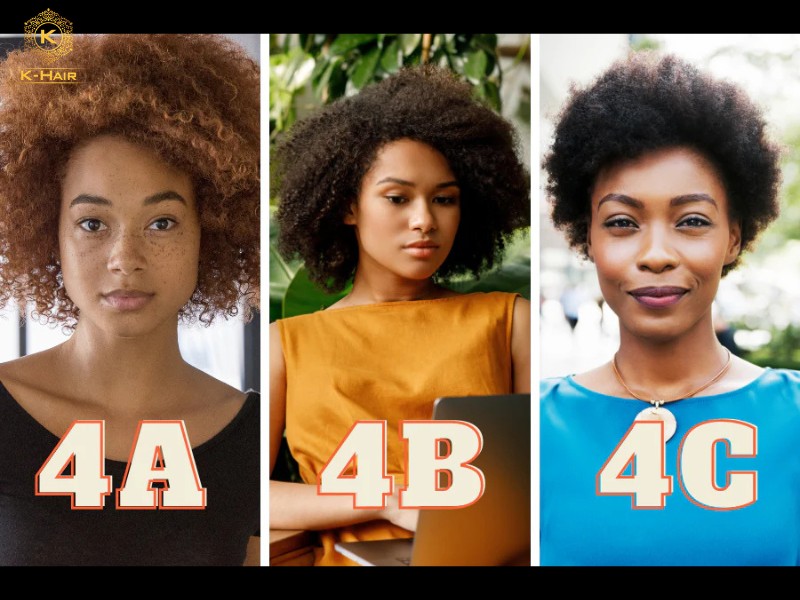
Curious about other hair types and their comparisons? You can also visit our article on Hair Typing System.
4. 3 BIGGEST Challenges for 4B Hair
The signature features of 4B hair are indeed, to be celebrated. However, you cannot truly appreciate and tend to these lustrous curls, if you overlook the challenges that resulted from these features themselves!
Hence, in order to truly give your strands with what they actually need – make sure to acknowledge these issues and learn to adapt your routine around them:
4.1. Extreme Dryness
Dehydration is among the inherent features of 4B hair – as mentioned above. This challenge is mostly rooted from the strand’s poor moisture retention and lifted cuticle. Hence, to properly solve hair dryness for 4B strands, these should be your main focuses:
- Choosing the right hair care product should be the first and most important step. For 4B hair, the most suitable products are often heavy, rich and more nourishing formulas – shea butter, aloe vera, glycerin,…
- Steer clear from harsh cleaning products that consist of sulfate or alcohol. Instead, you should focus on moisturizing options – or even better, switch to co-wash altogether.
- Providing moisture is not enough, you also need to seal it inside – using the LOC/LCO method:
- LOC: Liquid → Oil → Cream
- LCO: Liquid → Cream → Oil
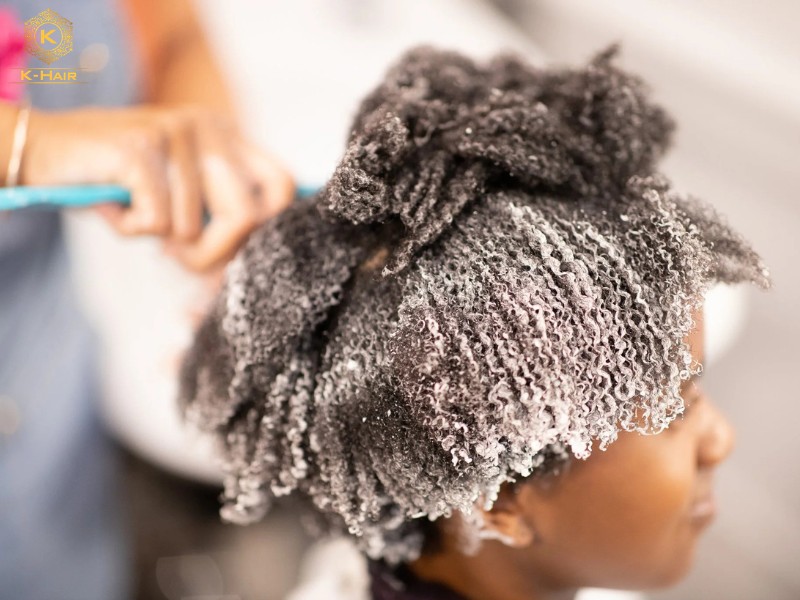
- Wash days should be 7-10 days away from one another. Between these, make sure to include deep conditioning every week – you can also use low heat for better absorption.
Deep condition your hair every week between wash days
4.2. Single-strand Knotting
Tighter curls also means more frequent and hard-to-manage tangles. And in 4B hair’s case, hair tangles and knotting can occur within a single strand! This can further worsen the whole situation with tangling – causing damage and knots that are beyond fixing if not addressed.
- Moisturizing is the key to getting rid of tangles – hence, besides detangling, make sure to include dryness prevention methods above.
- Your hair ends are often the most prone to tangles – as these lengths are more vulnerable to external stressors. Make sure to protect them by wrapping them in twists, braids, buns,…
- Friction causes frizz, and frizz causes knots. Therefore, friction prevention is also crucial:
- Sleep with satin, silk beddings
- Limit excessive touching
- Air-dry your hair instead of blow-dry or towel-dry
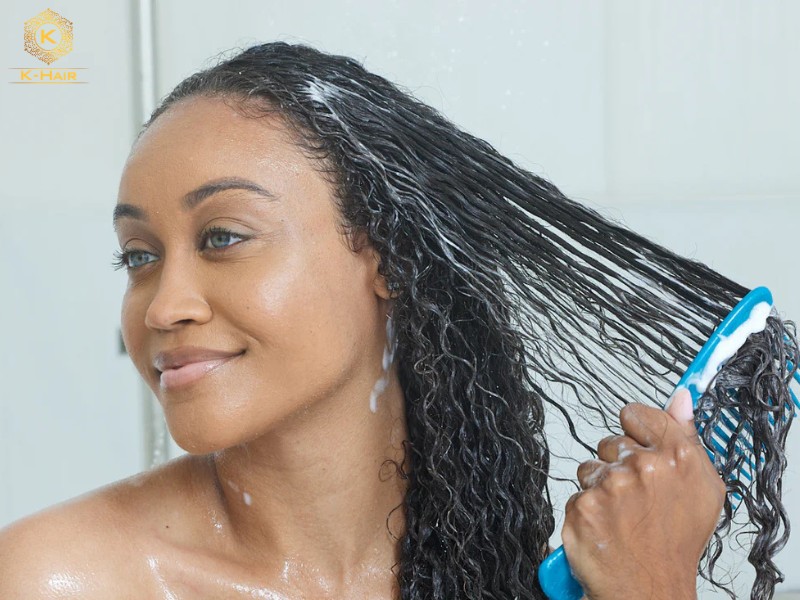
- Detangle once a week – work gently on damp hair; use your finger first – then a wide-tooth comb; detangle sections by sections.
Make sure to detangle your hair properly
4.3. Styling Difficulty
One thing about 4B hair is that curls rarely follow any rules at all! In most cases, these sharp hair kinks would flow freely in their own ways, rather than forming any apparent patterns. On the one hand, this helps form the iconic, voluminous Afro-texture that we know and love. On the other hand, these inconsistent curls would demand extra care and styling effort.
However, you can still bring out more definition by following certain methods:
- For those wanting more curl definition, there are quite a range of methods to choose from:
- For natural-looking curls: the Shingling method – Smoothing the products down the strand using your finger.
- For maximum definition: Finger coiling – Wrapping the strand around your finger from root to end
- For stretched, uniform curls: Twist-Outs/Braid-Outs
- The styling process should follow a liner layering method: leave-in for moisture; curl cream for definition; and gel for better hold.
- Work in small sections to allow better product distribution.
Applying curl cream to bring out more curl definition
5. FAQs about 4B Hair
Here are some frequently asked questions about 4B hair:
5.1. What exactly is 4B hair?
4B hair is a coily hair type with a zig-zag pattern rather than clearly defined curls. It’s known for its volume, density, and soft, cotton-like feel.
5.2. Why does my 4B hair feel so dry?
Because of its shape, natural oils have a harder time traveling down the strands. That’s why 4B hair tends to lose moisture quickly and needs consistent hydration.
5.3. How often should I wash 4B hair?
Most people find that washing every 7-10 days works well. If you use a lot of products or sweat often, you might need to wash more frequently.
5.4. Does 4B hair grow slower than other hair types?
No. 4B hair grows at a similar rate. It just appears shorter due to shrinkage and can lose length from breakage if not properly cared for.
5.5. Do I need to use heavy products on 4B hair?
Not always. While 4B hair benefits from richer products, using too much can lead to buildup. It’s more about using the right amount and layering properly.
6. Conclusion
With the information provided in this article, we hope that we have been able to satisfy your curiosity with 4B hair. All and all, this hair type can be defined by their signature Z-shaped kinks, altogether with its thick strand texture, high shrinkage and impressive volume. And, to properly tend to it, you would have to focus on its proneness to dehydration, tangle and inconsistent patterns.
For 4B hair, wigs are often suggested as an ideal protective style. Indeed, these units can help shield your fragile curls from external factors like UV rays, pollutants, and humidity – while allowing you to rock multiple styles and hair looks. If you ever get tired of styling your own hair – maybe wigs will be your perfect match!