The special thing about hair is that each and every hair type is beautiful and unique in its own ways. And, for 4A hair, these curls are distinct and often appreciated for their impressive volume, lustrous curls and soft, textured hair strands. However, this beauty comes with its own costs – as the tight curls often lead to several maintenance challenges.
Maintaining this hair beauty would have to start at understanding it first. And, to unwrap more about this unique hair type, let’s take a closer look at our informative article below.
1. What is 4A Hair?
Belonging to the kinky hair spectrum, 4A hair is identified by its distinct tight, coily hair kinks. However, among the kinky hair types in the Andre Walker Hair Typing system, 4A is often considered the loosest curl texture. Indeed, if we take the same hair, and compare it to other coily textures 4B or 4C, we can actually see that the curls are much softer and looser.
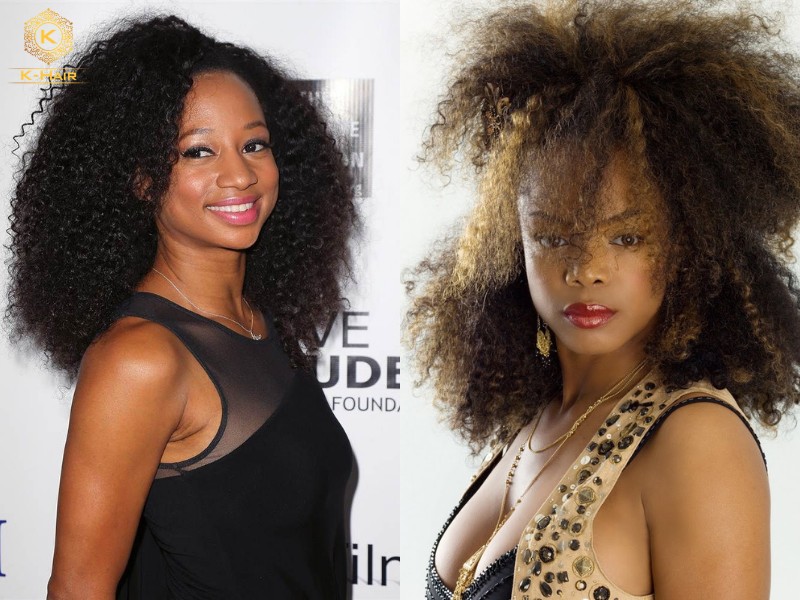
These looser kinks are often mistaken for nearby curl types – especially 3C or even 4B. Hence, if your hair frequently falls somewhere between these categories, there is a high chance that your hair is actually a typical 4A hair, just like Monique Coleman, Leela James,…
2. What are Some Unique Features Seen in 4A Hair?
Despite all the attention it was getting, there are still many features unknown or misunderstood about 4A hair. Let’s clear out these misconceptions, and dig deeper into the curls’ appearance and features below:
2.1. Appearance
Taking a closer look into its looks and patterns, you can actually observe many unique traits in its kinks and curls:
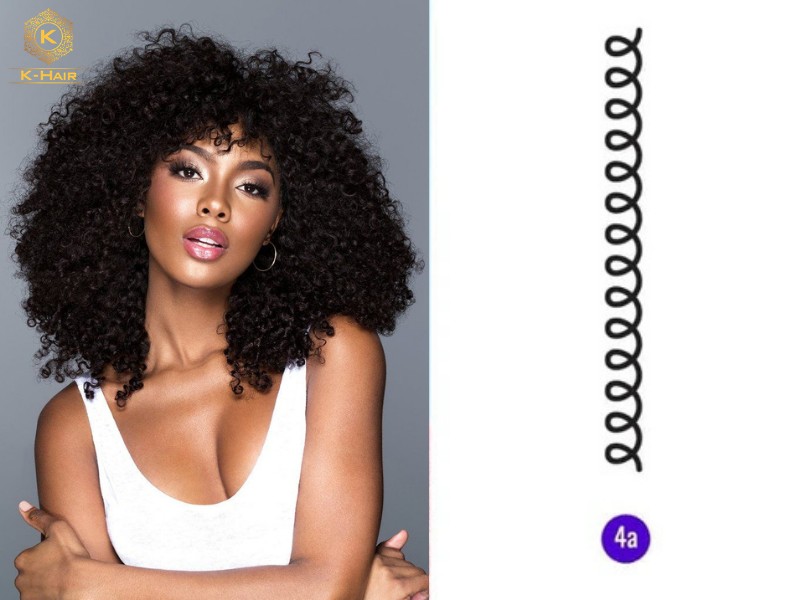
- Curl patterns: 4A hair is defined by its rounded S and O-shaped curls, with small, spring-like loops stemming right out of the hair follicles. The kinks often cluster together naturally, creating clearly outlined rings with a smoother curve instead of abrupt, sharp angles like 4B, 4C hair.
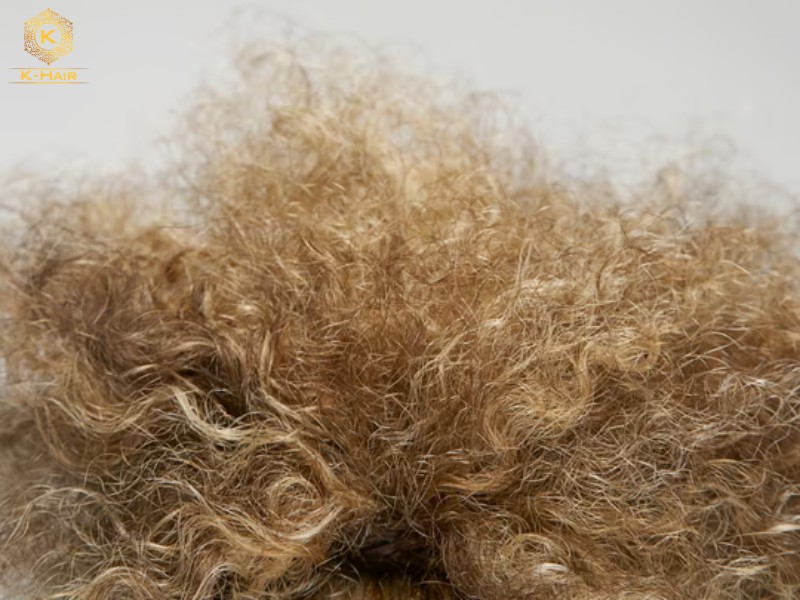
- Strand textures: As the “A” in its name suggests, 4A hair generally feels a bit softer to the touch. Its strands are often much finer and smoother, while still carrying that signature fullness seen in Afro-textured hair. However, this texture can range quite drastically and inconsistently for different sections and lengths.
- Curl size: Upon inspection, these curls are roughly the diameter of a crochet needle or a small makeup brush. This sizing gives 4A hair that beautifully defined look, without shrinking as drastically as the tighter coils in the 4B and 4C categories.

Oftentimes, 4A hair curls would have the same size as a crochet needle - Shrinkage: Shrinkage remains a signature trait across all kinky and curly textures, and 4A hair is no exception. When stretched, the difference between the elongated curl and its natural state is quite considerable, usually up to twice its length.
- Volume: Because the curls are densely packed with moderate shrinkage, 4A hair naturally expands outward, creating a rounded, fluffy silhouette. In many cases, its overall volume falls right between the highly defined look of 3C curls and the denser fullness of 4B hair.
2.2. Innate features
Not only by its appearance, hair lovers can also identify this hair category by observing its behavior and hidden features:
- High porosity: This remains one similar trait for almost all kinky hair types. And, because 4A curls form tight patterns, the cuticles tend to be lifted and leave huge, exposing gaps, making 4A an extremely porous hair type. This leads to heightened moisture loss, leaving the strands more and more prone to dryness.
- Easily subjected to humidity: As a result of being porous, 4A hair is also quite prone to frizz, especially in humid conditions. The raised cuticles allow more moisture to penetrate than what the strands can take in, causing the curls to swell, appear frizzy and become harder to manage.
As a result of being porous, 4A hair is also quite prone to frizz, especially in humid conditions - Possible tangles: Raised cuticles mean that different strands can easily catch onto one another, leading to knots or matting if not detangled regularly. These tangles can even get worse over time, causing shedding, damage and stress on the fragile curls.
- Hard to style: Due to the strands’ fragility, heat, chemical styling are often advised against using on 4A hair. What’s more is that dehydration and hair frizz can also disrupt curl definition, leading to uneven results and making styling more difficult and time-consuming.
3. What are The Differences Between 4A Hair and Curly Hair Types?
Bordering curly and kinky categories, 4A hair would have several common traits with curly hair types. This can easily make the identification more confusing and mixed-up between these two hair classes.
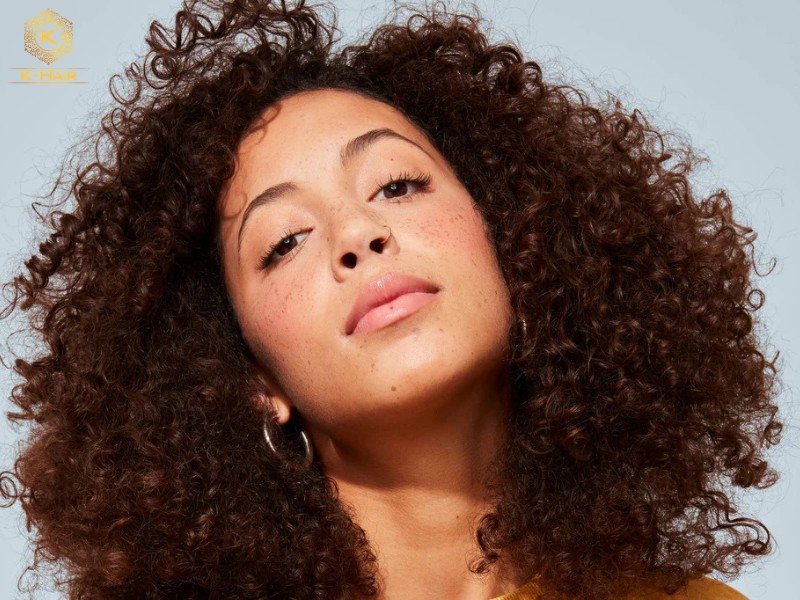
However, besides these shared characteristics – 4A hair would also carry many distinct features that make these kinks stand out. Let’s put these two categories up for comparison for a more accurate distinction:
| 4A Hair | Curly Types (Type 3 Hair) | |
| Curl Patterns | Tight, springy coils | Looser curls, ranging from soft loops to corkscrew curls |
| Curl size | Small circumference – a size of a crochet needle | Larger, bigger curls – a sidewalk chalk, a Sharpie, or a pencil |
| Moisture Retention | Poorer moisture retention – leading to more frequent dehydration | Better retention, due to having looser curls |
| Definition | Naturally voluminous but can lose definition without styling | Naturally more defined, especially in 3B, 3A |
| Frizz Proneness | More prone to frizz due to tighter structure and dryness | Still frizz-prone, but generally easier to control |
| Maintenance | Needs more structured routines (twist-outs, layering products) for moisture provision | Easier to maintain, thanks to their stronger hair resilience and frizz resistance |
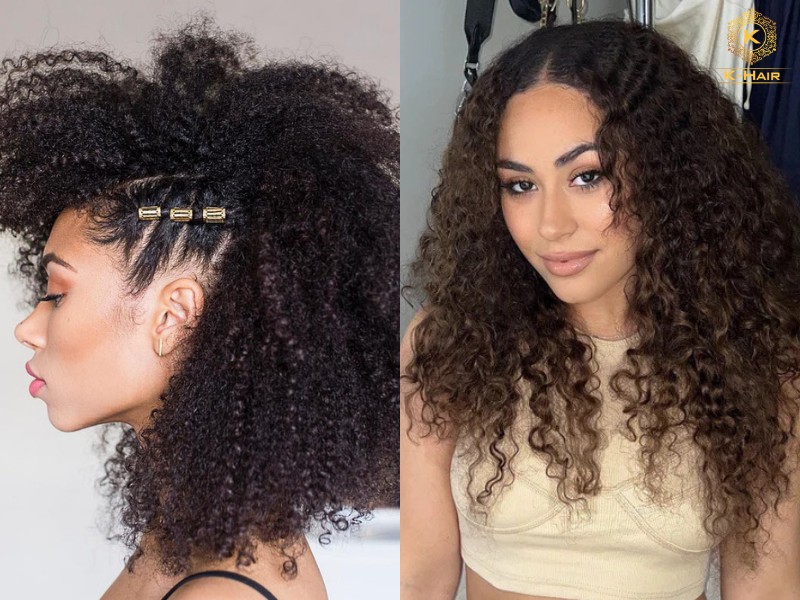
For a more thorough comparison between all hair types – let’s check out our article on Hair Typing System.
4. 3 BIGGEST Problems for 4A Hair
4A hair provides one with thick, bouncy hair volume, natural hair definition, but it can also come with its own cost. For many born with 4A hair, these curls often demand extra attention and care into fixing their frizz, product buildup, and inconsistent curl patterns.
4.1. Unmanageable Frizz
One of the universal experiences for those blessed with 4A hair is hair frizz. Indeed, almost every individual with 4A reports frizzy, puffy hair that requires more time and effort to get ready in the morning.
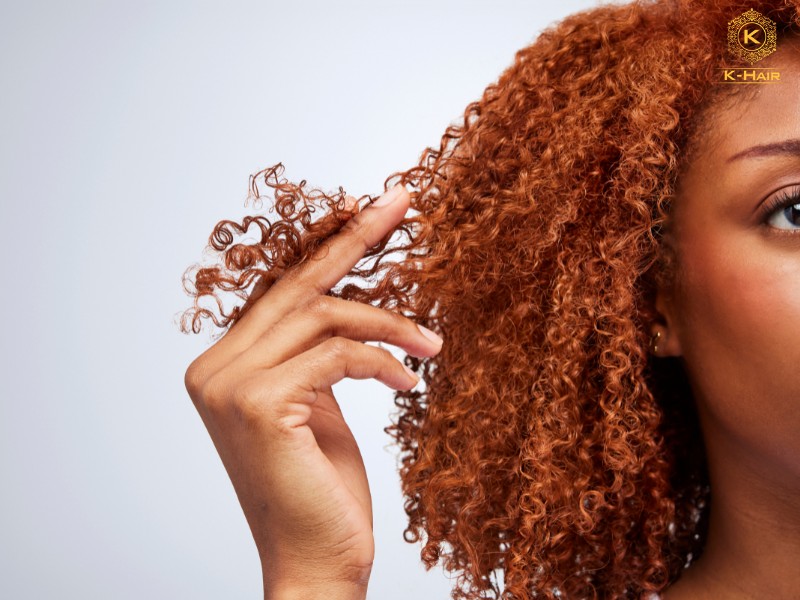
The roots of this entire situation actually stem from the nature of the cuticles themselves. Therefore, this should be the focus of your frizz treatment:
- Frizz actually occurs when your dry strands become too thirsty – therefore, hydration should be the focus of your routine:
- Use a moisturising shampoo, or co-wash (conditioner-only wash) altogether.
- Rich, deep conditioning products are highly advised.
- Using the LOC/LCO methods – leave-in, cream and oil to moisturize.
- Sealing the moisture inside is also important – you can close the cuticle gaps by rinsing with cold water, or using hair oil.
- Minimize friction-induced frizz by: letting your hair air dry, avoiding styling on dry hair, and using frictionless materials like silk or satin,…
Cuticle and friction care should be the main focus if you want to get rid of hair frizz
4.2. Frequent Product Buildups
Too much conditioning without proper cleansing is also another huge problem for 4A hair. Indeed, the finer strands are quite quick to attract residue – weighing the curls down, dimming their shines, and causing the strands to become dull and lifeless.
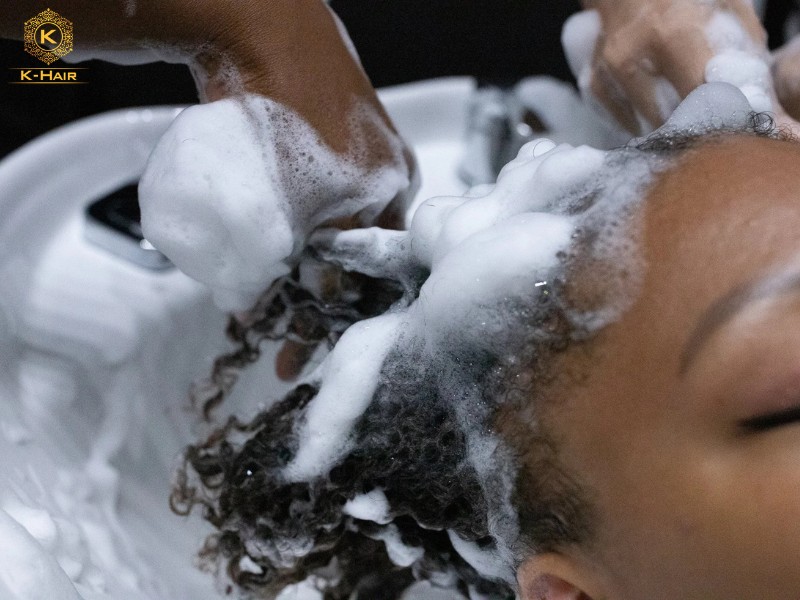
Hence, the key to getting rid of product buildups in 4A hair is proper hair washing method:
- Include clarifying shampoo in your routine, especially after heavy styling or product coating.
- Buildups are often the result of too many layers – therefore, keep your routine simple and consisting of necessary products only.
- Make sure to avoid stacking them all at once and apply them in moderate amounts only. And, between these reapplies, you should also cleanse the residue thoroughly.
However, one thing to bear in mind is that – overwashing can also disrupt your natural hair oil production and distribution. Hence, the perfect cleansing frequency should be 7-10 days, or 5-7 days if you use a lot of products.
4.3. Inconsistent Curl Patterns
Although 4A hair was indeed blessed with uniformed curl formation itself, hair frizz and dehydration often cause the curls to puff up and separate. This inconsistency can not only affect the overall hair look, but also make the strands harder to style and manipulate.
To soften these strands and bring out more curls, you can consider:
- Several methods to enhance curl formation include: finger coiling, twisting, braiding, backed with curl-enhancement products.
- Night time friction can also worsen frizz and ruin your curl definition. To fight this, you should consider wrapping your hair in a bonnet, or trying loose braids, twists overnight.
- Different sections might have different patterns due to the fact that they are not evenly moisturized. Hence, next time you apply products onto your hair – make sure to do it sections by sections instead of all at once.
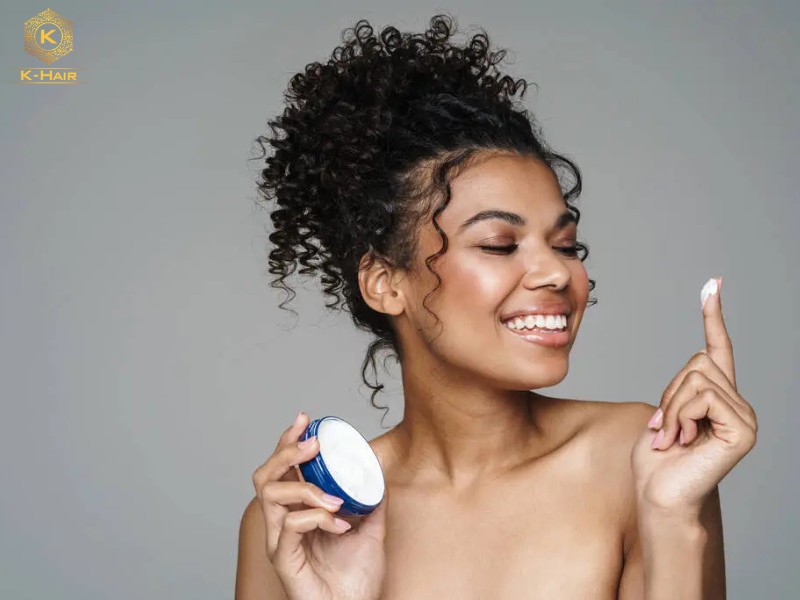
Applying curl enhancing cream sections by sections can help improve definition
5. FAQs about 4A Hair
Here are some frequently asked questions about 4A hair:
5.1. What is 4A hair?
4A hair is a curl type characterized by tight, springy coils with a defined “S” or “O” pattern. The curls are usually about the size of a crochet needle and have a naturally soft, bouncy texture.
5.2. Is 4A hair hard to maintain?
Not necessarily – but it does require consistent care. With the right routine (moisture, gentle handling, and proper styling), 4A hair can be very manageable.
5.3. How often should you wash 4A hair?
Typically, once every 7-10 days works best. This helps remove buildup without stripping natural oils.
5.4. How can I keep my 4A curls defined?
- Style on damp hair
- Use a leave-in + cream + gel routine
- Apply products in sections
- Avoid touching hair while drying
5.5. How do I prevent product buildup in 4A hair?
- Clarify every 2-4 weeks
- Avoid over-layering products
- Use lightweight formulas when possible
6. Conclusion
With this article, we hope to have given you a clearer understanding of 4A hair. Overall, this hair type stands out with its tight, springy coils with built-in unique, exotic characteristics, setting it apart from other curl patterns. By recognizing these traits, you can build a routine that truly supports your hair’s needs – keeping your coils defined, hydrated, and healthy.
However, beside embracing and working with your own natural hair – you can also consider switching to hair enhancements for a change. Indeed, wigs, extensions can not only give you an instant transformation, but also help shield your hair from external stressors like humidity, friction,…