
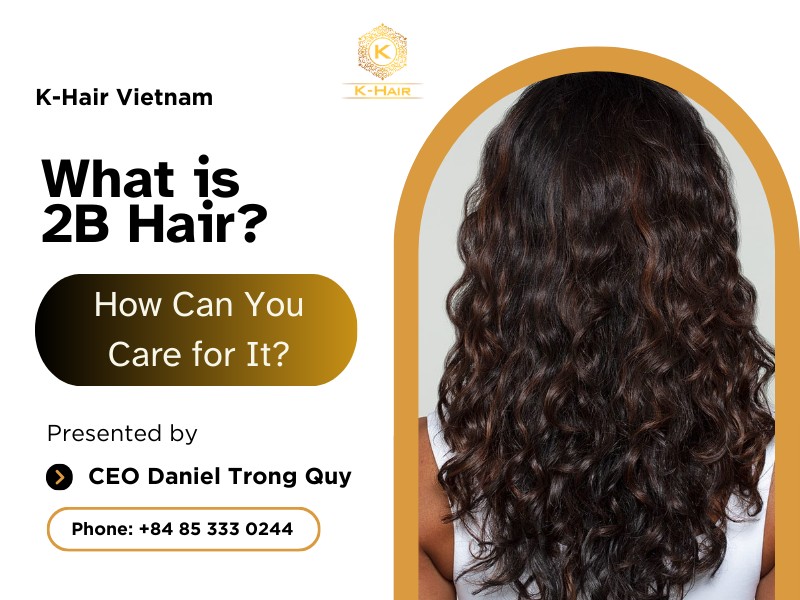
Hair health has always been a big deal – a major beauty need for women and men across the globe. In fact, throughout the years, experts have come up with ways to classify the existing hair types – in order to better cater hair products to different hair care needs. Through these systems, terms like “2B Hair” have been introduced and popularized.
In general, 2B hair is characterized by defined S-shaped waves and noticeable volume. However, this description alone may not be enough to help you accurately identify your own hair type. If you’re wondering whether you have 2B hair or simply want to learn more about this unique hair texture, this article will provide everything you need to know, and more!
1. What is 2B hair?
The title “2B” is rooted from the Andre Walker Hair Typing System, developed by Andre Walker – the famous celebrity stylist. Through the naming and classification alone, we can easily infer that 2B hair type would be a type of wavy hair. And, the “B” suggests a medium-range coarseness and thickness in their hair strands.
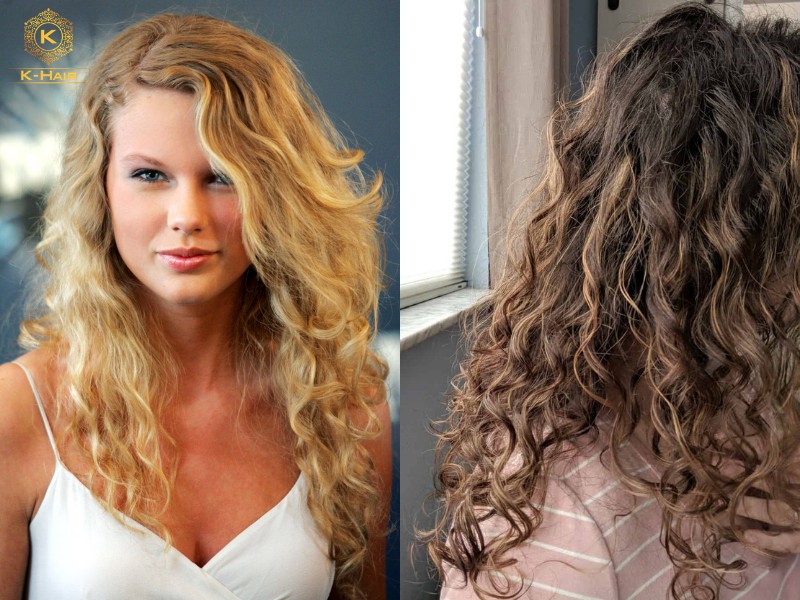
Across the globe, 2B hair can easily be among the most popular types of wavy hair patterns out there, with many famous celebrities examples like Tori Kelly – the iconic American singer-songwriter, and Taylor Swift – the global music sensation,… Hence, if you ever feel like “Hey! My hair looks just like theirs!” there is a high chance that your hair would fall into the same category as what they have, too.
2. Getting to Know 2B Hair Features
Given that 2B hair belongs to the wavy type 2 hair, it would carry some common traits of this class, such as hair shine, proneness to buildups,… However, despite these familiar features, 2B hair can still have its own characteristics that make it unique compared to the other 2A and 2C subtypes.
2.1. Physical features
Upon first impression, in the eyes of inexperienced individuals, 2B hair can be easily confused with 2C hair, given that its curl patterns can somewhat seem similar and identical with each other. However, if you pay it more attention, you can actually spot out a lot of exclusive and unique physical features of 2B hair, such as:
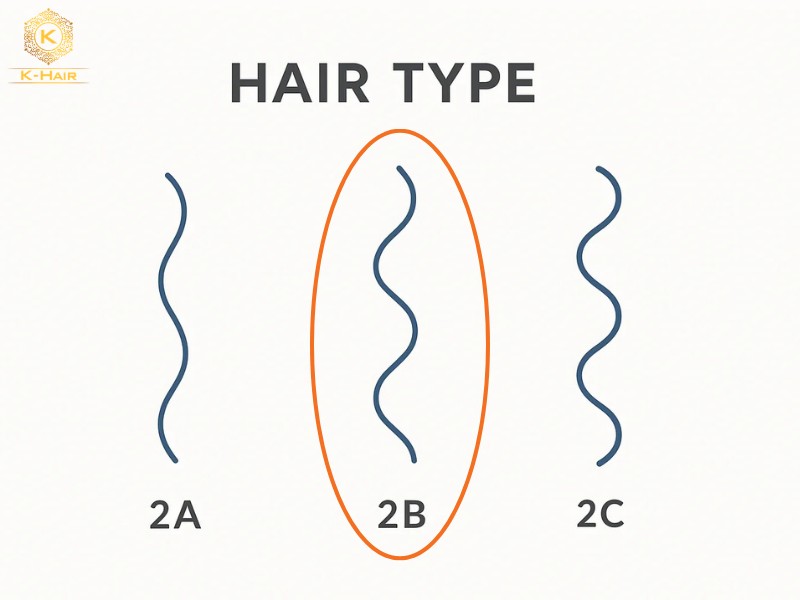
- Wave pattern: 2B hair curl tightness sits at the middle range – these curls are tighter than the 2A, and looser than the 2C. However, most of the waves tend to lean toward a free-flowing appeal, making the hair seem slightly whimsier compared to the tight texture of 2C hair.

2B hair curls are tighter than the 2A, and looser than the 2C. - Texture: Being in the middle of the hair type would also mean that 2B hair would stand in a medium range when it comes to strand thickness. On top of that, the strands would also be much coarser and denser, giving the hair strands more strength and durability needed for styling and texturizing.
- Volume: Although a slight proportion of the overall texture still leans toward a looser side, 2B hair type can still offer more thickness and density compared to the loose 2A hair. However, as the waves only start at a few inches from the roots, the top hair lengths near the roots tend to lie sleek and flat against the scalp.
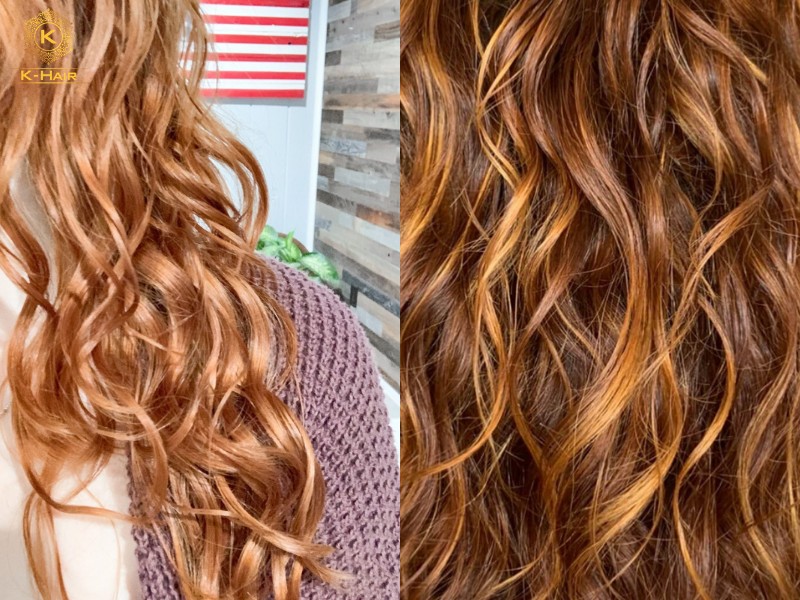
- Moderate sheen: Having bumpier strands would make it harder for the hair oil to coat around a 2B hair strand. However, for the top hair lengths, this natural hair luster can greatly heighten, making this part much glossier and shinier than the rest.
Moderate hair shine is the signature feature of 2B hair
2.2. Innate traits
Believe it or not, the above are only the surface level. In order to truly know 2B hair, you would have to dig deeper into its inherent features. And from these characteristics, you can be more aware of your hair needs, and create the best maintenance routine:
- Cuticle layer: Having more waves and curls would also mean that 2B hair’s cuticle layers would be much more different than the sleek and flat 2A hair type. Hence, when you run your finger upward through these hair parts, you can actually feel small bumps – signifying the raised and opened cuticles in these waves.
- Medium porosity: More raised cuticles also means more porosity. Indeed, the gaps between these scales make it easier for water to penetrate and slip out of the hair shaft. This is not necessarily a negative trait, however, it can potentially lead to several issues like frizz, dehydration, and tangles.
- Uneven oil distribution: One of the signature traits of 2B hair is that the hair strands can easily gather more product and oil buildup, especially the area nearest to the scalp. And, the hair strands are also affected, making them appear stickier and oilier if not cared for properly.
- Styling ability: On the one hand, the defined and smaller curls of this texture demand more time, heat and effort to be able to deliver that wanted hair look. On the other hand, thanks to the coarser strands and tighter texture, once the hair is finally styled, the result can stay still for a much longer time compared to the oilier 2A hair. Although it takes more effort for 2B hair to be styled, it can hold curls much longer
Although it takes more effort for 2B hair to be styled, it can hold curls much longer
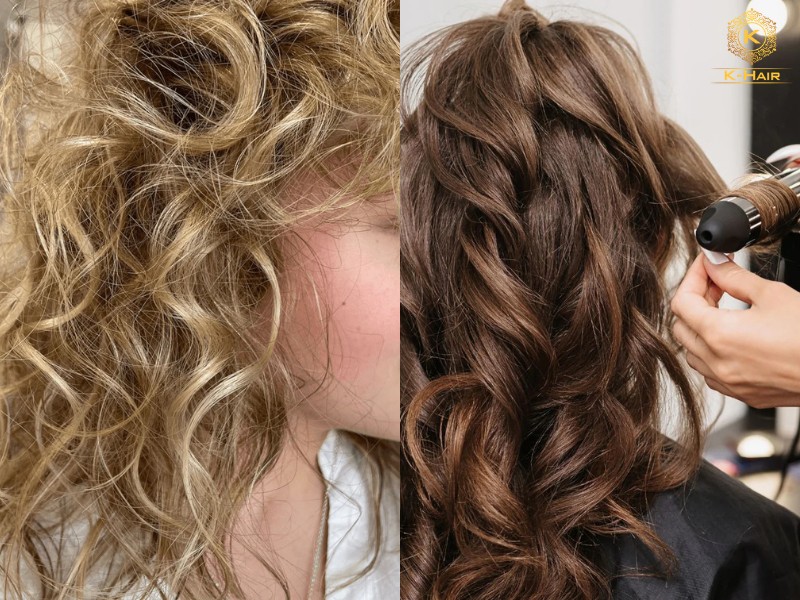
Expert tips: Gently scrunch your hair while it’s damp. If the waves bounce back easily and become more defined, your hair likely falls in the 2B category.
3. What are The Differences Between 2B, 2A and 2C Hair
Belonging in the same wavy hair category means that 2A, 2B and 2C hair can still share many common features that can make it difficult to identify and classify. However, no matter how similar they can get, there are still several distinct characteristics that help to separate the three hair categories:
| 2A hair | 2B hair | 2C hair | |
| Wave patterns | Following a loose, S-shape pattern. | The strands feature tighter and smaller S-shape waves. | The strands feature tighter S shapes, mixing with loose spring-like curls. |
| Wave starting points | The waves mostly start at mid lengths | The waves start closer to the roots – mostly upper-mid length | The waves directly start at the roots |
| Texture | The thinnest strand thickness | Medium-range texture and thickness | The thickest and coarsest |
| Volume | The least hair volume → most of the hair tends to lie flat against the scalp. | Moderate volume, thicker at the ends than at the roots. | The most volume, due to their wave patterns and textures. |
| Frizz and Dryness | The least porous type 2 hair – less prone to frizz and dryness | More prone to frizz and damage – especially at the ends | The most frizz-prone, due to highly porous strands |
| Styling ability | The easiest to style, however, 2A hair cannot hold curls for long. | Demands more styling efforts, but 2B hair has better curl hold. | 2C hair is often the hardest to style, but it can also hold curls the longest |
| Manageability | The easiest to maintain | Medium maintenance complexity | The hardest to maintain |
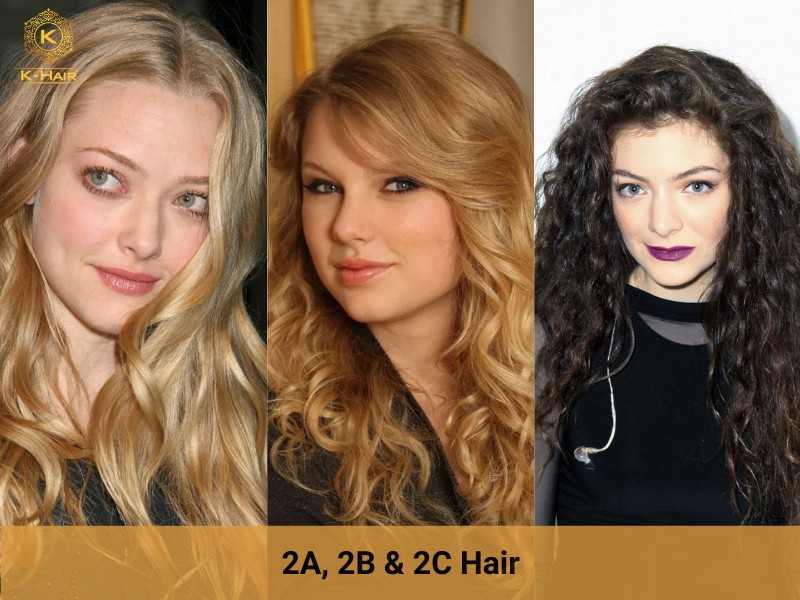
If you want to learn more on how the overall type 2 hair looks ike compared to the other categories, feel free to check out our article on the Hair Typing System.
4. 3 BIGGEST Problems of 2B Hair
2B hair is one of the most manageable hair types, sitting in the medium range when it comes to manageability among the three members of the wavy hair family. Indeed, some traits can make it a pain in the neck, like its root oiliness, frizz proneness,… However, if properly maintained, no problems can be too difficult for 2B hair.
4.1. Root Oiliness
The signature feature of 2B hair is that their curls often start at the upper mid-lengths, leaving the lengths near the scalp flat. This also makes this section the easiest to accumulate oil and residue, making the roots look oily, while the ends appear dry and frizzy.
However, you can still solve this issue, by taking several recommendations below:
- Wash your hair 2-3 times/week to get rid of excess oil, without disrupting the natural oil distribution.
- Distribute scalp oil downward to the ends by using a wide-tooth comb to brush your hair.
- Instead of heavy cream that can gather more buildups at the roots, use lightweight mousses, sea salt sprays, or light curl creams only.
- Avoid touching your hair with your hands, to prevent transferring the oil from your palms to your strands.
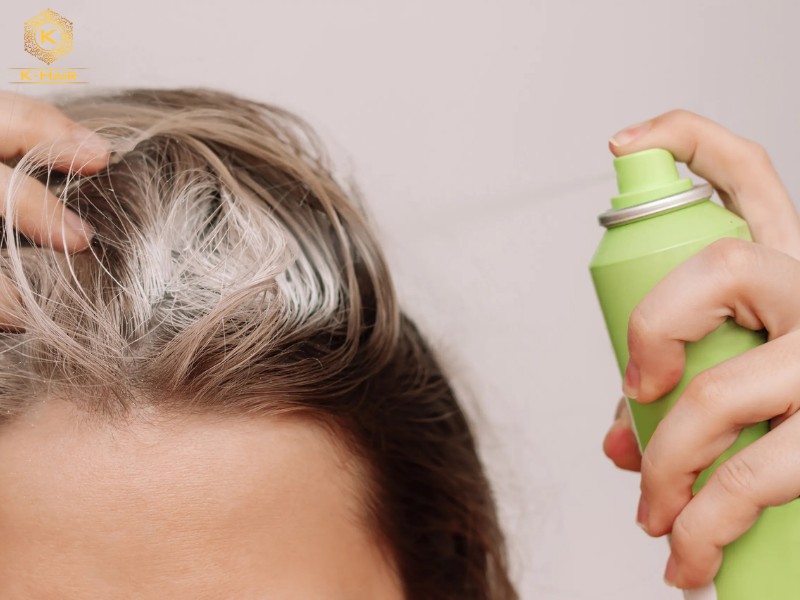
- Use dry shampoo between washes to temporarily fix the issues.
Dry shampoo can temporarily fix oily roots
4.2. Inconsistent Volume
Another issue that 2B hair has to face is the inconsistent volume between the roots and the hair ends. Indeed, most of the waves are gathered at the ends, the roots might appear much flatter compared to the voluminous ends.
- One common factor that causes root flatness is often root oiliness. Hence, if you follow the above solutions for root oiliness, you can also quickly enhance your root volume.
- Use volumizing products for the roots to further enhance its volume.
- When blow-drying with a diffuser, you should also flip your head upside down, and diffuse the roots – this can quickly add more volume, while keeping the waves intact.
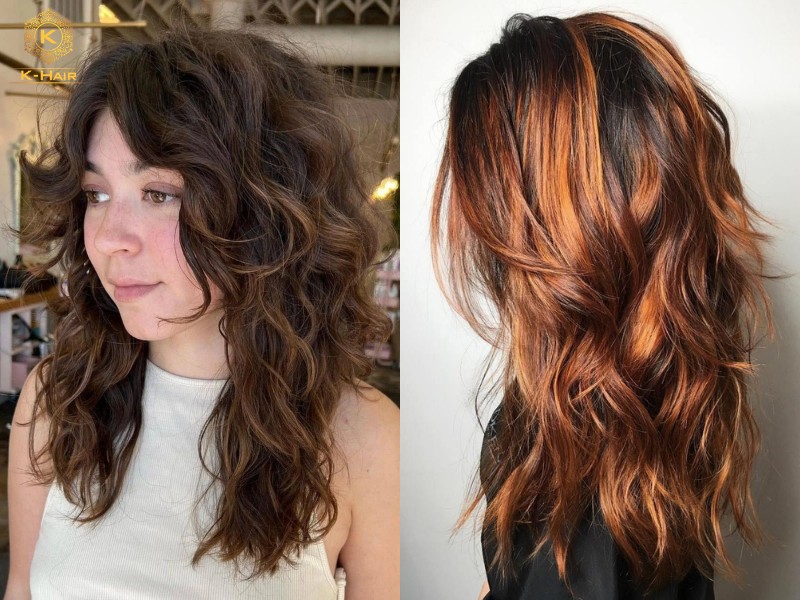
- Certain hairstyles can help, especially layered haircuts – which can help distribute volume more evenly between the roots and the ends.
You can consider layered styles to make the volume more natural and even
4.3. Frizz-prone Hair Ends
Having tighter curls and hair bends would also mean more lifted cuticles along the hair shafts. This feature makes 2B hair more prone to moisture loss, especially at the hair ends where most the waves are – leading to tangles, frizz, and dehydration.
However, with proper maintenance steps, these issues can still be solved:
- Applying your conditioner at the hair ends only – as this section demands moisturizing the most.
- Sealing the moisture is also necessary: you can use this by rinsing your hair in cool water, or applying argan, jojoba oil to your hair ends.
- Besides the basic conditioning step after washing, you should also apply a small amount of lightweight leave-in conditioner every now and then.
- Friction is the leading cause of frizz, make sure to minimize this by: switching to micro-fiber towel, avoiding brushing on dry hair, sleeping on silk or satin beddings,…
- Minimize heat styling, or at least spray a thin layer of heat protectant first to reduce the damage dealt.
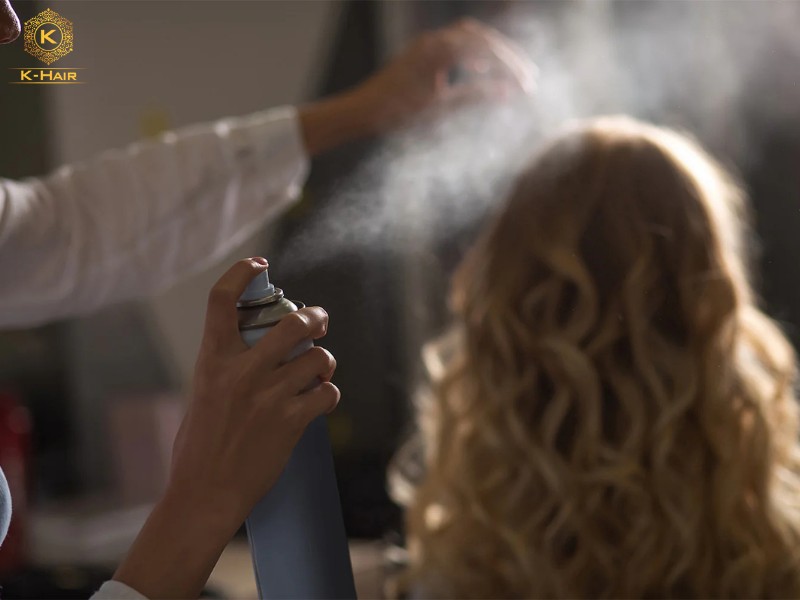
Spraying heat protectant before heat styling is a must!
5. FAQ About 2B Hair
Here are some frequently asked questions about 2B hair:
5.1. How can I tell if I have 2B hair?
You may have 2B hair if your hair forms clear S-shaped waves after air-drying, tends to have flat roots and fuller ends, and can become frizzy when brushed dry or exposed to humidity.
5.2. Is 2B hair prone to frizz?
Yes, 2B hair can be more prone to frizz because the wave pattern makes it harder for natural oils to travel evenly along the hair shaft. Proper hydration and lightweight styling products can help manage this issue.
5.3. What haircut works best for 2B hair?
Haircuts with light layers or long layers tend to work best for 2B hair. Layers help distribute volume evenly and allow the natural wave pattern to appear more defined.
5.4. Can 2B hair become 2C hair over time?
Hair type can sometimes appear to change due to factors like humidity, hair damage, length, or styling routines. However, the natural hair pattern is largely determined by genetics.
5.5. What products are best for 2B hair?
Lightweight products such as mousse, sea salt spray, curl cream, and leave-in conditioner are usually ideal. Heavy oils or thick creams can weigh down the waves and reduce root volume.
6. Conclusion
With the information provided in this article, we hope that we have managed to provide all the information necessary for those interested in 2B hair. All and all, this type of wavy hair can have both common and distinct features that make it a unique hair type compared to other wavy hair variations. And based on these characteristics, we can organize our hair care routine accordingly to provide the strands with what they need.
However, taking care of these strands takes time. If you want an instant hair transformation, you should consider using wigs as an alternative. This can, not only alter your hair look in seconds, but also offer a protective shield for your strands to grow healthily underneath.

