How to straighten hair without heat is a practical question for anyone who wants smoother hair without relying on flat irons or high-temperature tools. Heat-free methods use moisture, tension, wrapping, rollers, or controlled drying to temporarily stretch the hair.
For salons and hair businesses, these techniques are also useful when explaining how human hair wigs and extensions behave after washing and styling.
How Heat-Free Straightening Works
Heat-free straightening is a styling method that stretches damp hair under tension as it dries. It relies on moisture, tension, and controlled drying instead of hot tools.
When hair becomes wet, temporary hydrogen bonds are disrupted. As the hair dries, these bonds reform according to the shape of the strands. Holding damp hair in a stretched position therefore creates a smoother, straighter appearance.
However, the effect is temporary. Humidity, water, and the natural texture of the hair gradually bring the original pattern back.
For a practical routine, start with:
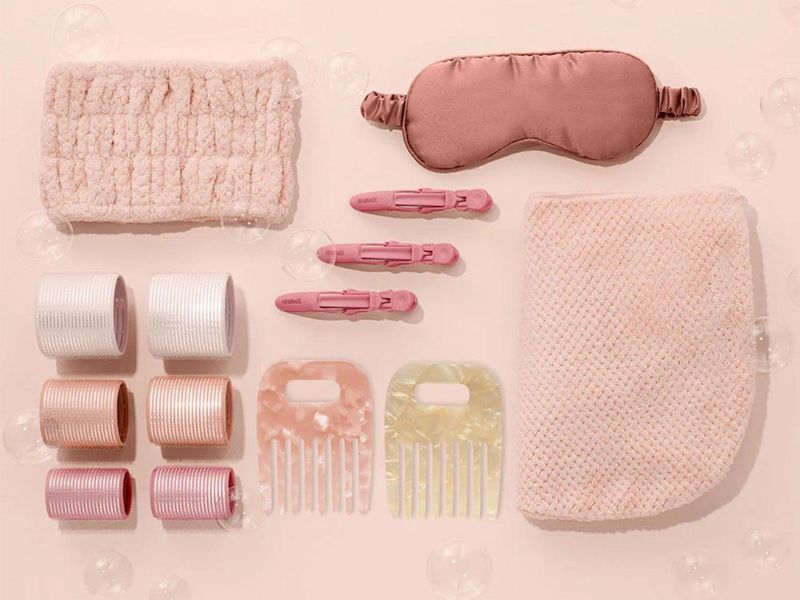
- Clean, conditioned hair
- A wide-tooth comb and a dense-bristle brush
- A microfiber towel
- Lightweight leave-in conditioner, smoothing serum, or smoothing oil
- Bobby pins, snap clips, or large rollers
- A silk or satin scarf
The hair should be damp rather than soaking wet. Excess water increases drying time and makes manipulation more difficult.
How to Straighten Hair With the Flat Wrap Method
The flat wrap method, also called a doobie wrap or hair wrapping, is one of the most direct ways to stretch hair without heat.
The technique works by brushing damp hair around the head and keeping it flat while it dries. This creates continuous tension without exposing the hair to a hot styling tool.
Step 1: Wash and condition the hair
Start with clean hair and apply conditioner through the lengths. Gently detangle with a wide-tooth comb, working from the ends upward, then squeeze out excess water with a microfiber towel.
Avoid rubbing the hair aggressively because friction increases frizz.
Step 2: Apply a smoothing product
Apply a lightweight leave-in conditioner, smoothing lotion, anti-frizz serum, or a few drops of smoothing oil.
Distribute the product mainly through the lengths and ends. Heavy buildup makes the finished hair look flat or greasy.
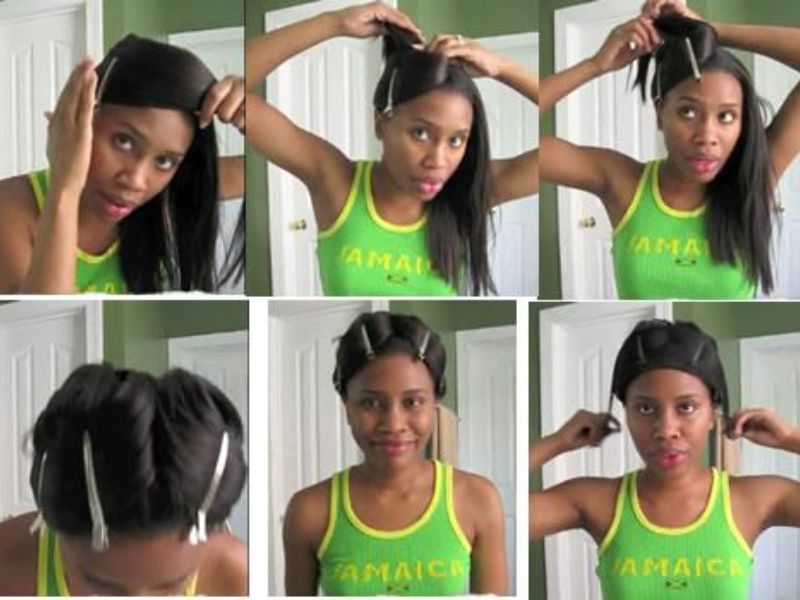
Step 3: Brush the hair around the head
Create a deep side part. Use a dense-bristle brush or fine-tooth comb to pull a section taut and flat against the scalp, then brush it smoothly around your head.
Continue adding sections until the hair forms a flat wrap around the head, like a crown or halo.
The goal is consistent tension rather than force. Pulling too tightly creates unnecessary stress on the hair and scalp.
Step 4: Secure the sections
Use bobby pins, snap clips, or duckbill clips to hold each section in place.
Secure the hair closely enough to maintain the shape but not so tightly that the pins leave deep marks.
Step 5: Cover and allow the hair to dry
Cover the wrapped hair with a silk or satin scarf to lock in tension and prevent frizz.
Leave the wrap in place for at least 4 to 6 hours or overnight, depending on hair density and moisture level. The hair must be 100% dry before you remove the wrap.
Step 6: Remove the wrap carefully
Take out the pins one by one and gently release the hair. Separate the sections with your fingers, then brush through the full length with a paddle brush.
This method creates a smooth, stretched finish, but the amount of straightening depends on the starting texture.
Factory Insight: For human hair wigs and extensions, the same styling method produces different results between products. Processing history, porosity, elasticity, and cuticle condition affect how easily the hair stretches and how it behaves after drying, according to Mrs. Cherry, Sales Manager at K-Hair Factory.
6 Other Ways to Straighten Hair Without Heat
If wrapping is not practical for your hair length or texture, several other techniques create a similar stretched effect. The main difference is how each method controls tension and drying direction.
Use jumbo rollers
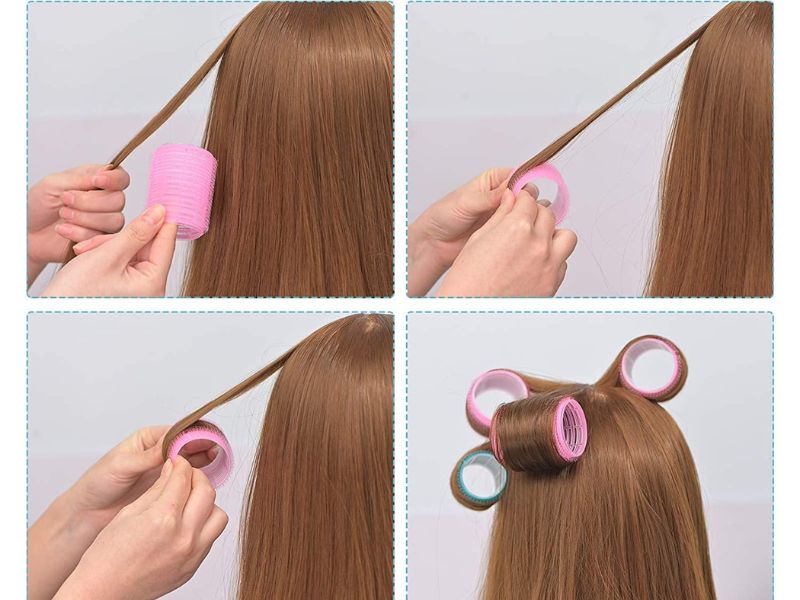
Jumbo rollers stretch damp hair while keeping more volume than a flat wrap.
Towel-dry the hair until it is about 80% dry, then apply a setting lotion or anti-frizz serum. Divide the hair into 2-to-3-inch sections and roll each one around a 3-to-4-inch velcro or plastic roller.
Leave the rollers in place until the hair is completely dry, then unroll gently and finger-comb. Large rollers suit clients who want smoothness with some body rather than a completely flat result.
Try African hair threading
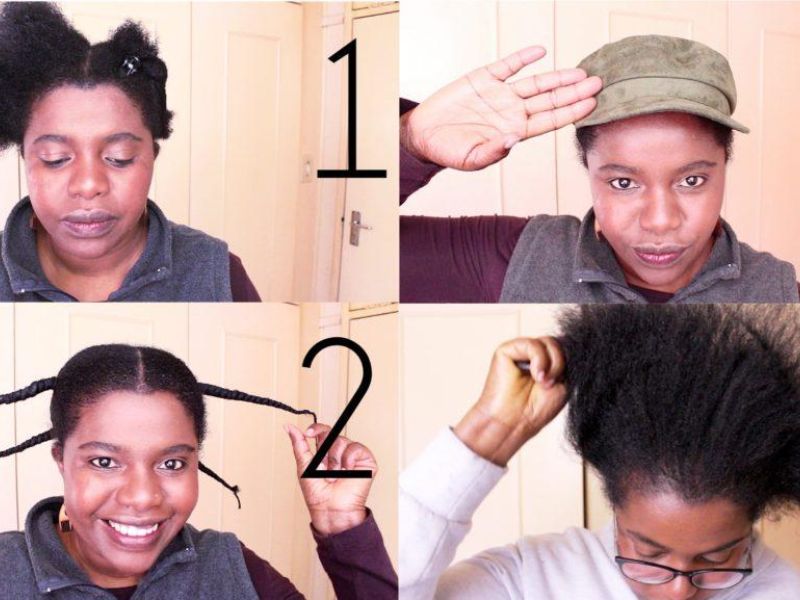
African threading uses thread or yarn to stretch sections of damp, moisturized hair.
Divide the hair into sections and wrap the thread from the root toward the tip. As the hair dries, the thread keeps each section elongated.
This method suits coily textures because it focuses on stretching the hair rather than creating a completely flat finish. Avoid excessive tension, and adjust any technique that causes scalp discomfort or pulls strongly at the roots.
Try banding
Banding compresses the hair shaft as it dries, which reduces curl memory.
Gather the hair into a low ponytail or several sections. Place soft, snag-free hair ties down the length, spacing them about an inch apart.
Keep the bands secure but not tight. After the hair has dried completely, slide the ties off and smooth the lengths with a drop of hair oil. Banding works well for longer hair because it stretches continuously without wrapping around the head.
Air-dry while brushing
For naturally straight or lightly wavy hair, brushing during air-drying provides a smoother finish.
After washing, gently detangle the hair and apply a lightweight leave-in product. Brush the hair downward or around the head while it dries.
This method provides less continuous tension than wrapping or threading. It reduces waves and frizz rather than creating a highly straight finish.
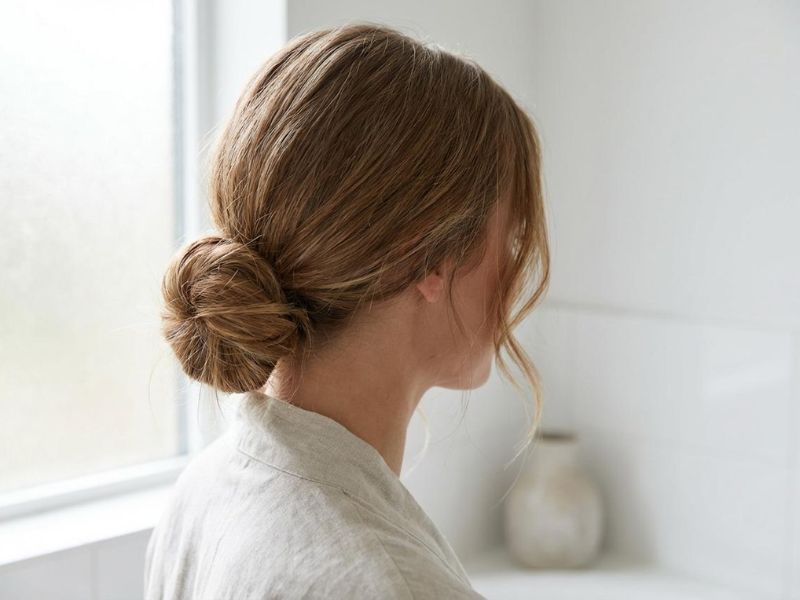
Use a low bun
A low bun stretches damp hair while it dries.
Smooth the hair toward the nape of the neck and secure it with a soft fabric tie. Keep the bun loose enough to avoid a strong crease.
Once the hair is fully dry, remove the tie and gently comb through the lengths. This is a convenient option for a softer, naturally smooth result.
Use cool-air drying
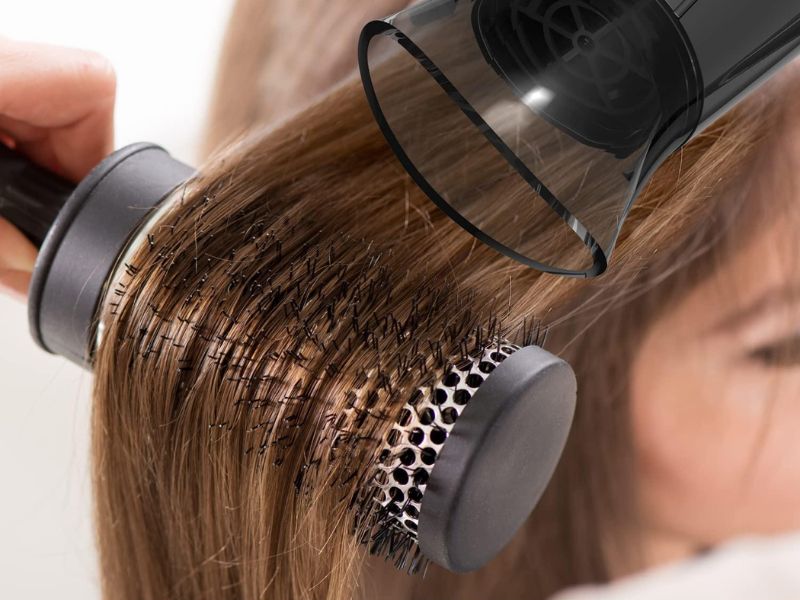
Cool-air drying is not completely heat-free, but it avoids the high temperatures of conventional blow-drying.
Apply a leave-in treatment and use a brush to maintain tension while directing cool or low airflow along the hair.
This method shortens drying time when overnight techniques are inconvenient. For salons, it is also easier to control than leaving wet hair wrapped for several hours.
Which Heat-Free Method Should You Choose?
The best answer to how to straighten hair without heat depends on your natural texture, density, and available time. Each technique creates a slightly different result.
| Method | Stretching effect | Volume | Typical drying time | Suitable for |
|---|---|---|---|---|
| Flat wrap | Medium–high | Low–medium | 4–6+ hours | Straight to wavy hair |
| Jumbo rollers | Medium–high | High | Several hours | Wavy hair |
| Threading | High | Low | Several hours | Coily textures |
| Banding | Medium–high | Low | Several hours/overnight | Longer hair |
| Air-drying + brushing | Low–medium | Medium | 2–4+ hours | Slightly wavy hair |
| Cool-air drying | Medium–high | Medium | Shorter | Time-sensitive styling |
Here’s the bottom line. For a flatter finish, choose the flat wrap. For stretched hair with volume, jumbo rollers offer a different trade-off. For tightly coiled hair, threading or banding provides more controlled elongation.
How to Keep Hair Straight After Heat-Free Styling
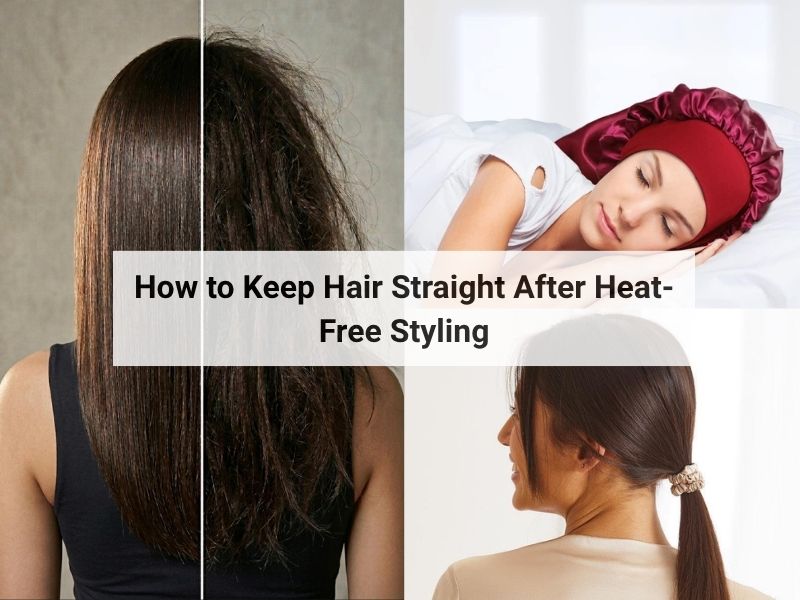
Getting the hair into a straighter shape is only part of the process. Moisture and friction quickly change the result, so focus on protecting the shape rather than repeatedly manipulating the hair.
Protect the hair from humidity
Humidity introduces moisture back into the hair and pushes it toward its natural texture. Avoid steam, rain, and high-humidity environments right after styling.
Reduce friction while sleeping
A silk or satin scarf, bonnet, or pillowcase reduces friction between the hair and bedding. This minimizes frizz and preserves the stretched shape overnight.
For extensions and wigs, this matters even more because repeated friction contributes to tangling. Our guide on How to Keep Hair Extensions From Tangling covers the full routine.
Avoid tight hair ties
Very tight elastics create visible bends and place repeated tension on the same areas. Soft fabric ties or larger clips maintain a smooth shape more safely.
Keep the hair dry
Water disrupts the temporary styling pattern. To maintain the result, protect the hair from unnecessary moisture until you are ready to wash or restyle it.
Does Straightening Hair Without Heat Damage It?
No. Straightening hair without heat avoids thermal protein loss (denaturation), the main damage that flat irons and hot blow dryers cause. The risk shifts to mechanical stress, so the technique still needs a gentle hand.
Excessive tension in tight buns, braids, or wraps causes traction breakage. Rough detangling of wet, fragile hair snaps or splits the strands. This is particularly relevant for bleached, colored, chemically processed, or already fragile hair.
Worth noting: chemical relaxers and keratin smoothing treatments are not heat-free styling. They chemically alter the hair and can weaken or dry out the cuticle.
A useful distinction is:
- Heat stress: caused by high temperatures from tools such as flat irons and hot blow dryers.
- Mechanical stress: caused by pulling, brushing, wrapping, tying, or repeated manipulation.
For businesses, this matters when writing customer care instructions. “Heat-free” does not automatically mean that every styling method suits every hair condition.
Can You Straighten Wigs and Hair Extensions Without Heat?
The same principles apply to human hair wigs and extensions, but the construction of the product affects how the technique should be performed.
Synthetic and human hair need different methods. The hot water method, which uses water around 180°F, resets synthetic fibers into a new shape. Hot water does not permanently reset human hair this way, because human hair responds to moisture and tension instead.
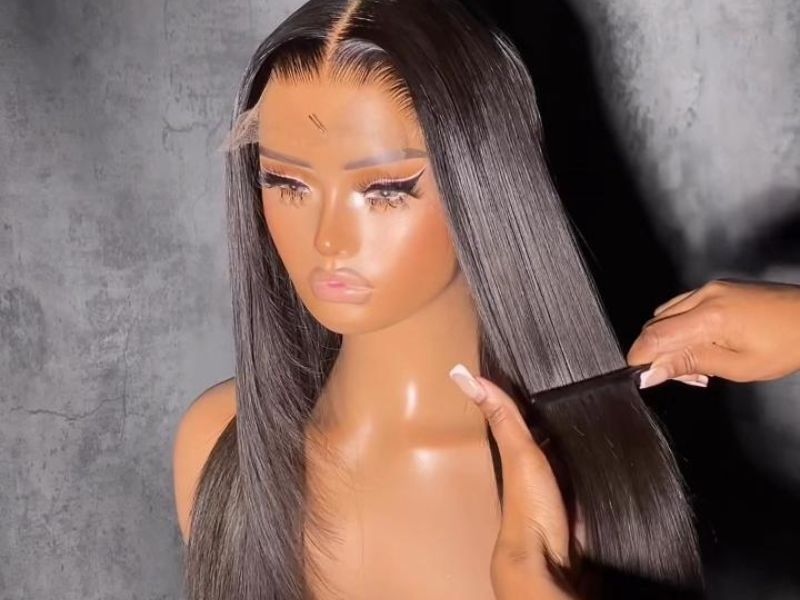
For human hair wigs, pin the unit to a wig stand or mannequin head, then use the flat wrap or rollers. This makes tension much easier to control.
→ Not sure which fiber you are working with? Read our guide: Synthetic Hair vs Human Hair
Human hair extensions can be stretched with rollers, controlled brushing, or other low-tension methods. However, the attachment area should not be pulled aggressively. A weft, Clip-in, Tape-in, or loose hair piece does not respond to tension in exactly the same way.
Before recommending a heat-free styling method for a wholesale hair product, businesses should check:
- Hair origin
- Hair texture
- Length
- Density
- Processing level (for example, factory heat-set bone straight)
- Cuticle alignment
- Elasticity
- Porosity
- Construction
- Batch consistency
Manufacturer’s Insight: A useful factory-level test is to wash and dry a sample before evaluating its styling behavior. A hair product can look smooth and straight when first received but respond differently after moisture is introduced. Testing after washing gives buyers a realistic view of how the hair behaves in customer use, according to Mrs. Cherry, Sales Manager at K-Hair Factory.
→ Keep wig units in shape between styling sessions: How to Care for Human Hair Wigs
What Results Can You Expect From Heat-Free Straightening?
Heat-free styling is temporary reshaping, not permanent straightening. Straight or slightly wavy hair becomes smoother with little tension. Wavy hair can often be stretched into a visibly straighter appearance. Curly or coily hair can be elongated, but part of the original pattern usually remains.
The result also depends on:
- Hair texture
- Hair density
- Porosity
- Length
- Moisture level
- Drying time
- Humidity
- Amount of tension
For B2B businesses, this shapes how hair products are described. Instead of promising permanently straight results, product and care information should use precise terms such as smooth, stretched, elongated, or temporarily straightened.
Interestingly, many end users who want lasting straightness skip daily styling altogether. Bone Straight Hair is heat-set at the factory through thermal processing, not chemical relaxers. It keeps a sleek finish through washing, so clients need far less tension styling at home.
FAQs About How to Straighten Hair Without Heat
The methods above cover the main techniques, but customers often have practical questions about results, hair texture, and long-term care.
Can I straighten my hair naturally without heat?
Yes. The flat wrap, jumbo rollers, threading, banding, and controlled air drying temporarily make hair appear smoother and straighter without high-temperature styling.
What is the easiest way to straighten hair without heat?
The flat wrap method is the simplest option because it requires only a brush, pins, and a scarf. The final result still depends on the starting texture and whether the hair dries completely.
How long does heat-free straightening last?
The result is temporary. Washing, humidity, sweating, and moisture gradually return the hair toward its natural texture.
Can you straighten curly hair without heat?
You can stretch and smooth curly hair without heat, but the result varies by curl pattern, density, porosity, and drying technique. Tightly coiled hair often retains part of its original pattern.
Can I straighten hair extensions without heat?
Yes. Human hair extensions can be stretched with rollers, wrapping, or controlled air drying. Consider the attachment and construction before applying tension.
Does wrapping hair make it straight?
Wrapping makes hair appear straighter because damp strands are held in a stretched position while drying. It does not permanently change the hair’s natural structure.
Is heat-free straightening better for damaged hair?
It removes exposure to high temperatures, but excessive tension or rough handling still stresses fragile hair. Adapt the method to the condition of the hair.
Conclusion
How to straighten hair without heat comes down to controlling moisture, tension, and drying direction. The flat wrap, rollers, threading, and banding create a smoother, temporarily stretched finish.
For salons and wholesale buyers, hair quality and processing also affect styling results. If you are sourcing human hair, contact K-Hair Factory to discuss wholesale hair options for your business.
Ready to source verified raw Vietnamese hair?
Contact K-Hair Factory directly for wholesale pricing, MOQ details, and free samples.
Or visit our Facebook: K-Hair Vietnam Factory to get the latest wholesale price list and start building your brand with confidence!