Human hair wigs can deliver a natural appearance and long-term styling flexibility, but their performance depends heavily on proper maintenance. For salons, retailers, and distributors, understanding how to care for human hair wigs is also important for reducing avoidable shedding, tangling, dryness, and customer complaints.
This guide explains the key steps involved, from detangling and washing to drying, heat styling, storage, and professional maintenance.
What Is a Human Hair Wig?
A human hair wig is made from real human hair attached to a wig cap, which may use lace, mesh, or monofilament construction. Because the hair is natural, it can generally be washed, conditioned, cut, and restyled.
Read more: Vietnamese Human Hair Wigs Wholesale & B2B Potentials
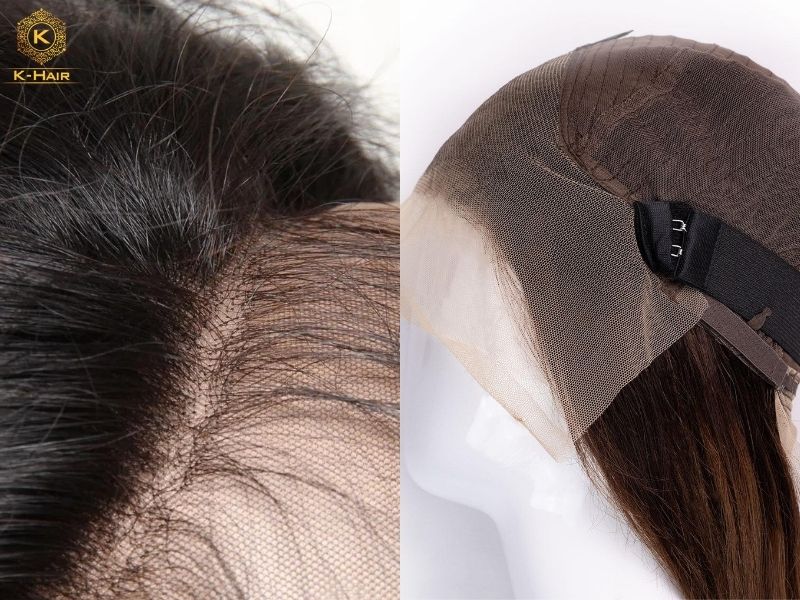
The cap construction should also be considered when planning your maintenance routine. Lace-front, full-lace, and monofilament wigs have different base structures and may require different handling, particularly around the hairline and knots.
How to Care for Human Hair Wigs Step by Step
Proper care comes down to eight habits, most of which happen away from the sink. Each one has a specific number attached to it. Skipping that specification is usually where damage starts.
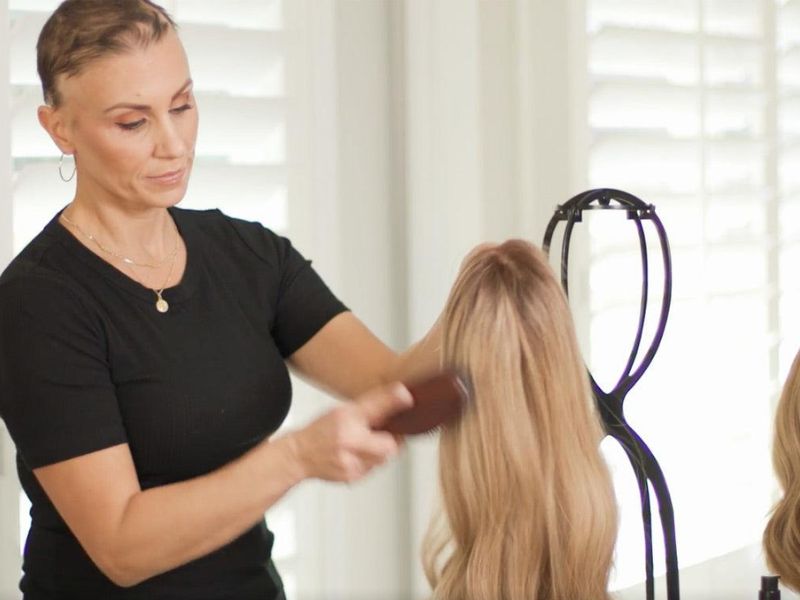
Detangle before and after every wear
Hold the cap firmly at the base. Work through 5 to 7 cm sections with a wide-tooth comb, moving from ends toward roots. A comb with tooth spacing under 0.5 cm pulls on the hand-tied knots and accelerates shedding.

Wash every 7 to 15 wears, deep condition every 2 to 4 weeks
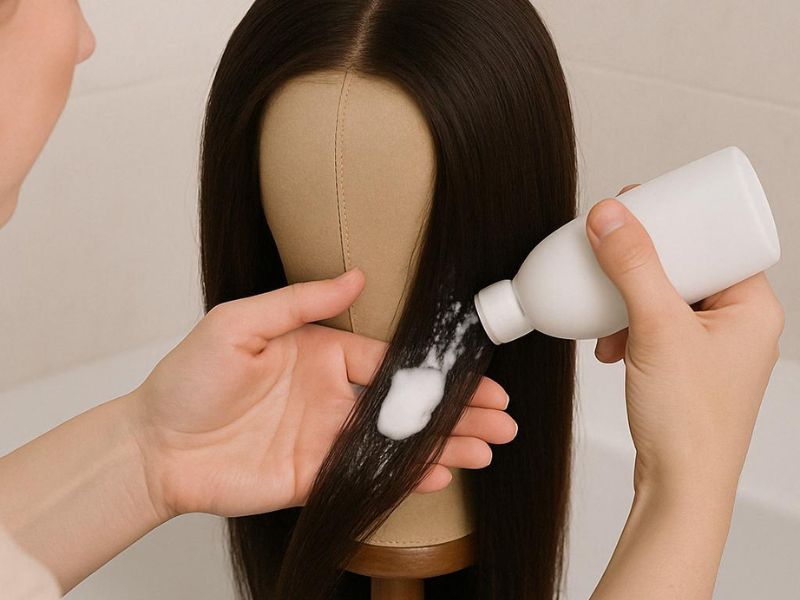
Wash the wig every 7 to 15 wears – roughly every 1 to 2 weeks with daily use – with a sulfate-free shampoo, and follow with a separate deep-conditioning treatment every 2 to 4 weeks to restore moisture; washing and deep conditioning are not the same step, and treating them as one usually means over-conditioning. Apply a conditioner with a pH between 4.5 and 6.5 to the mid-lengths and ends only, never the roots or cap. Leave it on for 10 to 15 minutes under a plastic cap to increase absorption. Rinse with cool water at roughly 24 to 27°C to help the cuticle lie flat.
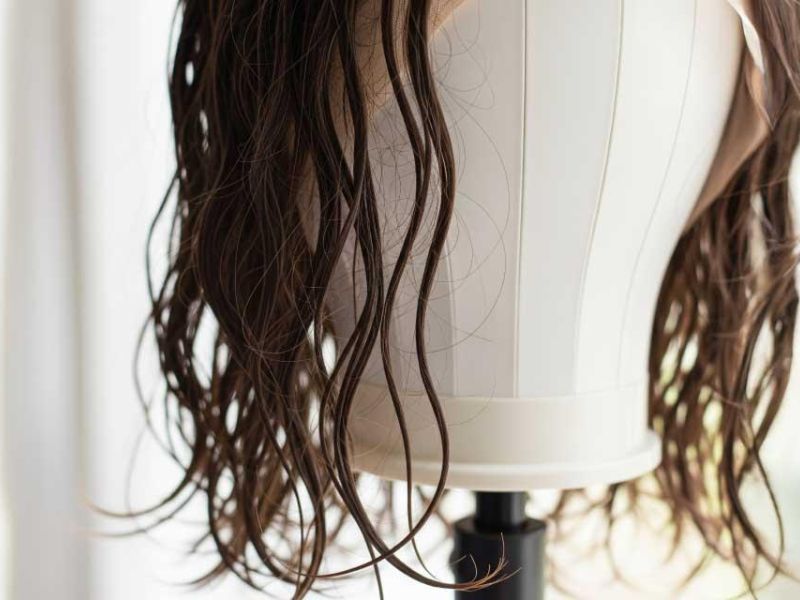
Air-dry on a proper stand for 6 to 8 hours
A canvas or wire wig stand keeps the cap’s shape while allowing airflow underneath. Foam heads trap moisture inside the lace. Left damp too long, this encourages mold and a musty smell.
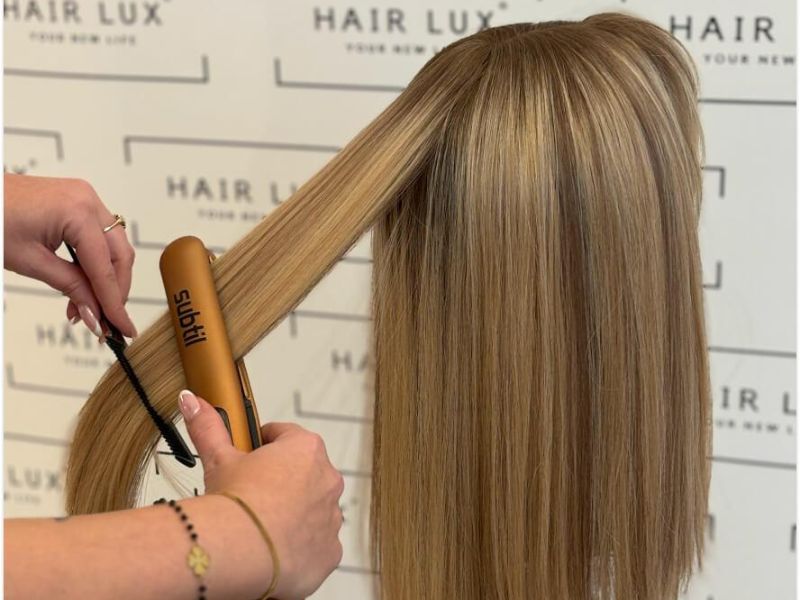
Limit heat styling to once a week, below 150°C (300°F)
Apply a heat protectant spray to fully dry hair first. Wait about 30 seconds before using any hot tool. Repeated exposure above this threshold breaks down the internal keratin bonds that give the hair its natural movement.
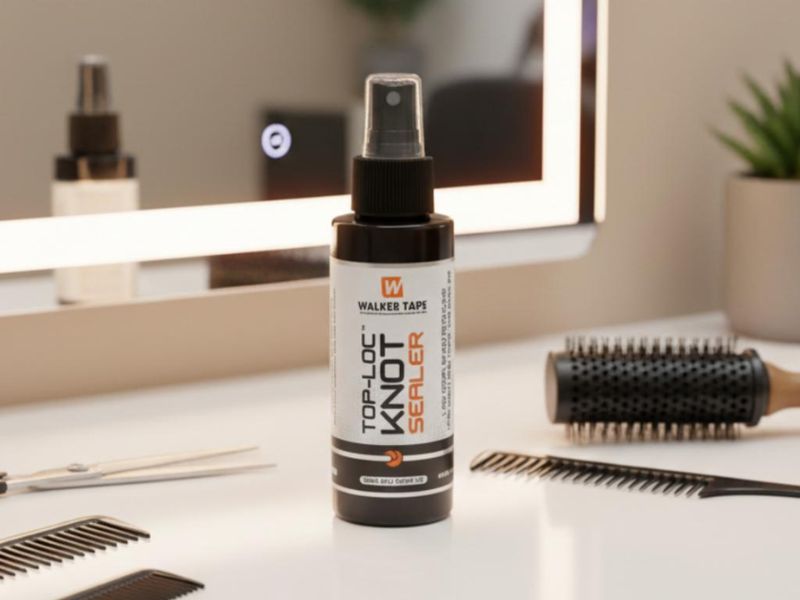
Apply knot sealer every 4 to 6 weeks
Focus application on the first 2 to 3 cm of the hairline and the part line, where daily friction concentrates. Allow the sealer to dry for 4 to 6 hours before turning the cap right-side out.
Protect the wig overnight with silk or satin
A pillowcase or bonnet with at least a 300 thread count reduces surface friction. This limits the tangling and breakage that happen during sleep.

Keep the wig away from chlorine, saltwater, and direct sun
Chlorine can visibly lighten dark strands within roughly an hour of exposure. Repeated sun exposure above 30°C fades color in a way that professional toning can only partly correct.
Schedule professional maintenance every 3 to 4 months
A stylist can reset the lace, tighten loose wefts, and deep clean sections home care cannot reach. This matters most around the perimeter of the cap.
Together, these eight steps form the core routine for the wig’s full lifespan, not just after a single wear.
Factory Insight: Buyers often blame the hair itself when a wig sheds early. In our experience, most complaints trace back to storage conditions, not sourcing. A human hair wig kept on a stand in a room between 18 and 24°C will outlast one left folded in a bag, according to Mrs. Cherry, Sales Manager at K-Hair Factory.
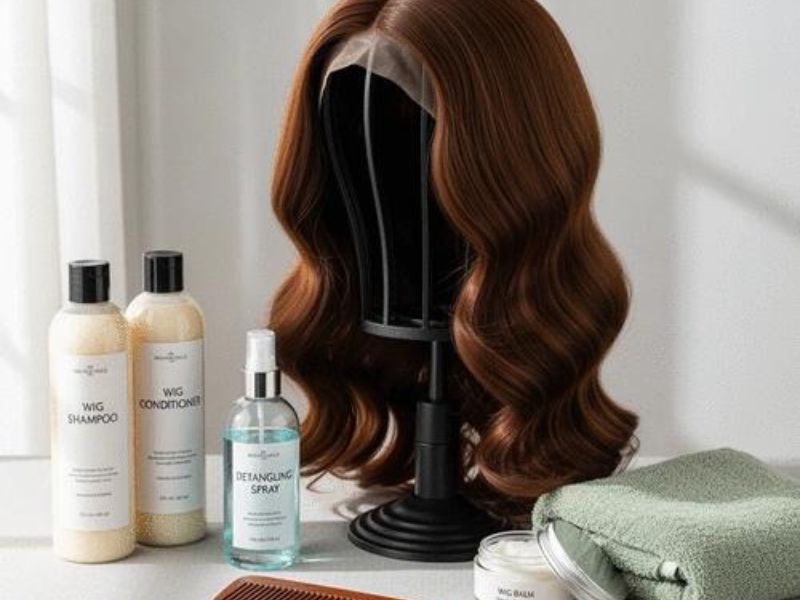
What Products Are Best for Caring for Human Hair Wigs?
Choosing suitable products is just as important as using the correct technique.
Shampoo
Choose a mild shampoo formulated for human hair. Sulfate-free formulas are often preferred when the goal is to minimize dryness and preserve the hair’s feel.
Avoid aggressive scrubbing, particularly around lace and hand-tied areas.
Conditioner
Use a moisturizing conditioner on the lengths and ends. Lightweight formulas can help maintain softness without leaving excessive residue.
If the wig becomes dry or difficult to manage, an occasional deep-conditioning treatment can be incorporated into the routine.
Heat Protectant
A heat protectant should be applied before using heated styling tools. Follow the manufacturer’s instructions and allow the product to distribute evenly before styling.
Products for Lace and Knots
For lace wigs, use products specifically intended for lace and wig construction. Avoid unnecessarily applying heavy adhesives, oils, or styling products to the knots and cap.
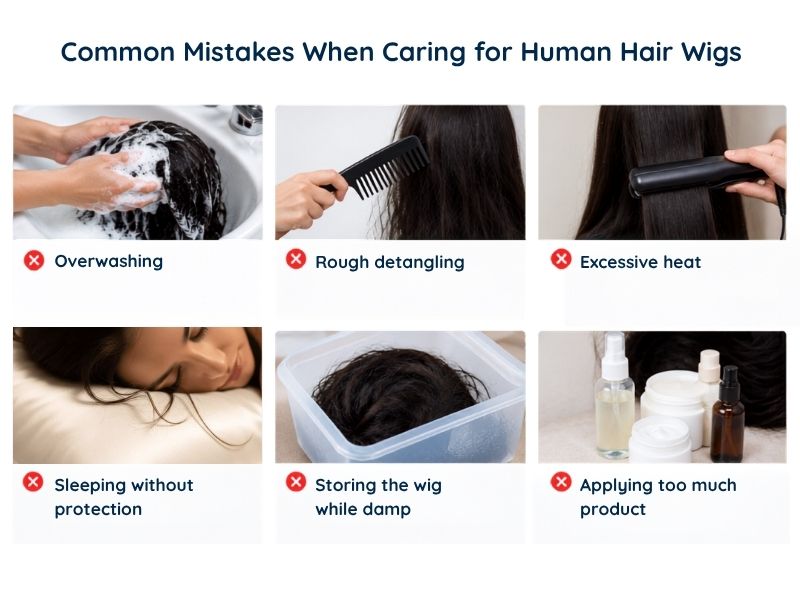
Common Mistakes When Caring for Human Hair Wigs
Even a high-quality wig can deteriorate faster when maintenance is inconsistent. Common mistakes include:
- Overwashing: Washing more frequently than necessary can contribute to dryness.
- Rough detangling: Pulling from the roots or forcing through knots can increase breakage and shedding.
- Excessive heat: Frequent high-temperature styling can gradually damage the hair.
- Sleeping without protection: Continuous friction can increase tangling and wear around the hairline.
- Storing the wig while damp: Moisture trapped in an enclosed space can create odor and other storage problems.
- Applying too much product: Heavy oils, butters, and styling products can create buildup and make subsequent cleaning more difficult.
How to Tell When a Human Hair Wig Needs Professional Care
Some problems require more than a change in your home-care routine.
Persistent shedding may indicate loose or damaged knots, particularly on lace units. A cap that has lost its shape may require professional adjustment. Severe dryness, extensive tangling, or damage caused by chemical processing or repeated heat styling may also require professional treatment.
For salons and distributors, identifying these issues early can help determine whether a unit needs repair, refurbishment, or replacement.
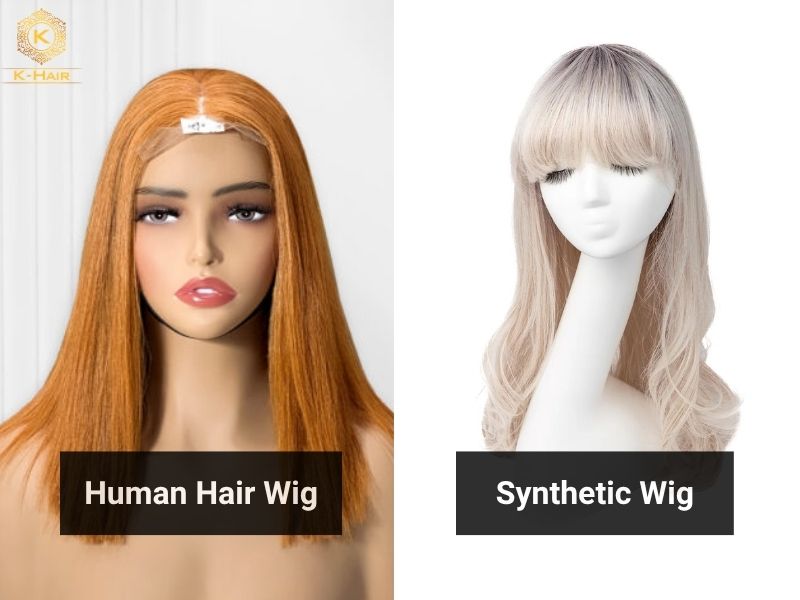
Human Hair Wig Care vs. Synthetic Wig Care
The maintenance requirements of human hair and synthetic wigs are not identical.
| Care Factor | Human Hair Wigs | Synthetic Wigs |
|---|---|---|
| Heat styling | Can generally be restyled with appropriate heat protection | Many synthetic fibers are heat-sensitive |
| Washing | Requires gentle washing and conditioning | Requires products suitable for synthetic fibers |
| Restyling | Can generally be cut and restyled | Style retention depends on fiber type |
| Maintenance | Requires ongoing washing, conditioning, and detangling | Often requires less conditioning |
If you are comparing the two for your business, product construction and fiber type should be considered alongside appearance and price.
Read more: The comparison of synthetic hair vs. human hair
Why Proper Care Matters for Your Business
For salons and distributors, proper wig maintenance is not just a customer courtesy. A wig that sheds within weeks generates returns, refund requests, and public complaints. All of that costs more in time and reputation than the product itself.
A simple care card with every order should list wash frequency, heat limits, and storage conditions. This reduces disputes before they start. It also signals to buyers that the product is worth maintaining, which supports stronger resale pricing.
→ If you’re sourcing human hair wigs at scale, K-Hair’s wholesale price list breaks down cost by grade and MOQ.
Factory Insight: When we onboard a new distributor, we always ask what care instructions they pass on to customers. Sellers who hand over a human hair wig with no guidance see far more shedding complaints, even with an identical hair grade, according to Mrs. Cherry, Sales Manager at K-Hair Factory.
This applies beyond the first sale as well. A distributor who documents the routine in writing, with real numbers, builds a track record that supports repeat orders. Retailers who can show buyers a clear routine tend to see fewer disputes over hair quality months after purchase. For a wholesale relationship, that reduction in friction is worth more than a marginally lower unit price.
FAQs
Before wrapping up, here are the questions buyers and stylists ask most often about how to care for human hair wigs.
How Long Do Human Hair Wigs Last With Proper Care?
The lifespan of a human hair wig depends on hair quality, construction, wearing frequency, chemical processing, heat exposure, and maintenance. A well-maintained, high-quality wig can generally last 1 to 2 years under regular wear, compared to a much shorter life for one exposed to frequent heat, rough handling, or improper storage.
Can You Use Regular Shampoo on a Human Hair Wig?
It is better to choose a mild shampoo formulated for human hair and avoid harsh cleansing formulas. Because wig hair does not receive natural scalp oils, gentle cleansing and regular conditioning are important.
How Often Should You Wash a Human Hair Wig?
There is no single schedule that works for every wig, but every 7 to 15 wears (roughly every 1 to 2 weeks with daily wear) is a reasonable starting point. Consider how frequently the wig is worn, the amount of styling product used, and how dirty or oily it becomes. Washing only when necessary can help avoid unnecessary dryness.
What Water Temperature Is Safe for a Human Hair Wig?
Use cool to lukewarm water when washing. Extremely hot water can be harsh on the hair and may also affect delicate wig construction.
How Should You Store a Human Hair Wig?
Store the wig only after it is completely dry and detangled. Use a suitable wig stand when preserving its shape is important, or a breathable storage bag when space is limited. Keep it away from direct sunlight, excessive heat, and moisture.
Conclusion
Knowing how to care for human hair wigs is essential for maintaining their appearance, manageability, and overall service life. The most important practices are simple: detangle gently, wash only when necessary, condition regularly, dry thoroughly, minimize excessive heat, protect the wig from friction and harsh exposure, and store it correctly.
For retailers looking to offer quality wigs with suitable cap constructions and customization options, K-Hair Factory provides factory-direct human hair wigs from Vietnam.
Ready to source verified raw Vietnamese hair?
Contact K-Hair Factory directly for wholesale pricing, MOQ details, and free samples.
Or visit our Facebook: K-Hair Vietnam Factory to get the latest wholesale price list and start building your brand with confidence!