Elevating your salon’s extension services requires more than just mastering the installation technique; it demands expert-level consultation skills. When evaluating a client’s natural hair density, scalp health, and lifestyle, the decision between hand tied vs machine weft extensions can make or break the service. Recommending the wrong weft can lead to bulky tracks, client discomfort, or even damage to the natural follicle.
This comprehensive guide equips hair professionals with the technical pros, cons, and price breakdowns of both methods, ensuring you can deliver customized, premium results that justify luxury service pricing.
What Are Hand-Tied Wefts?
Hand-tied wefts are exactly what they sound like: individual pieces of hair are tied by hand onto a very thin, strong thread, one small section at a time. There is no machinery involved in creating the base – it’s a slow, meticulous process, which is part of why these wefts look and feel the way they do.
Because a human technician is tying the hair, the resulting track is incredibly lightweight, ultra-thin, and flexible. When applied, this micro-track lays completely flush against the scalp, making it virtually undetectable – even if the wind blows or you throw your hair up into a high ponytail.
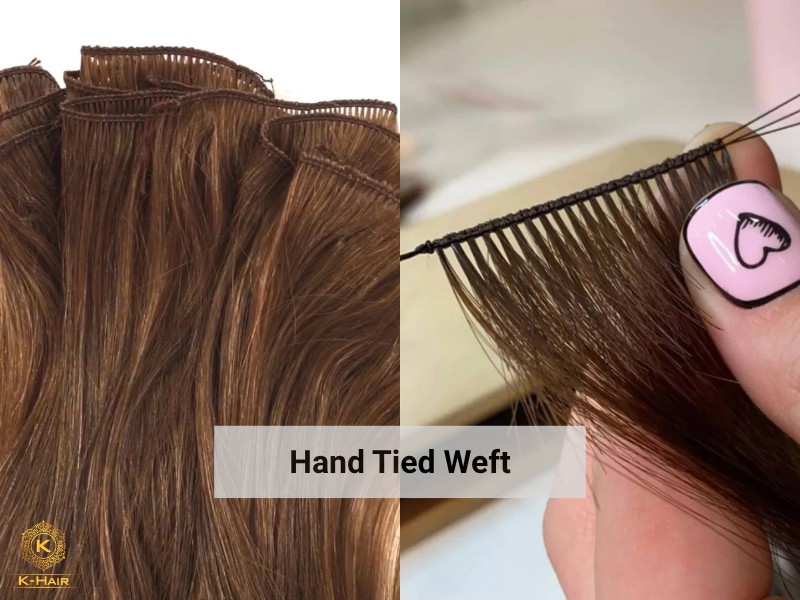
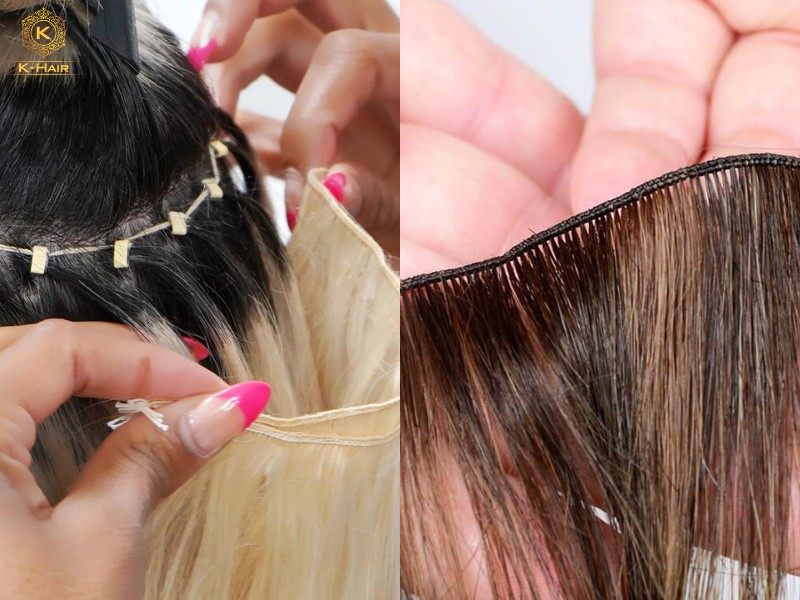
Hand-tied wefts are among the most delicate and complex hair installations there are – attached to your hair using the “beaded row technique”. In this method, the wefts will be sewn and attached along the natural hairline using beads and tracks as the attachment points – with no heat, adhesive involved. The results – seamless, subtle volume lift that last around 9-12 months, with reinstallation required every 6-8 weeks.
| Pros | Cons |
|
|
→ See how weft extensions stack up against other install methods: Weave hair extensions pros and cons
What Are Machine Wefts?
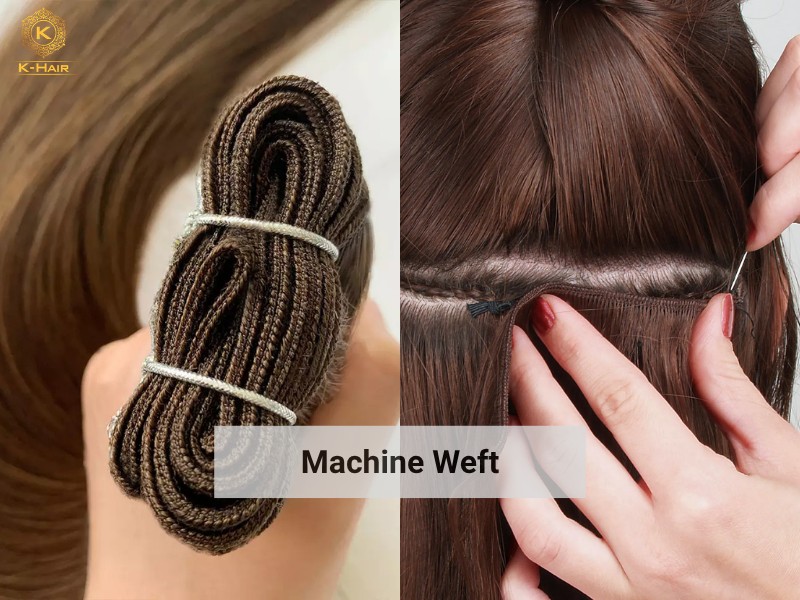
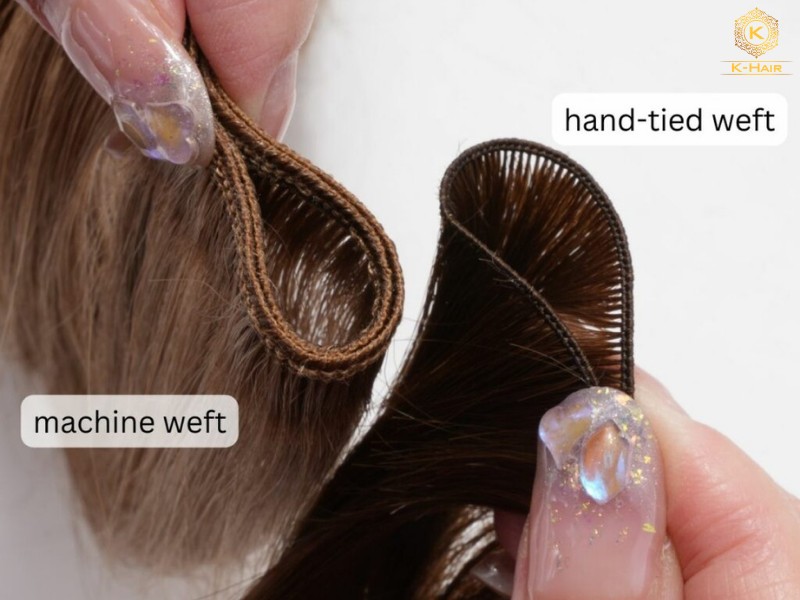
Machine wefts are manufactured by feeding hair through a specialized triple-head sewing machine that tightly stitches the strands together along a continuous track. This automated process creates a reinforced, highly durable base that is naturally sturdier, and slightly thicker than hand-tied hair.
The most defining characteristic of a machine weft is its alteration tolerance. Unlike hand-tied wefts that will instantly unravel if the string is snipped, a stylist can cut a machine weft anywhere along the seam to perfectly customize the width to a client’s head. Furthermore, machine wefts hold a significantly higher density of hair per track, meaning you need fewer wefts to achieve maximum volume for your clients.
What’s more is that, machine wefts are also extremely flexible in terms of installation – they can be attached using the “beaded row method” or the traditional sew-in methods. With the same lifespan – machine wefts offer a much wider range of flexibility and a much lower skill requirement, a safer choice for stylists and professionals.
| Pros | Cons |
|
|
Hand Tied Wefts vs Machine Wefts: The Ultimate Comparison
Now that you understand the basics, let’s dig into how hand tied wefts vs machine wefts actually compare when it comes to the details that matter most: thickness, customization, durability, and cost.
Thickness and Seamlessness
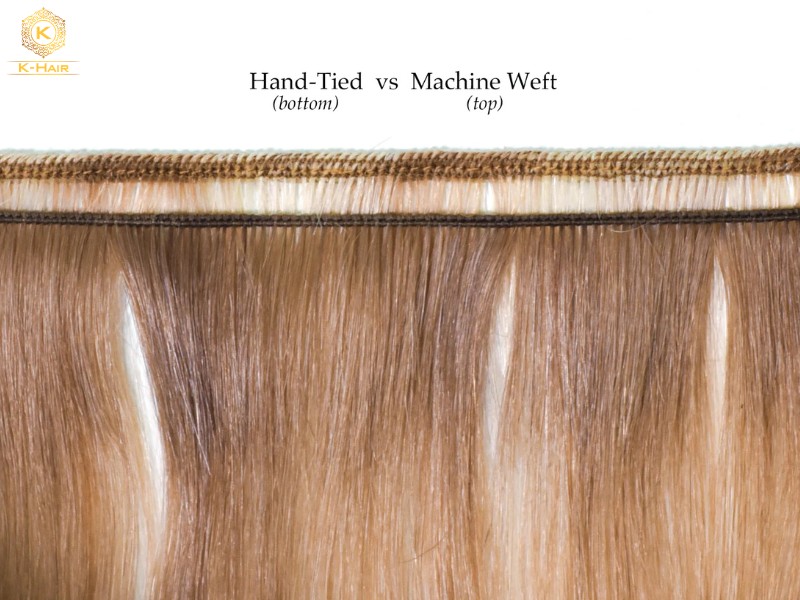
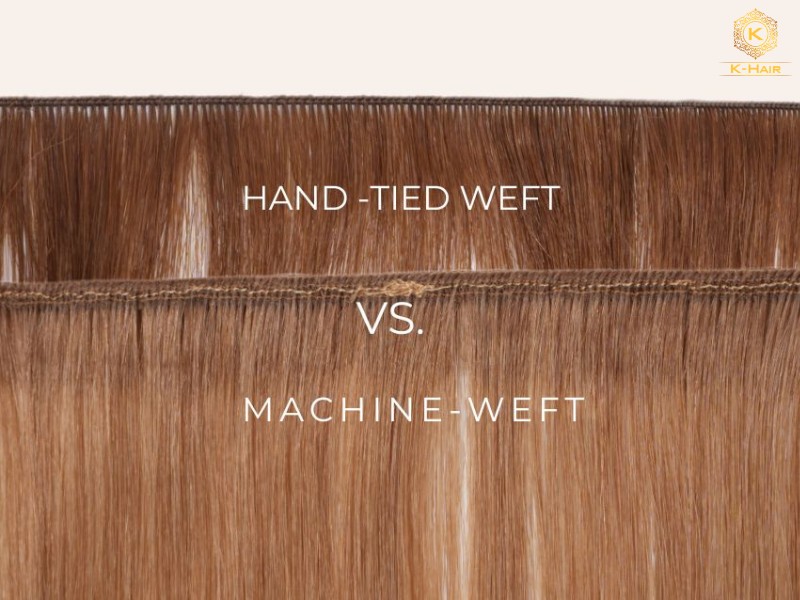
Seamlessness is where hand-tied wefts really shine. Hand-tied wefts offer superior craftsmanship by using meticulously hand-tied knots on a very fine thread, creating an ultra-thin, lightweight base. This delicate construction allows the hair extensions to blend seamlessly and remain virtually undetectable against the scalp, even when parted directly over the installation track.
Meanwhile, machine wefts thrive in durability and thickness, giving textured-hair users the needed natural volume to blend into their hair. However, the mechanical nature of layered machine stitching means that even the best machine wefts inherently carry slightly more bulk than purely hand-tied options.
Customization and Cutting
Here’s a major mechanical difference that often gets overlooked: machine wefts can be trimmed with scissors to fit the exact width of a client’s head, no special technique required. This makes them incredibly flexible for stylists working with different head sizes or filling in specific areas.
Hand-tied wefts don’t offer that same flexibility. Because the hair is tied onto a thread rather than locked in place by machine stitching, cutting into the base causes it to unravel completely, with hair shedding out from the cut point. Instead, stylists fold the ends of hand-tied wefts to shorten them, which preserves the integrity of the weft but requires more skill and planning during installation.
Durability and Longevity
While both weft types can enjoy a long lifespan when properly maintained, machine wefts are undeniably the more durable option of the two. Their tightly reinforced machine stitching can easily withstand rigorous daily wear and hold up exceptionally well under vigorous brushing, frequent washing, and heavy heat styling. This makes them a highly practical choice for active clients or those who are slightly rougher on their hair.
Conversely, hand-tied wefts are structurally more delicate. While they perform beautifully and maintain a flawless appearance with gentle handling, their fine thread base demands much more careful attention to avoid snapping or stressing the seam.
The Cost Breakdown: Hair and Installation
When evaluating the upfront cost of the hair, as stylists – you might want to consider these two costs:
- Upfront Cost (The Hair): Hand-tied hair is significantly more expensive due to the slow, manual labor required to hand-tie each section. On average, the hair itself costs between $150 and $400 per bundle, with a full salon installation (hair plus multi-row application) typically running $800 to $1,500 or more. Because machine wefts are mass-produced, the hair is much more budget-friendly, typically ranging from $50 to $200 per bundle, keeping total installation costs lower as well.
- Installation Cost (The Stylist’s Time): Hand-tied installations carry higher fees because stacking and delicately sewing the wefts requires more time and advanced skill. Machine wefts install much faster, reducing the overall cost of the stylist’s chair time. Expect a hand-tied installation to take anywhere from 2 to 4 hours – while machine weft will only take around 1-2 hours for one install.

Differences between Hand tied vs Machine wefts – The Cost Breakdown
| Hand-Tied Wefts | Machine Wefts | |
| Thickness | Ultra-thin micro-string base → lays completely flush and seamless against the scalp | Thicker, bulkier reinforced seam → can be visible or bulky on clients with fine hair |
| Flexibility | Highly flexible – molds perfectly to the natural curvature of the head | Rigid base – feels stiffer and lays less flush against the head compared to tied knots |
| Durability | Delicate, cannot be cut and can snap with aggressive brushing | Highly durable, can be cut anywhere along the track without any risk of unraveling |
| Weight | ~50-120g total pack, split into 8-10 pieces (~10-15g per piece) | ~100-114g per bundle, packaged as one continuous track |
| Cost | Premium: Higher upfront hair cost ($150-$400/bundle; $800-$1,500+ full salon install) and labor-intensive installation | Budget-Friendly: Lower upfront hair cost ($50-$200/bundle) and faster, less costly installation |
→ Want the full wholesale cost breakdown across every extension type? Hair extensions cost
The Difference Between Hand Tied and Machine Weft – Based on Hair Type
Beyond price and durability, the biggest factor in choosing between these two methods often comes down to one thing: your clients’ natural hair type. Understanding the difference between hand tied and machine weft as it relates to hair density can save you from unflattering results that translate directly to customer complaints and dissatisfaction.
Hand-tied Weft – Best for Fine or Thin Hair
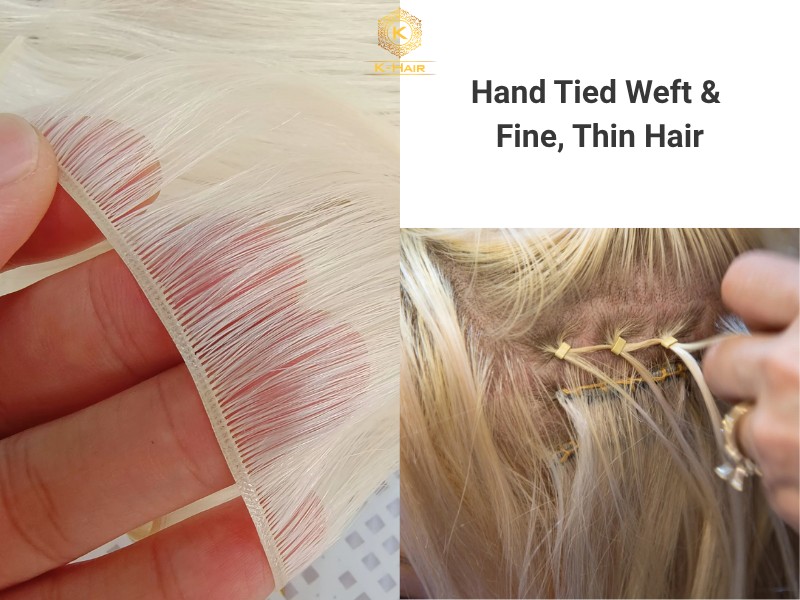
If you have fine or thin hair, hand-tied wefts are usually the better choice. Their ultra-thin base places less weight and tension on delicate hair follicles, reducing the risk of strain over time. Because the wefts lie completely flat, they’re also far less likely to show through thin strands or create visible bumps and ridges along the part.
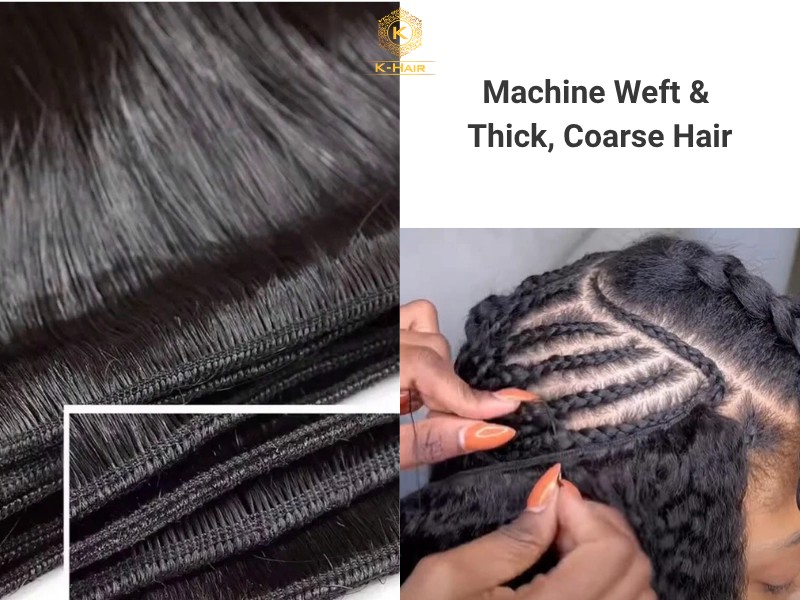
Machine Weft – Best for Thick or Coarse Hair
Clients with thick or coarse hair, on the other hand, often do best with machine wefts. These tracks hold more hair per weft, which means fewer tracks are needed to achieve dramatic volume and length. The added thickness of the base is a non-issue on thick hair, since there’s plenty of natural hair to camouflage it, and installation is faster when you’re aiming for maximum volume in a single sitting. Many salons stock a wholesale bone straight hair weave in machine weft form specifically for this reason.
→ Not sure which hair type calls for which method? How to choose hair extensions like a professional
FAQs about Hand Tied vs Machine Weft Hair Extensions
Here are some frequently asked questions about hand tied vs machine weft:
Can you mix hand-tied and machine wefts?
Yes. Many stylists use a hybrid approach – placing machine wefts toward the back and crown for added volume and durability, while using hand-tied wefts around the hairline and part to keep those visible areas seamless.
Which type of weft causes less damage to natural hair?
Both methods are safe when installed correctly by a trained stylist. That said, hand-tied wefts are generally lighter on the follicle, since the thinner base places less tension on individual hair strands.
How often do you need to reinstall the wefts?
Most clients need a move-up appointment every 6 to 8 weeks, though this can vary slightly depending on your natural hair growth rate. For a full lifespan breakdown across every extension method, see how long hair extensions last.
Conclusion
With the insight mentioned, we hope that we have been able to help identify hand tied vs machine weft. At the end of the day, the difference between hand tied and machine weft extensions comes down to a trade-off between seamlessness and durability, luxury and budget. Hand-tied wefts offer an ultra-thin, virtually invisible base that’s ideal for fine or thin hair, but at a higher cost and with less flexibility for cutting. Machine wefts are sturdier, more affordable, and easier to customize, making them a great fit for thicker hair or budget-conscious clients. There’s no universally “better” option – only the one that’s better for you.
For stylists who want a middle ground, Genius Weft hair extensions are worth exploring too – they combine the flat, undetectable profile of hand-tied wefts with the cuttable flexibility of machine wefts, without the “return hair” that can occasionally irritate sensitive scalps.
When you are ready to invest in premium, 100% human hair extensions, K-Hair Factory is your ultimate wholesale partner. Contact our expert team today to explore our top-tier hand-tied and machine weft collections!
Ready to source verified raw Vietnamese hair?
Contact K-Hair Factory directly for wholesale pricing, MOQ details, and free samples.