Assuming that all textured hair behaves the same is a common-and often costly-mistake. While the visual contrast between loose waves and tight curls is obvious, their maintenance routines, longevity, and ideal target audiences couldn’t be more different.
With years of experience supplying and styling diverse hair types, we understand exactly what makes each texture unique. In this definitive breakdown of wavy hair vs curly hair extensions, we will uncover the crucial differences that most suppliers fail to mention, helping you curate the perfect look or build a highly profitable salon inventory.
1. What is Wavy hair?
Learning the differences between wavy hair vs curly hair extensions, let’s start with their appearance first.
All and all, much like its name, wavy hair is defined by their soft, beachy waves that follow a looser S-shape line. When installed, these extensions tend to have a slight shrinkage that creates more volume than the standard straight. That’s why – among users, these textures are considered the safer, more balanced options between straight and curly.
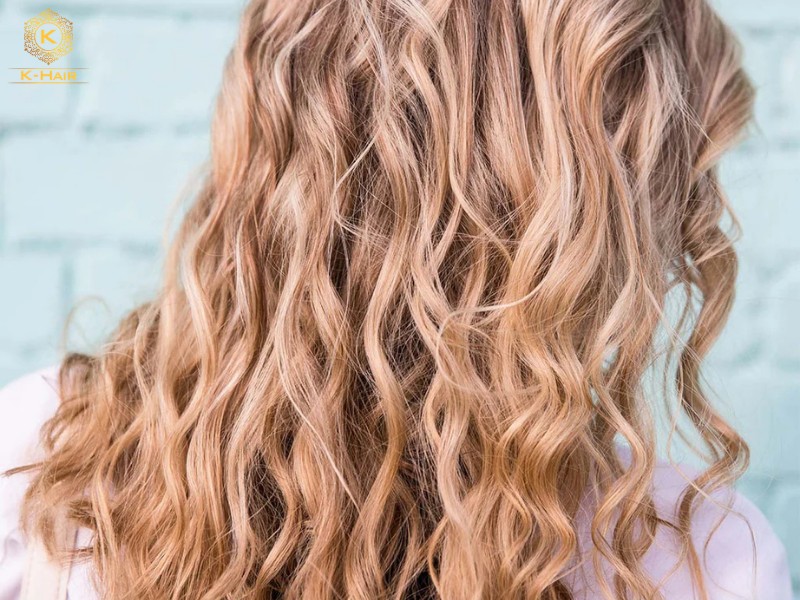
And, just like how different hair patterns can range for different people – wavy hair extensions also have their variations to better match their users. For example:
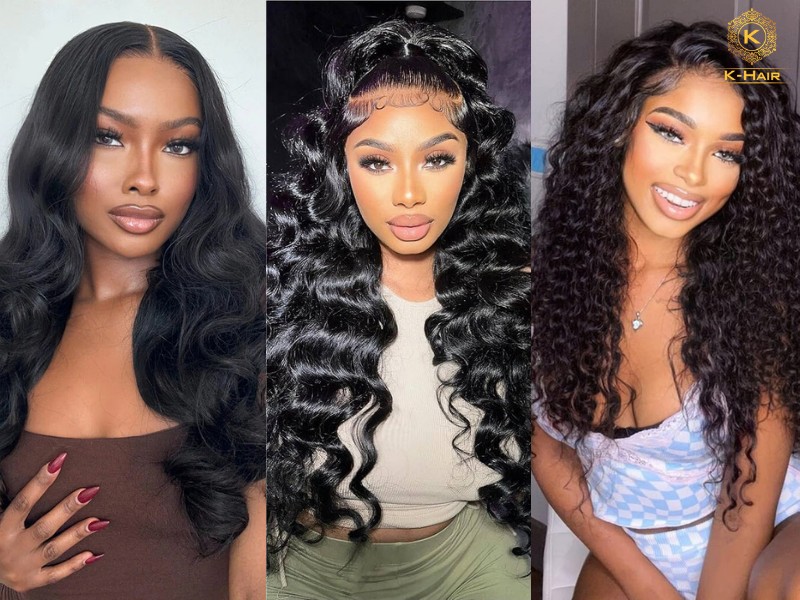
- Body wave, Natural wave extensions – best mimic the look of natural 2A wavy hair types: loose, flowing with slight and lightweight patterns.
- Round twist, Loose wave extensions – look quite similar and blending with the natural 2B wavy hair types: slightly tighter and more defined waves.
- Deep wave, or Water wave – identical to natural 2C wavy hair: tighter, more uniform patterns, with smaller and denser waves.

Body wave, Loose wave, Deep wave are variations of wavy hair extensions
2. What is Curly hair?
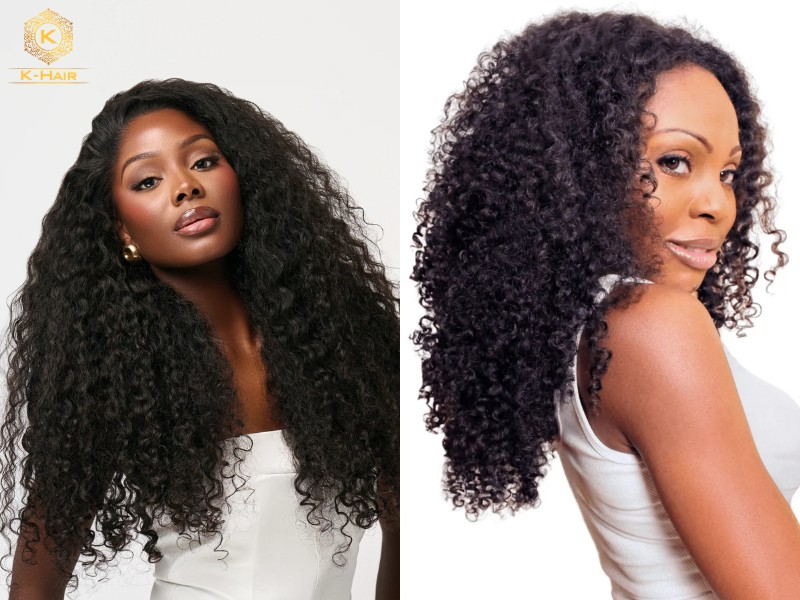
Unlike wavy or straight hair, curly hair tends to appear much more dramatic and voluminous. In fact, these textures often follow a tighter, denser curl pattern that aligns in a spiral, corkscrew-like shape. And, because of these densely-packed patterns – curly hair extensions can shrink drastically from 10-40% → making them the most voluminous of all textures.
Much like wavy hair, the number of curly hair extension variations in the market has also multiplied over the years:
- Circle curly, Water curly – quite similar to the standard 3A hair: the loosest type of curly hair extensions.
- Jerry curl – best mimic the look of 3B curly hair type, with tighter and more defined curl patterns
- Kinky curl – the closest we got to the natural 3C hair pattern, with the tightest and most densely packed corkscrew-like formation.
- Others: Body twist, Deep curly, and Spanish curly,…
Curly textures follow a tighter, denser curl pattern that aligns in a spiral, corkscrew-like shape
3. What Are Differences Between Wavy Hair VS Curly Hair?
The differences between wavy hair vs curly hair can be quite hard to spot. And, what’s interesting about this topic is that, these are different not only by appearance, but also by maintenance, styling ability, production, and so many more:
| Wavy Hair Extensions | Curly Hair Extensions | |
| Production & Processing | Only minimal processing needed to produce the desired textures | Require more controlled steaming or pattern-setting to ensure consistency across bundles |
| Pricing Range | Stable, mid-range pricing due to easier sourcing & production | Slightly priced higher per unit – due to production complexity |
| Styling Ability | Extremely flexible – can be straightened or further curled to achieve more texture | Quite limited:
→ Should be used as-is. |
| Market Appeal | Suitable for clients aiming for elegance, and simpler looks | Suitable for clients wanting dramatic, voluminous looks |
| Maintenance | Easier to maintain. Its routine mostly focuses on texture retention, slight moisturization. | Harder to maintain – as the strands are more prone to frizz, dehydration and tangles.
→ Slightly higher percentage of complaints and returns. |
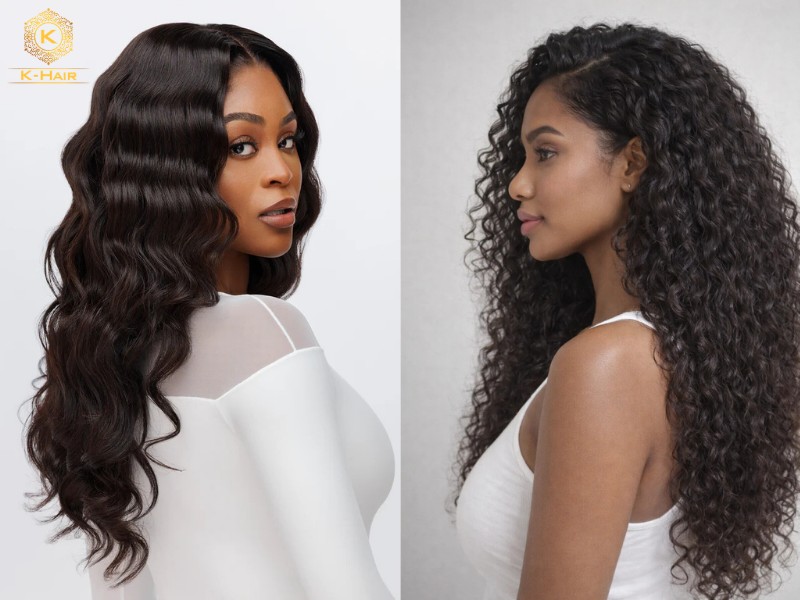
Expert tips: Curly hair tends to generate more complaints if expectations aren’t set clearly. Therefore, make sure to provide care guides and realistic product descriptions to minimize return rates or dissatisfactions.
4. Wavy Hair VS Curly Hair Extensions: Which Markets Do They Work BEST For?
The reason why choosing between wavy hair vs curly hair extensions is so difficult is mostly rooted from the lack of market insight. In fact, many inexperienced hair entrepreneurs often find this decision hard to make because they don’t yet know which options are best for their business.
Let’s clear out the confusion – with the sections below:
4.1. Which Markets Are Best for Wavy Hair Extensions?
Among the two, wavy hair extensions are the slightly more in-demand ones – not only because of their neither-too-flat-nor-too-dramatic look, but also their affordability. However, the primary consumers for this product line might include:
- Geographically: Wavy hair is currently trending on multiple markets – especially for European, Latin American and the US regions. These markets are often highly influenced by the traditional Western beauty standards, hence, the sense of elegance that wavy hair brings make it a widely-chosen option.
- Customer base: The minimal maintenance that wavy hair extensions require also make them the perfect match for women with busy schedules wanting convenience and manageability. If they are your target audience, you should definitely invest.
Also, the elegance and smooth appeal of wavy hair also create the ultimate classy look – best for professional, formal occasions. If class and luxury are what you aim to offer, this will be your ace.
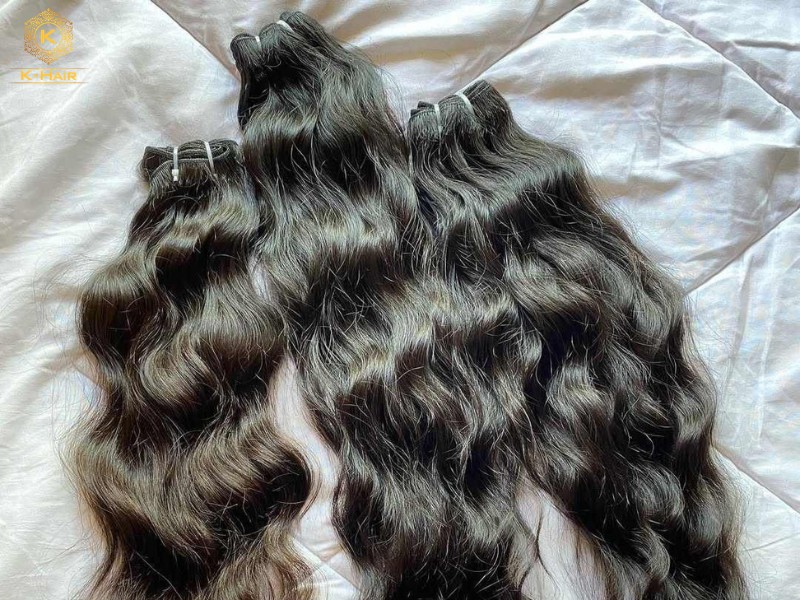
If you’ve decided that the effortless look of wavy extensions is for you, the next step is choosing the exact pattern. Check out our detailed breakdown of loose wave vs body wave to find your perfect match.
4.2. Which Markets Are Best for Curly Hair Extensions?
Different appearance leads to different markets – indeed, compared to wavy hair, curly hair extensions would have a completely distinct target audience:
- Geographically: Curly hair extensions tend to be the most popular for African, US hair buyers. One reason for such a trend is that these two regions gather a huge proportion of those with textured hair – using curly extensions to give their natural hair a subtle lift.
- Customer base: Dramatic volume, thickness are often guaranteed for such tight textures like curly hair. This allows the product line to cater to the ongoing market trend for voluminous, dynamic hair look that many customers aim to achieve.
- Unlike the sleek and loose wavy, straight extensions – the tight textures of curly hair provide more grip, making them ideal for protection styles. This unlocks a brand new window of opportunities – braiders as customers.
Which Markets Are Best for Curly Hair Extensions?
- Unlike the sleek and loose wavy, straight extensions – the tight textures of curly hair provide more grip, making them ideal for protection styles. This unlocks a brand new window of opportunities – braiders as customers.
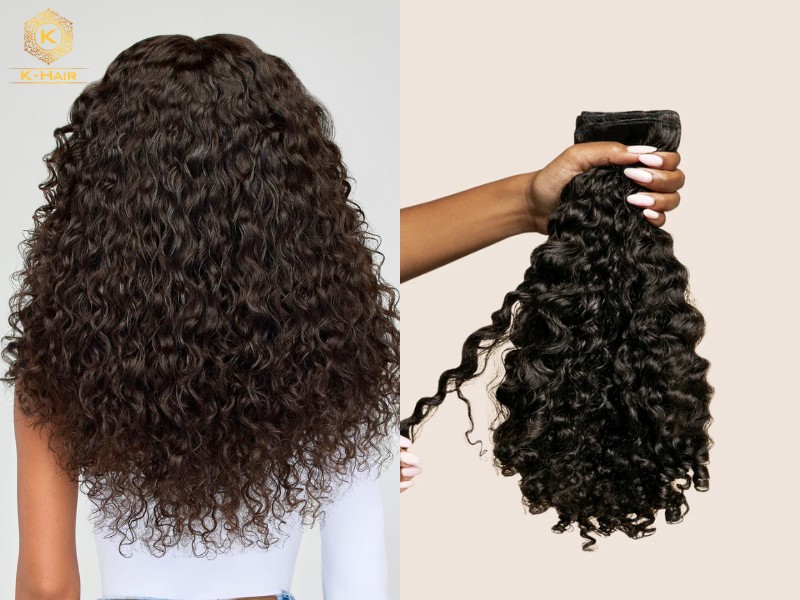
Expert tips: Targeting only one type of hair extensions is rarely a wise move – as it can easily restrict your market reach and profitability. After all, not all customers demand the same products.
Therefore, besides your primary products – make sure to include diverse texture selection to cater to more customer needs.
For those leaning towards tighter, more voluminous textures, understanding the nuances between specific curl patterns is crucial. Explore our guide on deep wave vs water wave to see which style suits your salon’s vibe.
5. Wavy Hair VS Curly Hair: What Are The BEST SELLING Hair Extensions Textures?
As previously mentioned, both wavy and curly hair types come with their own variations. But here is the thing – not all types of wavy or curly hair extensions sell the same.
Much like how different wavy hair vs curly hair are from each other, these variations are also distinct in features, patterns – and of course, market appeal and profitability:
- Wavy hair extensions: The three most selling hair textures are – Body Wave, Deep Wave, Natural Wavy:
- Body Wave: The most versatile and scalable texture, with a loose, uniform pattern that’s easy to style, making it a consistent top-seller across bundles and wigs.
- Deep Wave: Offers a more defined, textured look while still being easier to maintain than curls, helping it sit in a slightly higher-value segment with strong visual appeal.
- Natural Wavy: Mimics raw, unprocessed hair patterns, giving it higher perceived authenticity and making it attractive for premium lines with less processing.
Body Wave, Deep Wave, Natural Wavy are the best selling wavy textures
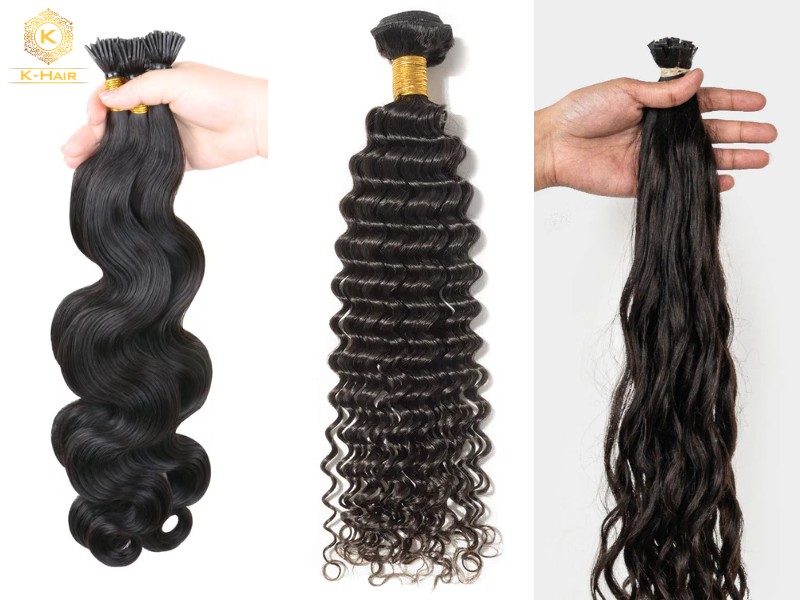
- Curly hair extensions: The three biggest hot cakes are Burmese curly, Kinky Curly and Bouncy Curly:
- Burmese Curly: A balanced curl pattern that blends softness with definition, making it easier to manage and more consistent in quality, driving in steady, repeat sales.
- Kinky Curly: Highly textured and voluminous, this pattern stands out in the market and commands higher pricing due to its distinct look and more complex sourcing.
- Bouncy Curly: Known for its uniform, springy curls and polished finish, it performs well in ready-to-wear products like wigs, where consistency and visual appeal are key.
Burmese Curly, Kinky Curly, Bouncy Curly are the best selling curly hair textures
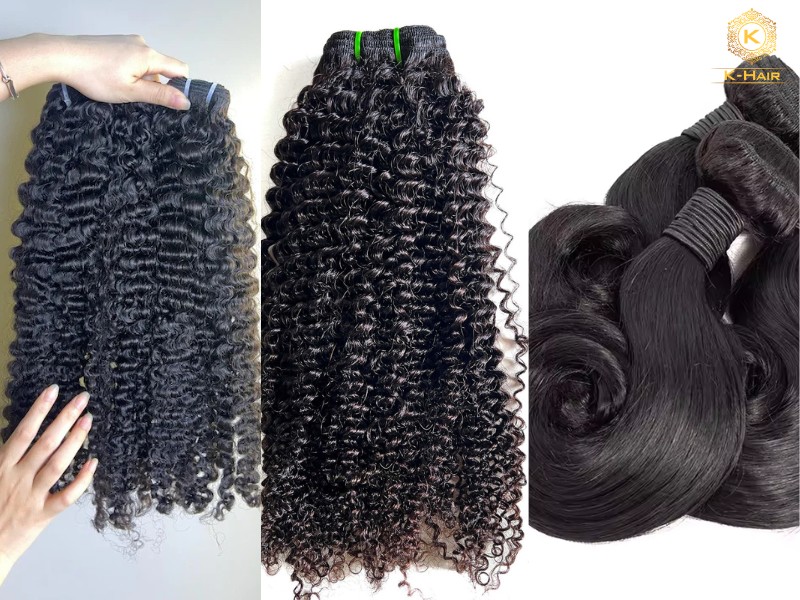
6. FAQs about Wavy hair vs Curly Hair Extensions
Here are some frequently asked questions about Wavy hair vs Curly hair extensions:
6.1. What is the main difference between wavy and curly hair extensions?
Wavy hair has a looser, more uniform pattern, while curly hair features tighter, more defined curls. This difference affects not only appearance, but also processing, maintenance, and pricing.
6.2. Which texture offers more styling flexibility?
Wavy hair extensions are more versatile—they can be straightened or curled further with minimal impact. Curly hair is more pattern-dependent and performs best when kept in its original texture.
6.3. How should businesses price wavy vs curly hair extensions?
Wavy hair is typically priced competitively for volume, while curly hair allows for higher pricing due to its complexity and perceived value.
6.4. Which texture requires stricter quality control?
Curly hair extensions. Even small inconsistencies in curl pattern or density are more noticeable, requiring tighter quality checks during production.
6.5. Why are curly hair extensions usually more expensive?
Curly textures require more precise sourcing and controlled processing to maintain consistent curl patterns, which increases production costs.
7. Conclusion
Understanding the distinct appeal of wavy hair vs curly hair extensions is the first step in curating a versatile salon menu. While wavy extensions offer an effortless, everyday elegance, curly extensions deliver bold, unmatched volume. The right choice ultimately depends on your clients’ natural hair and their styling goals.
Since raw Vietnamese hair is world-renowned for its quality, many buyers wonder about its natural textures. If you’re curious about how we source these bouncy curls, read our insights on Do Vietnamese Have Curly Hair.
Unsure Which Textures Fit Your Salon Best?
Navigating the world of hair textures can be tricky. At K-Hair Factory, we do more than just supply hair – we help you build the perfect inventory. Sourced 100% from Vietnamese donors, our raw hair is naturally strong, safely lifts to #60 blonde, and lasts 4-5 years with proper care.
- Expert Guidance: Get a free consultation to match the right wave or curl pattern to your specific clientele.
- Affordable Customization: We craft premium wavy and curly textures for just an extra $3 fee.
- Reliable Quality: Direct-factory sourcing ensures your clients enjoy long-lasting, tangle-free hair.