
Why Indian Hair Vendors Dominate Global Raw Hair Supply
India’s position in the global hair market is built on one structural advantage no other country can match: sheer volume. India exported roughly $501 million in raw human hair in FY2024 (India’s Department of Commerce), and counting wigs and finished extensions, its broader hair-product exports approached $1.4 billion across 2024–2025 (trade data). Any serious wholesale buyer needs to understand this market.
The Indian hair industry operates across two distinct geographic hubs, each producing a fundamentally different quality tier:
- South India (Tamil Nadu, Andhra Pradesh): Home to the Tirupati and Madurai temple systems—the source of the highest-grade single-donor, cuticle-aligned raw hair. This is the hair that serves US and European salon-grade buyers.
- North India (Commercial Sourcing): Hair collected from salons, drain fallout, and public spaces—commonly known as “hair ball” or non-Remy grade. High volume, low cost, inconsistent quality.
2026 Tariff Note for US Buyers: US tariff policy shifted sharply in early 2026 following the February 20, 2026 Supreme Court ruling on IEEPA tariffs, so “tariff-free” is no longer accurate for any Asian origin. Following the February 2026 US-India trade deal, India-origin goods carry roughly an 18% tariff (down from a prior ~50%), while Vietnam has been near a temporary 10% Section 122 rate set to lapse mid-2026. Both still compare favorably to China, which faces higher layered duties (often 20%+) plus the loss of duty-free De Minimis treatment—now eliminated for all countries since August 2025. Because these rates change frequently, always verify the current Harmonized Tariff Schedule (HS codes 0501, 6703, 6704) before costing any order.
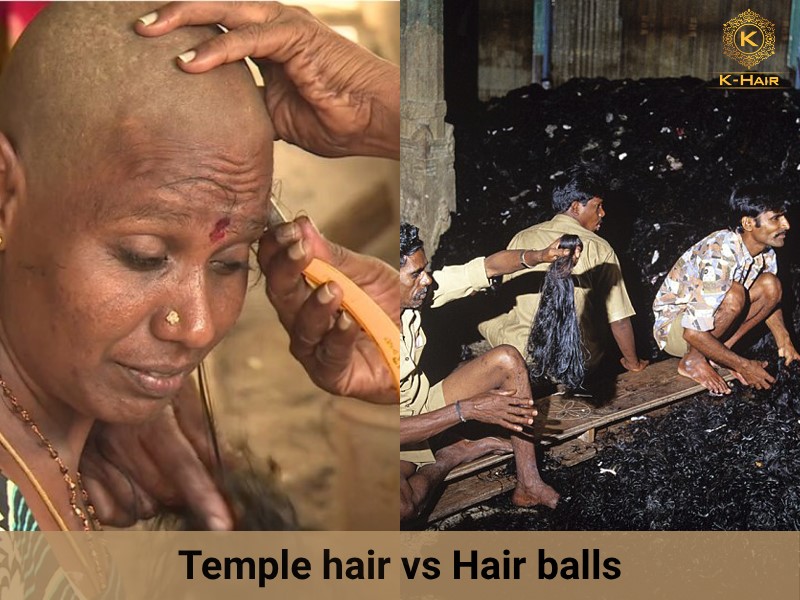
Temple Hair vs. Hair Ball – What Every Buyer Must Know Before Ordering
This is the single most important distinction in the Indian hair factory market. Before sourcing raw Indian hair wholesale, you must understand this gap to protect your margins.
| Criteria | Temple Hair (Premium) | Hair Ball (Non-Remy) |
|---|---|---|
| Source | Voluntary donation at Tirupati/Madurai temples | Collected from salon floors, drains, public spaces |
| Cuticle Integrity | 100% intact, aligned root-to-tip | Mixed direction, heavy tangling after first wash |
| Lifespan | 1.5–2.5 years with care | 3–6 months before significant shedding |
| Price Signal | $15–$40 per bundle wholesale (varies by length/grade) | Below $7 per bundle — Immediate red flag |
The practical red flag: any Indian hair vendor quoting below $7 per bundle is almost certainly selling hair ball grade. Legitimate temple hair wholesale requires factories to bear the cost of temple auctions, making sub-$7 pricing structurally implausible.
Raw Hair vs. Virgin Hair vs. Remy — The Quality Ladder & The “Bone Straight” Trap
The biggest loophole in the global hair market is the lack of regulated terminology, allowing deceptive suppliers to label chemically processed hair as “raw” or “virgin” to artificially inflate prices. To protect your investment and your salon’s reputation, you must evaluate inventory based on strict chemical boundaries rather than marketing buzzwords.
While these terms are used interchangeably by many vendors, they absolutely should not be. Here is the precise B2B definition you must hold your suppliers to:
| Tier | Definition | Cuticles | Best Use Case |
|---|---|---|---|
| Raw Hair | Single-donor, straight from temple, zero chemicals | 100% intact & aligned | Premium salon installs |
| Virgin Hair | Unprocessed, may be multi-donor | Intact | Mid-premium wholesale |
| Remy Hair | Aligned cuticles, lightly processed for texture/color | Aligned | Budget-premium volume |
The “Bone Straight” Trap in Indian Sourcing
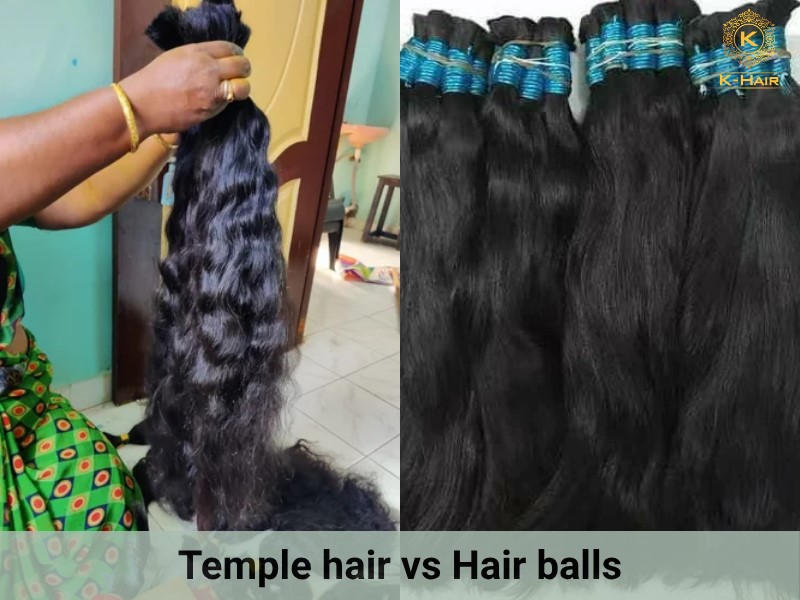
Here is a critical operational insight: Genetically, authentic Indian hair is naturally wavy or curly. If an Indian hair factory offers you “100% Raw Indian Bone Straight Hair”, you are being misled. To achieve that bone-straight texture, the Indian facility must heavily steam-process or chemically straighten the hair, meaning it is no longer “Raw”. If your US/EU clients demand naturally thick, bone-straight hair that lasts years, you must source from Southeast Asia (Vietnam), not India.
Top 5+ Best Indian Hair Factories & Vendors — 2026 Verified List
Instead of listing every unverified vendor on Alibaba, we have narrowed this down to verified Indian hair factories with documented temple sourcing, clear MOQ structures, and proven US/EU export track records. Each entry below includes honest pros and cons — because no supplier is perfect for every business model.
→ Before reaching out, ensure you read our master guide on evaluating wholesale hair vendors for wigs globally.
| Vendor Name | Type | Sourcing Hub | Temple Access | Best For |
|---|---|---|---|---|
| Dhwarak Indian Hair | Direct Factory | Chennai | Verified | Premium US salon buyers |
| BigLove Indian Hair | Direct Factory | Chennai | Tirupati direct | US boutique owners |
| Jaipur Hair | Factory + Export | Delhi / Hyderabad | South India temples | High-volume US/EU wholesale |
| Adorable Hair Suppliers | Factory | South India | Verified | Raw hair distributors |
| SGI Hair | Factory | Chennai | Verified | Premium segment brands |
Dhwarak Indian Hair — Best Overall Temple Factory
Dhwarak is the most technically documented Indian hair factory on this list. Their unique “head and tail band technique” — tying each bundle at procurement and only removing the band at the wefting stage — ensures cuticle direction is preserved from the temple floor to the finished product. For US buyers who have been burned by inconsistent batches, this level of process discipline is rare in the Indian market.
- Location: Chennai, Tamil Nadu — 100% women-led manufacturing workforce.
- Facility: 3,200 sqft | Japanese imported wefting machines | 30 QC checkpoints per bundle.
- Sourcing: Direct temple procurement across South India — zero chemical processing, no heat treatment, sun-dried only.
- MOQ: 1 kg (~10 bundles) — Sample kit available for first-time buyers.
- Products: Raw wefts, HD closures (Swiss transparent lace), frontals, full lace wigs, clip-ins.
- Best for: US premium salon owners, HD lace specialists, compliance-focused buyers needing full documentation.
Pros: Most transparent production process in the segment; women-led factory is a strong EEAT signal for ethical brands; Japanese machinery produces ultra-strong wefts; low MOQ entry point makes trial orders accessible.
Cons: Higher price point than commercial Indian vendors (temple auction cost is reflected in pricing); limited SKU range compared to large-scale Chinese manufacturers; communication response times can be slower during peak temple procurement periods.
BigLove Indian Hair — Best for US Market Reach
BigLove is the oldest active temple hair factory on this list, operating since 1983 under parent company Textile For Homes — a 40-year veteran of supplying high-end textiles to global fashion houses. This heritage translates into supply chain discipline that most newer Indian vendors cannot match. Their US-direct DHL/FedEx infrastructure makes them the fastest Indian factory option for American salon owners.
- Location: Chennai, India | Established: 1983.
- Sourcing: Tirupati direct procurement — single-donor, cuticle-aligned bundles; every weft double-stitched to prevent shedding.
- Logistics: DHL/FedEx 3–5 business days to US addresses (faster than most Indian competitors).
- MOQ: 1 kg | Sample kit available | Bulk discount tiers available.
- Products: Raw bundles (straight, wavy, curly, kinky curly), wigs, lace frontals.
- Best for: US boutique salon owners and small-batch wholesale buyers who need fast domestic delivery without the China tariff exposure.
Pros: Fastest US shipping among Indian factories (3–5 days); 40-year parent company credibility; celebrity and fashion house clientele validates quality tier; full traceability from temple to shipment.
Cons: Premium pricing reflects quality (not suitable for budget segment buyers); kinky curly texture availability is limited and listed as “rare”; website primarily B2C-oriented, meaning wholesale buyers need to contact directly for bulk pricing.
Jaipur Hair — Best for High-Volume US/EU Wholesale
Jaipur Hair is one of the most internationally recognized Indian hair factories, with 20+ years of experience and verified wholesale clients across the USA, UK, Canada, France, Germany, Dubai, and Nigeria. Their standout claim is a documented lifespan of 5–8+ years for their highest-grade temple hair — significantly longer than most Indian factory benchmarks and competitive with premium Vietnamese hair.
- Location: Delhi and Hyderabad | 20+ years in operation.
- Sourcing: Single-donor, cuticle-aligned, unprocessed — ethically sourced from South Indian temples (Tirupati verified).
- Product range: Raw curly, wavy, straight bundles; virgin Indian hair; Remy extensions; widest texture range among Indian factories.
- Lifespan claim: 5–8+ years on highest-grade temple hair (vendor’s claim, applies to top grade only) — among the longest cited in the Indian segment.
- Markets served: USA, UK, Canada, France, Germany, Dubai, Australia, Nigeria.
- Best for: High-volume US and EU wholesale buyers needing consistent large batches across multiple SKUs and textures.
Pros: Widest product range among verified Indian factories (best for buyers who need multiple textures from one supplier); 20+ years export experience means customs documentation is reliable; strong verified reviews from elite salon clients internationally.
Cons: Higher price tier (among the most expensive Indian factory options); communication reported as slower for smaller first-time orders; the 5–8 year lifespan claim applies only to top-grade temple hair — buyers should clarify grade tier before ordering.
Adorable Hair Suppliers — Best Raw Hair Wholesale Volume
Adorable Hair Suppliers occupy the mid-market position — temple-sourced, cuticle-aligned raw hair at more accessible pricing than Dhwarak or BigLove, with a strong export track record to Africa and the Middle East in addition to the US and UK.

- Location: South India | Temple-direct sourcing.
- Specialty: 100% raw, cuticle-aligned hair — zero shedding verified on export batches.
- Markets served: USA, UK, Africa, Europe, Middle East.
- Price tier: Mid-range — more accessible than premium factory options, starting from $20/product.
- Best for: Wholesale raw hair distributors targeting the African and Middle Eastern market alongside US/EU buyers.
Pros: More accessible pricing makes trial orders lower risk; strong Africa/Middle East distribution network (good if you serve multiple geographic markets); straightforward ordering process with prompt customer response.
Cons: Less publicly documented production process compared to Dhwarak; customization options are limited to standard textures; less brand recognition in the premium US salon segment.
SGI Hair — Best for Premium Segment Brands
SGI Hair has operated since 1977, evolving from a family-based business into an internationally recognized export brand present in 15+ countries. Their positioning is unambiguously premium — they do not compete on price, they compete on consistency and prestige.
- Location: Chennai, South India | Founded: 1977 (oldest on this list).
- Sourcing: Hindu temple donations — ethically sourced, consistent quality commitment across batches.
- Export markets: 15+ countries including USA, UK, Europe, Middle East.
- Price tier: Premium — higher end of the Indian factory price spectrum, quality-justified.
- Best for: High-end salon product lines and brand owners who prioritize consistent quality over lowest cost-per-bundle.
Pros: Longest operating history in the segment (institutional knowledge of quality control); strong long-term relationship track record with wholesale clients; 15+ country export experience means reliable customs and logistics documentation.
Cons: MOQ not publicly listed (requires direct inquiry, which slows the onboarding process for new buyers); higher price point limits appeal for budget or mid-market segments; less digital presence makes it harder to vet via online research alone.
How to Verify Any Indian Hair Vendor Before Wire Transfer — 6-Step Protocol
Protect your investment by strictly following this B2B verification checklist:
- Request Temple Source Documentation: Ask for the procurement certificate from Tirupati or Madurai. “Ethically sourced” is not enough; demand a named source.
- Verify the DGFT Export License: All legitimate Indian hair exporters hold a Directorate General of Foreign Trade (DGFT) Import Export Code (IEC). Trading intermediaries cannot provide this.
- Ask for Single-Donor Video: Request a raw video showing the bundle from root to tip to confirm uniform cuticle direction.
- Conduct a Bleach Patch Test: Order a paid sample and bleach it. Note that authentic dark Indian hair lifts safely to around blonde #27; even, controlled lift indicates genuine temple grade, while patchy or melting results signal acid-stripped hair ball.
- Cross-Check the $7 Benchmark: Any quote below $7 per bundle for “raw” Indian hair is structurally implausible.
- Secure Payment & Logistics: Never use Western Union or MoneyGram. Only pay via Bank Wire (T/T) to an official corporate account or PayPal Invoice. Anticipate a 7-10 day customs clearance window via DHL/FedEx from Chennai.
Manufacturer’s Insight — K-Hair Factory:
The most common mistake wholesale buyers make when sourcing Indian hair is skipping the temple documentation. They accept “100% virgin hair” listings and discover the truth too late. Ask the vendor to send you the temple auction receipt for your specific batch. A factory with genuine temple access will send it within 24 hours. A hair ball vendor will stall.
When Indian Hair Factories Are Not the Right Fit – The Vietnamese Alternative
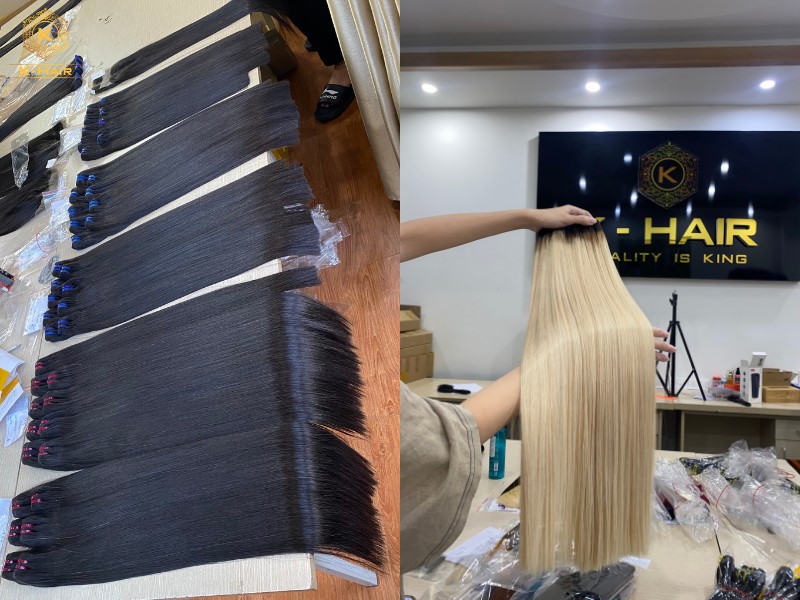
Indian hair factories serve a valuable niche. However, if your clients demand bone-straight textures or flawless platinum blonde bleaching, Indian hair – even temple-grade – will struggle to meet your product requirements. This is where Vietnamese hair factory changes the economics of your sourcing strategy.
- Bleach Capacity: High-grade Vietnamese virgin hair bleaches consistently to #613 without breaking—a result of single-donor sourcing from highland women whose hair has never been chemically treated.
- Texture & Softness: Vietnamese hair carries a naturally softer, straighter finish, eliminating the need for the chemical straightening processes required to make Indian hair “bone straight.”
- Lifespan: Vietnamese virgin hair averages 3–5 years. Indian temple hair averages 1.5–2.5 years.
- Tariff Landscape: As of early 2026, both India (~18%) and Vietnam (near a temporary 10% rate) face materially lower US duties than China’s higher layered tariffs—but rates are shifting quickly, so confirm current figures before locking in landed-cost projections.
The most profitable wholesale buyers carry both: Indian temple hair for natural wave/curl clients, and Vietnamese virgin hair to anchor their premium straight and colored extension lines.
FAQ — Indian Hair Factory Questions US Buyers Ask Most
Navigating the Indian hair market requires separating authentic temple sourcing from deceptive hair ball vendors. With 30 years of manufacturing experience guiding US salon owners through complex overseas supply chains, we know exactly what is on your mind. Before you wire any funds to Chennai or Delhi, here are the unfiltered answers to the most critical B2B sourcing questions about Indian Hair Factory.
What is the difference between raw, virgin, and Remy Indian hair?
Raw hair is single-donor, straight from the temple, never chemically processed. Virgin hair is unprocessed but may come from multiple donors. Remy hair has aligned cuticles but is often lightly processed. Non-Remy (hair ball) is collected from mixed sources and should be avoided for wholesale.
Where do the best Indian hair factories source their temple hair?
The two primary temple sourcing hubs are Tirupati (Andhra Pradesh) and Madurai (Tamil Nadu). Tirumala Tirupati alone collects an estimated 500–600 tonnes of tonsured hair per year, with roughly 30,000 devotees tonsured daily and around 600 barbers employed by the temple trust. Legitimate factories will provide procurement documentation upon request.
What is the MOQ for wholesale orders from an Indian hair factory?
Most verified Indian hair factories set a minimum order of 1 kg (approx. 10 bundles). Larger factories offer sample kits below this threshold for first-time buyers to verify quality before bulk commitments.
Is Indian hair tariff-free for US buyers in 2026?
No—this changed in early 2026. After the February 2026 US-India trade deal, India-origin hair carries roughly an 18% US tariff (reduced from a prior ~50%), and US tariff policy overall remains in flux following the February 20, 2026 Supreme Court ruling on IEEPA. India still compares favorably to China, but it is not duty-free. Always confirm the current Harmonized Tariff Schedule rate (HS codes 0501/6703/6704) before costing an order.
Conclusion
Sourcing from an authentic Indian hair factory offers excellent margins for natural curly and wavy textures – provided you secure genuine temple hair and actively avoid the non-Remy hair ball trap. However, as the 2026 global market forces US buyers to recalculate landed costs, diversifying your supply chain is more critical than ever.
While India dominates the high-volume curly segment, pairing your Indian inventory with premium, bone-straight virgin hair from a trusted K-Hair Factory ensures you capture every tier of the high-end salon market. Protect your brand reputation by verifying every supplier, demanding DGFT licenses, and never compromising on single-donor sourcing.
Ready to add bone-straight Vietnamese virgin hair to your catalog? Explore our Vietnamese Raw Hair Collection.
Ready to secure your 2026 supply chain?
Whether you’re building around Indian temple hair or Vietnamese virgin hair, contact K-Hair Factory directly for wholesale pricing, MOQ details, and free samples.