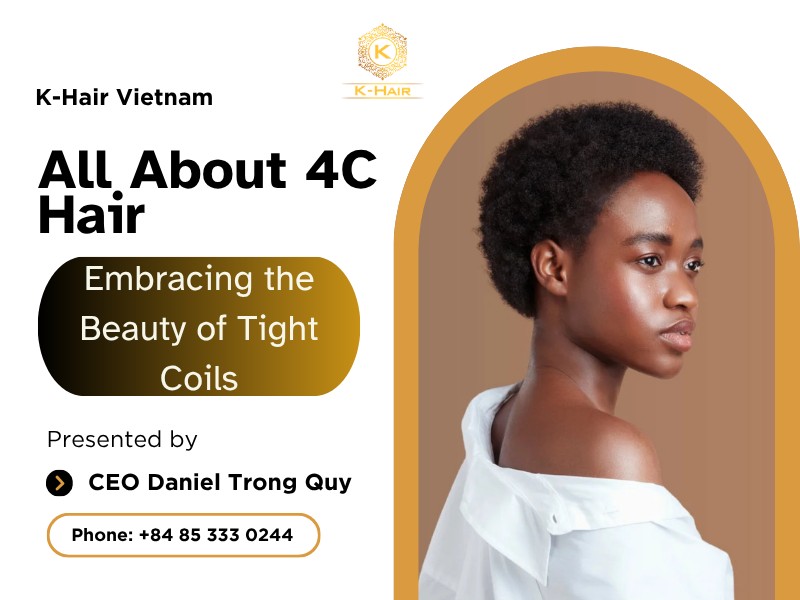
Nowadays, more and more men and women are reconnecting to their roots by showing appreciation toward their own natural hair. Among people with African descents, their iconic Afro-texture hair has also reemerged to popularity – celebrating the community’s unique and culturally-acclaimed image of beauty.
The full and dynamic hair that makes up most Afro hair we see today actually goes by another name – 4C hair. Among the Hair Typing system, this hair type belongs to the kinky hair family – together with its siblings 4A and 4B hair. Discover more about this iconic kinky hair category, unwrap more on what makes it as special as it is – through our article below.
1. What is 4C Hair?
By definition, 4C hair is categorized within the kinky hair family – ones with the densest curl patterns. And, the letter means that 4C hair would have the highest strand thickness among its siblings. Hence, generally speaking, 4C hair would definitely be the most densely-packed, coarsest kinky hair texture of all!
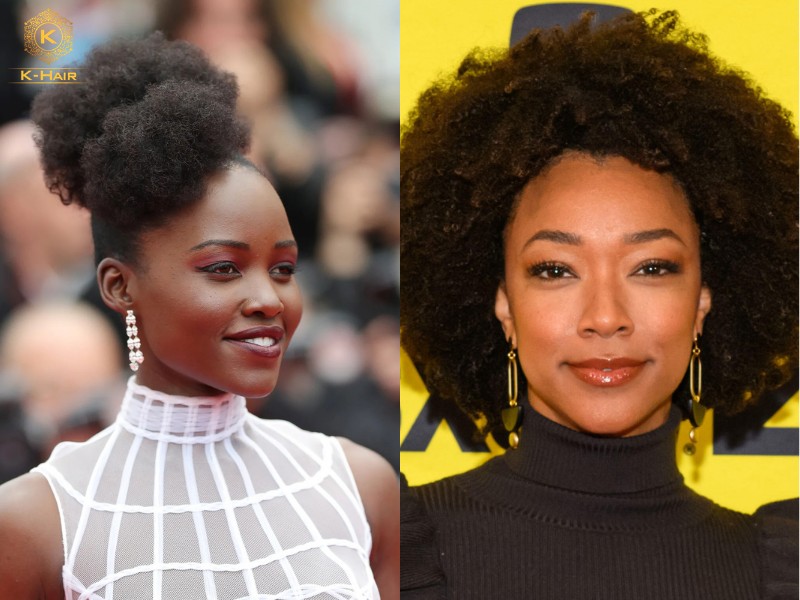
The iconic 4C hair is not as rare as most might assume, considering the revival of natural Afro-textured hair. Some famous public figures who have been embracing and celebrating this special hair type might include: Lupita Nyong’O, Sonequa Martin-Green, or Sasheer Zamata. So, if you ever feel like: “Hey, my hair looks just like theirs!” – there is a high chance that your hair also falls into the same category.
Curious about the other hair types included in this system? You can check out our article on the Hair Typing System.
2. Getting to Know 4C Hair Features
For most people, 4C hair is often associated with huge hair volume, puffy and frizzy hair look. However, these are not all there is to know about this hair category. In fact, if you pay a closer look into its appearance or hair behavior – you can actually discover many interesting features about this kinky hair type:
2.1. Appearance
First, in terms of appearance, 4C hair type can have a completely distinct and unique hair appeal – which can be described as follow:
- Curl patterns: If you take a closer look, you can see the Z-shape kinky pattern inside the volume, with extremely sharp angles and bends. But, in its normal stage, these spirals tend to be extremely compact, creating a cotton-like, textured look.
- Curl size: 4C hair has the smallest curl size out there! In fact, in most cases, 4C curls would be even smaller than a pen spring – the smallest size compared to all kinky, curly, wavy types in the typing system.
- Definition: The interesting thing about 4C hair is that, in its natural state, it is almost impossible to detect the hair’s natural patterns! Unlike other kinky hair types, there is little to no curl definition in 4C hair – due to the tiny curl size and extra tight formation.
- Shrinkage: For 4C hair, the degree of shrinkage is the highest, and the most intense. In fact, upon first impression, the observable length of the 4C hair is only 30-25% of its actual length – which means that up to 75% of the strand’s total length is completely compacted!

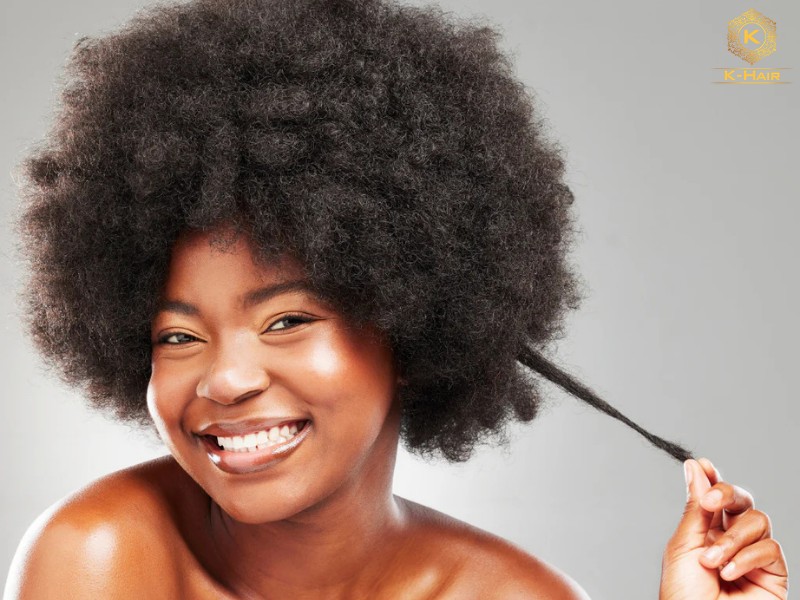
4C hair has a total hair shrinkage of over 75% - Volume: Being the kinkiest hair type also means that 4C hair is undoubtedly the most voluminous pattern compared to all the other categories. In fact, for 4C hair, volume is often the most noticeable trait, with fluffy hair that resembles a cloud-like, cotton-like and puffy appeal.
2.2. Behavior
In terms of behaviors and qualities, some signature features of 4C curls can include:
- Open cuticles: Having Z-shape curls with sharp angles means that 4C hair will be the most likely to have more raised cuticles and an overall higher hair porosity. This creates more openings for moisture to enter – but also escape just as easily – leading to poor moisture retention and a range of related issues.
- Dryness: One direct consequence of having raised cuticles is its extreme proneness to dehydration. In fact, the raised cuticles can not only expose the inner moisture, but also fail to grasp hydration provided through hair care. Over time, the strands become drier and drier, causing heightening breakage, tangles, and frizz.
- Prone to hair frizz: 4C hair is extremely porous, or in other words: “thirsty for water”. Hence, in high humidity, the hair strands will absorb as much moisture as possible → causing the strands to swell up, creating a voluminous but hard-to-manage mane.4C hair is extremely prone to hair frizz
4C hair is extremely prone to hair frizz - Possible tangles: The sharp hair kinks often make it extremely hard for the natural sebum to provide the moisture and lubrication needed for a sleeker look. And, with the raised cuticles, the hair strands are easier to get tangled up between each other → causing massive shedding if not managed carefully.
- Hard to maintain and style: Maintaining 4C hair is no easy task either, especially considering its typical curl pattern. Indeed, 4C hair is extremely hard to handle – considering its proneness to tangling alone. Furthermore, as the coily texture can be quick to gather build-up, choosing the right products is also another headache.
3. 3 BIGGEST Problems for 4C Hair
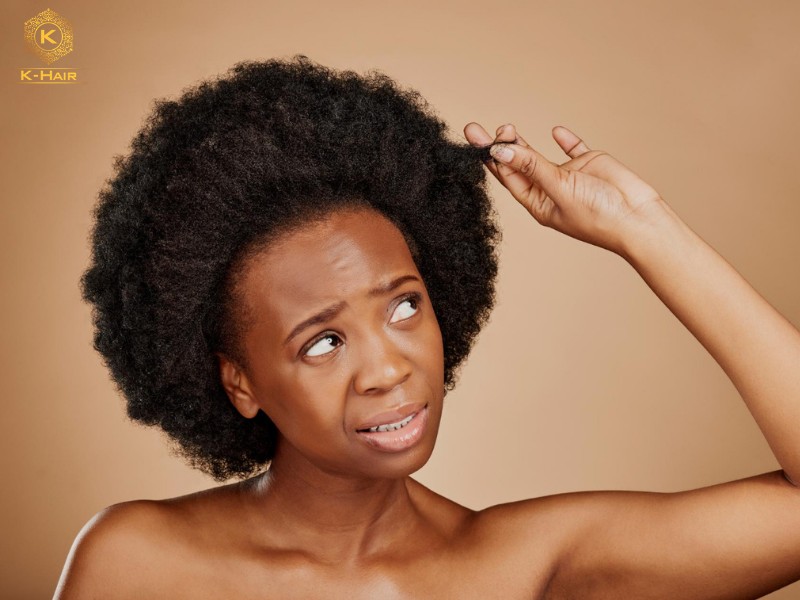
As lustrous and beautiful as it can get, 4C hair can be quite a demanding hair type – especially when it comes to maintenance. Indeed, keeping these tight hair kinks healthy would mean that you have to put more time and effort into the process, as most of these issues are rooted from inherent features.
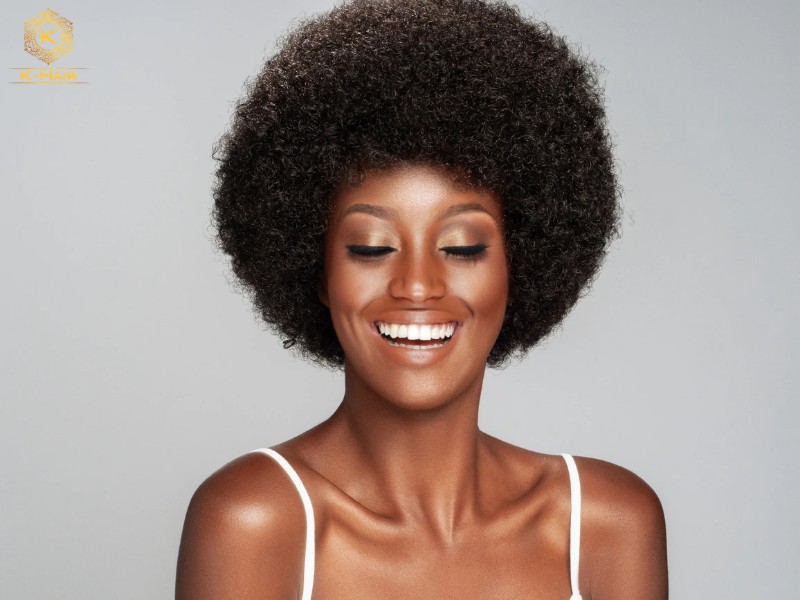
However, to properly give the strands what they need – without altering its natural beauty, you would only have to focus on three main issues below:
3.1. Moisture Retention Failure
The lack of moisture is often the biggest problem for anyone born with 4C. Indeed, these tight curls can not only make it difficult for the strands to receive moisture from sebum and hair care products, but also create lifted cuticles – causing tangles and frizz.
The root of this problem actually starts at the cuticles themselves. Hence, sealing these cuticles and providing moisture should be your main focus:
- If for other looser hair types, the LOC method is optional, for 4C hair, this method is non-negotiable. The leave-in for softening and better absorption, the cream for deeper hydration, and the oil for better moisture retention.
- The best washing frequency for 4C hair is from 7-10 days. And, between these washes, you should also incorporate deep conditioning steps with heavy products to restore moisture.
- Overusing clarifying shampoo is a huge mistake – as it can strip away vital nutrients and disrupt the natural oil distribution. Instead, you should consider switching to co-wash entirely for a better moisture retention result.
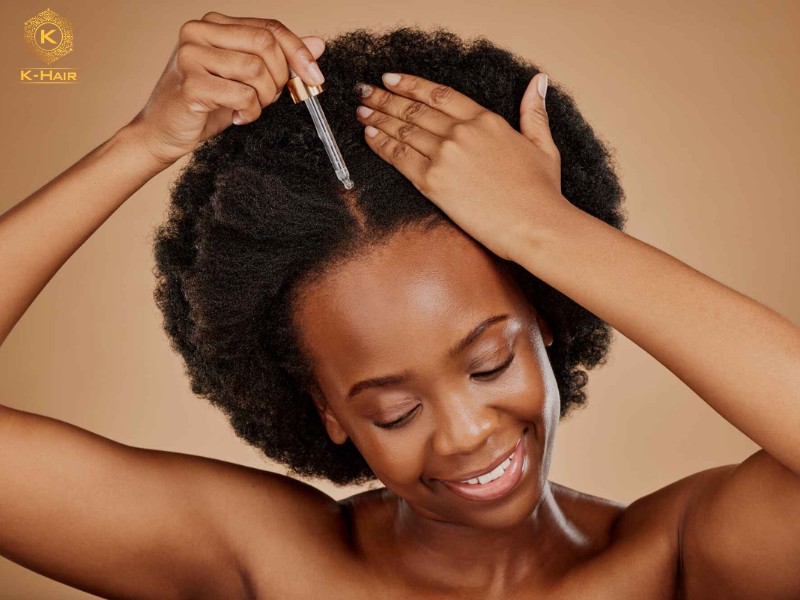
- The most important part of the process is sealing the moisture inside – you can achieve this by rinsing the strand in cold water, or using oil to coat and lock the nutrients inside.
Coating your hair with oil is a great way to lock moisture
3.2. Breakage During Detangling
Due to being easily subjected to tangles, detangling and brushing soon became an essential for 4C hair care. However, because of the drier hair ends and overall fragile strands, breakage during detangling has made itself a major problem.
To truly solve the situation, make sure to not only eliminate breakage, but also detangle your hair the right way:
- To minimize breakage, it is best to handle the strands only when they are damp and thoroughly conditioned. The strands are now softened and smoothened out – hence, they won’t cause many shedding when detangled.
- Too much styling can cause even more stress – especially heat and chemical styling. Instead of these manipulation methods, you can consider switching to protective styles like twists, braids, or using wigs.
- Friction is often the leading cause of tangled hair. Make sure to keep this at bay by:
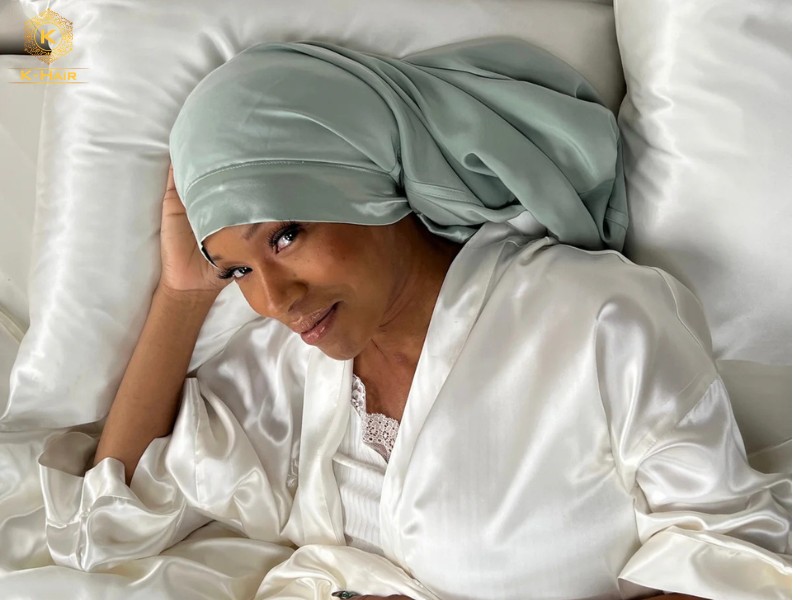
- Wrapping your hair in protective styling, in a silk bonnet.
- Change bedding materials to silk and satin.
Make sure to minimize friction by using a bonnet and changing your bedding materials
3.3. Rough & Hard Strand
As the “C” in 4C might suggest, this hair type has one of the thickest and coarsest strand textures. This, combined with uncontrolled frizz can lead to unmanageable curls that are unable to be styled without taking damage.
However, you can still soften the strands out and style the hair properly, using several methods:
- One reason why your strands stay hard during styling is because you are styling on dry hair – a huge mistake. For your next section, make sure to apply the styling products on damp hair only!
- If your hair still feels rough during styling, feel free to reapply leave-ins or sprays to soften the strands and give it more slip.
- The process can also start inside out. You can also provide the moisture, nutrients needed for softer strands by eating more protein-rich, beneficial food, and drinking the right amount of water for hydration.
Get hydrated so that your strands stay healthy too

4. FAQs about 4C Hair
Here are some frequently asked questions about 4C hair:
4.1. What is 4C hair?
4C hair is the tightest coily hair type, known for its dense texture and very compact curl pattern. It may not always show clear definition, but it has incredible volume and versatility when properly cared for.
4.2. Does 4C hair have a curl pattern?
Yes, it definitely does. The curls are just extremely tight and closely packed, so they’re not always visible unless the hair is well-moisturized or styled using techniques like twist-outs or finger coils.
4.3. Why does 4C hair feel so dry?
Because of its tight structure, natural oils from the scalp struggle to travel down the strands. This makes moisture retention more difficult, so the hair can feel dry even shortly after moisturizing.
4.4. How often should I wash 4C hair?
Most people find that washing every 1–2 weeks works best. This helps keep the scalp clean without stripping too much moisture from the hair, which is especially important for 4C textures.
4.5. What are the best styles for 4C hair?
Styles like twist-outs, braid-outs, and protective styles are great options. They not only help with definition but also reduce daily manipulation, which keeps your hair healthier in the long run.
5. Conclusion
With the information shared in this article, we hope that we have provided everything you wish to learn about 4C hair. All in all, this hair type is best recognized as the kinkiest, tightest and most densely-textured hair type of all. These features also lead to 4C hair having poor moisture retention, frequent breakage and coarse, unruly strands.
Wigs are a major part of the 4C hair maintenance routine – mostly used as a highly effective protection piece. In fact, for those struggling with highly damaged kinky hair, these units can help shield your strands from external factors, allowing the curls to recover underneath its cap.