
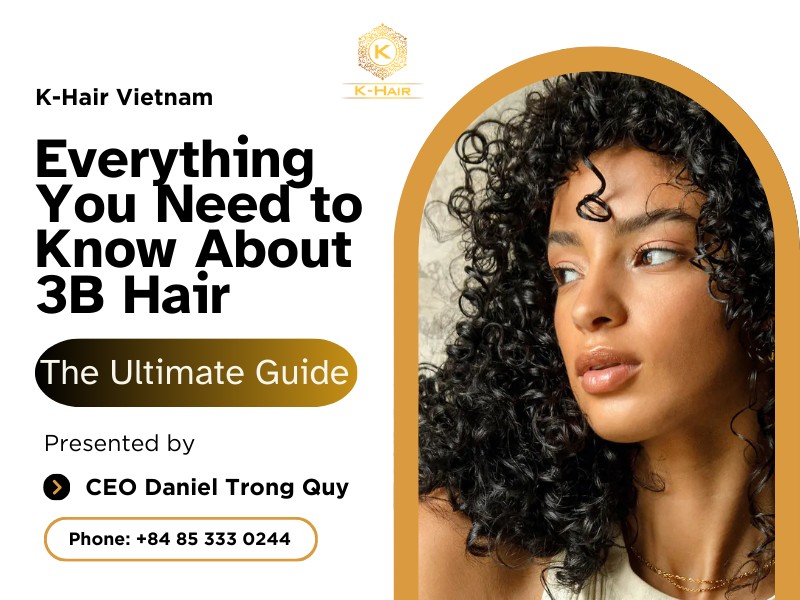
As we are now growing to be more inclusive, our hair beauty standards soon moved on from one generalized image to celebrating different, unique hair types. In such lighting, curly, kinky hair types are now finally getting the attention they deserve, including the voluminous, dynamic 3B hair type. However, despite the curiosity around it, there is still a great deal of information left unknown about this exotic hair type.
Worry not! That is exactly why we are here. As experts, we are more than able to give you all the information needed: its features, maintenance tips,… to help you navigate and get to know your natural hair better.
1. What is 3B hair?
Let’s go over the definition first. According to the Andre Walker hair typing system, 3B hair belongs to the curly hair category. And, the “B” in its name suggests medium strand thickness and pattern distribution. Indeed, compared to the loose 3A hair, 3B strands would feature more volume, with springier, smaller curls across the shafts. Hence, it is also known as the thicker and tighter version of the 3A curls.
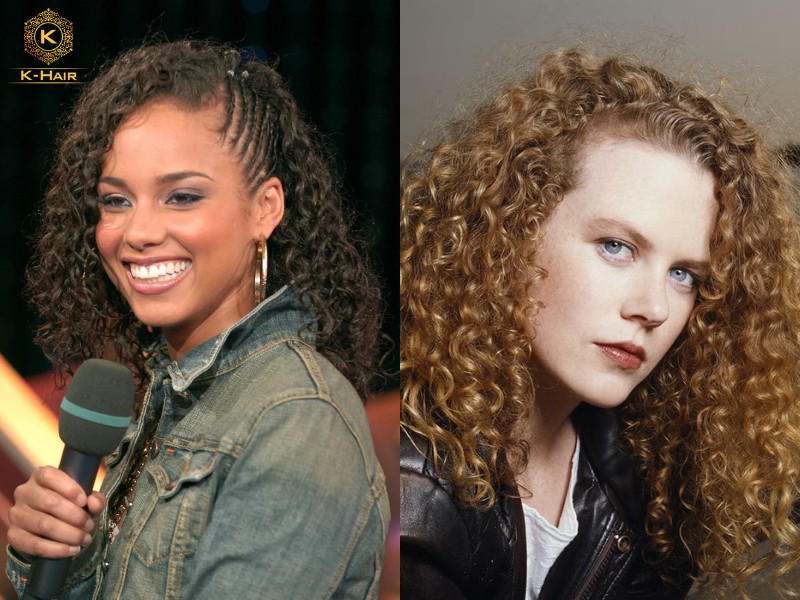
3B hair might have some familiar faces that you might have already seen on the big screen. Some of the celebrity examples with these lustrous curls are – the famous American songbird, and Nicole Kidman – the award-winning actress in her earlier acting career.
2. Getting to Know The Key Characteristics of 3B Hair
Being placed in the middle range of the curly hair category, 3B hair might have a lot in common with the other curly hair types. However, as distinct as it is, 3B hair still possesses a wide range of unique features, such as its curl patterns, size, and textures,…
2.1. Its Physical Traits
Upon close visual inspection, we can easily spot some of its distinct physical features:
- Curl patterns: The hair often features spring-like, bouncy curls, identical to layers of spirals, stemming directly from the scalp to the ends. On top of that, these curls tend to be much more uniformed, creating visible patterns throughout the lengths.
- Curl size: The tighter the curls, the smaller they get. Indeed, for 3B hair, the average curl circumference and width would only be similar to that of a Sharpie.
- Textures: Regarding thickness and coarseness, 3B hair would often sit in the middle range – with strands thicker than that of 3A hair, but thinner than 3C hair.
- Volume: As the curls are tighter, and denser, the overall hair body is greatly increased compared to the loose 3A curly hair. And, the thickness of the individual hair strands also contribute to the hair’s thick and full look.
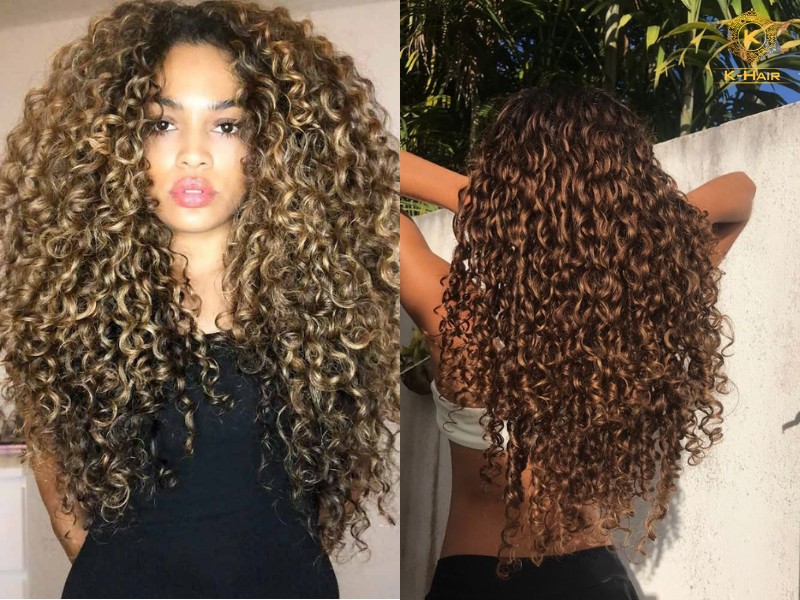
- Shrinkage: Most of the time, the dry 3B strands tend to shrink inward due to the natural tightly-pack pattern. Hence, the curly hair we often see is only 75% of its original length, and only showcases its true length once thoroughly washed. Bouncy, elastic curls with full volume and moderate shrinkage is the typical traits of 3B hair

Bouncy, elastic curls with full volume and moderate shrinkage is the typical traits of 3B hair
2.2 What Are Its Innate Traits?
Answering “What is 3B hair?” – its texture and patterns also resulted in its having some of the most unique inherent traits, such as:
- Cuticle layer: Having tightly packed curls also means that the hair would most likely have more lifted cuticles, especially at the hair bends. This condition can further expose the inner nutrients, creating huge gaps between cuticle scales → causing poor moisture retention and high hair porosity.
- Dryness-prone: Due to the natural cuticle layer, most moisture applied can be quick to penetrate inside of the hair shafts. However, it is also quick to slip out of the open gaps between the scales. This poor retention ability makes 3B strands easy victims of dehydration – further worsen the whole situation with frizz.
- Moderate frizz: Due to having more lifted cuticles, 3B hair is also more prone to frizz. This means that when the strands meet high humidity, the surrounding water vapor can easily penetrate and cause the curls to swell and become frizzy.
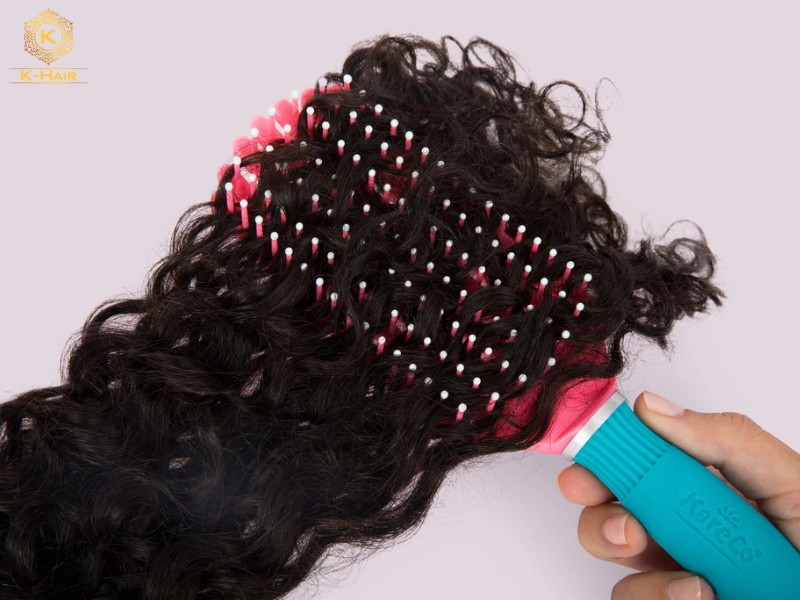
- Tangles: One major drawback of 3B hair is that no matter how uniform the curls can get, they can still get tangled and create stubborn hair knots. Additionally, the open cuticles also make the strands more easily-tangled, making it slightly harder to maintain.
3B hair can also get easily tangled, especially at the ends
Learn more about the classification system itself, and dig deeper into differen hair classes using our article – Hair Typing System.
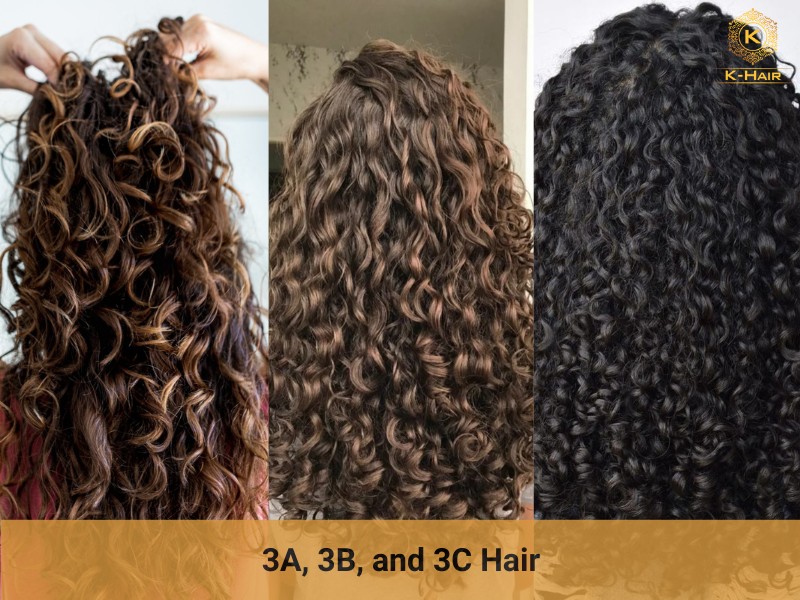
3. What are The Differences between 3A vs 3B vs 3C Hair?
Being in the same curly hair family, 3A, 3B and 3C hair cannot help but share a lot of common traits with each other. In order to avoid confusion, let put them up for comparison:
| 3A hair | 3B hair | 3C hair | |
| Curl patterns | Feature large, loose ringlets with mixed patterns | Feature spiral ringlets with more consistency in its patterns | Feature the tightest, most densely-packed curls – running from the roots to ends |
| Curl size | The curls are often the size of a sidewalk chalk or a wine cork. | The curls are often the size of a large market or a board pen. | The curls are as small as pencils or straws |
| Textures | The hair strands tend to be more lightweight, softer, thinner and finer | The strands tend to be slightly coarser and thicker | 3C hair strands is the coarsest and thickest among the three |
| Shrinkage | Minimal, shrink up a few inches when dried or diffused. | Moderate shrinkage: 20% of the original hair length | The most shrinkage:
25-40% of the original hair lengths |
| Volume | The least volume | Medium volume | The most thickness |
| Maintenance needs | The least prone to dryness & frizz → The easiest to manage | Slightly more prone to dryness & frizz → Quite demanding in terms of maintenance | The most likely to get dried up and frizzy → The most high-maintenance hair type |
| Styling ability | Demands less effort to be styled. However, cannot hold curls for as long | Need more effort to style – due to having tighter curls. However, can hold style for an extremely long time | The least versatile, but has the most style-holding ability |
4. 3 BIGGEST Problems for 3B Hair
Much like any other hair types, the bouncy curls of 3B hair also come with their own perks and drawbacks. In fact, regarding hair maintenance, those with 3B hair must often pay closer attention to 3 major issues: frizz, moisture loss, tangling – as they are often the most common challenges for these 3B curls.
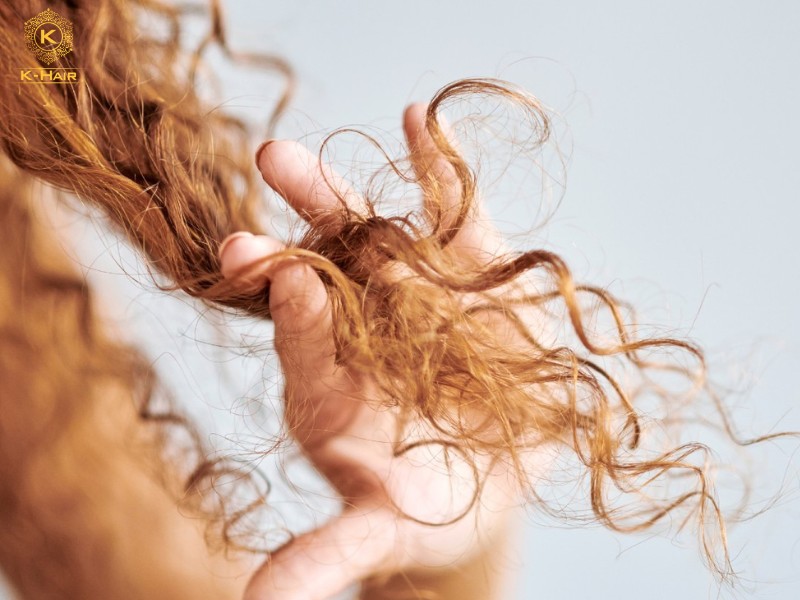
4.1. Moisture loss
Having high porosity also means that 3B hair cannot hold moisture as effective as the other hair types. Hence, in most cases, if not properly manipulated, these strands would not be able to take in any moisture at all – causing dehydration and fragility across strands.
To improve this situation, and provide more moisture to the curls, you can:
- Use the LOC or LCO method – layering your hair with 3 types of products:
- L (Liquid): water or leave-in conditioner for moisture
- O (Oil): seals moisture inside of the shafts
- C (Cream): adds softness and definition
- Using the right washing products also matters: make sure to avoid harsh cleansing chemicals like sulfate, alcohol in your shampoo.
- Heat styling is to be avoided for 3B hair – you should turn to hydrating curl creams, diffuse on low heat, use a heat protectant, or avoid straightening your curls altogether.
- Beside the standard conditioning steps, you can also add a deep moisturizing routine weekly, or use leave-in spray regularly to keep the curls hydrated.
Moisture loss is one of the popular problem for 3B curls
4.2. Significant frizz
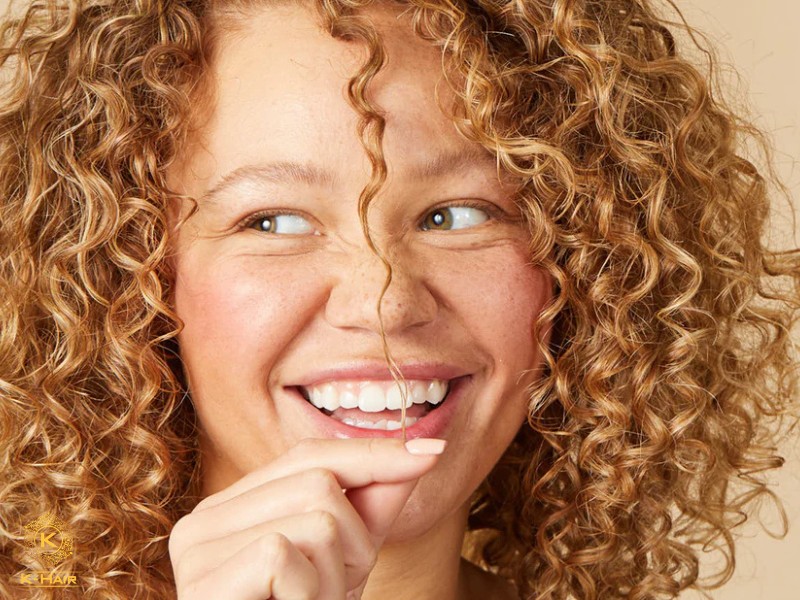
As previously mentioned, frizz proneness is one of the built-in features of 3B hair. Although this hair frizz can enhance volume, it can also create more hair problems – making it harder and harder to maintain.
To solve this issue, you can consider the following suggestions:
- Frizz often roots from hair moisture loss and dehydration, therefore, make sure to follow the methods above to keep your hair moisturized and lubricated.
- Make sure to avoid friction at all costs: use a microfiber, crunch instead of rub, sleep on silk and satin, or wrap your hair in a bonnet at night.
- Styling on wet hair is also a great way to make it easier to create the desired results, without causing as much friction as styling on dry hair.
- Touching your hair should be limited, especially when the hair is fully dry or is drying. Instead, you should just let the curls air dry on their own, or diffuse them lightly.
- Humidity is one leading cause of frizz. Therefore, you should include anti-humidity gels or sprays into your getting-ready routine.
You can minimize hair frizz by minimizing the effect of friction, moisture loss and humidity
4.3. Tangling
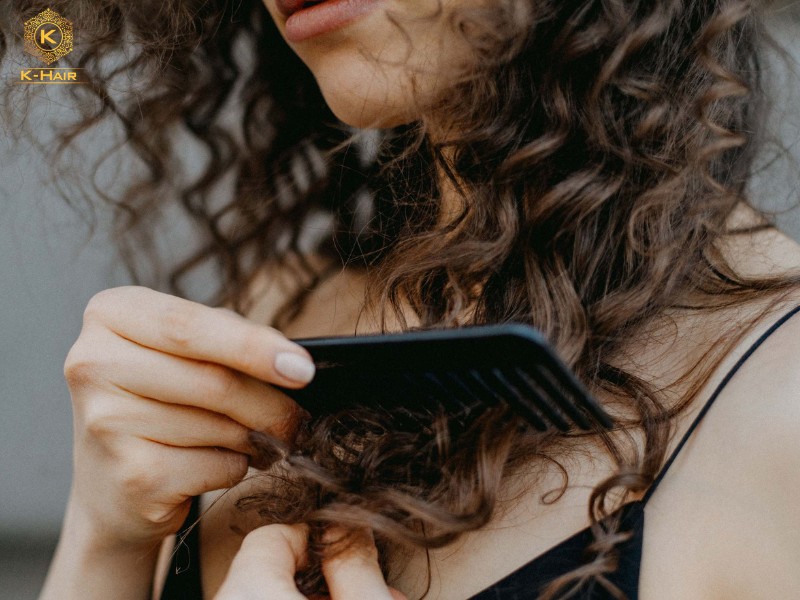
Dryness can also result in tangles – especially at the drier hair ends. Leaving these tangles neglected, and they can develop into large knottings that cost you even more discomfort. In many cases, you would have to cut down the entire hair section itself to get rid of these knots.
Make sure to solve this problem before too late, using these methods:
- To properly detangle 3B curls, make sure to do it while the hair is fully damp and conditioned only.
- Enhancing curl definition and keeping them clumped with each other is also a great way to keep away tangles – you can achieve this by using curl cream, or scrunching your hair.
- To keep tangles at bay, you can also turn to braiding, twisting at night, or use other gentle stretching styles like loose buns, claw clip twists,…
Detangling is also an important part of the maintenance
5. FAQs about 3B Hair
Here are some frequently asked questions about 3B hair.
5.1. How can you tell if you have 3B hair?
You likely have 3B hair if your hair:
- Forms well-defined spiral curls
- Has noticeable shrinkage
- Feels dense and voluminous
- Can become frizzy if not moisturized
5.2. Why is 3B hair so frizzy?
3B hair gets frizzy because:
- Natural oils don’t travel easily down curls
- The hair cuticle is more raised
- It reacts strongly to humidity
5.3. How often should you wash 3B hair?
Most people with 3B hair should wash their hair 1–3 times per week, depending on dryness and product buildup.
5.4. Can 3B hair be straightened?
Yes, but frequent heat styling can cause damage and loosen the curl pattern. Always use a heat protectant and avoid doing it too often.
5.5. How do you define 3B curls better?
- Apply products on wet hair
- Use scrunching or finger coiling
- Layer leave-in + cream + gel
- Diffuse or air-dry without touching
6. Conclusion
With all the information provided in this article, we sure hope that we have been able to provide you all the information you need. From hair features, distinctions, to maintenance needs, these are all crucial knowledge necessary to properly care for and embrace the lustrous 3B curls.
However, if you ever want to switch up your style, it’s important to do so without damaging your strands. Wearing wigs is a great solution, as it allows you to change your look effortlessly without relying on heat styling. And, where to find the best wigs you might ask? K-Hair would proudly recommend ourselves as the perfect source – providing only the best of quality Vietnamese hair wigs, with multiple colors, styles for choosing.

