The hair industry is a dogs-eat-dogs world – everyone is out to get the largest share of the cake and attracting more and more sales for themselves. And, with the growing pace of the market, the number of competition will only get bigger and bigger. In such a case, your hair business marketing strategies will be the deciding factor whether you can compete and actually succeed or not.
Understanding the struggle, especially for inexperienced hair startups, as a hair business expert myself, I have gathered all the tips and strategies used by many in the market. In this article, you will find all the answers you need on how to start a hair business and aim it for success – just like how you dreamed it!
1. Why You Need Strategic Marketing for Your Hair Brand in 2026
The hair industry is not for the weak. In 2025, in the US hair market alone – there has been more than 1 million hair salon businesses, with a market size of around $60 billion. To dominate the market and ensure your value doesn’t go unnoticed – using the right hair business marketing strategies is the only way.
In reality, not even the best, most premium quality hair can reach its clients without you convincing and letting them know about it – that’s the ultimate goal of marketing. With the right marketing strategies, you can introduce your brand and its products to more buyers, expanding your market reach.

The right hair business marketing strategies will do much more than just spreading your names around. By consistently increasing your visibility, you transform your brand into a credible, reputable industry player, snatching potential customers from your competitors. And, by backing marketing with quality – one-time buyers will become lifelong advocates.
2. Phase 1: Building a Digital Presence
Given the digital age that we are living in, social media and digital platforms are more than just simple tools to enhance your reach, but also the foundation of your digital storefront. And, before actually spending the big bucks on ads and KOLs collabs – make sure to establish your authority with these E-commerce platforms first.
2.1. How To Optimize your E-commerce Sites
Nowadays, many of the purchases or booking is done only. Hence, ensuring a smooth and seamless website, social media operation is among the crucial, foundation hair business marketing strategies out there:
- As previously mentioned, most of the booking, purchases – precisely 80% – are done online on mobile phones. Make sure to use tools like Google PageSpeed Insights to manage your site loading speed and optimize your customers’ experience.
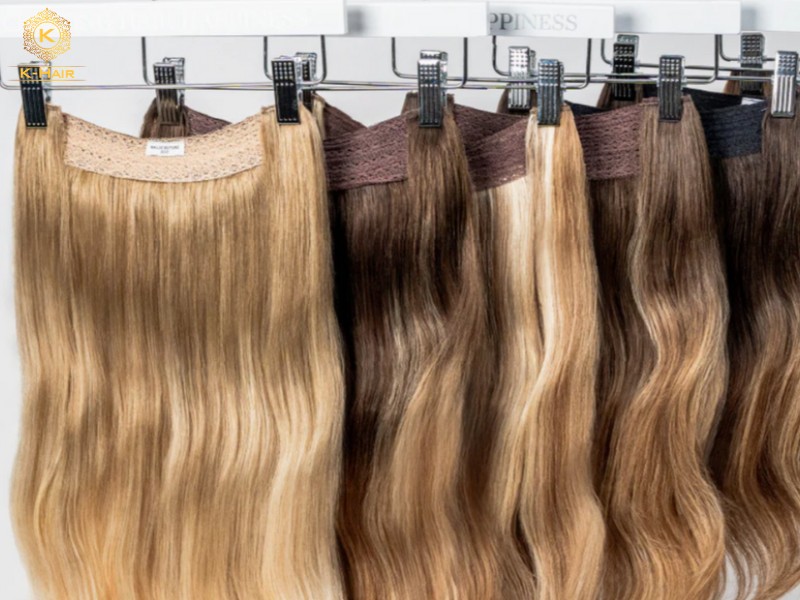
- Visual transparency is also a must-have. Besides the basics – clean, high-quality photos, make sure to include close-ups, before-and-after, actual hair movement to better showcase what your business can offer.
- The more your customers have to fill out, the more they are prone to lose interest. To shorten the process – integrate Shop Pay, Apple Pay or Google Pay, or “Buy Now, Pay Later” options to your services, products.
Expert tips: To add the cherry to the cake, you can also add a “Verified Buyer” widget that shows recent purchases. This creates FOMO and social proof simultaneously.

2.2. Winning Local SEO Recognition
One great way to drive in more “ready-to-buy” customers is to assert your dominance within your local area – establishing yourself as the BEST:
- Make sure to maintain your activeness as a hair business – and before uploading new contents, add locations and hashtags so that Google can verify that you are an actual local authority of that area.
- Use phrases like “Top-rated wholesale hair supplier in [Your City]” or “Premium HD lace wigs near [Local Landmark].”
- Install a “Local Pickup” option on your website, for custom unit makers and hair resellers. Even if you are primarily online, having a physical “Pickup” option signals to Google that you have a local footprint, which can significantly boost your ranking for “near me” searches.

Establish your authority as a local hair expert by using local SEO
3. Phase 2: Content & Social Commerce
Your content planning is the heart of your brand image and hair business marketing strategies. Because the hair industry moves at the speed of a TikTok scroll, staying relevant requires a ‘social-first’ mindset that is both adaptive and aggressively trend-forward:
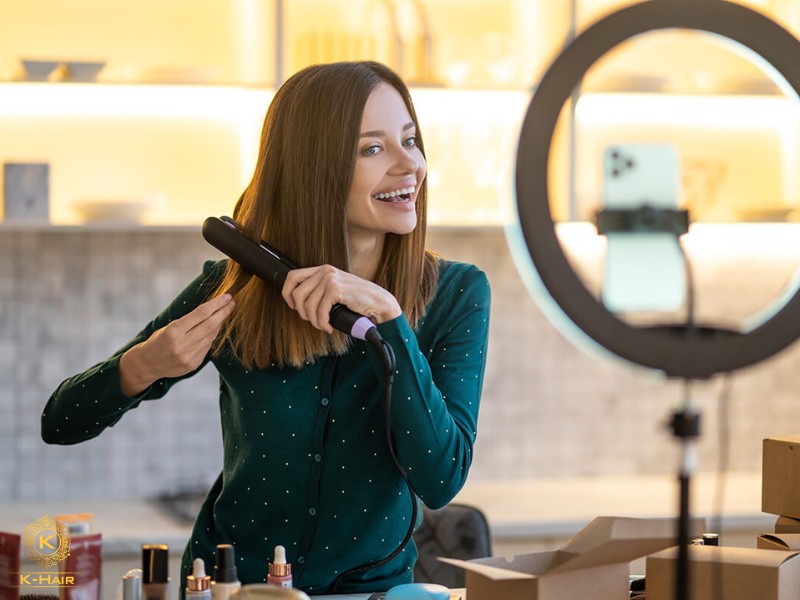
- Take Advantage of Short-form videos: Short-form videos are not only trending – but the perfect form of product presentation. They can show the visual appeal of the hair, allowing clear and transparent shots within as much as 30 seconds. And what’s more is that, this short-form is extremely algorithm-friendly – reaching thousands of potential customers with just one reel.
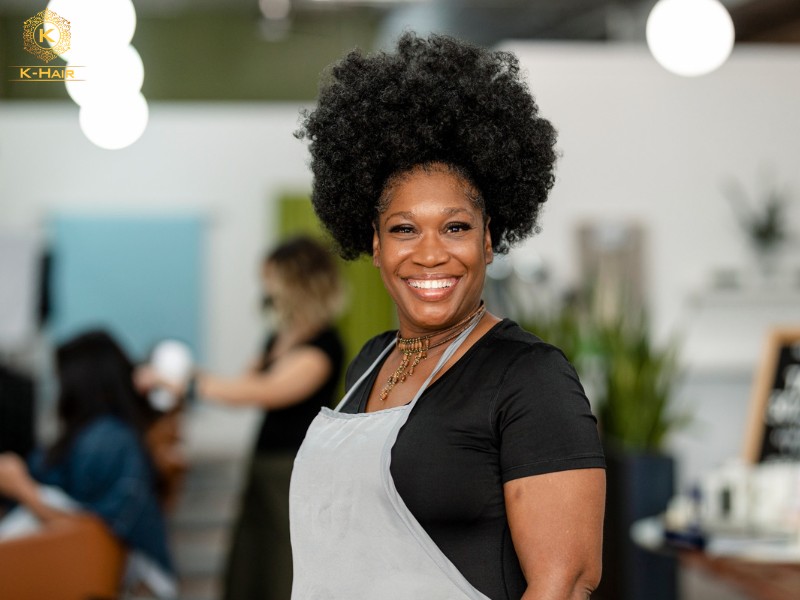
- Encouraging User-generated contents: Encourage your own satisfied customers to support your business with reviews, videos or selfies. These UGCs (User-Generated Content) can have much more impact than your regular product shoot. You can do this by:
- Hosting a competition among your buyers – encouraging reviews, testimonials, and tagging your brand,… can generate user-generated contents.
- Offering discounts and deals to encourage referrals, reviews, feedback videos.
- The Power of Educational Content: Create content that answers the questions customers are afraid to ask: “How do I stop my nape from matting?” or “How to install a wig in 10 minutes?” When you solve their problems for free, you are building your credibility – not only as a hair business, but as an expert yourself.
Encourage your own satisfied customers to support your business with reviews, videos or selfies

4. Phase 3: Influencer & Community Marketing
Having done everything in the book but no real results? Maybe it’s time to bring out the big guns – influencer and community marketing. In fact, these methods are one of the most effective hair business marketing strategies – not only attracting sales but also building your authority brick by brick:
- Partner With Influencers: Collabing with the right influencers can be the best thing you do for your business – exposing your brand and increasing your credibility with their image. Consider partnering with micro-influencers who specialize in “Get Ready With Me” (GRWM) or hair transformation content.
- Join Events: Events like hair trade fairs, educational workshops provide a great platform for your brand to get exposed to local hair communities. On top of that, as a businessperson, you can also gain more beneficial relations with people in the same industry, opening up more collaboration opportunities.
- Build Communities: Don’t stop at just selling hair – create a community to spread your value. Use Facebook groups, Instagram communities to give your VIPs early access to discounts, as well as provide your customers to share their experience. This level of engagement doesn’t just mean loyalty – but also an organic ‘reputation engine’ that does the marketing for you.
Collabing with the right influencers can be the best thing you do for your business
5. Phase 4: Customer Retention & Automation
Now that you have succeeded in driving in a desirable number of clients to your door, the next and important step is how to attract these customers into purchasing. After all, the ultimate goal of hair business marketing strategies is still to attract sales and profits:
- Discounts/Sales: One of the most universally-used marketing methods there is – applying discounts can easily create financial incentives that not many customers can ignore. In many cases, you can use this to quickly get rid of non-moving stock, or draw in more customers during your grand opening, seasonal sales,…
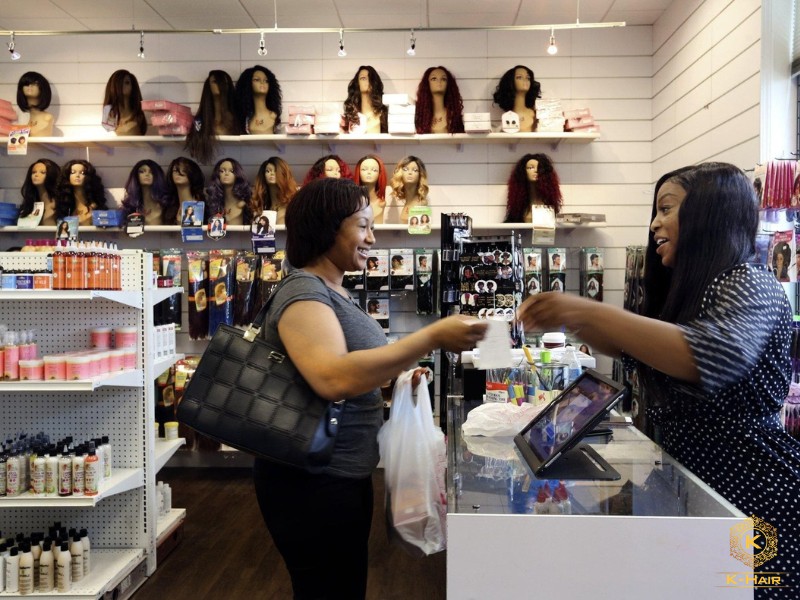
- Loyalty Programs: To better retain customers, reward revisiting customers – a loyalty program consisting of exclusive discounts, packages can be applied. By doing this, you can ensure that your loyal customers feel appreciated, and encourage one-off customers to become revisiting buyers themselves.
- Gamify Purchase Frequency: Instead of the usual discounts, create tiers (Bronze, Silver, Gold,…) with different levels of discounts, gift cards,… This can make experience more interesting, and create a sense of goals or achievement with every purchase.
- Automation: SMS are highly effective as a tool for automated customer retention, with as much as 98% open rates. For example: Abandoned Cart SMS to recover lost sales and Post-Purchase sequences to educate customers on hair care. For dormant clients, trigger 90-day “Win-back” campaigns to reactivate interest.
Expert tips: In the US, the “Post-Purchase Hair Care” email is actually one of the best ways to prevent “chargebacks” or complaints about hair quality, because it proves you gave them the instructions to succeed!
6. FAQs About Hair Business Marketing Strategies
Here are some frequently asked questions about hair business marketing strategies:
6.1 Is social media enough to sustain long-term growth?
Social media is essential, but it should not be your only channel. After all, algorithms change, trends evolve, and platforms can become too crowded with competitions. To build stability, hair businesses should also invest in:
- SMS marketing
- Website SEO
- Reviews and referrals
6.2 Is influencer marketing worth it for hair businesses?
Influencer marketing can be highly effective when approached strategically. In fact, micro-influencers often provide better engagement and conversion rates than larger creators because their audiences tend to trust them more. Performance-based collaborations, such as affiliate commissions, can also reduce upfront risk.
The key is alignment, the influencer’s audience should closely match your target customer.
6.3 How long does it take to see results from marketing efforts?
The timeline depends on the hair business marketing strategies used:
- Paid advertising can generate traffic relatively quickly.
- Organic content and SEO typically require several months to build momentum.
- Referral and word-of-mouth marketing grows steadily but provides long-term benefits.
Consistency and clear positioning are usually more important than speed.
6.4 What are common marketing mistakes hair businesses make?
Some of the most common mistakes include:
- Inconsistent branding: When visuals, tone, and messaging vary across platforms, it weakens brand recognition and trust.
- No clearly defined target audience: Trying to appeal to everyone often results in connecting with no one.
- Over-reliance on discounts: Constant promotions may drive short-term sales but can damage perceived value in the long run.
- Neglecting customer retention: Focusing only on attracting new clients while ignoring existing ones limits sustainable growth.
- Publishing content without a clear strategy: Posting regularly is not enough; content should support defined business goals and brand positioning.
6.5 How can a hair business stand out in a saturated market?
Differentiation starts with clarity. Indeed, rather than trying to serve everyone, you should:
- Target a specific niche
- Develop a distinct visual identity
- Focus on a signature service or product line
- Communicate a clear value proposition
7. Conclusion
Success in the hair industry doesn’t happen overnight, it’s built on effective hair business marketing strategies and a foundation of uncompromising product quality. We hope this guide has provided you with the actionable insights needed to elevate your brand and reach your target audience in the future.
At K-Hair, we believe that doing business is about more than just transactions; it’s about long-term commitment. We don’t just want to be your wholesale hair supplier – we aim to be your strategic partner and a supportive friend who stands by you in this competitive market.
Your success is our success.
Ready to take the next step?
- Need more guidance? Check out our ultimate master guide on How to Start a Hair Business for a complete step-by-step roadmap.
- Ready to source premium hair? [Contact our experts today] through hotline: +84 85 333 0244 or visit our Facebook: K-Hair Vietnam Factory to get the latest wholesale price list and start building your brand with confidence!