Your clients ask for a middle part on Monday and a deep side part on Friday, yet your shelf only holds pre-parted pieces. That gap is where a free part closure earns its place in a wholesale catalog. It lets the wearer place the part wherever the look calls for it, without buying a second unit. This guide covers types, specs, pricing, and quality checks so you can order with fewer returns.
What Is a Free Part Closure?
Before comparing specs, it helps to define the term, because many buyers still confuse this piece with a lace frontal.
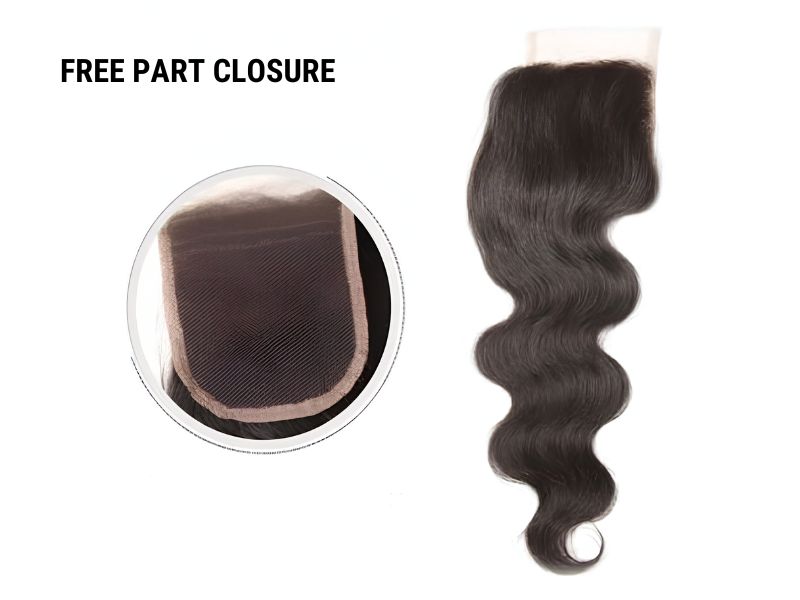
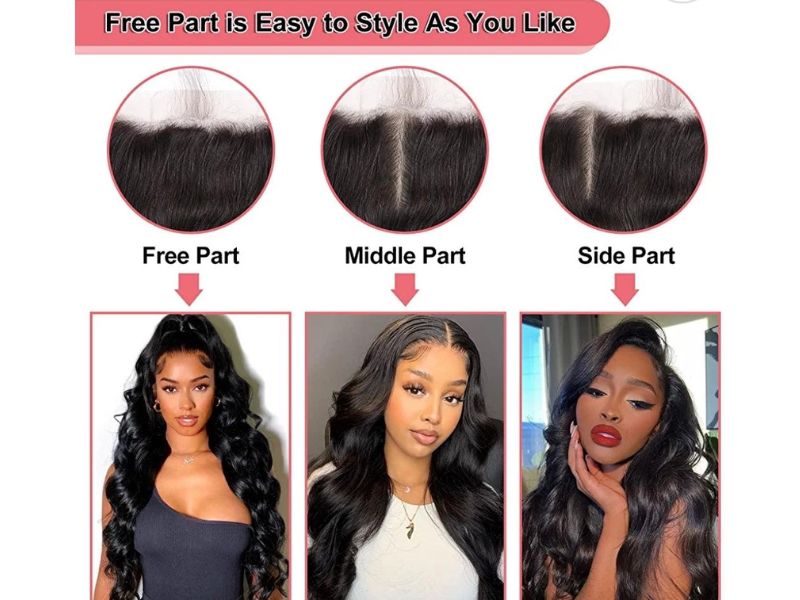
A free part closure is a hairpiece with a lace base where the hair is ventilated without a permanent, pre-made part. It is a small lace patch that closes the top of a sew-in or finishes a closure wig. The wearer can create a middle part, a side part, a zigzag part, or sweep the hair back with no part at all. Most versions come as a 4×4-inch or 5×5-inch square (about 10×10 cm or 13×13 cm), hand-tied onto Swiss lace or a similar fine lace base.
The lace mimics the scalp, so the part line reads as natural skin instead of a stitched track. It also protects the wearer’s own hair from heat and breakage, because the natural hair stays braided down under the install. For a wholesale buyer, one unit covers several looks, which cuts the number of variants on the shelf.
Lace quality shapes how convincing the result looks. Swiss lace is fine and blends with most skin tones, while French lace is slightly thicker and sturdier. A few versions use a silk base instead, which hides the knots but feels thicker on the head. Ventilation, the process of tying each strand into the lace by hand, then decides how natural the part line appears.
Here are the key facts at a glance:
- Base: hand-tied lace, usually Swiss lace; silk base is less common
- Common sizes: 4×4 and 5×5 inches
- Part line: none pre-set, so the wearer decides
- Main trade-off: the part needs training to hold its shape
→ Still mixing up closures and frontals? Read our guide: Frontal vs Closure Wigs
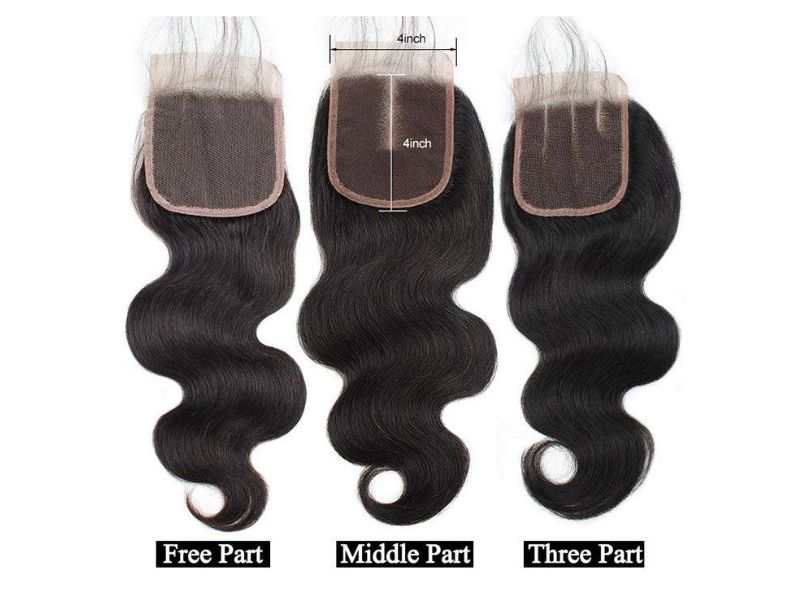
Free Part Closure vs Middle Part and Three Part Closure
Once the definition is clear, the next question is how this piece compares with pre-parted options, since that choice drives your inventory mix.
| Criteria | Free Part | Middle Part | Three Part |
|---|---|---|---|
| Styling flexibility | Part anywhere on the lace | Fixed center line | Left, center, or right only |
| Install speed | Slower, part needs setting | Faster | Fast |
| Part retention | Needs training after washing | Holds the set part | Holds the set parts |
| Install risk | Part can be re-set if the piece shifts | A shifted install makes the line look off-center | Same risk across three set lines |
| Scalp realism | Natural, no fixed line | Natural at the center | Natural at three lines |
| Price position | Similar to other part styles | Similar | Similar |
| Best for | Clients who vary their style | Beginners and low-maintenance routines | Clients who want limited variety |
The table shows the core trade-off in a few lines. This closure style gives the widest styling range and the most natural scalp look. Its downside is that the wearer must set the part with water and a tail comb or light heat, and the part may need re-training after washing.
Middle part closures install faster and keep one clean center line, which suits beginners and sleek straight or bob styles. They lock the wearer into a single look, and a slightly shifted install makes the off-center line obvious. Three-part closures let the wearer switch between left, center, and right, though complex styling is harder.
Worth noting: part style rarely moves the price. Size, lace type, and hair grade drive the quote, so the right pick depends on how your clients actually wear their hair.
→ See how closures perform inside a finished unit: Lace Closure Wigs
Closure Specs Wholesale Buyers Should Compare
The comparison shows why flexibility is the main selling point, but that flexibility only pays off when the base specs are right. Six specs decide most of the outcome:
- Lace type (HD lace or transparent lace)
- Lace size (2×6, 4×4, 5×5 or 6×6 inches)
- Knot finish (bleached knots and knot size)
- Hair density across the part area
- Hairline (pre-plucked or natural)
- Hair source and texture (single donor, cuticle alignment)
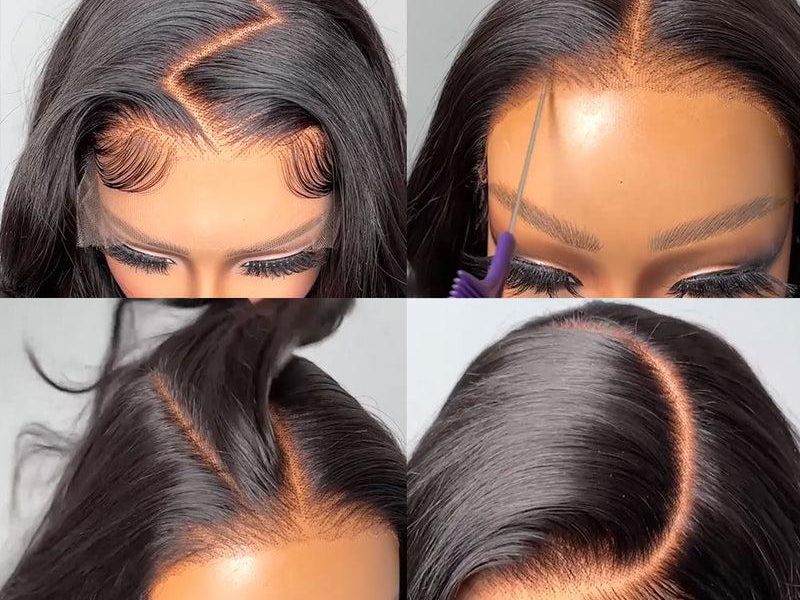
Knot finish and density deserve extra attention on this style. A pre-parted piece hides its weak spots behind one fixed line, while a piece with no fixed line shows every knot across the whole lace. Uneven density then becomes visible the moment the wearer moves the part.
Lace Size and Coverage
Size sets how much room the wearer has to move the part, so it is the first spec to lock.
A 4×4 inch piece gives a compact part zone that suits a standard closure sew-in. A 5×5 inch piece offers 25 square inches of parting space versus 16 on a 4×4, about 56% more lace. That extra room allows a deeper side part. A 6×6 inch piece extends the part area toward the crown, which helps stylists who want more freedom.
For a first order, 4×4 and 5×5 are sensible sizes to test, since most buyers treat them as standard. Add 6×6 only after you see repeat demand for wider parting.
HD Lace vs Transparent Lace
After size, the lace itself decides how the part looks up close.
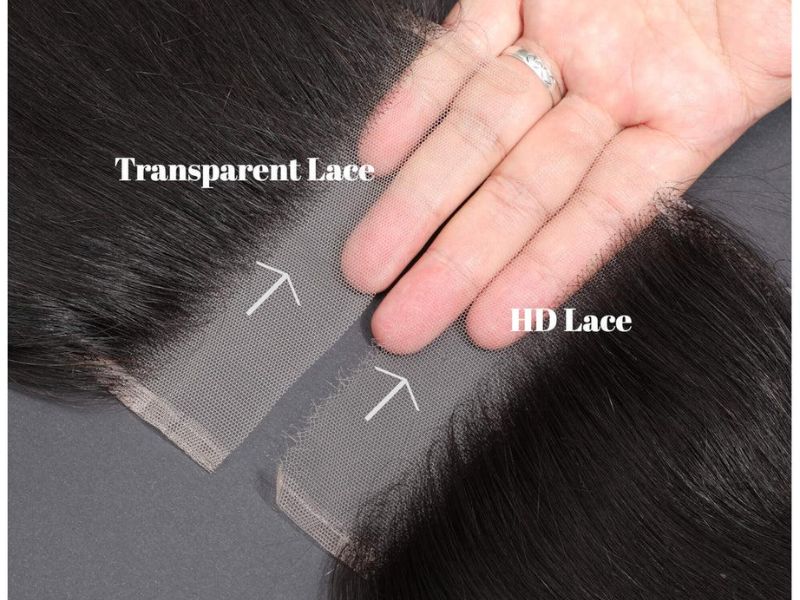
HD lace is thinner and finer, so it melts into the skin and keeps the part line almost invisible. It is also lighter and more breathable, but it is delicate and needs a gentle hand during installation and takedown. Transparent lace is slightly sturdier and tolerates more customizing, though it can look a little more visible under harsh light.
Here’s the bottom line. For visibility, HD lace has the edge. For durability and cost, transparent lace has the edge.
→ Compare both lace types in our range: Transparent Lace Closure and HD Lace Closure
How to Check Free Part Closure Quality Before Ordering
Specs on a quote sheet only tell half the story, so the sample inspection matters just as much. Run this checklist on every sample before you approve a bulk order:
- Knots: bleached evenly, small and consistent across the whole part area
- Density: even from the front edge to the back, with no thin patches near the center line
- Lace: clean edges, no tears, no stiff or yellow patches
- Hairline: natural and slightly irregular, or pre-plucked if that option was ordered
- Hair: cuticles aligned in one direction, and single donor if the supplier claims it
- Part memory: part the hair in three places with a damp tail comb and check that it settles without heavy force
Factory Insight: Knot finish decides how this closure looks along the entire part line. Because the wearer can part anywhere, every zone of the lace is on display, so uneven knots show up much faster than on a pre-parted piece. Buyers should ask to see the sample under bright light, not only in a product photo, according to Mrs. Cherry, Sales Manager at K-Hair Factory.
Part memory deserves its own test. Hair on a closure with no built-in direction may need water or heat to hold a new part. A piece that resists every new part after one wash will generate complaints later.
Free Part Closure Wholesale Pricing and MOQ
With quality criteria set, the next step is turning them into a budget.
K-Hair’s lace closures run from $50 to $170 per piece, depending on size, lace type, and hair grade. A quote far below that range often signals thinner density or blended hair. Ask every supplier to quote a free part closure by lace type and size, not as one flat number.
| Factor | How it affects price |
|---|---|
| Lace type | HD lace usually costs more than transparent lace |
| Lace size | Larger sizes use more lace and more hair |
| Hair grade | Single donor raw hair costs more than blended hair |
| Texture and color | Extra processing time adds surcharges |
| Order volume | Bulk orders unlock better rates |
Minimum order quantities differ by product, and closures are often quoted separately from bundles and wigs. Confirm the closure MOQ in writing before you commit to a larger purchase, or start with a sample order.
→ Compare factory rates across every product line: Full Wholesale Price List
Who Should Stock This Closure Style?
Pricing tells you what it costs, and this section tells you who it suits. Use these if-then rules to match the product to your business:
- If your clients change their part often, a free part closure is a better fit than a pre-parted piece.
- If your stylists are newer and want fast installs, a middle part closure may suit better, but it locks one look.
- If you sell closure wigs, a free-part base lets you market several part styles on one unit.
- If your buyers care about scalp realism, pair the piece with HD lace and accept the extra care it needs.
- If your buyers are price sensitive, pair it with transparent lace, though the part may look slightly less refined up close.
A small mixed first order lets you read demand before you scale. Track which size and lace type reorder first, then shift your stock toward those.
Closure Styling Tips for End Customers
Your buyers’ clients will judge the product by how easily the part sits, so passing on simple guidance cuts returns. Because this closure has no fixed line, the first setup takes a little patience.
- Dampen the hair, map the part with a rat-tail comb, then set it with light heat and let it cool
- Bleach the knots lightly for a cleaner scalp look
- Pluck the hairline gently, since over-plucking weakens the lace
- Tint the lace area with powder or concealer to match the scalp
- Re-set the part after each wash
Share these five steps on a printed card or a short video with each bulk order. It costs little, and it gives your customers a reason to trust the product. Clear aftercare also helps stylists explain why the part needs setting, which reduces returns caused by handling rather than defects.
→ Not sure which texture matches your market? Explore our guide: Vietnamese Hair Textures
FAQs
Buyers raise the same few questions before a first order, so here are direct answers.
Can this closure be parted in the middle and on the side?
Yes. The lace has no set line, so the wearer can create a middle part, a side part, or a zigzag part on the same piece. The hair may need water or heat to hold a new position.
How is a free part closure different from a lace frontal?
The difference comes down to size and coverage. A closure is a small patch, usually 4×4 or 5×5 inches, while a frontal is a strip that runs ear to ear at about 13×4 inches. Frontals cost more and need more upkeep, so a closure suits buyers who want a simpler install.
Which lace suits this closure, HD or transparent?
The answer depends on your customer and budget. HD lace gives the most seamless scalp look but is more delicate. Transparent lace is sturdier and usually costs less, so it suits high-volume or price-sensitive stock.
What MOQ applies to a closure order?
MOQ rules vary by factory and by product. At K-Hair, closure minimums are confirmed per order, so contact our team for current terms. Ask every supplier for the figure in writing before you compare quotes.
Conclusion
A free part closure offers flexible styling because the part can move to suit different looks. For B2B buyers, focus on lace quality, density, hairline, knot finish, hair source, MOQ, and batch consistency when evaluating suppliers.
If you source this closure style for wholesale, work with a supplier that can provide clear specifications, consistent quality, and samples for evaluation. Contact K-Hair Factory to discuss your requirements and request a quote for your next order.
Ready to source verified raw Vietnamese hair?
Contact K-Hair Factory directly for wholesale pricing, MOQ details, and free samples.
Or visit our Facebook: K-Hair Vietnam Factory to get the latest wholesale price list and start building your brand with confidence!