When choosing a lace front wig, buyers often consider hair length, texture, and density. Lace size also affects styling flexibility. The 13×4 vs 13×6 Lace Front Wig comparison comes down mainly to lace depth: 13×4 has 4 inches of depth, while 13×6 has 6 inches.
That extra two inches can provide more room for parting and styling. For salons, retailers, and wholesale buyers – as well as anyone choosing a lace front for personal wear – understanding this difference helps match each option to customer needs and product positioning.
What Do 13×4 and 13×6 Actually Mean?
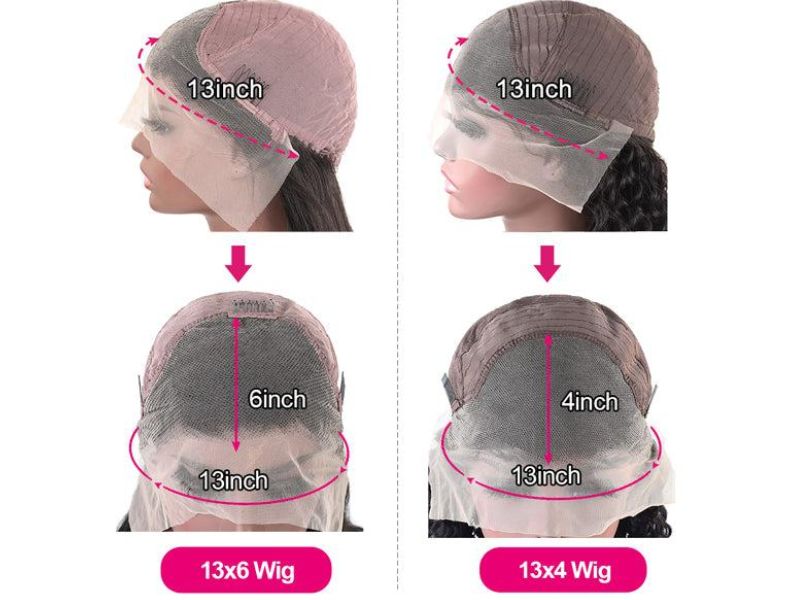
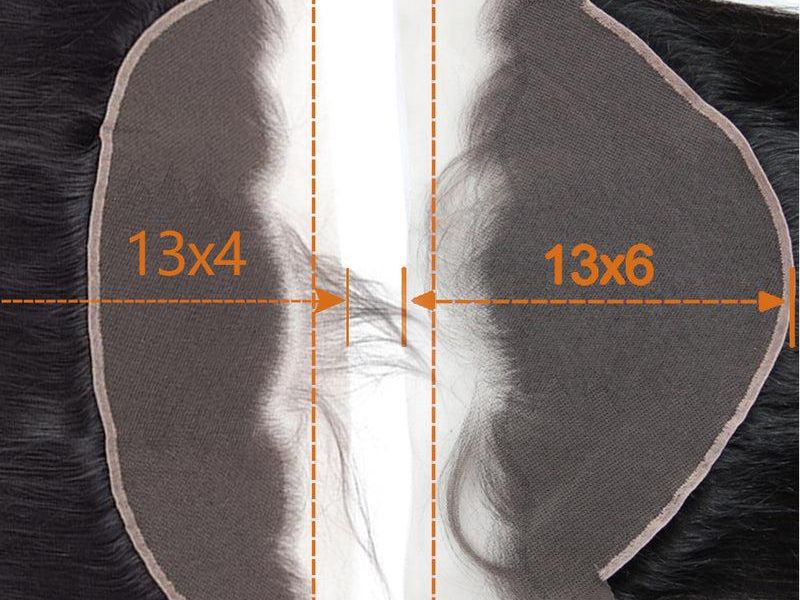
The numbers in a lace size describe two dimensions of the lace panel. The first number, 13, refers to the approximate width from ear to ear. The second number indicates the depth extending from the front hairline toward the crown.
A 13×4 therefore has roughly 13 inches of width and 4 inches of depth, while a 13×6 has the same width but 6 inches of depth. Using a simple rectangle as a reference, that corresponds to about 52 square inches versus 78 square inches of lace area, which works out to roughly 50% more parting space on the 13×6. The actual usable area can vary because frontal lace is not always a perfect rectangle and may be shaped or trimmed during production.
K-Hair’s own frontal range uses both 13×4 and 13×6 constructions, reflecting how these two sizes can serve different styling and product-positioning needs. For businesses building a lace category, size should be considered alongside lace type, hair density, length, texture, and overall cap construction.
13×4 Lace Front: What It Offers
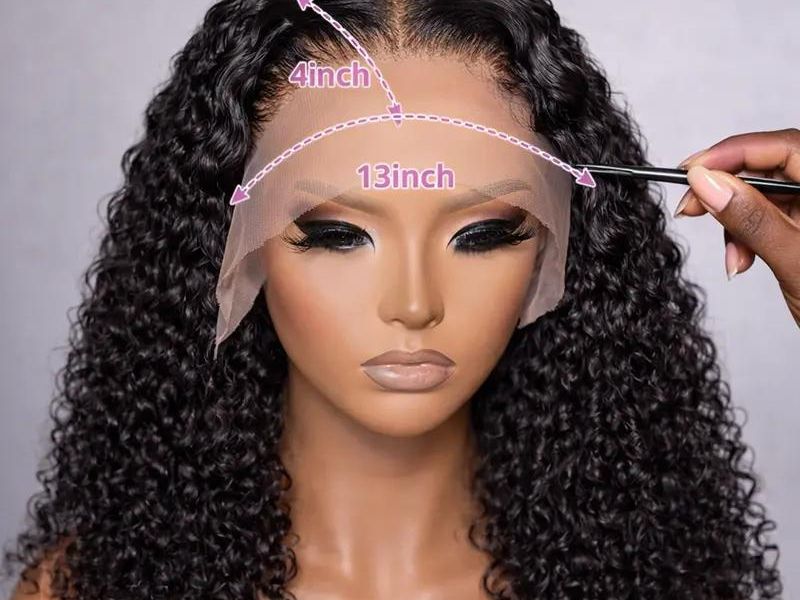
A 13×4 lace front provides coverage across the front hairline while keeping the lace depth relatively compact. It can support common looks such as a middle part, a standard side part, loose waves, straight styles, and everyday hairstyles.
Its smaller lace area can appeal to buyers who do not need a very deep parting space. It is also a beginner-friendly choice that is generally more affordable, which suits entry-level customers, retailers working with a lower price point, or businesses that want a simpler lace-front product.
The key limitation is not that a 13×4 cannot be styled. Rather, the usable lace area ends sooner as the part moves toward the crown. When the wearer wants a deep side part or wants to move the hair farther back, the four-inch depth can become a more noticeable constraint.
For a customer who usually keeps the same middle or side part, that limitation may not matter much. In a practical comparison, the smaller option may simply be enough. The product can still look natural when the lace, knots, hairline, and density are well matched.
13×6 Lace Front: What Changes?
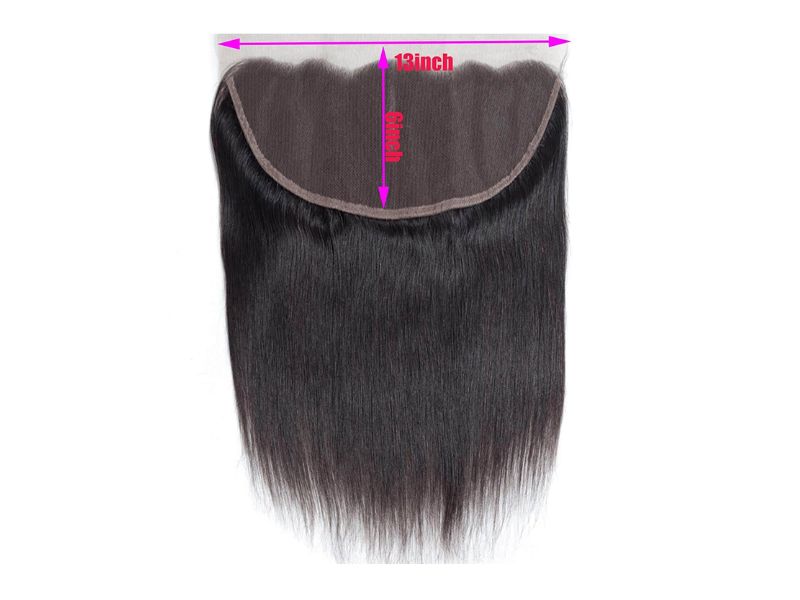
A 13×6 has the same 13-inch ear-to-ear width as a 13×4, but the lace extends two inches farther toward the crown. This creates more room for parting and styling.
| Feature | 13×4 | 13×6 |
| Lace width | 13 inches | 13 inches |
| Lace depth | 4 inches | 6 inches |
| Parting space | Standard | Deeper |
| Styling flexibility | Suitable for everyday styles | More options for deep middle and side parts |
| Lace area | Smaller | Larger |
| Ventilation space | Standard | More potential ventilation area |
| Best suited for | Simple, everyday styling | Frequent restyling and creative looks |
The main benefit of a 13×6 is its additional styling space. The larger lace area can also allow for more ventilation and hand-knotting, depending on the construction. However, lace size alone does not determine how natural or breathable a wig feels. Lace material, knot size, hair density, cap construction, and installation also matter.
For retailers, the 13×6 can be positioned as a more versatile option for customers who want deeper parting and greater styling flexibility.
Parting Space: The Main Difference Buyers Notice
If there is one feature that best explains the difference between 13×4 and 13×6 frontal, it is parting depth.
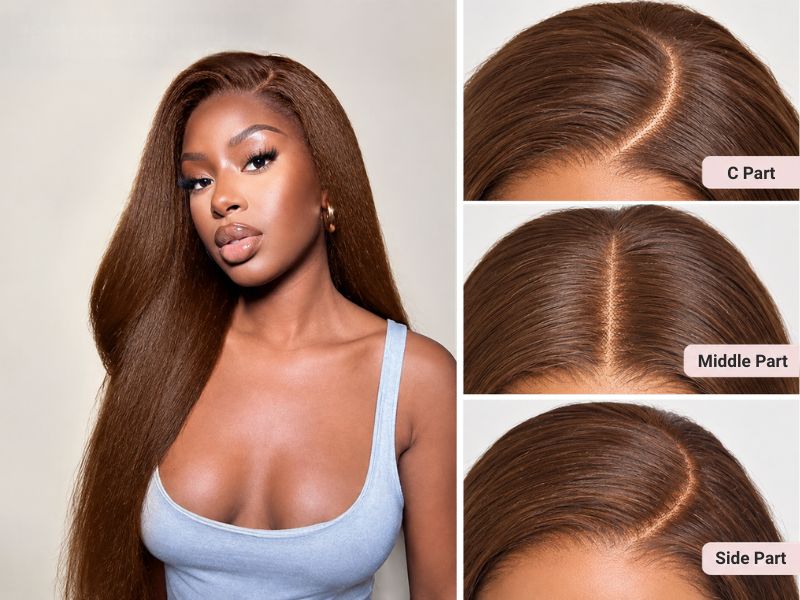
With a 13×4, the wearer has a four-inch front lace area in which the hair can be separated and directed. That works well for conventional center and side parts. With a 13×6, the additional two inches create more space toward the crown, so the part can appear deeper and the hair can be moved more freely.
The larger lace panel allows the scalp-like part to continue farther back before the hair reaches the cap or weft area underneath. This can be useful for wearers who frequently change their parting position.
However, the distinction is not simply about having more lace. The quality of the lace, the ventilation, the knotting, and the cap structure all affect how much usable styling space the wearer actually gets.
For customers who rarely change their part, the extra depth may have limited practical value. That is one reason the choice between the two sizes should start with actual styling habits. For customers who switch between middle, side, and swept-back styles, it can be a more meaningful feature.
Styling Flexibility for Different Hairstyles
A smaller lace area is often enough for simple everyday styling. A larger area becomes more useful as the hairstyle requires more of the top or front section to be exposed.
A 13×4 can work well for these simpler styling scenarios:
- Middle or standard side parts
- Straight, wavy, or curly looks worn down
- Everyday styles with limited part changes
A 13×6 can offer additional room for:
- Deeper middle or side parts
- Long sweeping parts and side-swept styles
- More frequent part changes
- Some half-up or pulled-back looks, depending on cap construction
This is another practical part of that difference. The larger lace area gives the stylist more room to work with, but it should not be marketed as a guarantee that the wig can be put into every updo.
That does not mean every 13×6 supports every hairstyle. Cap construction still matters, particularly for pulled-back styles. Track placement, hair volume, and how the unit is secured can affect whether the cap or lace edge becomes visible.
For businesses, this distinction also helps with product descriptions. Rather than calling a 13×6 “better,” explain that its additional depth is designed for customers who value deeper parting and broader styling options.
Does a 13×6 Look More Natural?
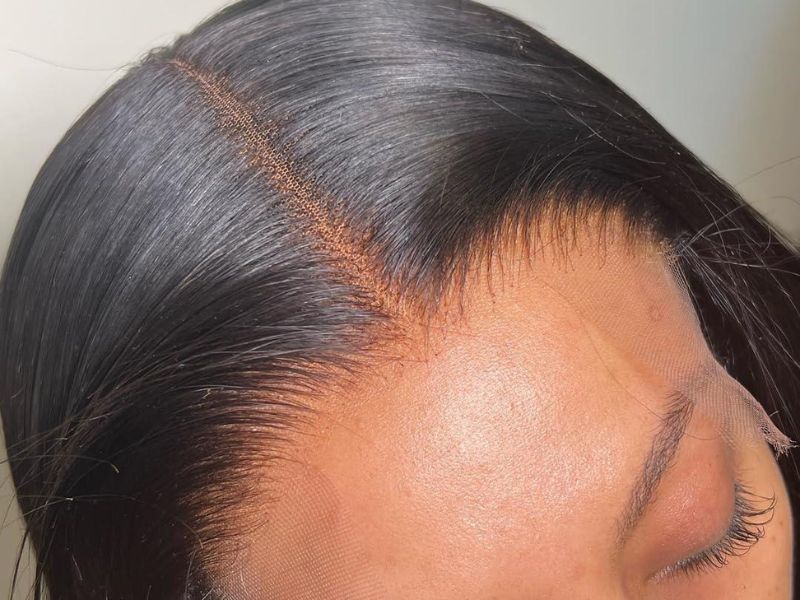
A larger lace panel can support a more flexible scalp illusion, but lace size alone does not determine how natural a wig looks.
Several factors matter:
- Lace material and color
- Knot size and ventilation
- Density and hairline design
- Hair texture and lace placement
- Installation technique
A well-made 13×4 can look more natural than a poorly constructed 13×6. The same principle applies to both sizes: the lace should blend with the wearer’s skin, while the knots and density should look appropriate for the intended style.
The larger lace area can also contribute to a more open scalp-like appearance when it is ventilated and installed well. In practice, a 13×6 tends to give a more realistic scalp appearance when the hair is pushed back or parted deeply, while a 13×4 is lighter and easier to maintain for everyday looks. This is another reason to view the 13×4 vs 13×6 Lace Front Wig choice as a construction decision, not simply a size label.
For buyers interested specifically in lace quality, it is useful to compare lace materials as well as the frontal construction itself – see HD lace vs transparent lace for a closer look.
Breathability and Comfort
More lace does not automatically mean more airflow. Comfort also depends on lace type, density, cap design, fit, and installation (see Swiss lace vs HD lace for how the lace types differ).
That said, a 13×4 generally gives a slightly lighter cap overall because it uses less lace, while a 13×6’s larger lace area can provide extra scalp airflow and breathability during longer wear sessions.
A 13×4 may suit customers who prefer a smaller frontal area, while a 13×6 can provide more lace surface around the crown. Cap size, stretch, adjustable straps, combs, and total wig weight should also be checked.
For wholesale buyers, evaluate a sample rather than assuming one size will feel comfortable for every customer. The overall cap should be assessed together with the lace specification.
Cost and Maintenance Considerations
Because a 13×6 uses a larger lace area, it can require more lace material and more ventilation or hand-knotting work than a comparable 13×4. That can contribute to a higher unit cost.
K-Hair’s wholesale price list lists lace frontals in 13×4 and 13×6 sizes at $100 to $200 per piece, with final pricing dependent on the specifications of the order. Buyers should treat that as a reference range rather than a fixed price for every unit.
Price can change substantially with hair length, density, texture, color, lace type, and customization. A premium lace type or very long, high-density hair can affect the final cost more than the lace-size difference alone.
Maintenance is another consideration. Larger lace can require careful handling because there is more delicate material to trim, clean, tint, or secure. If adhesive is used, the wearer may also need to spend additional time cleaning product residue from a larger lace area. Glueless lace wigs are another option for customers who want to skip adhesive altogether.
That does not make the 13×6 unsuitable for everyday use. It simply means the product may make more sense for customers who actually use the additional styling flexibility.
K-Hair Factory Perspective
From a factory perspective, compare the two sizes through the customer’s styling needs first, then assess density, hair quality, cap construction, lace type, and finishing.
Factory Insight: Moving from 13×4 to 13×6 increases lace depth, but it does not automatically improve knots, hairline, or lace material. Two wigs with the same size label can perform differently, which is why sample approval and consistent QC matter for wholesale orders, according to Mrs. Cherry, Sales Manager at K-Hair Factory.
K-Hair’s wholesale wig range lists 13×4 and 13×6 as its standard frontal sizes and allows buyers to customize specifications such as texture, color, length, density, construction, and lace type.
→ Read more: Frontal vs Closure Wigs: Differences, Pros & Which to Choose
→ Looking for lace front styles in bulk? Browse Vietnamese hair wigs.

Which Lace Size Fits Different Customers?
The distinction becomes easier to apply when customer profiles are considered.
A 13×4 can make sense for customers who:
- Prefer straightforward everyday styles
- Usually wear a middle or standard side part
- Want a more accessible price
- Do not frequently restyle the top section
- Are purchasing their first lace front wig
A 13×6 may suit customers who:
- Frequently change their part
- Want a deeper middle or side part
- Create content, take photos, or attend events
- Want more freedom around the crown
- Are willing to pay for additional styling flexibility
For retailers, carrying both sizes can create a clearer product ladder. Instead of treating the two sizes as direct substitutes, they can be positioned around different customer priorities. This makes the 13×4 vs 13×6 Lace Front Wig comparison more useful as a merchandising decision than as a simple “better or worse” question.
What Should Wholesale Buyers Check Before Ordering?
Lace size should be only one item on the purchasing checklist. Before placing a bulk order, buyers should confirm:
- Lace type: HD or transparent
- Lace dimensions: 13×4 or 13×6
- Hair origin and grade
- Hair density
- Length range
- Texture and color
- Cap size and construction
- Hairline design
- Knotting and ventilation
- Customization options
- MOQ
- Sample approval process
- Production lead time
- QC standards
This wider evaluation matters because a customer may pay more for a 13×6, but the added cost only creates value when the rest of the product meets expectations.
K-Hair’s closure and frontal product line includes both transparent and HD lace options and is designed for wholesale buyers who need different product specifications and quantities.
→ Read more: The Ultimate Vietnam Hair Factory Wholesale Price List 2026

Frequently Asked Questions About 13×4 and 13×6 Frontals
These differences often raise a few common questions for buyers and everyday wearers alike:
What is the difference between 13×4 and 13×6 frontal?
The main difference is lace depth. Both are about 13 inches wide, but 13×4 provides roughly four inches of depth while 13×6 provides about six.
Is 13×6 better than 13×4?
Not universally. A 13×6 offers deeper parting and more styling room, while a 13×4 can be sufficient for standard styles and tighter budgets.
Which is better for beginners, 13×4 or 13×6?
A 13×4 is generally the more beginner-friendly option: it is usually more affordable, uses less lace, and covers standard middle and side parts. A 13×6 is worth considering once you know you want deeper parting or more styling freedom.
Can a 13×4 have a middle part?
Yes, as long as the desired parting depth fits within the available lace.
Can you wear a side part with a 13×6?
Yes. The additional depth provides more room for deeper or wider side parts.
Is a 13×6 more breathable than a 13×4?
A 13×6’s larger lace area can provide extra scalp airflow during longer wear, while a 13×4 gives a slightly lighter cap because it uses less lace. Lace type, density, and cap design still decide how comfortable either one feels.
Does 13×6 cost more?
It often does because the larger lace area may require more material and labor. Hair length, density, lace type, texture, color, and customization also affect price.
Final Thoughts
The key difference between 13×4 and 13×6 is lace depth. A 13×4 suits standard everyday styles, while a 13×6 offers deeper parting and more styling flexibility. If you’re choosing for yourself, start with how you usually part your hair; if you’re buying for a business, start with who you’re selling to.
For wholesale buyers, consider lace quality, hair density, cap construction, and customization alongside size. K-Hair Factory offers both 13×4 and 13×6 frontal options for different business needs.
Ready to source verified raw Vietnamese hair?
Contact K-Hair Factory directly for wholesale pricing, MOQ details, and free samples.
Or visit our Facebook: K-Hair Vietnam Factory to get the latest wholesale price list and start building your brand with confidence!